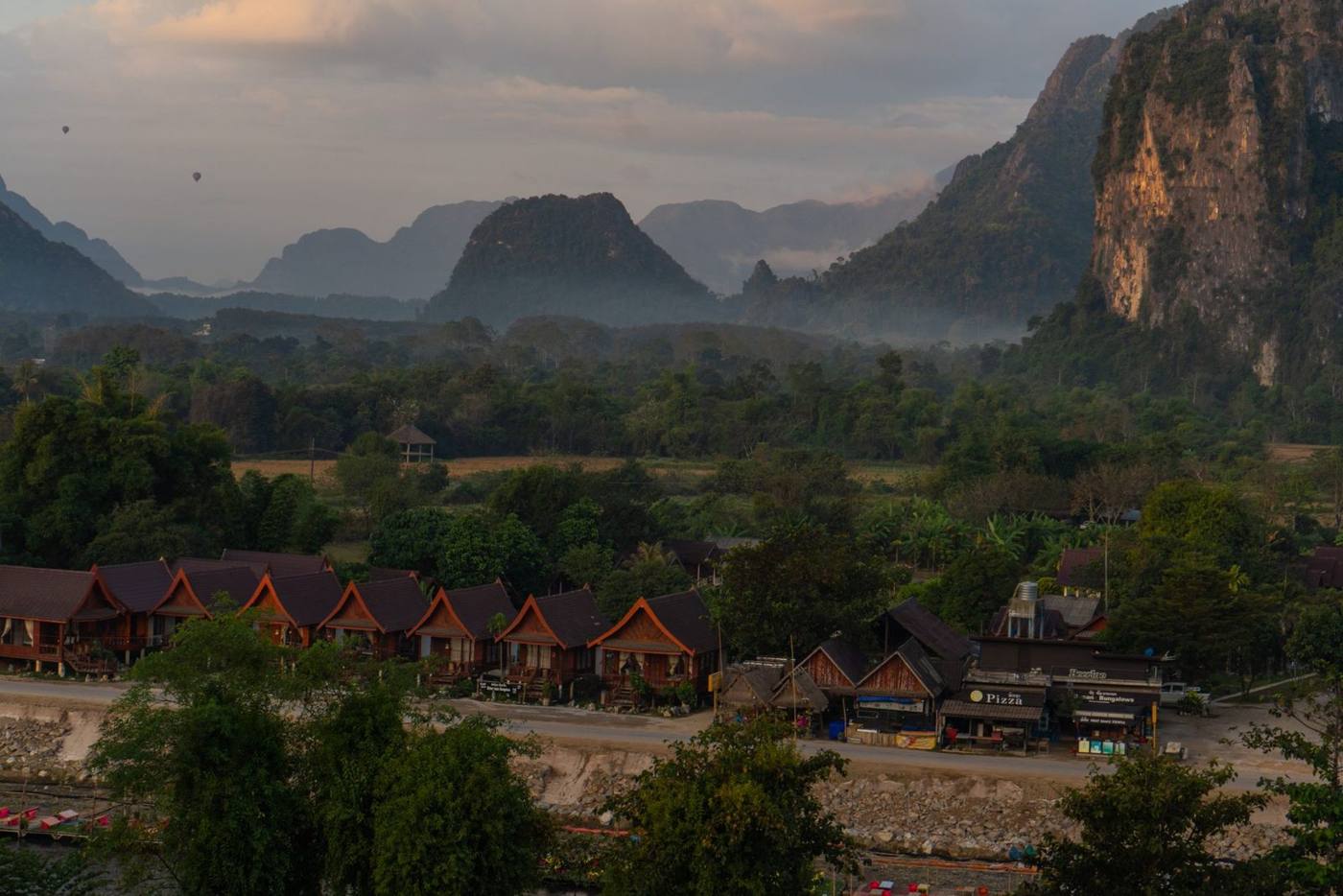
From Vientiane to Vang Vieng
The capital on the Mekong with That Luang, then the fast Laos-China railway to Vang Vieng among karst peaks, kayaks and blue lagoons.
- Vientiane
- That Luang
- Buddha Park
- Vang Vieng
- Blue Lagoon
- Nam Song
Day by day
- Day 1
Vientiane: That Luang, Patuxai and the riverfront
This five day trip combines Vientiane, the quiet capital on the Mekong, and Vang Vieng, among karst peaks, kayaks and blue lagoons, linked by the fast Laos-China railway. In the capital you see the great monuments and the COPE centre, which tells the story of the bombs still lying in the fields.
Before you go: for Laos Italian citizens need a passport valid for at least six months from entry, with two blank pages, and a tourist visa. Apply for the eVisa only on the official website laoevisa.gov.la, at least five days ahead, or get a visa on arrival at Wattay airport. Also fill in the LDIF digital form within the three days before arrival. Other nationalities should check their own rules.
Safety: the British government advises against all travel to Xaisomboun province, which this trip does not touch. In Vientiane watch out for bag snatching from motorbikes: carry your bag on the side away from the road.
Start with Pha That Luang, the great golden stupa that is the symbol of the country, surrounded by a cloister and smaller temples. Then go to Patuxai, the war memorial that recalls a triumphal arch, and climb to the top to see the city's avenues. Check prices and times.
In the afternoon visit Wat Si Saket, the oldest temple still standing in the city, with thousands of small Buddha statues in the niches of its cloister, and the nearby Haw Phra Kaew.
At sunset walk along the riverfront, where the night market lights up and people do open air exercise to music. Have dinner with a plate of larb and sticky rice.
Practical tip: buy your train tickets to Vang Vieng straight away, at the station or on the official railway app, with your passport, because they often sell out.
- Day 2
Buddha Park and the COPE centre
In the morning leave the city to the south-east, along the Mekong, to Buddha Park, Xieng Khuan, about twenty five kilometres from the centre. A Lao mystic who blended Buddhism and Hinduism created it from the late 1950s: a lawn full of concrete statues, with a large reclining Buddha, many armed deities and a giant pumpkin that you enter through a demon's mouth and climb up to a panoramic terrace. Check prices and times. Get there by tuk-tuk or car with driver, or by local bus.
In the afternoon, back in town, visit the COPE visitor centre, the organisation that provides artificial limbs and rehabilitation to people injured by ordnance. With films, objects and testimonies it tells the story of the American bombing during the Vietnam War, which made Laos one of the most heavily bombed countries in the world per person, and of the cluster bombs still left in the fields. It is a hard visit but a necessary one to understand the country.
In the evening go back towards the river or explore the streets around Nam Phu, with cafés and bakeries that recall the French period. Try khao piak sen, the soup of handmade rice noodles.
Practical tip: leave a donation at the COPE centre if you can, because it directly supports treatment for those who have been injured.
- Day 3
Train to Vang Vieng and kayaking on the Nam Song
In the morning go to Vientiane station, outside the city, and take the fast train to Vang Vieng. The journey takes about an hour through plains and hills. Arrive at the station early, because there are luggage and document checks as at an airport.
Vang Vieng has left its wild party days behind and is now a place for nature and outdoor activities, framed by limestone mountains along the Nam Song river.
Safety: in November 2024 six foreign tourists died after drinking alcohol laced with methanol in this area. Do not drink unsealed spirits or cocktails of uncertain origin, and choose beer and soft drinks in sealed bottles or cans. For tubing and kayaking insist on a lifejacket, and do not go in the water after drinking.
In the afternoon go kayaking on the Nam Song with a guide: you start upstream of the town and drift down with the current between peaks and rice fields, stopping at small caves along the river. Check prices and times.
At sunset sit on the bank or cross a bamboo bridge to watch the mountains turn pink.
Practical tip: bring a waterproof bag for your phone and documents, and a long sleeved shirt against the sun on the river.
- Day 4
Caves and the Blue Lagoon
Today you explore the countryside west of the river. Hire a bicycle or a scooter with a helmet, or a tuk-tuk with driver, and cross the Nam Song.
The first stop is Tham Chang cave, near the town, with a staircase leading to a viewpoint over the valley and a cool spring at the exit. Then follow the dirt road through rice fields and villages to the Blue Lagoon, a turquoise pool at the foot of a mountain, where people swim and jump from the trees. Above the lagoon opens the Tham Phu Kham cave, large and dark, with a reclining Buddha statue in the first chamber. Check prices and times at each site. In the area there are other numbered lagoons, quieter ones.
In the cave use a torch and do not go into the deeper chambers without a guide. On the trails stay on the trodden tracks.
Have lunch in a village with a noodle soup, then ride back slowly, stopping to photograph the buffalo in the rice fields and the mountains reflected in the flooded fields.
In the evening have dinner in town with grilled fish from the Nam Song.
Practical tip: go to the Blue Lagoon early in the morning, before the groups, and bring water shoes, because the bottom is slippery rock.
- Day 5
Train to Luang Prabang or the return
Last day, given over to travel. Early in the morning, if the sky is clear, watch the mist rising from the mountains above the Nam Song, one of the loveliest moments in Vang Vieng.
Then go to the station and take the train: heading north you reach Luang Prabang in about an hour, heading south you return to Vientiane for your flight home. If you go to Luang Prabang, you can continue your trip with the temples and the Kuang Si waterfalls.
In these five days you have seen Vientiane with Pha That Luang, Patuxai, Wat Si Saket and the riverfront, Buddha Park, the COPE centre, the fast Laos-China train, kayaking on the Nam Song, Tham Chang cave, the Blue Lagoon and Tham Phu Kham cave.
When to go: the best period is from November to March, with dry weather and pleasant temperatures. In April and May it is very hot. From June to October it rains, the Nam Song is high and fast and some river activities may be suspended.
Practical tip: book your return train or the one to Luang Prabang on the same day you arrive in Vang Vieng, because at weekends and during holidays the seats go quickly.
Vang Vieng has left its party days behind and is now a place for nature and outdoor activities. Train tickets are bought at the station or via official apps and often sell out. The COPE centre explains the American bombs still in the fields.
Before you go
- Documents and visa
- Passport valid for at least six months from entry, with at least two blank pages, and a tourist visa: the eVisa, to be requested only on the official website laoevisa.gov.la (accepted at the main airports and at Friendship Bridges I and IV), or a visa on arrival at the main entry points. You must also fill in the LDIF digital immigration form within the three days before arrival and departure.
- Health and vaccines
- Malaria is present in rural areas and dengue cases are regular: use repellent. Medical facilities are poor even in the capital, so you need insurance covering medical costs and repatriation. Drink only bottled water. Emergencies: ambulance 1195, police 1191.
- Money and payments
- Lao kip. Tourist businesses often accept US dollars and Thai baht; cards work in towns, but carry cash in the countryside.
- Power sockets
- Types A, B and C, 230 volts: you need an adapter for British plugs.
- Time zone
- UTC+7 all year.
- Safety
- The British government advises against all travel to Xaisomboun province. Unexploded ordnance remains across the country: walk only on marked paths and never pick up metal objects. There have been fatal methanol poisonings from drinks served in tourist areas: avoid unsealed spirits. Drug penalties are extremely severe. Official advice: GOV.UK.
Information checked in November 2026 for Italian and EU citizens. Rules change: always check before you travel.
Variations
In three days: Vientiane and the COPE centre on the first day, then two days in Vang Vieng.
In eight days: continue by train to Luang Prabang and add three days of temples, the monks' alms round and the Kuang Si waterfalls.
Frequently asked questions
How do you buy tickets for the Laos-China railway?
At the station or on the official railway app, showing your passport. Buy them a few days ahead, because they often sell out.
Is Vang Vieng safe?
Generally yes, but in November 2024 six tourists died from alcohol laced with methanol. Drink only from sealed bottles and cans and always wear a lifejacket on the river.
How far is Buddha Park from Vientiane?
About twenty five kilometres from the centre, along the Mekong. You get there by tuk-tuk, by car with driver or by local bus.
Indicative itinerary written by World Atlas. Before booking, check timetables, seasonal openings, documents and safety.
 6 daysEasy
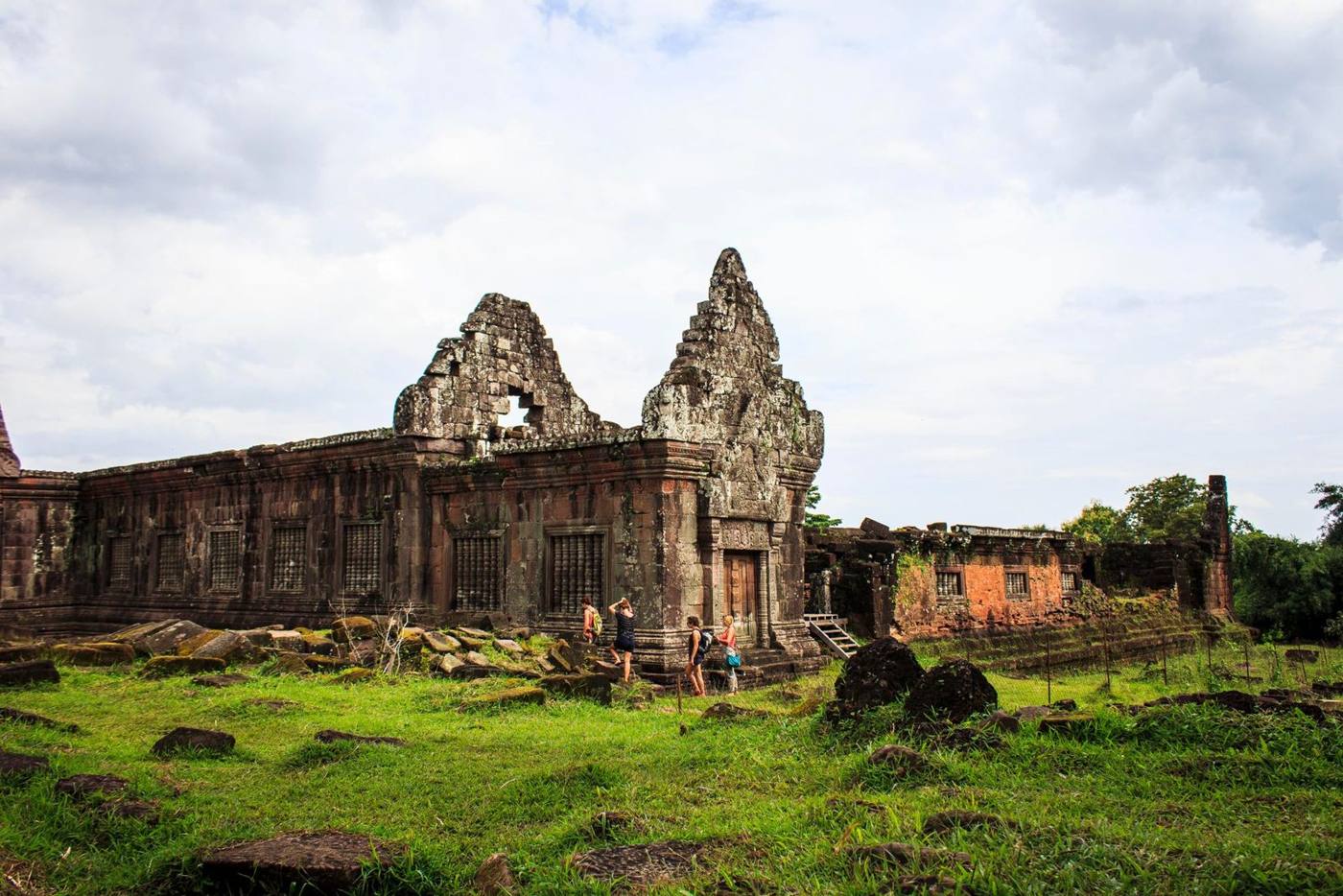
The south and the 4,000 Islands
Pakse, the pre-Angkor temple of Wat Phou, the Bolaven plateau with coffee and waterfalls, and Don Det and Don Khone on the Mekong.
 4 daysEasy
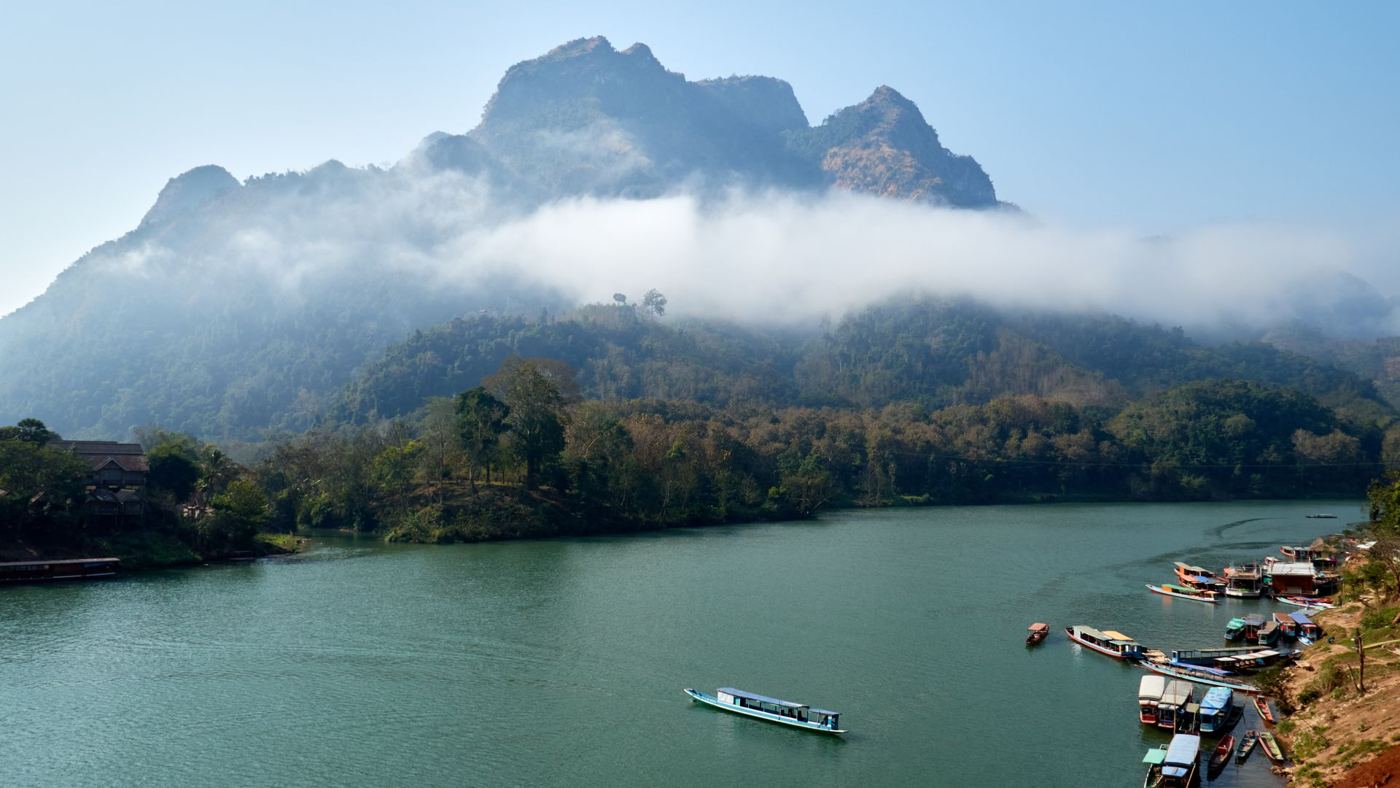
Nong Khiaw and Muang Ngoi
The karst peaks on the Nam Ou river: Pha Daeng viewpoint at Nong Khiaw, the boat to the roadless village of Muang Ngoi and walks among the rice fields.
 3 daysEasy
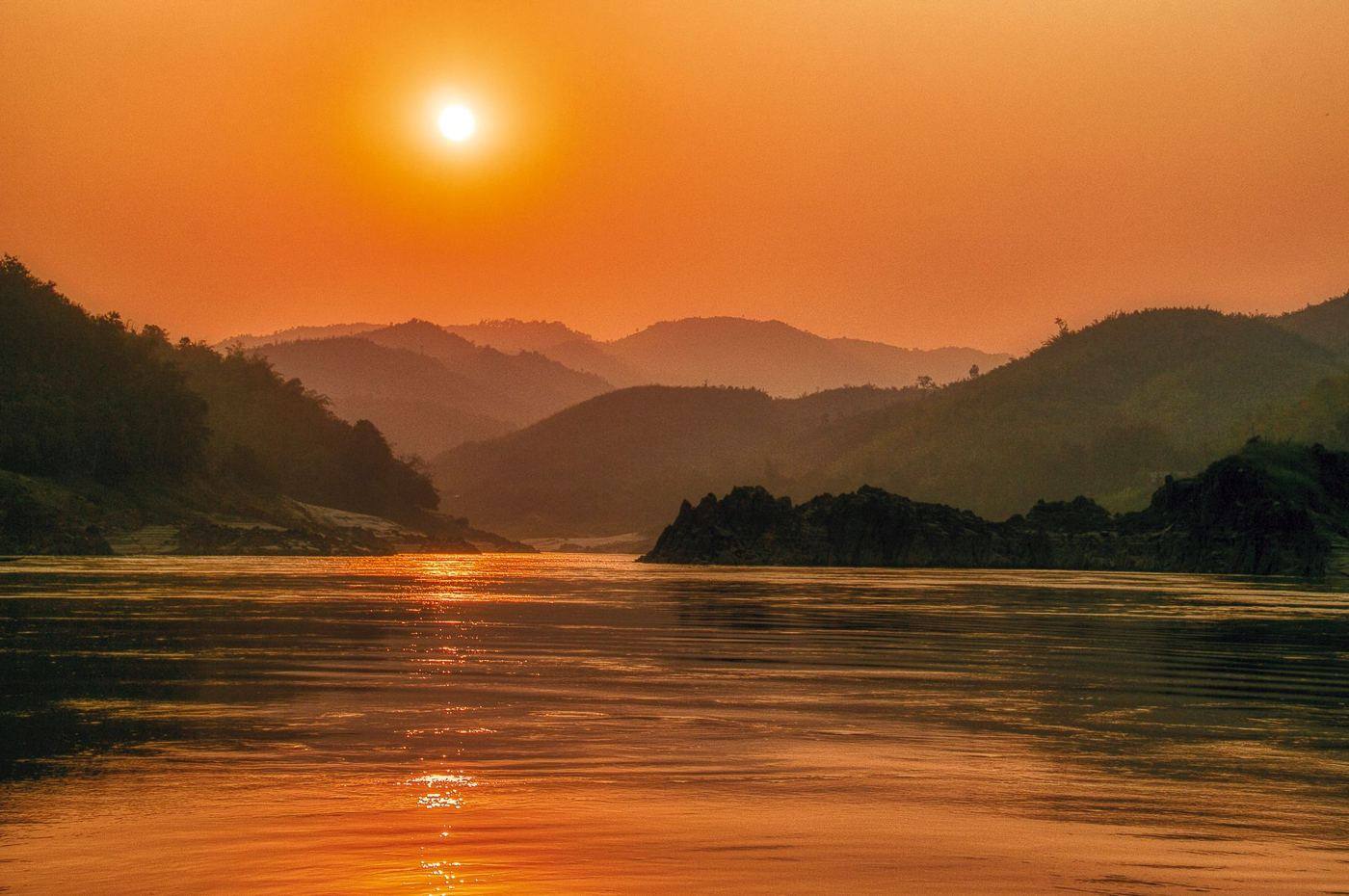
The Mekong slow boat
Two days by slow boat from the Thai border at Huay Xai to Luang Prabang, with a night in Pakbeng and the Pak Ou caves on arrival.