Lenin Peak and the Alay
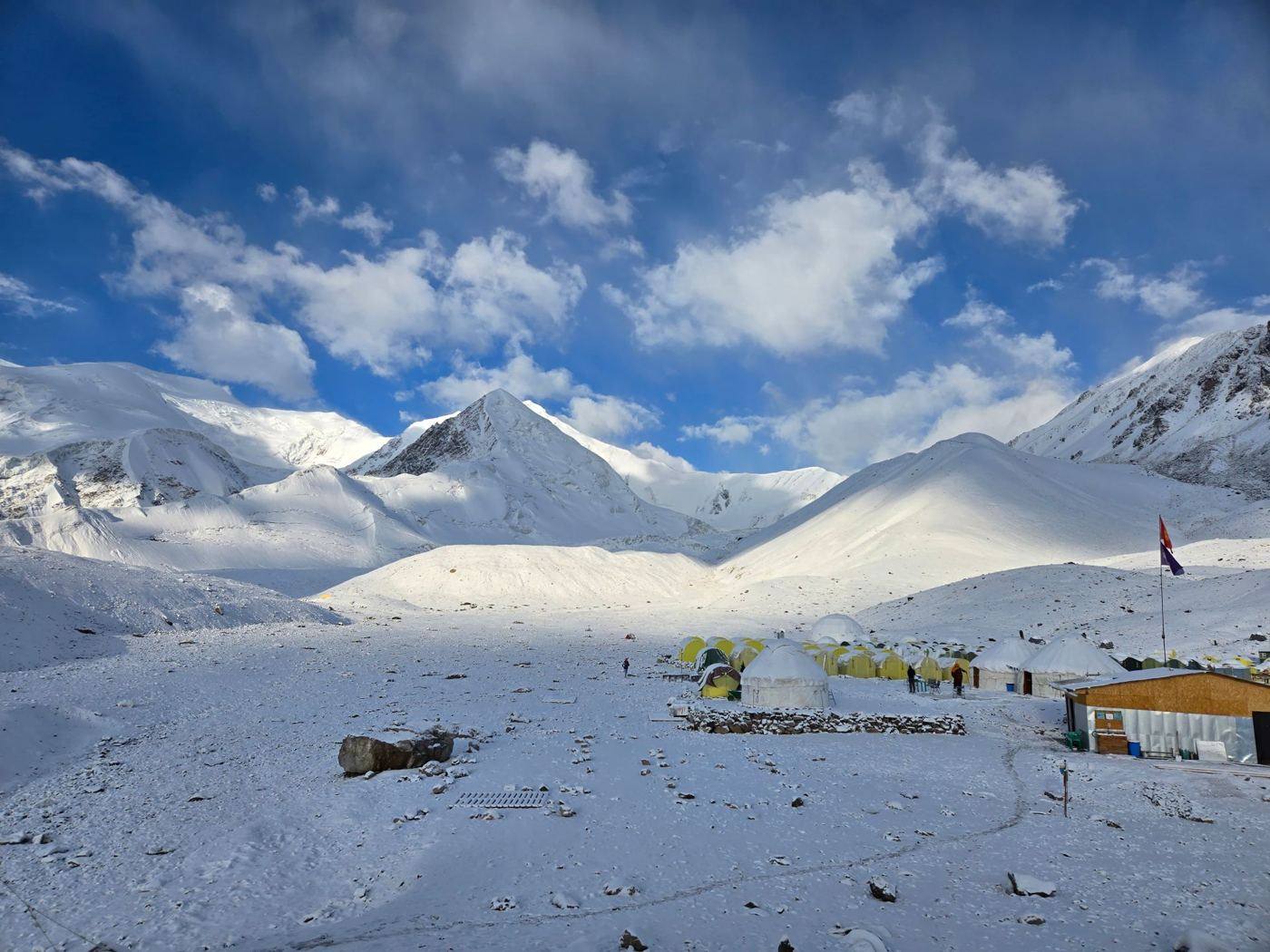
The Alay valley below the Pamir range, the village of Sary-Mogol, Lake Tulpar-Köl and the Lenin Peak base camp, at over 3,500 metres.
- Osh
- Sary-Tash
- Sary-Mogol
- Tulpar-Köl
- Lenin Peak base camp
Day by day
- Day 1
From Osh to Sary-Mogol, over the Taldyk pass
This five-day trip takes you to the south of Kyrgyzstan, into the great Alai valley, below the Pamir range: the village of Sary-Mogol, Lake Tulpar-Köl with its yurts and the base camp of Lenin Peak, 7,134 metres high, at more than 3,500 metres above sea level. You do not need to be a mountaineer, but you do need to get used to the altitude.
Before you go: Italian citizens enter Kyrgyzstan without a visa for up to 30 days in every 60 days, with a passport valid for at least six months from arrival; the electronic identity card is not enough. Other nationalities should check their own rules. For the Alai valley, Lake Tulpar-Köl and the base camp you need a border zone permit, to be requested in advance.
Some areas on this trip are close to borders or places where the situation changes often: check your government's travel advice before booking and again before you leave.
In the morning leave Osh by four-wheel drive, with a driver. The Pamir Highway climbs through green hills and villages, then crosses the Taldyk pass, at more than 3,600 metres, with hairpin bends and high meadows. You drop down to Sary-Tash, a village of low houses at a road junction, and in front of you opens the Alai valley, wide and green, closed to the south by a line of white mountains.
Carry on west to Sary-Mogol, the village where the walks begin. Take a short stroll and drink plenty. Sleep in a family home in Sary-Mogol.
Practical tip: always keep your passport and border permit with you, because there are checkpoints along the road; carry photocopies too.
- Day 2
The yurts of Lake Tulpar-Köl
Today you go up to the yurts, below the glaciers.
In the morning leave Sary-Mogol and cross the Alai valley southwards by four-wheel drive, along dirt tracks and through fords. The valley is a vast high pasture, where in summer Kyrgyz families come up with their herds of horses, yaks and sheep and live in yurts. The sky is huge and the mountains seem very close.
You reach Lake Tulpar-Köl, at about 3,500 metres, a small lake surrounded by meadows, with the face of Lenin Peak and its glaciers in the background. Around the lake there are yurt camps where you sleep and eat. Step inside the yurt, with colourful felts on the floor, blankets and the stove in the middle.
In the afternoon take an easy walk around the lake and on the nearby hills. Do not rush: at altitude every step takes effort, and on the first day it is important to go slowly. Watch the herders bringing the horses to the water and the children playing among the yurts.
In the evening try kymyz, fermented mare's milk, boorsok, the fried bread, and a hot soup. When the sun goes down, the temperature drops quickly and the sky fills with stars. Sleep in a yurt by the lake.
Practical tip: altitude sickness can affect anyone; drink plenty, avoid alcohol for the first days and if you have a strong headache or nausea, go down.
- Day 3
Towards Lenin Peak base camp
Today you walk to the base camp of the great mountain.
In the morning set off on foot from Lake Tulpar-Köl, with your guide, towards the valley that leads to Lenin Peak base camp, in the Achik-Tash area. The trail follows a stream through meadows, moraines and boulders, with the mountain always ahead. Lenin Peak, 7,134 metres, is one of the highest summits in Central Asia and stands on the border with Tajikistan.
At base camp, in summer, you find the tents of climbers setting off for the summit. Sit on a boulder and look at the glaciers, the seracs and the ridges: from here you understand how big this mountain is. If you have energy, climb a little on the nearby hills to get a better view of the valley and the lake.
In the afternoon head back towards the lake, on foot or on horseback. Many herders offer horses for the return, and it is a traditional and pleasant way to get around these valleys. The area is close to the border: stay on known trails, with your guide, and do not go near frontier areas.
In the evening have dinner in the yurt with your host family: mutton, potatoes, tea and bread. Sleep in a yurt at Lake Tulpar-Köl.
Practical tip: in the high mountains the weather changes within a few hours; always carry a waterproof jacket, gloves, a hat, strong sun cream and sunglasses, even if the morning is clear.
- Day 4
Travellers' Pass
Today you do the highest walk of the trip.
In the morning leave the lake early with your guide and climb towards Travellers' Pass, at more than 4,000 metres. The trail goes up steep meadows and then scree, with many stops to catch your breath. Along the climb you hear marmots whistling among the stones and see birds of prey circling above the ridges. This is the hardest day: only go up if you feel well after the days of acclimatisation, and if you have a headache or dizziness, stop and turn back.
From the pass the view is grand: in front of you is the north face of Lenin Peak and its glaciers, below you Lake Tulpar-Köl and the tiny yurts, and all around the peaks of the Pamir and the green, endless Alai valley. On clear days you can also see the distant mountains to the north. Stop, eat something and enjoy the silence.
Then come down slowly the same way. On the descent your legs are tired and the stones are slippery: use walking poles and watch where you put your feet.
In the afternoon rest by the lake. If you still have strength, take a horse ride in the meadows around. In the evening enjoy a last dinner in the yurt and a last night under the stars. Sleep in a yurt at Lake Tulpar-Köl.
Practical tip: leave at dawn to have the clearest sky and come down before the afternoon, when clouds, wind and storms often arrive.
- Day 5
Back to Osh
Today you leave the mountains and return to the city.
In the morning have breakfast in the yurt, with bread, cream, jam and tea, and say goodbye to the family who hosted you. Then set off again by four-wheel drive across the Alai valley, towards Sary-Mogol and Sary-Tash. Stop for the last photos of the Pamir range, which from the valley looks like a white wall.
After Sary-Tash climb back over the Taldyk pass and descend towards Osh along the Pamir Highway, through green valleys, villages and fields. You reach Osh in the afternoon. If you have time, climb the sacred mountain of Sulaiman-Too, a UNESCO World Heritage Site, or walk through the city's great bazaar. Check prices and times.
Over these five days you have seen one of the grandest mountain views in Asia: the Taldyk pass, the Alai valley with its pastures, Lake Tulpar-Köl with its yurts, Lenin Peak base camp and Travellers' Pass, facing the glaciers.
When to go: the best time is July and August, when the yurts are open, the pastures are green and the tracks can be driven. In June and September it is already very cold and it can snow. In winter the valley is covered in snow and the yurt camps are closed.
Practical tip: in the Alai valley there are no cash machines and phone signal is rare; carry enough cash in som and tell someone your route.
One of Asia's grandest mountain views, without being a mountaineer. High altitude: acclimatise. The area is near Tajikistan: carry your passport.
Before you go
- Documents and visa
- Passport valid for at least six months from the date of arrival. Since 31 December 2025, British and EU citizens can enter without a visa for up to 30 days in every 60 days, counted from the day of entry. For longer stays you must leave before the limit or register online within five days of arrival. Some areas near the borders, such as Kel-Suu lake, Chatyr-Kul lake and the approaches to Lenin Peak, need a border zone permit arranged in advance: you cannot buy it at the checkpoint.
- Health and vaccines
- No compulsory vaccinations for travellers from Europe: check which are recommended at least eight weeks before you go. In the mountains there is a risk of altitude sickness: climb gradually and talk to your doctor before you travel. Medical facilities are basic, especially outside Bishkek: take insurance covering medical costs and repatriation. Ambulance 103, police 102, fire 101.
- Money and payments
- Kyrgyz som. ATMs and cards are found in Bishkek, Osh and Karakol; in villages, valleys and yurt camps you need cash. Cash above the equivalent of 10,000 dollars must be declared.
- Power sockets
- Types C and F, 220 volts: you need an adapter for British plugs.
- Time zone
- A single time zone, UTC+6 all year: six hours ahead of the UK in winter, five in summer.
- Safety
- The country is generally calm, but there are bag snatchers and pickpockets in Bishkek, especially at Osh Bazaar. Since the 2025 border agreement with Tajikistan there have been no new clashes, but the situation can change quickly and there may be mines in the border areas of Batken region; the United States advises reconsidering travel within about 30 kilometres of the Tajik border. Do not photograph border posts, military sites or police stations. In the mountains there are avalanches, landslides and limited rescue: do not hike alone. The risk of earthquakes is high. Official advice: GOV.UK.
Information checked in November 2026 for Italian and EU citizens. Rules change: always check before you travel.
Variations
In 4 days: Sary-Mogol and two nights at Lake Tulpar-Köl, without Travellers' Pass.
In 7 days: add more days of acclimatisation and a walk towards the higher camps, with a mountain guide.
Frequently asked questions
Do I need a permit for Lenin Peak base camp?
Yes, for the Alai valley, Lake Tulpar-Köl and the base camp you need a border zone permit. Request it in advance and always keep it with you together with your passport.
Do you need to be a mountaineer?
No, this is a trekking trip and needs no technical skills. You do need to be fit and to allow a few days to get used to the altitude.
How do you sleep at Lake Tulpar-Köl?
In a yurt, with blankets and mats on the floor and the stove in the middle. Nights are cold: bring a warm sleeping bag.
Indicative itinerary written by World Atlas. Before booking, check timetables, seasonal openings, documents and safety.
 4 daysEasy
The eagles of Bokonbayevo
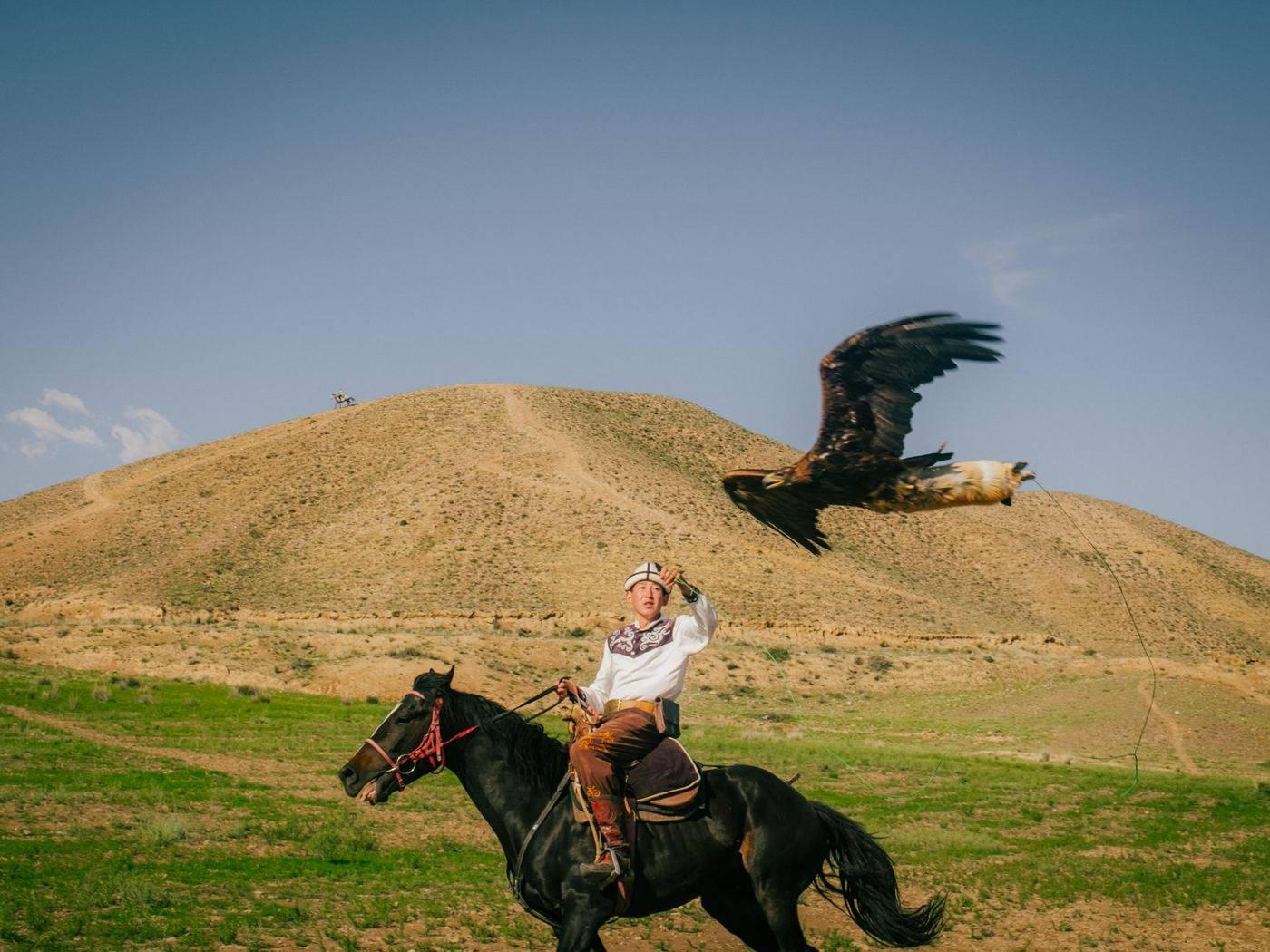
The south shore of Issyk-Kul: an eagle-hunting demonstration at Bokonbayevo, the Barskoon gorge and waterfalls, a night in a yurt and shyrdak felt-making.
 3 daysEasy
Chong-Kemin and Burana
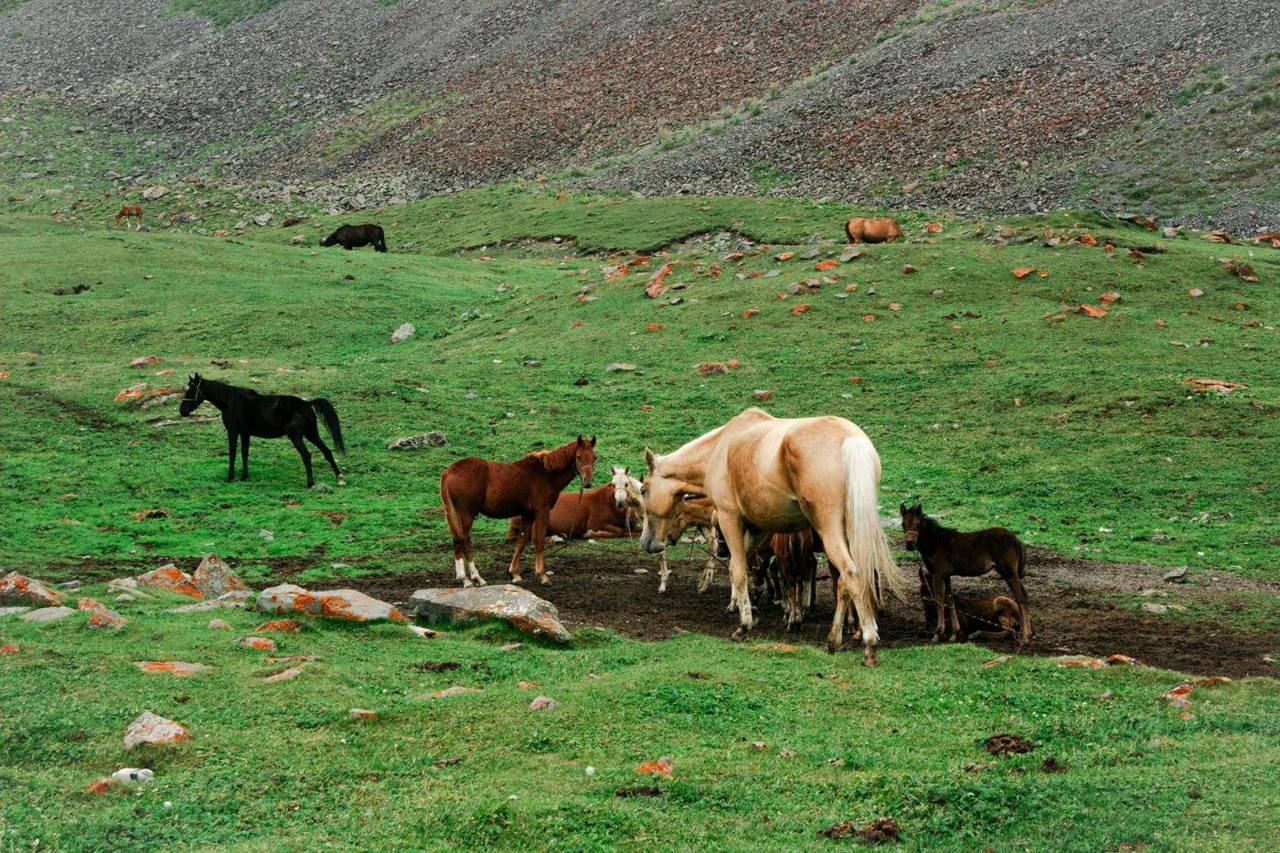
The Burana tower with its balbal Turkic grave stones, and the Chong-Kemin valley for riding among pastures and firs, staying on a farm.
 4 daysModerate
Kel-Suu
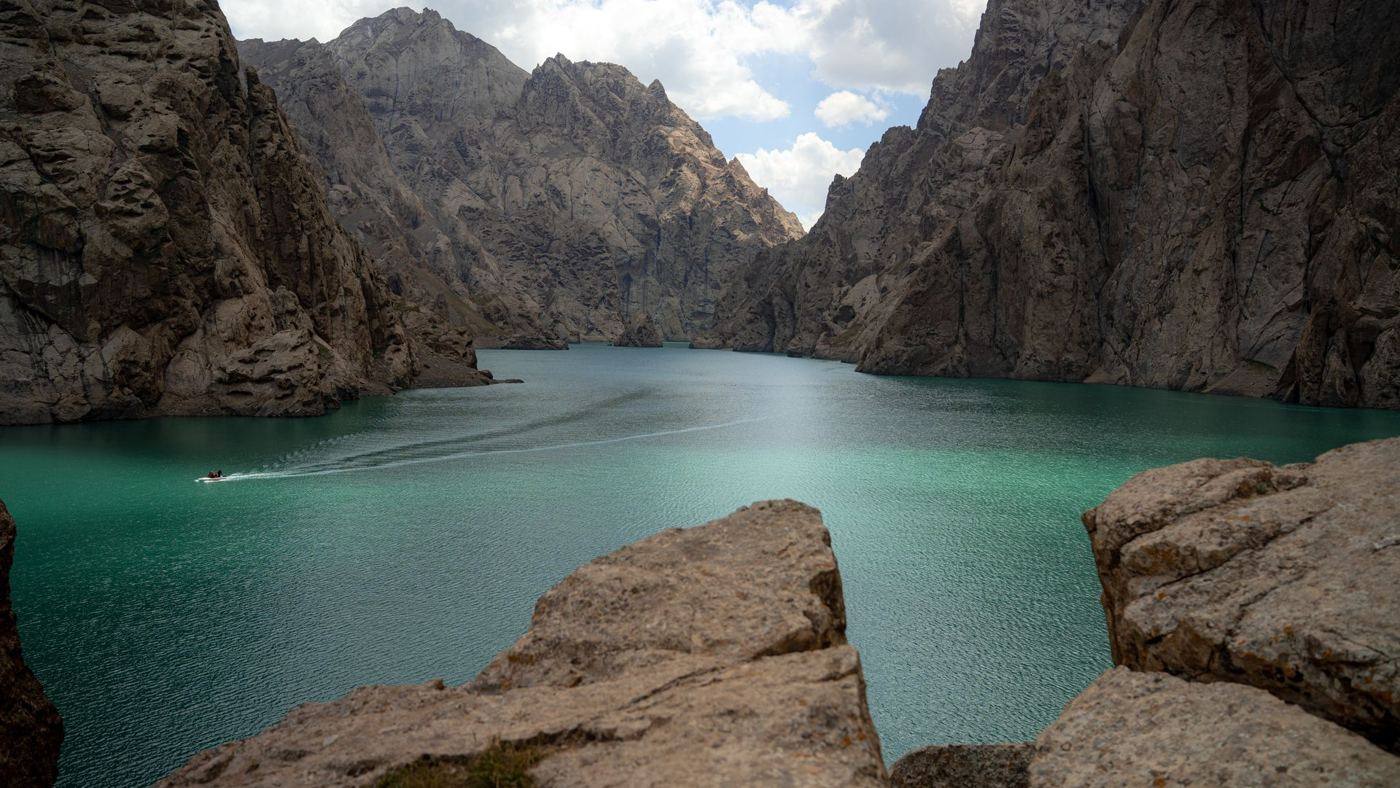
Lake Kel-Suu in the At-Bashy mountains near China, a turquoise lake between sheer walls reached by 4x4 and on foot or horseback.