Kel-Suu
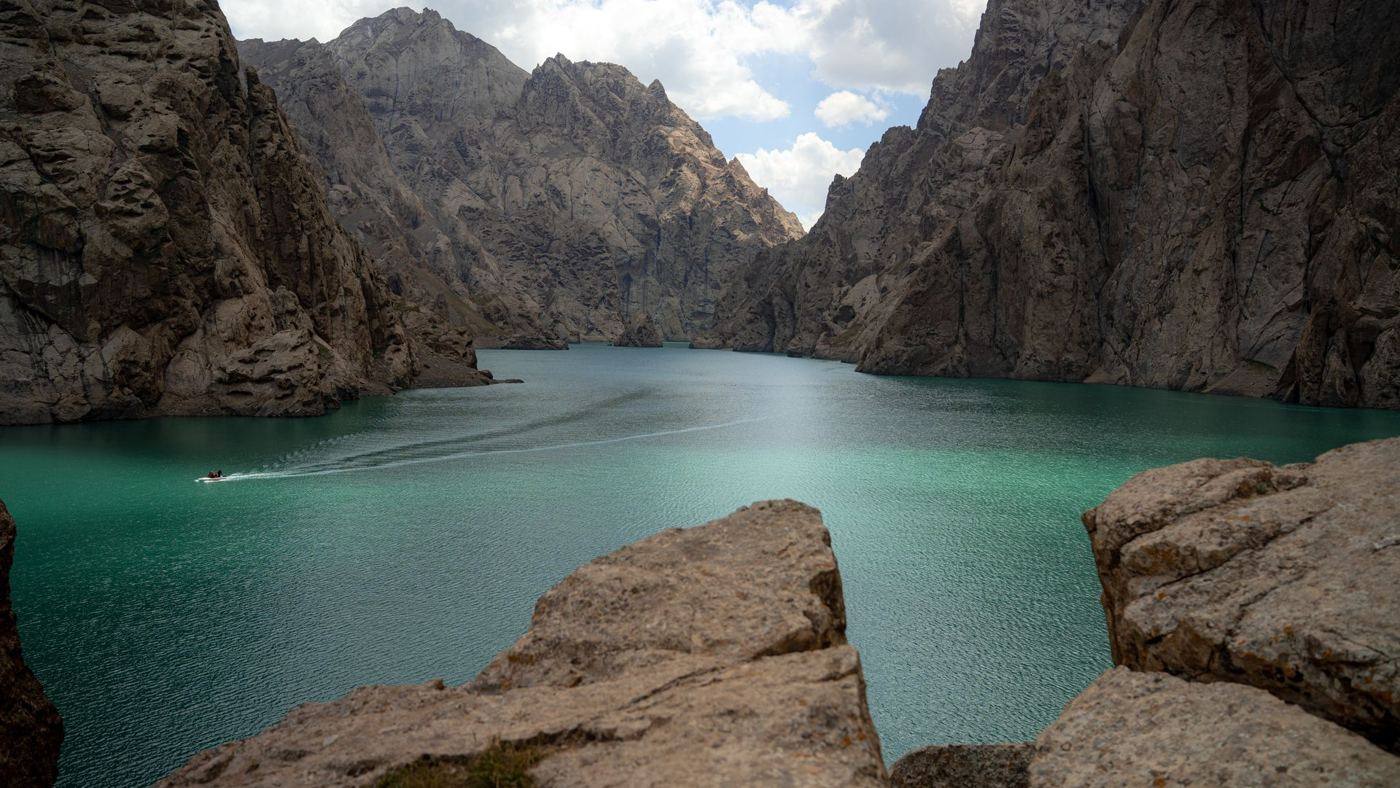
Lake Kel-Suu in the At-Bashy mountains near China, a turquoise lake between sheer walls reached by 4x4 and on foot or horseback.
- Naryn
- Kel-Suu
- Tash Rabat
Day by day
- Day 1
From Naryn to the Kel-Suu yurt camp
This trip takes you to Kel-Suu, one of the most spectacular lakes in Central Asia: a turquoise lake enclosed by vertical walls, in the mountains near the border with China, at about 3,500 metres. You reach it by four-wheel drive and then on foot or on horseback. On the way back you visit the stone caravanserai of Tash Rabat.
Before you go: Italian citizens enter Kyrgyzstan without a visa for up to 30 days in every 60 days, with a passport valid for at least six months from arrival; the electronic identity card is not enough. Other nationalities should check their own rules. Kel-Suu is in a border zone: you need a special permit, applied for at least two weeks ahead through whoever organises your trip, with a copy of your passport and your dates. You cannot buy it at the checkpoint. Carry your original passport and several printed copies of the permit. Do not photograph checkpoints.
Leave Naryn early in the morning in a four-wheel drive with a driver who knows the area. The road crosses the At-Bashy valley, wide and green, with villages, fields and herds of horses. Then it becomes a dirt track, with fords and climbs, and passes the checkpoint, where the guards check your permit and documents.
In the afternoon you reach the yurt camp in the valley below the lake. Around you there are only pastures, streams and mountains. At this altitude the air is thin: move slowly, drink plenty and do not overexert yourself on the first day.
In the evening have a hot dinner in the yurt, with soup, bread and tea. The night is cold even in summer.
Sleep in the yurt camp for two nights.
Practical tip: bring a warm sleeping bag or ask if there are extra blankets. At night the temperature can drop close to zero.
- Day 2
The walk to the lake and the boat trip
Today you reach Kel-Suu lake, on foot or on horseback, and discover it from the water on a boat trip.
After breakfast leave the camp with a guide. The path follows the valley, climbs through pastures and scree and runs beside the stream. It takes a few hours on foot, a little less on horseback. If you choose the horse, ask for a helmet and say what your level is.
Suddenly the walls open and the lake appears: turquoise and green water between vertical rock, like a fjord in the middle of the mountains of Asia. The lake is long and narrow and disappears between the walls, towards the border.
If the water level allows, take a boat trip with the people who run the camp. The boat goes in between the walls, where the water is still and the colours change with the sun. Always wear a life jacket: the water is icy. Check prices and times at the camp.
The level of the lake changes a lot depending on the season and the year: at some times the water drops and the landscape looks different. Find out before you set off.
In the afternoon walk back to the camp slowly. At this altitude it is easy to get tired: if you feel a strong headache, nausea or shortness of breath, rest and go lower if it does not pass. Before your trip talk to your doctor.
In the evening look at the sky: far from any city, there are countless stars.
Sleep in the yurt camp.
Practical tip: there are no facilities at the lake. Bring water, food, sun cream, sunglasses and a windproof jacket: the wind between the walls is strong.
- Day 3
The caravanserai of Tash Rabat
Today you leave Kel-Suu and return to the At-Bashy valley, to visit Tash Rabat, the stone caravanserai of the Silk Road.
In the morning the four-wheel drive takes the track back down the valley, passes the checkpoint again and rejoins the main road. Then it enters a side valley, green and narrow, that climbs towards mountains above 3,000 metres.
At the end of the valley Tash Rabat appears, a low, massive stone building with a dome in the middle, almost hidden against the slope. Historians do not agree on its origins, but for centuries it was a shelter for the caravans crossing the mountains between the Fergana valley and China. Go into the long corridor, look at the central hall under the dome and the dozens of small rooms around it, dark and cool. Check prices and times.
After the visit walk up the path behind the caravanserai, towards the pastures and a ridge with a view. From above you see the valley and, on clear days, the mountains towards the Torugart pass. Chatyr-Kul lake, beyond the mountains, is in a border zone and needs a permit: do not go there unless you have applied for it.
In the evening sleep in one of the yurt camps in the valley. Taste kymyz, fermented mare's milk, and boorsok, small pieces of fried bread.
Sleep at Tash Rabat.
Practical tip: inside the caravanserai it is dark and the floor is uneven. Use your phone torch and walk carefully.
- Day 4
Back to Naryn
Today you come down from Tash Rabat and return to Naryn, the town on the river of the same name, capital of the region.
In the morning take a last walk around the camp, when the herders take out their flocks. Then drive back along the At-Bashy valley, with snowy mountains on one side and pastures on the other. Stop in a village for tea, and if you find a small market buy some fruit and bread.
In the afternoon you arrive in Naryn. Walk along the river, which flows through a narrow valley between red hills, and take a look around the centre with its market and mosques. It is a simple town, but it is the base for many trips in the south and towards China.
In four days you have seen the At-Bashy valley, Kel-Suu lake between vertical walls, reached on foot or on horseback and discovered by boat, and the caravanserai of Tash Rabat on the Silk Road. It is one of the most powerful nature trips in Kyrgyzstan, far from everything, with nights in yurts and mountains all around.
When to go: the best period is from July to September, when the tracks are open and the yurt camps are running. The level of the lake changes with the season: find out first. From October cold and snow make the area hard to reach. Remember to apply for the border permit well in advance.
Practical tip: keep a spare day in your plan. With rain or snow the mountain tracks close, and return journeys can be delayed.
One of central Asia's most spectacular lakes. A border-zone permit is required, arranged in advance through an agency. The water level varies with the season.
Before you go
- Documents and visa
- Passport valid for at least six months from the date of arrival. Since 31 December 2025, British and EU citizens can enter without a visa for up to 30 days in every 60 days, counted from the day of entry. For longer stays you must leave before the limit or register online within five days of arrival. Some areas near the borders, such as Kel-Suu lake, Chatyr-Kul lake and the approaches to Lenin Peak, need a border zone permit arranged in advance: you cannot buy it at the checkpoint.
- Health and vaccines
- No compulsory vaccinations for travellers from Europe: check which are recommended at least eight weeks before you go. In the mountains there is a risk of altitude sickness: climb gradually and talk to your doctor before you travel. Medical facilities are basic, especially outside Bishkek: take insurance covering medical costs and repatriation. Ambulance 103, police 102, fire 101.
- Money and payments
- Kyrgyz som. ATMs and cards are found in Bishkek, Osh and Karakol; in villages, valleys and yurt camps you need cash. Cash above the equivalent of 10,000 dollars must be declared.
- Power sockets
- Types C and F, 220 volts: you need an adapter for British plugs.
- Time zone
- A single time zone, UTC+6 all year: six hours ahead of the UK in winter, five in summer.
- Safety
- The country is generally calm, but there are bag snatchers and pickpockets in Bishkek, especially at Osh Bazaar. Since the 2025 border agreement with Tajikistan there have been no new clashes, but the situation can change quickly and there may be mines in the border areas of Batken region; the United States advises reconsidering travel within about 30 kilometres of the Tajik border. Do not photograph border posts, military sites or police stations. In the mountains there are avalanches, landslides and limited rescue: do not hike alone. The risk of earthquakes is high. Official advice: GOV.UK.
Information checked in November 2026 for Italian and EU citizens. Rules change: always check before you travel.
Variations
In 3 days: from Naryn to Kel-Suu lake and back, without the stop at Tash Rabat.
In 6 days: add a night at Song-Köl, the lake of pastures, before reaching Naryn.
Frequently asked questions
Do you need a permit for Kel-Suu?
Yes, Kel-Suu is in a border zone near China and you need a special permit. Apply at least two weeks ahead through whoever organises your trip: you cannot buy it at the checkpoint. Carry your passport and printed copies.
Do you also need a permit for Tash Rabat?
The caravanserai of Tash Rabat does not need a border permit. Chatyr-Kul lake, beyond the mountains near the border, does.
Is the boat trip at Kel-Suu always possible?
No, it depends on the water level and the weather, which change a lot with the season. Ask at the camp before setting off and always wear a life jacket.
Indicative itinerary written by World Atlas. Before booking, check timetables, seasonal openings, documents and safety.
 4 daysEasy
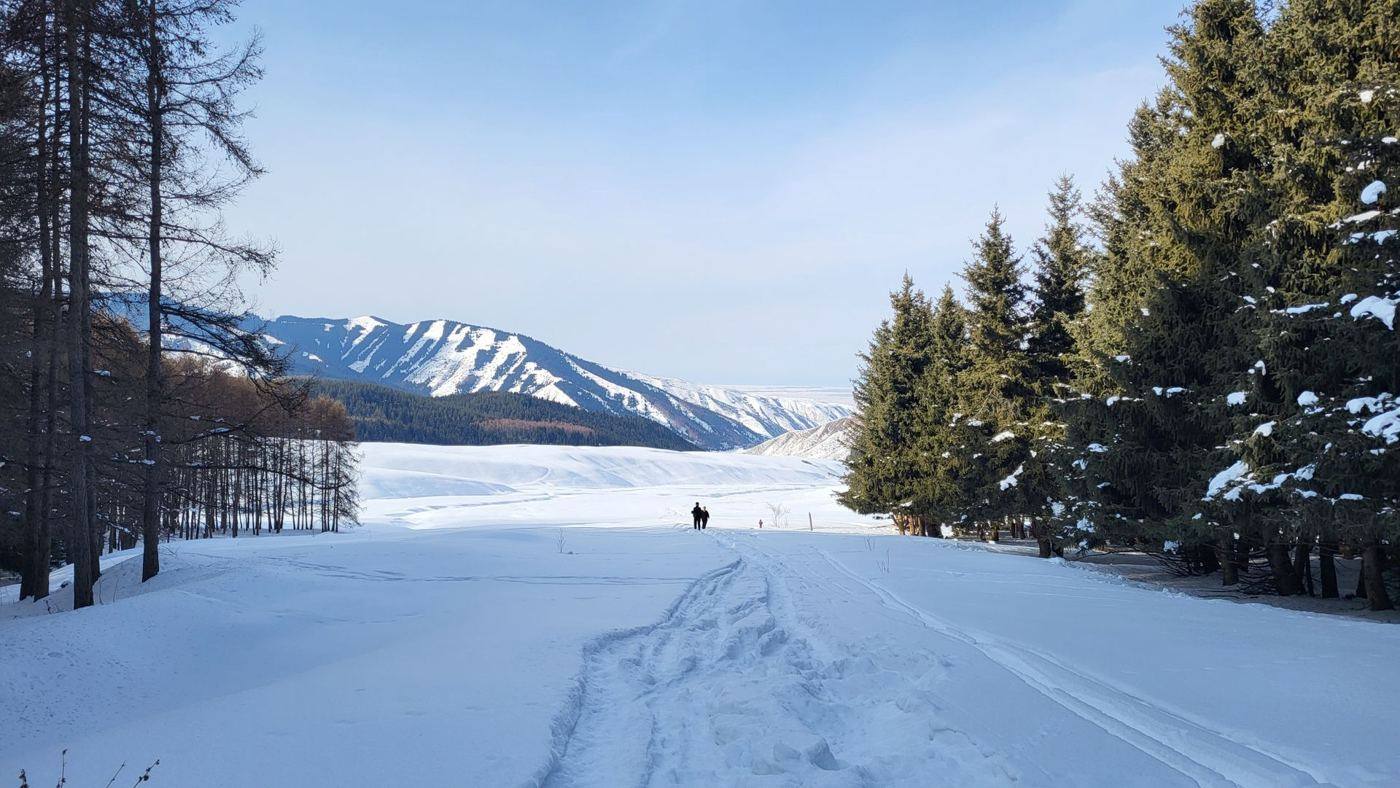
Skiing at Karakol
The ski resort among the pines at Karakol, with dry snow and low prices, Lake Issyk-Kul that never freezes and the hot springs.
 9 daysModerate
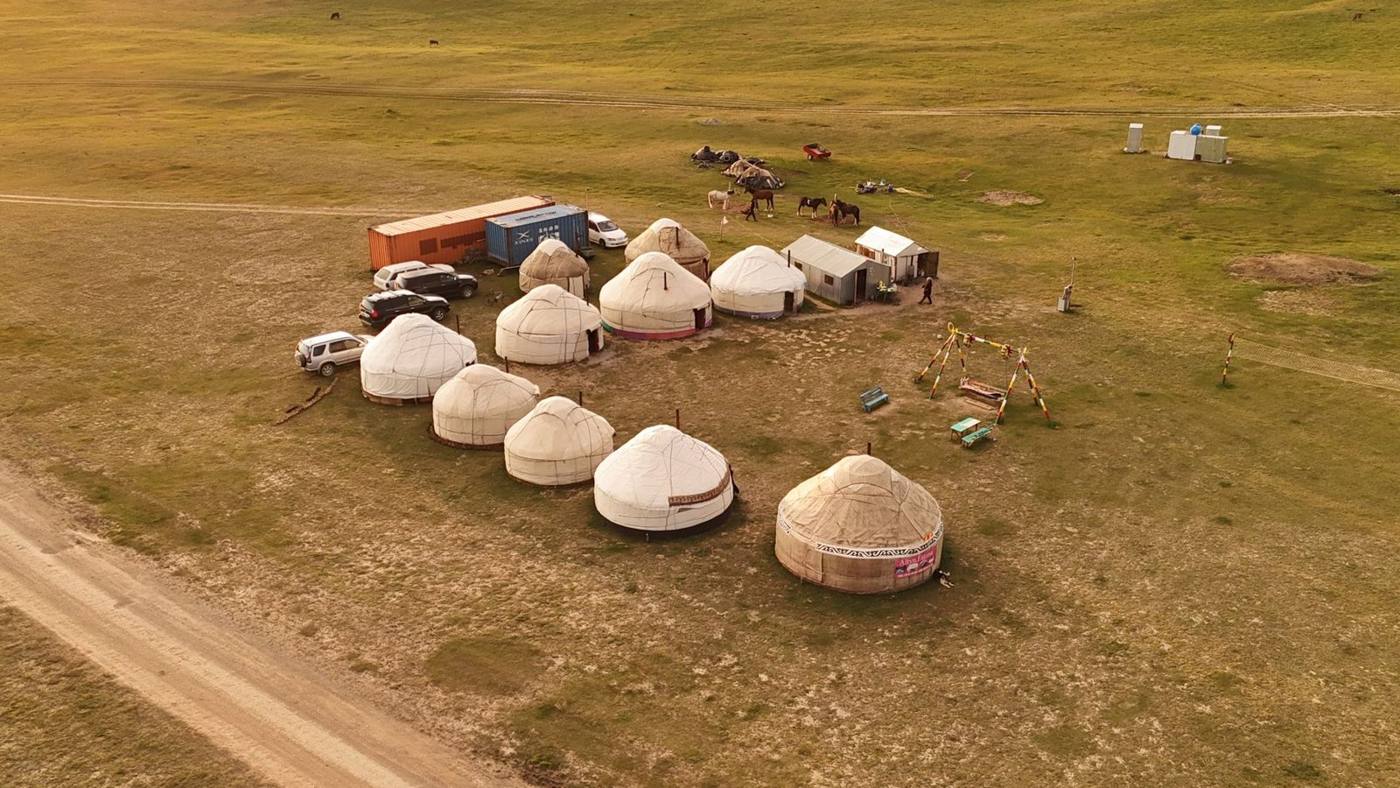
Issyk-Kul and Song-Köl
Lake Issyk-Kul, the Skazka fairy-tale canyon, Karakol and the Jeti-Ögüz valley, then the herders' yurts by the high lake of Song-Köl.
 4 daysChallenging
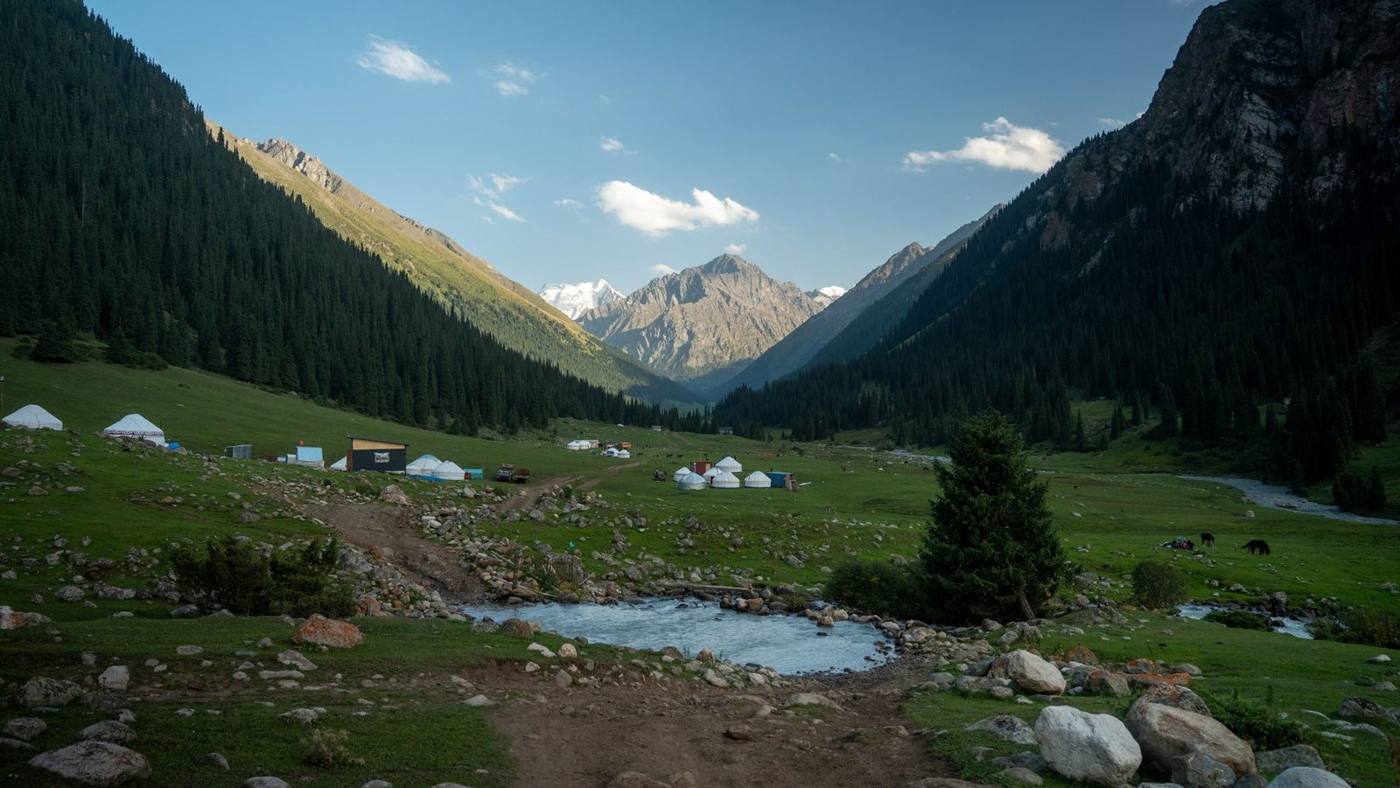
Ala-Köl lake trek
The classic trek from Karakol: the Karakol valley, turquoise Ala-Köl lake at 3,500 metres, the pass at 3,900 and the descent to the hot springs of Altyn-Arashan.