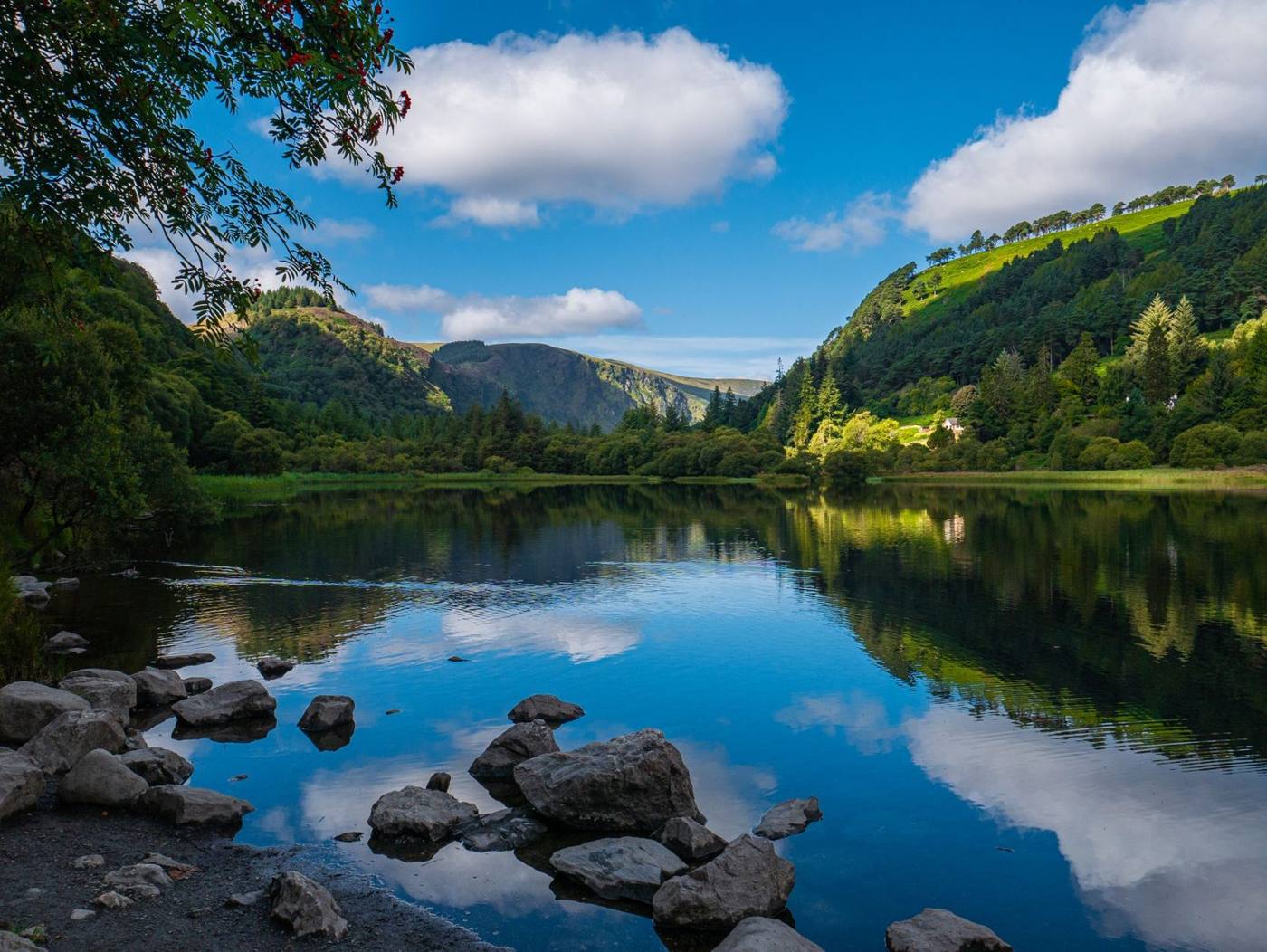
Dublin, Wicklow and Newgrange
Dublin with Trinity College and its music pubs, the Wicklow Mountains with Glendalough monastery and the Neolithic tomb of Newgrange.
- Dublin
- Howth
- Glendalough
- Wicklow
- Newgrange
- Dublin
Day by day
- Day 1
Dublin: Trinity College, the Book of Kells and Georgian Dublin
Ireland is in the European Union but not in the Schengen area: EU citizens need only a valid identity card, checked on arrival. From Dublin airport express buses reach the centre in about half an hour. The city is easy to explore on foot; for longer distances there are the Luas tram and buses, payable with a contactless card.
Start at Trinity College, the university founded in 1592, with stone quadrangles and the campanile at the centre. The Old Library displays the Book of Kells, a Gospel manuscript illuminated around the year 800 by Irish monks, one of the masterpieces of medieval European art: two pages are shown at a time in a dimly lit room. Then you climb into the Long Room, the library's great hall about 65 metres long, with marble busts and thousands of old books. Tickets are timed and sold on the official website; adult prices start from around 21.50 or 25 euros depending on the time slot.
In the afternoon walk through Georgian Dublin, with Merrion Square and St Stephen's Green, brick houses with colourful doors, and the no-cost National Museum of Archaeology, with Bronze Age gold, the Ardagh Chalice and bog bodies preserved for over two thousand years.
In the evening explore the city-centre pubs with live traditional music; Temple Bar is the most famous area but also the most expensive and crowded, while the nearby streets feel more authentic. Practical tip: accommodation in Dublin is expensive and sells out early, especially at weekends; book well ahead.
- Day 2
Dublin: Kilmainham Gaol, the cathedral and the neighbourhoods
In the morning visit Kilmainham Gaol, opened in 1796 and closed in 1924, where many leaders of the Irish independence struggle were imprisoned and in some cases executed, including the leaders of the 1916 Easter Rising. It can be visited only on guided tours, which sell out days ahead: book online. It is one of the most moving places for understanding the country's history.
Head back to the centre via St Patrick's Cathedral, Ireland's largest, where Jonathan Swift, author of Gulliver's Travels, was dean and is buried. Nearby are Christ Church Cathedral, with its great medieval crypt, and Dublin Castle, for centuries the seat of English rule in Ireland, with the State Apartments and the no-cost Chester Beatty Library, which holds manuscripts, illuminated books and art from all over the world.
In the afternoon cross the River Liffey on the Ha'penny Bridge, a footbridge from 1816, and walk up O'Connell Street to the General Post Office, headquarters of the 1916 Rising, with a small museum. If you like literature, the Museum of Literature Ireland tells the story of Joyce, Yeats, Beckett and the city's other writers.
In the evening try an Irish dish such as lamb stew or fish and chips. Practical tip: many national museums in Dublin are at no cost; check opening hours, as some close on Mondays.
- Day 3
The Howth cliff walk and seafood at the harbour
Today is a day by the sea, half an hour from the centre. Take the DART suburban train from Connolly or Tara Street station to Howth, a fishing village on a rocky peninsula north of Dublin Bay. The coastal train ride is already lovely.
From the harbour starts the Howth cliff path, waymarked in different colours by length: the classic loop, about two or three hours, climbs above the sea through heather and gorse, with views over the bay, the Baily lighthouse and, on clear days, the Wicklow Mountains to the south. The path is easy but in places runs close to the cliff edge: in strong wind keep to the inland side.
Back at the harbour, watch the seals that often swim near the pier, waiting for fishermen's scraps. The harbour is lined with places serving freshly caught fish: mussels, fried cod, chowder, shellfish. The east pier leads to a small lighthouse, and in summer boats leave the harbour for Ireland's Eye, an uninhabited island with a watchtower and seabird colonies.
In the late afternoon return to Dublin. If you still have energy, get off at Clontarf for a seafront walk or stop at Sandymount. Practical tip: pay for the DART with a contactless card or the Leap Card, Dublin's transport card, worthwhile if you use trams and buses a lot.
- Day 4
Wicklow: Glendalough, the lakes and the Sally Gap
Today you leave the city for the Wicklow Mountains, known as the garden of Ireland, about an hour south of Dublin. You go by rental car or on a group excursion; scheduled buses to Glendalough are few.
Glendalough, the valley of the two lakes, is one of Ireland's most beautiful and ancient places: in the sixth century Saint Kevin founded a monastery here that became a great centre of learning. What remains includes the perfectly preserved round tower about thirty metres high, the ruined cathedral, the small stone-roofed St Kevin's Church and a graveyard full of Celtic crosses. The visitor centre explains the site's history.
Well-marked trails start from the monastery: the easiest leads in half an hour to the upper lake through woods and waterfalls; the Spinc loop, about three hours, climbs above the valley on a wooden boardwalk with views of both lakes and the old mines. Deer and wild goats are often seen.
In the afternoon return towards Dublin on the Military Road over the Sally Gap: a plateau of bog and heather with almost no houses, and the dark Lough Tay, nicknamed the Guinness Lake for its water colour and pale beach. From the viewpoint on the road you see it all from above. Practical tip: on the pass the weather changes in minutes and fog arrives suddenly; drive carefully and leave nothing visible in the car at car parks.
- Day 5
Newgrange and the Boyne Valley; departure
On the last morning head to the Boyne Valley, about an hour north of Dublin, for the Brú na Bóinne complex, a UNESCO World Heritage site. Here are great passage tombs built about 5,000 years ago, older than Stonehenge and the pyramids of Giza. The most famous is Newgrange: a large circular mound of earth and stone ringed by boulders carved with spirals, with a passage leading to an inner chamber.
Newgrange and Knowth can be visited only from the Brú na Bóinne Visitor Centre, from which a shuttle takes you to the monuments with a guide: you cannot drive there directly. Places are limited, especially in summer, so book or arrive early. Inside Newgrange the guide recreates with a light what happens at dawn on the winter solstice, when for a few minutes the sun enters through the roof box above the entrance and lights the back of the chamber. Places for those December days are allocated by lottery.
If you have time, nearby are the site of the Battle of the Boyne, fought in 1690, and Monasterboice with its great carved Celtic crosses.
Dublin airport is on the way back, about forty minutes away. Things to take home: wool sweaters, tweed, whiskey, Irish books. Practical tip: return the car at the airport with plenty of margin; traffic on the M50 motorway around Dublin is often jammed.
A short, easy trip, ideal even for a long weekend. Dublin is expensive, especially for lodging, and Temple Bar is more for tourists than for the Irish: the best music is in the nearby pubs. Newgrange can only be visited through the Brú na Bóinne centre and places run out early in summer.
Before you go
- Documents and visa
- EU citizens need only a valid identity card or passport. Ireland is in the European Union but not in the Schengen area, so documents are checked on arrival.
- Health and vaccines
- No vaccines required. The European Health Insurance Card is valid. Emergencies: 112 or 999.
- Money and payments
- Euro. Cards are accepted almost everywhere, including in pubs and for small amounts.
- Power sockets
- Type G, three rectangular pins, 230 volts: you need an adapter.
- Time zone
- UTC in winter, UTC+1 in summer.
- Safety
- A very safe country. Watch for pickpockets in cities; on Atlantic cliffs and beaches waves and wind can be dangerous. Traffic drives on the left. Official advice: GOV.UK.
Information checked in November 2026 for Italian and EU citizens. Rules change: always check before you travel.
Variations
In 3 days: Dublin with Trinity College and Kilmainham on day one, Glendalough on day two and Newgrange on the morning of day three before the flight.
In 8 days: after Newgrange cross the island to Galway and Connemara, or head north to Belfast and the Causeway Coast.
Frequently asked questions
Do I need to book the Book of Kells?
Yes, it is advisable: tickets are timed and sold on Trinity College's official website. Adult prices start from around 21.50 or 25 euros depending on the time slot.
Can I visit Newgrange without booking?
Newgrange can be visited only from the Brú na Bóinne Visitor Centre by shuttle with a guide. Places are limited: in summer it is best to book or arrive at opening time.
Do I need a car?
Not for Dublin and Howth: walking, the tram and the DART are enough. For Wicklow and Newgrange a car is convenient, but there are also day tours from Dublin.
Indicative itinerary written by World Atlas. Before booking, check timetables, seasonal openings, documents and safety.
 6 daysEasy
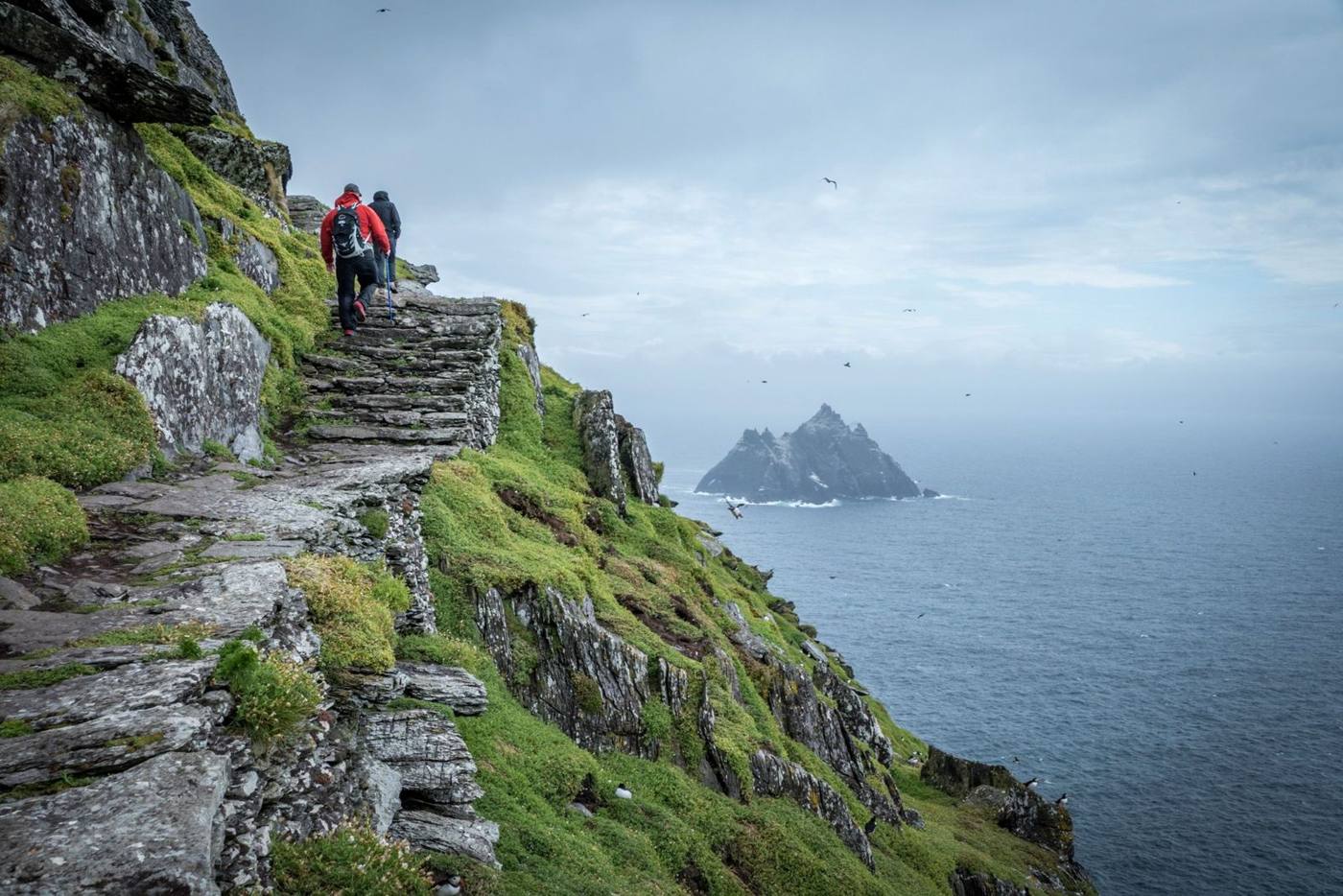
The Ring of Kerry and Dingle
Kerry at a gentle pace: Killarney and the Gap of Dunloe, the Ring of Kerry and the Skellig Ring, the Dingle Peninsula and its pubs.
 5 daysEasy
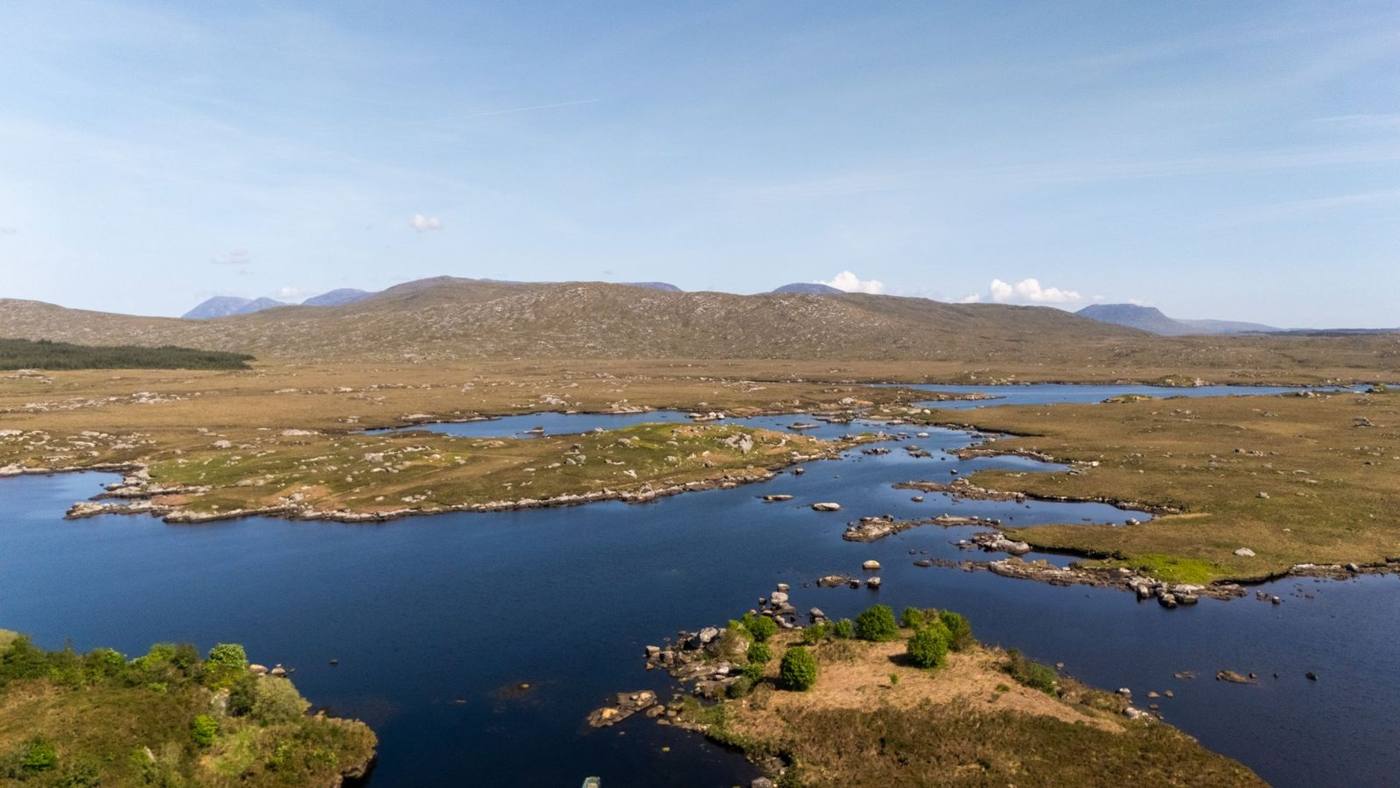
Connemara and the Aran Islands
Irish-speaking Ireland: the Aran Islands by bike, dry-stone walls, Connemara with its bogs and the Killary fjord.
 5 daysModerate
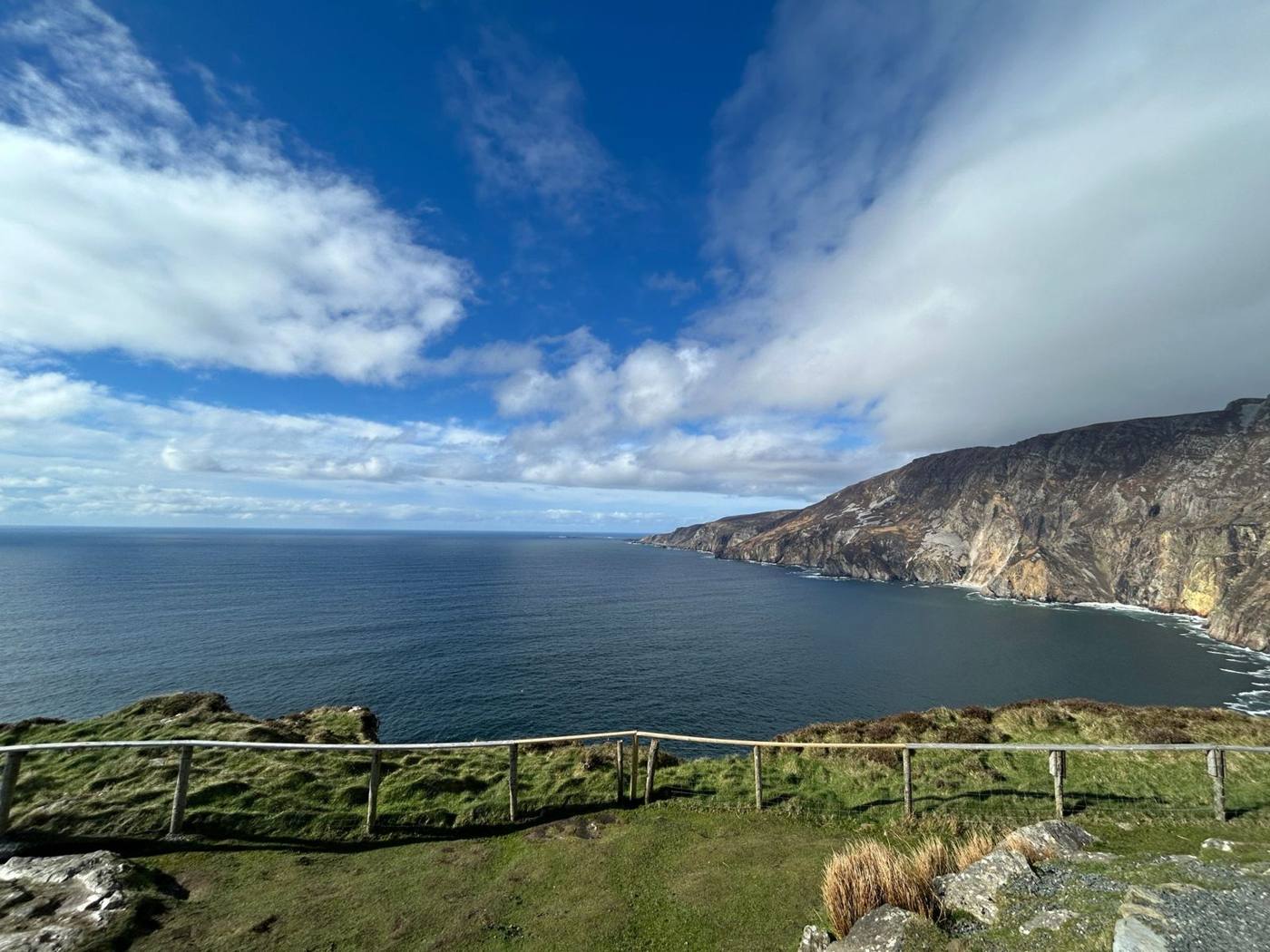
Donegal
Ireland at its wildest: the Slieve League cliffs, Glenveagh National Park, Mount Errigal and the empty beaches of the Inishowen Peninsula up to Malin Head.