County Clare and traditional music
Evenings of Irish music in Doolin and Ennis, the limestone landscapes of the Burren, the Cliffs of Moher on foot and Loop Head.
- Ennis
- Burren
- Doolin
- Cliffs of Moher
- Loop Head
Day by day
- Day 1
Ennis and a pub session
County Clare, on the west coast of Ireland, is the home of traditional Irish music: in many villages, almost every evening, musicians sit at a pub table with fiddles, flutes, accordions, pipes and drums, and play together for the pleasure of it. Here too are the Burren, a plateau of grey limestone unique in Europe, and the Cliffs of Moher, the most famous in the country. In five days you experience an authentic Ireland of landscapes, villages and music.
You arrive at Shannon airport, about twenty minutes from Ennis, the county town. It is worth renting a car here, because the villages and sights are spread out and buses are few. Remember that in Ireland you drive on the left.
Ennis is a small town with narrow streets, colourful shops and a lively atmosphere. In the afternoon, visit the Franciscan friary, Ennis Friary, founded in the thirteenth century, with the ruins of its church and stone carvings, including scenes of the Passion of Christ. Then walk around the centre and the small music shops.
In the evening, go into one of the pubs in the centre for a session, that is, a traditional music session. It is not a show: the musicians meet, choose a tune and play it together, and anyone who can play may join in. You hear jigs, reels and slow airs, sometimes an unaccompanied song, and everyone falls silent. Sessions are at no cost and spontaneous; they usually start around nine or ten in the evening.
Practical tip: during a session, do not talk loudly near the musicians and do not ask for famous songs: it is their moment, which you are invited to share.
- Day 2
The Burren: Poulnabrone, Mullaghmore and the caves
Today you go into the Burren, in the north of the county, about an hour from Ennis. The name comes from the Irish word for a rocky place. It is a plateau of grey limestone, polished by glaciers and rain, with large slabs of stone separated by deep cracks, where surprising plants grow: Alpine orchids and gentians next to Mediterranean flowers, blooming above all in May and June. It looks like a lunar landscape, but it is full of life.
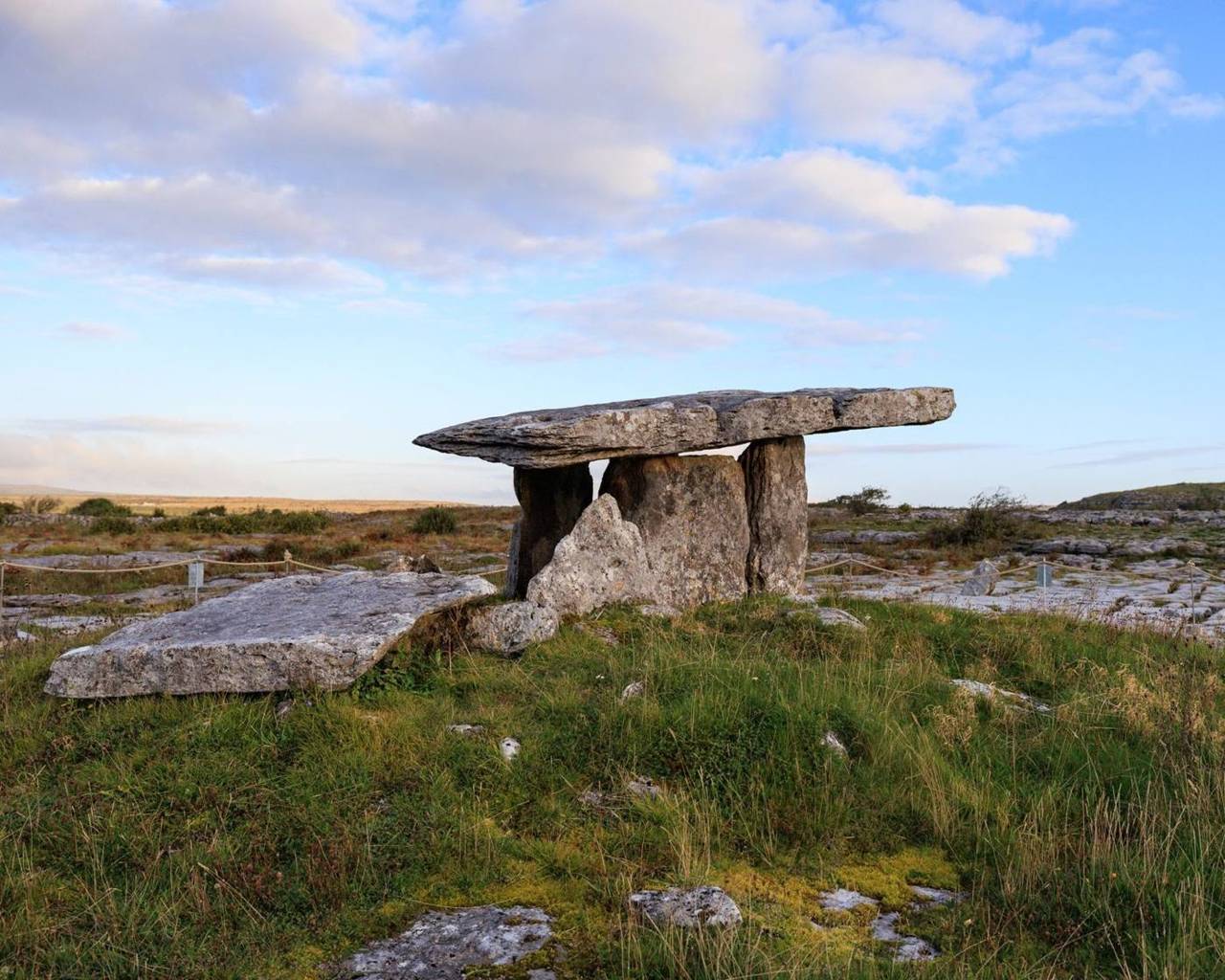
The first stop is the Poulnabrone dolmen, a megalithic tomb more than five thousand years old, with a large capstone resting on upright slabs, in the middle of the expanse of rock. Archaeologists found the remains of dozens of people buried here in the Neolithic. It is one of the most photographed monuments in Ireland.
Then go into Burren National Park and walk one of the marked trails around Mullaghmore, a hill of limestone layers folded like a cake, with small lakes and hazel woods at its foot. The trails vary in length, from one to four hours.
In the afternoon, visit the Aillwee caves, a limestone cave with stalactites, underground waterfalls and traces of brown bears that lived here thousands of years ago. On the way, stop at Ballyvaughan, a small harbour on Galway Bay.
In the evening, go to Doolin, the village most famous for music, where you will sleep for two nights.
Practical tip: in the Burren, do not pick plants or move stones: it is a protected and fragile landscape. Stay on the marked trails.
- Day 3
On foot from Doolin to the Cliffs of Moher
Doolin is a small, scattered village on the coast, with colourful houses, pubs and a harbour from which ferries leave for the Aran Islands. It is one of the symbolic places of traditional Irish music, linked to great twentieth-century musicians.
In the morning, walk the coastal path from Doolin south to the Cliffs of Moher, about eight kilometres. The path follows the edge of the cliffs, among fields and stone walls, with views over the open sea, the Aran Islands and, on clear days, the mountains of Connemara to the north. The cliffs gradually rise to more than two hundred metres above the Atlantic. In spring and early summer thousands of seabirds nest here, including puffins.
When you reach the cliffs visitor centre, walk along the paths near O'Brien's Tower, built in the nineteenth century as a viewpoint, from which you see the cliff face along its whole length and the Branaunmore sea stack. On some stretches of the coastal path local guides accompany visitors and tell the story of the farming families of the area.
In the afternoon, return to Doolin by bus or taxi or, if you are fit, on foot again. Alternatively, you can see the cliffs from the sea on a boat leaving from Doolin.
In the evening, in Doolin, listen to music again in one of the village pubs.
Practical tip: the path runs close to the cliff edge and has no barriers in many places. In strong wind or fog it is dangerous: always stay well away from the edge.
- Day 4
Loop Head and the dolphins of the Shannon estuary
Today you head south along the coast, in about an hour and a half, to the Loop Head peninsula, the south-western tip of the county, between the Atlantic and the estuary of the river Shannon, the longest in Ireland. It is a quiet peninsula of green fields, stone walls, cliffs and small villages, far less busy than the Cliffs of Moher.
On the way, pass through Miltown Malbay, a village where every July a famous summer school of traditional music is held, with musicians from all over the country and the world, and then through Kilkee, a seaside town with a horseshoe bay and a cliff path west of the town.
At Loop Head, visit the lighthouse on the point, which in summer can be climbed on a guided tour. From the balcony you see the Atlantic, the Shannon estuary and, on clear days, the mountains of Kerry to the south. All around, the cliffs have strange shapes, with rock arches and sea stacks detached from the coast.
In the afternoon, go to Carrigaholt, a small harbour on the estuary, from where boats leave for dolphin watching. A resident group of bottlenose dolphins lives in the estuary, and they are often seen close up as they swim, leap and approach the boat. The estuary is a protected area, and the boats follow rules so as not to disturb the animals.
In the evening, sleep on the peninsula or head back towards Ennis.
Practical tip: dolphin trips depend on the sea and the season, usually from April to October. Book ahead and check the times.
- Day 5
Departure from Shannon
On your last morning, before returning to the airport, make a stop along the estuary road. A good choice is Bunratty Castle, a few minutes from Shannon airport: a restored fifteenth-century castle, furnished with period furniture and tapestries, next to an open-air village that recreates nineteenth-century Irish rural life, with farmers' cottages, a school, a blacksmith's forge and shops. It is a good way to end the trip with a plunge into history.
If you prefer nature, take a walk instead by Lough Derg, in the east of the county, or stop at Quin, with the ruins of a large, very well preserved Franciscan friary in the middle of the fields.
Before leaving, buy a souvenir linked to music: a tin whistle, the small metal flute used by so many beginners, or a recording of traditional music by musicians from the county. Or local produce, such as Burren cheese, smoked salmon or Irish whiskey.
Shannon airport is small and convenient, about twenty minutes from Ennis, with flights to several European cities and to the United States. Return the car and arrive a little early.
If you want to extend your trip, from Clare you can head north to Galway and Connemara, or south to Kerry.
Practical tip: Ireland is part of the European Union: Italian citizens only need an identity card valid for travel abroad or a passport. The weather changes quickly, so always bring a waterproof jacket.
The county with Ireland's strongest musical tradition: pub sessions are at no cost and spontaneous. In July Miltown Malbay hosts the Willie Clancy Summer School, with musicians from all over the country. Shannon airport is very close, so it is great for a few days.
Before you go
- Documents and visa
- EU citizens need only a valid identity card or passport. Ireland is in the European Union but not in the Schengen area, so documents are checked on arrival.
- Health and vaccines
- No vaccines required. The European Health Insurance Card is valid. Emergencies: 112 or 999.
- Money and payments
- Euro. Cards are accepted almost everywhere, including in pubs and for small amounts.
- Power sockets
- Type G, three rectangular pins, 230 volts: you need an adapter.
- Time zone
- UTC in winter, UTC+1 in summer.
- Safety
- A very safe country. Watch for pickpockets in cities; on Atlantic cliffs and beaches waves and wind can be dangerous. Traffic drives on the left. Official advice: GOV.UK.
Information checked in November 2026 for Italian and EU citizens. Rules change: always check before you travel.
Variations
In 3 days: Ennis, the Burren and Doolin with the Cliffs of Moher, without Loop Head.
In 8 days: after Clare, take the ferry from Doolin to the Aran Islands and then head north to Galway and Connemara.
Frequently asked questions
When is the best time to go?
From May to September, with long days and flowers in the Burren. Pub sessions happen all year, including in winter, when the villages are quieter. In July there is the Miltown Malbay summer music school.
Do I need to play to join a session?
No, you can simply listen. Anyone who plays a traditional instrument can politely ask whether they may join in, but it is usual to listen for a while first.
What documents do I need?
For citizens of the European Union, an identity card valid for travel abroad or a passport is enough. Ireland is not in the Schengen area, so there is a document check on arrival.
Indicative itinerary written by World Atlas. Before booking, check timetables, seasonal openings, documents and safety.
 5 daysEasy
Belfast and the Causeway Coast
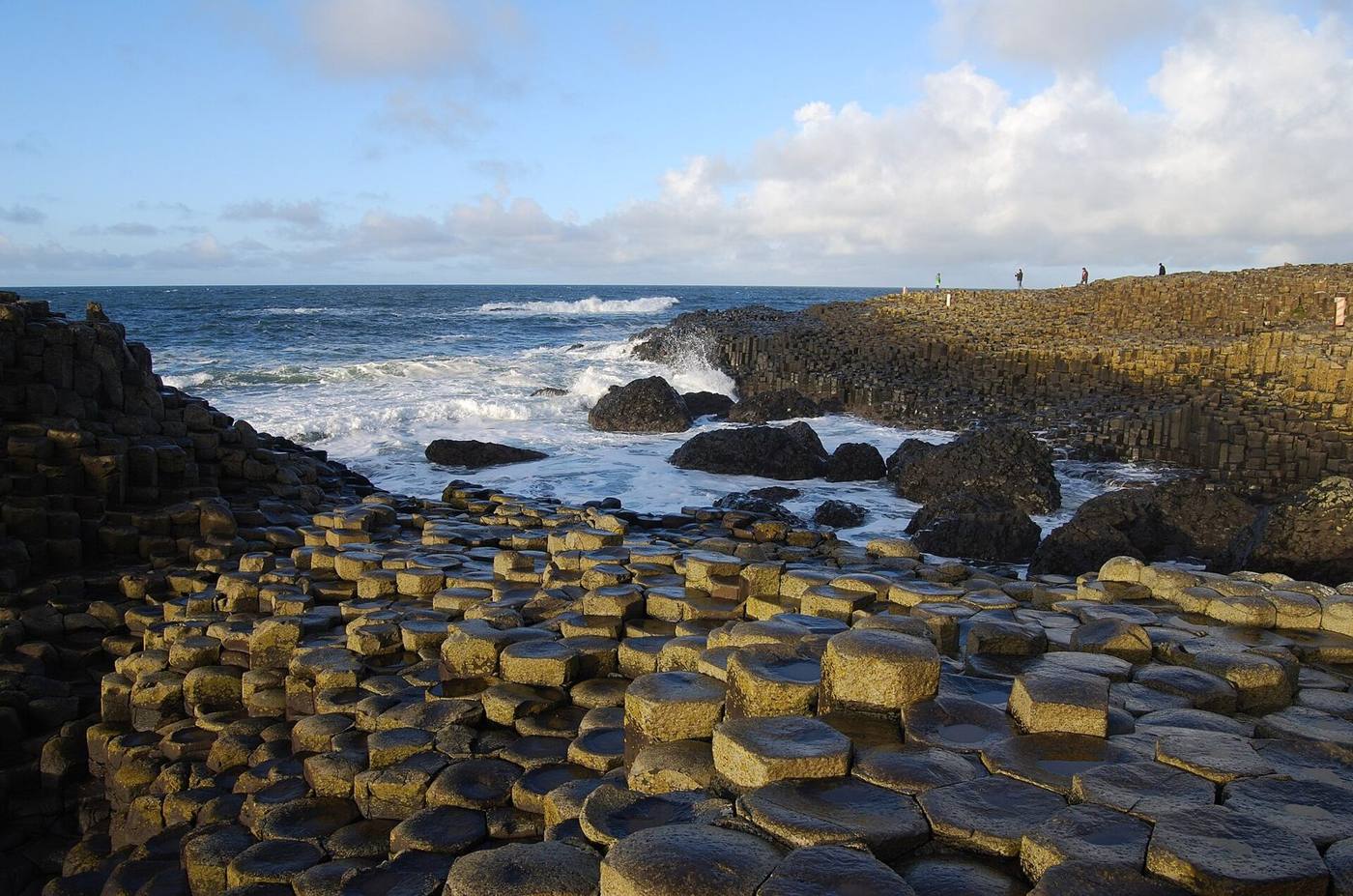
Across the border, in Northern Ireland: Belfast with the Titanic museum and the murals of the Falls and Shankill, then the Antrim coast with its Glens, the Carrick-a-Rede rope bridge, the basalt columns of the Giant's Causeway and the ruins of Dunluce Castle on the cliff.
 5 daysModerate
Mayo and Achill
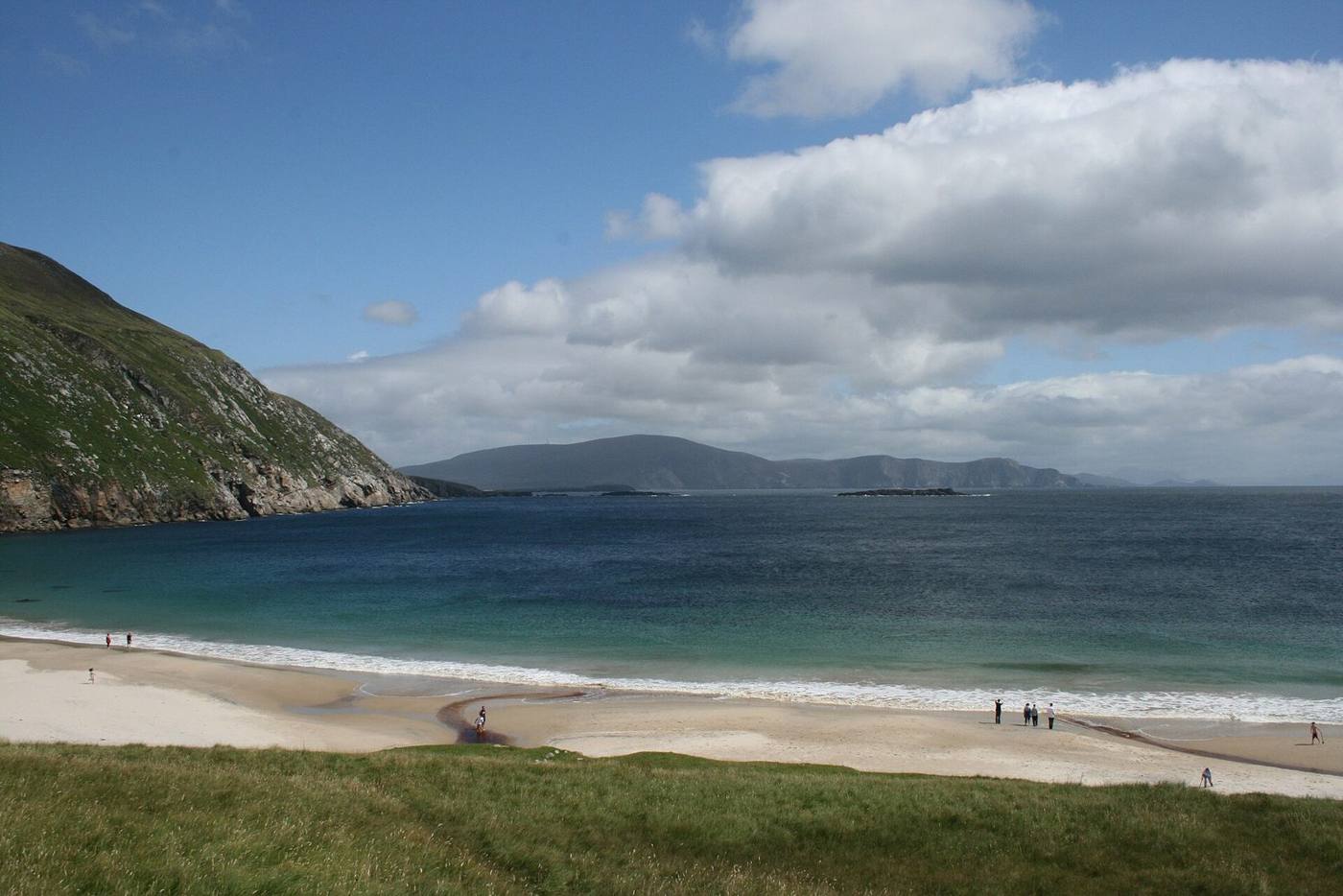
The wide-open west: Westport and the climb up Croagh Patrick, the holy mountain above Clew Bay, the Great Western Greenway by bike along an old railway, Achill Island with the cliffs at Keem and the deserted village of Slievemore, and the Neolithic Céide Fields.
 4 daysEasy
Sligo and Yeats Country
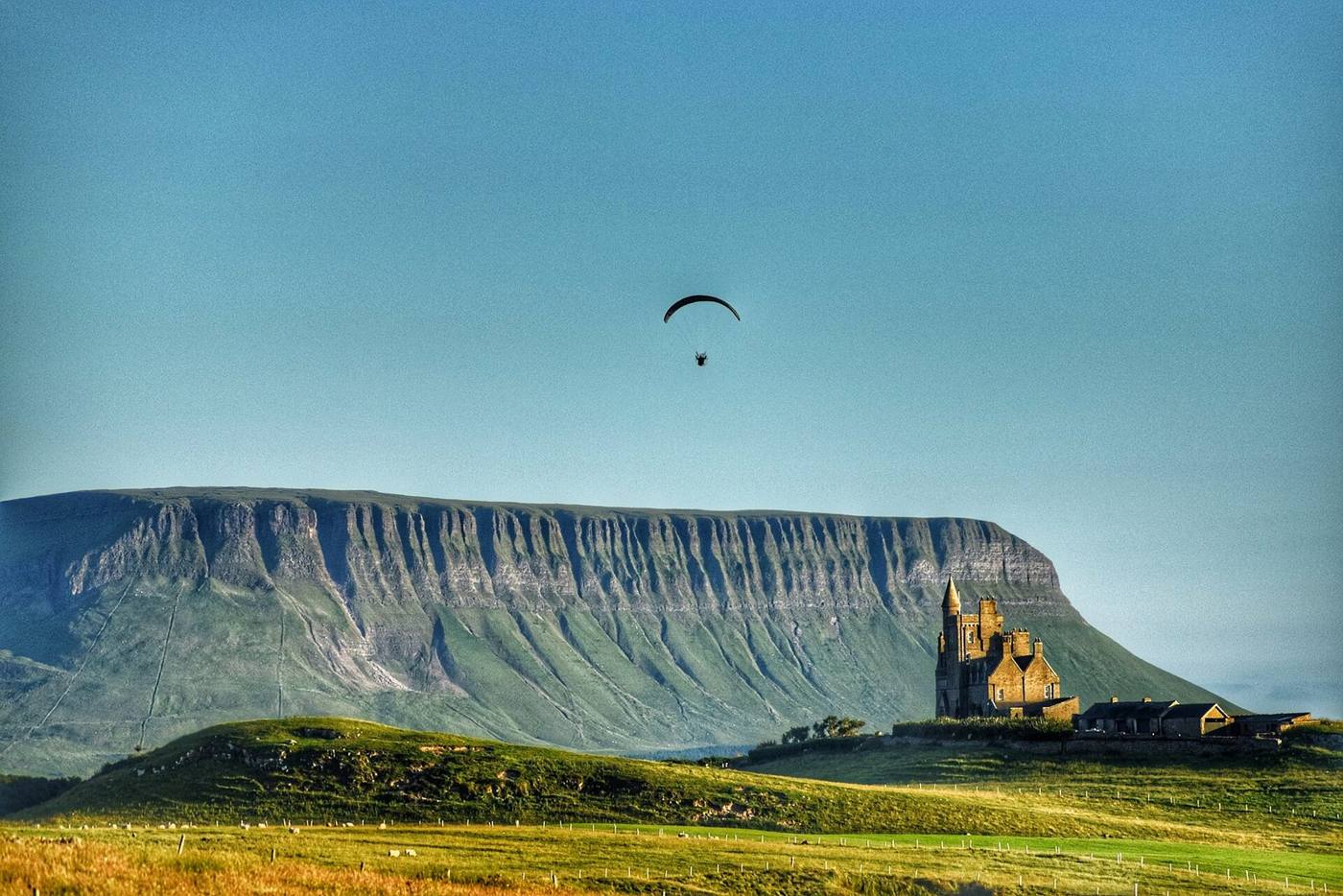
The poet's county: the rock table of Benbulben and Yeats's grave at Drumcliff, the lake isle of Innisfree, the megalithic tombs of Carrowmore and Carrowkeel, among the oldest in Ireland, surfing at Strandhill and Glencar waterfall.