Belfast and the Causeway Coast
Across the border, in Northern Ireland: Belfast with the Titanic museum and the murals of the Falls and Shankill, then the Antrim coast with its Glens, the Carrick-a-Rede rope bridge, the basalt columns of the Giant's Causeway and the ruins of Dunluce Castle on the cliff.
- Dublin
- Belfast
- Glens of Antrim
- Giant's Causeway
- Derry
Day by day
- Day 1
The train from Dublin to Belfast and the Titanic Quarter
Northern Ireland occupies the north-eastern corner of the island of Ireland and is part of the United Kingdom. In a few days it offers a capital renewed after decades of conflict, one of the most beautiful coastal roads in Europe, with the valleys of the Glens of Antrim, the basalt columns of the Giant's Causeway, and Derry, the only city on the island with intact walls. In five days you go from Dublin to Belfast, along the coast to Derry and back to Ireland.
In the morning, take the train from Dublin to Belfast, in just over two hours, along the coast and through green hills. The border between the two states is invisible: there are no checks or signs, just the change in road signs, from kilometres to miles.
In the afternoon, visit the Titanic Quarter, on the bank of the river Lagan, where the Titanic was built in Belfast's shipyards and launched in 1911. The museum devoted to the ship, in a modern building shaped like ships' bows and clad in aluminium panels that shine in the sun, tells the story of industrial Belfast, the construction, the voyage and the sinking of 1912.
Next door you see the slipway where the ship was built, with the outline of its deck marked on the ground, and SS Nomadic, the small tender that carried passengers to the Titanic at Cherbourg.
In the evening, sleep in Belfast.
Practical tip: even arriving from Dublin by train, Italian citizens need the British ETA, costing 20 pounds, to enter Northern Ireland. For Ireland an identity card is enough.
- Day 2
Belfast: the murals and City Hall
In the morning, take a tour of Belfast's political murals, the best way to understand the Troubles, the conflict that from the late 1960s to 1998 set nationalists, mostly Catholic, who wanted union with Ireland, against unionists, mostly Protestant, who wanted to remain in the United Kingdom. The conflict caused more than three and a half thousand deaths and ended with the Good Friday Agreement.
The tour is usually done in a black taxi with a local driver, who tells the story from his own point of view, or on foot with a guide. You pass along the Falls Road, the nationalist area, and the Shankill Road, the unionist one, with large murals on the walls of houses, dedicated to their own heroes, to victims and to the struggles of other peoples around the world.
Between the two areas the peace walls still run, several metres high, with gates that in some places close at night. Many visitors write a message of peace on the wall.
In the afternoon, visit City Hall, a large white stone building with a green dome, completed in 1906, with no-cost guided tours of its rooms and an exhibition on the city's history.
Then walk through the Cathedral Quarter, with cobbled streets, colourful murals, historic pubs and live traditional music in the evening.
In the evening, sleep in Belfast.
Practical tip: the mural areas are lived in and sensitive. Respect the residents and memorials, and in summer, on the days of the big July parades, find out which areas to avoid.
- Day 3
The coast road of the Glens of Antrim
In the morning, hire a car and leave Belfast heading north, passing Carrickfergus, with its twelfth-century Norman castle by the sea, one of the best preserved on the island.
Then begins the Causeway Coastal Route, the coast road that follows the sea for more than a hundred and fifty kilometres to Derry, past cliffs, bays and villages. The first stretch runs beneath the Glens of Antrim, nine green valleys descending from the plateau to the sea, with waterfalls, woods and fields divided by stone walls.
Stop at Glenariff, the queen of the glens, and walk the forest park trail along the river, with wooden walkways between waterfalls and ferns, in about an hour.
Continue north through the villages of Carnlough, with its small stone harbour, and Cushendall and Cushendun, with white houses built in Cornish style. From here, on clear days, you see the coast of Scotland, only twenty kilometres across the sea.
If you have time, take the narrow, steep Torr Head road, a scenic detour along the cliffs, with views over the sea and Scotland.
In the evening, you reach Ballycastle, a small seaside town.
In the evening, sleep in Ballycastle or nearby.
Practical tip: in Northern Ireland you drive on the left and limits are in miles. The Torr Head detour is very narrow and steep: avoid it in a large car or if you are not used to such roads.
- Day 4
Carrick-a-Rede, the Giant's Causeway and Dunluce
Today is the finest day on the coast. In the morning, go to the Carrick-a-Rede rope bridge, a suspension bridge about twenty metres long, some thirty metres above the sea, linking the coast to a small island. It was built by salmon fishermen, and today you cross it in the wind, with views of the cliffs and turquoise water.
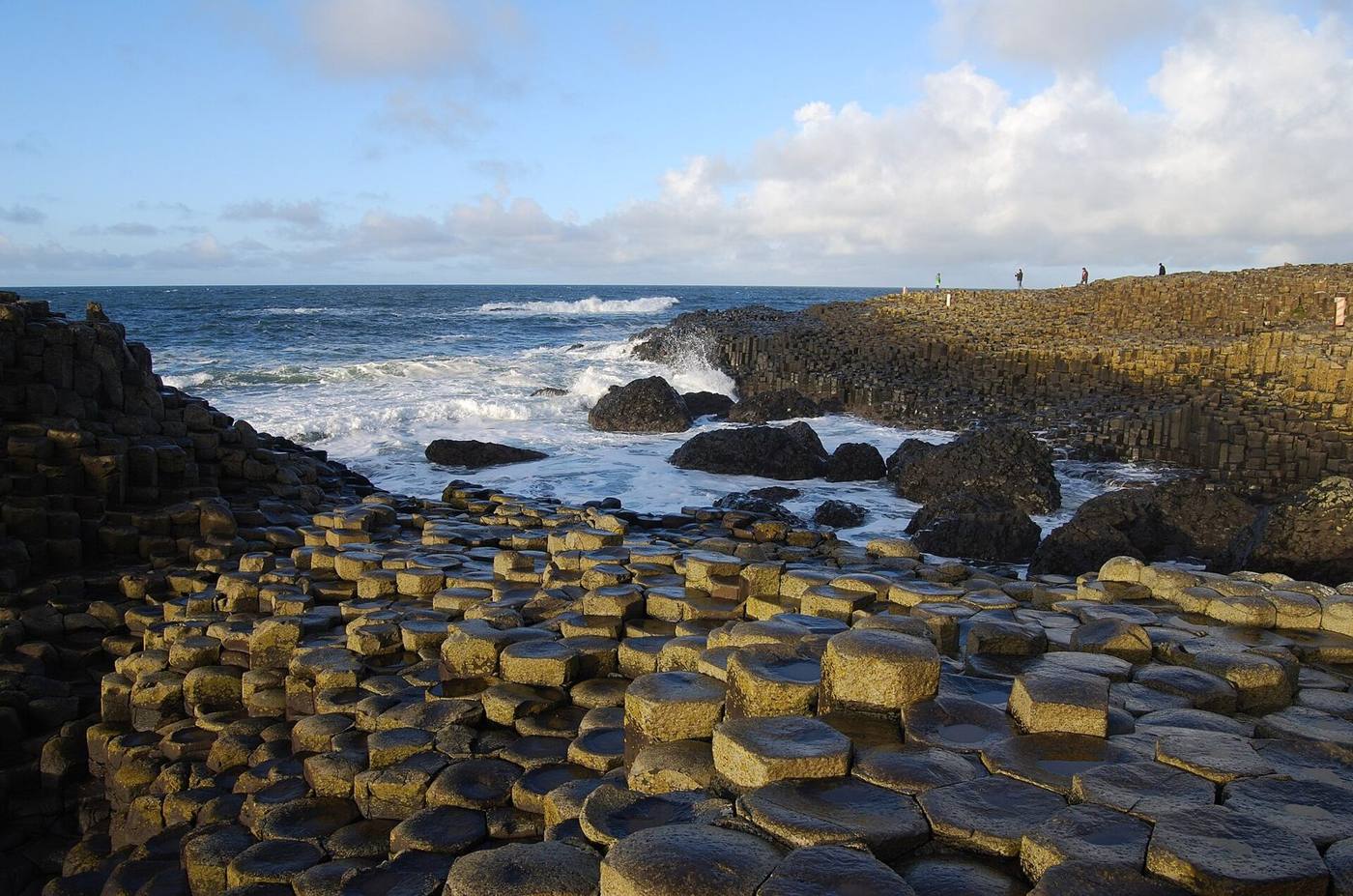
Then go to the Giant's Causeway, a World Heritage site and the most famous place in Northern Ireland. About forty thousand basalt columns, almost all hexagonal, step down into the sea like giant stairs. They formed about sixty million years ago, when a lava flow cooled slowly and cracked into these regular shapes. According to legend, they were built by the giant Finn McCool to reach Scotland.
Walk among the columns and then along the upper cliff path, with views over the bays and rock formations such as the giant's organ and boot.
In the afternoon, visit Dunluce Castle, the ruins of a medieval castle on the edge of a sheer sea cliff, one of the most photographed scenes on the island.
Nearby, in Bushmills, is one of the oldest whiskey distilleries in the world, with guided tours.
In the evening, sleep in Portrush or nearby.
Practical tip: you can walk to the Giant's Causeway at no cost, while the visitor centre and car park are paid. In summer, arrive early to avoid the crowds.
- Day 5
Derry and its walls, then back to Ireland
In the morning, continue west along the coast, past the long beach at Downhill and Mussenden Temple, a small round eighteenth-century temple on the edge of a cliff, built by a bishop as a library, with views over the beach and the sea.
Then you reach Derry, called Londonderry by unionists, on the river Foyle, the only city on the island of Ireland with complete walls. The walls were built in the early seventeenth century and were never breached, not even during the long siege of 1689. Walk the walls, about a mile and a half, with old cannons and views over the city's districts.
From the walls you see the Bogside, the nationalist area outside the walls, where in January 1972 Bloody Sunday took place, when British soldiers opened fire on a civil rights march and killed thirteen people. The Bogside murals and the Museum of No-cost Derry tell the story of those events.
Cross the Peace Bridge, the pedestrian bridge over the river opened in 2011, a symbol of union between the two communities.
In the afternoon, head back to Ireland: Dublin is about three and a half hours away by car or bus, or you can continue into Donegal.
Practical tip: if you return your hire car in the Republic of Ireland, ask the company first: there is often an extra charge for crossing the border and for drop-off in another country.
Northern Ireland is part of the UK: EU citizens need a UK ETA even when entering overland from Ireland, and payment is in pounds. The rope bridge has timed entry. Otherwise a valid identity card is enough for EU citizens.
Before you go
- Documents and visa
- EU citizens need only a valid identity card or passport. Ireland is in the European Union but not in the Schengen area, so documents are checked on arrival.
- Health and vaccines
- No vaccines required. The European Health Insurance Card is valid. Emergencies: 112 or 999.
- Money and payments
- Euro. Cards are accepted almost everywhere, including in pubs and for small amounts.
- Power sockets
- Type G, three rectangular pins, 230 volts: you need an adapter.
- Time zone
- UTC in winter, UTC+1 in summer.
- Safety
- A very safe country. Watch for pickpockets in cities; on Atlantic cliffs and beaches waves and wind can be dangerous. Traffic drives on the left. Official advice: GOV.UK.
Information checked in November 2026 for Italian and EU citizens. Rules change: always check before you travel.
Variations
In 3 days: Belfast and the coast as far as the Giant's Causeway.
In 8 days: add Donegal, with the Slieve League cliffs.
Frequently asked questions
Do I need a passport?
For Ireland an identity card is enough. For Northern Ireland, part of the United Kingdom, you also need the British ETA, costing 20 pounds.
What currency is used?
The pound in Northern Ireland, the euro in the Republic of Ireland. Payment cards work almost everywhere.
Is it safe to visit the mural areas?
Yes, they are visited every day with guides. Respect the residents and check the dates of the July parades.
Indicative itinerary written by World Atlas. Before booking, check timetables, seasonal openings, documents and safety.
 5 daysModerate
Mayo and Achill
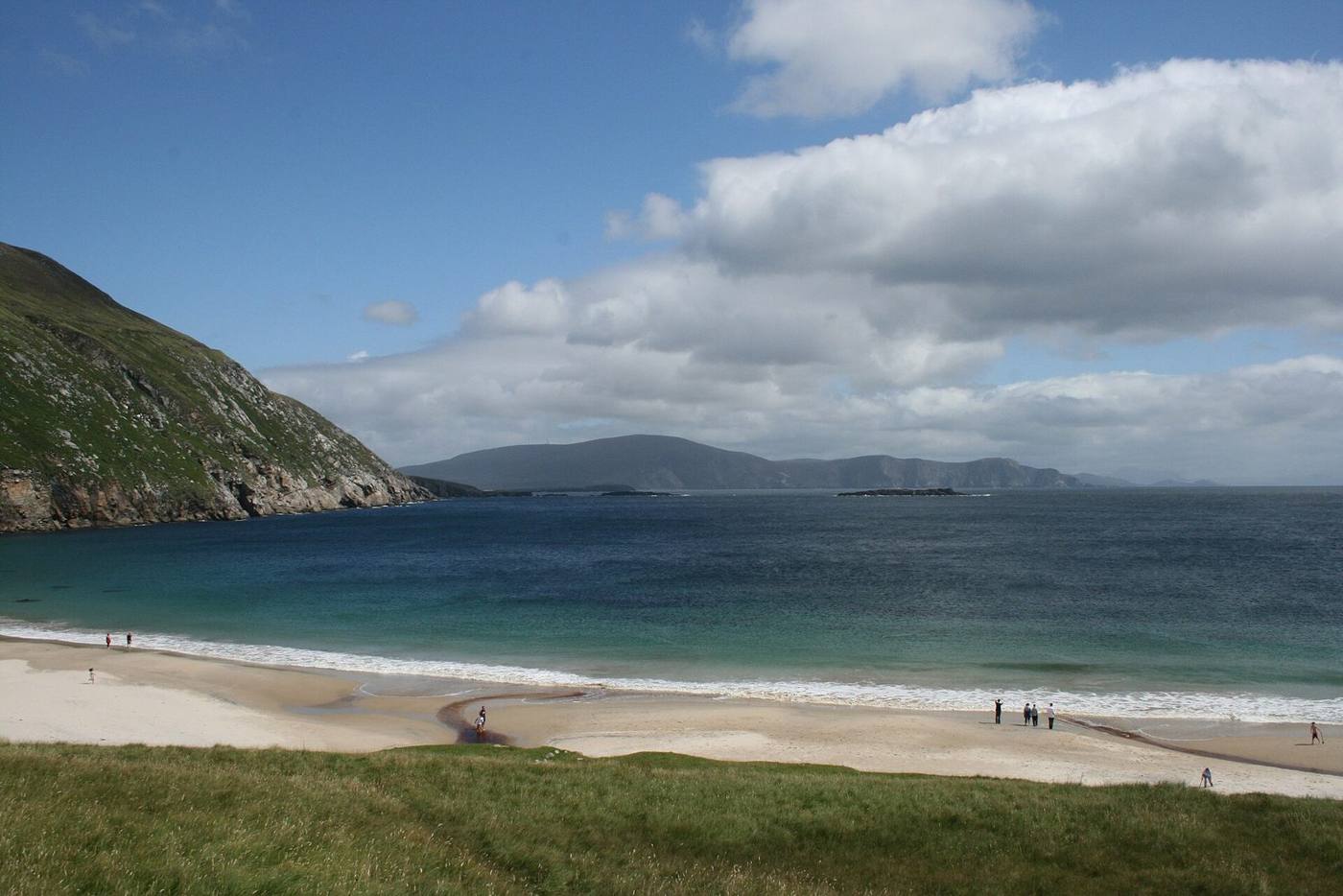
The wide-open west: Westport and the climb up Croagh Patrick, the holy mountain above Clew Bay, the Great Western Greenway by bike along an old railway, Achill Island with the cliffs at Keem and the deserted village of Slievemore, and the Neolithic Céide Fields.
 4 daysEasy
Sligo and Yeats Country
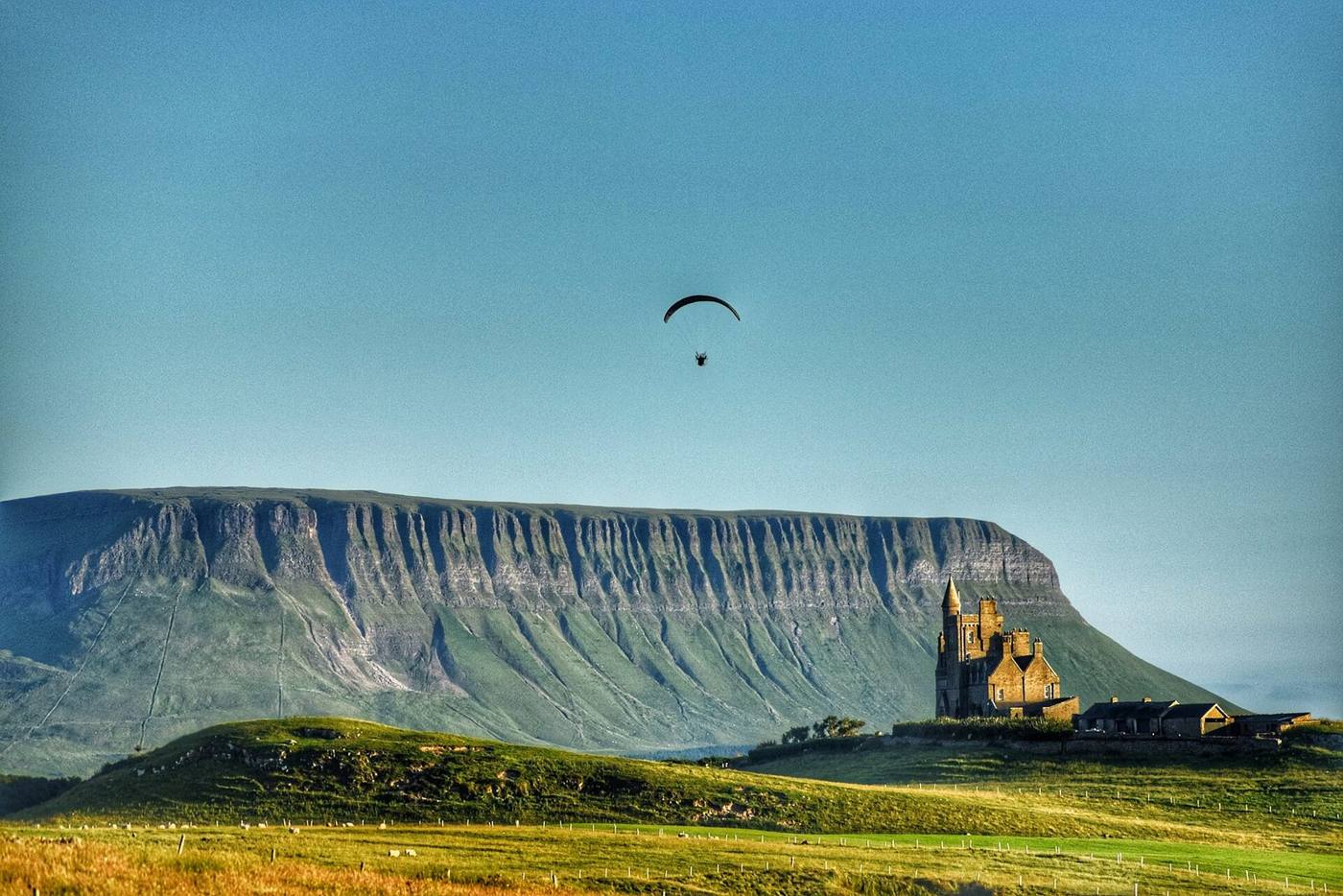
The poet's county: the rock table of Benbulben and Yeats's grave at Drumcliff, the lake isle of Innisfree, the megalithic tombs of Carrowmore and Carrowkeel, among the oldest in Ireland, surfing at Strandhill and Glencar waterfall.
 4 daysEasy
The Shannon and Clonmacnoise
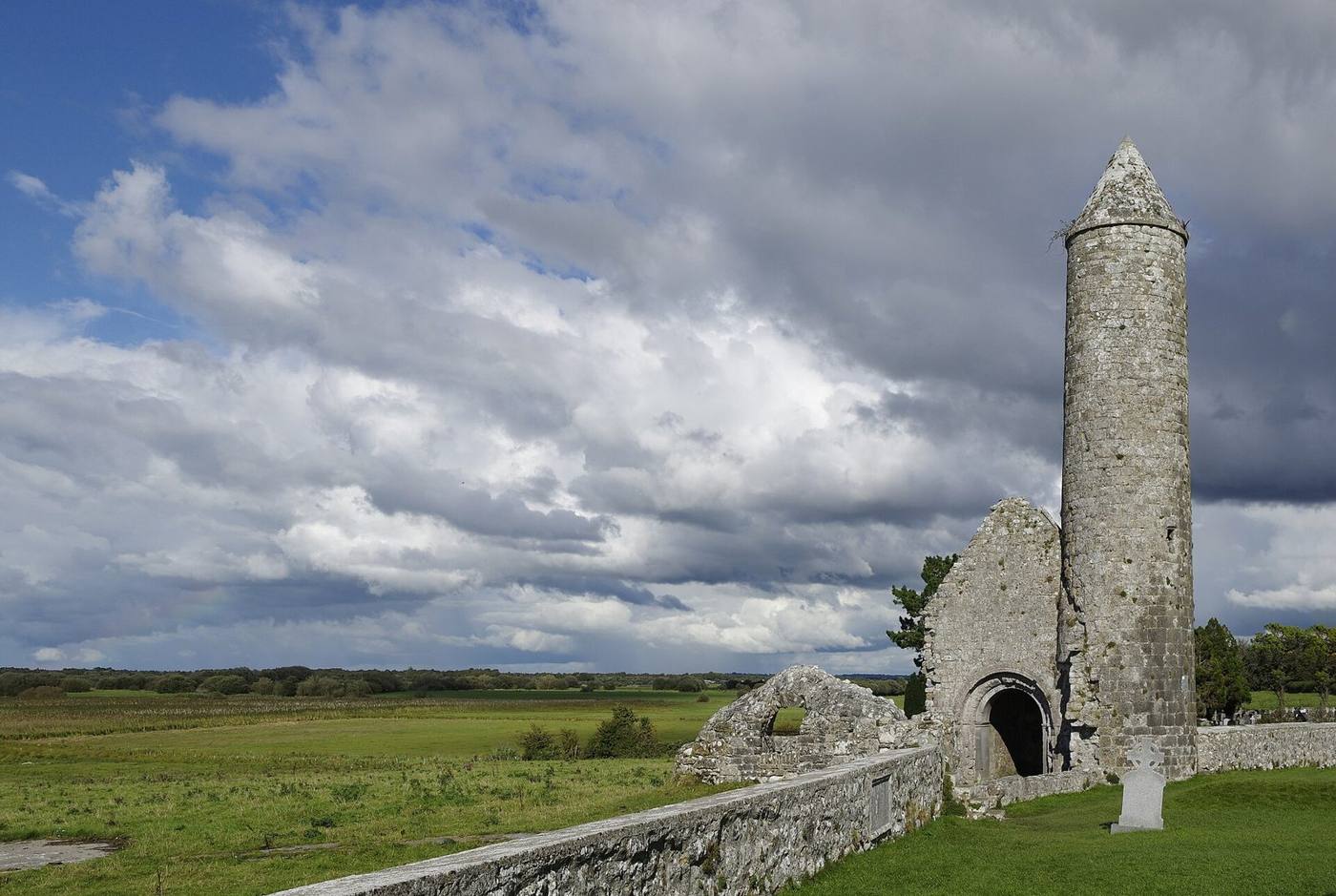
Ireland's slow heart: the monastery of Clonmacnoise with its high crosses on the riverbank, Athlone and its castle, Birr Castle and gardens with their great 19th-century telescope, and a rented cruiser on the River Shannon with no boating licence needed.