North and west Bali: Menjangan and Pemuteran
Quiet Bali, far from the crowded south: the village of Pemuteran with its Biorock artificial reef project, snorkelling and diving on the walls of Menjangan island in West Bali National Park, temples by the sea and the Munduk waterfalls in the hills.
- Denpasar
- Munduk
- Lovina
- Pemuteran
- Menjangan
Day by day
- Day 1
From Denpasar to Munduk, Lake Bratan and the Ulun Danu temple
The north and west of Bali are the quietest and least touristy part of the island: cool mountains covered in forest and coffee and clove plantations, lakes in ancient craters, waterfalls, rural villages and, on the coast, a calm sea with some of the island's finest coral reefs. This five-day itinerary is ideal for those who have already seen Ubud and the south and want a slower, more natural Bali.
From Denpasar airport you climb towards the central mountains, in about two and a half to three hours. The road crosses rice fields, villages and temples, then climbs through woods and vegetable fields to the Bedugul pass, at about 1,200 metres, where the air is cool.
The first stop is Lake Bratan, in an ancient crater, with the Ulun Danu Bratan temple, built in the seventeenth century in honour of Dewi Danu, the goddess of the waters, who is very important for the irrigation of rice fields across the island. Its towers with multi-tiered roofs seem to float on the water, with the mountains behind: it is one of the most famous images of Bali. Arrive early in the morning or late in the afternoon, when there are fewer visitors and there is often mist on the lake.
Then continue to the viewpoint above the twin lakes, Buyan and Tamblingan, surrounded by forest, and reach Munduk, a mountain village spread along a ridge, with houses among plantations of coffee, cocoa, cloves and fruit. You will sleep here for two nights.
Practical tip: in Munduk the evenings are cool, sometimes below twenty degrees. Bring a light sweatshirt and a rain jacket.
- Day 2
The Munduk waterfalls and the descent to the north coast
In the morning, walk with a local guide along the paths around Munduk, through the plantations and forest, to the waterfalls of the area. There are several, reached on foot in a few hours: some fall into deep valleys covered in ferns and bamboo, others pour down moss-covered rock walls. They are most beautiful in the rainy season, when the water is plentiful. Along the way the guide shows you coffee plants, cloves spread out to dry in the sun in front of the houses, scenting the whole village, vanilla and cocoa. The walk often passes a small plantation where you can taste the local coffee.
If you prefer, you can go canoeing on Lake Tamblingan, one of the quietest in Bali, with a village guide, past ancient temples on the shore and forest running down to the water.
In the afternoon, go down to the north coast, in about an hour and a half. The road descends through many bends, through forests and terraced rice fields, with views over the Bali Sea. On the coast the climate changes: it is warmer and drier, with coconut palms and vineyards, because a little wine is also made here.
In the evening you reach the Lovina area, with beaches of dark volcanic sand and a calm sea. From here, early in the morning, boats leave to see dolphins, although among many other boats.
Practical tip: on the waterfall paths the stones are slippery, especially after rain. Wear shoes with a good grip and do not swim in the pools when the stream is in flood.
- Day 3
Pemuteran and the coral reef
In the morning, continue west along the north coast, in about an hour, to Pemuteran, a quiet fishing village with a bay of dark sand, dry hills behind it and a calm sea, ideal for snorkelling and diving.
Pemuteran is famous for a reef restoration project. Since the late 1990s, the reef, damaged by dynamite fishing and warming seas, has been helped to regrow with submerged metal structures connected to a weak electric current, which encourages the corals to grow. Today these structures, of various shapes, are covered in corals and colourful fish, a few metres from the shore. The project is run with the local community, and village guides are happy to explain it.
Snorkel straight from the beach over the coral gardens, or dive with a local centre at the nearby sites, where you see clownfish, moray eels, triggerfish and sometimes turtles. The village also has a sea turtle conservation centre, where the eggs are kept safe and the hatchlings released into the sea.
In the afternoon, rest on the beach and, at sunset, look at the mountains of Java across the strait.
Practical tip: do not walk on or touch the corals. Use a reef-friendly sunscreen, without filters harmful to corals, and bring reef shoes to get into the water.
- Day 4
Menjangan island and West Bali National Park
Today you go to Menjangan island, inside West Bali National Park, the wildest part of the island. The boat leaves from a small harbour near Pemuteran and takes about half an hour.
Menjangan is a small, uninhabited island covered in dry woodland, home to the deer that give it its name. Around it are some of the finest coral walls in Bali: from the island's edge the seabed drops almost vertically for dozens of metres, covered in sea fans, sponges and soft corals of every colour. The water is often very clear. You snorkel over the edge of the wall, where the reef is rich in fish, or dive along the walls, where you may meet turtles, schools of fish and sometimes whitetip reef sharks.
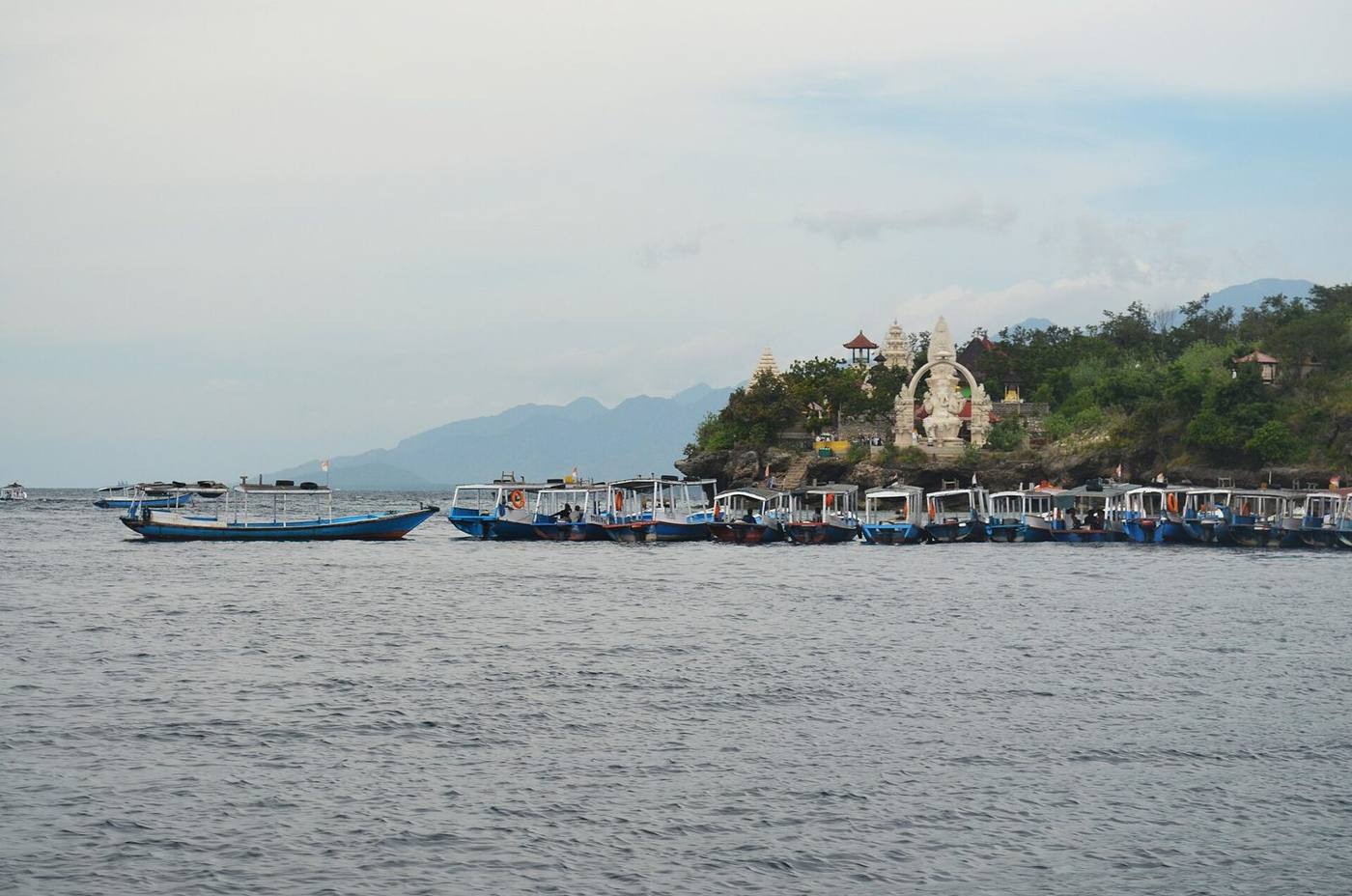
On the island there is also a seaside temple, with a large statue of Ganesha, the elephant-headed Hindu deity, looking out over the water. Some Balinese pilgrims come here for ceremonies.
In the afternoon, if you have time, go with a park guide into one of the areas of forest and mangroves on the Prapat Agung peninsula, on the mainland, home to the Bali starling, a white bird with a blue mask around its eyes, endemic to the island and critically endangered, saved by breeding and release projects.
Practical tip: to enter the park and go to Menjangan you need a ticket and a park guide: dive centres or your lodging usually arrange them.
- Day 5
Return to the south
On your last morning, have a final swim or snorkel in Pemuteran, early, when the sea is flat and the light enters the water well. Then set off for southern Bali.
The return journey to the airport or to Ubud, Seminyak or Canggu takes about four hours. You can choose between two roads. The first goes back through the central mountains, passing the lakes and Bedugul again, with the chance to stop at the fruit and spice market. The second follows the west coast, passing Gilimanuk, the ferry port for Java, and then along the south-west coast, with rice fields, black sand beaches and the Tanah Lot temple, built on a rock in the sea, very beautiful at sunset but always crowded.
If you still have a few hours, stop at the Jatiluwih rice terraces, a UNESCO World Heritage Site as part of the traditional Balinese irrigation system, the subak, with green fields climbing the hills at the foot of the Batukaru volcano. A walk among the terraces, along the water channels, is one of the most peaceful moments in Bali.
If your flight is in the evening, plan your timing carefully: the traffic around Denpasar airport can be very slow.
Practical tip: Italian citizens need a visa on arrival, costing 500,000 rupiah, best applied for online in advance as an e-VOA. For Bali there is also the 150,000 rupiah tourist levy, payable online or on arrival.
Easy and relaxed, ideal for those who have already seen Ubud and the south. Entering the park and Menjangan requires a ticket and a park guide. The transfer from the airport takes 3-4 hours. Bali also charges a tourist levy of 150,000 rupiah. Italian citizens need a visa on arrival (500,000 rupiah, best requested online beforehand as an e-VOA); an increase has been proposed: check the amount before leaving.
Before you go
- Documents and visa
- Passport with at least six months' validity. Visa on arrival 500,000 rupiah for 30 days, extendable once, or online on the official immigration website. In Bali you also pay the 150,000 rupiah tourist levy.
- Health and vaccines
- No compulsory vaccines arriving from Europe. Protect yourself against mosquitoes because of dengue; Bali has rabies, so keep away from dogs and monkeys. The eastern regions carry malaria risk: ask your doctor. Emergencies: 110 police, 112 general number.
- Money and payments
- Indonesian rupiah. Cards work in hotels and shops in tourist areas; QR payments are widespread; markets and villages need cash.
- Power sockets
- Types C and F, 230 volts: the same round-pin sockets as much of Europe.
- Time zone
- The country has three time zones. Java is UTC+7, Bali UTC+8, with no daylight saving time.
- Safety
- Tourist areas are generally calm. The United States rates Indonesia level 2 and the Papua regions level 4. Active volcanoes may close on alert. Very severe drug penalties. Official advice: GOV.UK.
Information checked in November 2026 for Italian and EU citizens. Rules change: always check before you travel.
Variations
In 3 days: Munduk and Lake Bratan, then Pemuteran with snorkelling, without Menjangan.
In 8 days: after Pemuteran, take the ferry from Gilimanuk to Java and visit the Ijen and Bromo volcanoes, then fly to Yogyakarta.
Frequently asked questions
When is the best time to go?
From April to October, in the dry season, with clearer, calmer seas. From November to March it often rains in the mountains, but the waterfalls are more beautiful.
Do I need to be a diver?
No: in Pemuteran and Menjangan snorkelling is already wonderful. Diving requires a certification, but local centres also offer try dives and beginner courses.
What documents do I need?
A passport valid for at least six months, the 500,000 rupiah visa on arrival, best applied for online, and the 150,000 rupiah Bali tourist levy. Check the visa amount before you leave.
Indicative itinerary written by World Atlas. Before booking, check timetables, seasonal openings, documents and safety.
 6 daysEasy
Central Java: Yogyakarta, Solo and Dieng
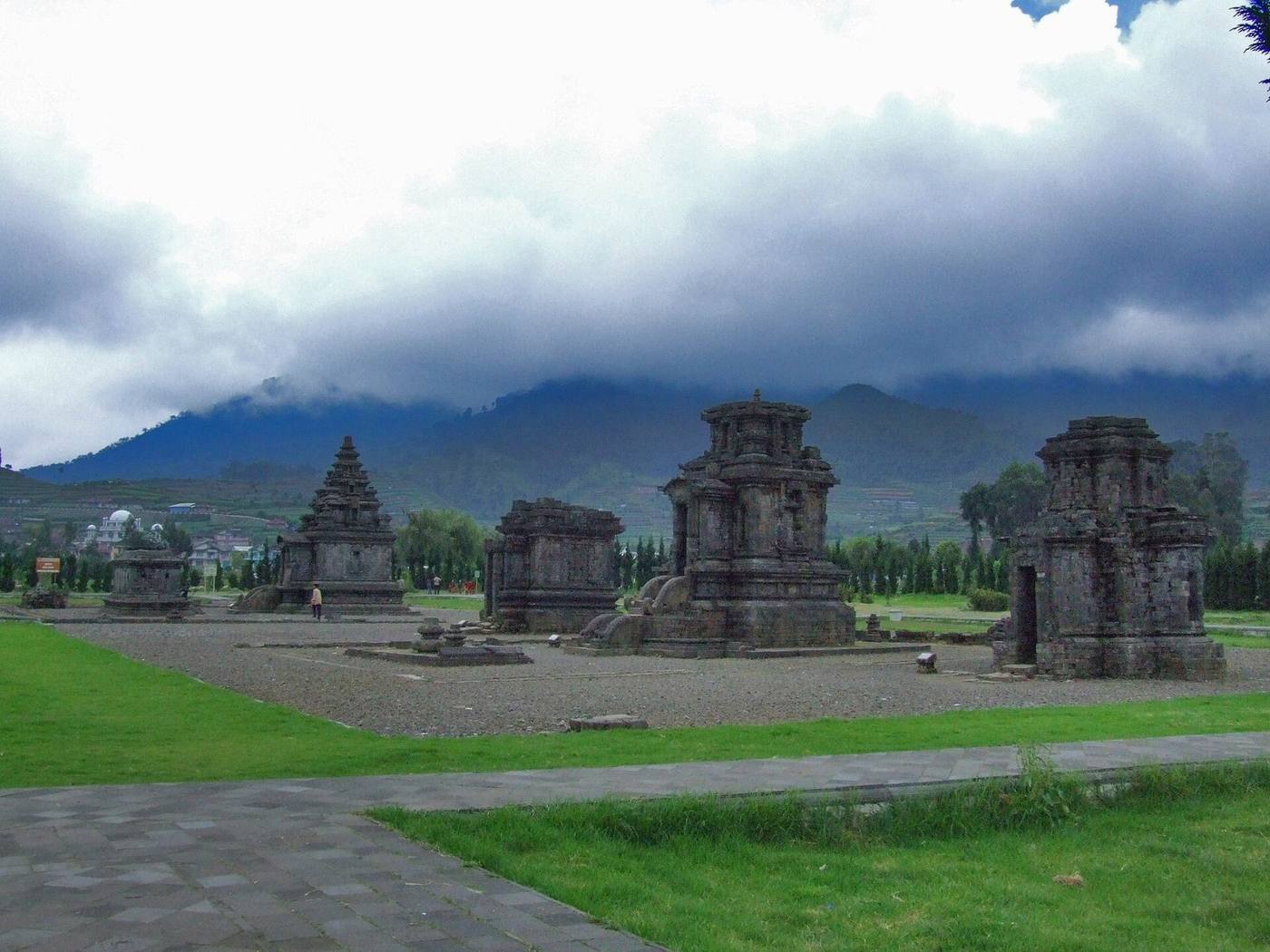
Java's cultural heart beyond Borobudur: the sultan's palace and batik of Yogyakarta, the two royal palaces and markets of Solo, the temples of Sukuh and Cetho on the slopes of Mount Lawu, and the Dieng plateau with the island's oldest Hindu temples, coloured lakes and fumaroles.
 7 daysEasy
West Sumatra: Bukittinggi and Harau
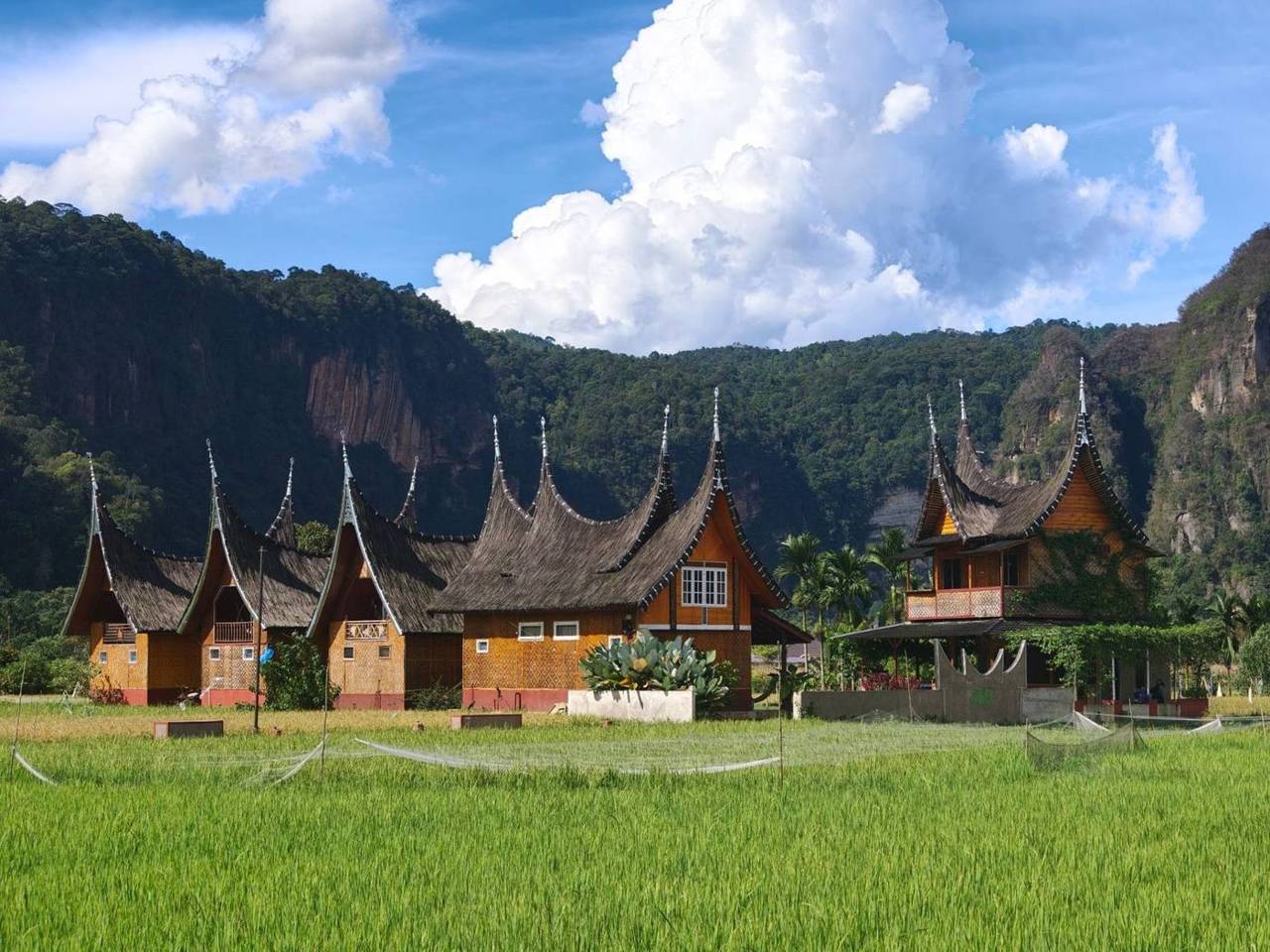
The land of the Minangkabau, a matrilineal society with buffalo-horn roofed houses: Bukittinggi above the Sianok canyon, the Harau valley between rock walls and rice fields, the volcanic lake of Maninjau, Pagaruyung palace and Padang cooking, with rendang.
 5 daysEasy
Belitung
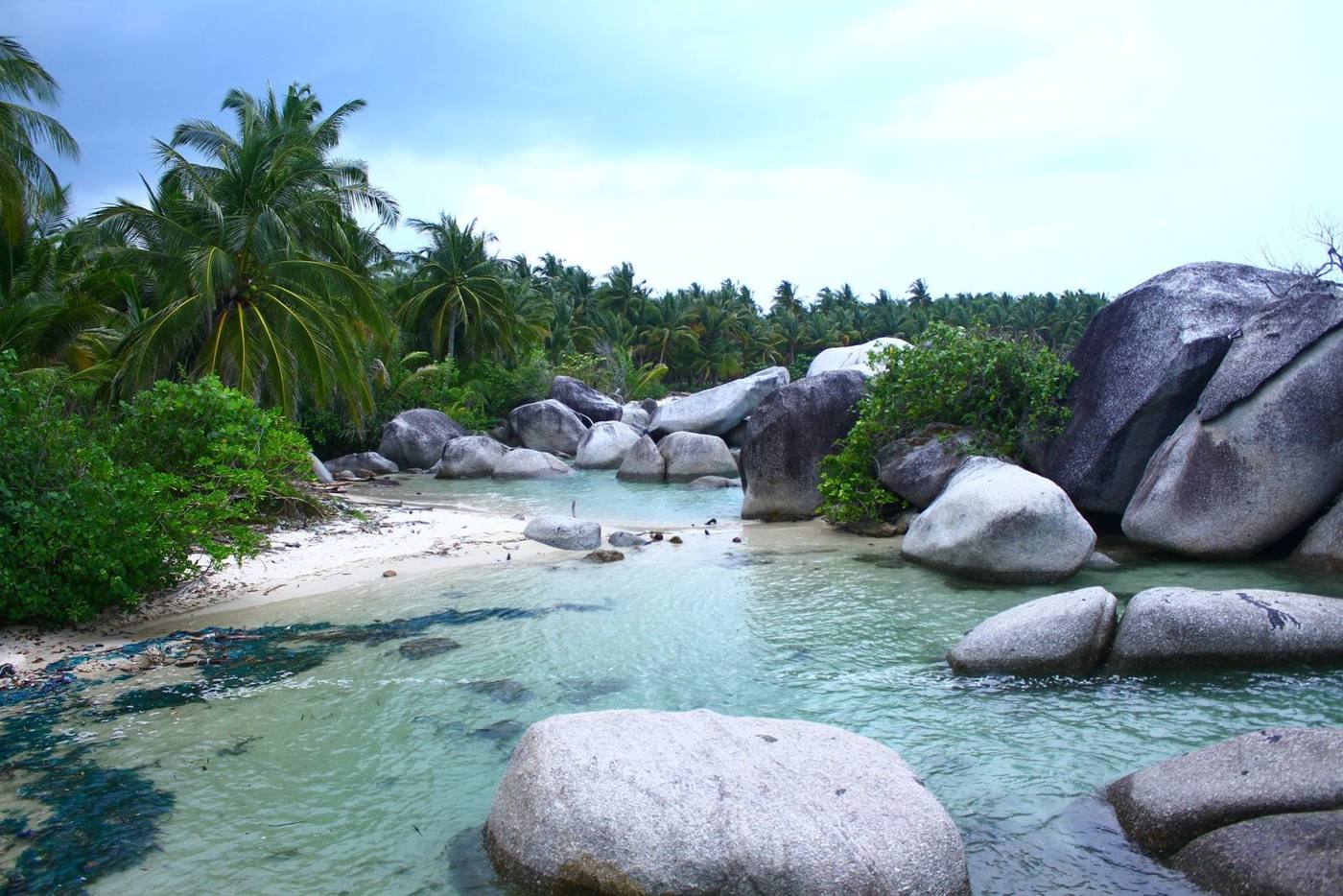
An island between Sumatra and Borneo, an hour's flight from Jakarta, famous for white beaches with huge polished granite boulders, calm clear water, islets reached by boat and the Dutch lighthouse of Lengkuas.