Valley of Flowers and Hemkund Sahib
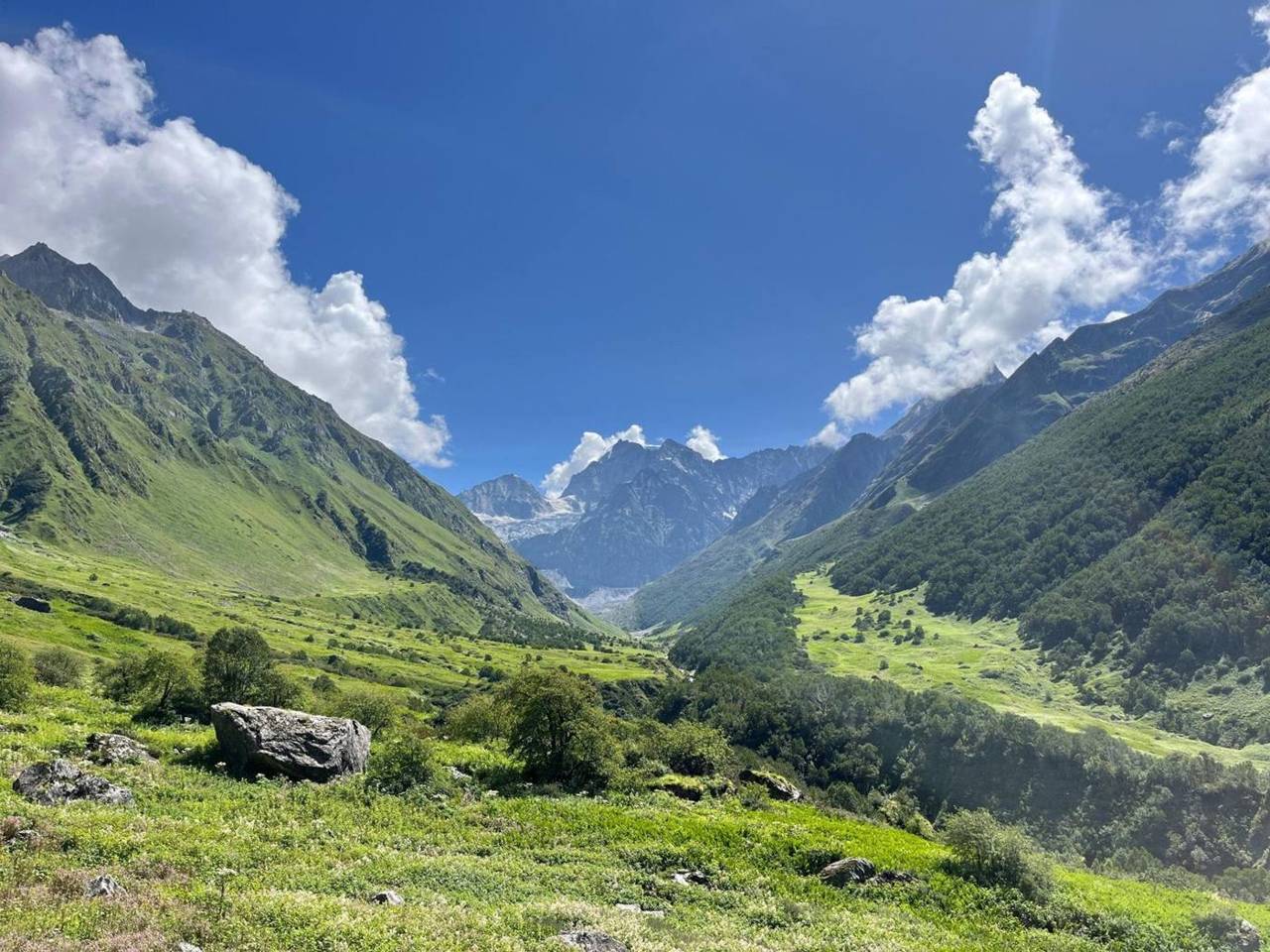
A trek in the Garhwal Himalaya to the Valley of Flowers, a UNESCO-listed alpine meadow with hundreds of species blooming during the monsoon, and to the sacred lake of Hemkund Sahib above 4,000 metres, a Sikh pilgrimage site.
- Rishikesh
- Joshimath
- Govindghat
- Ghangaria
- Valley of Flowers
- Hemkund Sahib
Day by day
- Day 1
Rishikesh and the evening ceremony on the Ganges
This trip takes you into the Indian Himalaya, in the state of Uttarakhand, to the Valley of Flowers, a high mountain national park that blooms with hundreds of species of wild flowers in summer, and to the sacred lake of Hemkund Sahib, a Sikh pilgrimage site. It is a real mountain journey, with long roads, uphill walks and simple lodgings, but extraordinary landscapes. Over seven days you go from Rishikesh up the Alaknanda valleys and back.
You start in Rishikesh, a holy city on the Ganges at the foot of the Himalaya, about six hours by road, or by train and car, from Delhi. The nearest airport is Dehradun, less than an hour away.
Rishikesh is famous for its ashrams, centres of meditation and yoga, and for its suspension bridges over the river, which runs fast and green here between forested hills. Walk along the ghats, the steps leading down to the water, among temples, sadhus, pilgrims and cows.
At sunset join the aarti, the evening ceremony on the Ganges. On one of the main ghats priests and worshippers sing, ring bells and wave large lit oil lamps before the river. At the end many people float small leaf boats with flowers and a candle on the water.
Spend the night in Rishikesh.
Practical tip: most European visitors need a visa for India, applied for online. The thirty day e tourist visa costs 25 dollars from July to March and 10 dollars from April to June. The United States rates India at level 2. By tradition Rishikesh is vegetarian and alcohol no-cost.
- Day 2
The long mountain road to Joshimath
Today is a travel day. The road from Rishikesh to Joshimath is about two hundred and fifty kilometres but takes nine or ten hours, as it winds up the river gorges through forest and villages clinging to the slopes. It is best to travel by car with a driver experienced on mountain roads.
The road follows the Ganges and then its main branch, the Alaknanda. Along the way you pass several prayags, the sacred points where two rivers meet. At Devprayag, the most famous, the green Alaknanda and the greyer Bhagirathi join to form the Ganges. Steps lead down to the confluence, with a small temple above.
Further on you pass Rudraprayag and Karnaprayag, mountain towns with markets and temples, and the mountains get higher and higher. On clear days you see the first snowy peaks.
In the evening you reach Joshimath, a small town at about two thousand metres, gateway to the Alaknanda valley, Badrinath and the Valley of Flowers. In recent years some parts of the town have suffered from ground subsidence: follow local advice on where to stay.
Spend the night in Joshimath or nearby.
Practical tip: during the monsoon, from July to September, landslides can block the road for hours or even days. Set off early, carry food and water in the car and keep at least a day of margin in your plans.
- Day 3
Govindghat and the walk up to Ghangaria
In the morning drive down from Joshimath to Govindghat in about half an hour. This is the end of the road for private cars. The next stretch to the village of Pulna is usually done by shared jeep, then the trail begins.
From Pulna to Ghangaria the walk is about ten kilometres and climbs more than a thousand metres along the Lakshman Ganga valley. The path is paved and wide, because thousands of Sikh pilgrims bound for Hemkund Sahib walk it every day. You pass through forests of pine and rhododendron, waterfalls, river bridges and small rest stops where you can drink hot chai.
For those who cannot or do not want to walk there are mules, porters with baskets and, at times, a helicopter service from Govindghat. Many travellers hand their pack to a mule or porter and walk with a small daypack.
Ghangaria is a seasonal village at about three thousand metres, made up of simple hotels, tents, small restaurants and a large gurdwara, the Sikh temple, which welcomes pilgrims. It is open only in the months when the trail can be walked.
In the evening rest and drink plenty: the altitude starts to make itself felt.
Spend the night in Ghangaria.
Practical tip: walk slowly and take frequent breaks. The trail is shared with mules: always let them pass, staying on the mountain side, never on the drop side.
- Day 4
The Valley of Flowers
Today you enter Valley of Flowers National Park, a UNESCO World Heritage Site together with nearby Nanda Devi National Park. From Ghangaria a trail climbs a few kilometres to the entrance, where you buy a permit and register your name.
The valley is long and narrow, ringed by mountains and glaciers, with the Pushpawati river running through it. In July and August the meadows are covered with wild flowers of hundreds of species: primulas, geraniums, anemones, orchids, Himalayan blue poppies, balsams and many plants used in traditional medicine. The colours change from week to week as different species bloom.
You walk on a trail through meadows, streams and small bridges, with waterfalls pouring down the walls. Halfway up the valley is the grave of Joan Margaret Legge, an English botanist who died here in the 1930s while collecting plants and is buried among the flowers. It was another Englishman, the mountaineer Frank Smythe, who made the valley known to the world in the 1930s.
You cannot sleep in the park: you must return to Ghangaria before it closes in the afternoon.
Spend the night in Ghangaria.
Practical tip: the valley is usually open from 1 June to 31 October. The best blooms are from mid July to mid August, in the heart of the monsoon: bring a waterproof jacket, a pack cover and quick drying hiking shoes. Do not pick flowers and stay on the trail.
- Day 5
Climbing to the lake of Hemkund Sahib
Today you climb to the lake of Hemkund Sahib, one of the holiest places for Sikhs. It lies at about four thousand three hundred metres, in a cirque of mountains with glaciers reflected in the lake. On the shore stands a star shaped gurdwara, the Sikh temple, among the highest in the world. According to tradition, Guru Gobind Singh, the last of the ten Sikh gurus, meditated here in a previous life.
From Ghangaria the trail climbs about twelve hundred metres in six kilometres, with many bends and stone steps. It is a hard climb, mainly because of the altitude, and usually takes three to four hours. Along the way you walk with Sikh pilgrims, who climb singing and help one another. Above three thousand five hundred metres, in summer, you see Brahma Kamal, large white sacred flowers, and sometimes the blue poppy.
You enter the temple barefoot and with your head covered: there are scarves at the entrance for those without one. Pilgrims bathe in the icy water of the lake. After prayers, hot tea and a simple meal are offered to everyone, in the Sikh tradition of hospitality.
In the early afternoon walk back down to Ghangaria before the weather turns, as it often does in the afternoon.
Spend the night in Ghangaria.
Practical tip: if you have a bad headache, nausea or shortness of breath even at rest, do not climb higher and go down: these are signs of altitude sickness. The temple is open only from late May or June to about early October: check the dates for the year.
- Day 6
Down to Govindghat and the road back down
In the morning walk down from Ghangaria to Pulna on the same trail, in about three to four hours. Going down is faster, but your knees work hard: use walking poles if you have them. If you prefer, hand your pack to a mule again.
From Pulna return to Govindghat by jeep and meet your car and driver. Before setting off, if you have time, stop briefly at the Govindghat gurdwara by the river for a last cup of tea.
In the afternoon begin the journey south along the Alaknanda valley. As the road to Rishikesh is very long, it is best to split it over two days and stay halfway, for example around Rudraprayag or Srinagar, a riverside town not to be confused with Srinagar in Kashmir.
Along the way you see again the prayags and villages from the journey up, in a different light. At viewpoints, stop to look at the mountains and the terraced fields on the slopes.
Spend the night halfway between the mountains and Rishikesh.
Practical tip: after the descent your body feels tired even if the effort seemed less. Drink plenty, eat well and do not plan anything demanding for the evening. A hot shower and an early night help a lot.
- Day 7
Back to Rishikesh and Delhi
On the last day you complete the journey back. In the morning drive on towards Rishikesh, a few hours away, descending from the mountains to the plain. The river widens and the hills become lower and greener.
If you reach Rishikesh early, take a last walk across the suspension bridges over the Ganges or sit on a ghat to watch the river. You can also take a ritual dip in the Ganges, as pilgrims do, at a safe spot with chains to hold on to, because the current is strong.
There are three ways back to Delhi. Flights leave Dehradun airport for Delhi in about an hour. Fast trains run from Haridwar, half an hour from Rishikesh, to Delhi in four to five hours. Or you can drive back, about six hours depending on traffic.
In Delhi stay near the airport if your flight home leaves early the next morning, or add a day to see the city, with Old Delhi, the great mosque and Humayun's tomb.
Practical tip: Indian traffic is unpredictable, especially on the way into Delhi. Leave plenty of margin for your international flight and, if possible, spend a night in Delhi before you leave. Keep a printed copy of your e visa.
For fit walkers: you climb above 4,000 metres and it often rains in summer. In 2026 the park was open from 1 June to 31 October, with the best bloom between mid-July and mid-August, right in the monsoon season: landslides and road closures are frequent, so keep at least two spare days. The Valley of Flowers requires a permit, obtained online or at Ghangaria; overnight stays inside are not allowed.
Before you go
- Documents and visa
- Passport with at least six months' validity and two blank pages, plus an electronic tourist visa from the official Indian government website: 30 days for 25 dollars from July to March, 10 dollars from April to June.
- Health and vaccines
- No compulsory vaccines arriving from Europe; ask your doctor about hepatitis A, typhoid and malaria depending on the area. Drink only sealed bottled water. Emergencies: 112.
- Money and payments
- Indian rupee. Cards and digital payments are common in cities; markets, villages and rickshaws need cash.
- Power sockets
- Types C, D and M, 230 volts: a universal adapter is useful.
- Time zone
- UTC+5:30 all year: India does not use daylight saving time.
- Safety
- The United States rates India level 2, with level 4 for Jammu and Kashmir (except Ladakh), Manipur and the 10 km strip along the Pakistani border. Official advice: GOV.UK.
Information checked in November 2026 for Italian and EU citizens. Rules change: always check before you travel.
Variations
In 5 days: just the Valley of Flowers, without Hemkund Sahib and with less time in Rishikesh.
In 10 days: add Badrinath and the village of Mana, or the Kuari Pass trek.
Frequently asked questions
When is the best time to go?
Mid July to mid August for the flowers, during the monsoon. September has fewer flowers but clearer skies.
Do I need to be fit?
Yes, reasonably. The climbs are long and at high altitude, but mules and porters help a lot.
What is accommodation like in the mountains?
Ghangaria has simple hotels and tents, with hot water not always available. Bring a sleeping bag liner.
Indicative itinerary written by World Atlas. Before booking, check timetables, seasonal openings, documents and safety.
 9 daysChallenging
Ladakh in winter: tracking the snow leopard
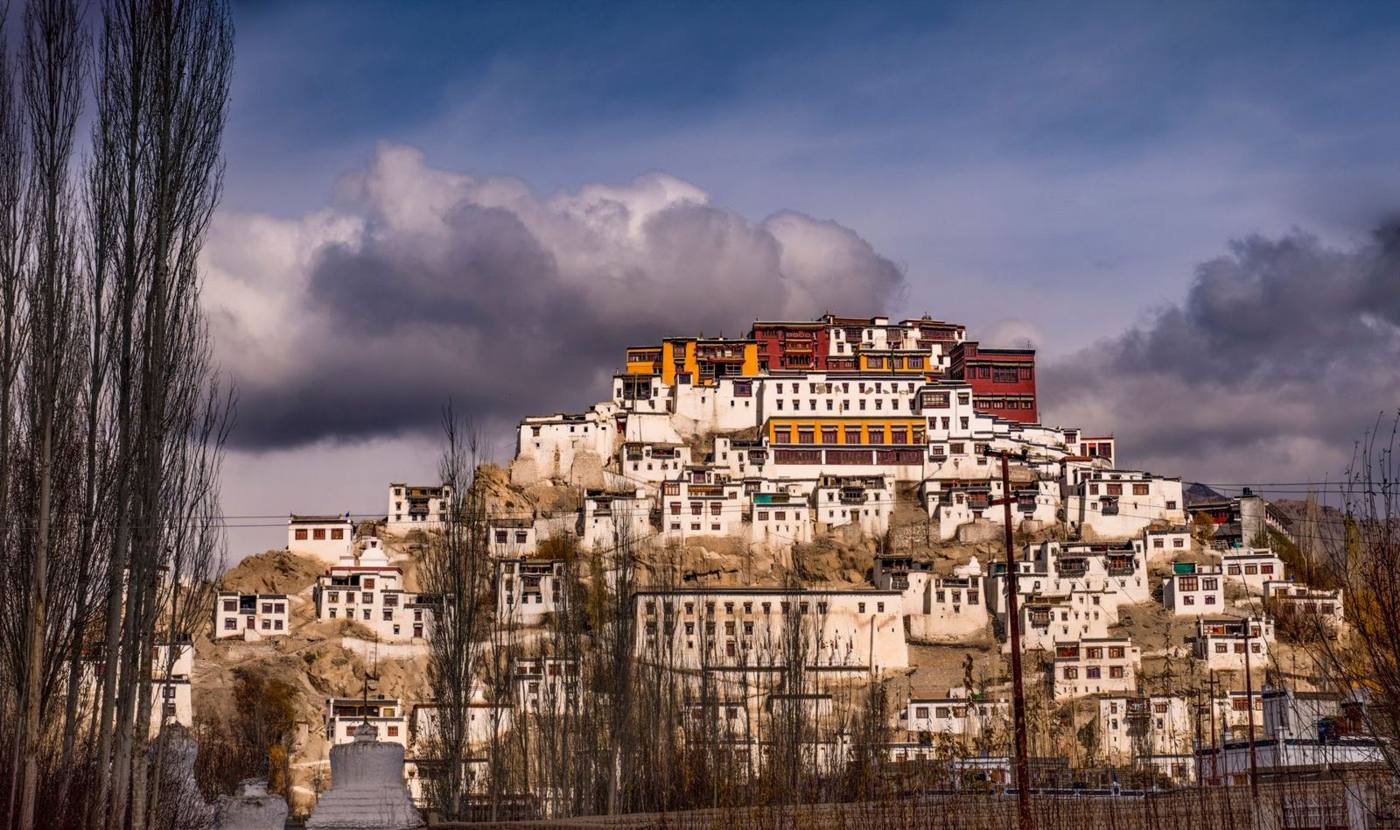
Ladakh under snow and almost empty of tourists: the monasteries of Thiksey and Hemis with their winter festivals, then several days in the Ulley valley or the Rumbak valley in Hemis National Park, with local trackers searching for the snow leopard, ibex and bharal.
 9 daysModerate
Gujarat: the Rann of Kutch and the lions of Gir
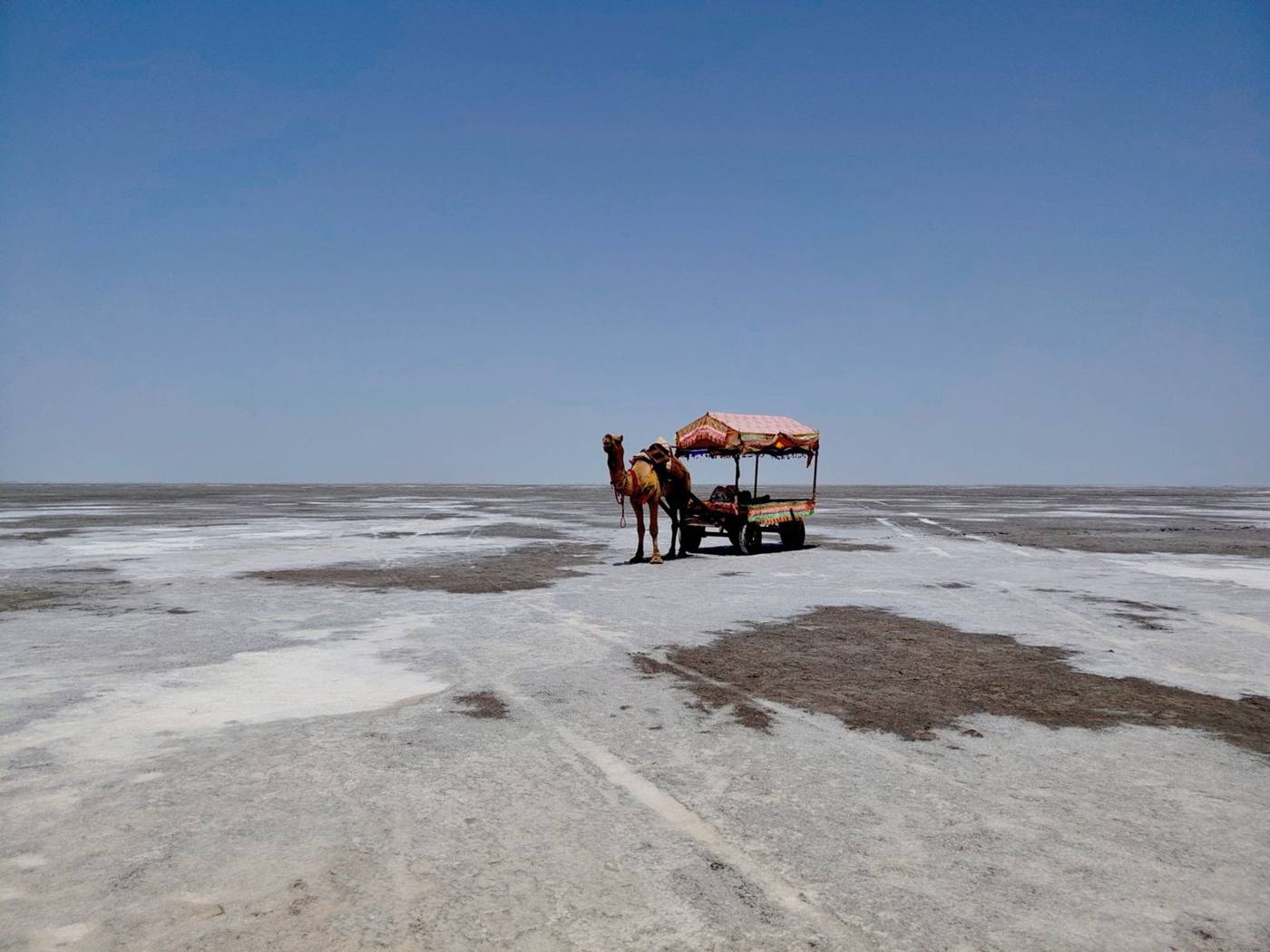
The less-travelled India of the west: the old city of Ahmedabad (UNESCO World Heritage), the Rani ki Vav stepwell and the sun temple of Modhera, the craft villages of Kutch and the white salt desert of the Great Rann, ending with the last Asiatic lions in the Gir forest.
 6 daysEasy
Mumbai, Ajanta and Ellora
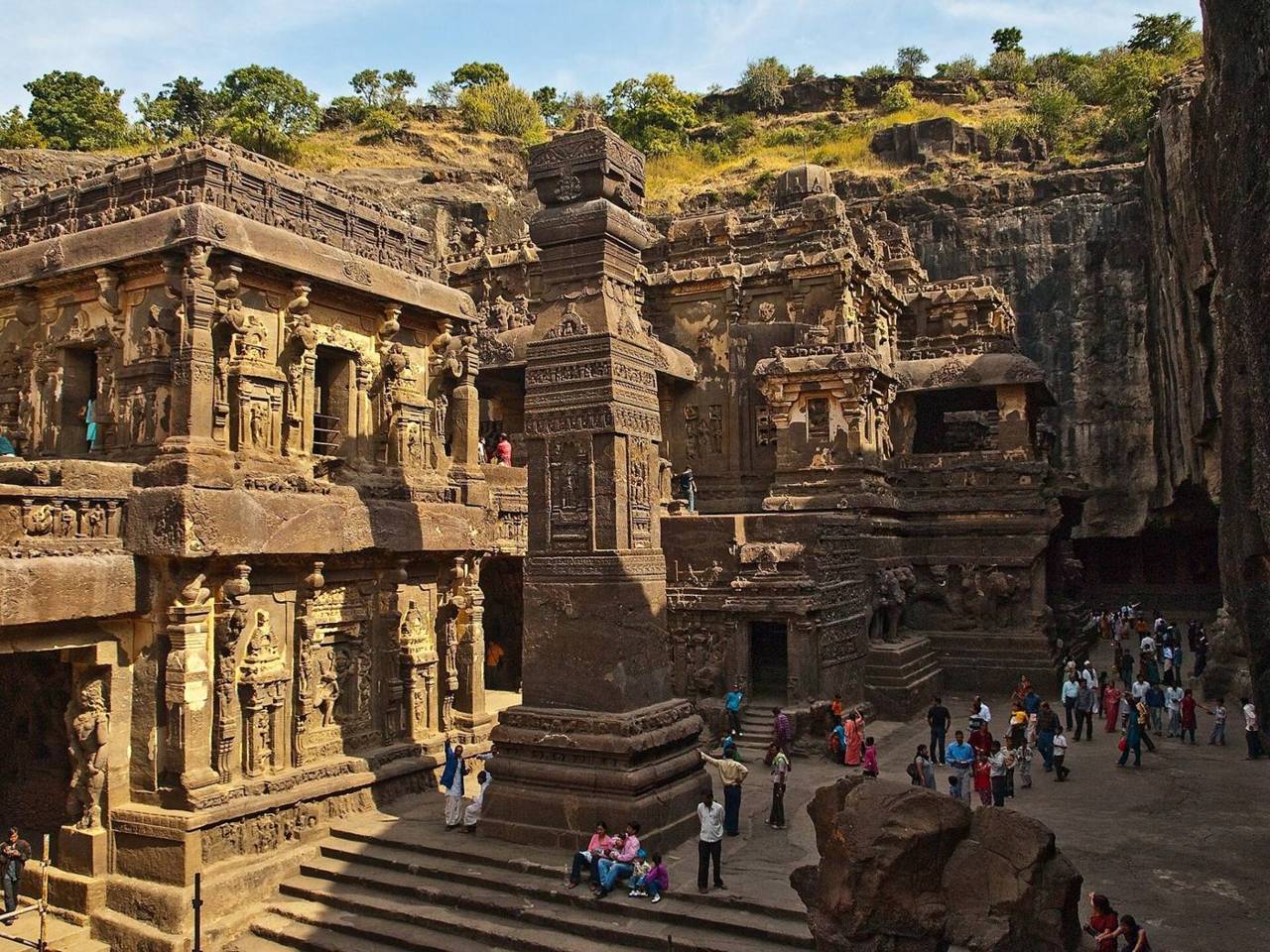
India's great metropolis with the Gateway of India, the Victorian railway station and the dhobi ghats, then the Ellora caves with the Kailasa temple carved from a single rock and the Buddhist paintings of Ajanta, both UNESCO World Heritage sites.