Mumbai, Ajanta and Ellora
India's great metropolis with the Gateway of India, the Victorian railway station and the dhobi ghats, then the Ellora caves with the Kailasa temple carved from a single rock and the Buddhist paintings of Ajanta, both UNESCO World Heritage sites.
- Mumbai
- Elephanta
- Aurangabad
- Ellora
- Ajanta
Day by day
- Day 1
Mumbai: the Gateway of India, Colaba and Marine Drive at sunset
Mumbai, formerly Bombay, is India's richest and busiest city: more than twenty million people among skyscrapers, colonial buildings, markets, slums and Bollywood film studios. In six days you combine the seaside metropolis with the Ajanta and Ellora caves, inland in Maharashtra, two of the most extraordinary art sites in Asia.
You arrive at the international airport and settle in the south of the city, in Colaba or Fort, where the main monuments are. In the morning start at the Gateway of India, the great yellow basalt arch on the harbour, built in 1924 to commemorate King George V's visit; by an irony of history, the last British troops left from here in 1948. Next to it stands the great historic hotel with its red dome, a symbol of the city.
Then stroll through Colaba, with streets full of stalls, cafés and old colonial buildings, and reach Kala Ghoda, the art district, with galleries and the city's great museum, housed in an Indo-Saracenic palace, with sculptures, miniatures and objects from all over India.
Towards sunset go to Marine Drive, the crescent-shaped seafront more than three kilometres long, called the Queen's Necklace because at night its street lamps look like pearls. Sit on the sea wall with local people and watch the sun set over the Arabian Sea. Then continue to Chowpatty, the beach where families eat bhel puri and pav bhaji.
Practical tip: to enter India you need an e-visa, applied for online before departure; the 30-day tourist visa costs 25 dollars from July to March and 10 dollars from April to June.
- Day 2
Mumbai: Chhatrapati Shivaji station, the dhobi ghat and street food
In the morning go to Chhatrapati Shivaji Terminus, formerly Victoria Terminus, completed in 1888 and a UNESCO site: a vast Victorian Gothic building with domes, towers, arches and stone carvings of animals and plants that looks like a cathedral. It is still one of the busiest stations in the world: watch the flow of millions of commuters arriving every day on local trains.
Nearby, around lunchtime, watch the dabbawalas, the men in white caps who every day deliver tens of thousands of home-cooked lunches to office workers, using trains and a system of coloured codes with almost no mistakes. You see them mainly at Churchgate and the central stations.
In the afternoon take a local train or taxi to Mahalaxmi to see the dhobi ghat, the great open-air laundry where hundreds of washermen wash by hand the linen of hotels, hospitals and families in concrete tubs, beat it on stones and hang it to dry on endless rows of lines. You watch from the bridge over the railway.
Then visit the Mahalaxmi temple and the Haji Ali shrine, built on an islet in the sea and reached at low tide along a causeway.
In the evening taste Mumbai's street food: vada pav, a bun with a spiced potato fritter, pani puri and kulfi, Indian ice cream. Practical tip: eat street food at the busiest stalls where it is cooked fresh, and avoid tap water and ice.
- Day 3
The boat to the Elephanta caves and an evening in Bandra
In the morning take one of the boats leaving the pier in front of the Gateway of India for Elephanta Island, about an hour's sail across Mumbai harbour. On the way you see the city from the sea, with its ships and port cranes.
The island is home to the Elephanta caves, a UNESCO site: temples carved into the basalt rock between the fifth and seventh centuries, dedicated mainly to the god Shiva. From the landing you climb a long stairway lined with stalls and very bold monkeys to the main cave. Inside, in the half-light, is the most famous sculpture: the Trimurti, an enormous three-faced bust of Shiva over five metres high, representing the creator, the preserver and the destroyer. Around it, other large carved panels tell the stories of Shiva and Parvati. The caves were damaged by the Portuguese in the sixteenth century but remain impressive.
Return to the city in the early afternoon. Remember that the Elephanta caves and boats usually do not operate on Mondays.
Towards evening go to Bandra, the district north of the centre, linked by the great cable-stayed sea bridge. Bandra is lively, with film stars' homes, old Portuguese villas in the Catholic villages of Ranwar and Chimbai, murals and bars. At sunset stroll along Bandstand, the seafront, or climb to the old Castella de Aguada fort for the view of the bridge.
Practical tip: between June and September the monsoon brings very heavy rain to Mumbai, and the sea can be too rough for the Elephanta boats.
- Day 4
Flight or train to Aurangabad and the Bibi ka Maqbara
In the morning leave for Aurangabad, officially renamed Chhatrapati Sambhajinagar in 2023 but still known by its old name. By plane it takes about an hour; by train about six or seven hours, a journey across the Western Ghats and then the Deccan plateau, interesting if you have time. It is the best base for visiting Ellora and Ajanta.
In the afternoon visit the Bibi ka Maqbara, the mausoleum built in 1660 by the son of Emperor Aurangzeb for his mother. It is called the little Taj Mahal of the Deccan because it copies its shape, with a white dome, four minarets and gardens, but on a smaller scale and partly in less precious materials. It is less crowded than the original, and at sunset the golden light is very beautiful.
Then visit the Panchakki, a seventeenth-century water mill powered by water brought from a spring through underground channels, and, if you like textile history, one of the workshops where himroo, the city's typical silk and cotton fabric, is still woven by hand.
The city also has the Aurangabad caves, Buddhist and little visited, carved into the hill above the mausoleum.
In the evening taste Deccan cooking, with biryani, naan khaliya, a spicy mutton stew, and milk sweets. Practical tip: for Ellora and Ajanta it is best to hire a car with driver for the two days; book it through your hotel or a local agency.
- Day 5
Ellora: the Kailasa temple and the Buddhist, Hindu and Jain caves
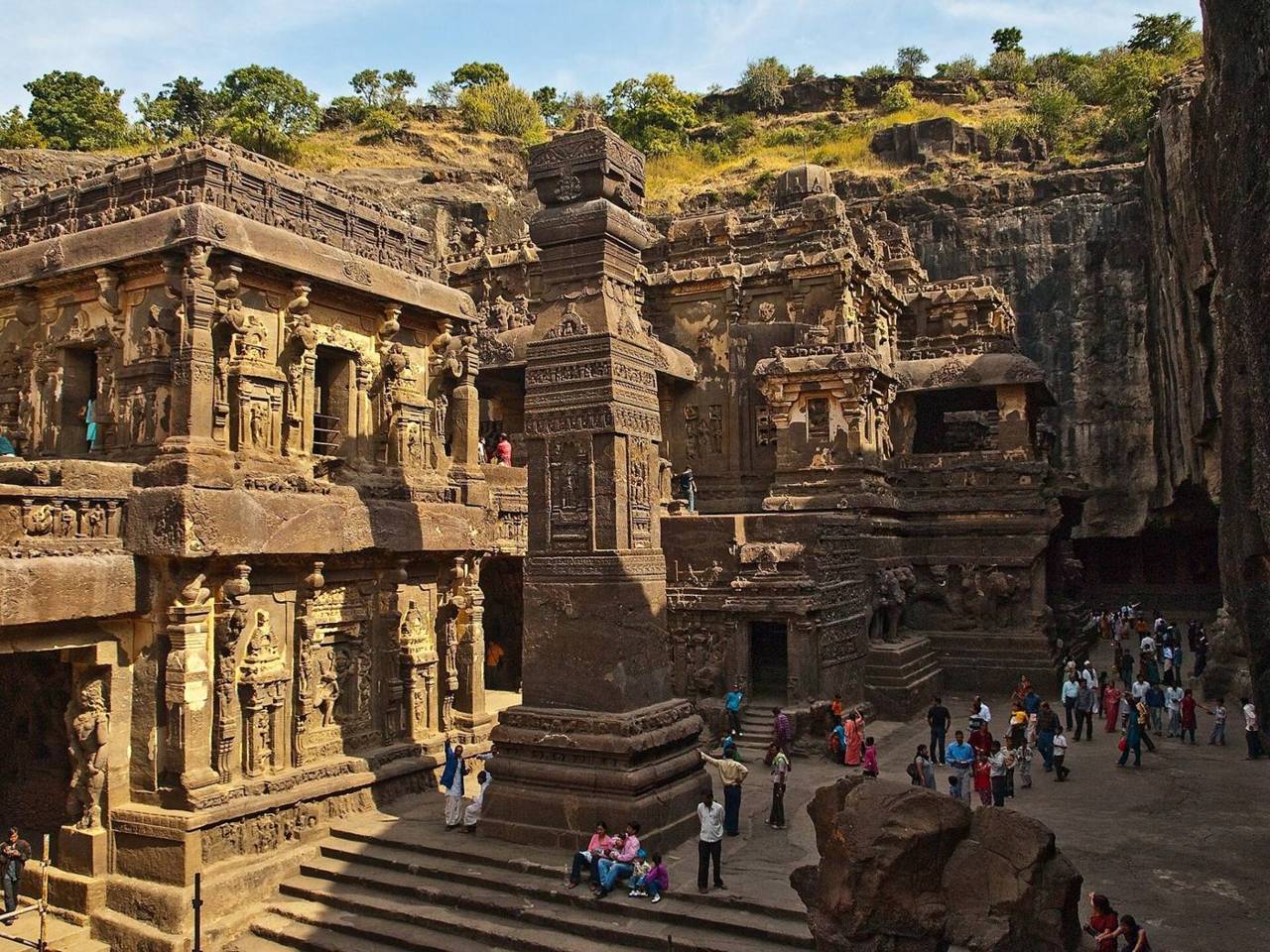
Early in the morning set off for Ellora, about half an hour from Aurangabad. The site, a UNESCO World Heritage site, comprises 34 caves carved into the basalt face of a hill between the sixth and tenth centuries by three different religions: Buddhist, Hindu and Jain. That they existed side by side speaks of the tolerance of ancient India.
The heart of the site is cave 16, the Kailasa temple, one of the most incredible works ever made by human hands. It is not built but carved: eighth-century craftsmen dug down from above into a single enormous block of rock, removing some two hundred thousand tonnes of stone, to create a complete temple with courtyards, towers, bridges, columns, life-size elephants and panels telling the stories of the gods. It represents Mount Kailash, the home of Shiva. Climb the path above the rock face to see it from above and grasp its size.
Then visit the Buddhist caves, the oldest, to the south, including the great cave 10, a temple with a ceiling carved to look like wooden beams and a seated Buddha, and the Jain caves to the north, smaller but with very fine sculptures.
In the afternoon, on the way back, stop at Daulatabad fort, built on a conical hill, with moats, dark passages and a stairway to the top. In the fourteenth century a sultan of Delhi briefly moved his capital here, forcing the entire population to relocate.
Practical tip: Ellora is closed on Tuesdays; plan your visits accordingly.
- Day 6
Ajanta: the painted caves in the horseshoe gorge and the journey back
On the last day leave very early for Ajanta, about two and a half to three hours' drive from Aurangabad. The Ajanta caves, a UNESCO site, are about thirty Buddhist temples and monasteries carved between the second century BC and the sixth century AD into the wall of a horseshoe-shaped gorge above the Waghora river. Abandoned for centuries and covered by jungle, they were rediscovered in 1819 by a British officer on a tiger hunt.
From the visitor centre a shuttle bus takes you to the entrance of the site; from there a paved path runs along the gorge from one cave to the next.
Ajanta is famous above all for its murals, among the oldest and most beautiful in Indian art: scenes from the life of the Buddha and the tales of his previous lives, with princes, princesses, musicians, animals and landscapes, painted with natural colours. The most celebrated are in cave 1, with the two bodhisattvas, Padmapani holding a lotus and Vajrapani, with very gentle faces. Inside the caves the light is dim and protecting the paintings means rules: no flash, and sometimes entry in small groups.
Allow at least three or four hours. Before leaving, climb to the viewpoint on the other side of the gorge, from which you see the whole semicircle of caves.
In the afternoon return to Aurangabad for your flight or train back to Mumbai, or continue to Jalgaon, closer to Ajanta, for trains to the north. Practical tip: Ajanta is closed on Mondays. Between July and September, after the monsoon, the gorge is lush green and the waterfalls are full.
A trip of ancient art, comfortable and with no risk zones. Ellora is closed on Tuesdays and Ajanta on Mondays: plan the days accordingly. At Ajanta flash photography is forbidden and the most delicate caves are entered in groups. In Mumbai, a rush-hour local train is an experience, but only for those who can handle crowds.
Before you go
- Documents and visa
- Passport with at least six months' validity and two blank pages, plus an electronic tourist visa from the official Indian government website: 30 days for 25 dollars from July to March, 10 dollars from April to June.
- Health and vaccines
- No compulsory vaccines arriving from Europe; ask your doctor about hepatitis A, typhoid and malaria depending on the area. Drink only sealed bottled water. Emergencies: 112.
- Money and payments
- Indian rupee. Cards and digital payments are common in cities; markets, villages and rickshaws need cash.
- Power sockets
- Types C, D and M, 230 volts: a universal adapter is useful.
- Time zone
- UTC+5:30 all year: India does not use daylight saving time.
- Safety
- The United States rates India level 2, with level 4 for Jammu and Kashmir (except Ladakh), Manipur and the 10 km strip along the Pakistani border. Official advice: GOV.UK.
Information checked in November 2026 for Italian and EU citizens. Rules change: always check before you travel.
Variations
In 4 days: a full day in Mumbai, then a flight to Aurangabad with Ellora and Ajanta, returning on the evening of day four.
In 9 days: after Ajanta continue to the coast of Goa and its Portuguese churches, or to Udaipur and Rajasthan.
Frequently asked questions
When is the best time to go?
From October to March, with dry weather and bearable heat. April to June is very hot; June to September brings the monsoon, with heavy rain but very green scenery at Ajanta.
Which days are the sites closed?
Usually Ellora is closed on Tuesdays and Ajanta and Elephanta on Mondays. Always check the current opening times.
Is it safe?
The United States has India at level 2, increased caution; Mumbai and Maharashtra are not among the highest-risk areas. Watch out for pickpockets in crowds and for scams by fake tourist offices.
Indicative itinerary written by World Atlas. Before booking, check timetables, seasonal openings, documents and safety.
 6 daysEasy
Goa: churches, spices and beaches
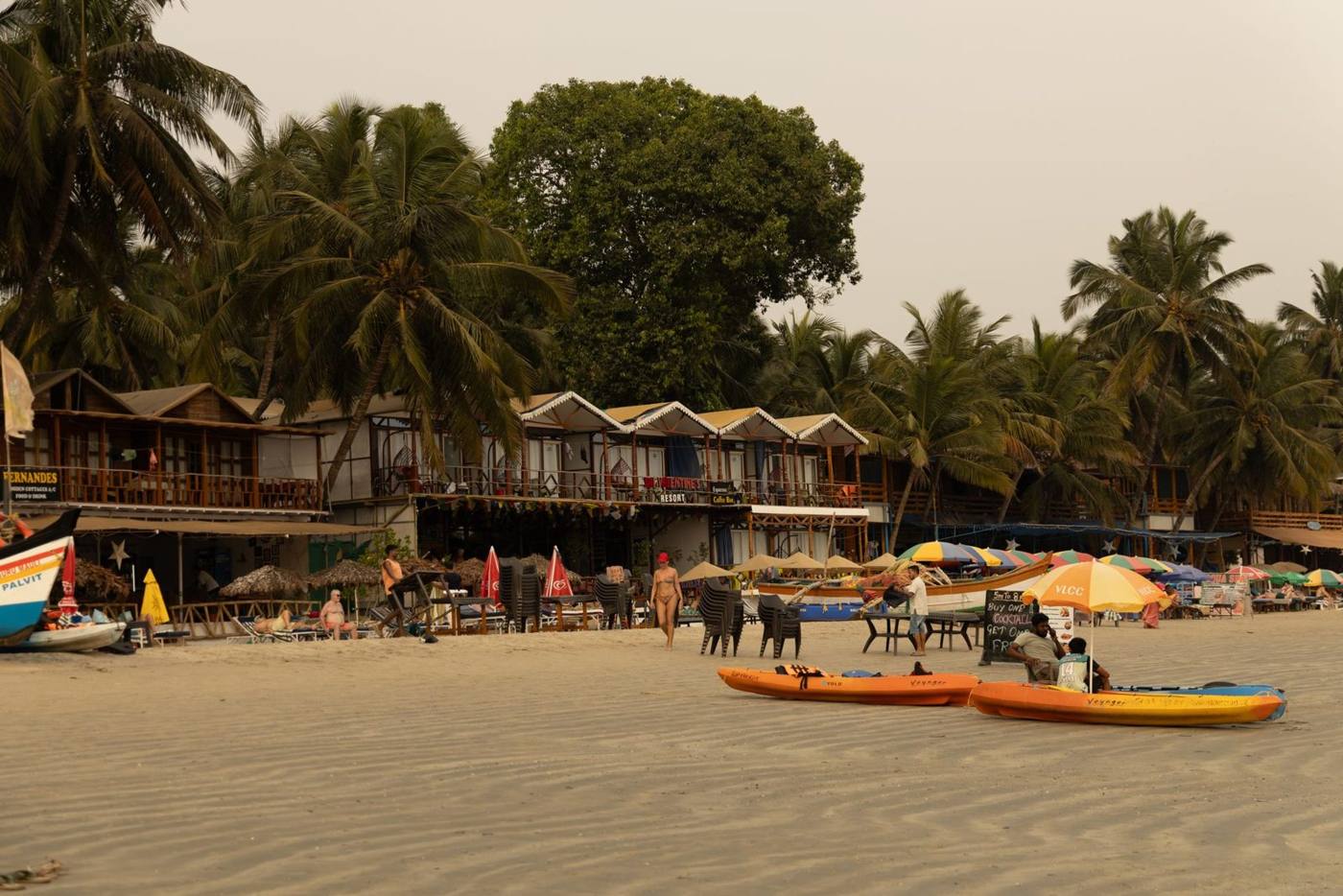
Portuguese India: the baroque churches of Old Goa (UNESCO World Heritage), the Fontainhas quarter in Panaji, a spice plantation inland, the Dudhsagar falls and the quiet southern beaches such as Palolem and Agonda.
 10 daysModerate
Punjab and Himachal: Amritsar, Dharamsala, Manali and Shimla
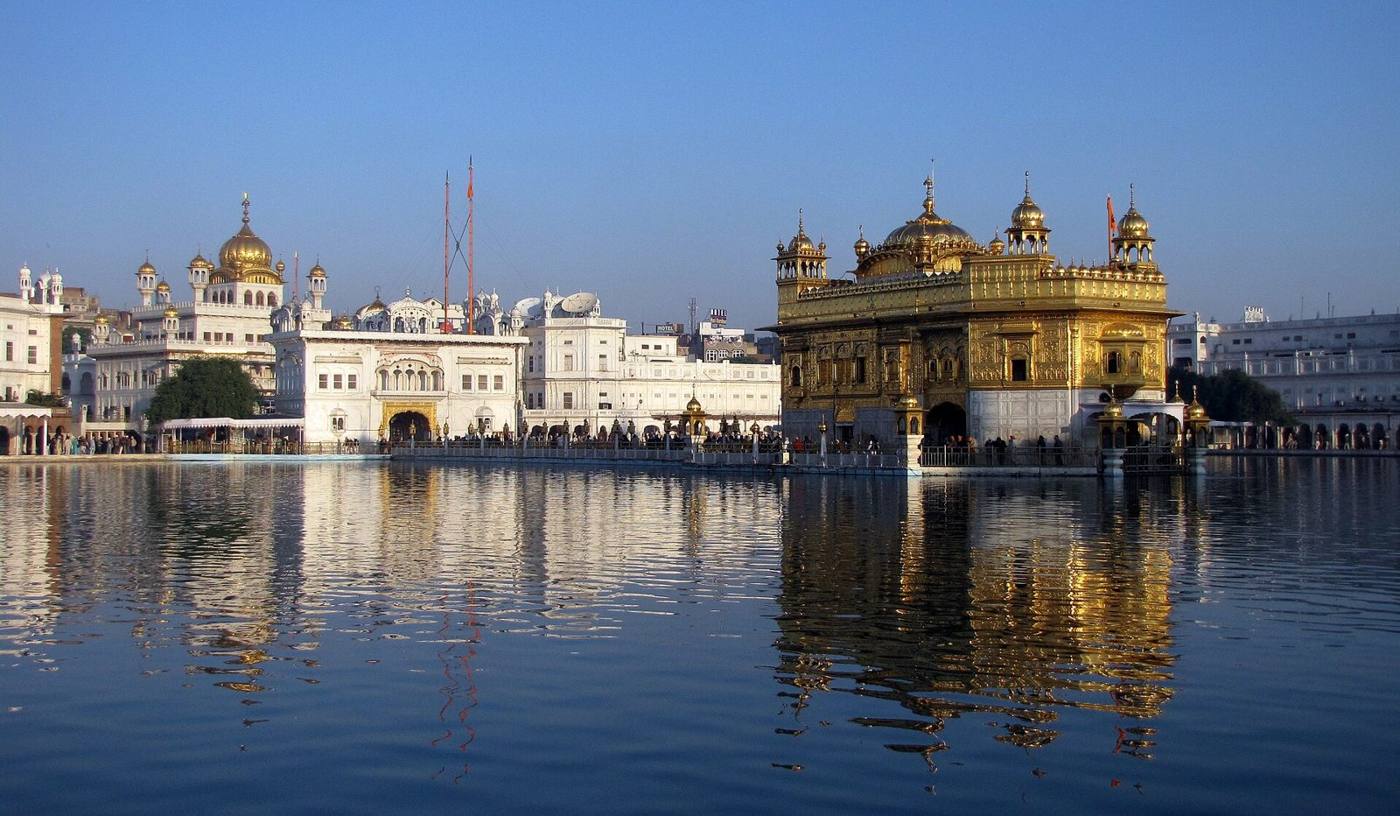
From Amritsar's Golden Temple to the Himalayan foothills: Dharamsala and McLeod Ganj with the Tibetan community, the Kangra valley and its tea gardens, Manali and the Kullu valley, ending in Shimla with its historic toy train (UNESCO World Heritage).
 8 daysEasy
Madhya Pradesh: tigers of Bandhavgarh, Pench and Satpura
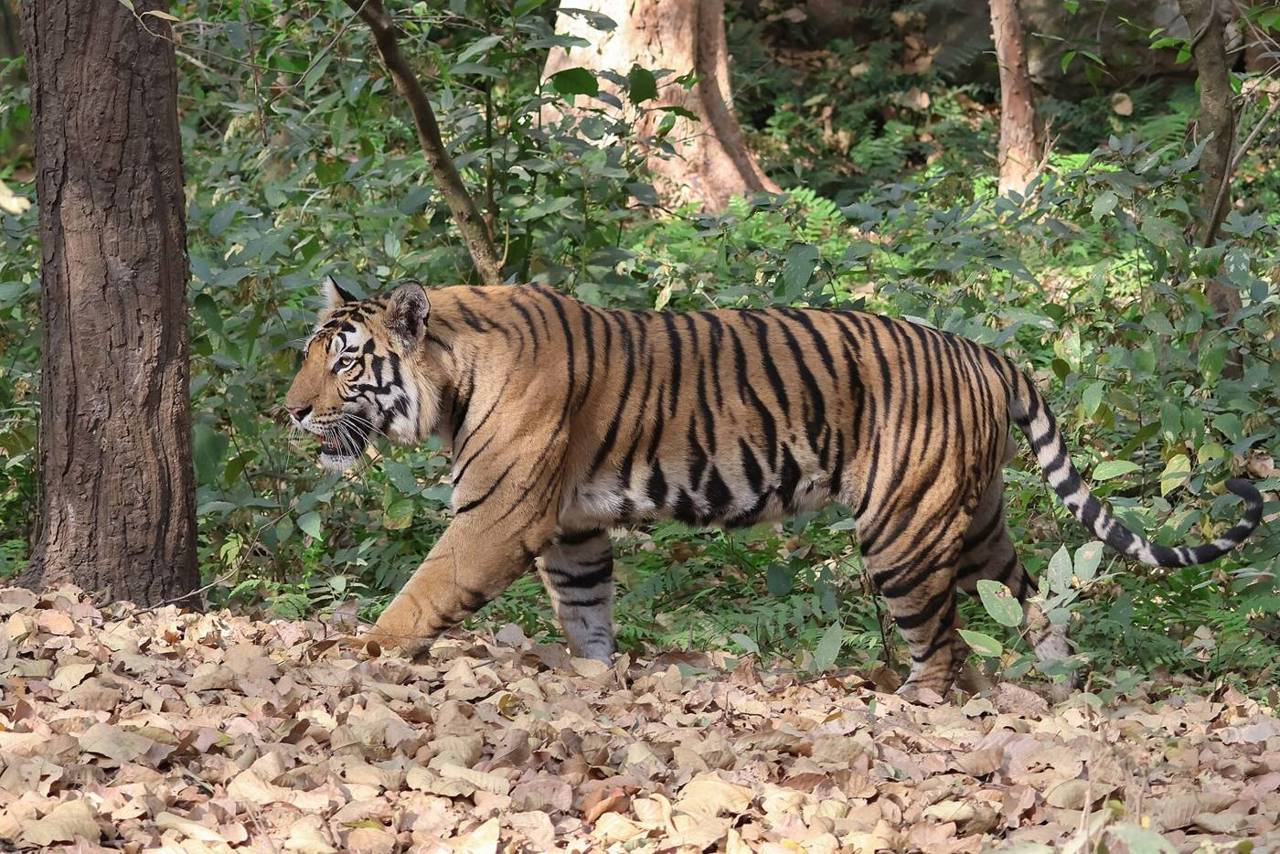
The heart of the Jungle Book forests: Bandhavgarh, one of India's parks with the most tigers, Pench with its teak forests, and Satpura, where safaris are done on foot, by canoe and by jeep among leopards, sloth bears and sambar deer.