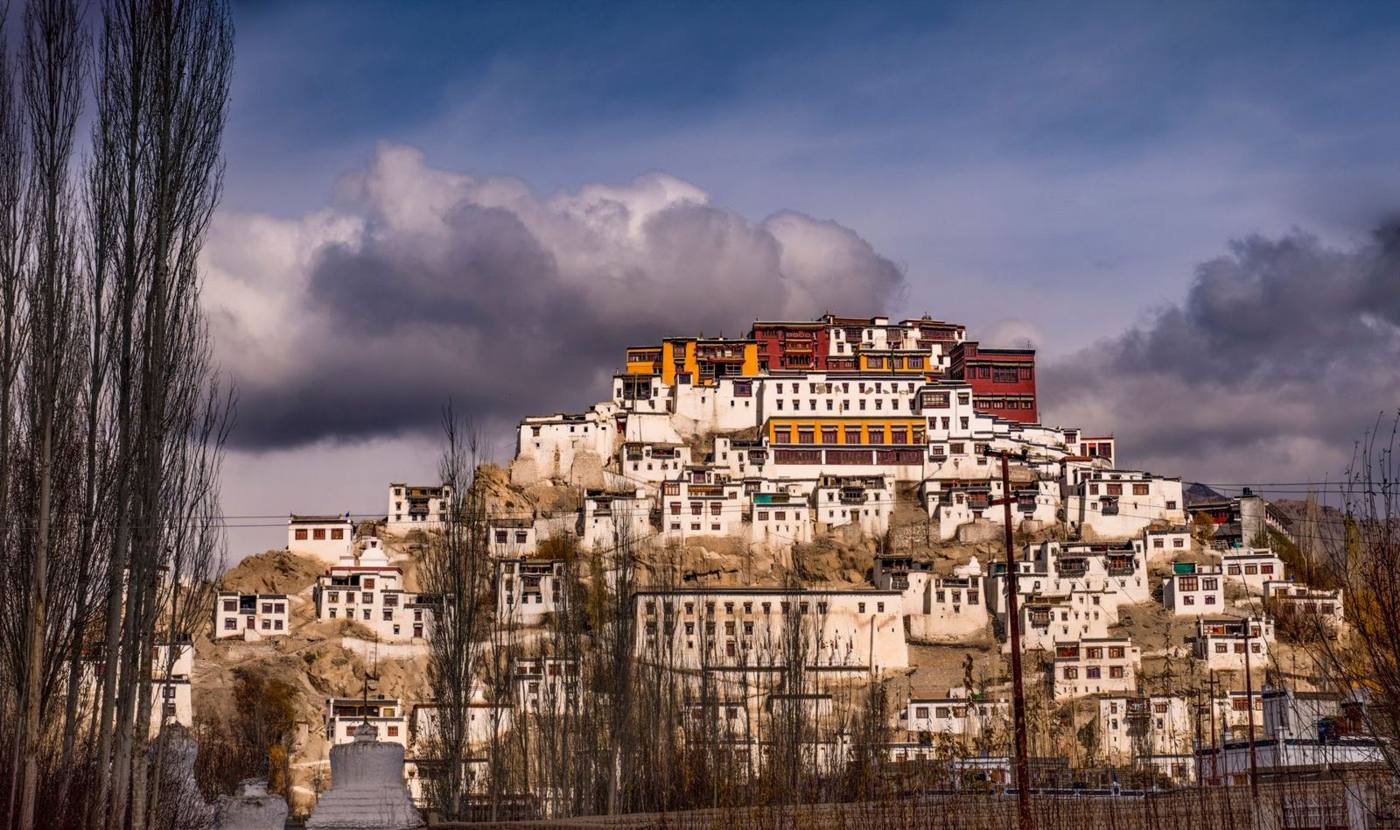
Ladakh in winter: tracking the snow leopard
Ladakh under snow and almost empty of tourists: the monasteries of Thiksey and Hemis with their winter festivals, then several days in the Ulley valley or the Rumbak valley in Hemis National Park, with local trackers searching for the snow leopard, ibex and bharal.
- Delhi
- Leh
- Thiksey
- Ulley
- Hemis
- Rumbak
Day by day
- Day 1
Flight from Delhi to Leh and rest for the altitude
This trip takes you to Ladakh in the depths of winter, on the Himalayan plateau of northern India, to look for the snow leopard, one of the hardest animals in the world to see. In winter the leopards come down to lower altitudes following their prey, ibex and wild sheep, and the snow covered valleys make them easier to spot. You walk with expert trackers and spotting scopes and sleep in simple lodges or in the homes of Ladakhi families.
Before you leave: you need the Indian e-visa, which costs 25 dollars from July to March and 10 dollars from April to June. The United States government rates India at level 2 of 4, with level 4 for Jammu and Kashmir but not for Ladakh. Check the latest advice and the permits required for the areas you will visit.
In the morning take the flight from Delhi to Leh. It lasts just over an hour and passes over snow covered Himalayan ranges: sit by the window. Leh is at about 3,500 metres. You arrive from the plains in a few hours, with no time to adjust.
That is why the first day is for rest only. Stay in your warm room, drink plenty of water and tea, eat light and avoid any effort, even climbing stairs quickly. A mild headache, shortness of breath and poor sleep are normal.
Sleep in Leh.
Practical tip: talk to your doctor before you leave about altitude and possible medication to prevent its effects.
- Day 2
Leh, Thiksey and Shey at a slow pace
Today, if you feel well, spend a quiet day in and around Leh, still without exertion. Winter temperatures are very low: often below freezing by day and as low as minus twenty at night. The sky, however, is often perfectly clear and the sun strong.
In the morning go to Thiksey monastery, about half an hour from Leh, built on a terraced hill with white and red buildings rising one above the other. It recalls the Potala Palace in Lhasa, Tibet. If you arrive early you can attend the morning prayer, with monks chanting and playing long horns and drums. Inside is a large statue of the Buddha of the future, two storeys high.
Then stop at Shey palace, the old summer residence of the kings of Ladakh, with a large seated Buddha of gilded copper.
In the afternoon walk slowly through the old quarter of Leh, below the nine storey royal palace built in the seventeenth century, with narrow lanes, mud and wood houses, white stupas and walls of stones carved with prayers. When you meet them, always pass keeping them on your right, as the Ladakhis do.
In the evening try Ladakhi food: thukpa, a noodle soup, momos, steamed dumplings, and salted butter tea.
Sleep in Leh.
Practical tip: in monasteries take off your shoes, do not touch the statues and ask before photographing the monks.
- Day 3
To the Ulley valley and a first outing
Today you leave Leh and drive west along the Indus valley and then up a side valley to Ulley, a small village at about 3,800 metres, a few hours away. The road passes between bare mountains of red, yellow and purple rock, with the frozen river at the bottom of the valley.
Ulley is one of the best areas in Ladakh for snow leopards, along with the Rumbak valley. It is surrounded by steep mountains with rock faces and pastures, home to Himalayan ibex, urial, a wild sheep, wolves, red foxes and golden eagles.
In the afternoon go out for the first time with the guide and the trackers, local men who know every ridge. You climb slowly to a viewpoint and scan the mountains with a spotting scope. The trackers look for the animals, their tracks in the snow, marks left on rocks and the remains of prey. The snow leopard has a grey coat with dark rosettes and blends perfectly with the rocks: often only a very trained eye can find it.
In the evening settle into a simple lodge or a family home. Rooms are heated by a wood or dried dung stove, called a bukhari, in the middle of the kitchen, where the whole family gathers.
Sleep in Ulley.
Practical tip: bring a good sleeping bag rated for extreme cold, even if your lodging provides blankets.
- Day 4
Ulley valley: a day with the trackers
Today you spend the whole day in the Ulley valley. The plan depends on what the trackers have seen at dawn: every morning some of them go out early, check the ridges and gorges with their scopes, then report by radio or phone.
If a leopard has been spotted, you set off immediately by car or on foot towards the best place to watch it, often a ridge facing the cliff where the animal is resting or moving. You may watch for hours, in silence, with the scope on a tripod. Sometimes the leopard sleeps on a sunny rock all afternoon; sometimes it gets up, walks along the cliff, marks its territory or hunts.
If there are no sightings, you walk through the valley looking for fresh tracks, watching ibex grazing on the slopes, snowcocks and huge bearded vultures flying along the cliffs.
The walks are short but at high altitude, above 3,800 metres, on frozen ground. Walk slowly and breathe deeply. The cold is fiercest at dawn and after sunset.
Lunch is often a packed meal outdoors, with hot tea from thermos flasks, or back in the village.
In the evening, by the stove, families talk about life in winter and their relationship with the leopard, which sometimes attacks livestock.
Sleep in Ulley.
Practical tip: dress in layers, with thermal underwear, a down jacket, double gloves, a hat and warm boots.
- Day 5
Ulley valley: patience and observation
Today you stay in the Ulley valley with the trackers again. The second and third days in the same area matter: the snow leopard moves over large territories and can disappear for days, then come back. The more days you spend in the valley, the greater the chance of seeing it. No one can guarantee a sighting: it is a rare wild animal.
In the morning climb with the guide to a different ridge, overlooking other side valleys. With the scope you watch ibex with their great curved horns, which the males use to fight, and, with luck, Himalayan wolves, which hunt in packs.
In the middle of the day, when the animals rest, visit the village. In winter Ladakhi families live on supplies gathered in summer: barley, potatoes, turnips, dried meat and fodder for the animals, stored on the flat roofs of the houses. Many also live from snow leopard tourism: the money left by visitors convinces villagers that protecting the leopard is worth more than hunting it. In some villages closed, secure pens have been built for livestock to prevent attacks.
In the afternoon return to the observation points until sunset, when the leopard often moves.
Sleep in Ulley.
Practical tip: keep your camera and phone batteries warm inside your jacket. In the cold they drain within minutes.
- Day 6
Last day in Ulley
The last day in the Ulley valley follows the same rhythm: out at dawn, watching from the ridges, a break in the middle of the day, out again in the afternoon.
If you have already seen the leopard, today you can spend more time on the other animals and the landscape. Winter light in Ladakh is wonderful for photography: deep blue sky, white snow, warm coloured mountains. With the guide you can climb to a nearby pass for a wide view of the snowy ranges.
For leopard photos you need a long telephoto lens, because the animal is almost always far away, hundreds of metres off. Many people also shoot through the scope with a phone and an adapter. Never ask to get too close: disturbance can make the animal flee and even abandon its prey.
Throughout these days follow the rules of conduct: no noise, no drones, no attempts to attract animals with food or sounds. Always follow the guide's instructions.
In the evening say goodbye to the family who hosted you. Leave a tip for the trackers, who spend whole days in the cold to find the animals.
Sleep in Ulley.
Practical tip: drink at least three litres a day of water or hot tea. The dry air and cold dehydrate you a lot, even if you are not thirsty.
- Day 7
Hemis National Park and the Rumbak valley
Today you leave Ulley for Hemis National Park, south west of Leh, one of the largest national parks in India, created partly to protect the snow leopard. Entry to the park is charged: check the current fees and permits.
You leave the car at the start of the valley, near the Zingchen bridge, and walk for a few hours along the frozen river to the village of Rumbak, at about 4,000 metres. The path climbs gently between rock walls; sometimes you walk directly on the ice of the stream. Luggage can be carried by animals or porters.
Along the way watch the cliffs: leopards have been spotted here many times, even close to the path. You often see urial and blue sheep, or bharal, the leopard's favourite prey in this area.
Rumbak is a small village of a few houses below very high mountains. Here you stay in a family home, a homestay, sleeping in simple rooms on mattresses on the floor with heavy blankets, eating with the family and keeping warm by the stove.
In the afternoon go out with the guide for a first look at the side valleys.
Sleep in Rumbak.
Practical tip: in family homes toilets are often dry toilets, in the traditional way. It is an ecological system used for centuries.
- Day 8
Rumbak valley: last searches
Today you spend your last full day in the Rumbak valley. Early in the morning go out with the guide and the trackers, who know the side gorges where the leopard passes most often, such as the Husing or Tarbung valleys. You climb to an observation point and wait in the sun, scanning the cliffs.
Even if the leopard does not show itself, the day is full: fresh tracks in the snow, claw marks on low trees, groups of bharal on the slopes, foxes, hares, snowcocks and sometimes the lynx. On clear nights the sky is full of stars as in few other places in the world.
In the afternoon, if you have the strength, walk towards the Stok La pass to see the surrounding ranges, or stay in the village with the family. The women of Rumbak work wool and bake bread for the evening; the men look after the animals.
In the evening, a last dinner in the family home: ask to taste skyu, a thick soup with small pieces of handmade pasta and vegetables, the typical Ladakhi winter dish.
Sleep in Rumbak.
Practical tip: leave a tip for the family, the trackers and the porters. Winter tourism is one of the few sources of income in these valleys during the hardest months.
- Day 9
Back to Leh and flight to Delhi
On the last day you walk down from Rumbak along the valley to the road, then drive back to Leh and take the flight to Delhi.
Plan the journey with a margin. In winter flights between Leh and Delhi can be cancelled or delayed by snow, fog or wind, and the road to Leh from the plains is closed for many months. It is better to spend an extra night in Leh before your flight to Europe, or to leave at least one no-cost day in Delhi.
If your flight leaves in the afternoon, in Leh you can climb up to the royal palace or the great white Shanti stupa on the hill, with views over the town and the Stok mountains.
Once in Delhi, the difference in altitude and temperature is huge: from minus twenty degrees you arrive in a warm, noisy and crowded city. Rest before your international flight.
This trip is not a comfortable holiday: it is very cold, accommodation is simple and you wait for hours. But it lets you enter one of the purest landscapes of the Himalaya, live with Ladakhi families and, with luck, see the snow leopard, the ghost of the mountains.
Practical tip: check your travel insurance. It must cover medical costs and emergency evacuation at high altitude.
An extreme trip, only with specialist operators: at night it often drops below -20 degrees and Leh is at 3,500 metres, so the first days must be spent resting. In winter the roads to Ladakh are closed and you can only arrive by air. The snow leopard is never guaranteed: you search for hours with a spotting scope, often from afar. Ladakh is excluded from the US advisory that warns against the rest of Jammu and Kashmir.
Before you go
- Documents and visa
- Passport with at least six months' validity and two blank pages, plus an electronic tourist visa from the official Indian government website: 30 days for 25 dollars from July to March, 10 dollars from April to June.
- Health and vaccines
- No compulsory vaccines arriving from Europe; ask your doctor about hepatitis A, typhoid and malaria depending on the area. Drink only sealed bottled water. Emergencies: 112.
- Money and payments
- Indian rupee. Cards and digital payments are common in cities; markets, villages and rickshaws need cash.
- Power sockets
- Types C, D and M, 230 volts: a universal adapter is useful.
- Time zone
- UTC+5:30 all year: India does not use daylight saving time.
- Safety
- The United States rates India level 2, with level 4 for Jammu and Kashmir (except Ladakh), Manipur and the 10 km strip along the Pakistani border. Official advice: GOV.UK.
Information checked in November 2026 for Italian and EU citizens. Rules change: always check before you travel.
Variations
In 6 days: Leh, Thiksey and three days in Ulley, without Hemis.
In 12 days: add more days in Rumbak and a visit to Hemis monastery and the Markha valley.
Frequently asked questions
Will I definitely see a snow leopard?
No. It is a rare wild animal. The more days you spend in the valleys with expert trackers, the better your chances, but no one can guarantee a sighting.
When should I go?
From January to March, when leopards come down to lower altitudes and the snow helps to spot them. Temperatures can fall to minus twenty degrees.
Is it safe?
The United States rates India at level 2 of 4, with level 4 for Jammu and Kashmir but not for Ladakh. The main danger is altitude: rest on the first day and talk to a doctor beforehand.
Indicative itinerary written by World Atlas. Before booking, check timetables, seasonal openings, documents and safety.
 9 daysModerate
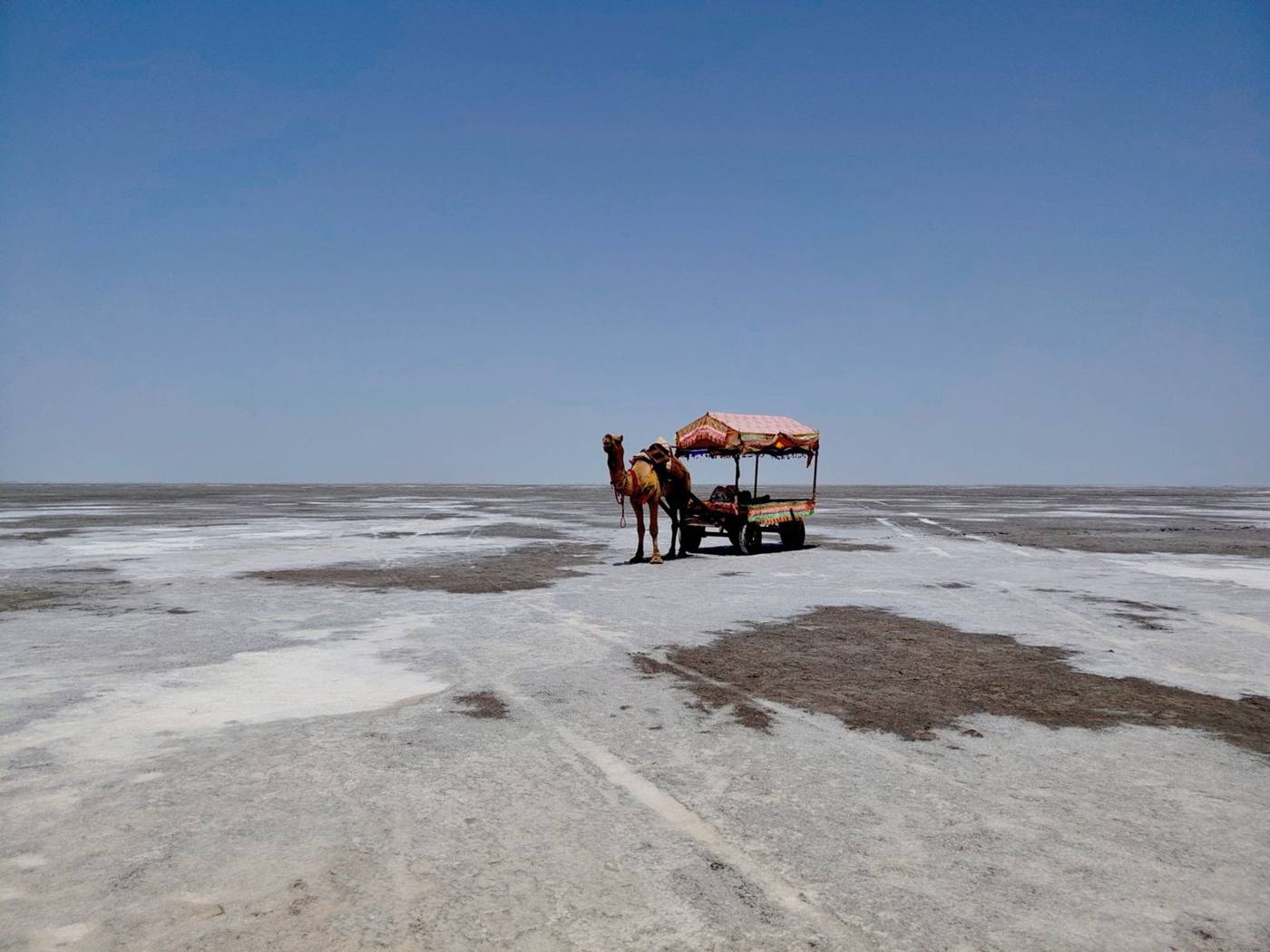
Gujarat: the Rann of Kutch and the lions of Gir
The less-travelled India of the west: the old city of Ahmedabad (UNESCO World Heritage), the Rani ki Vav stepwell and the sun temple of Modhera, the craft villages of Kutch and the white salt desert of the Great Rann, ending with the last Asiatic lions in the Gir forest.
 6 daysEasy
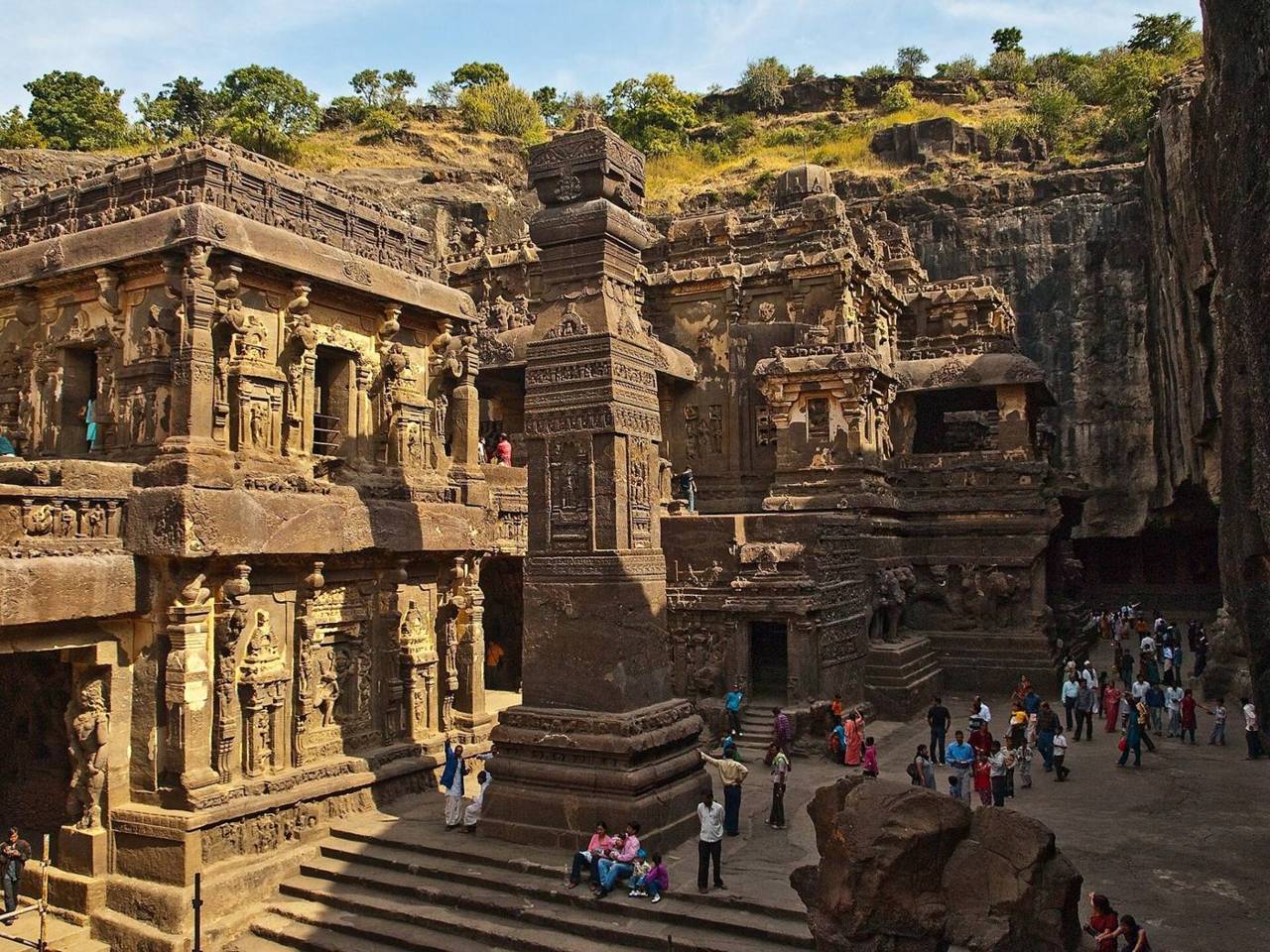
Mumbai, Ajanta and Ellora
India's great metropolis with the Gateway of India, the Victorian railway station and the dhobi ghats, then the Ellora caves with the Kailasa temple carved from a single rock and the Buddhist paintings of Ajanta, both UNESCO World Heritage sites.
 6 daysEasy
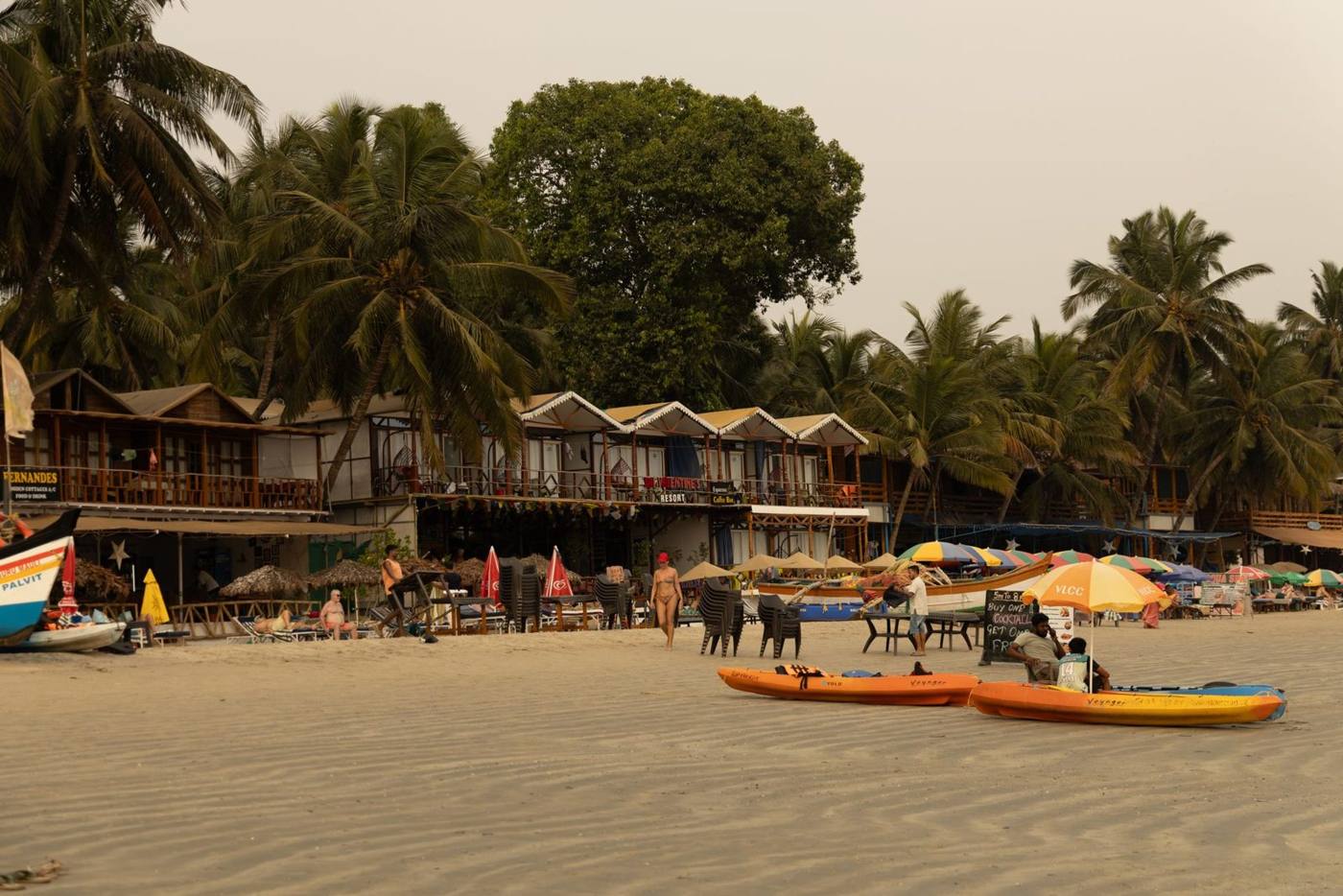
Goa: churches, spices and beaches
Portuguese India: the baroque churches of Old Goa (UNESCO World Heritage), the Fontainhas quarter in Panaji, a spice plantation inland, the Dudhsagar falls and the quiet southern beaches such as Palolem and Agonda.