Karnataka: Hampi, Mysore and the Jog falls
The ruins of Vijayanagara among the Hampi boulders, the carved temples of Belur and Halebid, Mysore palace lit up and India's highest waterfalls.
- Bangalore
- Mysore
- Coorg
- Belur
- Halebid
- Jog Falls
- Gokarna
- Hampi
- Badami
Day by day
- Day 1
Arrival in Bangalore
This trip crosses Karnataka, the southern Indian state that runs from the coffee hills to the Arabian Sea. You will see the maharajas' palace in Mysore, the plantations of Coorg, the carved temples of Belur and Halebid, the Jog Falls, the beaches of Gokarna, the ruins of Hampi among granite boulders and the cave temples of Badami. You travel by car with a driver, with a few stretches by train or plane.
Before you go: Italian citizens need an electronic visa for India. The 30 day tourist visa costs 25 dollars from July to March and 10 dollars from April to June; it is applied for online before departure. Other nationalities should check their own rules. Karnataka has no areas advised against, but the usual care applies all over India: pickpockets in crowds, transport scams and caution for women travelling alone in the evening. Check your government's travel advice before leaving.
You land at the airport of Bangalore, also called Bengaluru, the state capital and the centre of India's computer industry. It lies at about 900 metres, and the climate is cooler than in the rest of the south.
In the afternoon, if you have the energy, walk in the Lalbagh botanical garden, created in the eighteenth century by the sultans of Mysore, with huge trees and a glass and iron greenhouse. Check prices and times.
In the evening, try masala dosa, a thin rice and lentil crêpe filled with spiced potatoes, served with sambar and coconut chutney.
Overnight in Bangalore.
Practical tip: in India drink only sealed bottled water, avoid ice and choose cooked, hot dishes, especially in the first few days.
- Day 2
Srirangapatna and the evening in Mysore
Today you leave Bangalore heading south west, in about three or four hours on the road, depending on traffic. The first stretch is slow, then the countryside opens up with rice fields, coconut palms and sugar cane.
Halfway, stop at Srirangapatna, an island in the Kaveri river that was the capital of Tipu Sultan, the ruler who fought against the British in the eighteenth century and died here in 1799, during the last siege. Visit the Daria Daulat Bagh, his summer palace, with wooden walls painted with battle scenes, and the white domed mausoleum where he rests with his father. On the island there is also a large temple dedicated to Vishnu. Check prices and times.
In the afternoon you reach Mysore, now called Mysuru, the old capital of the Wodeyar maharajas. It is a tidy city, with tree lined avenues, colonial buildings and a calmer pace than Bangalore.
Plan your trip so that you are here on a Sunday evening. On Sundays and public holidays, at dusk, the royal palace lights up with tens of thousands of bulbs for about an hour: the domes, arches and towers shine gold in the dark, and the square fills with Indian families. Check prices and times, because the illumination sometimes changes or is suspended.
Overnight in Mysore, for two nights.
Practical tip: always keep small notes in your pocket for entry tickets, for the shoes you leave outside temples and for small purchases.
- Day 3
Mysore: the palace, the market and Chamundi Hill
In the morning, visit the inside of Mysore Palace, rebuilt in the early twentieth century after a fire, in a style that blends Indian, Islamic and Gothic elements. You walk through the marriage hall, with its stained glass ceiling and painted cast iron columns, and the great audience hall open onto the courtyard. The walls are covered with paintings of the Dasara festival, the most important in the city. You go in without shoes and photos are often not allowed. Check prices and times.
Then walk through the Devaraja market, covered and crowded, with mounds of coloured powder for rituals, bunches of jasmine, bananas of many varieties, betel, incense and sandalwood oil. The sellers are used to visitors and let you look without hurry.
In the afternoon, go up Chamundi Hill, a few kilometres from the city. At the top stands the temple of the goddess Chamundeshwari, protector of the maharajas, with a tall decorated gateway tower. On the way down, stop in front of the great Nandi bull, carved from a single block of black rock in the seventeenth century, along the staircase of about a thousand steps that leads down to the city. If your legs are good, you can walk down.
In the evening, taste Mysore pak, the city's sweet made with chickpea flour, sugar and clarified butter, and look for a scarf of Mysore silk.
Overnight in Mysore.
Practical tip: for silk and sandalwood, buy in state run shops with fixed prices and always ask for a receipt, so you avoid fakes.
- Day 4
The Tibetan monastery of Bylakuppe and arrival in Coorg
Today you climb towards the western hills. After about two hours on the road you reach Bylakuppe, near Kushalnagar, one of the largest Tibetan refugee settlements outside Tibet, founded in the early 1970s on land given by the Indian government. Suddenly, among maize fields and palms, you see monks in red robes, prayer flags and Tibetan writing.
The heart of the settlement is Namdroling monastery, home to thousands of monks. The main temple, called the Golden Temple, holds three great gilded statues almost twenty metres tall: the Buddha in the centre, with Padmasambhava and Amitayus at the sides. The walls are covered with paintings in very bright colours. If you arrive in the afternoon, you may hear the monks chanting and playing the long horns. Sit in silence, take off your shoes and cover your shoulders.
Day visits are open to everyone, but foreigners who want to sleep inside the Tibetan settlements need a special permit from the Indian government. So for the night you continue to Madikeri, the main town of Coorg, about an hour away.
Coorg, now called Kodagu, is a region of green hills between 900 and 1,700 metres, with forests, coffee and pepper plantations, and a people, the Kodava, with traditions of their own.
Overnight in Coorg, for two nights.
Practical tip: at Bylakuppe, try momos and thukpa, the Tibetan noodle soup, in the small kitchens of the village near the monastery.
- Day 5
Coorg: coffee, pepper and waterfalls
Today is a slow day in the hills. Early in the morning, when the mist rises from the valleys, walk through a coffee plantation with a local guide. In Coorg coffee grows in the shade of tall trees, together with pepper vines that climb the trunks, orange trees and cardamom. You will learn the difference between arabica and robusta, how the red berries are picked and how they are dried in the sun. The main harvest takes place in winter, between November and February.
Then go to Abbey Falls, a few kilometres from Madikeri, reached by a short path through the plantations. A suspension bridge faces them. They carry the most water after the monsoon, between August and November. Check prices and times.
In the afternoon, visit Madikeri fort, with its stone walls and small museum, and then Raja's Seat, a garden on the edge of the hill where the kings of Coorg came to watch the sunset. From here you see the valleys and the ranges of the Western Ghats fading towards the sea.
In the evening, taste Kodava food: pandi curry, pork in a dark, tangy sauce, and akki roti, rice flatbreads. If you do not eat meat, you will find vegetables with coconut and steamed rice.
Overnight in Coorg.
Practical tip: in the plantations wear closed shoes and long trousers. After rain there are leeches on the paths; a little salt makes them drop off.
- Day 6
Belur, the Chennakeshava temple
Today you leave Coorg heading north, through hills, plantations and fields, in about three or four hours on the road. You reach the Hassan area, the heart of the old kingdom of the Hoysalas, who ruled southern Karnataka between the eleventh and fourteenth centuries and left some of the most finely carved temples in India. In 2023 their temples at Belur, Halebid and Somanathapura were inscribed on the UNESCO World Heritage list.
In the afternoon, visit the Chennakeshava temple at Belur, built for King Vishnuvardhana and begun in 1117. It is still a living temple, dedicated to a form of Vishnu, with worshippers bringing flowers and priests ringing the bell. The Hoysalas worked a soft stone that hardens in the air: that is why the carvings are so fine. Look at the female figures under the roof, dancers and musicians, with jewels, mirrors and hair carved like lace. Inside, the pillars of the hall look as if they were turned on a lathe, each one different from the others.
Hire an official guide at the entrance: they will show you details you would not see alone, such as a drop of water carved on a leaf. Check prices and times.
At sunset the grey green stone turns warm and golden.
Overnight in the Belur or Hassan area, for two nights.
Practical tip: you enter temples barefoot, so bring cotton socks, because in the hot hours the stone slabs of the courtyard burn your feet.
- Day 7
Halebid, the Hoysala capital
In the morning, go to Halebid, about half an hour from Belur. The name means "old city": this was Dwarasamudra, the Hoysala capital, sacked by the armies of the Delhi Sultanate in the fourteenth century. Little remains of the city, but the Hoysaleswara temple is a masterpiece.
It is a double temple, dedicated to Shiva, with two shrines side by side and two great Nandi bulls in front. It no longer has its tower, but the outer walls are covered with carved bands that run all the way round: at the bottom elephants, then lions, horses, flowers and scenes from the epics of the Ramayana and the Mahabharata, and higher up gods and goddesses almost life size. It is said that among the thousands of elephants in the lowest band no two are alike. Walk round the temple slowly, clockwise. Check prices and times.
Next to it there are a small open air archaeological museum and a group of Jain temples, plainer, with polished pillars that reflect the light.
In the afternoon, if you have time, you can take a detour to Shravanabelagola, about an hour and a half away, where on top of a hill stands the statue of Gommateshwara, a Jain saint, carved from a single block of granite in the tenth century, about seventeen metres tall. To reach the top you climb a long staircase cut into the rock, barefoot.
Overnight in the Belur or Hassan area.
Practical tip: in Jain temples you may not bring leather items, such as belts and bags. Leave them in the car.
- Day 8
The Jog Falls
Today you cross the Western Ghats towards the coast, in about four or five hours on the road. The landscape becomes greener and wilder, with thick forests, rice fields and villages of houses with red tiled roofs.
In the afternoon you reach the Jog Falls, on the Sharavathi river, among the highest in India. The water drops about 250 metres in a single leap into a rocky gorge, split into four streams that local people call Raja, Rani, Roarer and Rocket, that is the king, the queen, the roarer and the rocket.
The show depends a lot on the season. After the monsoon, between August and November, the falls are powerful and often wrapped in clouds of spray. Later in the winter the water drops, and from February to May there are often only thin threads of water on the cliff, also because a dam upstream holds back the river. If you travel in October or November you will see them at their best.
Look at the falls from the viewpoints on the edge of the gorge. A long staircase goes down to the bottom: it is tiring to climb back up and may be closed for safety. Check prices and times.
Stay until late afternoon, when the low light sometimes makes a rainbow in the spray.
Overnight in the Jog or Sagara area.
Practical tip: never climb over the railings to get a better photo. The wet rocks near the edge are slippery and there are accidents every year.
- Day 9
Gokarna, the holy town by the sea
Today you come down from the Ghats towards the Arabian Sea, in about three hours on the road through forests and rivers. You reach Gokarna, a small pilgrimage town on the coast, very different from the tourist beaches of Goa, further north.
Gokarna is sacred to Shiva. The Mahabaleshwar temple is said to keep a linga brought here by Ravana, the king of the demons, according to a legend of the Ramayana. Pilgrims from all over India come to bathe in the sea and then pray at the temple. Foreigners may not always enter the inner sanctum: respect the signs and ask first.
Walk along the main street, with its wooden houses, flower and coconut stalls and bare chested priests wearing the sacred thread. At the end of the street is the town beach, where in the evening families watch the sunset and pilgrims take their ritual bath.
In the afternoon, go to Kudle beach, south of the town, reached by a short path over the cliff or by rickshaw. It is a wide bay, with pale sand, palm trees and small wooden cafés.
In the evening, try the fish of the coast, cooked with coconut and tamarind, or a vegetarian thali with rice, vegetables and yoghurt.
Overnight in Gokarna, for two nights.
Practical tip: on the beaches of Gokarna the currents are strong, especially in the months after the monsoon, and there have been drownings. Swim only where there are lifeguards and never after sunset.
- Day 10
The beaches and the coastal path
Today is a day of sea and walking. South of Gokarna there is a series of bays separated by rocky headlands, linked by a path along the coast. Starting from Kudle beach, you walk over the cliff to Om, the beach shaped like the sacred symbol of Hinduism, with two curves joined by a point of rock.
From Om the path continues to Half Moon, a small crescent bay among the rocks, and then Paradise, the most isolated. The whole walk takes a few hours, with ups and downs through bushes and boulders. Start early, because at midday the sun is strong. On some stretches you can come back by boat with the fishermen, agreeing the price before you get on.
Along the way you will see sea eagles circling over the waves, crabs among the rocks and, sometimes, dolphins offshore.
In the afternoon, rest on one of the beaches. Gokarna is a quiet place, visited by Indian and foreign travellers, and here the pace slows down. It is the right moment for a break before the busy days at Hampi.
In the evening, go back to town and walk again along the temple street, when the oil lamps are lit.
Overnight in Gokarna.
Practical tip: carry at least two litres of water, a hat and shoes with good soles. On the coastal path there are not always places to buy a drink.
- Day 11
Arrival in Hampi and the Virupaksha temple
Today is a long day on the road inland, about seven hours, across the Deccan plateau. The green hills give way to dry fields, sunflowers, sugar cane and then, suddenly, to huge orange granite boulders, piled up as if a giant had thrown them. You have arrived in Hampi.
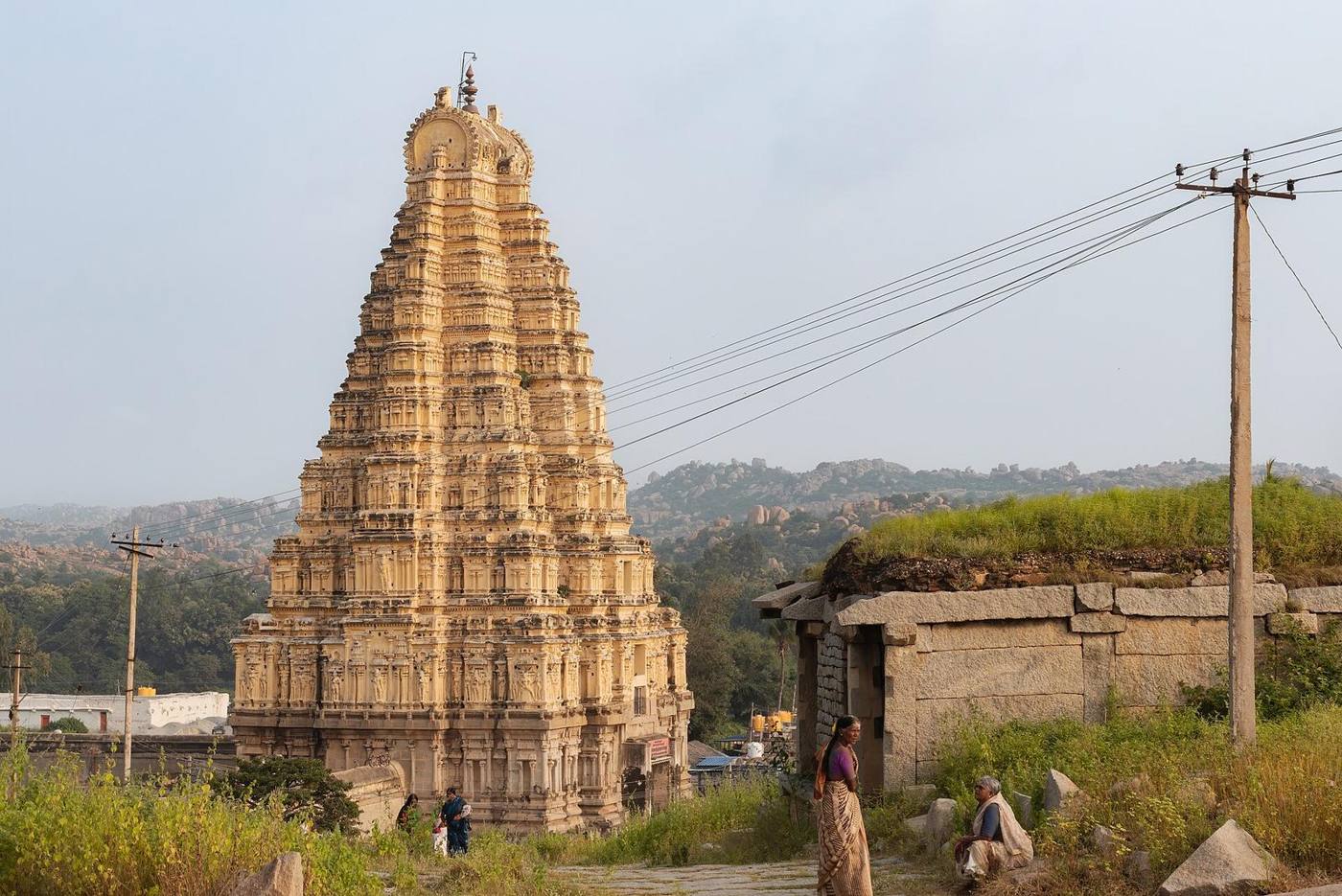
Here lie the ruins of Vijayanagara, the "city of victory", capital of a great Hindu empire that ruled southern India between the fourteenth and sixteenth centuries. In the sixteenth century it was one of the largest and richest cities in the world, with markets for horses, precious stones and spices. After defeat in the battle of Talikota, in 1565, it was sacked and abandoned. The site is a UNESCO World Heritage Site.
In the late afternoon, visit the Virupaksha temple, dedicated to Shiva and still used by worshippers, with its great white gateway tower about fifty metres tall. Inside there is often a temple elephant that blesses visitors. Check prices and times.
Then climb the nearby Hemakuta hill, covered with small stone temples, and wait for sunset sitting on the rocks, watching the sun go down behind the boulders and the temple tower.
Overnight in Hampi, for four nights.
Practical tip: in Hampi the distances between the ruins are large. Hire a bicycle, a scooter or a rickshaw for the day, and agree the price and the route in advance.
- Day 12
The Vittala temple and the riverbank
Set off early, to avoid the heat and the crowds. From Hampi bazaar follow the path along the Tungabhadra river on foot, among boulders, small shrines and banana trees. In about an hour you reach the Vittala temple, the most famous in Hampi.
The temple, dedicated to a form of Vishnu, was built in the fifteenth and sixteenth centuries. In the courtyard stands the stone chariot, the symbol of Karnataka, which looks made to move, with carved wheels and two elephants in front. The main hall has slender pillars that, according to tradition, give out musical notes when touched: today it is forbidden to strike them, to protect them. Look at the rearing horses carved on the pillars, with foreign riders that recall the horse trade with Arabia and Persia. Check prices and times.
Outside the temple, walk along the long Vittala bazaar street, where horses and jewels were once sold: the stone porticoes remain in rows, in the middle of the grass.
On the way back, stop at the King's Balance, a great stone gateway where, on feast days, the ruler was weighed against gold and gems to be given to the priests.
In the afternoon, rest in the shade: in Hampi the sun is strong even in winter.
Overnight in Hampi.
Practical tip: buy a ticket that also covers the other main monuments if one is available, and keep it, because it is checked at several entrances. Check prices and times.
- Day 13
The royal centre and sunset from Matanga Hill
Today you visit the royal centre, the part of the city where the king and the court lived, south of the bazaar. Start with the Mahanavami platform, a great stone base carved with scenes of hunting, dancing and parades, from which the king watched the festivals. Not far away is the stepped tank, uncovered by archaeologists in the twentieth century, with stone steps arranged like an upside down pyramid.
Then go to the Hazara Rama temple, the private temple of the royal family, its walls covered with long carved bands that tell the story of the Ramayana, with rows of elephants, horses and soldiers.
In the women's enclosure you see the Lotus Mahal, an elegant pavilion with arches shaped like petals, and the elephant stables, a long row of eleven domed halls where the royal elephants lived. Check prices and times.
In the hot hours, rest, then, an hour and a half before sunset, walk up Matanga Hill, the highest point near the bazaar. The path is steep, with stone steps and rocks to scramble over with your hands. At the top there is a small temple, and from there you see all of Hampi: the river, the temple towers, the palms and the sea of orange boulders that turn red and then purple. It is the finest view of the trip. Come down with a torch and not alone.
Overnight in Hampi.
Practical tip: go up Matanga Hill with company and come back before it is fully dark; the path is uneven and poorly lit.
- Day 14
A coracle on the river and Anegundi
Today you discover the other bank of the Tungabhadra, more rural and peaceful. In the morning, take a ride in a coracle, the round boat of woven bamboo covered with plastic or hide, used here for centuries. The boatman pushes it with a single paddle and sometimes spins it round. You glide between the boulders, close to banks with small temples carved into the rock and under flying herons. Check prices and times, and ask for a life jacket.
Then cross the river to Anegundi, a village older than Hampi, considered by tradition the monkey kingdom of the Ramayana. Walk among painted mud houses, rice fields and small workshops where women weave banana fibre into bags and baskets.
In the afternoon, climb Anjanadri hill, where according to legend Hanuman, the monkey god, was born. You climb more than five hundred white steps to the small temple at the top, among monkeys asking for food. From the top the view over the green rice fields, the river and the boulders is grand, especially at sunset.
On the way back, stop at Sanapur lake, among the rocks, but do not swim: the water is deep and there may be crocodiles in the area.
Overnight in Hampi.
Practical tip: do not carry food in plain sight on Anjanadri hill and keep your bags closed. The monkeys are skilled at stealing glasses and bottles.
- Day 15
Badami, Aihole and Pattadakal
Today you leave at dawn heading north west, about three and a half hours on the road, to visit the sites of the Chalukyas, a dynasty that ruled the Deccan between the sixth and eighth centuries, before Vijayanagara. Many forms of the Indian temple were born here.
Start at Badami, the old capital, at the foot of a red sandstone cliff. Four sixth century cave temples are cut into the rock, three dedicated to Hindu gods and one to Jain saints. Inside you find great carvings of Shiva dancing with eighteen arms, of Vishnu seated on the serpent and of the god with the head of a boar. Below the caves lies a green lake, with temples on its shores. Check prices and times.
Then go to Aihole, about an hour away, called the cradle of Indian temple architecture, because here builders tried out different forms. There are over a hundred temples scattered among the villages; the most famous is the Durga temple, with a rounded plan like an apse. Check prices and times.
In the afternoon, visit Pattadakal, a UNESCO World Heritage Site, where the Chalukya kings were crowned. In a single enclosure next to the Malaprabha river there are temples in the northern style, with curved towers, and in the southern style, with pyramid towers. The largest is the eighth century Virupaksha temple. Check prices and times.
Overnight in Badami.
Practical tip: at Badami and Aihole many sites are in the open with no shade. Bring a hat, sun cream and water, and visit in the early hours of the day.
- Day 16
Back to Bangalore
Today you return to Bangalore. It is a transfer day, because the distance is long. The most comfortable option is to drive to Hubballi, about two and a half hours away, and from there take a domestic flight of about an hour to Bangalore. Alternatively you can travel by train, including overnight trains, from the stations in the area. Book ahead, because trains in India fill up early.
If you reach Bangalore in the afternoon, visit Bangalore Palace, built in the nineteenth century on the model of an English castle, with towers and battlements, or Tipu Sultan's summer palace, in teak wood, in the old city. Check prices and times.
Then pass by the Vidhana Soudha, the seat of the state parliament, a huge granite building from the 1950s that you can only see from outside. Nearby is Cubbon Park, a large green space where local people stroll, jog and read in the shade of the trees.
In the evening, have dinner in Basavanagudi or Malleshwaram, traditional districts of Bangalore, with a soft idli, a crisp dosa and filter coffee, served in a metal tumbler with a bowl, poured from one to the other to make it froth.
Overnight in Bangalore.
Practical tip: Bangalore's traffic is among the worst in India. Always allow plenty of time for journeys, especially to the airport, which is far from the centre.
- Day 17
Departure
Today is the day you fly home. Bangalore airport lies north of the city, about an hour away, sometimes more at rush hour. Leave well in advance and keep your ticket and passport to hand, because you need them just to enter the terminal.
Looking back on the trip, you have seen a less known but very rich India. You have seen Mysore Palace lit up, the Nandi bull on Chamundi Hill, the Tibetan monks of Bylakuppe, the coffee plantations of Coorg, the fine carvings of the Hoysala temples at Belur and Halebid, the Jog Falls in their gorge, the bays of Gokarna, and above all Hampi, with the stone chariot, the temples among the boulders and the sunset from Matanga Hill. Finally you have seen the cave temples of Badami and the early temples of Aihole and Pattadakal.
When to go: from October to March, when the weather is dry and temperatures are pleasant. October and November are the best months if you want to see the Jog and Abbey falls full of water; from December to February the weather is cooler and more settled, ideal for Hampi. From April to May it is very hot inland, and from June to September the monsoon brings heavy rain, especially on the coast and in the hills of Coorg. In Mysore the Dasara festival falls between September and October.
Practical tip: if you have a fever after you get home, even a few weeks later, see a doctor and tell them you have been in southern India.
One of India's most beautiful and underrated trips. Hampi alone is worth it: a landscape of boulders and ruins like nothing else. The Jog falls are only mighty after the monsoon (August-November); from February they are almost dry.
Before you go
- Documents and visa
- Passport with at least six months' validity and two blank pages, plus an electronic tourist visa from the official Indian government website: 30 days for 25 dollars from July to March, 10 dollars from April to June.
- Health and vaccines
- No compulsory vaccines arriving from Europe; ask your doctor about hepatitis A, typhoid and malaria depending on the area. Drink only sealed bottled water. Emergencies: 112.
- Money and payments
- Indian rupee. Cards and digital payments are common in cities; markets, villages and rickshaws need cash.
- Power sockets
- Types C, D and M, 230 volts: a universal adapter is useful.
- Time zone
- UTC+5:30 all year: India does not use daylight saving time.
- Safety
- The United States rates India level 2, with level 4 for Jammu and Kashmir (except Ladakh), Manipur and the 10 km strip along the Pakistani border. Official advice: GOV.UK.
Information checked in November 2026 for Italian and EU citizens. Rules change: always check before you travel.
Variations
In 10 days: Bangalore, Mysore, Belur and Halebid and four days in Hampi, with a return flight from Hubballi, leaving out Coorg, Jog and Gokarna.
In 21 days: add Nagarhole National Park for safaris among elephants and tigers, and a few more days on the beaches of Gokarna.
Frequently asked questions
When are the Jog Falls full?
After the monsoon, from August to November, when the water falls hard in four streams. From February to May they are often almost dry, also because a dam upstream holds back the river. If the falls matter to you, travel in October or November.
How many days do you need for Hampi?
At least three full days. The ruins are spread over a very large area, between the bazaar, the royal centre, the Vittala temple and the other bank of the river. With four days, as on this trip, you have time to see everything calmly, rest in the hot hours and climb the hills at sunset.
Is Karnataka safe?
Yes, Karnataka is considered one of the calmer parts of India and there are no areas advised against on this route. The usual care applies: pickpockets, transport scams, caution in the evening and strong currents on the beaches. Always check your government's travel advice before leaving.
Indicative itinerary written by World Atlas. Before booking, check timetables, seasonal openings, documents and safety.
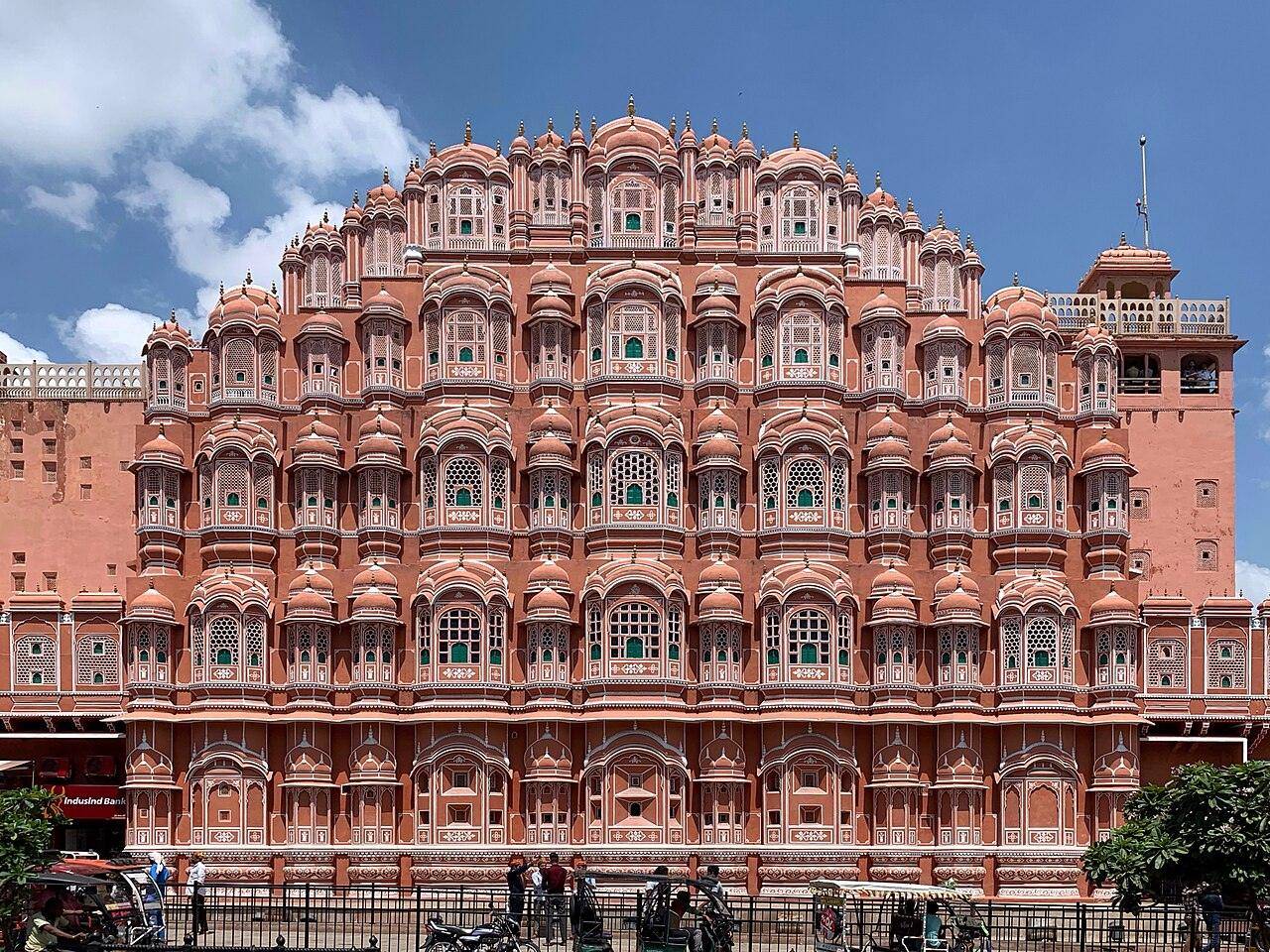 7 daysEasy
The Golden Triangle: Delhi, Agra and Jaipur
A first time in India: the Taj Mahal at dawn, the forts of Rajasthan and the life of Old Delhi, in one week.
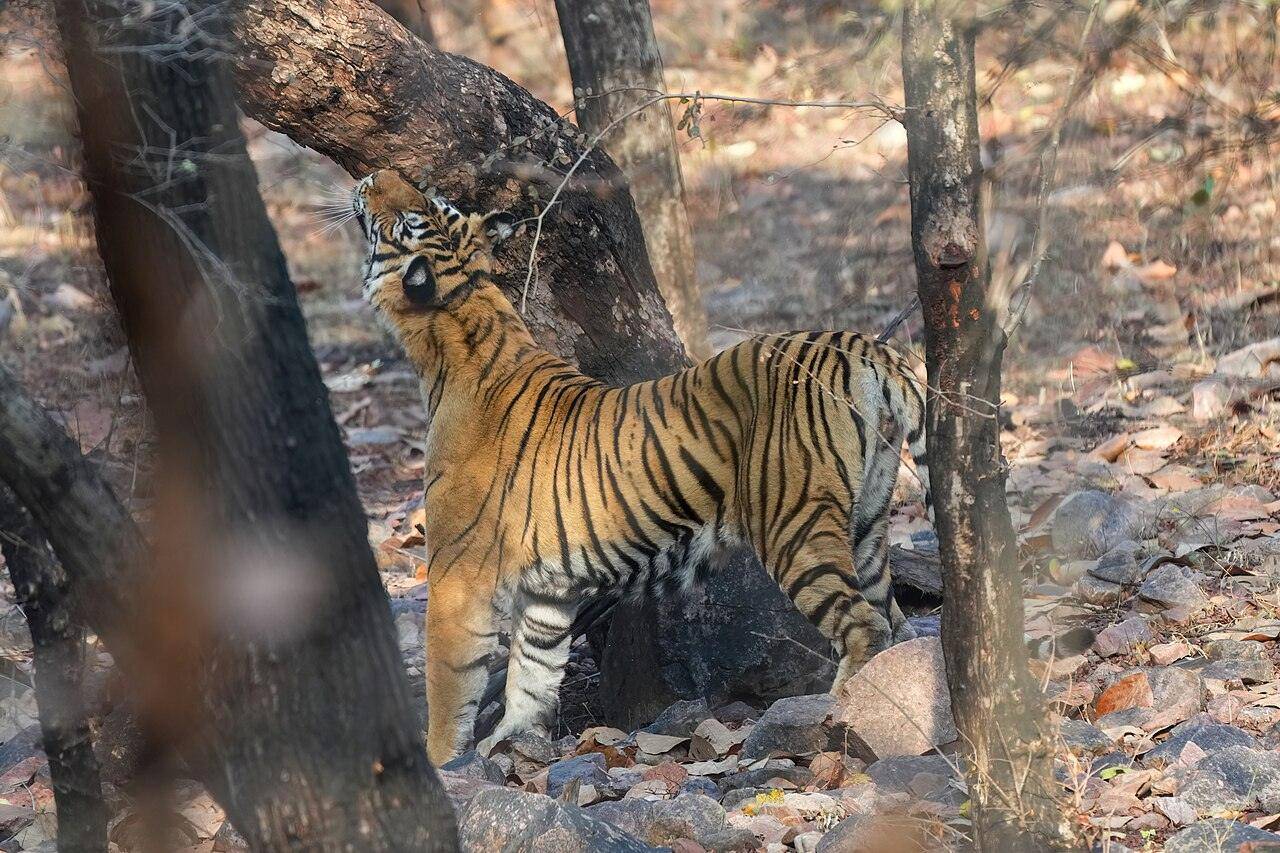 15 daysModerate
Rajasthan and the tigers of Ranthambore
Palaces, desert and safari: from the Taj Mahal to the blue and golden cities of Rajasthan, with two days in tiger country.
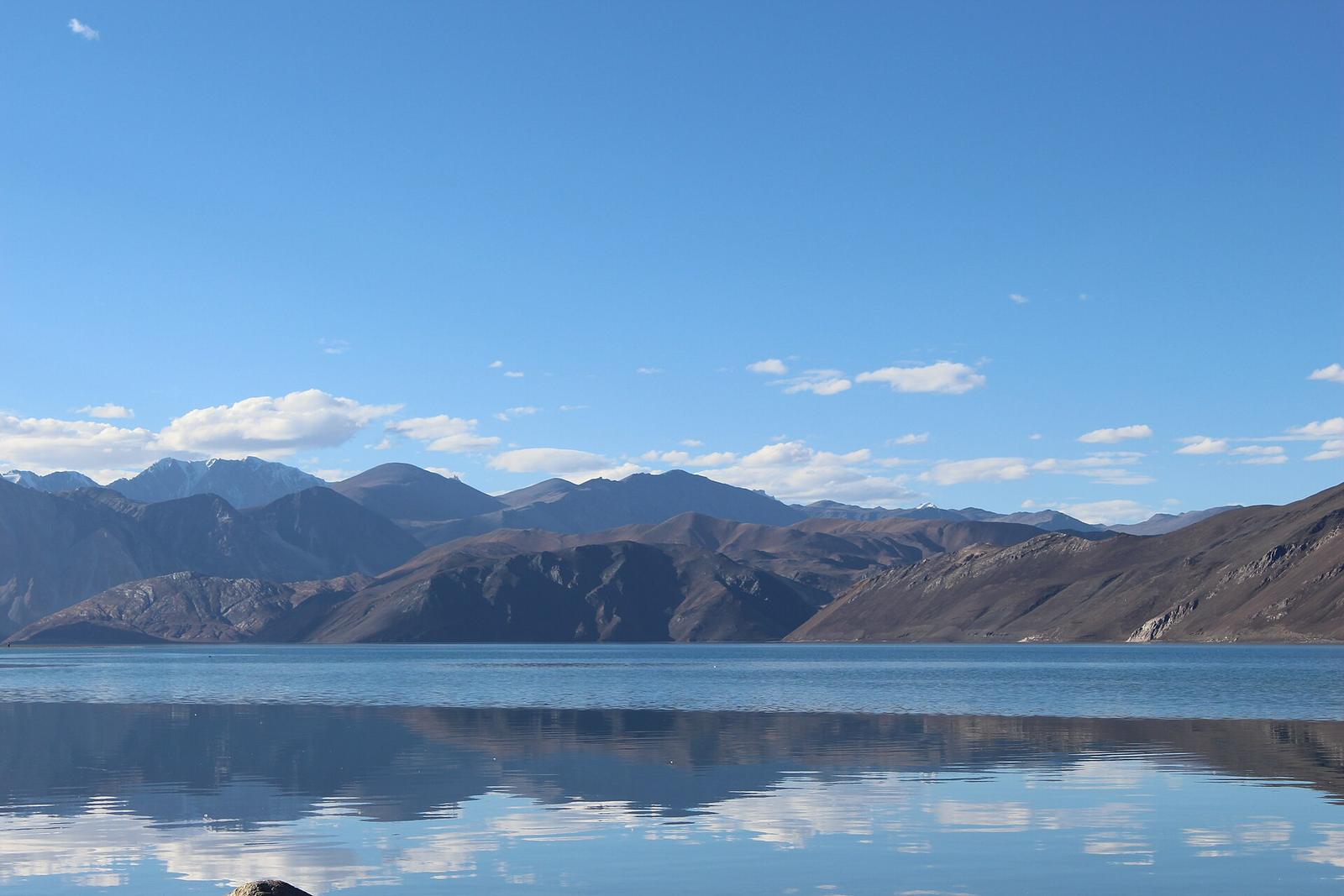 16 daysModerate
Ladakh, Little Tibet
Buddhist monasteries clinging to the rocks, the Nubra valley with its two-humped camels and Pangong lake at 4,300 metres.