Lesbos and Chios
The north-eastern Aegean, far from the crowds: Lesbos with Mytilene, the village of Molyvos below its castle, the petrified forest at Sigri and the ouzo of Plomari, then Chios with the mastic villages, Pyrgi with its sgraffito facades, Mesta and the monastery of Nea Moni (UNESCO).
- Mytilene
- Molyvos
- Sigri
- Plomari
- Chios
- Pyrgi
- Mesta
- Nea Moni
Day by day
- Day 1
Arrival in Mytilene: the castle and the harbour
This trip goes to two large islands of the north eastern Aegean, Lesvos and Chios, close to the Turkish coast and far from the mass tourism of the Cyclades. They are big, green islands, with olive groves as far as the eye can see, stone villages, monasteries, hot springs and a strong identity: Lesvos is the land of the poet Sappho, of ouzo and of a petrified forest millions of years old; Chios is the only island in the world that produces mastic, a fragrant resin, and has medieval villages decorated like fabric.
Greece is in the Schengen area: EU citizens only need an identity card valid for travel. In accommodation a nightly tax is charged, varying with category and season.
You fly into Mytilene, the capital of Lesvos, from Athens or, in summer, on direct flights from some European cities. Hire a car: Lesvos is large, the third biggest island in Greece.
Mytilene is a lively town with a crescent shaped harbour, neoclassical houses, churches and a large cathedral. On the first day climb to the castle, a Byzantine and Genoese fortress later enlarged by the Ottomans, among pines with views over the sea and the Turkish coast.
Walk through the market on Ermou street, among shops selling cheese, olives, olive oil soap and sweets.
In the evening have dinner on the harbour with a glass of ouzo, the anise liqueur of Lesvos, and small plates of sardines, octopus and cheese.
Spend the night in Mytilene.
Practical tip: the best time is May to June and September to October. In summer check fire warnings.
- Day 2
Molyvos and Petra
Today go to the north of the island, to Molyvos, also called Mithymna, about an hour and a half from Mytilene, through hills covered in olive groves.
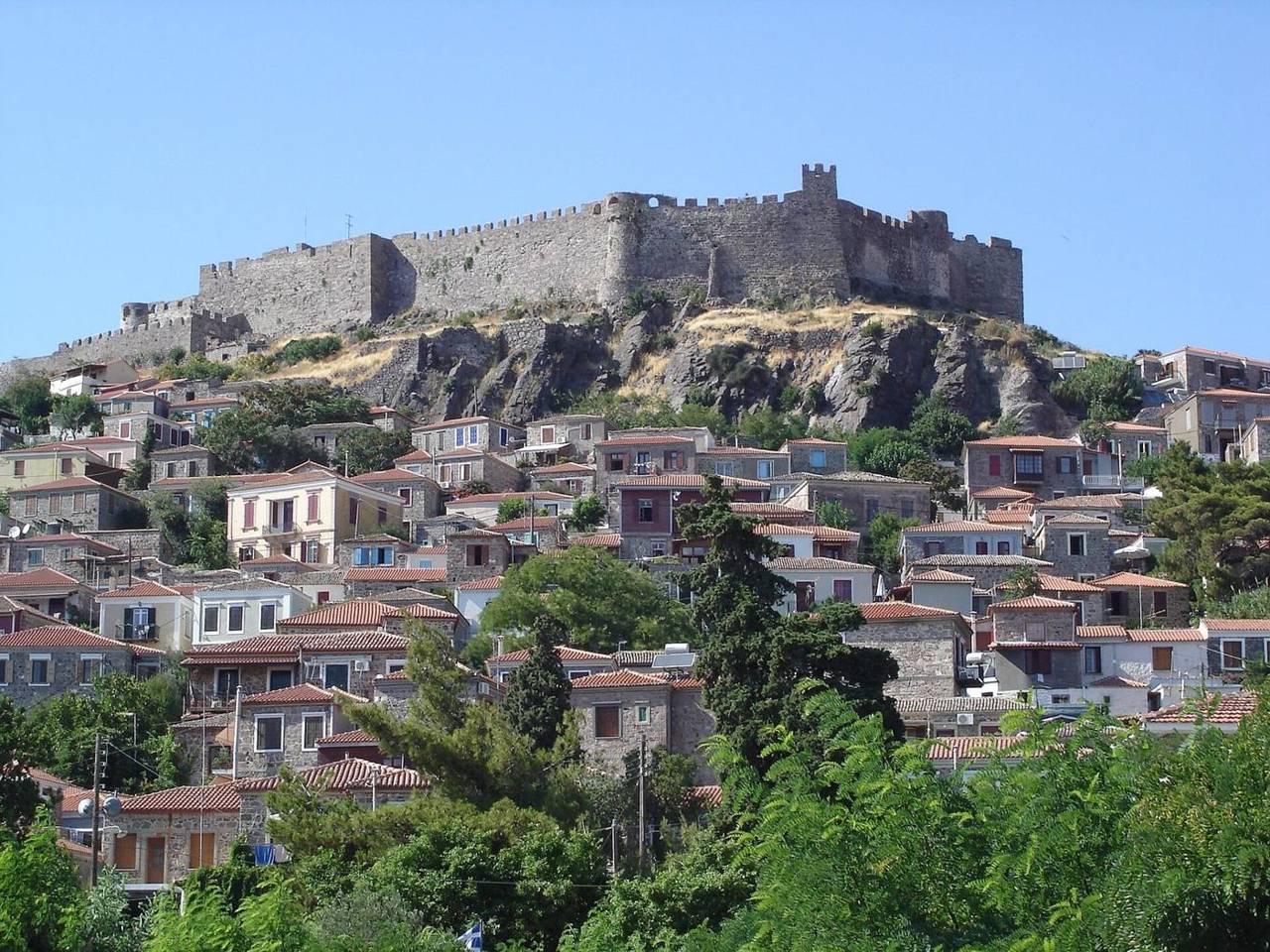
Molyvos is one of the most beautiful villages in Greece: stone houses with red roofs and wooden balconies rising like an amphitheatre on a hill below a Genoese castle, with a small fishing harbour below. The village is protected and there are no modern buildings in the centre.
In the morning climb to the castle through cobbled lanes covered in wisteria and bougainvillea, with small craft shops. From the walls you see the coast of Turkey, a few kilometres away.
Then go down to the harbour, with its colourful boats and fish tavernas.
In the afternoon go to Petra, a few kilometres away, a seaside village with a long beach, dominated by a huge isolated rock among the houses. On top of the rock, reached by a staircase of about a hundred and forty steps, is the eighteenth century church of the Panagia Glykofilousa, with a view over the bay. In the village visit the Vareltzidaina house, a nineteenth century mansion with painted walls.
At sunset return to Molyvos and have dinner on the harbour.
Spend the night in Molyvos or Petra.
Practical tip: cars cannot enter the centre of Molyvos: leave your car in the car park below and walk up. The lanes are steep and cobbled.
- Day 3
The petrified forest and the Sigri museum
Today go to the west of the island, the most arid and volcanic part of Lesvos, about an hour and a half from Molyvos, through bare hills, rocks and pastures.
Here is the Petrified Forest of Lesvos, one of the most important natural monuments in the world, within the Lesvos UNESCO Global Geopark. About twenty million years ago enormous volcanic eruptions buried a subtropical forest in ash: the buried tree trunks slowly turned to stone, keeping their shape, growth rings and roots. Today you see petrified trunks still standing or lying down, some more than ten metres long, in colours ranging from red to yellow, green and black.
In the morning walk in the main park of the petrified forest near Sigri, on paths among the trunks.
In the afternoon visit the Natural History Museum of the Petrified Forest at Sigri, a small fishing village with an Ottoman castle. The museum explains how the forest formed, with fossil trunks, leaves and fruits, as well as remains of animals of the time. Other trunks can be seen on the coast and even underwater off Sigri.
On the way back stop at Ypsilou monastery, on an old extinct volcano, with a view over the west of the island.
Spend the night in Sigri or Eressos.
Practical tip: the park and museum charge entry and have different hours in winter: check. Do not take fragments of petrified wood: it is forbidden. Bring water and a hat, there is little shade.
- Day 4
Plomari and the Gulf of Kalloni
Today discover the south and centre of the island.
In the morning, from Eressos, the village where according to tradition the poet Sappho was born in the seventh century BC, with a long beach of dark sand, head towards the Gulf of Kalloni, a large enclosed gulf in the centre of the island. Along its salt pans, in spring and autumn, flamingos and hundreds of other migratory bird species stop over: Lesvos is one of Europe's most famous birdwatching destinations. The gulf is also famous for Kalloni sardines, salted or fried.
In the afternoon continue south to Plomari, about an hour and a half away, a coastal town built like an amphitheatre on two hills, famous for its ouzo. The island's best known distilleries are here, and one has an ouzo museum explaining how anise is distilled in copper stills. The town also has old soap factories and captains' houses.
On the way stop at Agiasos, a mountain village at the foot of Mount Olympos of Lesvos, with stone houses, potters' and carpenters' workshops and the church of the Panagia, a place of pilgrimage.
In the evening head back towards Mytilene, passing Thermi with its hot springs.
Spend the night in Mytilene or Plomari.
Practical tip: visits and tastings at the distilleries have different times and prices: check. If you drink ouzo, do not drive.
- Day 5
Ferry to Chios: the town and Kambos
Today leave Lesvos and take the ferry from Mytilene to Chios, about three hours. The ferry sails along the Turkish coast, a short distance away.
Chios is a mountainous, green island with a rich history: according to tradition, Homer was born here. It was ruled for two centuries by the Genoese, who grew rich on the mastic trade, then by the Ottomans. In 1822, during the Greek War of Independence, the island suffered a terrible massacre, remembered in a famous painting by Delacroix.
In the afternoon walk around Chios town, the capital, with its harbour, the Genoese castle, inside which an old quarter still lives, the Ottoman mosque and the Byzantine museum. Visit the Korais library, one of the most important in Greece.
Then go to Kambos, south of the town, a plain of citrus groves enclosed by high honey coloured stone walls, with the mansions of Genoese and Greek merchants, wells with water wheels and carved gateways. Some mansions have been restored and can be visited, among gardens of mandarins, oranges and lemons. In spring the scent of orange blossom fills the air.
In the evening have dinner with Chios food: fish, garden vegetables, cheeses and mastic sweets.
Spend the night in Chios town or Kambos.
Practical tip: ferries between Lesvos and Chios do not run daily and times change with the season: check and book. Pick up a hire car in Chios, at the port or in town.
- Day 6
The mastic villages: Pyrgi, Olympi and Mesta
Today discover the south of Chios, the region of the mastichochoria, the mastic villages, whose mastic cultivation is on UNESCO's intangible heritage list.
Mastic is a resin that seeps from the bark of a small tree, the lentisk, when it is cut. The drops dry in the sun into fragrant transparent crystals used for chewing gum, sweets, liqueurs, cosmetics and medicines. The lentisk grows all over the Mediterranean, but only in southern Chios does it produce the resin. Visit the mastic museum, which explains its cultivation and history.
The mastic villages were built by the Genoese as small fortresses, with houses joined to form an outer wall and narrow lanes, as protection from pirates.
Pyrgi is the most surprising: all the houses are decorated with xysta, white and grey geometric patterns scratched into the plaster like fabric, covering the facades of entire streets.
Olympi is a smaller, quieter village near a cave with stalactites, the Olympi cave.
Mesta is the best preserved medieval village, a maze of lanes covered by stone arches, car no-cost, with a large church in the centre.
In the afternoon swim at Mavra Volia beach at Emporios, with black volcanic pebbles.
Spend the night in Mesta or Pyrgi.
Practical tip: mastic is harvested in summer: in July and August you see farmers working under the trees. The mastic museum charges entry and closes on some days: check.
- Day 7
Nea Moni and Anavatos
Today visit the centre of the island, with its monasteries and mountain villages.
In the morning go to Nea Moni monastery, a UNESCO World Heritage Site, about half an hour from Chios town, among pine covered mountains. The monastery was founded in the eleventh century by the Byzantine emperor Constantine IX Monomachos, where three monks had found an icon of the Virgin. The main church holds splendid Byzantine mosaics on a gold ground, among the most important in Greece together with those of Hosios Loukas and Daphni. The monastery was badly damaged in the 1822 massacre, the 1881 earthquake and fires, and has been restored.
In the afternoon go to Anavatos, about fifteen minutes away, an abandoned village built on top of a sheer rock crag, with grey stone houses the same colour as the rock, which seem to grow out of the mountain. In 1822, according to tradition, many inhabitants chose to throw themselves from the cliff rather than surrender to the Ottoman troops. Today it is a silent and moving place, with steep lanes among the ruins.
At sunset go to the north west of the island, to Volissos, a village with a Byzantine castle, or stay on the west coast to watch the sun sink into the sea.
Spend the night in Chios.
Practical tip: at Nea Moni enter with shoulders and knees covered; hours change and the monastery closes in the middle of the day. At Anavatos walk carefully: some sections have no railings.
- Day 8
Flight home via Athens
On the last day you leave from Chios airport, a few kilometres from town, on a flight to Athens, under an hour, and from Athens on to other European cities.
If your flight is in the afternoon, you can make a last visit in the morning. One option is the Daskalopetra, the teacher's stone, north of town, a rock by the sea that according to tradition was where Homer taught his pupils, although it was probably an ancient shrine of Cybele. From here you look across the sea towards Turkey.
Another option is a stroll in Vrontados or a last swim at Karfas, the sandy beach closest to town.
Before leaving buy some produce from the two islands: Chios mastic crystals, chewing gum, mastic liqueur and sweets, such as the white spoon sweet served in a glass of water; from Lesvos, Plomari ouzo, ladotyri cheese preserved in oil, olive oil and olive oil soap.
If you have a few more days, from Chios there are ferries to other Aegean islands such as Samos or Ikaria, or to Piraeus.
Practical tip: flights between Chios and Athens are few each day: book ahead and leave a margin before your international flight. Mastic liqueur goes in checked baggage if it exceeds the liquids limits.
Fly via Athens or take an overnight ferry from Piraeus; the ferry between Lesbos and Chios takes about three hours and does not run daily. The islands are large: you need a car. In spring Lesbos is a birdwatching destination. A valid identity card is enough for EU citizens. Accommodation charges a nightly tax that varies with season and category. In summer the wildfire risk is high: on alert days some forest areas and trails may be closed, and lighting fires outdoors is forbidden.
Before you go
- Documents and visa
- EU citizens need a valid identity card or passport, including on ferries, where ID may be checked at boarding. Other nationalities should check the Schengen rules.
- Health and vaccines
- No vaccines required. EU citizens should bring their EHIC; in summer protect yourself from the sun and drink plenty. Emergencies: 112.
- Money and payments
- Euro. Cards are accepted almost everywhere; every accommodation charges a fee per room per night, often paid on departure.
- Power sockets
- Types C and F, 230 volts.
- Time zone
- Eastern European Time (UTC+2), summer time (UTC+3) from late March to late October.
- Safety
- A safe country. In summer watch for wildfires and 112 alerts; in Athens, for pickpockets on the metro. Official advice: GOV.UK.
Information checked in November 2026 for Italian and EU citizens. Rules change: always check before you travel.
Variations
In 5 days: Lesvos only, with Mytilene, Molyvos, Sigri and Plomari.
In 11 days: add Samos or Ikaria by ferry, or a few days in Athens.
Frequently asked questions
How do you get from Lesvos to Chios?
By ferry, in about three hours. Ferries do not run daily and times change with the season: check.
Do I need a car?
Yes, both islands are large and the villages are far apart. Hire one on each island.
Do I need a passport?
No, Greece is in the Schengen area and EU citizens only need an identity card valid for travel.
Indicative itinerary written by World Atlas. Before booking, check timetables, seasonal openings, documents and safety.
 7 daysEasy
Syros, Tinos and Andros
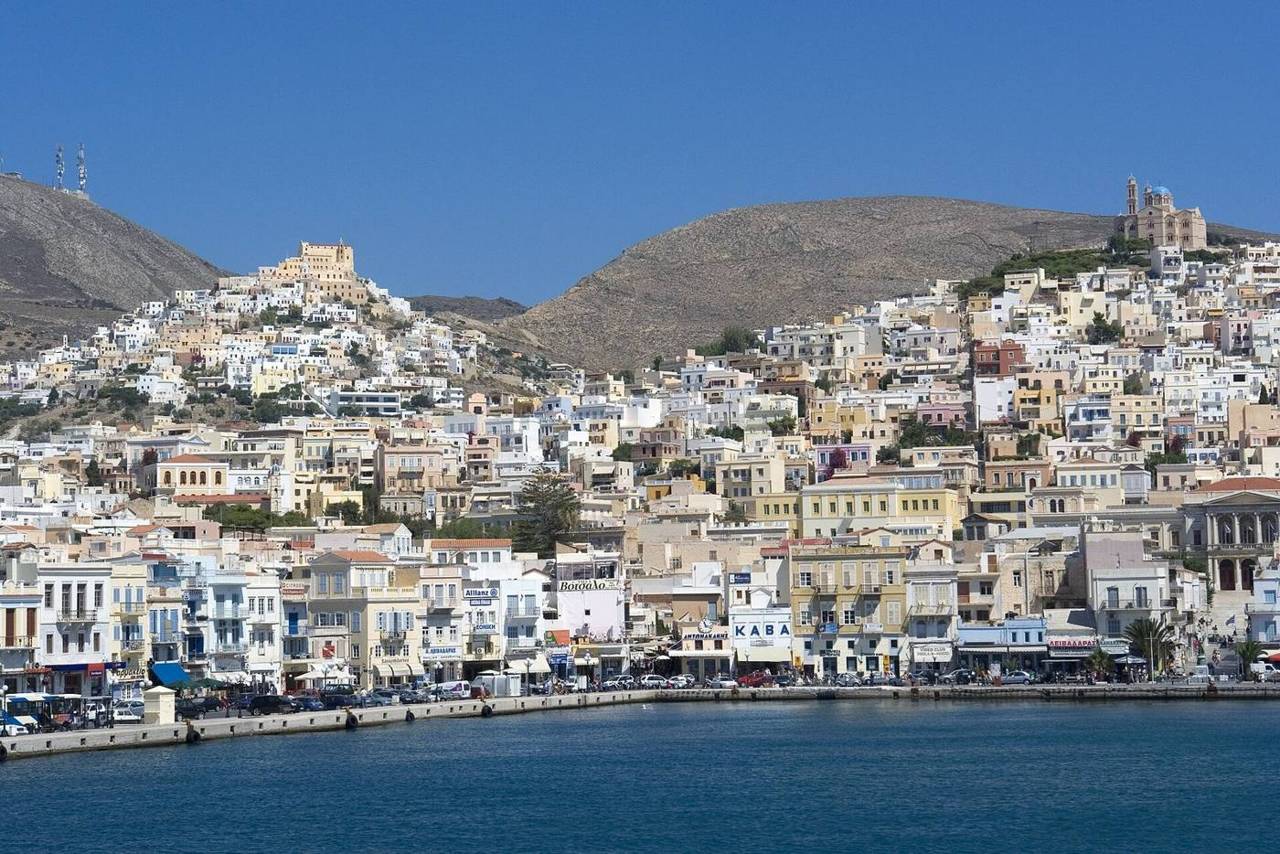
The northern Cyclades, authentic and close to Athens: Ermoupoli, the neoclassical capital of the Cyclades, and the Catholic quarter of Ano Syros, Tinos with the shrine of the Panagia, its marble villages and dovecotes, and Andros with waymarked trails between waterfalls, villages and beaches.
 5 daysChallenging
Mount Olympus, Dion and Vergina
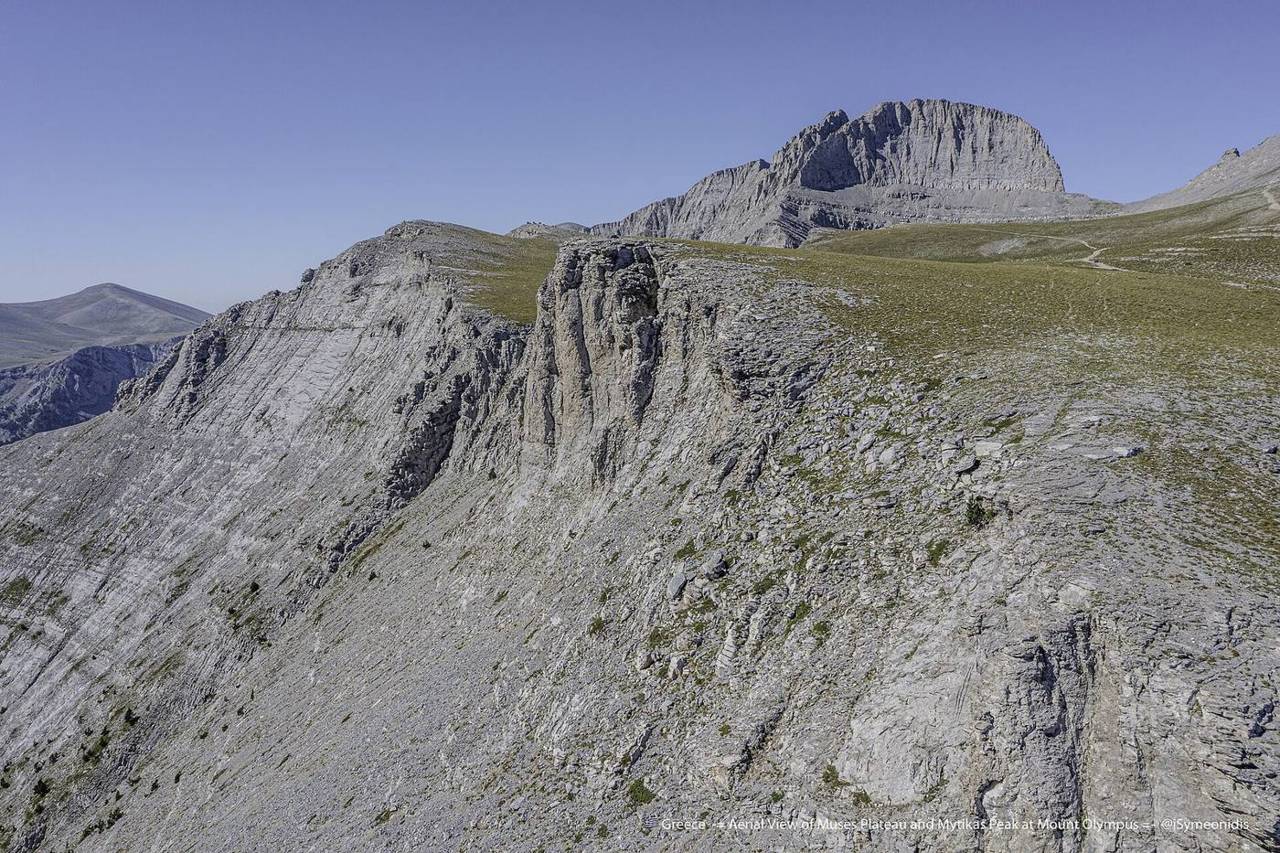
The mountain of the gods and ancient Macedonia: the Enipeas gorge from Litochoro, the climb to the Spilios Agapitos refuge and the summit of Mytikas, 2,918 metres, then the sacred city of Dion at the foot of the mountain and the royal tombs of Aigai at Vergina (UNESCO).
 6 daysEasy
Kythira and Elafonisos
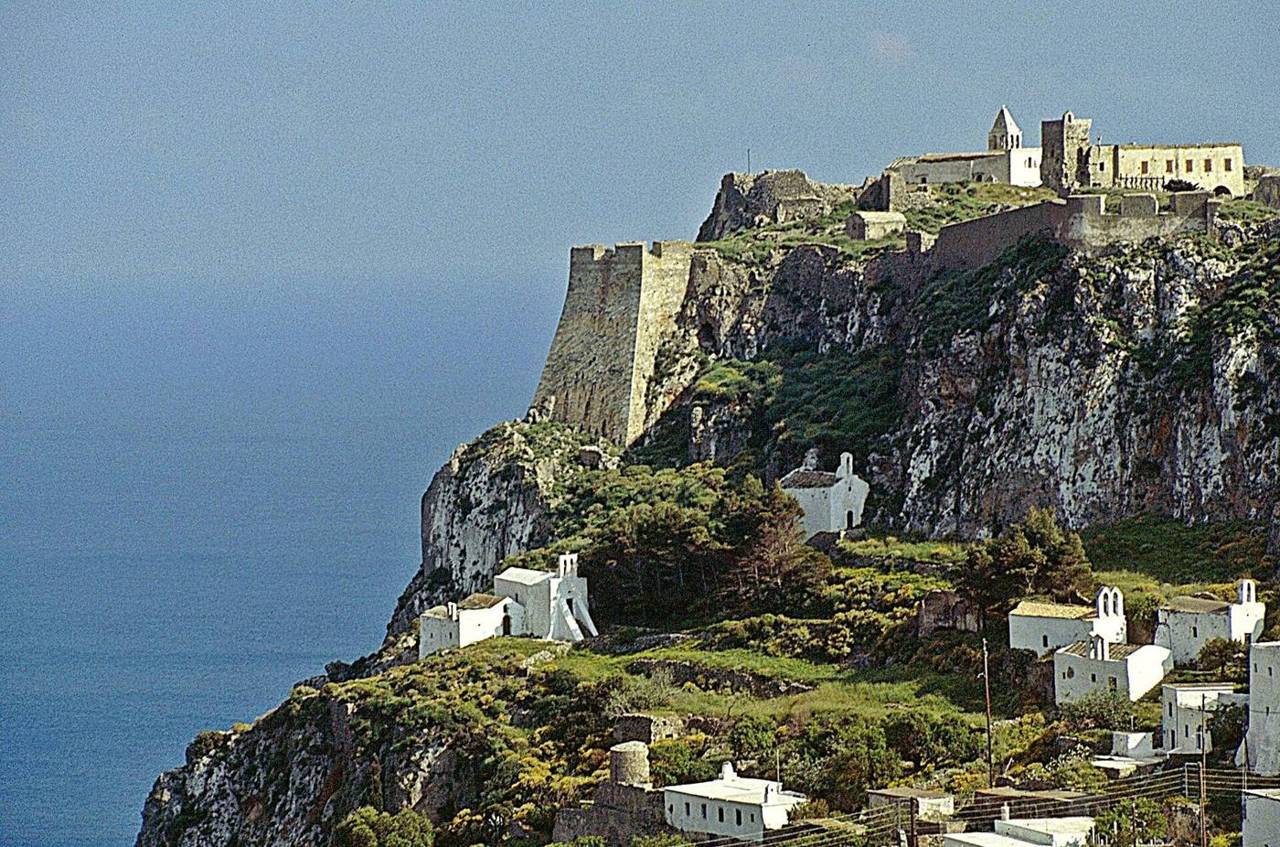
Between the Peloponnese and Crete: Kythira with the Venetian castle at Chora above Kapsali, the Neraida waterfalls at Mylopotamos, its villages and secluded beaches, then Elafonisos with the dunes and white sand of Simos.