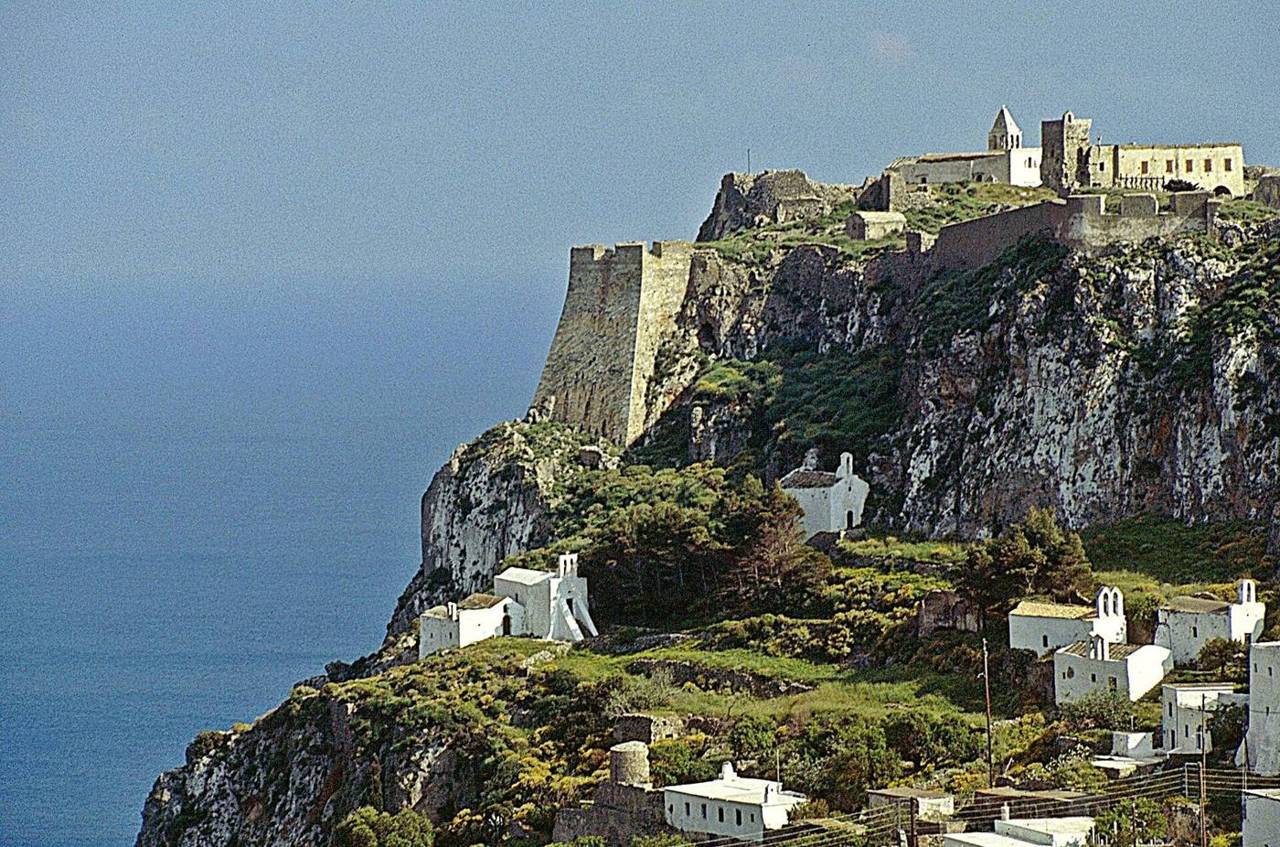
Kythira and Elafonisos
Between the Peloponnese and Crete: Kythira with the Venetian castle at Chora above Kapsali, the Neraida waterfalls at Mylopotamos, its villages and secluded beaches, then Elafonisos with the dunes and white sand of Simos.
- Athens
- Neapoli
- Kythira
- Kapsali
- Mylopotamos
- Elafonisos
Day by day
- Day 1
From Athens to Neapoli and the ferry to Kythira
Kythira is an island of low mountains, green gorges, white villages and hidden beaches, suspended between the tip of the Peloponnese and Crete. For centuries it was Venetian, then British, and it still bears the marks of both. According to an ancient tradition, it was here that Aphrodite arrived after being born from the sea. It is little known to foreigners and visited mainly by Greeks and by families who emigrated to Australia and come back in summer. In six days you discover it calmly and add Elafonissos, with one of the most beautiful beaches in Greece.
From Athens you drive south to Neapoli, on the Vatika peninsula, the easternmost finger of the Peloponnese: about four and a half hours of motorway and then country roads, through olive groves and hills. On the way, if there is time, stop at Monemvasia, the fortified town on a rock in the sea, about an hour from Neapoli.
From Neapoli the ferry to Kythira takes about an hour and arrives at the port of Diakofti, on the east coast. Timetables change a lot between summer and winter, and in summer it is wise to book a place for the car. The island also has a small airport with flights from Athens, useful if you do not want to drive so much.
In the evening, settle in the area of Chora or Kapsali, in the south, from where it is easy to get around over the next days.
Practical tip: on Kythira a car or a scooter is essential, because buses are almost non-existent. If you are not bringing your own car, rent one in advance for July and August.
- Day 2
Chora, the Venetian castle and Kapsali
In the morning, visit Chora, the main town, a village of white houses with blue doors and windows, built along the ridge of a hill in the south of the island. Walk along the main street, with its small squares and churches, and climb up to the Venetian castle, which overlooks the village from above. Inside the walls are the ruins of houses, cisterns and storerooms, a few churches and old cannons pointing out to sea. From the edge of the fortress the view is one of the finest on the island: below you see the two bays of Kapsali, separated by a tongue of rock, and the islet of Avgo, the egg, which according to legend is the spot where Aphrodite rose from the waves. On clear days you can see the outline of Antikythira on the horizon and, further away, Crete.
The town also has a small archaeological museum, with finds from the island's ancient sanctuaries and evidence from the Minoan period, when Kythira was an outpost of Crete.
In the afternoon, go down to Kapsali, the small harbour below Chora, with fishing boats, a waterfront lined with cafés and two beaches of sand and shingle with calm water, suitable for children too. Have a swim and stay for the sunset, when the castle glows orange above the bay.
If you want to walk, a path from the harbour climbs to the small church of Agios Ioannis, built into the rock of the cliff.
Practical tip: the castle has no shade and the climb is steep, so go early in the morning or in the late afternoon, with water and closed shoes.
- Day 3
Mylopotamos, the Neraida waterfall and the cave of Agia Sofia
Today you head to the west of the island, its greenest part. The first stop is Mylopotamos, a stone village with a square shaded by large plane trees, a church and a fountain. From here a short path goes down along the stream to the Neraida waterfall, also called Fonissa: a cascade in the middle of the vegetation, with a small pool, ferns and trees, on an island that is almost dry elsewhere. Along the river you can still see the remains of the old watermills that gave the village its name. The path can continue for an hour or two following the gorge, with stretches of slippery rock.
Return to the village and carry on to Kato Chora, a small fortified Venetian settlement above the ravine, almost abandoned, with empty houses and a gate carved with the lion of Saint Mark. The silence and the view down the gorge to the sea are the charm of the place.
In the afternoon, go down to the cave of Agia Sofia, on the west coast, with stalactites and a small chapel with frescoes at the entrance. It can only be visited with a guide, in certain months and at limited times, so check first that it is open. Then have a swim in one of the coves of the area, such as Kalami or Limnionas, reached on dirt roads.
In the evening, go back to Mylopotamos for dinner in the square under the plane trees, with dishes from the island's country cooking.
Practical tip: in summer the waterfall has little water; the best time is spring, when the stream is full and everything is in flower.
- Day 4
The beaches of the south and east, Avlemonas and Paleochora
The day is devoted to the sea and to a few historic places along the way. In the morning, go to Kaladi, on the east coast, one of the most photographed beaches on the island: you go down a long flight of steps and find a shingle bay divided by a rock, with crystal-clear water. A little further north is the long beach of Paleopoli, near the site of the ancient port town and the sanctuary of Aphrodite, of which few traces remain.
Continue to Avlemonas, a small fishing village with white and blue houses and an octagonal Venetian fort with cannons. The sea here is a lagoon of flat rocks: no sand, but water so clear you can see the bottom many metres down. Have lunch at the harbour with the catch of the day.
In the afternoon, cross the island to the north-east to see Paleochora, the Byzantine capital, built high on a rock between two deep gorges, hidden from the sea to defend itself against pirates. In 1537 it was captured and destroyed by the corsair Barbarossa and never rebuilt: today the walls and a few churches remain, in a wild and silent place.
On the way back, stop at Katouni to see the large arched stone bridge built by the British in the nineteenth century, one of the longest in Greece. If it is Sunday morning, the village of Potamos holds its weekly market with island produce, such as thyme honey.
Practical tip: many roads to the beaches are unpaved and steep, so drive slowly and check that your rental agreement allows you to use them.
- Day 5
Elafonissos and Simos beach
In the morning, take the ferry back from Diakofti to Neapoli, about an hour. From Neapoli you drive for about twenty minutes to Pounta, on the coast, from where a small ferry boat crosses the narrow strait in a few minutes to the island of Elafonissos. Departures are frequent in summer and you can take the car too.
Elafonissos is a low, almost treeless island, with a single fishing village on its north side and a few beaches of white sand and dunes. It is said that until the seventeenth century it was joined to the Peloponnese by an isthmus, later submerged by an earthquake: this is why the sea between the island and the coast is shallow.
The most famous beach is Simos, about four kilometres from the harbour: two bays of pale sand, side by side, separated by a thin strip of dunes, with turquoise water that stays shallow for many metres. Behind the beach are dunes with sea lilies and junipers, protected because they are fragile. Spend the day here, swimming and walking along the shore. If you want more peace, Panagia beach to the west is smaller.
In the late afternoon, return to the harbour, have a fish dinner on the village waterfront and watch the sunset over the gulf with the mountains of the Peloponnese in front of you.
Practical tip: in August Simos is very crowded and the car park fills up early; June and September are quieter. Respect the dunes and do not walk on them: they are a protected habitat.
- Day 6
Return to Athens
Your last morning on Elafonissos or the Vatika peninsula. If you have time before leaving, take a last early swim at Simos, when the beach is empty and the sand is still cool, or cross back on the boat and go and see the petrified forest near Agios Nikolaos, on the opposite coast. Here, on the shore, you can see fossilised trunks and roots of very ancient trees and shells turned into stone, uncovered by the waves. It is a small site, with a path along the sea and a few panels explaining how the fossils formed.
Then set off for Athens: it is about four and a half hours by road, with the last part on the motorway. If you have time for a stop, you can visit Monemvasia, if you did not see it on the first day, for a walk in the lower town and a coffee inside the walls, or further on Nafplio, the first capital of modern Greece, with its fortress above the sea. Plan your timing carefully if you have a flight, because the coast road north is slow and in summer there can be traffic at the entrance to Athens.
If you are returning a rental car at the airport, remember that Athens airport lies east of the city: follow the ring road, the Attiki Odos, without going into the centre.
Practical tip: Greece charges a per-night tax on accommodation that varies with the season and the category, paid on site. In summer the risk of wildfires is high: on alert days some areas and trails may be closed, and lighting fires outdoors is forbidden.
Kythira also has flights from Athens. From Neapoli, Elafonisos is a few minutes by boat. In August Simos is crowded: June and September are better. A valid identity card is enough for EU citizens. Accommodation charges a nightly tax that varies with season and category. In summer the wildfire risk is high: on alert days some forest areas and trails may be closed, and lighting fires outdoors is forbidden.
Before you go
- Documents and visa
- EU citizens need a valid identity card or passport, including on ferries, where ID may be checked at boarding. Other nationalities should check the Schengen rules.
- Health and vaccines
- No vaccines required. EU citizens should bring their EHIC; in summer protect yourself from the sun and drink plenty. Emergencies: 112.
- Money and payments
- Euro. Cards are accepted almost everywhere; every accommodation charges a fee per room per night, often paid on departure.
- Power sockets
- Types C and F, 230 volts.
- Time zone
- Eastern European Time (UTC+2), summer time (UTC+3) from late March to late October.
- Safety
- A safe country. In summer watch for wildfires and 112 alerts; in Athens, for pickpockets on the metro. Official advice: GOV.UK.
Information checked in November 2026 for Italian and EU citizens. Rules change: always check before you travel.
Variations
In 4 days: Kythira only, with a flight from Athens there and back.
In 9 days: add Monemvasia with a night inside the walls and the Mani peninsula, with its tower houses and the caves of Diros.
Frequently asked questions
When is the best time to go?
From late May to late September for the sea. June and September are quieter and cheaper than August. Spring is lovely for walking.
Do I need a car?
Yes. On Kythira public transport is almost non-existent and the beaches are spread out. On Elafonissos you can leave the car at Pounta, but Simos is about four kilometres from the harbour.
What documents do I need?
Greece is in the Schengen area: for citizens of the European Union, an identity card valid for travel abroad or a passport is enough.
Indicative itinerary written by World Atlas. Before booking, check timetables, seasonal openings, documents and safety.
 4 daysEasy
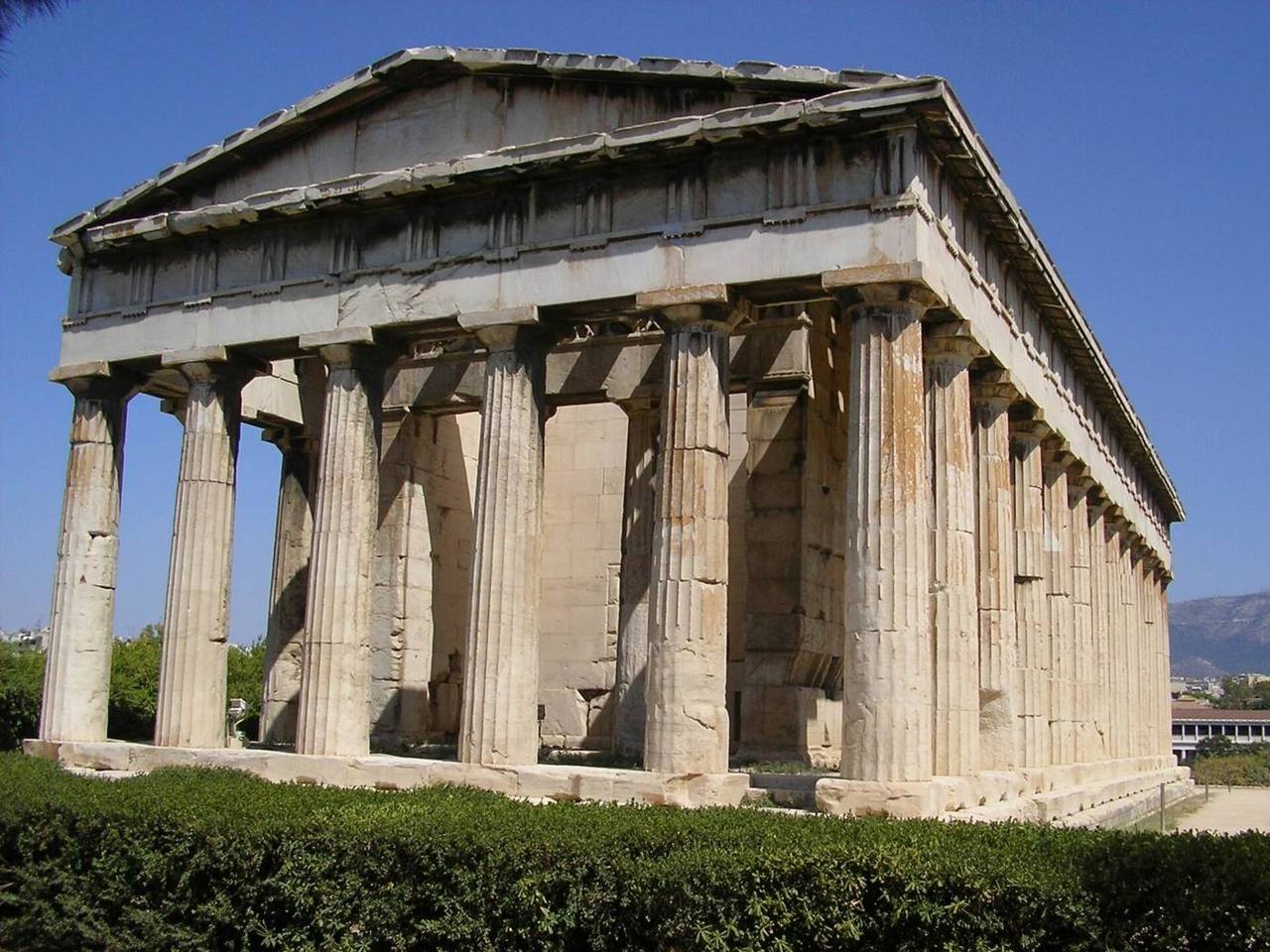
Athens in depth and Cape Sounion
Athens beyond the Acropolis: the National Archaeological Museum, the Ancient Agora with the temple of Hephaestus, the Kerameikos, the Anafiotika quarter, Lycabettus Hill, the Benaki Museum, the Stavros Niarchos Foundation Cultural Center and the temple of Poseidon at Cape Sounion at sunset.
 6 daysEasy
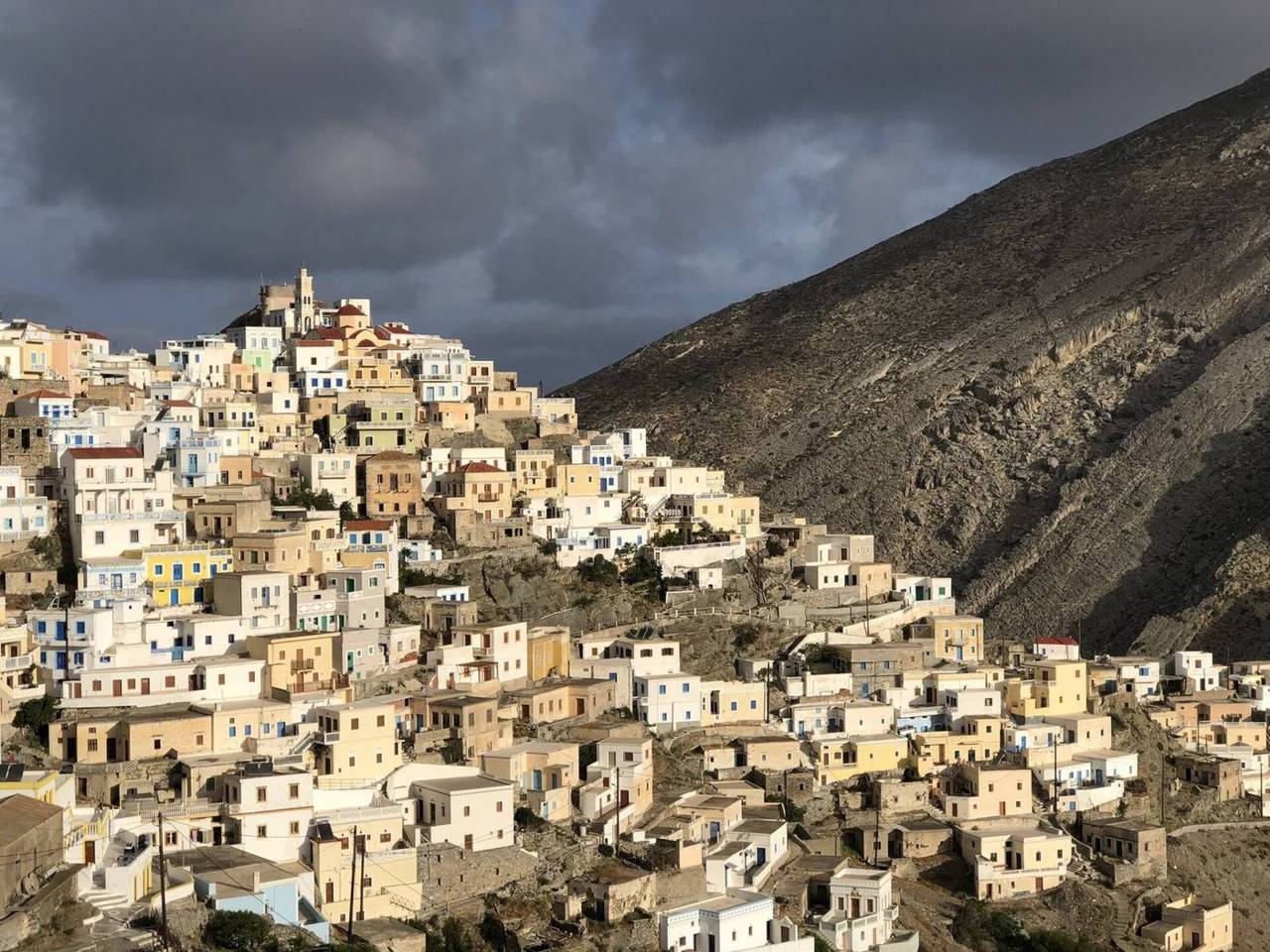
Karpathos, Olympos and the wild coast
The Dodecanese island between Rhodes and Crete: the harbour at Pigadia, the beaches of Apella, Kyra Panagia and Achata, the ridge-top village of Olympos with its windmills and living traditions, Diafani and the trails of the north.
 9 daysChallenging
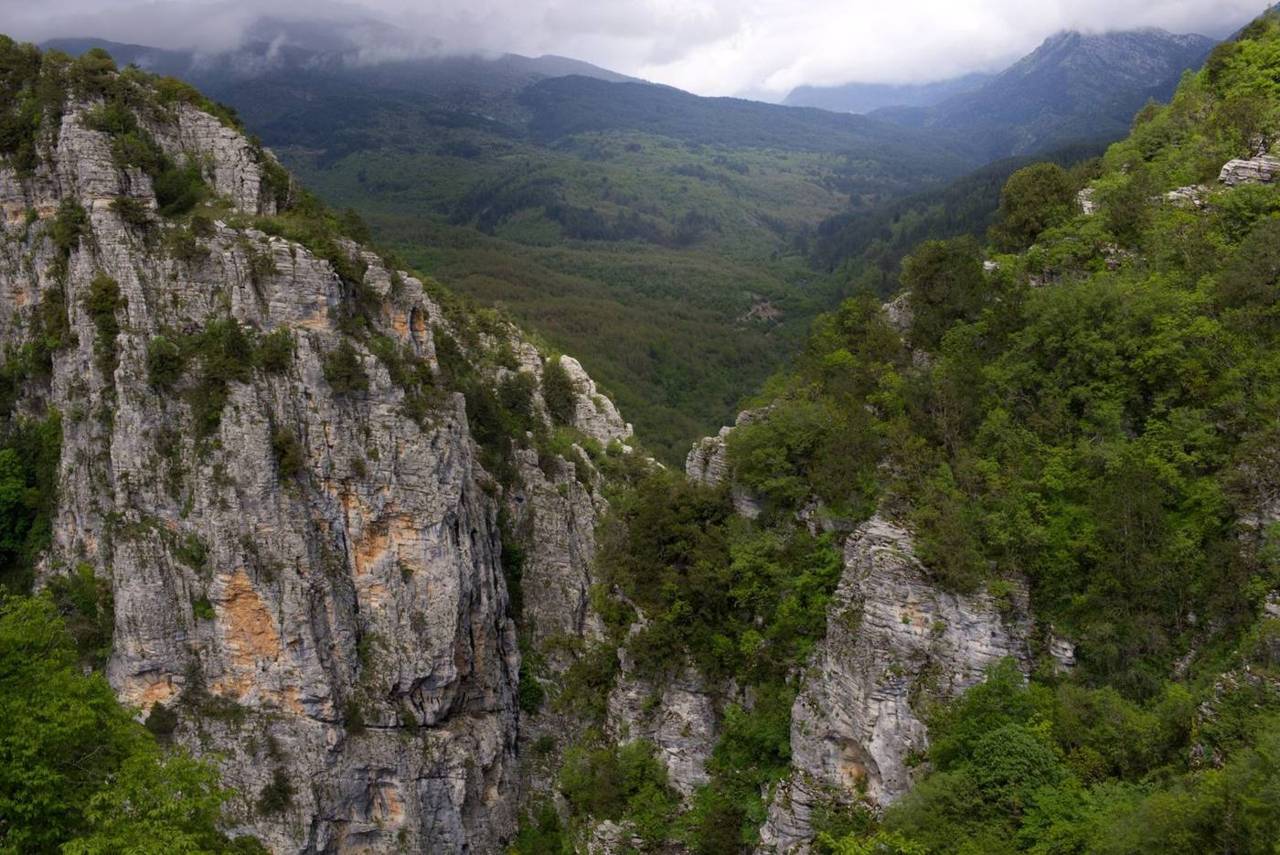
Zagori on Foot: the Vikos Gorge and the Stone Villages
Four days of walking in Epirus, from Monodendri to Tsepelovo, with a night in a mountain hut below Astraka and two closing days in Athens.