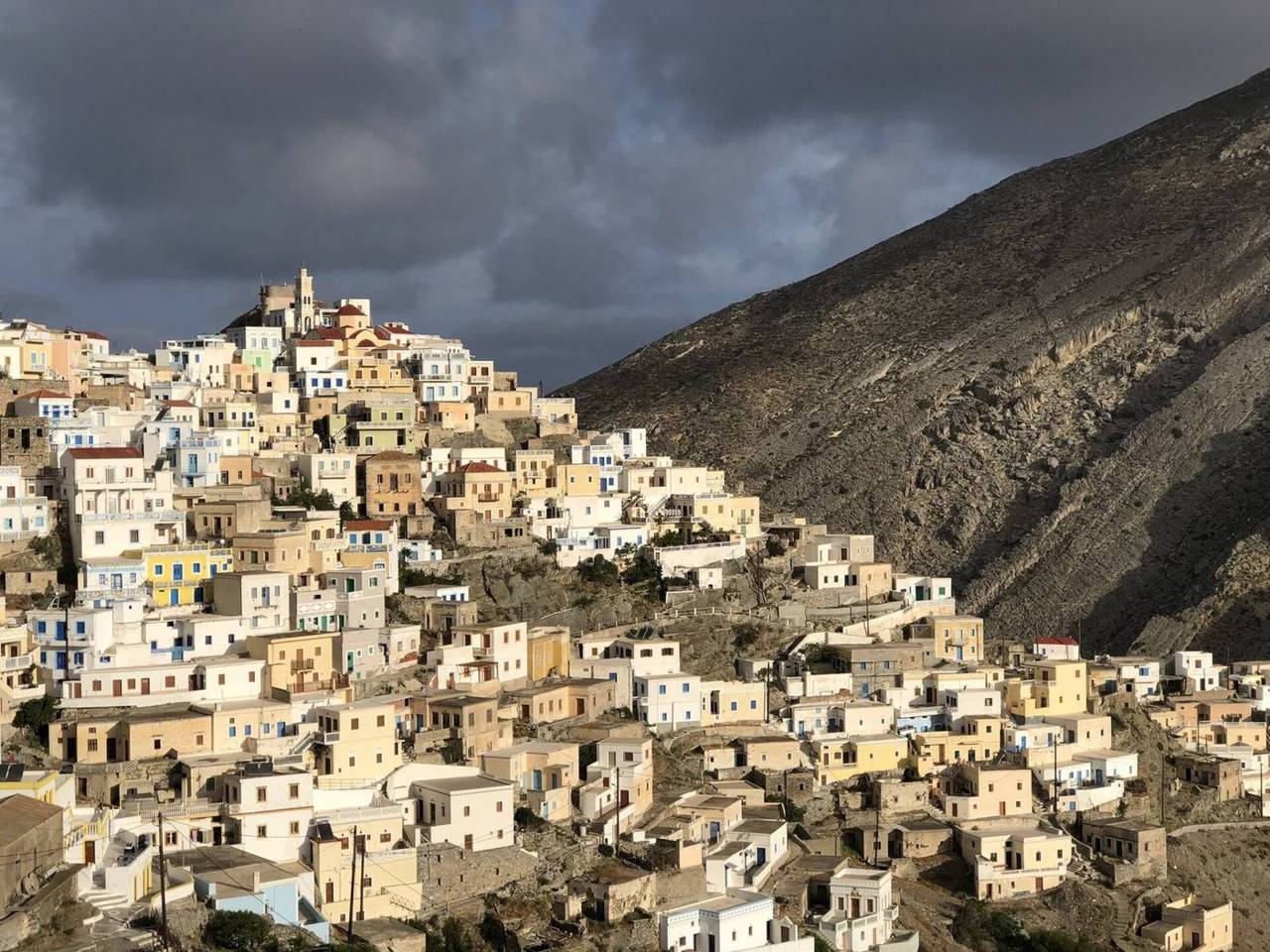
Karpathos, Olympos and the wild coast
The Dodecanese island between Rhodes and Crete: the harbour at Pigadia, the beaches of Apella, Kyra Panagia and Achata, the ridge-top village of Olympos with its windmills and living traditions, Diafani and the trails of the north.
- Pigadia
- Apella
- Kyra Panagia
- Diafani
- Olympos
Day by day
- Day 1
Arriving in Pigadia
Karpathos is a long, mountainous island in the Dodecanese, between Rhodes and Crete, in the south-eastern Aegean. It is less known than the Cyclades, but it has some of the most beautiful beaches in Greece, pine-covered mountains, white villages clinging to the slopes and, in the north, the village of Olympos, which preserves very old traditions, dress and dialect. The island is swept by the meltemi wind, which keeps it cool in summer and makes it popular with windsurfers. In six days you see the south, the east coast and the wild north.
You arrive by plane, with direct flights from Italy in summer or via Athens and Rhodes, or by ferry from Rhodes, Crete or Piraeus.
Pigadia, the main town, lies on a large bay in the south-east of the island, with the port, the seafront, modern houses and the remains of an ancient acropolis on the headland. It is the most convenient base for exploring the south.
In the afternoon, walk along the seafront and Vrontis beach, the long sandy beach of the bay, with the remains of an early Christian basilica near the shore.
In the evening, dine at the harbour on island cooking: fresh fish, goat's cheeses, makarounes, a handmade pasta served with cheese and fried onion, and thyme honey.
Practical tip: Karpathos is large and the mountain roads are slow. Rent a car or scooter for the first days, but drive carefully, especially in strong wind.
- Day 2
The east coast beaches: Achata, Kyra Panagia, Apella
Today is a beach day. The east coast of Karpathos, north of Pigadia, has a series of beaches in small coves enclosed by white cliffs and pines, with intensely blue, clear water.
The first is Achata, about a quarter of an hour from Pigadia, a small beach of white pebbles below a great rock wall, with crystal-clear sea. The road down to it drops steeply from the mountain.
Continue north to Kyra Panagia, one of the most photographed beaches on the island, with golden sand, the small red-domed church above the bay and pine-covered hills.
Further north is Apella, considered by many the most beautiful beach on Karpathos, a bay of sand and pebbles with green and blue water, enclosed by cliffs and pines reaching down to the sea. It is reached by a mountain road and then a short walk down.
In summer, boats also leave Pigadia for a tour of the east coast beaches, some reachable only from the sea.
In the evening, return to Pigadia or sleep in one of the mountain villages near the coast.
Practical tip: these beaches have few facilities and little natural shade. Bring water, food and an umbrella, and check which way the wind is blowing: with the meltemi, the east coast beaches are often more sheltered.
- Day 3
The mountain villages: Othos and Menetes
In the morning, go up into the mountains of the south, where some of the oldest villages on Karpathos stand, built away from the sea to protect them from pirates.
Start with Menetes, about a quarter of an hour from Pigadia, a village on a rocky ridge with colourful houses, stepped lanes and the church at the top with views over both coasts of the island. The village has a small folklore museum with objects from everyday life in the past.
Continue to Aperi, the island's old capital, a wealthy village with elegant houses built by those who emigrated to America and returned, and then to Othos, the highest village on Karpathos, at about five hundred metres, below Mount Kali Limni, the island's highest peak. In Othos visit the small traditional house turned into a museum, with its raised bed, embroidered textiles and decorated plates hung on the walls, as in the houses of the past. The village is also known for its home-made red wine.
In the afternoon, for keen walkers, a trail climbs towards Mount Kali Limni, with views over the whole island, the sea and, on clear days, as far as Crete.
Then go down to the west coast to Arkasa or Finiki, small fishing harbours with seaside tavernas, for sunset.
Practical tip: in summer the village churches celebrate their patron saints' feasts, the panigiria, with music, dancing and food for all. Ask in the villages for the dates.
- Day 4
The boat to Diafani and the climb to Olympos
In the morning, take the boat from Pigadia to the north of the island, to Diafani, in about an hour and a half to two hours, along the east coast with its cliffs and coves. In summer the boat runs almost every day. Alternatively, a mountain road, now mostly paved, links the south with the north.
Diafani is a small fishing harbour, the arrival point for the north. From here a bus or taxi climbs to Olympos, in about twenty minutes.
Olympos is one of the most extraordinary villages in Greece. Built on a mountain ridge, with colourful houses stacked one above the other and a row of old windmills along the crest, it remained cut off from the rest of the island for centuries. The inhabitants keep a dialect with very old words, the older women still wear traditional dress every day, with embroidered aprons, headscarves and leather boots, and festivals are celebrated with improvised songs and the lyra.
Walk through the village, visit one of the traditional houses, with rooms decorated with plates, embroidery and photographs, and the church with its frescoes. One of the windmills still works and grinds flour for bread.
In the evening, sleep in Olympos or Diafani, and have dinner with bread baked in the communal ovens and makarounes.
Practical tip: in Olympos, always ask permission before photographing people, especially women in traditional dress.
- Day 5
The trail from Olympos to the north
Today, walk in the wild north of the island, an area of bare mountains, farmed valleys and isolated beaches, reachable only on foot or by boat.
From Olympos a trail descends north to Avlona, a small farming village on a plateau, lived in only during the farming season by Olympos families, with stone houses, wheat fields and stables. The landscape is peaceful, with fields enclosed by stone walls and mountains all around.
From Avlona, a trail continues to Vroukounda, on the north-west coast, with the remains of an ancient city, rock-cut tombs, and the small chapel of Agios Ioannis, built in a cave above the sea. Every year, at the end of August, one of the most important festivals of the north is held there.
Alternatively, from Diafani a coastal trail leads to the coves of Vananta and Papa Mina, with pebble beaches and pines, where you can swim in peace. On the way you may meet goats and their shepherds, the only people living in these valleys for much of the year.
In the evening, return to Olympos or Diafani.
Practical tip: the northern trails are little used and partly poorly marked. Bring water, food, a map or a track on your phone, and start early to avoid the heat and the stronger afternoon wind.
- Day 6
The return, flying via Rhodes or Athens
On your last morning, take the boat or bus from Diafani back to Pigadia. If you have time before your flight, stop at Amoopi beach, south of Pigadia, with several small sandy and rocky coves, or at Lefkos harbour on the west coast, with three white sandy bays and the islet of Sokastro. Lefkos is also a good place for a last lunch of fish, watching the fishing boats and the open sea to the west, while on windy days big waves roll onto the sand.
The airport is at the southern tip of the island, near Afiartis beach, famous for windsurfing thanks to its strong, steady wind. From here there are flights to Rhodes and Athens, and in summer direct flights to some European cities.
This trip combines well with Rhodes, with its medieval city of the Knights, or with the nearby island of Kasos, small and quiet, reachable by ferry. Those with more time can continue south to Crete by ferry.
Practical tip: Italian citizens only need an identity card valid for travel. In Greece there is a per-night tax on accommodation, which varies by type of property and season. In summer there is a risk of wildfires: respect the bans and do not light fires.
Fly in from Athens or Rhodes, or come by ferry. The wind can be strong, especially in the south, a windsurfing spot. In Olympos some women still wear traditional dress: always ask before taking photos. A valid identity card is enough for EU citizens. Accommodation charges a nightly tax that varies with season and category. In summer the wildfire risk is high: on alert days some forest areas and trails may be closed, and lighting fires outdoors is forbidden.
Before you go
- Documents and visa
- EU citizens need a valid identity card or passport, including on ferries, where ID may be checked at boarding. Other nationalities should check the Schengen rules.
- Health and vaccines
- No vaccines required. EU citizens should bring their EHIC; in summer protect yourself from the sun and drink plenty. Emergencies: 112.
- Money and payments
- Euro. Cards are accepted almost everywhere; every accommodation charges a fee per room per night, often paid on departure.
- Power sockets
- Types C and F, 230 volts.
- Time zone
- Eastern European Time (UTC+2), summer time (UTC+3) from late March to late October.
- Safety
- A safe country. In summer watch for wildfires and 112 alerts; in Athens, for pickpockets on the metro. Official advice: GOV.UK.
Information checked in November 2026 for Italian and EU citizens. Rules change: always check before you travel.
Variations
In 4 days: the south only, with Pigadia, the east coast beaches and the mountain villages.
In 9 days: add a few days on Rhodes or on the small island of Kasos.
Frequently asked questions
When is the best time to go?
From May to October. In July and August the meltemi wind is strong, great for windsurfing but less so for boats. May, June and September are the calmest months.
Do I need a car?
It is very useful for the south. For the north you can take the boat to Diafani and then the bus up to Olympos.
What documents do I need?
Italian citizens only need an identity card valid for travel. In Greece there is a per-night tax on accommodation.
Indicative itinerary written by World Atlas. Before booking, check timetables, seasonal openings, documents and safety.
 9 daysChallenging
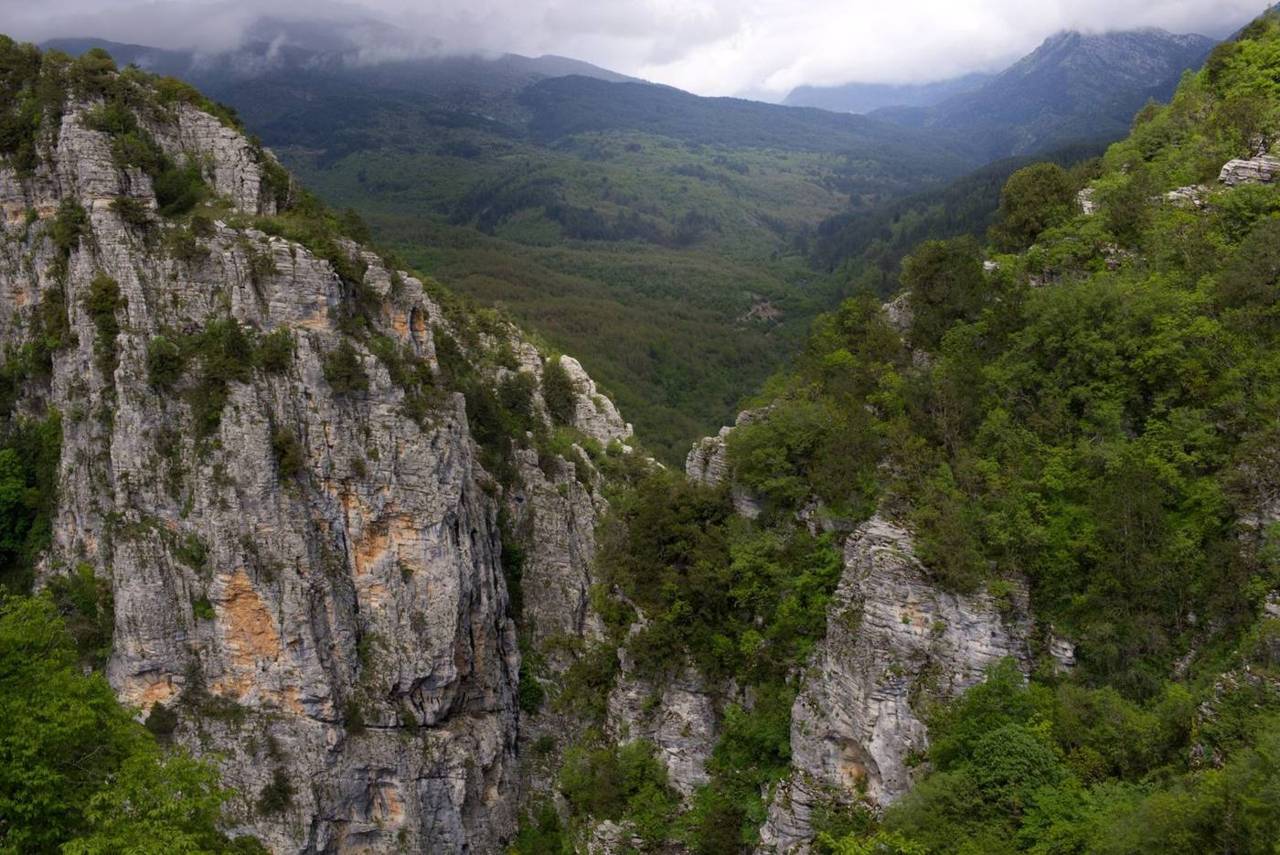
Zagori on Foot: the Vikos Gorge and the Stone Villages
Four days of walking in Epirus, from Monodendri to Tsepelovo, with a night in a mountain hut below Astraka and two closing days in Athens.
 9 daysEasy
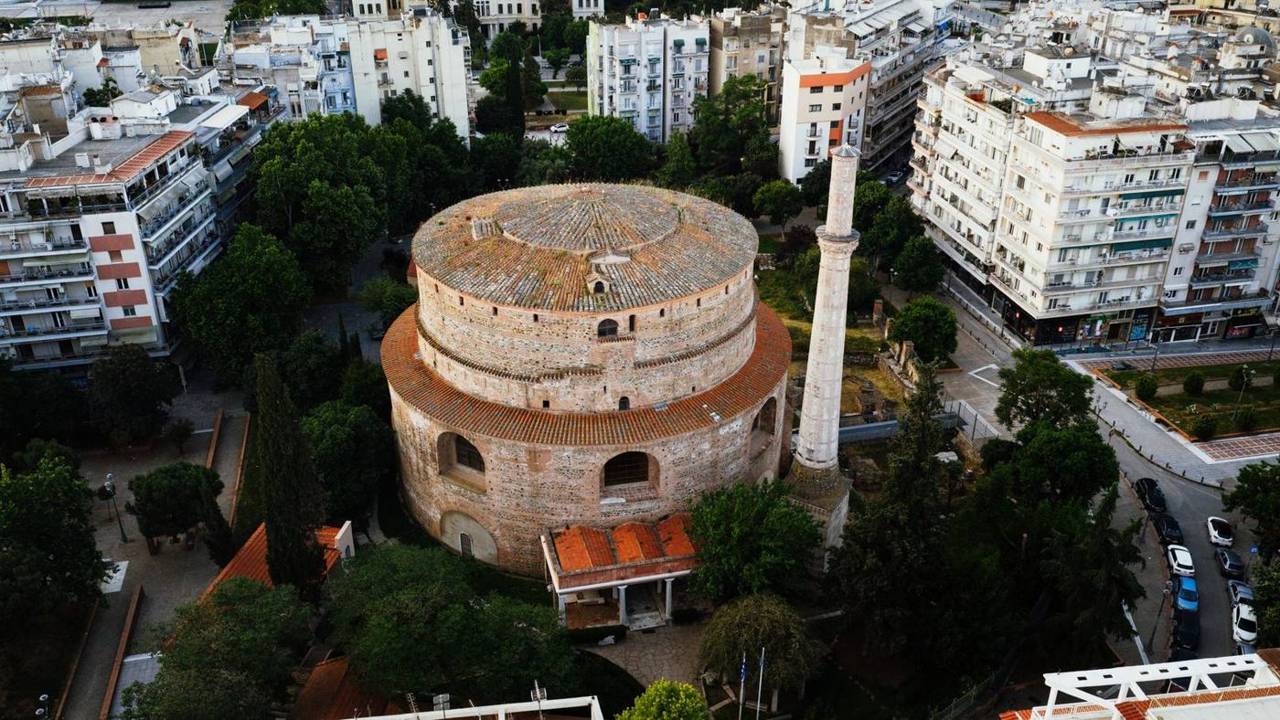
Byzantine Greece: Thessaloniki, Halkidiki and Kavala
A loop through northern Greece among Byzantine churches, mountain monasteries and the outline of Mount Athos seen from the sea, designed for the colder months.
 10 daysEasy
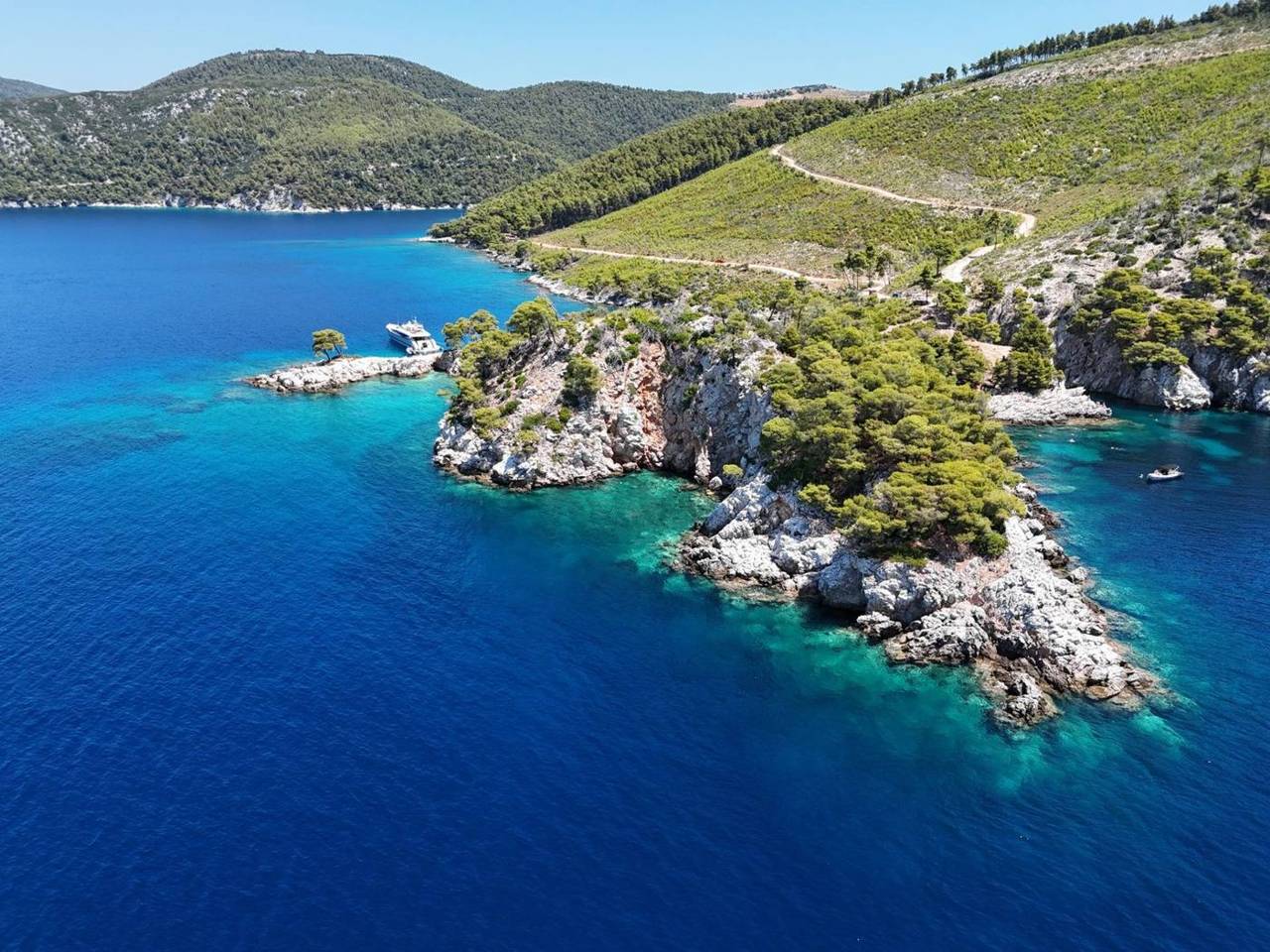
The Sporades: Alonissos, Skiathos and Skopelos
Three green islands in the western Aegean, with pine woods running down to the water, a marine park and a few trails up to the monasteries.