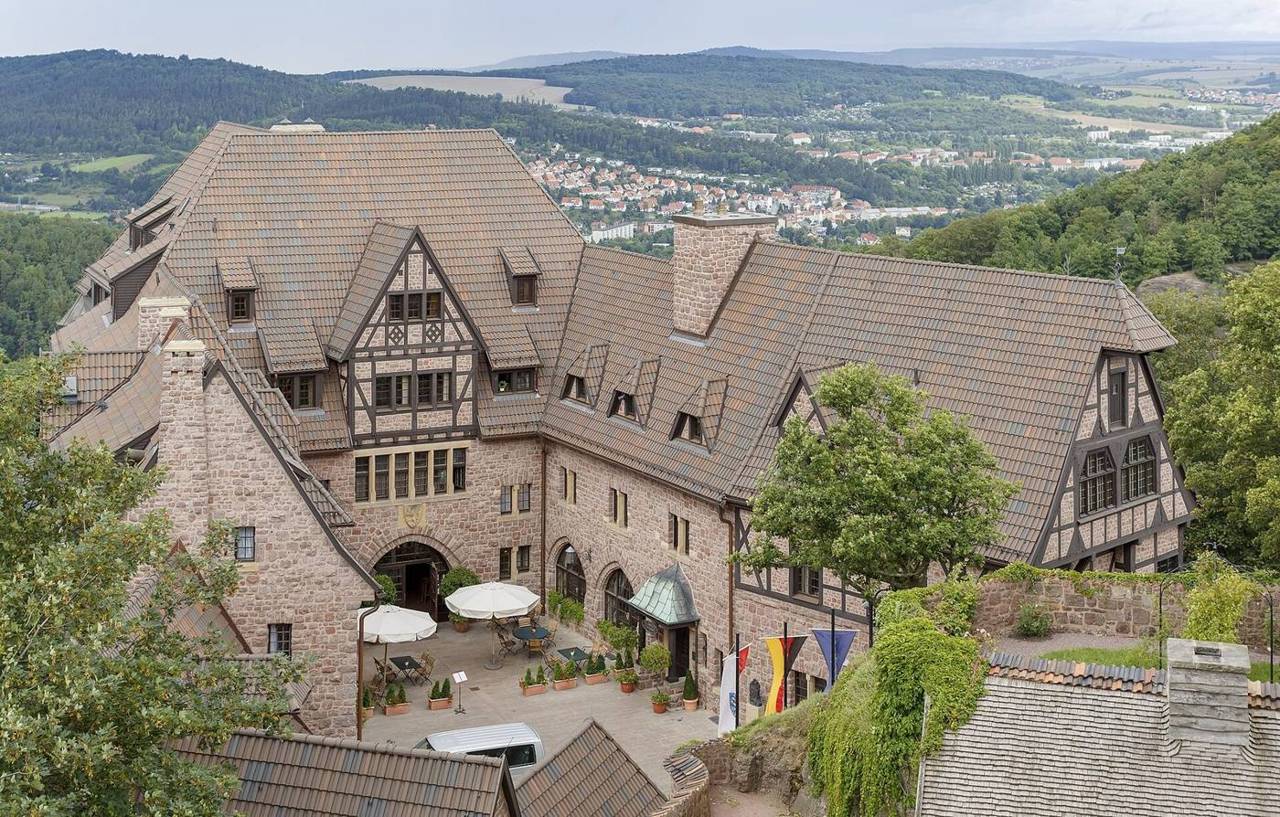
Thuringia: Weimar, Erfurt and the Wartburg
Germany's green heart: the Weimar of Goethe, Schiller and the first Bauhaus, the Anna Amalia library, the Buchenwald memorial, Erfurt with its inhabited Krämerbrücke bridge and cathedral, and Eisenach with Wartburg Castle, a UNESCO site where Luther translated the New Testament.
- Weimar
- Buchenwald
- Erfurt
- Eisenach
- Wartburg
Day by day
- Day 1
Weimar: Goethe's house and the Bauhaus Museum
Thuringia is a region in the centre of Germany, covered in hills and forests and known as the green heart of the country. Within a few kilometres it holds some of the most important places in German culture: Weimar, the city of Goethe and Schiller and the birthplace of the Bauhaus; Erfurt, with its medieval centre and inhabited bridge; and the Wartburg, the castle where Luther translated the Bible into German. In four days you see Weimar, Buchenwald, Erfurt and Eisenach.
You arrive by train in Weimar, from Frankfurt in about two and a half hours or from Berlin in just over two hours, or by air to Leipzig or Erfurt.
Weimar is a small, elegant town, with squares, parks and colourful houses. At the end of the eighteenth and start of the nineteenth century it was the centre of German culture, when Goethe, Schiller, Herder and Wieland lived here.
Visit Goethe's house, where the poet lived for almost fifty years, with its rooms, original furniture, library, collections of minerals and art, and garden. Next door is a museum devoted to his life and works.
In the afternoon, visit the Bauhaus Museum, in a modern building, which tells the story of the art and design school founded in Weimar in 1919 by Walter Gropius, which changed architecture, furniture and graphic design around the world for ever.
In the evening, sleep in Weimar.
Practical tip: Italian citizens need only an identity card. Germany is keeping border controls until March 2027: always carry your document.
- Day 2
The Duchess Anna Amalia Library and the Buchenwald Memorial
In the morning, visit the Duchess Anna Amalia Library, one of the most beautiful historic libraries in Europe, a World Heritage site together with the other sites of Classical Weimar. The oval Rococo hall is white and gold, with three storeys of wooden shelves full of old books, marble busts and a painted ceiling. Goethe directed it for many years.
In 2004 a fire destroyed part of the building and tens of thousands of books. The hall was carefully restored and reopened in 2007, and the work of restoring the damaged books continues today.
In the afternoon, take the bus to the Buchenwald Memorial, on the Ettersberg hill, about twenty minutes from the centre. Here in 1937 the Nazis built one of the largest concentration camps in Germany, where more than two hundred thousand people were imprisoned and about fifty-six thousand died. After the war the Soviet authorities used the site as a special camp.
Walk across the great empty space where the barracks stood, visit the crematorium, the permanent exhibition in the former storehouse and the cemetery. The memorial is a place of silence and remembrance, deeply moving.
In the evening, return to Weimar and walk in the park on the Ilm, where Goethe's garden house stands.
In the evening, sleep in Weimar.
Practical tip: the Anna Amalia Library admits a limited number of visitors per day, with timed tickets. Book ahead, especially at weekends.
- Day 3
Erfurt: the Krämerbrücke, the cathedral and the citadel
In the morning, take the train to Erfurt, the capital of Thuringia, in about fifteen minutes. Erfurt is a rich, well-preserved medieval city, with more than twenty churches, large squares and colourful half-timbered houses.
Start with the Krämerbrücke, the merchants' bridge, a stone bridge over the river Gera built in the early fourteenth century, entirely covered with inhabited half-timbered houses with shops on the ground floor. It is the longest inhabited bridge in Europe, and families still live there. Walk among the shops selling crafts, ceramics, fabrics and sweets.
Then go to Cathedral Square, a large square dominated by two Gothic churches side by side, St Mary's Cathedral and St Severus's Church, at the top of a monumental flight of steps. Martin Luther was ordained a priest in the cathedral in 1507. Inside are medieval stained-glass windows and the great Gloriosa bell.
In the afternoon, climb to the Petersberg Citadel, a large Baroque fortress above the city, with bastions and underground passages, from where you see the centre and the church towers.
In the centre, also visit the Old Synagogue, one of the oldest in Europe, with the museum of the Erfurt Treasure, jewellery and silver coins hidden by a Jewish family during a fourteenth-century persecution.
In the evening, sleep in Erfurt.
Practical tip: the Old Synagogue and Erfurt's medieval Jewish heritage have been a World Heritage site since 2023. Check opening times, as some places close on Mondays.
- Day 4
Eisenach and the Wartburg, then departure
In the morning, take the train to Eisenach, in about forty minutes, a small town at the foot of the Thuringian Forest.
Walk up, in about half an hour, or take a bus to the Wartburg, a castle on a wooded hill above the town, founded according to tradition in 1067. It is a World Heritage site and one of the symbols of German history.
In 1521 and 1522 Martin Luther, condemned by the Church and the emperor, hid here under a false name, protected by the Elector of Saxony. In less than three months he translated the New Testament from Greek into German, a fundamental work in the birth of the modern German language. His simple room, with its wooden table, can still be visited today.
The guided tour also shows the festival hall, decorated in the nineteenth century, the chapel and the rooms of Saint Elizabeth of Hungary, who lived in the castle in the thirteenth century. In 1817 German students gathered here to call for the unity of Germany.
In the afternoon, return to Eisenach and visit the Bach House, the museum devoted to Johann Sebastian Bach, born in this town in 1685, with old instruments and short concerts.
Then take the train to Frankfurt, in about two hours, or to another city.
This trip combines well with Leipzig and Dresden, or with the Bauhaus and Luther towns of Dessau and Wittenberg.
Practical tip: at the Wartburg, the interior can only be visited on guided tours. Check times and tours in English, and arrive early on summer weekends.
The three towns are linked by frequent regional trains. The historic hall of the Anna Amalia library admits few visitors a day: book ahead. Allow at least three hours at Buchenwald. A valid identity card is enough for EU citizens. Germany has reintroduced spot checks at all its land borders, extended until March 2027: keep your document to hand on trains and in the car too.
Before you go
- Documents and visa
- A valid identity card or passport is enough for EU citizens. German land border checks have been extended until March 2027: always carry your document.
- Health and vaccines
- No vaccines required. EU citizens should carry the European Health Insurance Card. Emergencies: 112, police 110.
- Money and payments
- Euro. Cards are increasingly accepted, but many bars, bakeries and beer halls still take cash only.
- Power sockets
- Types C and F, 230 volts.
- Time zone
- UTC+1, UTC+2 in summer.
- Safety
- The United States rates Germany level 2 for terrorism. In stations and crowded markets watch out for pickpockets. Official advice: GOV.UK.
Information checked in November 2026 for Italian and EU citizens. Rules change: always check before you travel.
Variations
In 3 days: Weimar, Buchenwald and Erfurt.
In 7 days: add Leipzig and Dresden.
Frequently asked questions
When is the best time to go?
From May to October, with green parks and good weather. In December the Christmas markets of Erfurt and Weimar are lovely.
Do I need a car?
No, the three towns are linked by frequent trains, less than an hour apart.
Is Buchenwald suitable for young people?
It is a powerful place, with harsh images and accounts: judge for yourself whether it suits younger children. Dress respectfully and keep quiet.
Indicative itinerary written by World Atlas. Before booking, check timetables, seasonal openings, documents and safety.
 5 daysEasy
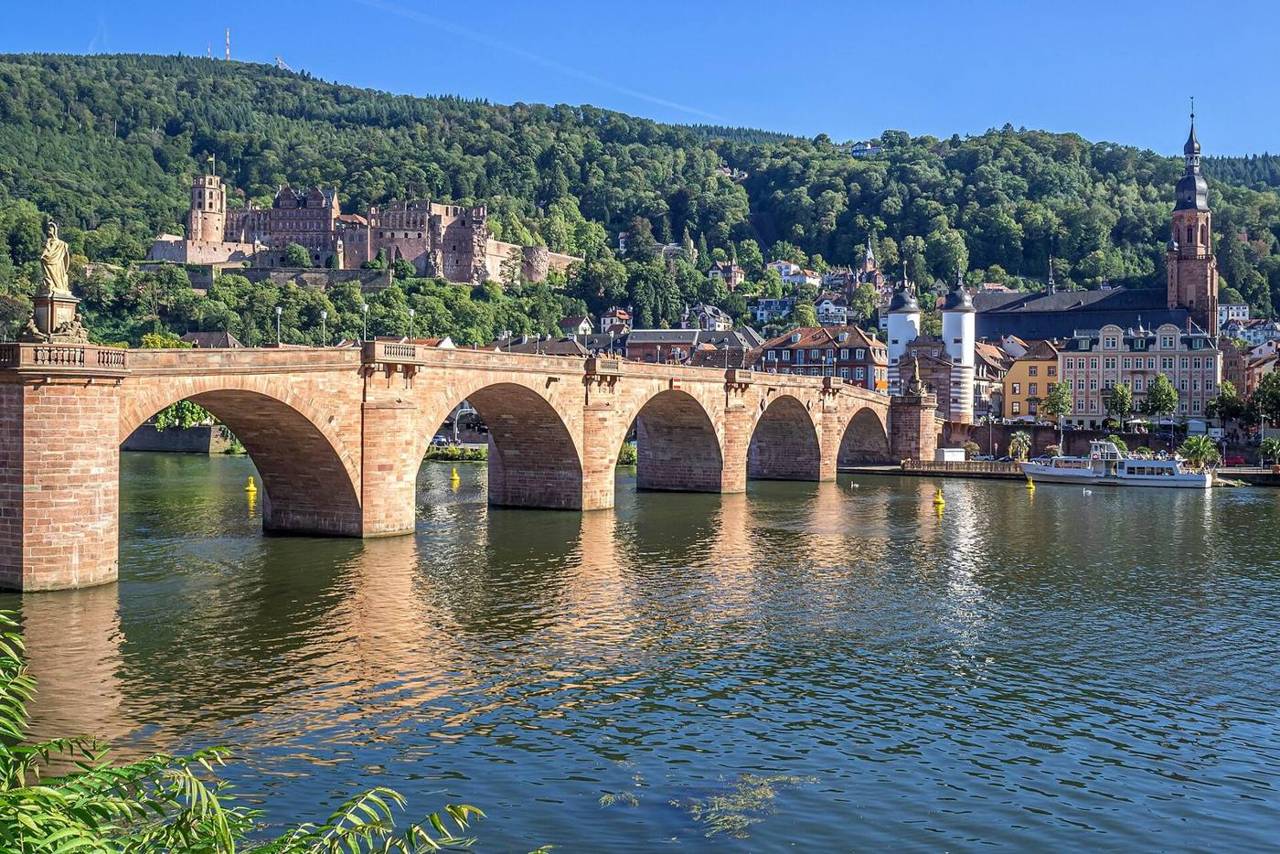
Heidelberg, Stuttgart and Tübingen
Baden-Württemberg along the Neckar: Heidelberg Castle and the Philosophers' Walk, Maulbronn Monastery (UNESCO), the Mercedes-Benz and Porsche museums and Stuttgart's Weissenhof estate, Tübingen with its punts on the river and Hohenzollern Castle.
 5 daysEasy
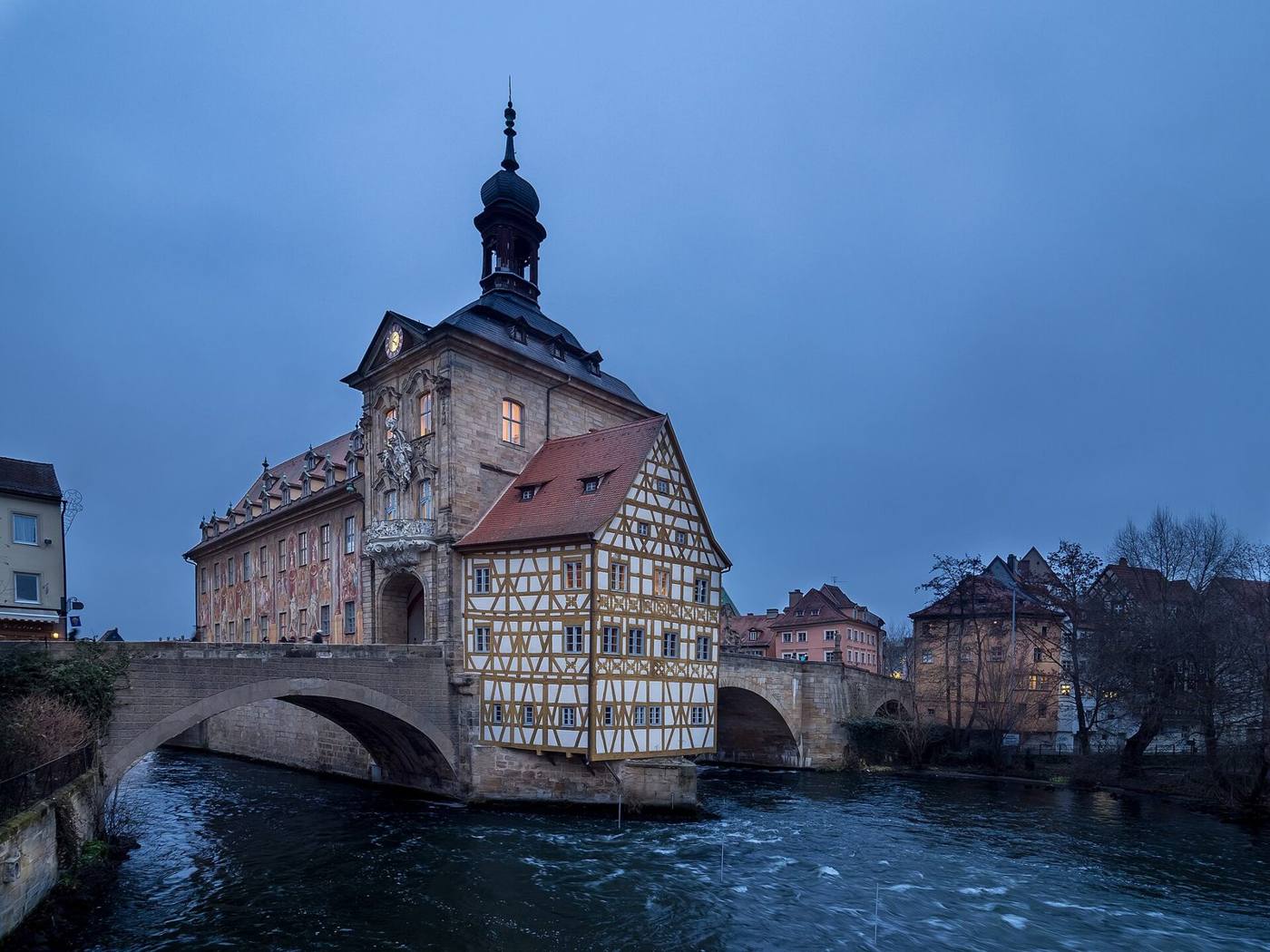
Franconia: Nuremberg, Bamberg and Franconian Switzerland
Northern Bavaria: Nuremberg with its imperial castle, the Germanic National Museum and the documentation centre on the Nazi rally grounds, Bamberg (UNESCO) and its smoked beer, the caves and rocks of Franconian Switzerland and the Margravial Opera House in Bayreuth.
 4 daysEasy
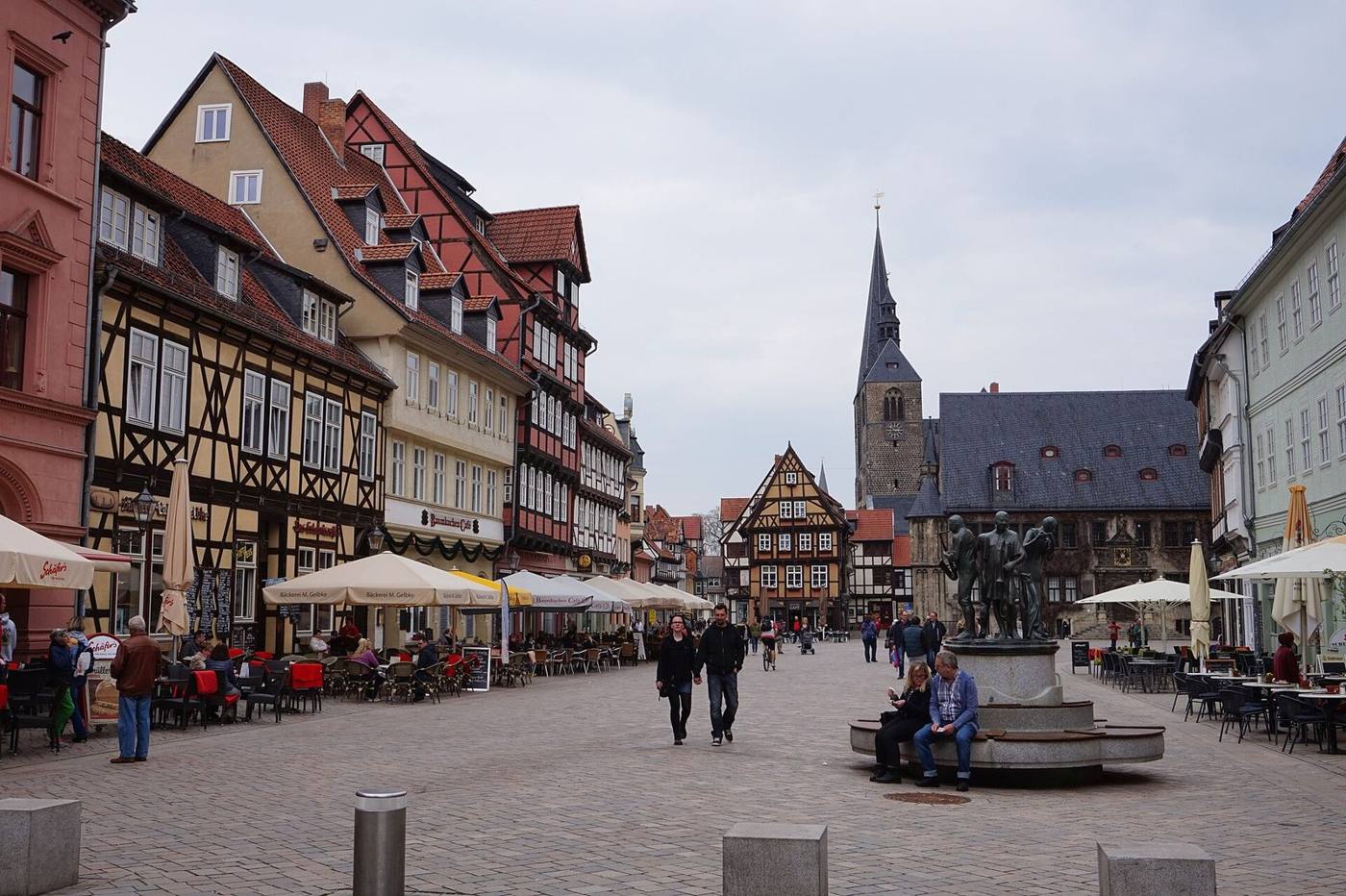
The Harz: Quedlinburg, Goslar and the Brocken
The witches' mountains: Quedlinburg with over a thousand half-timbered houses (UNESCO), Goslar and the Rammelsberg mine, Wernigerode and its castle, the steam train up the Brocken and the Bode gorge between Thale and Treseburg.