The Romantic Road and Bavaria
Würzburg, Rothenburg ob der Tauber, Dinkelsbühl, Augsburg, the castles of Neuschwanstein and Linderhof and Munich with its beer halls.
- Würzburg
- Rothenburg ob der Tauber
- Dinkelsbühl
- Augsburg
- Füssen
- Neuschwanstein
- Linderhof
- München
Day by day
- Day 1
Würzburg: the Residence and Franconian wines
Germany is part of the Schengen area: EU citizens need only a valid identity card. German land border checks have been extended until March 2027, so always carry your document.
The Romantic Road, the Romantische Strasse, is a route of about 400 kilometres across Bavaria from Würzburg on the River Main to Füssen at the foot of the Alps, through walled medieval towns, castles and countryside. It was created in the 1950s to attract travellers and is now one of Germany's most famous routes. It is best done by car; the nearest airport to Würzburg is Frankfurt, about an hour and a half away.
In Würzburg visit the Residence of the prince-bishops, one of the largest baroque palaces in Europe and a UNESCO World Heritage site. The grand staircase is covered by a gigantic fresco by Giambattista Tiepolo depicting the four continents then known. The court chapel and gardens are well worth seeing.
In the afternoon cross the Old Main Bridge, lined with statues of saints, and climb to Marienberg Fortress on the hill among the vineyards, with views over the city and the river.
In the evening taste Franconian wines, above all white Silvaner, served in the typical round-bellied bottle called a Bocksbeutel, perhaps on the bridge, as locals do.
Practical tip: part of the Residence is visited on a guided tour; book for your day and time.
- Day 2
Rothenburg ob der Tauber and the walk on the walls
In the morning drive to Rothenburg ob der Tauber, about an hour from Würzburg, Germany's most famous medieval town, perfectly preserved within its walls above the Tauber valley. Half-timbered houses, towers and cobbled streets look straight out of a fairy tale.
Walk along the walls, covered by a wooden roof, for about two and a half kilometres, with views over red roofs and towers. The Plönlein, a small junction with a yellow half-timbered house between two town gates, is Rothenburg's most photographed image.
On the market square, the town hall has a tower with views over the whole town. On the facade of the councillors' tavern, several times a day, clock figures recall the legend of the Meistertrunk: in 1631, during the Thirty Years' War, the mayor is said to have saved the town by drinking a tankard of over three litres of wine in one go.
In the afternoon visit St Jakob's church, with the Holy Blood altar carved in wood by Tilman Riemenschneider, and the Medieval Crime Museum, with instruments of torture and punishment.
In the evening join the night watchman's tour, who tells the town's history with humour, lantern in hand.
Practical tip: stay inside the walls to see the town in the evening and early morning without coach groups. Try Schneeballen, snowballs of fried pastry, the local sweet.
- Day 3
Dinkelsbühl, Nördlingen in its crater and Augsburg
Today three towns on the Romantic Road. The first is Dinkelsbühl, about forty minutes from Rothenburg, less crowded, with complete walls, brightly coloured half-timbered houses and the great Gothic church of St George. Every summer the children's festival, the Kinderzeche, recalls the day when, according to legend, the children saved the town in the Thirty Years' War.
Then continue to Nördlingen, about half an hour away, a round town encircled by complete walls you can walk all the way round. Nördlingen lies at the centre of the Ries, a crater about twenty-five kilometres wide formed by a meteorite impact almost fifteen million years ago. Climb the tower of St George's church, called Daniel, about ninety metres high, to see the town's perfect shape and the crater rim. The church stones contain tiny microscopic diamonds formed by the impact. The crater museum tells the meteorite's story.
In the afternoon reach Augsburg, one of Germany's oldest cities, founded by the Romans. Visit the Fuggerei, the oldest social housing complex in the world still inhabited, founded in 1521 by the Fugger family for the city's poor: residents still pay a symbolic rent of less than a euro a year and say three prayers a day for the founders.
In the evening stay in Augsburg. Practical tip: parking in the historic centres is limited; use car parks outside the walls.
- Day 4
Füssen, Neuschwanstein and Hohenschwangau
In the morning drive to Füssen, about an hour and a half from Augsburg, a small town at the foot of the Alps on the River Lech, at the end of the Romantic Road.
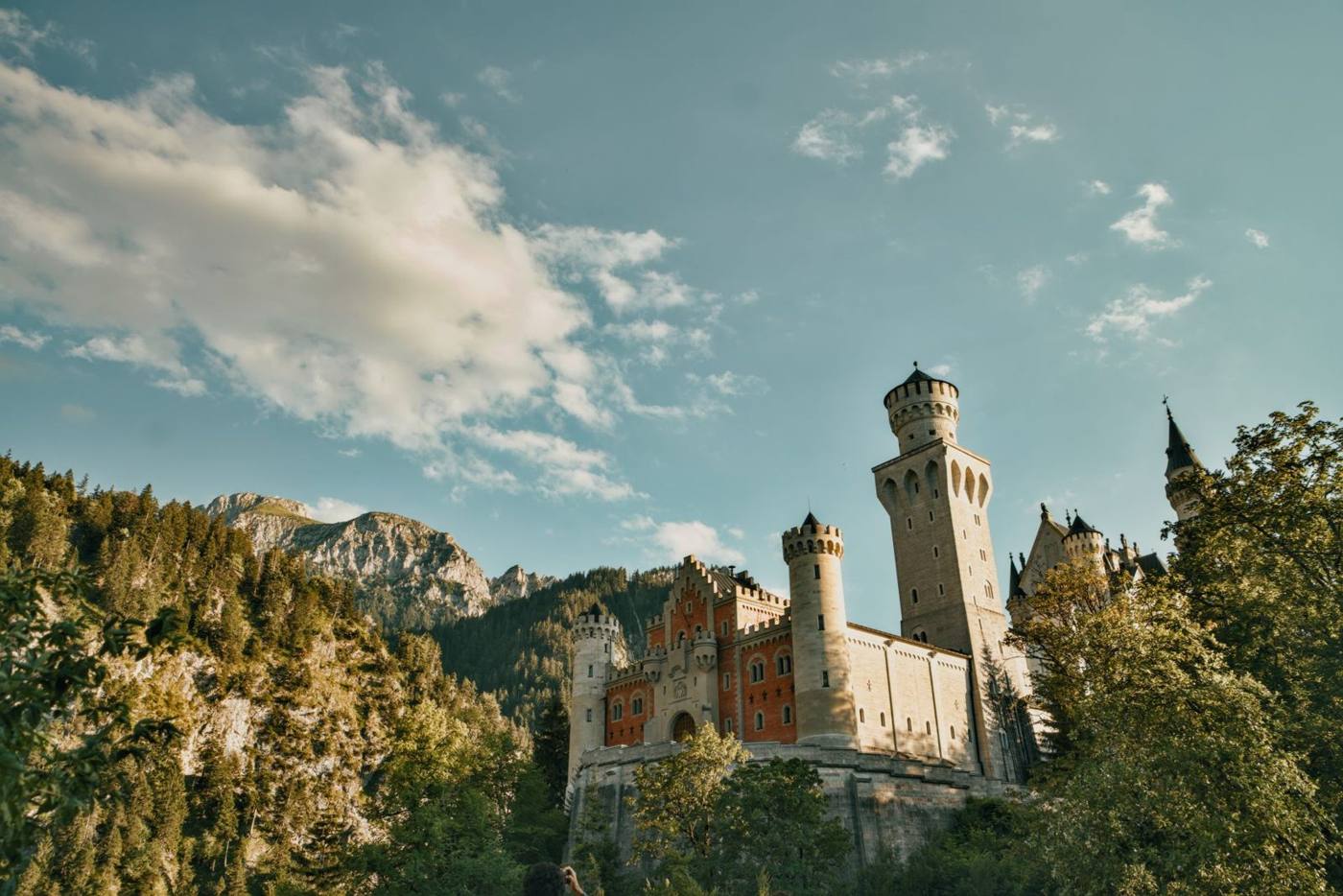
Nearby, at Schwangau, stand Bavaria's two most famous castles. Neuschwanstein, built by King Ludwig II, the fairy-tale king, in the second half of the nineteenth century on a crag above the Pöllat gorge, inspired Disney's Sleeping Beauty castle. The king never saw it finished: he died in 1886 in mysterious circumstances in Lake Starnberg. Inside you visit rooms inspired by Wagner's operas, including the throne room and the singers' hall. The castle is a candidate for UNESCO World Heritage status together with the king's other castles.
In 2026 the official Neuschwanstein ticket costs 21 euros for an adult, with a small fee for online booking; under-18s enter no-cost but still need a timed ticket. Visits are guided only, last about half an hour, and tickets should be booked well ahead on the official website.
The yellow Hohenschwangau Castle below Neuschwanstein was Ludwig II's childhood home. Mary's Bridge, above the gorge, offers the classic view of Neuschwanstein: check whether it is open, as it sometimes closes for works or snow.
In the evening stay in Füssen. Practical tip: from the village to the castle you walk up in about forty minutes, or take the shuttle bus or a horse-drawn carriage.
- Day 5
Linderhof and Oberammergau
In the morning drive to Linderhof Palace, about an hour from Füssen, the smallest of Ludwig II's palaces and the only one the king saw completed. It is a small rococo palace inspired by Versailles, in an isolated valley among the mountains, with formal gardens, fountains and terraces. In the park lie the Venus Grotto, an artificial cave with an underground lake and a shell-shaped boat, where the king listened to Wagner's operas, and the Moorish Kiosk.
In the afternoon visit Oberammergau, about fifteen minutes away, a village famous for two traditions. Its houses are decorated with frescoes, called Lüftlmalerei, showing religious scenes and fairy tales such as Little Red Riding Hood and Hansel and Gretel. The village is also famous for its Passion Play, performed by the villagers every ten years since 1634, following a vow made during a plague epidemic: the next performance is in 2030. The Passion Play theatre can be visited.
In the village workshops woodcarvers keep a centuries-old tradition alive.
Alternatively, mountain lovers can head to Garmisch-Partenkirchen and go up the Zugspitze, Germany's highest mountain, almost three thousand metres.
In the evening continue to Munich, about an hour and a half away. Practical tip: Linderhof also has timed tickets; book ahead, especially in summer.
- Day 6
Munich: Marienplatz and the Residenz
Today is Munich, München, the Bavarian capital, an elegant, lively city of baroque churches, museums and beer halls.
Start at Marienplatz, the central square, with the neo-Gothic New Town Hall. At 11 a.m., and in summer also at noon and 5 p.m., the tower's Glockenspiel sets figures dancing to depict a knights' tournament and the coopers' dance. Climb the town hall tower or that of St Peter's church, called Alter Peter, for views over the roofs and, on clear days, the Alps.
Nearby, the Viktualienmarkt is Munich's great open-air market, with stalls of fruit, cheese and charcuterie and a beer garden under the trees. The Frauenkirche, the cathedral with two domed towers, is the city's symbol.
In the afternoon visit the Residenz, the palace of the kings of Bavaria, one of the largest in Europe, with more than a hundred rooms, the Antiquarium, a long frescoed Renaissance hall, the treasury with the royal crowns and the rococo Cuvilliés Theatre.
In the evening try the Hofbräuhaus, the world's most famous beer hall, founded in 1589, with wooden benches, Bavarian music and one-litre tankards, or a quieter beer garden.
Practical tip: public transport in Munich works very well; a day ticket is worthwhile for several journeys.
- Day 7
The English Garden and the Deutsches Museum
In the morning walk in the English Garden, one of the largest urban parks in the world, bigger than New York's Central Park. At the entrance, on the Eisbach channel, surfers ride a standing wave all year round, even in winter in wetsuits: a unique sight in a city far from the sea. The park has the Chinese Tower, with a large beer garden, meadows and ponds; in summer locals sunbathe.
In the afternoon visit the Deutsches Museum, on an island in the River Isar, one of the largest museums of science and technology in the world, with aircraft, ships, reconstructed mines, musical instruments and laboratories. It is huge: choose the sections that interest you in advance.
Alternatively, art lovers can visit the Pinakotheken: the Alte Pinakothek, with Dürer, Rubens and the Italian masters, and the Pinakothek der Moderne, with twentieth-century art and design.
If you want to learn about a terrible chapter of history, visit the Dachau Concentration Camp Memorial, the first Nazi camp, opened in 1933, about half an hour by train from Munich, with no-cost entry.
In the evening dine on Bavarian food: roast pork knuckle, Weisswurst, white sausage, served with pretzels and sweet mustard, and apple strudel.
Practical tip: by tradition, Weisswurst is eaten only in the morning, before noon.
- Day 8
A last day in Munich and departure
The last day is for a relaxed visit before departure.
In the morning visit Nymphenburg Palace, the summer residence of the Bavarian kings, about twenty minutes from the centre by tram, with a large park of canals and pavilions and the Gallery of Beauties, where King Ludwig I had the most beautiful women of his time painted. Ludwig II was born in the palace.
Alternatively, if you are in Munich between late September and early October, there is the Oktoberfest, the world's largest beer festival, on the Theresienwiese meadow, with the breweries' huge tents, fairground rides and millions of visitors: accommodation must be booked months ahead and prices rise sharply.
In December, Munich's Christmas markets, on Marienplatz and in the neighbourhoods, are among the finest in Germany.
Munich airport is about forty minutes from the centre by S-Bahn.
Things to take home: Bavarian beer, sweet mustard, gingerbread, a ceramic beer stein and carved wooden items from Oberammergau.
Practical tip: the United States rates Germany level 2 for terrorism; in Munich big-city precautions apply. Beer halls and markets are crowded: keep an eye on your wallet. Reach the airport with a good margin, because security checks can be long. Trains to the airport run every few minutes.
Fairy-tale Germany, easy to drive. Neuschwanstein can only be visited with a timed ticket, booked online weeks ahead in summer. Rothenburg is beautiful but becomes an open-air museum by day: stay overnight to see it empty. Oktoberfest, from September to early October, sends Munich prices soaring.
Before you go
- Documents and visa
- A valid identity card or passport is enough for EU citizens. German land border checks have been extended until March 2027: always carry your document.
- Health and vaccines
- No vaccines required. EU citizens should carry the European Health Insurance Card. Emergencies: 112, police 110.
- Money and payments
- Euro. Cards are increasingly accepted, but many bars, bakeries and beer halls still take cash only.
- Power sockets
- Types C and F, 230 volts.
- Time zone
- UTC+1, UTC+2 in summer.
- Safety
- The United States rates Germany level 2 for terrorism. In stations and crowded markets watch out for pickpockets. Official advice: GOV.UK.
Information checked in November 2026 for Italian and EU citizens. Rules change: always check before you travel.
Variations
In 5 days: Rothenburg, Dinkelsbühl and Nördlingen, then Füssen with Neuschwanstein and a day in Munich.
In 12 days: add Lake Constance, the Black Forest, or Salzburg and Berchtesgaden on the Austrian border.
Frequently asked questions
How much is Neuschwanstein?
In 2026 the official ticket costs 21 euros for an adult, with a small fee for online booking. Under-18s enter no-cost but need a timed ticket.
Can the Romantic Road be done without a car?
Partly: trains link Würzburg, Rothenburg, Augsburg and Füssen, with some changes. But for Dinkelsbühl, Nördlingen and Linderhof a car is much more convenient.
When is the best time for the Romantic Road?
May to October, with the best weather. In December the Christmas markets of Rothenburg and Munich are beautiful, but it is cold and days are short.
Indicative itinerary written by World Atlas. Before booking, check timetables, seasonal openings, documents and safety.
 6 daysEasy
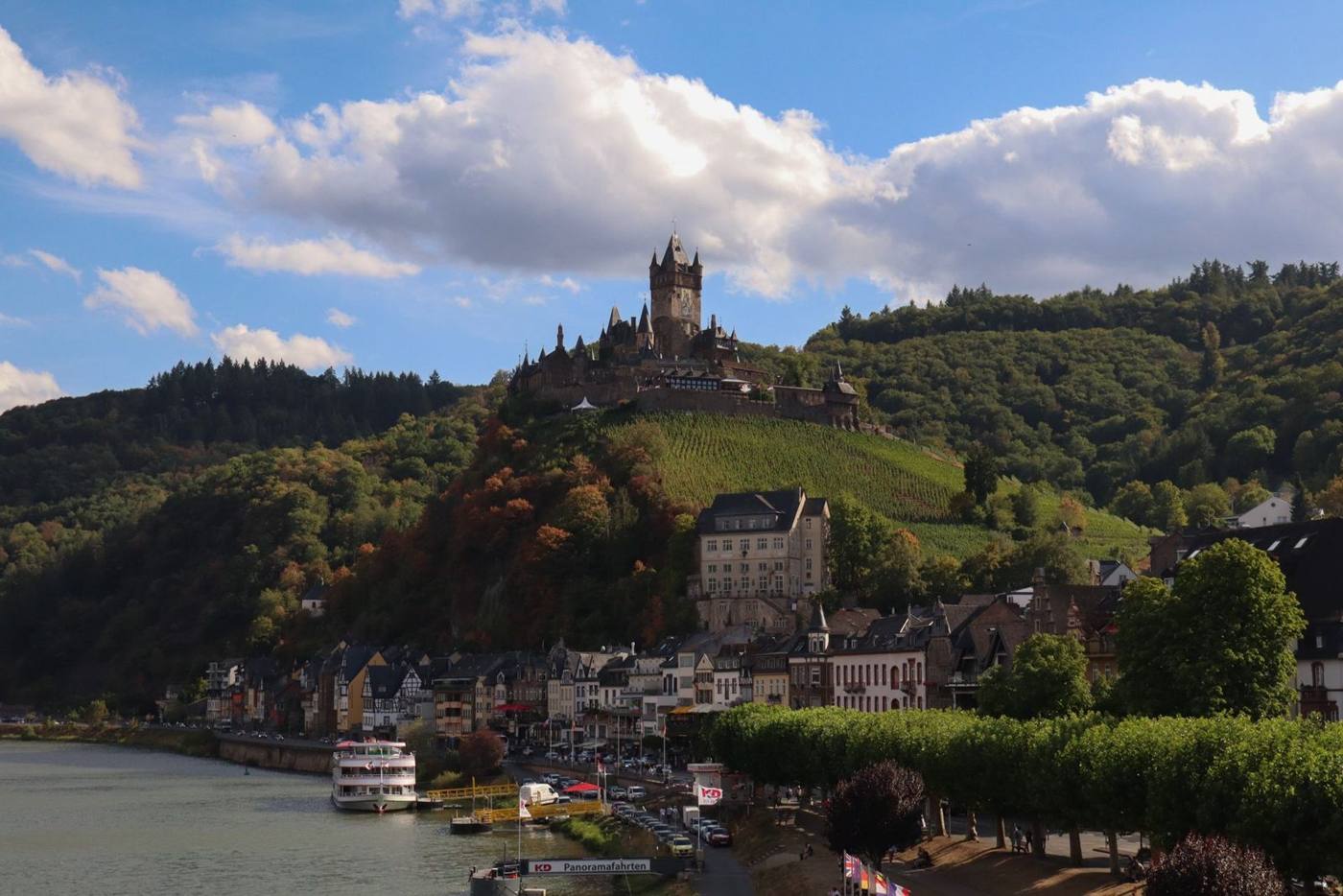
The Rhine and the Moselle
The Middle Rhine valley among castles and the Loreley rock, Koblenz, the steep vineyards of the Moselle, Eltz Castle and Roman Trier.
 6 daysEasy
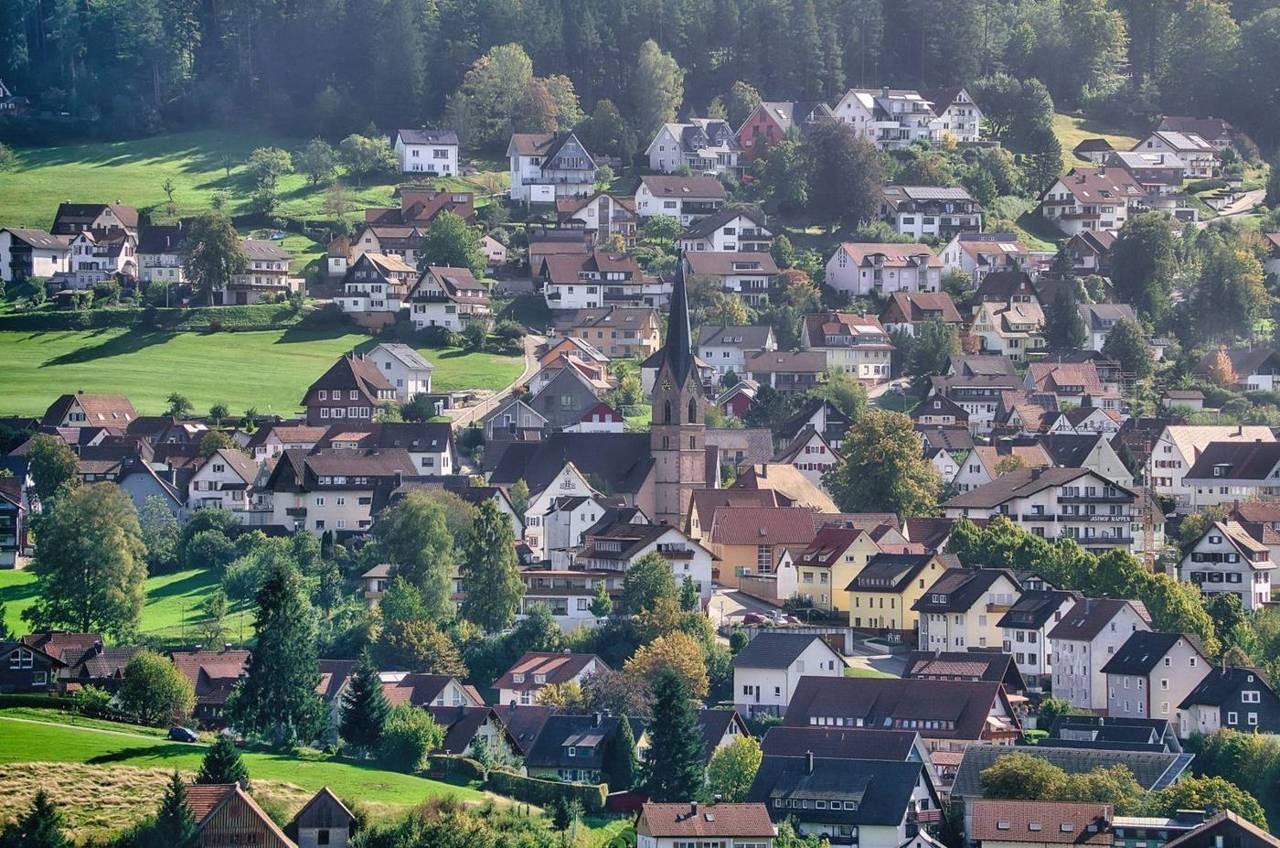
The Black Forest
Freiburg, the Triberg waterfalls, Lake Titisee, the Feldberg, the spa town of Baden-Baden and the villages of cuckoo clocks.
 7 daysEasy
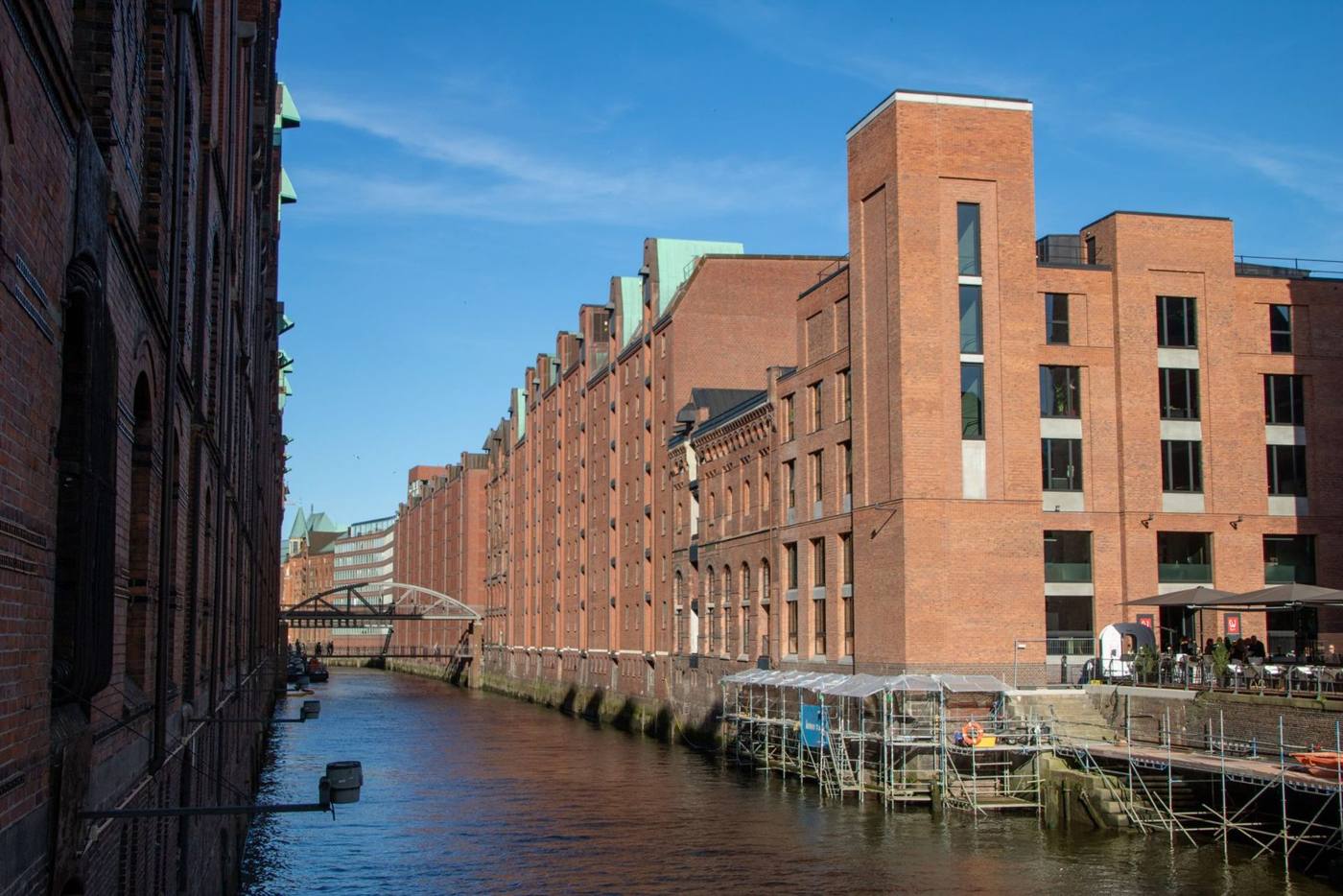
Hamburg and the Baltic Sea
Hamburg's port and the Speicherstadt, Hanseatic Lübeck, the brick towns of Wismar and Stralsund and the white cliffs of Rügen island.