The Yasawas and Mamanucas
By boat among the Mamanuca and Yasawa islands: turquoise lagoons, the Sawa-i-Lau caves, swimming with mantas and Fijian villages.
- Nadi
- Denarau
- Mamanuca
- Waya
- Nacula
- Sawa-i-Lau
Day by day
- Day 1
Arrival in Nadi and the Sri Siva Subramaniya temple
This eight-day trip takes you by boat through the Mamanuca and Yasawa islands, west of Viti Levu: turquoise lagoons, sandbanks, grassy hills above the sea, the Sawa-i-Lau caves, manta rays and Fijian villages. You get around on the fast catamaran that links the islands every day, with a multi-day pass, and sleep in simple beachfront lodgings.
Before you go: Italian citizens enter Fiji without a visa for tourist stays of up to 120 days, with a passport valid for at least six months from arrival; at the border you may be asked for a return or onward ticket. Other nationalities should check their own rules. The country is generally calm, but there are thefts and robberies in the tourist areas of Suva and Nadi, especially at night. From November to April is cyclone season, with a risk of floods and landslides: follow the warnings of the local weather service and keep an eye on boat service announcements.
You arrive at Nadi airport. In the afternoon visit the Sri Siva Subramaniya Hindu temple, at the southern end of the town, the best known in Fiji. It is built in the style of the temples of southern India, with towers decorated with statues of gods painted in bright colours and ceilings covered in frescoes. It tells the story of the large Indo-Fijian community, which arrived in the nineteenth century to work on the sugar cane plantations. Go in barefoot, with shoulders and knees covered, and check prices, times and the rules on photos.
In the evening eat a curry in the centre of Nadi and pack your bag for the islands.
Practical tip: there are no cash machines on the islands and cards are not always accepted; withdraw in Nadi the cash you need for the whole trip.
- Day 2
The Mamanuca islands and snorkelling
Early in the morning go to the port of Denarau, near Nadi, where the boats to the islands leave. In about an hour you are among the Mamanuca islands, an archipelago of small low islands, with white beaches, palms and turquoise water protected by coral reefs.
The boat stops offshore and a small tender takes you to the beach of your lodging. Drop your bag, put on mask and fins and get into the water: a few metres from the shore the corals begin, with clownfish, parrotfish, butterflyfish, blue starfish and, sometimes, turtles grazing among the seagrass.
In the afternoon walk around the island: on many Mamanuca islands less than an hour and a pair of sandals are enough. Look at the other islands on the horizon, some green and mountainous, others little more than strips of sand. Among them is Monuriki, the uninhabited island where a famous castaway film was shot.
At sunset sit on the beach: from here the sun sets straight into the sea, to the west. Dinner on the islands is often served all together, at long tables, with grilled fish, rice, tropical fruit salads and dishes made with coconut milk.
Practical tip: during transfers between the boat and the beach always wear a life jacket and keep your documents and phone in a waterproof bag.
- Day 3
A sandbank in the middle of the sea
Today take a boat to one of the Mamanuca sandbanks, strips of dazzling white sand that rise from the sea at low tide and disappear at high tide. All around there is nothing but clear water, in every shade from green to deep blue.
Walk on the sand, swim in the shallow water and then snorkel on the nearby reef, where the water gets deeper and the corals bigger. With some luck you see small, harmless reef sharks swimming over the sandy bottom.
Go back to the island for lunch. In the afternoon try kayaking or stand-up paddleboarding in the lagoon, or rest in the shade of the palms. Many lodgings also run lessons in weaving palm leaves or opening a coconut the way the islanders do.
In the evening look at the sky: far from the lights of the city, the Milky Way is very bright. On moonless nights, in the shallow water near the shore, you can sometimes also see the tiny lights of plankton glowing when you stir it with your hand.
Practical tip: there is no shade on the sandbanks and the sun reflects off the water and the white sand. Bring a hat, sunglasses, plenty of water and a reef-safe sun cream, and wear a T-shirt even in the water.
- Day 4
Waya and the climb over the hills
Today take the boat north again and leave the Mamanuca for the Yasawa islands, a chain of higher and wilder volcanic islands, with hills of golden grass sloping down to empty beaches. The journey takes a few hours, with stops at many islands along the way: watch the small boats coming out from the beaches to pick up and drop off passengers.
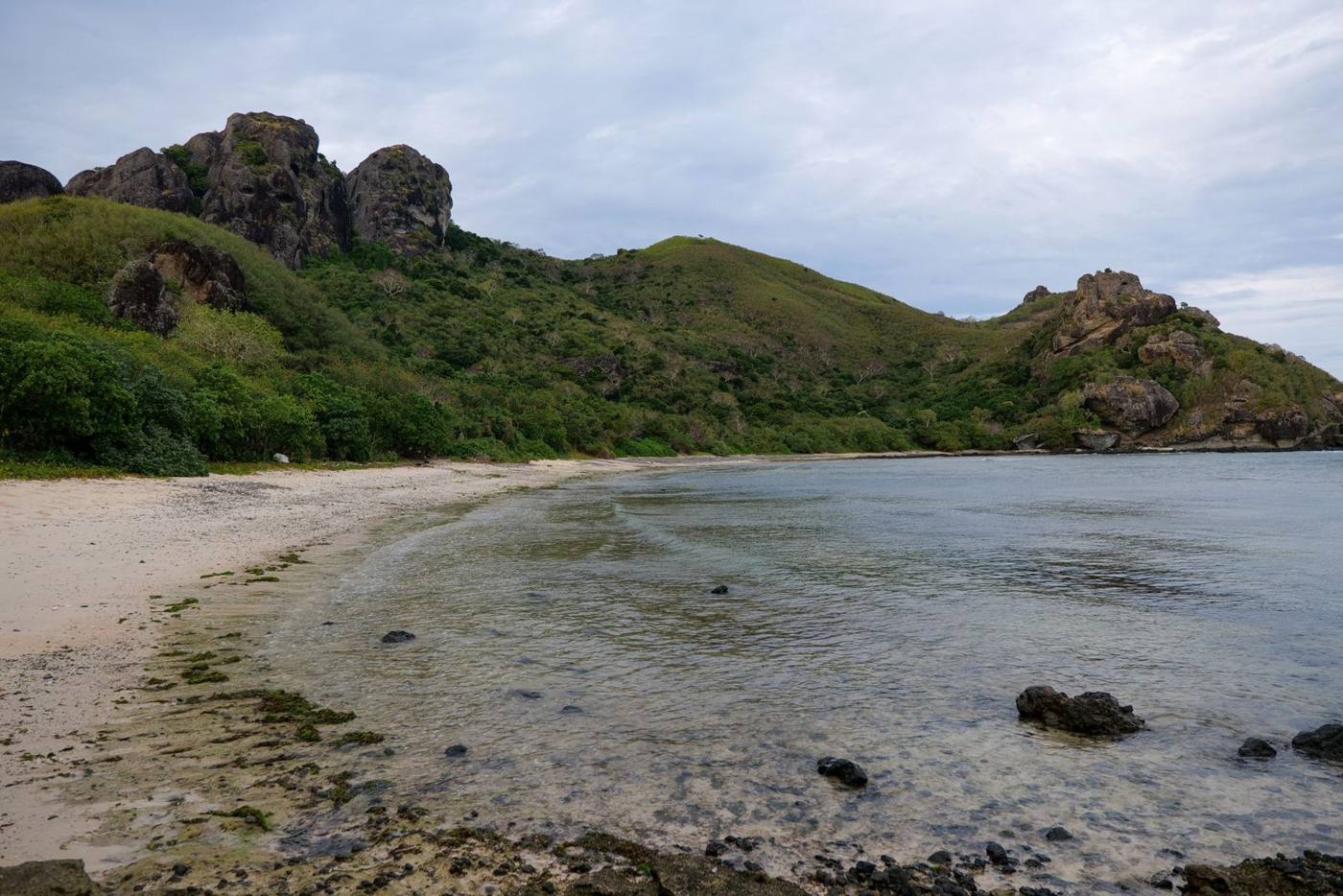
Get off at Waya, one of the most spectacular islands in the group, with ridges of dark rock and steep peaks above the bays. After lunch take a walk over the island's hills with a guide from the village. The path climbs through tall grass and rocks to a viewpoint from which you see the bays of Waya, the coral reef and the other Yasawa islands stretching north.
Come down before sunset and swim in the bay. Waya also has a good reef close to the shore: if you still have energy, snorkel among the corals in front of your lodging, where parrotfish and schools of small silver fish swim.
In the evening, at your lodging, many communities organise a lovo dinner, food cooked underground on hot stones, with songs accompanied by guitar.
Practical tip: for the walk set off early or in the late afternoon, and bring water and closed shoes. On the islands fresh water and electricity are limited: use them carefully.
- Day 5
Manta rays and Nacula
In the morning continue north. In the channel between some of the central Yasawa islands, in the cooler months, manta rays come to feed on the plankton carried by the currents. The lodgings in the area go out by boat when the guides spot them and visitors get into the water with mask and fins.
It is a special moment: the mantas, several metres across, glide slowly beneath you with their mouths open. Follow the rules: enter the water gently, do not touch them, do not chase them, stay a few metres away and do not get in front of them. The current in the channel can be strong: stay close to the guide. Mantas are seen mainly between May and October, but they are never guaranteed.
In the afternoon take the boat again to Nacula, one of the largest Yasawa islands, with green hills and long white sand beaches. The area is famous for its blue lagoon, a stretch of calm and clear sea sheltered by islands and reefs.
In the evening take a walk on the beach at low tide, among crabs and shells. Then sit down with the other travellers for dinner and listen to the stories of the staff, almost always born in the island's villages.
Practical tip: ask your lodging in advance whether it runs manta trips and at what time, because boats leave as soon as the call comes and you must be ready in a few minutes.
- Day 6
The Sawa-i-Lau caves
Today you visit the Sawa-i-Lau caves, on a small limestone island near Nacula, very different from the volcanic islands around it. You get there by boat. The caves belong to the nearby village: at the entrance you pay a fee and a guide goes with you. Check prices and times.
Go down a stairway in the rock and enter the first cave, a great chamber with an open roof that lets in the sunlight, lighting up a pool of clear green seawater. Swim in this natural pool, between towering walls. If you feel up to it, follow the guide through a short underwater passage to a second cave, dark and lit only by torches, with ancient marks carved on the walls. According to Fijian legend, a young chief hid here with his beloved.
In the afternoon go back to Nacula and snorkel in the blue lagoon, among corals and colourful fish, or stay on the beach.
At sunset climb a hill near your lodging to watch the sun go down between the islands. Bring a torch for the way down.
Practical tip: the underwater passage is short but you must hold your breath and not be afraid of enclosed spaces; do it only with the guide and only if you feel confident. It is not compulsory: the first cave alone is worth the visit.
- Day 7
A village and the kava ceremony
Today you spend the day with the people of the Yasawa islands. With a guide from your lodging you reach a nearby village on foot or by boat. Before entering put on a sulu, the Fijian sarong, covering your knees, and a shirt with sleeves; take off your hat and sunglasses.
In the chief's house, sitting on the mats, you present the sevusevu, a bundle of yaqona roots, the kava plant. The chief accepts it with a short prayer and from that moment you are a guest of the village. Then the ceremony begins: the kava is prepared in a large wooden bowl, mixing the powdered root with water, and served in coconut half shells. Clap once, say bula, drink it all in one go and hand back the cup. The taste is earthy and your tongue goes slightly numb. Drink it in moderation.
Then visit the school, the church and the gardens. If it is Sunday, attend the service: the part singing of Fijian communities is beautiful. In the afternoon the children will teach you a few words of Fijian, such as vinaka, thank you. Before leaving, thank the chief and the family who welcomed you.
Practical tip: in the village do not touch anyone's head, take off your shoes before entering houses, do not wear swimwear away from the beach and always ask before taking photos.
- Day 8
The boat to Denarau and departure
On the last morning take a final swim in the lagoon, say goodbye to the lodging staff, who often sing a farewell song on the beach, and board the boat for the long journey back south. The boat passes all the islands of the trip again, from Nacula to Waya and the Mamanuca, and reaches the port of Denarau in the afternoon. From there a taxi takes you to Nadi airport. If you have a flight the same evening, leave many hours of margin between the boat's arrival and departure.
In eight days you have seen the easiest and most welcoming side of the Pacific: the Hindu temple of Nadi, the white beaches and sandbanks of the Mamanuca, the hills of Waya, the mantas in the Yasawa channel, the blue lagoon of Nacula, the Sawa-i-Lau caves and the kava ceremony in a village. It is a trip suited to mid-range budgets too, thanks to the simple lodgings of the Yasawa islands.
When to go: from May to October, in the dry season, with less rain, a calmer sea and the manta season. From November to April it is hotter and wetter, and there is a risk of cyclones, which can stop the boats for days.
Practical tip: if you can, book your international flight for the day after you return from the islands, because the boat may arrive late or be cancelled in rough seas.
The easiest, friendliest Pacific, suitable even for mid budgets thanks to the simple Yasawa lodges. The Yasawa Flyer boat pass lets you hop between islands. November to April carries a cyclone risk.
Before you go
- Documents and visa
- Passport valid for at least six months from arrival. British and Italian citizens enter without a visa for tourist stays of up to four months; at the border you may be asked for a return or onward ticket.
- Health and vaccines
- In the rainy season, from November to April, there is a risk of dengue: use repellent and wear long, light-coloured clothes. Yellow fever is required only for travellers arriving from a country at risk. Healthcare is limited and serious cases are often evacuated abroad: you need insurance with repatriation that also covers diving. Emergencies: 911.
- Money and payments
- Fijian dollar. Cards work in hotels and towns; in villages and on small islands you need cash.
- Power sockets
- Type I, the Australian plug with flat angled pins, 240 volts: you need an adapter.
- Time zone
- UTC+12 all year.
- Safety
- A generally calm country with no areas advised against. Watch out for theft and robbery in the tourist areas of Suva and Nadi, especially at night. November to April is cyclone season, with a risk of floods and landslides: follow the local weather service. In villages present the sevusevu, a gift of kava root, to the chief, take off your hat and cover your shoulders and knees. Official advice: GOV.UK.
Information checked in November 2026 for Italian and EU citizens. Rules change: always check before you travel.
Variations
In 5 days: just the Mamanuca islands, with snorkelling and a sandbank, starting and ending at Denarau.
In 12 days: add the Coral Coast of Viti Levu, with the Sigatoka dunes and Suva.
Frequently asked questions
How do you get around between the islands?
On the fast catamaran that links Denarau with the Mamanuca and Yasawa islands every day. You buy a multi-day pass and get off at the islands you choose; small boats take you from the ship to the beach.
When can you see manta rays?
Mainly between May and October, in the channel between some of the central Yasawa islands. Sightings depend on the currents and are never guaranteed.
Do you need cash on the islands?
Yes, there are no cash machines on the islands and cards are not always accepted. Withdraw in Nadi what you need for the whole trip.
Indicative itinerary written by World Atlas. Before booking, check timetables, seasonal openings, documents and safety.
 7 daysModerate
Taveuni and diving
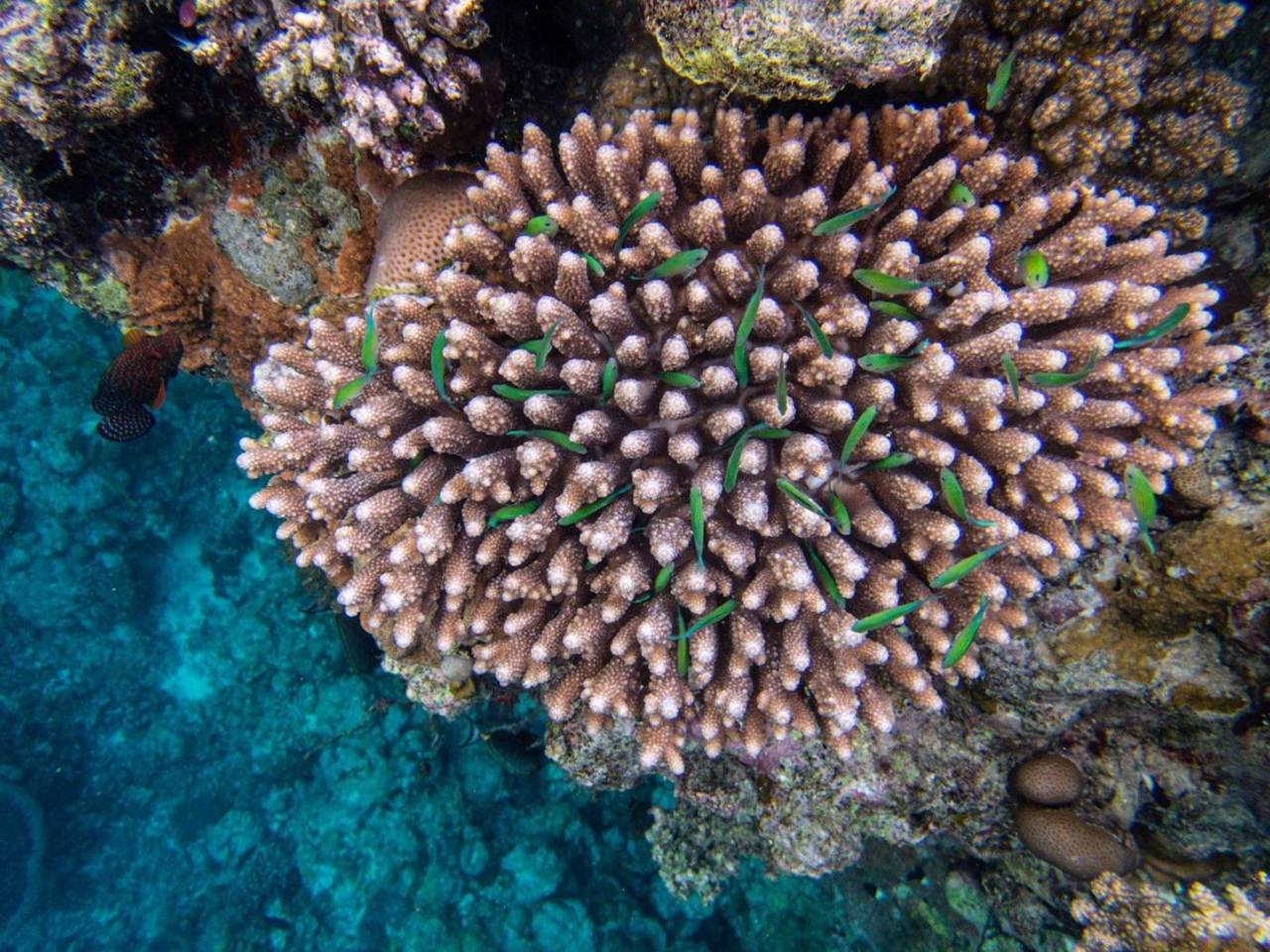
The garden island: Rainbow Reef and the Great White Wall for soft corals, the Tavoro falls in Bouma park and the date line.
 6 daysEasy
Viti Levu and the Coral Coast
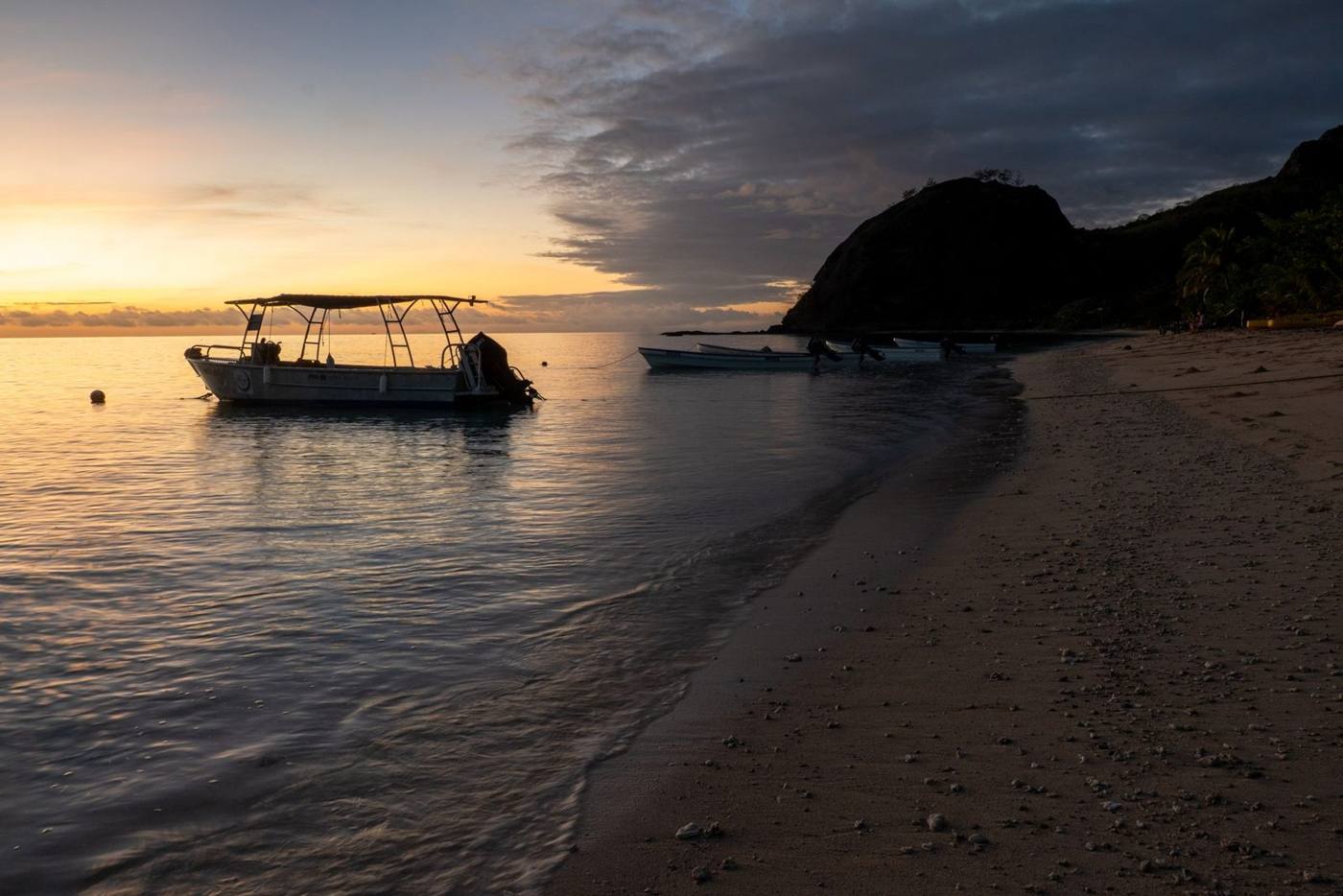
The Sigatoka dunes, the Navua river by canoe with its waterfalls, Beqa island and its firewalkers, and the capital Suva.
 5 daysModerate
Kadavu and the Great Astrolabe
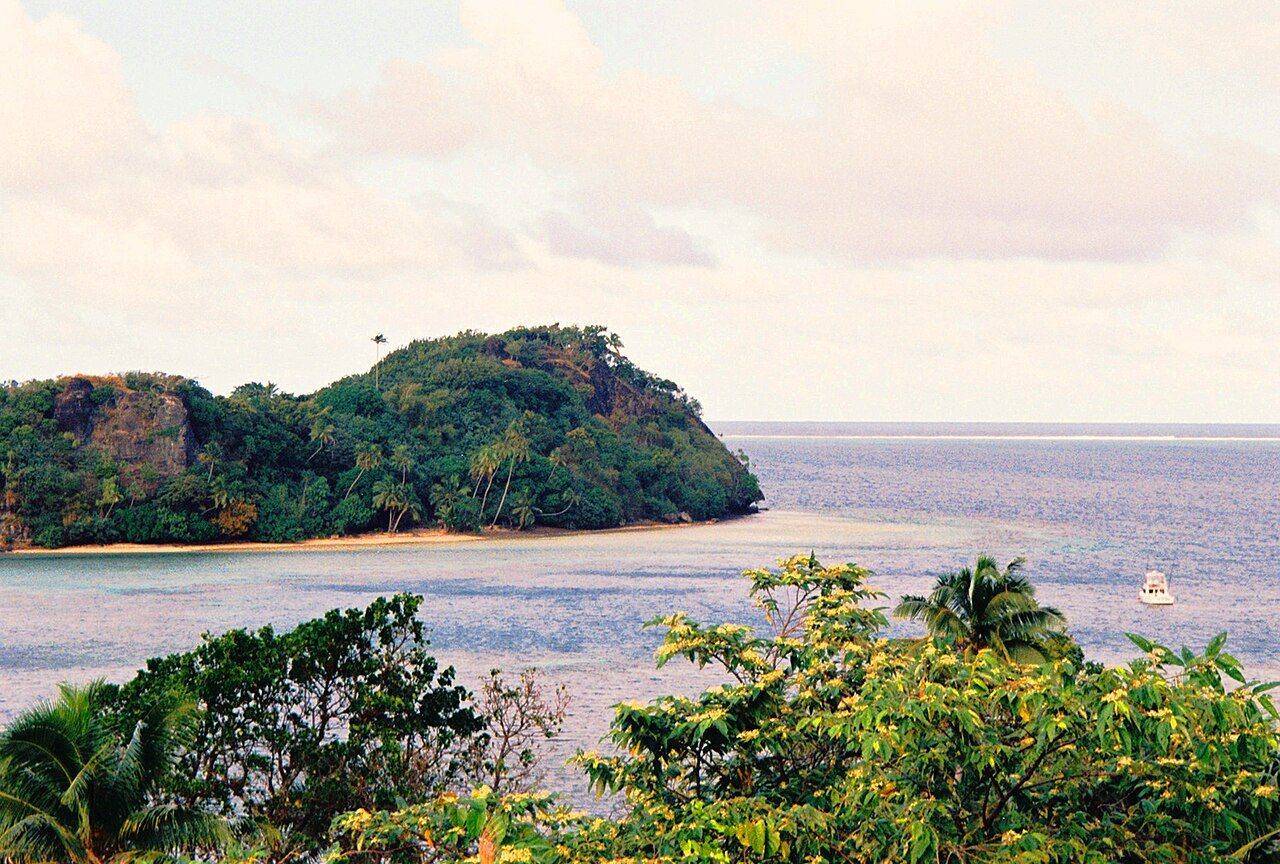
Fiji's wildest island, with no coastal roads, the Great Astrolabe Reef, manta rays, villages and eco-lodges reachable only by boat.