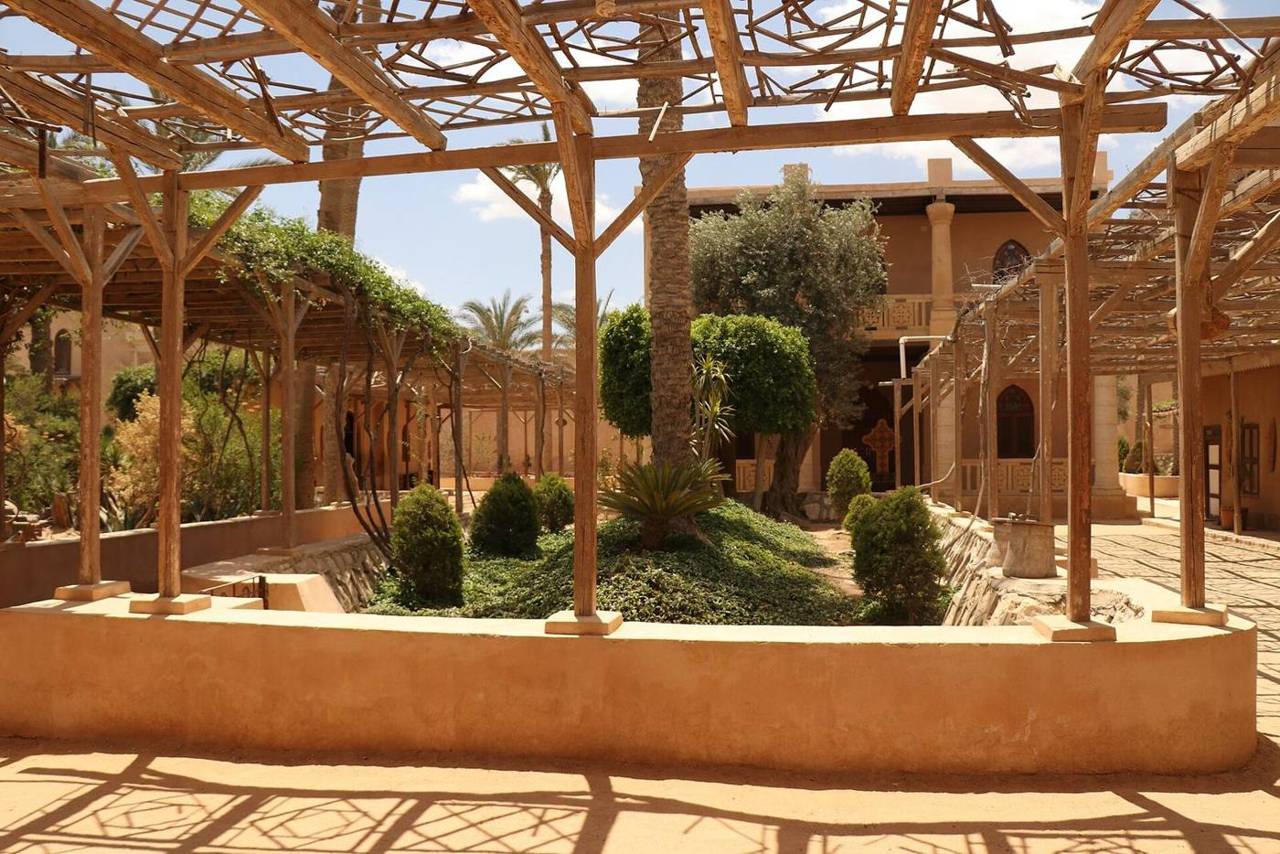
The Nile Delta and Alexandria
The Egypt tourists skip: the Coptic monasteries of Wadi Natrun, Rosetta and its Ottoman houses, Tanis, the Delta villages and Alexandria.
- Cairo
- Wadi Natrun
- Alexandria
- Rosetta
- Tanta
- Tanis
- Cairo
Day by day
- Day 1
Arrival in Cairo
This trip goes to the part of Egypt that few tourists see: the Nile delta, the great green plain where the river fans out before reaching the Mediterranean. After Cairo and Giza you visit the Coptic monasteries of the Wadi Natrun desert, Alexandria, Rosetta with its Ottoman houses, the villages among the canals and the ruins of Tanis, the capital of the northern pharaohs.
Before you leave: you need a passport valid for at least six months. The visa on arrival costs 30 dollars. The United States government rates Egypt at level 2 of 4. The delta and Alexandria are not among the areas the United Kingdom advises against, but check the latest advice before you leave.
You fly into Cairo. Traffic is extremely heavy: book your first transfer with your accommodation.
If you arrive in the afternoon, go to Islamic Cairo, the medieval city. Walk along Muizz Street, with mosques, Koranic schools, fountains and palaces of the Mamluk sultans, and reach the great Khan el Khalili market, with its shops of copper, spices, lanterns and perfumes. The evening is its liveliest time.
Have koshari for dinner, Cairo's popular dish of rice, lentils, pasta, chickpeas, fried onions and tomato sauce.
Sleep in Cairo.
Practical tip: the best time is from October to April. In summer the delta is hot and the air very humid.
- Day 2
The pyramids of Giza and the Grand Egyptian Museum
Early in the morning go to the Giza plateau, on the western edge of Cairo, for the three great pyramids of Khufu, Khafre and Menkaure and for the Sphinx. Arrive at opening time, when the light is soft and the groups have not yet arrived. You walk around the pyramids and go up to the viewpoint where you see them all together. Going inside a pyramid needs a separate ticket: check which ones are open.
Around the plateau there are many sellers, camel men and horses. If you want a ride, agree the price first and firmly refuse anyone who insists.
In the afternoon visit the Grand Egyptian Museum, near the pyramids. It is the largest archaeological museum in the world devoted to a single civilisation. You climb a grand staircase lined with statues of pharaohs and reach the halls with the complete treasure of Tutankhamun, displayed all together for the first time. The ticket for foreign visitors costs 1,830 Egyptian pounds, 920 for students and children, since 1 November 2026: check the current rules and buy your ticket online.
You need at least three or four hours. There are cafés and terraces with views of the pyramids.
In the evening return to the centre or have dinner near Giza watching the illuminated pyramids.
Sleep in Cairo.
Practical tip: carry cash in Egyptian pounds for tips. In Egypt they are often given, even for small services.
- Day 3
The Coptic monasteries of Wadi Natrun and the road to Alexandria
Today you leave Cairo and take the desert road to Alexandria. About halfway, in a little over an hour and a half, you reach Wadi Natrun, a depression in the desert with salt lakes. Coptic monks have lived here since the fourth century: one of the first monastic movements in Christian history was born in this desert, with Saint Macarius, who withdrew here around the middle of the fourth century. The name comes from natron, the salt the ancient Egyptians used for mummies.
Today four inhabited monasteries remain, surrounded by high walls built to defend them from nomad raids. Visit two of them, for example the monastery of Anba Bishoy and the monastery of the Syrians, close to each other. A monk often accompanies visitors and tells the story of the place. You see ancient churches with frescoes, the towers where monks took refuge during attacks and the cells.
Cover your shoulders and legs; women wear a headscarf. During Coptic fasting periods some monasteries limit visits: check before you go.
In the afternoon continue to Alexandria, about an hour and a half away.
In the evening walk along the Corniche, the seafront that follows the bay for kilometres.
Sleep in Alexandria.
Practical tip: the monasteries are places of prayer. Speak quietly and always ask before photographing the monks.
- Day 4
Ancient Alexandria
Alexandria was founded by Alexander the Great in 331 BC and became the capital of the Ptolemies, Cleopatra's dynasty, and one of the most important cities of the ancient world, with its lighthouse, one of the seven wonders, and its great library. Little of the ancient city remains above ground, because the modern city is built on top of it and part of it slid into the sea, but there are some very fine places.
In the morning visit the catacombs of Kom el Shoqafa, cut into the rock in the second century AD. You go down a spiral staircase into three levels of tombs. The decoration mixes Egyptian, Greek and Roman styles in a strange way: the god Anubis dressed as a Roman soldier, for example.
Not far away stands Pompey's Pillar, a column of red granite almost thirty metres high, raised in honour of the emperor Diocletian, surrounded by the ruins of the Serapeum and two sphinxes.
In the afternoon visit the Roman theatre of Kom el Dikka, a small marble amphitheatre with tiers of seats, the remains of baths and a Roman district with mosaics.
Then visit the Alexandria National Museum, in an Italian style palace, with objects from the pharaonic to the Islamic period, including finds raised from the sea in the harbour.
In the evening have fish: in Alexandria you choose raw fish at the counter and have it grilled.
Sleep in Alexandria.
Practical tip: traffic in Alexandria is slow. Use app taxis to know the price beforehand.
- Day 5
Alexandria: the library, the citadel and the Corniche
In the morning visit the Bibliotheca Alexandrina, opened in 2002 near the site of the ancient library. The building is a large disc tilted towards the sea, with outer walls of granite carved with letters from every alphabet in the world. Inside is a huge reading room on several levels, and there are museums of manuscripts, antiquities and science. Check the opening hours and the rules on bags.
Then walk along the Corniche to the citadel of Qaitbay, built in the fifteenth century by the Mamluk sultan Qaitbay on the spot where the lighthouse of Alexandria stood before it collapsed after a series of earthquakes. Some stones from the lighthouse are said to have been used in the walls. From the fortress you see the whole harbour and the city.
In the afternoon stroll around the eastern harbour, among the fishing boats, and through the streets of the centre, with nineteenth and early twentieth century buildings from the time when Alexandria was a cosmopolitan city, home to Greeks, Italians, Jews, Armenians and French. Step into one of the old pastry shops of the centre for a cake or a coffee.
If you like greenery, go to the Montaza gardens in the east, with the palace of Egypt's last king, which you see only from outside.
In the evening watch the sunset over the bay.
Sleep in Alexandria.
Practical tip: in winter Alexandria can be rainy and windy. Bring a jacket.
- Day 6
Rosetta, the town of the stone
Today you go to Rosetta, called Rashid in Arabic, about an hour east of Alexandria, where the western branch of the Nile meets the Mediterranean.
Rosetta is world famous for the stone found here in 1799 by French soldiers of Napoleon's expedition, while they were working on a fort near the town. The stone bears the same text in three scripts, hieroglyphic, demotic and Greek, and allowed Jean François Champollion to decipher hieroglyphs in 1822. The original is in the British Museum in London; here you see a copy.
But Rosetta is worth visiting above all for its Ottoman houses of the seventeenth and eighteenth centuries, built of red and black brick, with carved wooden windows called mashrabiya, which let the air through and allowed women to look out without being seen. Some are open as small museums: check which can be visited. There are also old mosques and a water mill.
Rosetta is a real Egyptian town with few tourists: the market, the workshops, the fishermen on the river and the boats on the Nile.
In the afternoon continue inland into the delta to Tanta, about two hours by road.
Sleep in Tanta.
Practical tip: in some parts of the delta the police sometimes escort foreign visitors. Follow their instructions patiently.
- Day 7
Tanta and the villages of the delta
Tanta is the most important city in the central delta. In the middle stands the great mosque of Sayyid al Badawi, a thirteenth century Sufi saint whose tomb is a place of pilgrimage. Every year, in autumn, his festival, the moulid, draws hundreds of thousands of people, with music, Sufi dancing, fairground rides and sweets. Visit the mosque in covering clothes; women wear a headscarf. In town you can buy the typical sweets, sugared chickpeas and caramelised hazelnuts, sold to pilgrims.
In the afternoon take a tour of the surrounding countryside with a car and driver, ideally with a guide who speaks Arabic. The delta is one of the most fertile farming areas in the world, irrigated by thousands of canals. You see fields of wheat, rice, maize and cotton, palms, water buffalo, donkeys pulling carts, farmers at work and mud dovecotes, tall towers where pigeons are raised.
Egyptian long staple cotton, famous worldwide, is harvested at the end of summer: in those months you see white fields and women picking by hand.
Stop in a village for a tea or to buy freshly baked bread. People are curious and welcoming, but always ask before taking photos.
In the evening return to Tanta.
Sleep in Tanta.
Practical tip: there are many mosquitoes in the delta in the evening. Use repellent.
- Day 8
Tanis, capital of the northern pharaohs, and back to Cairo
Today you go to Tanis, now called San el Hagar, in the north east of the delta, about two and a half hours by road from Tanta. Leave early.
Tanis was the capital of Egypt during the twenty first and twenty second dynasties, around 1000 BC, when the pharaohs ruled from the delta. The kings built a great temple with statues and obelisks brought from other cities, especially from Pi Ramesses, the capital of Ramesses II.
In 1939 the French archaeologist Pierre Montet discovered the intact royal tombs here, with silver coffins, gold masks and jewellery. The discovery went almost unnoticed because the Second World War began a few months later. The treasures are now in Cairo, but at Tanis you see the stone tombs, dozens of broken obelisks, statues of Ramesses II, columns and carved blocks scattered over a large mound of sand and brick. It is a silent, grand place with very few visitors.
Bring water and a hat: there is no shade and facilities are few. Check the opening hours before you go.
In the afternoon return to Cairo, about three hours by road.
In the evening have dinner in one of the districts along the Nile, such as Zamalek, on the island in the middle of the river.
Sleep in Cairo.
Practical tip: you need an experienced driver for this day. Delta roads are narrow and full of carts, tuk tuks and animals.
- Day 9
Departure from Cairo
On the last day, if your flight leaves in the afternoon or evening, you still have a few hours in Cairo.
A good choice is Coptic Cairo, in the old district near the river, where the Roman fortress of Babylon once stood. You visit the Hanging Church, built over a gate of the fortress, the church where according to tradition the Holy Family stopped during the flight into Egypt, the Ben Ezra synagogue and the Coptic Museum, with textiles, icons and sculptures from the first Christian centuries. After the monasteries of Wadi Natrun, it completes the story of Christian Egypt.
Alternatively climb up to Saladin's citadel, with the silver domed mosque of Mohammed Ali and a view over the whole city, or visit the old Egyptian Museum on Tahrir Square, where the treasures found at Tanis are displayed, with the silver coffins and the gold masks: after seeing the site, you understand them better.
Cairo airport is about forty minutes from the centre without traffic, but it often takes over an hour. Leave in good time.
This trip shows everyday Egypt alongside the Egypt of the pharaohs: the green countryside of the delta, the cities on the sea and a history five thousand years long, Christian and Islamic as well as ancient.
Practical tip: keep your passport and visa receipt to hand until boarding.
For those who have already seen classic Egypt. Tourists are almost absent in the Delta and the welcome is genuine, but travel is slow and accommodation simple. It works all year, even in summer, as the climate is milder than in the south.
Before you go
- Documents and visa
- Passport valid for at least six months and a tourist visa, obtained online on the official portal or on arrival at the airport, where since 1 March 2026 it costs 30 dollars in cash.
- Health and vaccines
- No compulsory vaccines for travellers from Europe. Drink only bottled water and take out travel health insurance. Emergencies: 122 police, 123 ambulance.
- Money and payments
- Egyptian pound. Cards work in hotels and larger shops, but for tips, taxis and markets you need cash in small notes.
- Power sockets
- Types C and F, 220 volts.
- Time zone
- UTC+2 in winter; Egypt uses daylight saving time in summer.
- Safety
- Tourist areas along the Nile and the Red Sea are busy and well policed. Governments advise against North Sinai, the Libyan border strip and much of the Western Desert off the main roads. Official advice: GOV.UK.
Information checked in November 2026 for Italian and EU citizens. Rules change: always check before you travel.
Variations
In 6 days: Cairo, Giza, Wadi Natrun and Alexandria, returning to Cairo.
In 12 days: add Port Said, Ismailia and the Suez Canal after Tanis.
Frequently asked questions
Do I need a visa?
Yes. The visa on arrival costs 30 dollars and you need a passport valid for at least six months. Check the current requirements.
Is it safe to visit the delta?
The United States rates Egypt at level 2 of 4. The delta and Alexandria are not among the areas the United Kingdom advises against. The police sometimes escort foreign visitors: follow their instructions.
When is the best time to go?
From October to April. Summer is hot and humid, and in winter it can rain in Alexandria.
Indicative itinerary written by World Atlas. Before booking, check timetables, seasonal openings, documents and safety.
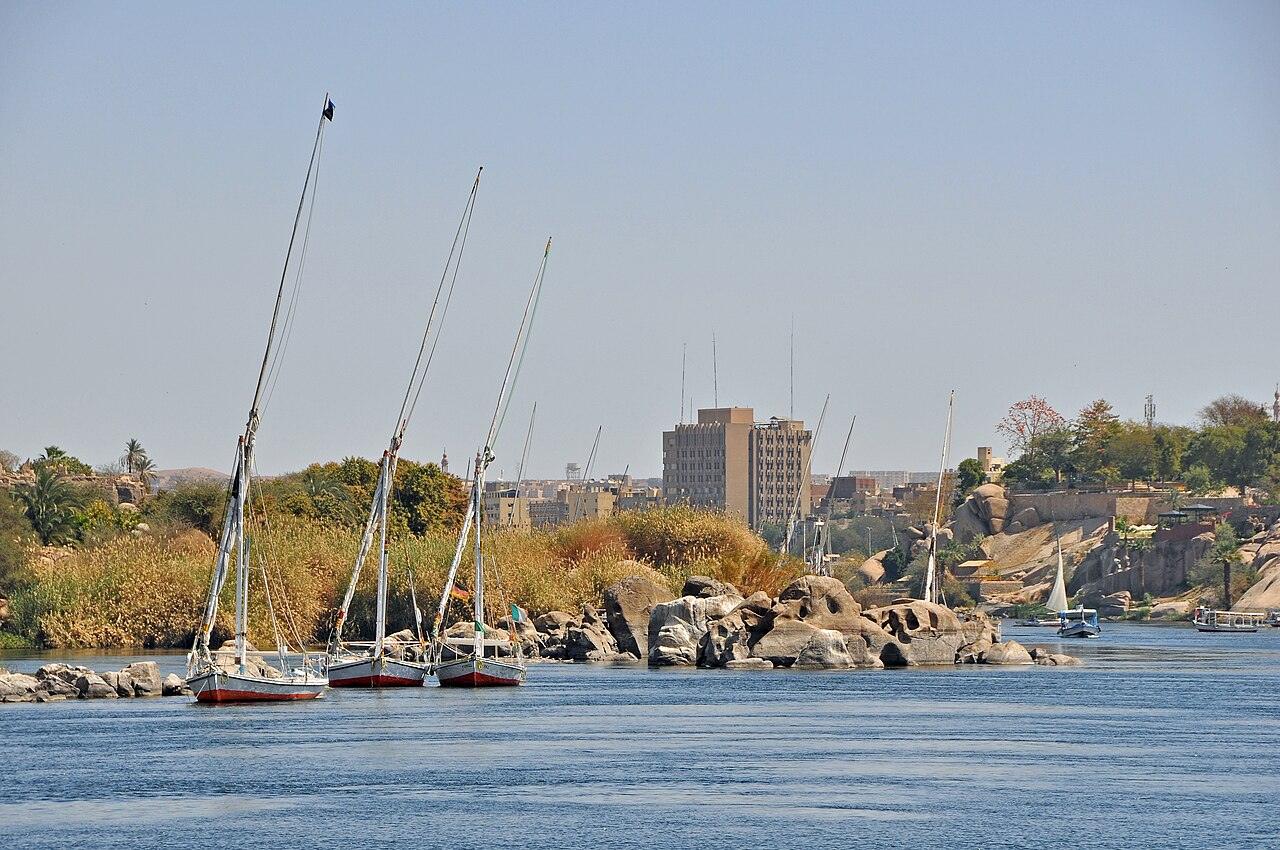 7 daysEasy
Cairo and a Nile cruise
The pyramids of Giza and the Grand Egyptian Museum, then four days sailing between Luxor and Aswan.
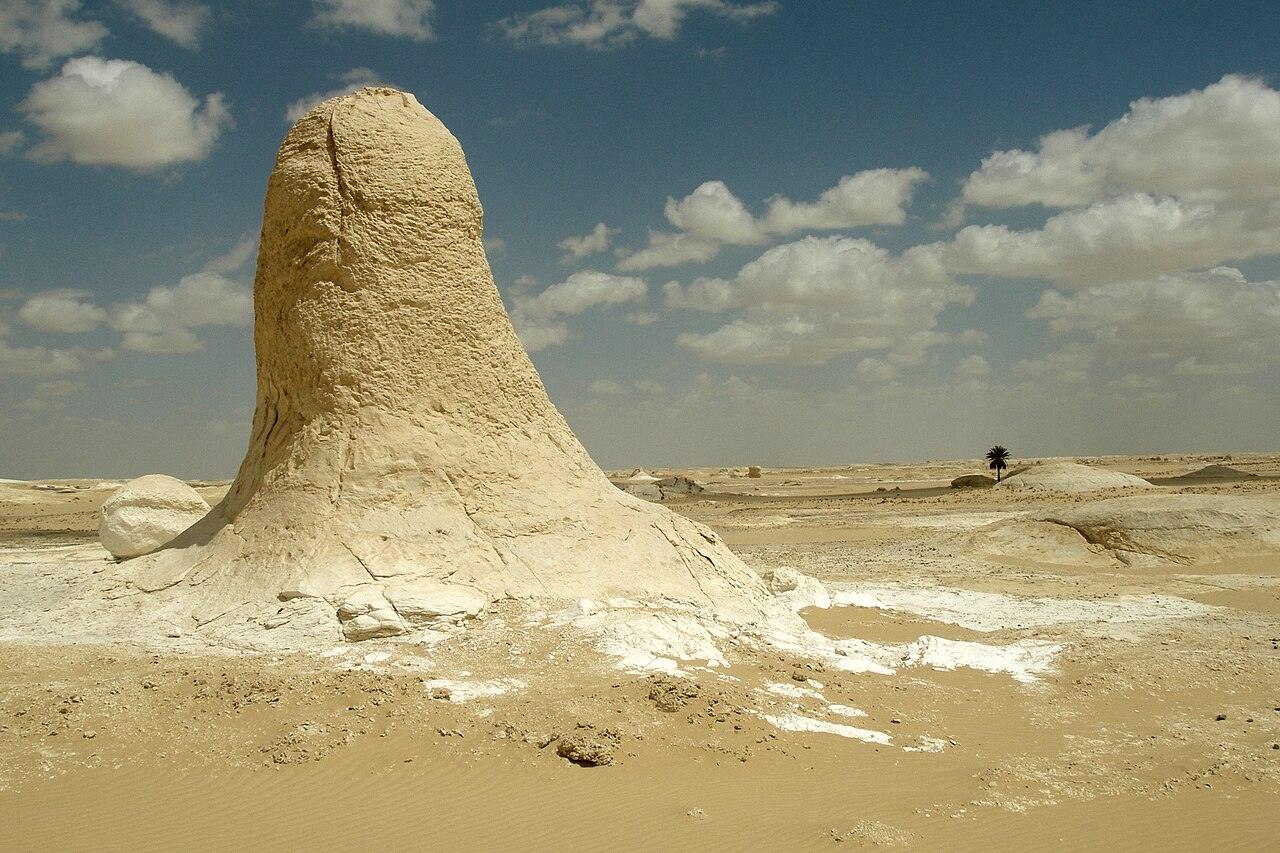 15 daysModerate
Complete Egypt: the Nile, the desert and the Red Sea
The pyramids, the Nile from Aswan to Luxor, a night in the White Desert and a finale on the Red Sea reef.
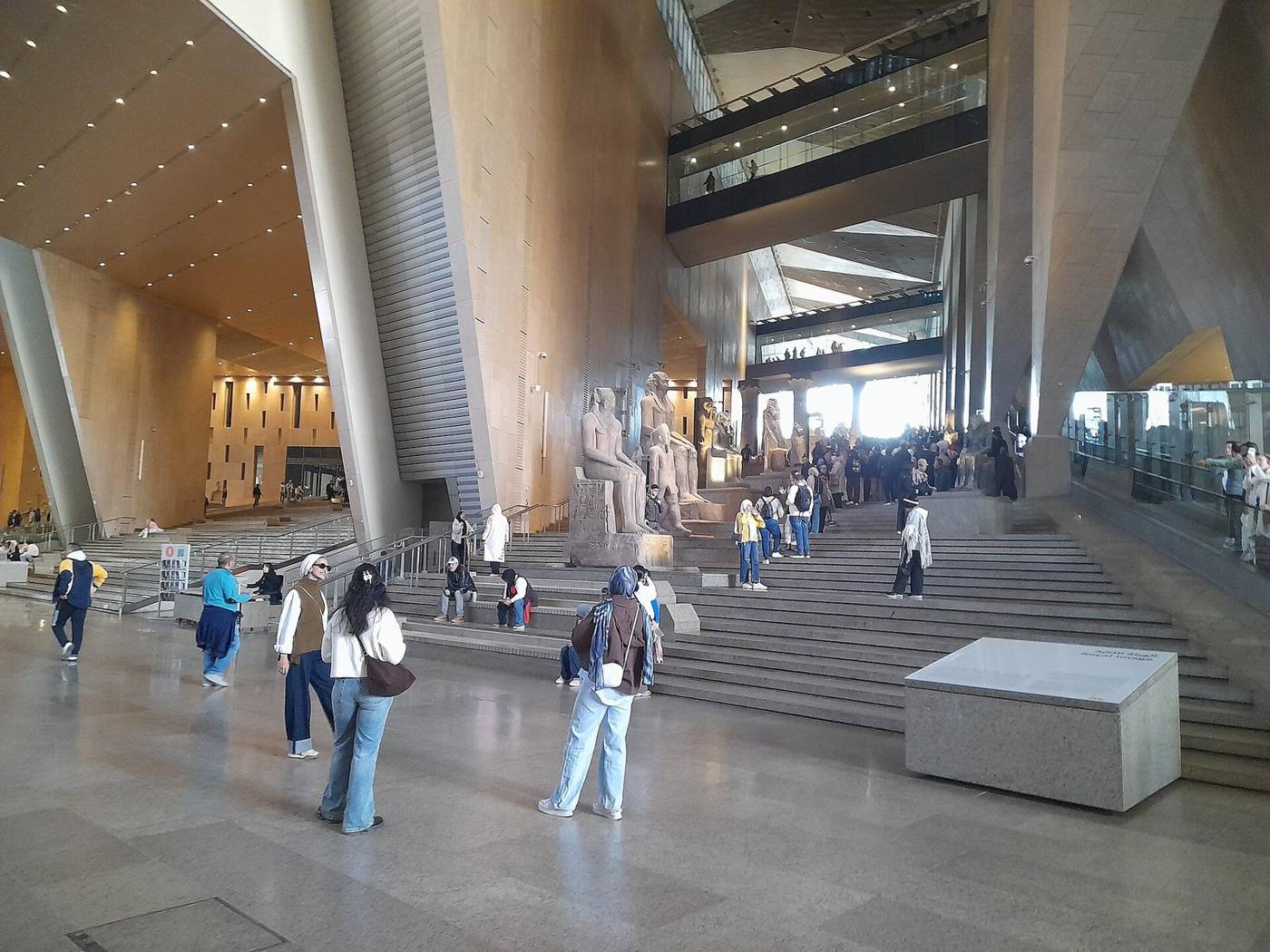 6 daysEasy
Cairo and Alexandria
A long weekend among the pyramids, the new Grand Egyptian Museum, Islamic Cairo and Alexander's city on the Mediterranean.