The Grand Egyptian Museum and Cairo in depth
Cairo with the time it deserves: a full day at the Grand Egyptian Museum near the pyramids, with Tutankhamun's complete treasure, the Egyptian Museum on Tahrir Square, Coptic Cairo with the Hanging Church, Islamic Cairo between al-Azhar, Bab Zuweila and al-Muizz Street, and the Khan el-Khalili bazaar.
- Cairo
- Giza
Day by day
- Day 1
The Giza pyramids early in the morning
The first day is devoted to the Giza plateau on the western edge of Cairo. To enter Egypt you need a passport valid for at least six months and a visa, obtained online before travelling or on arrival at the airport, where since 1 March 2026 it costs 30 dollars in cash. For these five days it makes sense to stay in Giza: you will be minutes from both the pyramids and the Grand Egyptian Museum, saving hours of traffic.
Enter at opening time. Walk around the Pyramid of Khufu, the largest, built about 4,500 years ago from over two million stone blocks; its original height was about 146 metres. With a separate ticket you can go inside: the passage is narrow, steep and hot, and the King's Chamber is undecorated, but the feeling of being at the heart of the pyramid is powerful. Beside it stand the pyramids of Khafre, which still keeps a piece of its original smooth casing at the top, and Menkaure, with the three small queens' pyramids.
From the viewpoint on the west side you see all three together with the desert in front. Then go down to the Sphinx, carved straight from the bedrock, and Khafre's valley temple with its red granite pillars.
In the afternoon rest during the hot hours. In the evening, from the terraces in Giza, you can watch the sound and light show on the pyramids. Practical tip: on the plateau always agree the price before accepting horses, camels or photos with anyone, and do not take objects offered as gifts.
- Day 2
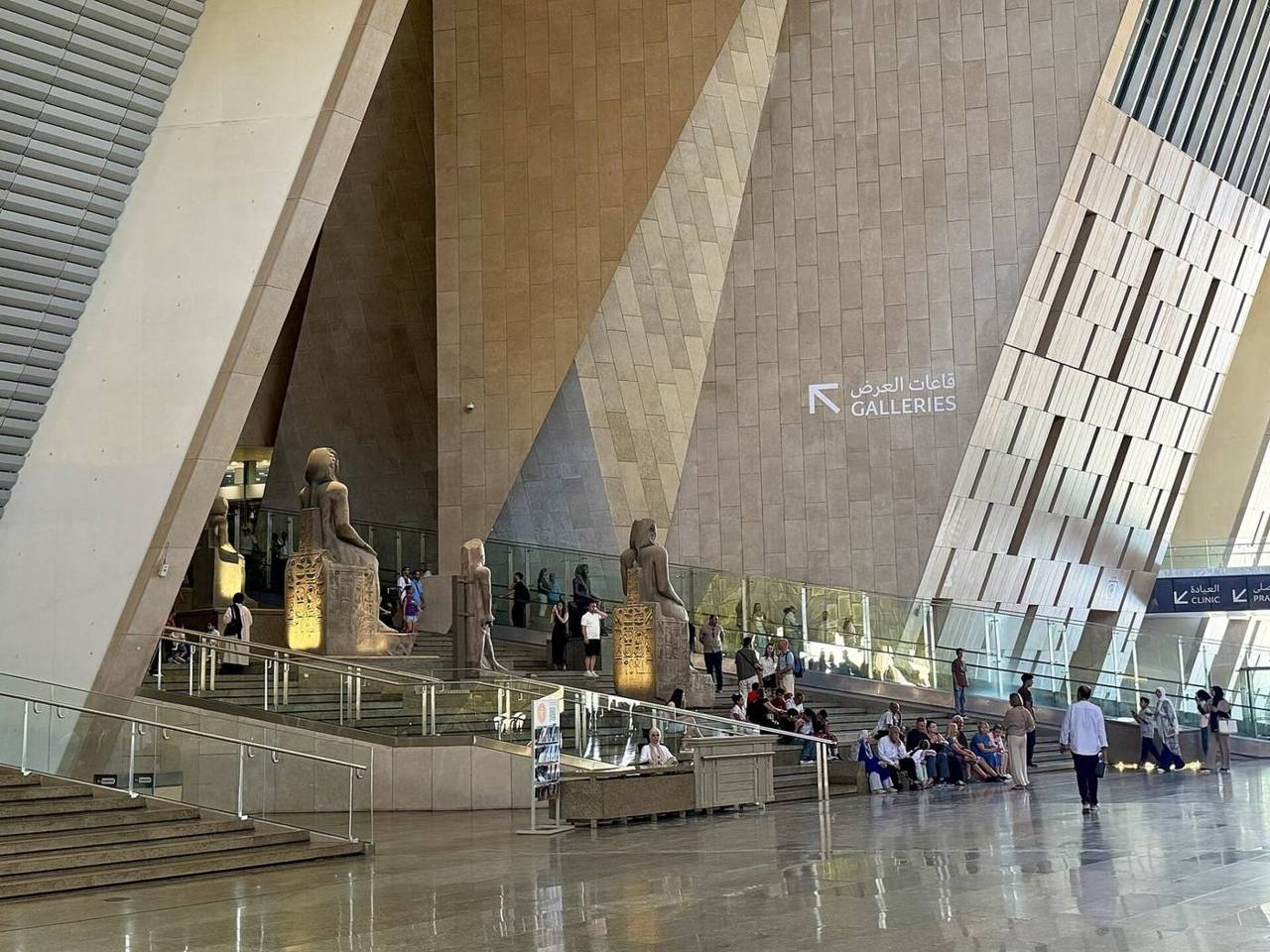
The Grand Egyptian Museum, a full day
The Grand Egyptian Museum, about two kilometres from the pyramids, has been fully open since November 2025 and is the largest museum in the world devoted to a single civilisation. Give it the whole day: it is huge and deserves time. Since 1 November 2026 tickets cost 1,830 Egyptian pounds for foreign adults and 920 for foreign students and children; buy them on the official website and arrive at opening time.
In the great hall you are greeted by the colossal statue of Ramesses II, about eleven metres tall, which for decades stood in a Cairo square amid traffic. Then the grand staircase climbs between statues of kings and gods to great windows overlooking the pyramids.
The heart of the museum is the Tutankhamun galleries: for the first time the entire contents of the tomb discovered by Howard Carter in 1922 are displayed together, more than five thousand objects, from chariots to funerary beds, from jewellery to the famous gold mask. The main galleries follow Egypt's history from prehistory to the Roman period, around themes such as kingship, religion and daily life.
A separate pavilion holds Khufu's solar boat, a cedar-wood ship over 40 metres long, buried beside the pyramid and reassembled piece by piece. At midday take a break in the museum's gardens and cafés. Practical tip: bring ID for a reduced student ticket if eligible, and check the times of guided tours, useful for getting your bearings in the first hours.
- Day 3
Coptic Cairo and the Tahrir Square museum
In the morning head to Coptic Cairo, the oldest part of the city, built in and around the walls of the Roman fortress of Babylon. It is the heart of Egypt's Christian community, which dates back to the first centuries after Christ. Visit the Hanging Church, so called because its nave rests above a gate of the fortress, with its ark-shaped wooden ceiling and ancient icons, and the Church of Saints Sergius and Bacchus, built according to tradition where the Holy Family stopped during the flight into Egypt.
In the same quarter are the Ben Ezra Synagogue, one of Cairo's oldest, where thousands of medieval documents were found in the nineteenth century, and the Coptic Museum, with textiles, manuscripts and frescoes from monasteries. The Mosque of Amr ibn al-As, the first built in Egypt, is a few steps away.
In the afternoon go downtown to the Egyptian Museum in Tahrir Square, the pink building of 1902 that for over a century was the country's main museum. Although many treasures have moved to the new museum, masterpieces remain here such as the Narmer Palette, Old Kingdom statues and the collection of papyri and everyday objects. The slightly old-fashioned halls have a charm the new museum lacks.
Practical tip: to move between Giza and the centre use the metro where possible or ride-hailing apps; metro line 1 stops near Coptic Cairo at Mar Girgis station.
- Day 4
Islamic Cairo: al-Azhar, al-Muizz Street and Khan el-Khalili
Islamic Cairo, also called Historic Cairo, is a UNESCO World Heritage site: one of the world's greatest concentrations of medieval Islamic architecture, with mosques, schools, fountains and palaces from the tenth to the nineteenth century. Start at the al-Azhar Mosque, founded in 970 together with its university, one of the oldest in the world. Visitors enter barefoot and women cover their hair; scarves are often available to borrow at the entrance.
Then cross the road and walk along al-Muizz Street, the great thoroughfare of the Fatimid city, now largely pedestrianised and restored. Along the way you see the Qalawun complex, with its mausoleum decorated in marble and mosaics, the madrasa of Sultan Barquq and Ottoman houses such as Bayt al-Suhaymi, with courtyards and carved wooden windows. Further south the street reaches Bab Zuweila, one of the city's medieval gates: climb its twin minarets for the view over rooftops and domes.
In the late afternoon enter the Khan el-Khalili bazaar, trading since the fourteenth century: lamps, spices, silver, textiles and perfumes. Bargaining is normal. Stop at one of the bazaar's historic cafés for mint tea.
In the evening, around al-Azhar, Sufi tanoura dance performances with live music are often held. Practical tip: wear clothes covering shoulders and knees; you will feel more at ease and can enter every mosque without problems.
- Day 5
The Citadel, the Mosque of Ibn Tulun and departure
On the last morning climb to Saladin's Citadel, the fortress built in the twelfth century on the Moqattam hill, which for more than six centuries was the seat of power in Egypt. Inside, the Mosque of Muhammad Ali, with Ottoman-style domes and slender minarets and an alabaster interior, dominates the city skyline. From the terrace, on clear days, you see the pyramids on the horizon.
Then go down to the Mosque of Ibn Tulun, from the ninth century, one of Cairo's oldest and largest: a vast square courtyard surrounded by arcades, with a unique minaret whose outer spiral staircase you can climb. It is often almost empty, a place of great calm. Next door is the Gayer-Anderson Museum, two linked Ottoman houses furnished by a British officer in the 1930s.
If your flight is in the evening, you can spend the early afternoon on the Nile in a felucca, the traditional sailing boat, which leaves from the banks downtown: an hour of gentle sailing at sunset.
Things to take home: spices and hibiscus from Khan el-Khalili, Egyptian cotton, brassware, coloured glass lamps. Practical tip: leave for the airport very early: Cairo traffic can triple journey times, and for international flights it is best to arrive three hours ahead.
The Grand Egyptian Museum fully opened in November 2025: timed tickets, to be bought online. Cairo traffic is slow: staying near the sights saves hours. In mosques cover shoulders and legs, and women need a headscarf. A visa is required, obtained online before travelling or on arrival at the airport. The UK advises against all travel to North Sinai and within 20 km of the Libyan border, and against all but essential travel to most of the Western Desert: this itinerary stays outside those areas.
Before you go
- Documents and visa
- Passport valid for at least six months and a tourist visa, obtained online on the official portal or on arrival at the airport, where since 1 March 2026 it costs 30 dollars in cash.
- Health and vaccines
- No compulsory vaccines for travellers from Europe. Drink only bottled water and take out travel health insurance. Emergencies: 122 police, 123 ambulance.
- Money and payments
- Egyptian pound. Cards work in hotels and larger shops, but for tips, taxis and markets you need cash in small notes.
- Power sockets
- Types C and F, 220 volts.
- Time zone
- UTC+2 in winter; Egypt uses daylight saving time in summer.
- Safety
- Tourist areas along the Nile and the Red Sea are busy and well policed. Governments advise against North Sinai, the Libyan border strip and much of the Western Desert off the main roads. Official advice: GOV.UK.
Information checked in November 2026 for Italian and EU citizens. Rules change: always check before you travel.
Variations
In 3 days: the pyramids and the Grand Egyptian Museum on day one, Islamic Cairo and Khan el-Khalili on day two, the Citadel and Coptic Cairo on day three.
In 8 days: add Saqqara and Dahshur, with the Step Pyramid and the Bent Pyramid, and a day in Alexandria on the Mediterranean.
Frequently asked questions
How long do I need for the Grand Egyptian Museum?
At least half a day, ideally a full day: the Tutankhamun galleries alone take a couple of hours. Tickets for foreign adults cost 1,830 Egyptian pounds since 1 November 2026.
Is Cairo safe for tourists?
Generally yes in tourist areas, with a strong police presence. The most common problems are petty scams, pushy vendors and traffic. The UK advises against some border areas, such as North Sinai, far from this itinerary.
Where should I stay, Giza or downtown?
Giza to be close to the pyramids and the new museum; downtown or Zamalek for Islamic Cairo, evening life and the Nile. With five days you can split your nights between the two.
Indicative itinerary written by World Atlas. Before booking, check timetables, seasonal openings, documents and safety.
 5 daysEasy
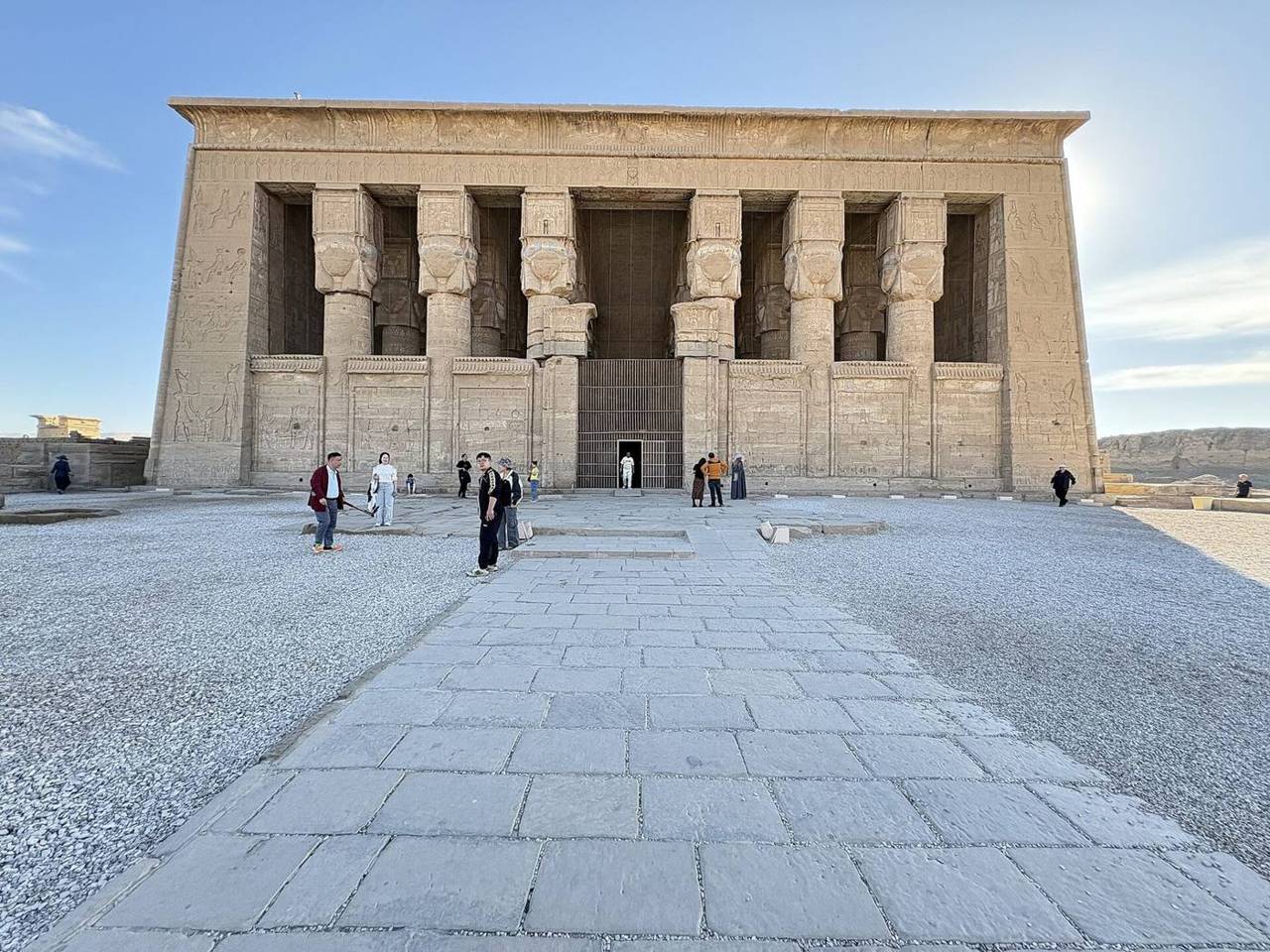
Luxor in depth, Dendera and Abydos
Ancient Thebes beyond the classic visits: on the west bank Medinet Habu, the Ramesseum, the craftsmen's village of Deir el-Medina and the tombs of the nobles, then the temple of Hathor at Dendera with its zodiac ceiling and the temple of Seti I at Abydos, with the finest reliefs in Egypt.
 4 daysEasy
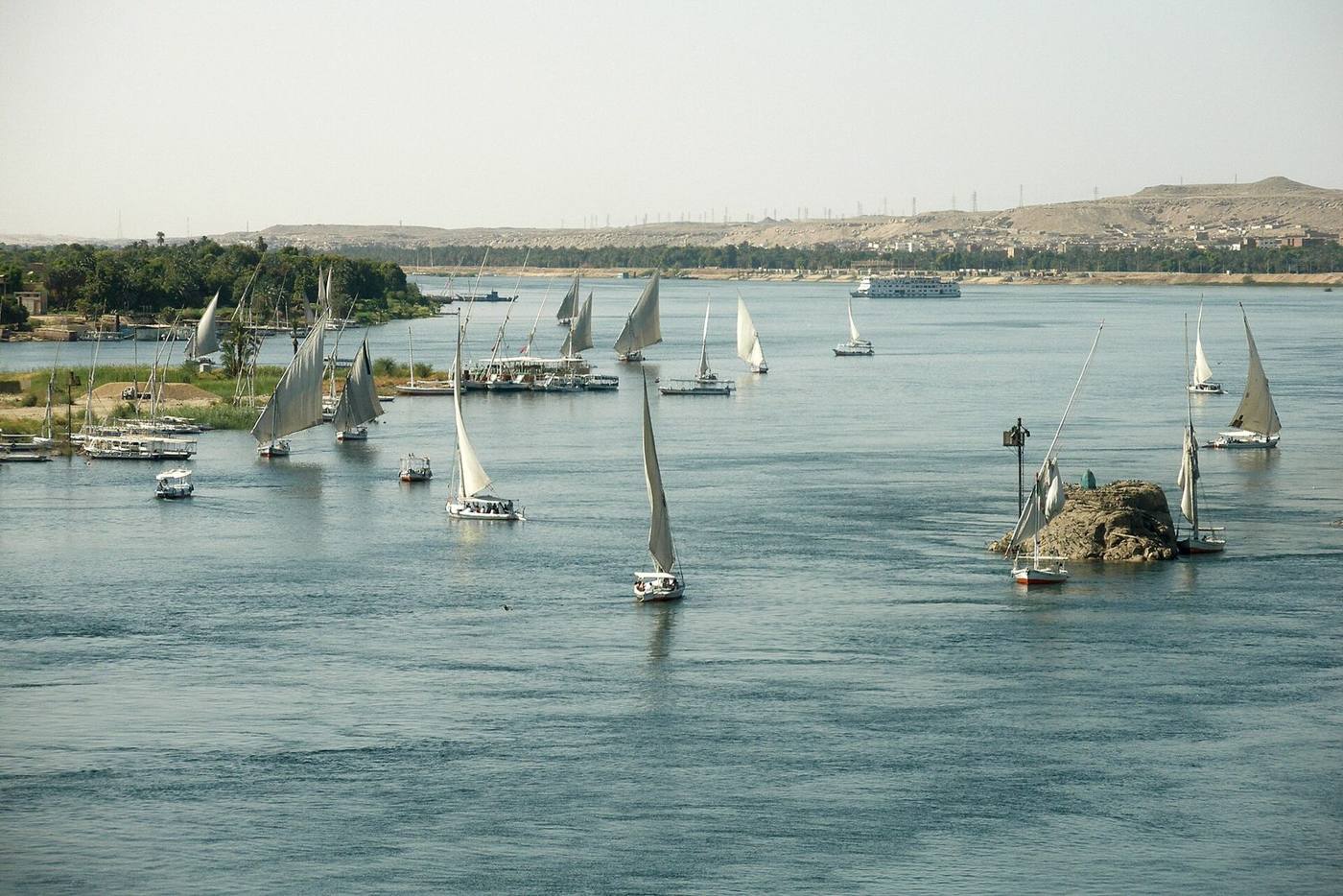
Aswan and Nubia
The Nubian south, slowly: the Nubian Museum, Elephantine Island and its villages, the tombs of the nobles at Qubbet el-Hawa, the desert Monastery of St Simeon, the temple of Kalabsha on Lake Nasser, the unfinished obelisk and the Nubian village of Gharb Soheil by boat.
 6 daysEasy
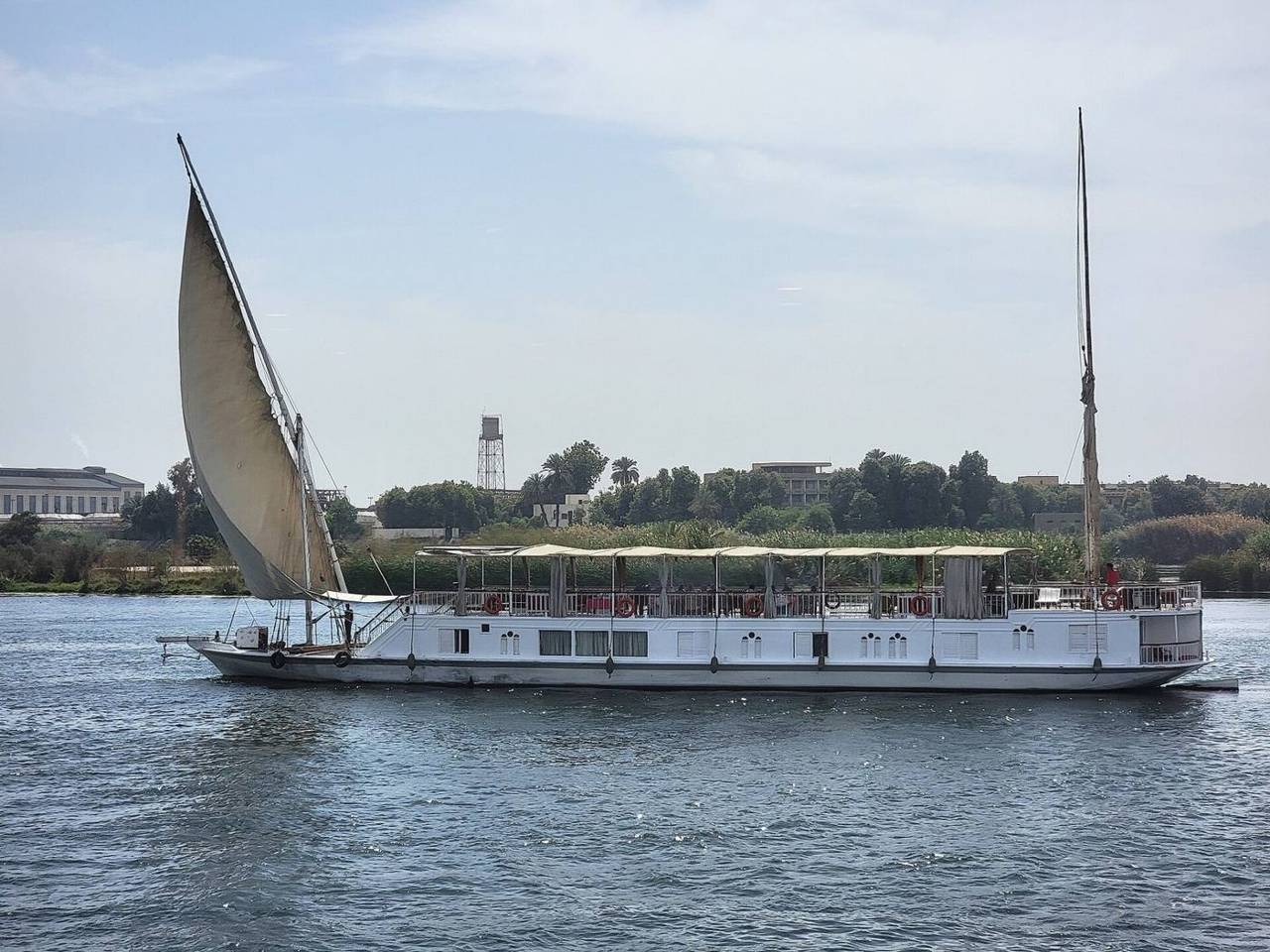
By dahabiya from Esna to Aswan
The Nile under sail, as in the 19th century: a dahabiya, the traditional two-masted boat with few cabins, stopping where big ships cannot, at the temple of Esna with its newly restored colours, at El Kab, the Gebel el-Silsila quarries, Edfu and Kom Ombo, with swims and village walks.