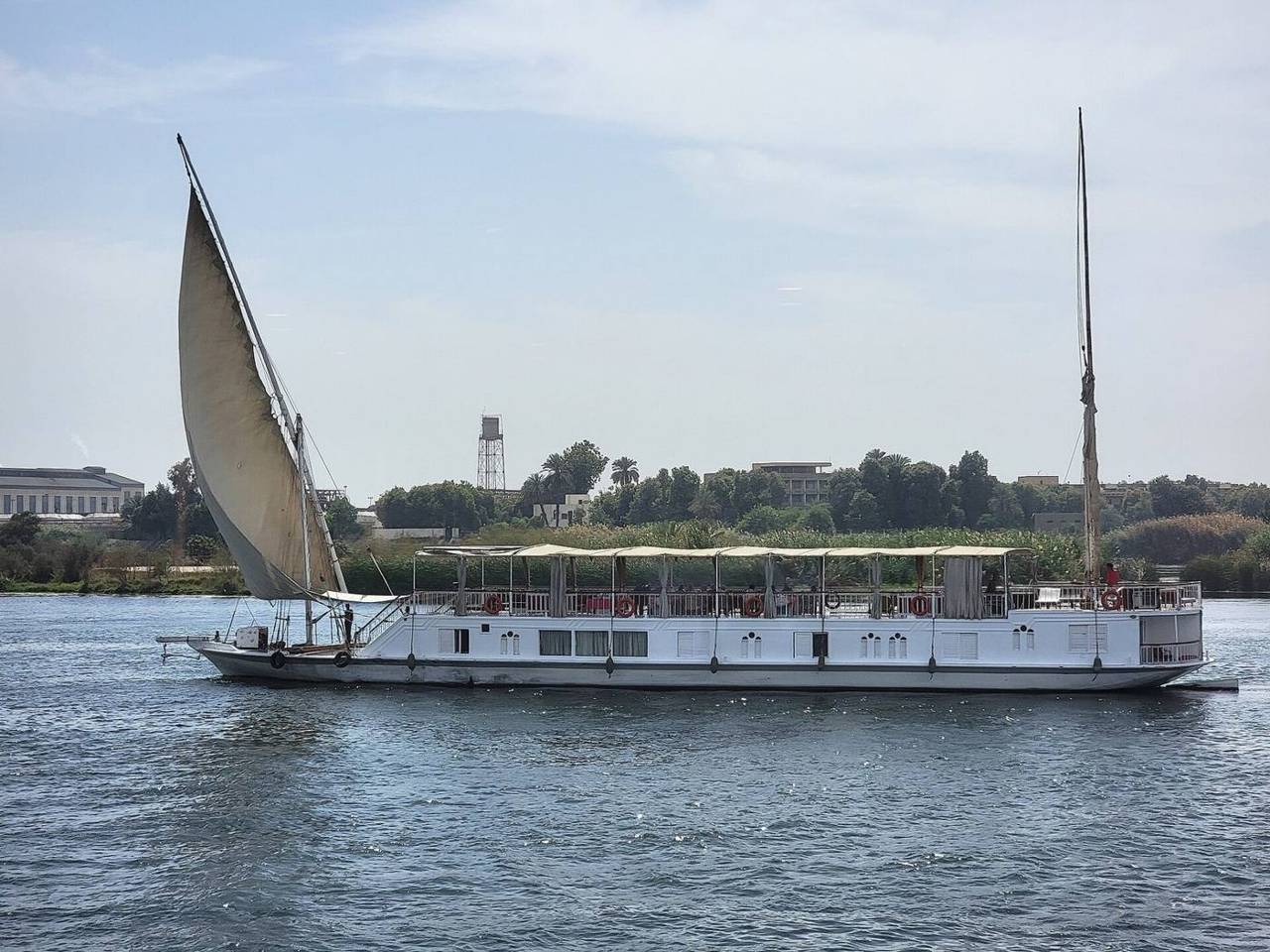
By dahabiya from Esna to Aswan
The Nile under sail, as in the 19th century: a dahabiya, the traditional two-masted boat with few cabins, stopping where big ships cannot, at the temple of Esna with its newly restored colours, at El Kab, the Gebel el-Silsila quarries, Edfu and Kom Ombo, with swims and village walks.
- Luxor
- Esna
- El Kab
- Edfu
- Gebel el-Silsila
- Kom Ombo
- Aswan
Day by day
- Day 1
From Luxor to Esna: the temple of Khnum and boarding
The dahabiya is the traditional Nile sailing boat, with two large lateen sails and few cabins, usually six to twelve. In the nineteenth century it was the way European travellers, archaeologists and writers travelled. Today it lets you sail the river slowly and quietly, stopping at places the big cruise ships do not reach: islands, villages, minor temples and isolated tombs. In six days you sail from Esna to Aswan, with Edfu, El Kab, Gebel el-Silsila and Kom Ombo.
You reach Luxor by plane, with flights from Cairo or direct flights from Europe. In the morning, drive from Luxor to Esna, about an hour south.
In Esna, visit the temple of Khnum, the ram-headed god who, according to the ancient Egyptians, shaped human beings on a potter's wheel. Of the temple, from the Ptolemaic and Roman periods, the great hypostyle hall remains, with twenty-four columns whose capitals are shaped like flowers and palms, about nine metres below the level of the modern town, because the town grew over the ancient remains. In recent years restoration has removed soot and mud from the ceiling and columns, revealing vivid colours, blue, red, yellow and green, with constellations and signs of the zodiac.
In the afternoon, board the dahabiya, meet the crew and start sailing south, through the Esna lock.
In the evening, have dinner on deck under the stars.
In the evening, sleep on board, moored along the bank.
Practical tip: to enter Egypt, Italian citizens can get a visa on arrival, which costs 30 dollars. The United States has Egypt at level 2.
- Day 2
Sailing and El Kab with its painted tombs
In the morning the dahabiya sails south with the wind, when there is any, or helped by a small tug when there is none. From the deck, watch life along the river: fields of sugarcane and alfalfa, date palms, buffaloes wading into the water, children waving, fishermen in rowing boats and birds, herons, kingfishers and ibises.
In the afternoon you stop at El Kab, ancient Nekheb, on the east bank, one of the oldest sites in Egypt, inhabited since prehistory. It was the city of the vulture goddess Nekhbet, protector of Upper Egypt, who appears on the pharaohs' crown.
On the hillside, cut into the rock, are the tombs of New Kingdom local governors, with painted and carved walls. In the tomb of Ahmose son of Ebana, an admiral, a long text tells in the first person of the battles against the Hyksos, the foreign kings driven out of Egypt around 1550 BC: it is one of the most important historical documents of the period. In the tomb of Paheri, tutor to a prince, the paintings show life in the fields: ploughing, harvesting, grape picking, fishing and the making of bread and beer.
Nearby are the huge mud-brick walls of the ancient town and some small temples in the desert. The site is usually almost empty.
In the evening, sleep on board.
Practical tip: bring a small torch for the tombs, closed shoes for the hills and some coins for tips to the guards who open the tombs.
- Day 3
Edfu and the temple of Horus
Early in the morning you reach Edfu, on the west bank. Here stands the temple of Horus, the falcon god, the best-preserved temple in all of Egypt, built in the Ptolemaic period between 237 and 57 BC. It remained buried almost to the roof under sand and village houses until the nineteenth century, when the French archaeologist Auguste Mariette cleared it. That is why it has survived almost intact, with its roofs, doors and rooms.
You enter through an enormous pylon about thirty-six metres high, with figures of the pharaoh smiting enemies before Horus, and two granite falcon statues in front of the gate. Then you cross the colonnaded courtyard, the hypostyle halls and the offering rooms to the sanctuary with its granite shrine, where the god's statue was kept. On the walls of the outer corridor are carved scenes of the battle between Horus and Seth, the god of chaos shown as a hippopotamus.
Visit at opening time, before the groups from the big ships arrive.
In the afternoon the dahabiya sets off again. Often there is a stop on a sandy island, where the crew prepares tea or lunch in the shade of palms, and you can take a walk or, where it is safe, swim near the bank.
In the evening, sleep on board.
Practical tip: in Edfu you will be offered carriage rides from the quay to the temple. Agree the price before getting in and check that the horse is in good condition.
- Day 4
Gebel el-Silsila and the sandstone quarries
In the morning you sail to Gebel el-Silsila, where the Nile narrows between two sandstone walls, at the narrowest point of its course in Egypt. For centuries these rocks were the country's main sandstone quarry: from here came the blocks for many of the great temples, including Karnak, Luxor, Edfu and Kom Ombo. The stones were cut, loaded onto boats and carried along the river.
On the west bank you walk among abandoned quarries, with walls cut in steps and chisel marks still visible, and graffiti left by quarrymen and scribes. There are also small chapels cut into the rock, dedicated to officials and to the god of the Nile, and the speos of Horemheb, a rock-cut shrine built by the pharaoh at the end of the Eighteenth Dynasty, with reliefs of the king and the gods. The big ships do not stop here, and the place is silent.
In the afternoon, continue sailing south, past villages, green fields and desert hills reaching down to the bank. It is the best time to read, watch the landscape and listen to the crew's stories.
At sunset the golden light on the river and the palms is beautiful. After dinner, the crew sometimes plays Nubian music with drums.
In the evening, sleep on board, moored near an island.
Practical tip: Nile water is not drinkable. Drink only bottled water, brush your teeth with it, and avoid raw vegetables washed in unsafe water.
- Day 5
Kom Ombo and the villages along the river
Early in the morning you reach Kom Ombo, where the temple stands on a mound right on the riverbank, in a beautiful position. It is a double temple, unique in Egypt, from the Ptolemaic period: the left half is dedicated to Haroeris, Horus the Elder with a falcon's head, and the right half to Sobek, the crocodile god, with two entrances, two halls and two parallel sanctuaries.
Among the wall reliefs are some very unusual scenes, such as a set of surgical instruments that some scholars think shows the medicine of the time, and a calendar of festivals. Next to the temple is the crocodile museum, with dozens of mummified crocodiles found in a nearby cemetery, where they were buried as animals sacred to Sobek.
In the afternoon, visit a village along the river on foot, with painted mud-brick houses, fields and local people. If the day is right, you can see the Daraw camel market near Kom Ombo, where camels arrive from Sudan: it is held on set days of the week, so check which ones.
Alternatively, the dahabiya stops on an island for a walk in the fields or to watch birds among the reeds.
On the last evening on board, the crew often prepares a special dinner on deck, with music and dancing.
In the evening, sleep on board.
Practical tip: in the villages always ask permission before photographing people, especially women. Wear clothes covering shoulders and legs.
- Day 6
Arriving in Aswan and disembarking
On your last morning you sail the final hours to Aswan, Egypt's southernmost city, where the Nile is at its most beautiful: the river widens among islands of smooth black granite, golden sand dunes running down to the water and the white sails of feluccas.
After disembarking, if you have time, visit the temple of Philae, dedicated to the goddess Isis, on an island reached by boat. The temple was dismantled piece by piece and rebuilt on Agilkia island in the 1970s, to save it from the waters behind the dam. You can also see the Aswan dam, the unfinished obelisk in the granite quarries, or take a felucca ride around Elephantine island, with the botanical garden on Kitchener's Island and the tombs of the nobles on the hill on the west bank.
In the evening you can dine in a Nubian village, with colourful houses on the west bank, or watch the sunset from the river.
From Aswan you can return to Cairo by plane or night train, or go to Abu Simbel, about three and a half hours' drive south, with the great temples of Ramesses II.
This trip combines well with Luxor in depth, with the Valley of the Kings and Karnak, before boarding, or with Cairo and the Grand Egyptian Museum.
Practical tip: dahabiya departure dates are fixed and places few. Book many months ahead, especially for winter, and check what is included: entry fees, guide and tips.
Pricier than a classic cruise but far calmer: dahabiyas have roughly 6 to 12 cabins. Without wind the boat is towed by a tug. Book well ahead for winter. A visa is required, obtained online before travelling or on arrival at the airport. The UK advises against all travel to North Sinai and within 20 km of the Libyan border, and against all but essential travel to most of the Western Desert: this itinerary stays outside those areas.
Before you go
- Documents and visa
- Passport valid for at least six months and a tourist visa, obtained online on the official portal or on arrival at the airport, where since 1 March 2026 it costs 30 dollars in cash.
- Health and vaccines
- No compulsory vaccines for travellers from Europe. Drink only bottled water and take out travel health insurance. Emergencies: 122 police, 123 ambulance.
- Money and payments
- Egyptian pound. Cards work in hotels and larger shops, but for tips, taxis and markets you need cash in small notes.
- Power sockets
- Types C and F, 220 volts.
- Time zone
- UTC+2 in winter; Egypt uses daylight saving time in summer.
- Safety
- Tourist areas along the Nile and the Red Sea are busy and well policed. Governments advise against North Sinai, the Libyan border strip and much of the Western Desert off the main roads. Official advice: GOV.UK.
Information checked in November 2026 for Italian and EU citizens. Rules change: always check before you travel.
Variations
In 4 days: a short sail from Esna to Edfu or from Edfu to Aswan.
In 10 days: add Luxor in depth before and Abu Simbel after.
Frequently asked questions
When is the best time to go?
From October to April, with warm but not scorching days and cool nights. In summer it is very hot and many dahabiyas do not sail.
What documents do I need?
A valid passport and a visa, which Italian citizens can get on arrival for 30 dollars.
How is it different from a normal cruise?
The dahabiya is small, sails and stops at minor places such as El Kab and Gebel el-Silsila, which the big ships do not reach. It is slower, quieter and more expensive.
Indicative itinerary written by World Atlas. Before booking, check timetables, seasonal openings, documents and safety.
 4 daysEasy
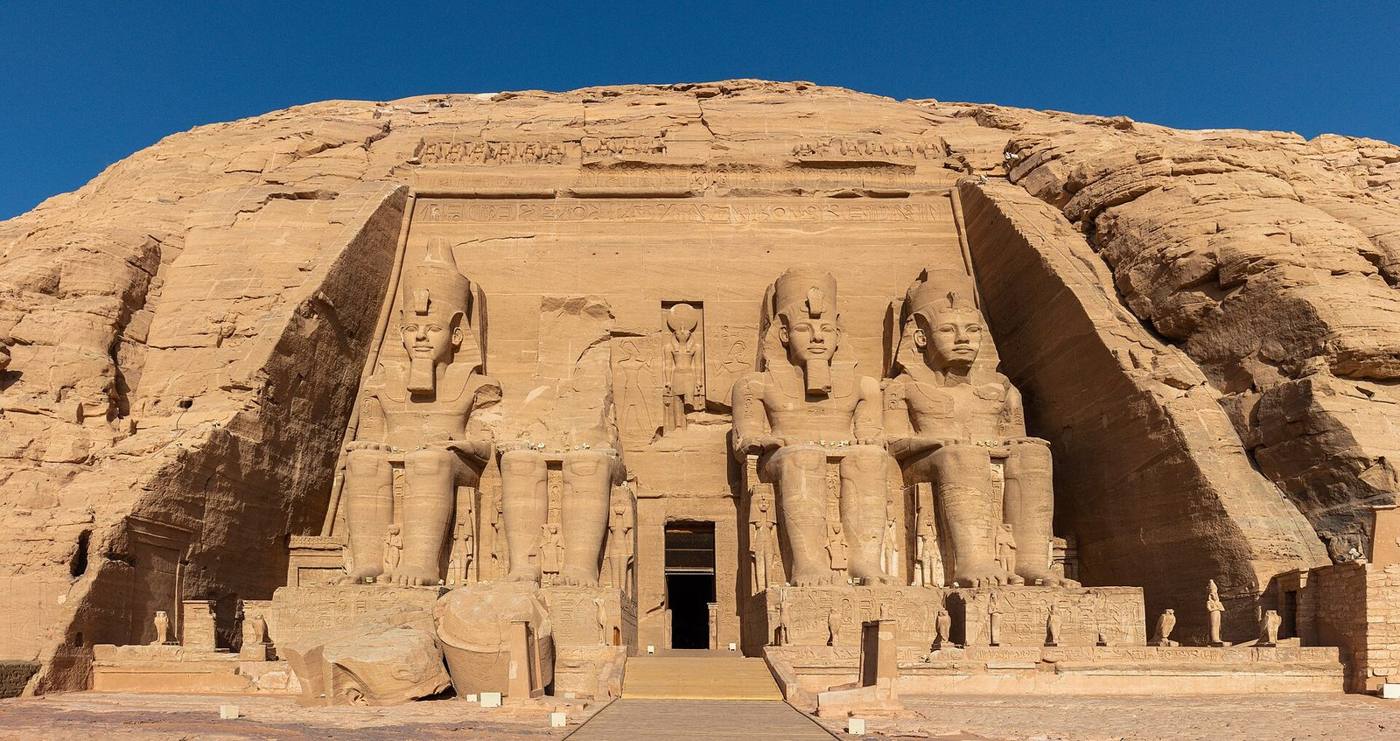
Abu Simbel and the Sun Festival
Twice a year, on 22 February and 22 October, the rising sun reaches deep into the temple of Ramesses II to light the statues of the gods in the sanctuary: a trip built around that moment, with a night in Abu Simbel, the evening show, the temple of Nefertari and the return to Aswan and Philae.
 7 daysEasy
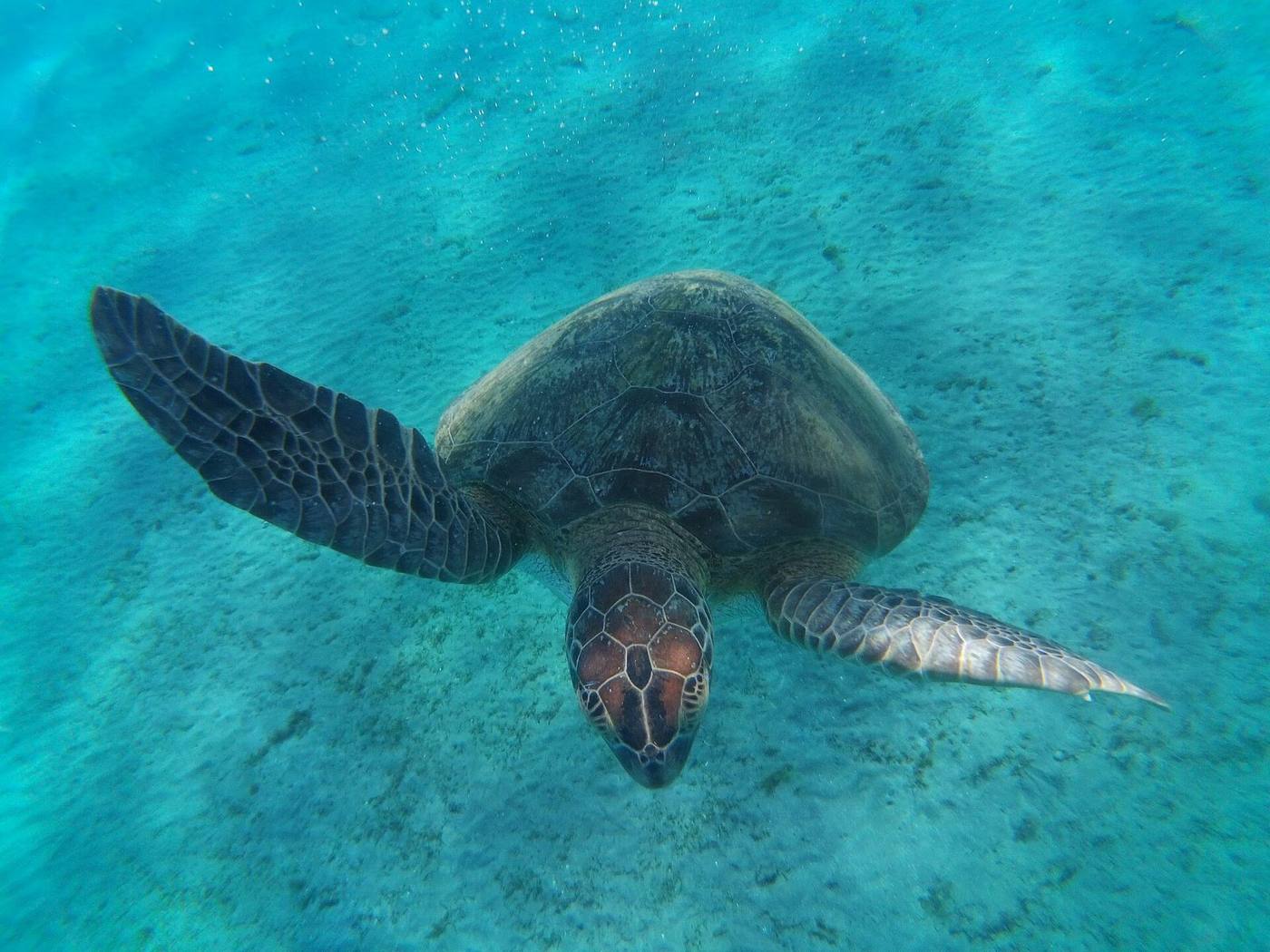
Marsa Alam and Wadi el-Gemal
The southern Red Sea, less built-up: snorkelling with turtles and, with luck, the dugong in Abu Dabbab bay, Sataya reef and its dolphins, Wadi el-Gemal National Park among mangroves, acacias and Ababda villages, and starry skies over the Eastern Desert.
 7 daysChallenging
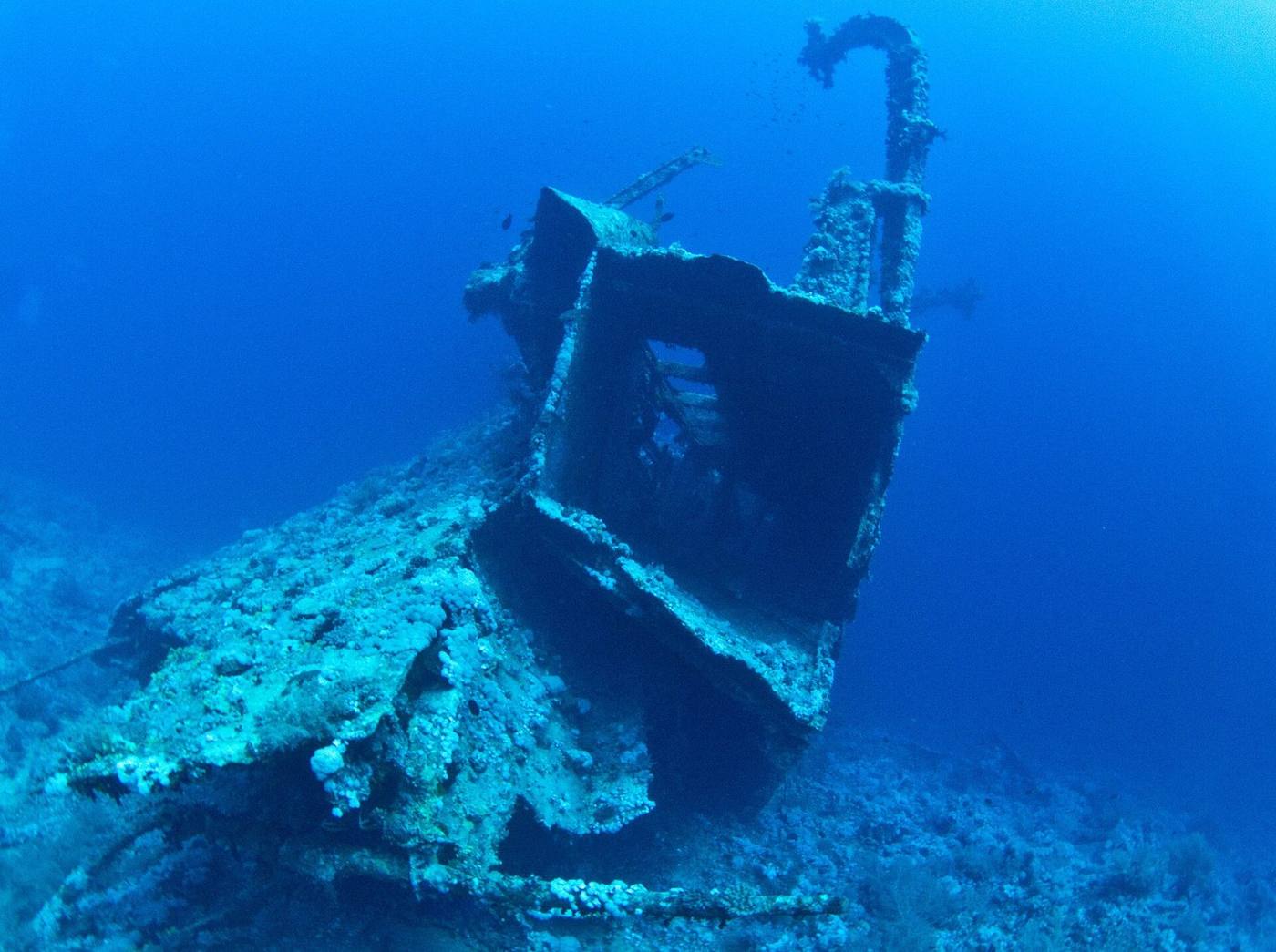
Liveaboard: the Brothers, Daedalus and Elphinstone
A week on board in the open Red Sea: the two Brothers islets with the wreck of the Numidia, Daedalus reef with its lighthouse and vertical walls, Elphinstone, with oceanic whitetips in autumn, hammerheads in some months, soft corals and big schools.