Luxor in depth, Dendera and Abydos
Ancient Thebes beyond the classic visits: on the west bank Medinet Habu, the Ramesseum, the craftsmen's village of Deir el-Medina and the tombs of the nobles, then the temple of Hathor at Dendera with its zodiac ceiling and the temple of Seti I at Abydos, with the finest reliefs in Egypt.
- Luxor
- Medinet Habu
- Deir el-Medina
- Dendera
- Abydos
Day by day
- Day 1
Karnak at an easy pace and Luxor Temple by night
Luxor is ancient Thebes, the religious capital of Egypt during the New Kingdom, more than three thousand years ago. On the east bank of the Nile, the bank of the living, stand the great temples of Karnak and Luxor; on the west bank, the bank of the dead, lie the tombs of the kings and nobles and the mortuary temples. This itinerary is designed for those who have already seen the Valley of the Kings or want to go deeper: in five days you visit the less crowded sites at an easy pace and take a long day trip to the temples of Dendera and Abydos.
Early in the morning, at opening time, enter the Karnak complex, the largest group of temples in ancient Egypt, built and enlarged over about two thousand years by dozens of pharaohs. Its heart is the temple of Amun. Pass through the great gateways, called pylons, and walk into the hypostyle hall, a forest of 134 stone columns, the tallest more than twenty metres high, covered in hieroglyphs and traces of their original colours. Then see the obelisks of Queen Hatshepsut, the sacred lake and the stone scarab around which, by tradition, people walk for good luck. Take time to look for the less visited parts, such as the temple of Ptah to the north.
In the afternoon, rest: the heat in the middle of the day is strong. In the evening, visit Luxor Temple, floodlit, when the stone takes on a golden colour. In front of the entrance is the Avenue of Sphinxes, reopened in 2021 after long excavations, which once linked Luxor to Karnak for almost three kilometres.
Practical tip: at Karnak, arrive at opening time, when the light is beautiful and the cruise groups have not yet arrived.
- Day 2
The west bank: Medinet Habu and the Ramesseum
In the morning, cross the Nile on the public ferry or a small motorboat, or by car over the bridge south of the city. On the west bank, take a taxi or a car with a driver for the day, because the sites are far apart.
The first stop is Medinet Habu, the mortuary temple of Pharaoh Ramesses III, one of the largest and best preserved in Egypt, yet little visited. Its very high walls are covered in deep reliefs telling the story of the king's battles, including the one against the Sea Peoples, mysterious invaders who came from the Mediterranean around 1175 BC. Inside, in the courtyards and halls, the ceilings and columns still keep very bright colours, blue, red and yellow. Also look for the fortified entrance gate, similar to a Syrian fortress.
Then go to the Ramesseum, the mortuary temple of Ramesses II, the most famous pharaoh. Today it is largely in ruins, but its size is striking: on the ground lie the pieces of a colossus of the king, a granite statue that weighed more than a thousand tonnes. These very ruins inspired the English poet Shelley to write Ozymandias, about power erased by time.
On the way back, stop at the Colossi of Memnon, two huge seated statues of Amenhotep III that marked the entrance to his mortuary temple, which has now disappeared.
Practical tip: many tombs and temples on the west bank have separate tickets, to be bought at the entrance or at a central ticket office. Bring cash, water, a hat and sunscreen.
- Day 3
Deir el-Medina and the Tombs of the Nobles
Today you return to the west bank to see the liveliest and least known tombs, those of ordinary people and officials.
In the morning, go to Deir el-Medina, the village of the workers and artists who dug and decorated the pharaohs' tombs in the Valley of the Kings. The foundations of the houses, the streets and a small temple remain. On the hill beside them are their own tombs, small but painted with extraordinary freshness: scenes of daily life, of the fields of the afterlife, of animals, gods and families. The workers, who knew their trade, decorated their own tombs with great care. Thanks to the thousands of written fragments found here, we know a great deal about their lives: wages paid in grain, quarrels, absences from work and even the first recorded strike in history, under Ramesses III.
In the afternoon, visit the Tombs of the Nobles, cut into the hill of Sheikh Abd el-Qurna and nearby areas, where the great officials of the empire, such as viziers, scribes and priests, were buried. On the walls you see banquets with musicians and dancers, hunting and fishing scenes in the marshes, the grape harvest, craftsmen at work and tribute brought by foreign peoples. They are the liveliest images of life in ancient Egypt. The open tombs change in rotation to protect the paintings, so ask at the ticket office which ones can be visited.
You may not touch the walls, and in many tombs photos are forbidden or require a special ticket.
Practical tip: inside the tombs it is hot and the air is humid. Go in calmly, drink a lot and take breaks in the shade between one tomb and the next.
- Day 4
A day at Dendera and Abydos
Today you take a long trip north along the Nile, with a car and a driver: it is a day of eight to ten hours. Leave very early in the morning.
The first stop is Abydos, about three hours by road, one of the most sacred places in ancient Egypt, because here, according to tradition, the head of the god Osiris, god of the dead and of rebirth, was buried. The temple of Seti I, the father of Ramesses II, has some of the finest and most delicate reliefs in all of Egypt, with their colours still visible. In one corridor is the Abydos King List, a carved table with the names of dozens of pharaohs before Seti, essential for scholars. Behind the temple is the Osireion, a mysterious structure of large granite blocks, often partly flooded.
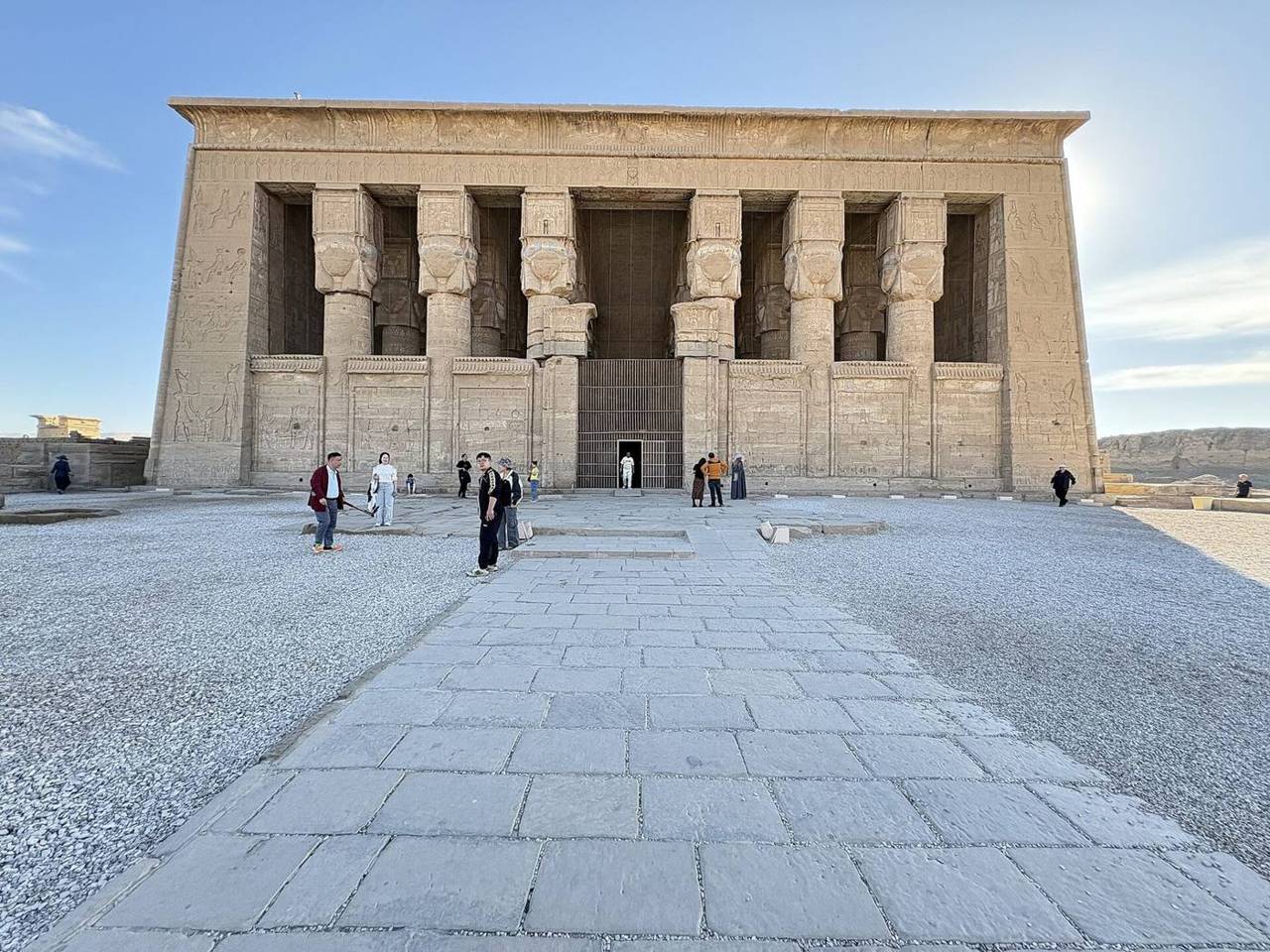
In the afternoon, head back south to Dendera, about an hour from Luxor. The temple of the goddess Hathor, goddess of love, music and joy, is one of the best preserved in Egypt, built in the Ptolemaic and Roman periods. The great hall has columns bearing the goddess's face and a restored blue ceiling with astronomical paintings. Climb to the terraces and the roof, with chapels dedicated to Osiris, and look for the ceiling with the zodiac, now a copy: the original is in the Louvre in Paris. On the back wall is the relief of Cleopatra with her son Caesarion.
In the evening you return to Luxor tired, but with two of the country's most beautiful temples in your eyes.
Practical tip: in the past escorts or convoys were required on this road; today the rules may change. Arrange the trip with a reliable agency or driver who knows the latest instructions.
- Day 5
The Luxor Museum and departure
On your last morning, visit the Luxor Museum, on the Nile corniche, halfway between Luxor Temple and Karnak. It is small, modern and well lit, with a selection of very high quality pieces, clearly explained. You will see statues of pharaohs and gods, reliefs, jewellery, objects from the tomb of Tutankhamun and two royal mummies, attributed to the pharaohs Ahmose I and Ramesses I. A special hall displays the statues found in 1989 in a cache beneath the courtyard of Luxor Temple, buried in antiquity and exceptionally well preserved.
If you are interested, nearby there is also the Mummification Museum, devoted to the techniques the ancient Egyptians used to prepare bodies for eternity, with tools, jars and animal mummies.
Before leaving, take a last walk along the corniche, watching the feluccas, the traditional sailing boats, and the mountains of the west bank. If you have time, you can spend an hour on a felucca on the river in the late afternoon, when the wind drops and the light is soft.
Luxor airport is about twenty minutes from the centre, with flights to Cairo and some direct flights to Europe. If you are continuing your trip, trains leave Luxor for Aswan and for Cairo.
Practical tip: to enter Egypt you need a visa, which you can get online before leaving or on arrival at the airport, where it costs 30 dollars. The United Kingdom advises against all travel to North Sinai and to the 20 km strip along the Libyan border: this itinerary stays well away from them.
For those who have already seen the Valley of the Kings or want to go deeper. Dendera and Abydos make a long day by car with a driver. Many tombs have separate tickets; some open in rotation. A visa is required, obtained online before travelling or on arrival at the airport. The UK advises against all travel to North Sinai and within 20 km of the Libyan border, and against all but essential travel to most of the Western Desert: this itinerary stays outside those areas.
Before you go
- Documents and visa
- Passport valid for at least six months and a tourist visa, obtained online on the official portal or on arrival at the airport, where since 1 March 2026 it costs 30 dollars in cash.
- Health and vaccines
- No compulsory vaccines for travellers from Europe. Drink only bottled water and take out travel health insurance. Emergencies: 122 police, 123 ambulance.
- Money and payments
- Egyptian pound. Cards work in hotels and larger shops, but for tips, taxis and markets you need cash in small notes.
- Power sockets
- Types C and F, 220 volts.
- Time zone
- UTC+2 in winter; Egypt uses daylight saving time in summer.
- Safety
- Tourist areas along the Nile and the Red Sea are busy and well policed. Governments advise against North Sinai, the Libyan border strip and much of the Western Desert off the main roads. Official advice: GOV.UK.
Information checked in November 2026 for Italian and EU citizens. Rules change: always check before you travel.
Variations
In 3 days: Karnak and Luxor Temple, then the west bank with Medinet Habu, Deir el-Medina and the Tombs of the Nobles, without Dendera and Abydos.
In 9 days: add the Valley of the Kings and the temple of Hatshepsut, then travel by boat or train to Aswan, stopping at Edfu and Kom Ombo.
Frequently asked questions
When is the best time to go?
From October to April, with warm days and cool nights. From May to September it is very hot, often above 40 degrees: visit only early in the morning and in the late afternoon.
Do I need a guide?
It is not compulsory, but an Egyptologist guide helps a great deal in understanding the reliefs and hieroglyphs, especially at Karnak, Medinet Habu and Abydos.
What documents do I need?
A passport valid for at least six months and a visa, online or on arrival at the airport for 30 dollars. The United States keeps Egypt at level 2 for caution.
Indicative itinerary written by World Atlas. Before booking, check timetables, seasonal openings, documents and safety.
 4 daysEasy
Aswan and Nubia
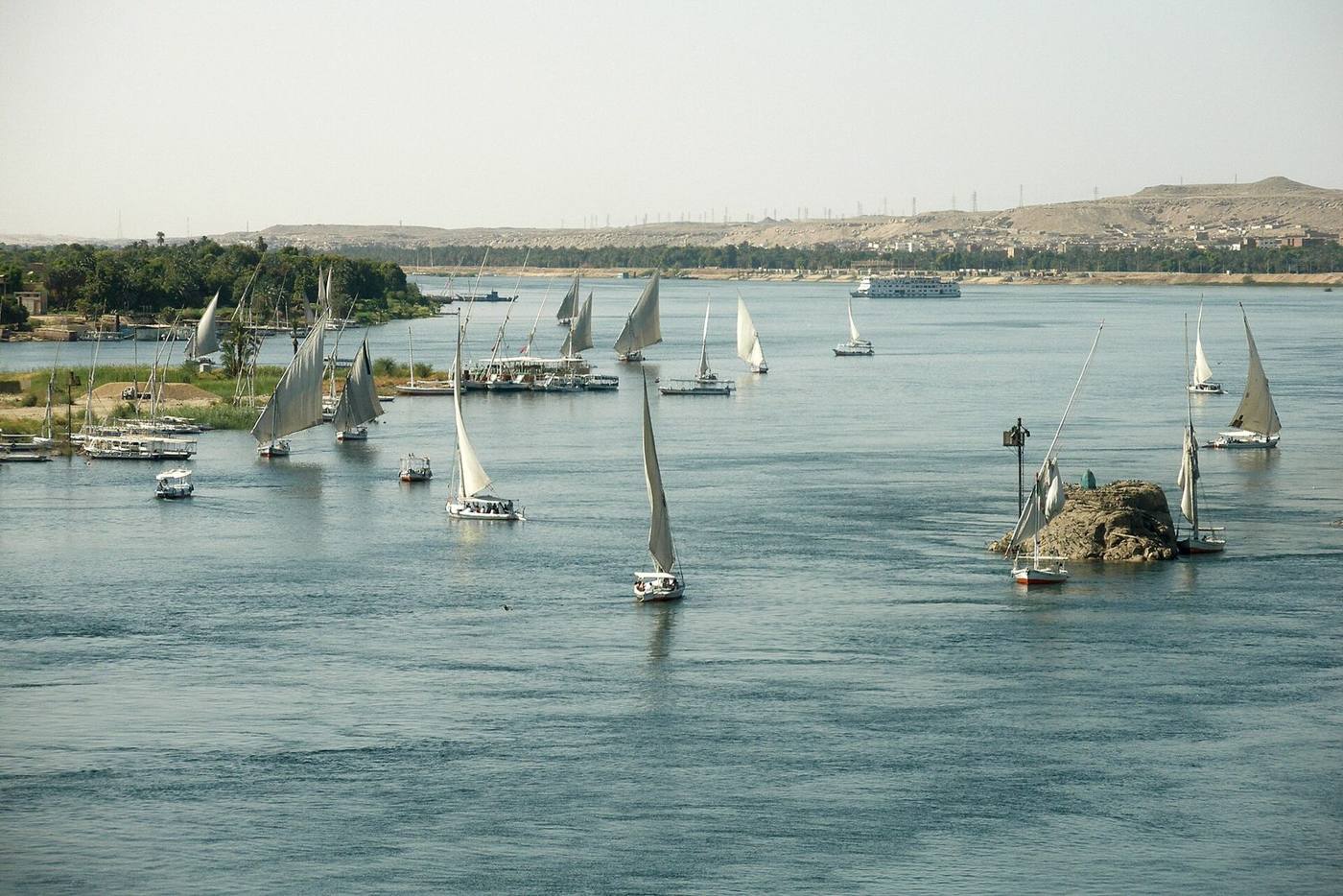
The Nubian south, slowly: the Nubian Museum, Elephantine Island and its villages, the tombs of the nobles at Qubbet el-Hawa, the desert Monastery of St Simeon, the temple of Kalabsha on Lake Nasser, the unfinished obelisk and the Nubian village of Gharb Soheil by boat.
 6 daysEasy
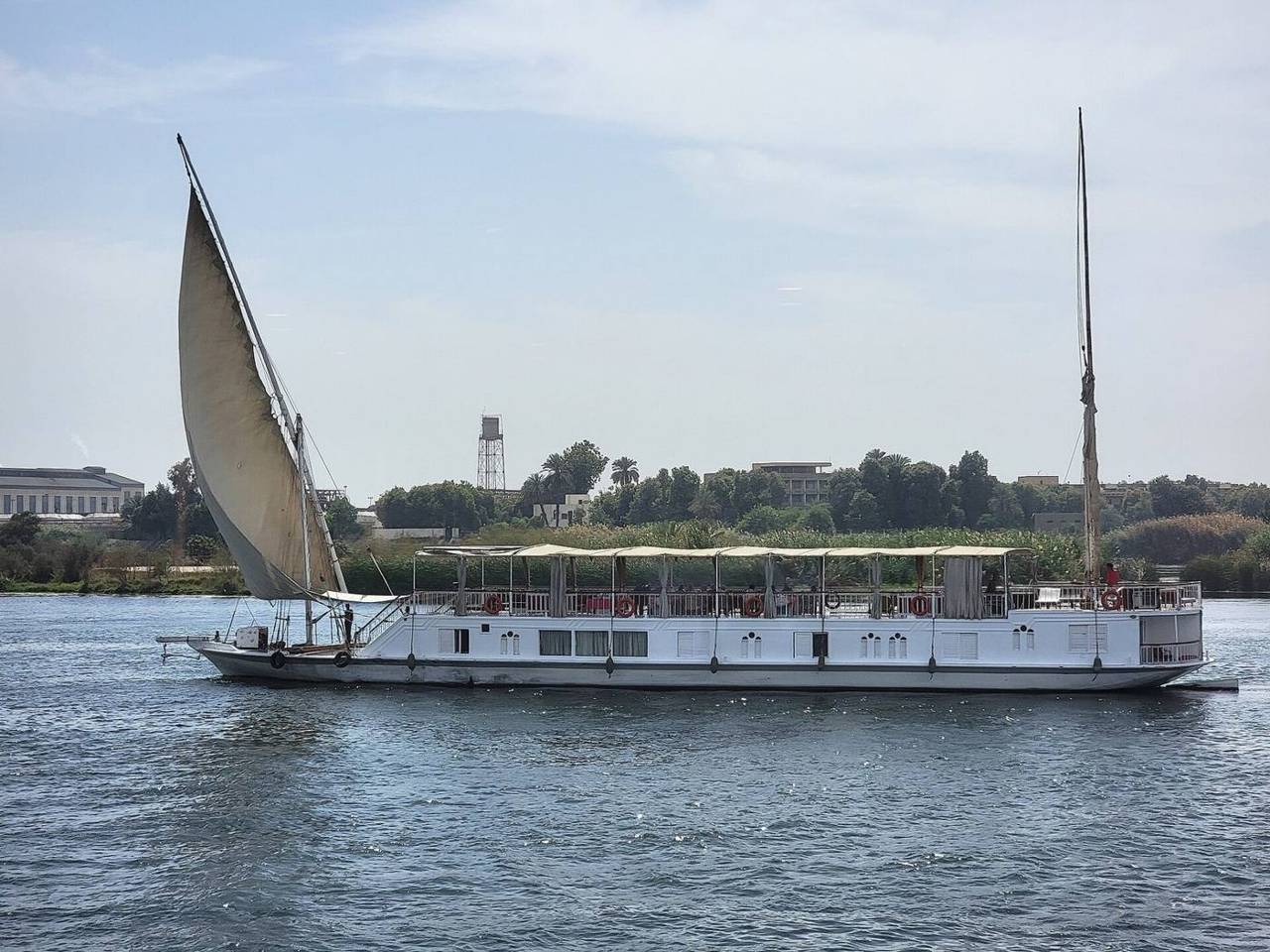
By dahabiya from Esna to Aswan
The Nile under sail, as in the 19th century: a dahabiya, the traditional two-masted boat with few cabins, stopping where big ships cannot, at the temple of Esna with its newly restored colours, at El Kab, the Gebel el-Silsila quarries, Edfu and Kom Ombo, with swims and village walks.
 4 daysEasy
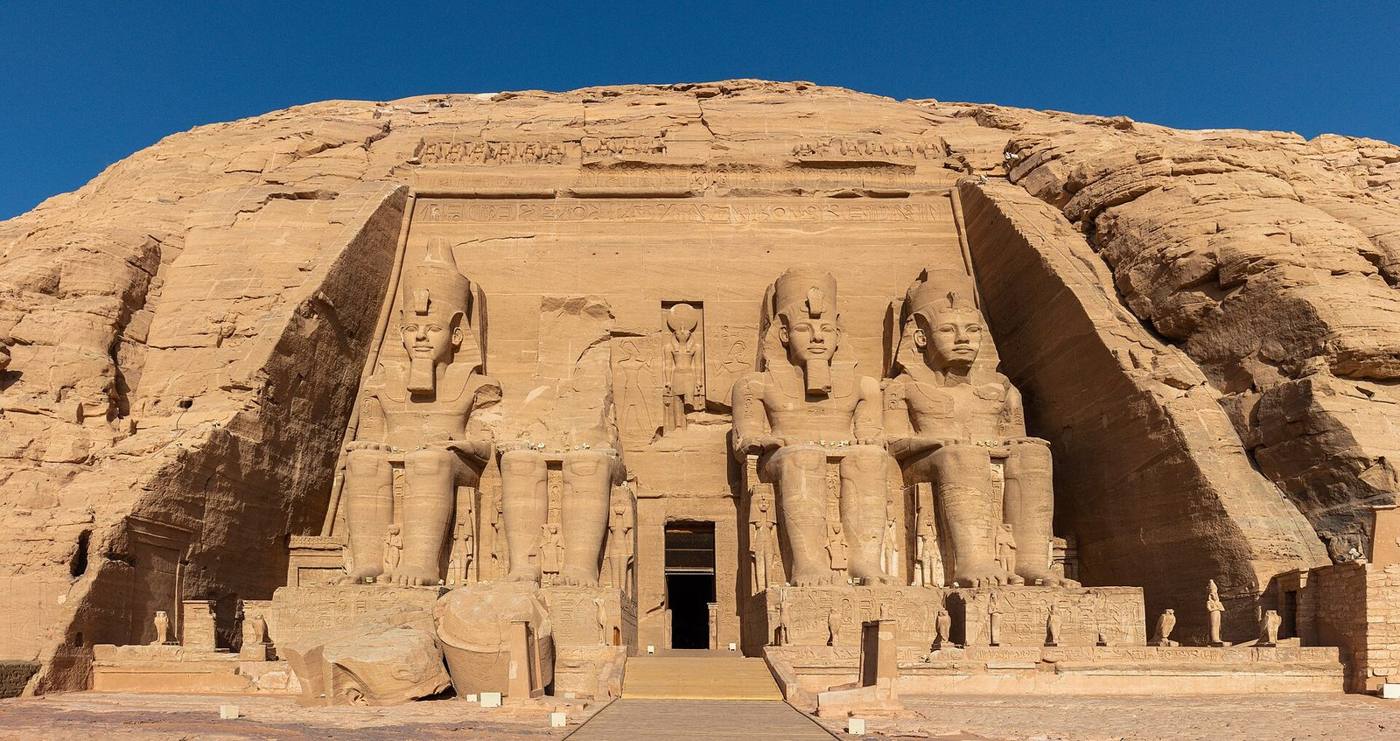
Abu Simbel and the Sun Festival
Twice a year, on 22 February and 22 October, the rising sun reaches deep into the temple of Ramesses II to light the statues of the gods in the sanctuary: a trip built around that moment, with a night in Abu Simbel, the evening show, the temple of Nefertari and the return to Aswan and Philae.