Sinai: Mount Moses, St Catherine's and Dahab
Dawn from the top of Mount Sinai, the world's oldest monastery, coloured canyons and the coral reef of Dahab.
- Sharm el-Sheikh
- Dahab
- Coloured Canyon
- St Catherine's
- Mount Sinai
- Ras Mohammed
Day by day
- Day 1
Arrival in Sharm el Sheikh and transfer to Dahab
This trip goes to southern Sinai, the peninsula between Africa and Asia, between the Gulf of Suez and the Gulf of Aqaba. It combines the sea, with some of the finest coral reefs in the Red Sea, and the mountain desert, with Saint Catherine's Monastery, one of the oldest continuously inhabited monasteries in the world, and Mount Sinai, where according to tradition Moses received the Ten Commandments. You walk with Bedouin guides who know every valley.
On arrival in Egypt you can get a visa on arrival at the airport, which costs 30 dollars. Before leaving check government advice: the United Kingdom advises against North Sinai and part of South Sinai. This trip stays in Sharm el Sheikh, Dahab, Saint Catherine and the roads linking them: check that these areas are still considered accessible.
You fly into Sharm el Sheikh, with direct flights from several European cities or via Cairo. From the airport you drive to Dahab in about an hour and a half, through mountains of red and dark granite.
Dahab is a former Bedouin fishing village on the Gulf of Aqaba, today a quiet town of divers, freedivers and travellers, with a pedestrian seafront, small low houses and views of the mountains of Saudi Arabia across the gulf.
In the evening walk along the seafront in Masbat bay and have dinner with grilled fish and Egyptian dishes.
Spend the night in Dahab.
Practical tip: there are checkpoints on Sinai roads: always keep your passport to hand. The best time is October to April; summer is very hot.
- Day 2
Dahab: snorkelling at the Lighthouse and the Blue Hole
Today discover the sea at Dahab, one of the best places in the world for snorkelling and shore diving: the reef begins a few metres from the beach and drops straight into the depths.
In the morning snorkel at the Lighthouse, at the northern end of the seafront, where you enter the water from a small platform and swim over a coral wall full of fish: clownfish, butterflyfish, pufferfish, parrotfish, moray eels and sometimes turtles.
In the afternoon go to the Blue Hole, about ten kilometres north of Dahab, an underwater sinkhole more than a hundred metres deep, a great circle of dark blue inside the reef. For snorkelling you swim along the rim of the hole, over a wall of brilliantly coloured corals. The Blue Hole is also famous for freediving and, sadly, for the accidents of divers who tried to pass through the underwater arch at more than fifty metres: memorial plaques line the shore. For ordinary divers, the dive follows the wall to safe depths.
Near the Blue Hole is also the Canyon, a cleft in the reef where divers descend.
At sunset return to Dahab and relax on the seafront with mint tea.
Spend the night in Dahab.
Practical tip: at the Blue Hole and the Canyon there is a protected area entrance ticket: check. Do not touch the coral and wear reef shoes to enter the water. Dives must be done with an authorised centre and the appropriate certification.
- Day 3
The Coloured Canyon and the oasis of Ain Khudra
Today leave the sea for the Sinai desert, on a four wheel drive trip with a Bedouin guide.
The first stop is the Coloured Canyon, inland, a narrow, winding gorge carved into sandstone, with walls striped red, orange, yellow, purple and white. You walk for about an hour between the walls, in places so close you have to turn sideways, climbing down small rock steps. The light from above changes the colours of the stone.
In the afternoon go to the oasis of Ain Khudra, a small palm oasis in a valley of white sand and rock, enclosed by mountains. According to tradition it is one of the places where the people of Israel stopped during the Exodus. A few Bedouin families live here, with palm gardens and a spring. You walk down to the oasis through a valley, passing the White Canyon, a gorge of pale sandstone.
With the guide you drink Bedouin tea, made over the fire with desert herbs, and eat bread baked under the embers.
In the evening return to Dahab.
Spend the night in Dahab.
Practical tip: these trips are only made with an authorised Bedouin guide, who knows the tracks and arranges the permits. Before setting off ask whether the area is open to visitors and check current advice. Bring plenty of water, a hat and closed shoes.
- Day 4
Saint Catherine: the monastery and the library
Today go to Saint Catherine, about two hours by road from Dahab, in the heart of the Sinai mountains at about 1,600 metres. The landscape is made of red granite mountains, narrow valleys and small Bedouin gardens.
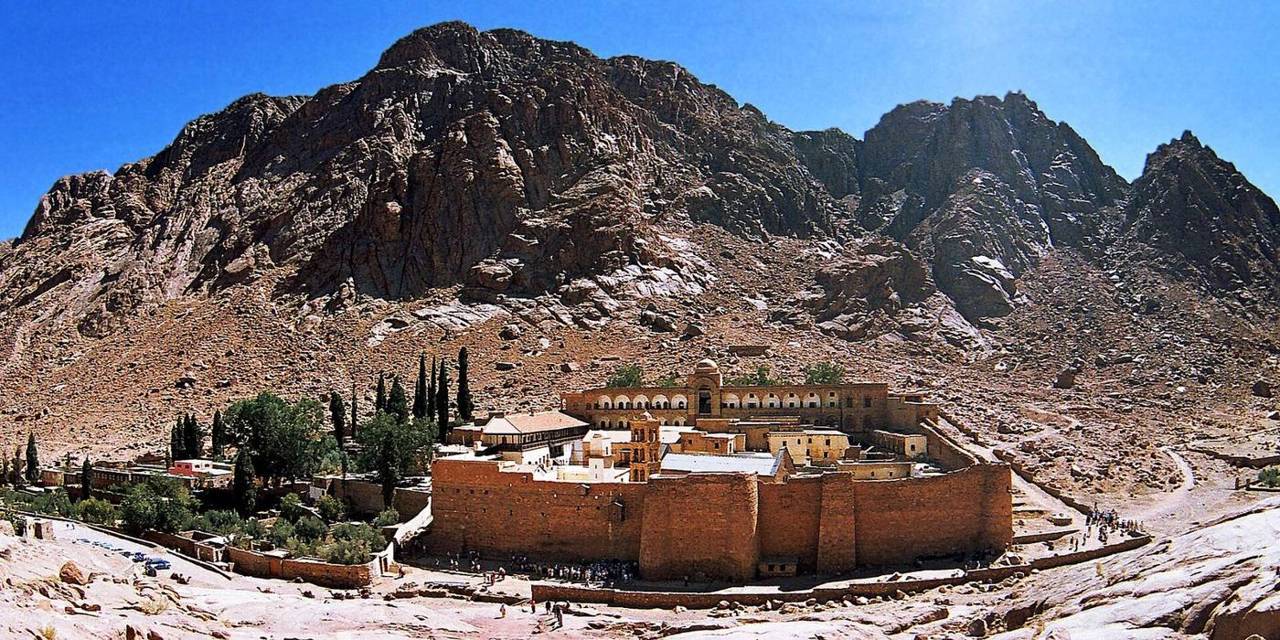
Saint Catherine's Monastery, a UNESCO World Heritage Site, was founded in the sixth century by the Byzantine emperor Justinian at the foot of Mount Sinai, where according to tradition Moses saw the burning bush. It is one of the oldest Christian monasteries in the world still in use, inhabited by Greek Orthodox monks. It is enclosed by high granite walls, like a fortress.
Inside the walls you see the sixth century Basilica of the Transfiguration, with an ancient mosaic in the apse, icons and silver lamps, and a bramble that tradition identifies as a descendant of the burning bush. The monastery also contains a small Fatimid era mosque, a sign of coexistence with Muslims.
The monastery library holds one of the most important collections of ancient manuscripts in the world, after the Vatican's, in Greek, Arabic, Syriac and other languages. Some of the icons and manuscripts are shown in the monastery museum.
In the afternoon rest: tonight you climb Mount Sinai.
Spend the night in Saint Catherine.
Practical tip: the monastery opens only a few hours a day and closes on some days of the week and on Orthodox holidays: check the times. Enter with shoulders and knees covered.
- Day 5
A night climb of Mount Sinai and sunrise at the summit
Today you climb Mount Sinai, also called Mount Moses or Jebel Musa, 2,285 metres high, to watch sunrise from the summit.
You set off at night, around two in the morning, from the monastery, with a compulsory Bedouin guide and a torch. The most common ascent follows the camel path, wide and gradual, for about two and a half or three hours. Along the way there are small Bedouin shelters where you can drink hot tea. Those who are tired can ride a camel for part of the way. The last section is a staircase of about 750 stone steps to the summit.
At the top, on a small platform with a chapel and a mosque, you wait for sunrise with hundreds of pilgrims and travellers from all over the world, praying and singing in many languages. When the sun rises it lights up in pink and gold a sea of granite peaks stretching to the horizon.
The descent is by the Steps of Repentance, about 3,750 stone steps carved, according to tradition, by a monk as penance. It is steeper and harder on the knees, but more beautiful and quieter, and comes down directly behind the monastery, passing under a stone arch where monks once heard the pilgrims' confessions.
In the afternoon rest.
Spend the night in Saint Catherine.
Practical tip: at the summit before dawn it is very cold even in summer, and in winter it drops below freezing, sometimes with snow. Bring a heavy jacket, gloves and a hat. Guides and camels are paid separately: check the rates.
- Day 6
Trekking with the Bedouin in the valleys of the high Sinai
Today take a trek with a Bedouin guide in the mountains around Saint Catherine, the highest part of Egypt, protected as a nature area.
The Bedouin tribes of southern Sinai, such as the Jebeleya, who have lived around the monastery for centuries, have organised walking routes through the valleys, called wadis, with local guides and camels to carry luggage. Walking tourism is one of the few sources of income for these communities.
A classic one day route climbs the Wadi el Arbain, the valley of the forty, with the monastery of the forty martyrs among olive trees, and continues towards Jebel Abbas Basha or the slopes of Mount Catherine, the highest mountain in Egypt at 2,629 metres.
You walk among red granite rocks and small orchards hidden between the walls, with almond, apricot, apple and olive trees, watered by channels and wells built by the Bedouin and the monks, and ancient cisterns. In the valleys you sometimes see Nubian ibex and, in the evening, hear foxes.
At lunch the guide bakes Bedouin bread over the fire and prepares a simple meal of lentils, rice, vegetables and tea. If you wish you can spend a night under the stars in a Bedouin camp instead of returning to the village.
Spend the night in Saint Catherine or in a Bedouin camp.
Practical tip: to leave the main trails you need a Bedouin guide and registration with the local police, usually arranged by the guide. Check the current rules before setting off.
- Day 7
Ras Mohammed by boat
Today head back towards Sharm el Sheikh, about two and a half hours from Saint Catherine, and take a boat trip to Ras Mohammed National Park, at the southern tip of the Sinai Peninsula.
Ras Mohammed is Egypt's first national park and one of the world's most famous places for diving and snorkelling. Here the Gulf of Suez and the Gulf of Aqaba meet, and the currents carry nutrients that attract huge numbers of fish. Coral walls drop sheer for hundreds of metres.
The boat stops at several sites. At Shark Reef and Yolanda Reef you swim over walls full of soft and hard corals, with shoals of barracuda, jacks, batfish, Napoleon wrasse, turtles and sometimes reef sharks. On Yolanda Reef you see on the bottom the remains of a sunken ship's cargo, including some bathroom fittings, which have become a famous spot for divers.
The park also has beaches and lagoons, a mangrove forest and a viewpoint called the Gate of Allah.
In the late afternoon the boat returns to port. In the evening, in Sharm, walk around Naama Bay or the old market.
Spend the night in Sharm el Sheikh.
Practical tip: entry to Ras Mohammed park is charged, usually included in the price of the trip: check. Currents can be strong: always swim close to the boat and follow the crew's instructions.
- Day 8
Departure from Sharm el Sheikh
On the last day you leave from Sharm el Sheikh airport.
If your flight is in the afternoon, you still have a few hours in the morning for a last swim. Many hotels in Sharm have a private reef in front of the beach, where you snorkel straight from the jetty. Another option is Shark's Bay or Naama Bay, with jetties and coral close to the shore.
Alternatively visit Sharm's old town, called the Old Market, with a market of spices, textiles and crafts, and the large modern Al Sahaba mosque, built in Ottoman and Mamluk style. Not far away is the Coptic cathedral of Sharm el Sheikh, decorated with colourful frescoes.
Before leaving buy some souvenirs: Sinai spices and herbal teas, such as Bedouin sage and thyme, Bedouin textiles and embroidery, silver jewellery and coloured sand in bottles.
Sharm el Sheikh airport is about twenty minutes from town. From here there are direct flights to many European cities or flights to Cairo, from where you continue.
If you have a few more days, you can add some diving in Sharm or Dahab, or take a flight to Cairo and Luxor.
Practical tip: do not take shells, coral or sand from protected beaches: luggage is checked at the airport and there are fines. Leave your hotel with plenty of time for security checks.
The right alternative to a Sharm resort: the same sea, but with desert, mountains and Bedouin culture. Dahab is laid-back and cheap. European authorities generally don't advise against travel to southern Sinai, but always check the latest advice before leaving.
Before you go
- Documents and visa
- Passport valid for at least six months and a tourist visa, obtained online on the official portal or on arrival at the airport, where since 1 March 2026 it costs 30 dollars in cash.
- Health and vaccines
- No compulsory vaccines for travellers from Europe. Drink only bottled water and take out travel health insurance. Emergencies: 122 police, 123 ambulance.
- Money and payments
- Egyptian pound. Cards work in hotels and larger shops, but for tips, taxis and markets you need cash in small notes.
- Power sockets
- Types C and F, 220 volts.
- Time zone
- UTC+2 in winter; Egypt uses daylight saving time in summer.
- Safety
- Tourist areas along the Nile and the Red Sea are busy and well policed. Governments advise against North Sinai, the Libyan border strip and much of the Western Desert off the main roads. Official advice: GOV.UK.
Information checked in November 2026 for Italian and EU citizens. Rules change: always check before you travel.
Variations
In 5 days: Dahab and Saint Catherine with the climb of Mount Sinai.
In 11 days: add a Red Sea liveaboard dive cruise or a few days in Cairo.
Frequently asked questions
Is it safe to visit southern Sinai?
The trip stays in Sharm el Sheikh, Dahab, Saint Catherine and the roads linking them. The United Kingdom advises against North Sinai and part of South Sinai: check current advice before leaving.
Do I need a visa?
Yes. You can get a visa on arrival at the airport, which costs 30 dollars.
Is the climb of Mount Sinai difficult?
It is a two or three hour walk at night, with the last section on steps. You need reasonable fitness and warm clothes for the summit.
Indicative itinerary written by World Atlas. Before booking, check timetables, seasonal openings, documents and safety.
 7 daysEasy
Cairo and a Nile cruise
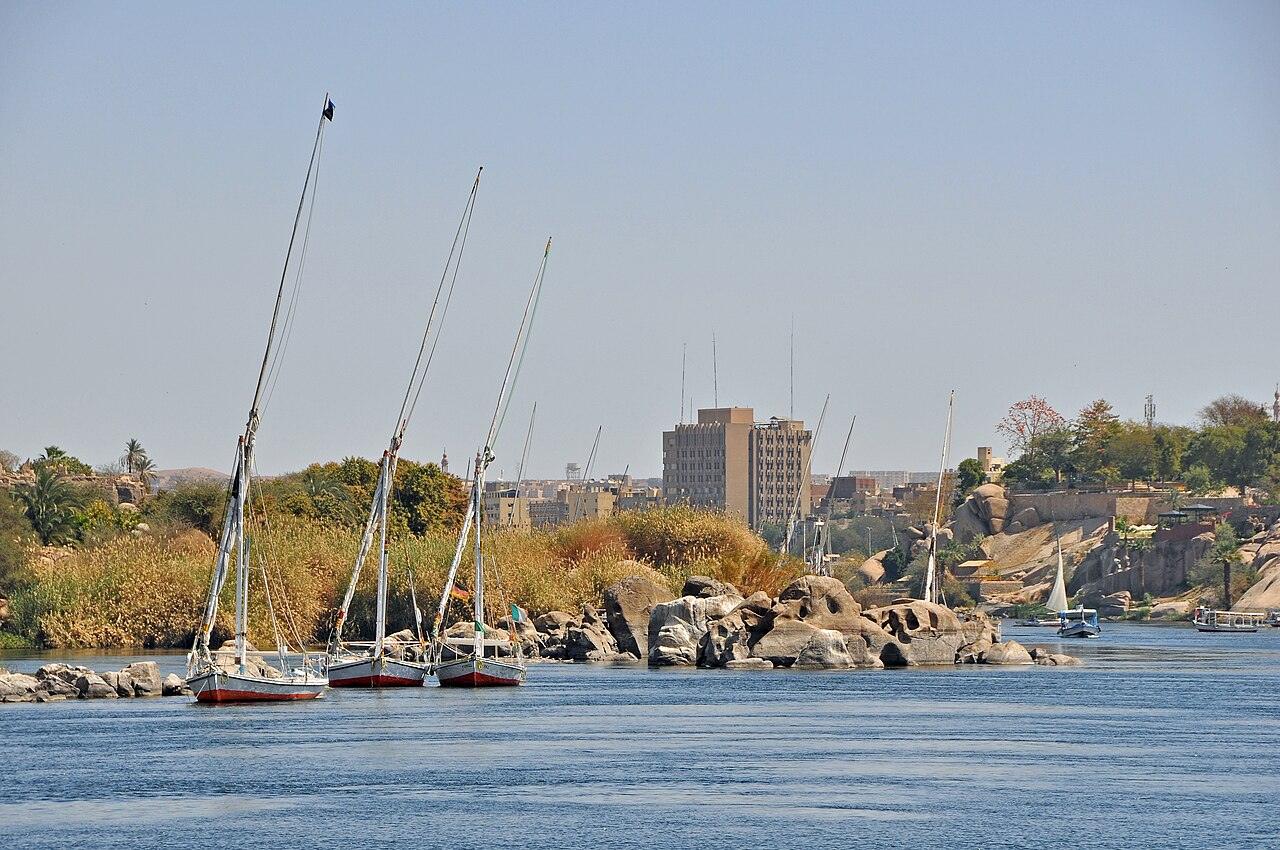
The pyramids of Giza and the Grand Egyptian Museum, then four days sailing between Luxor and Aswan.
 15 daysModerate
Complete Egypt: the Nile, the desert and the Red Sea
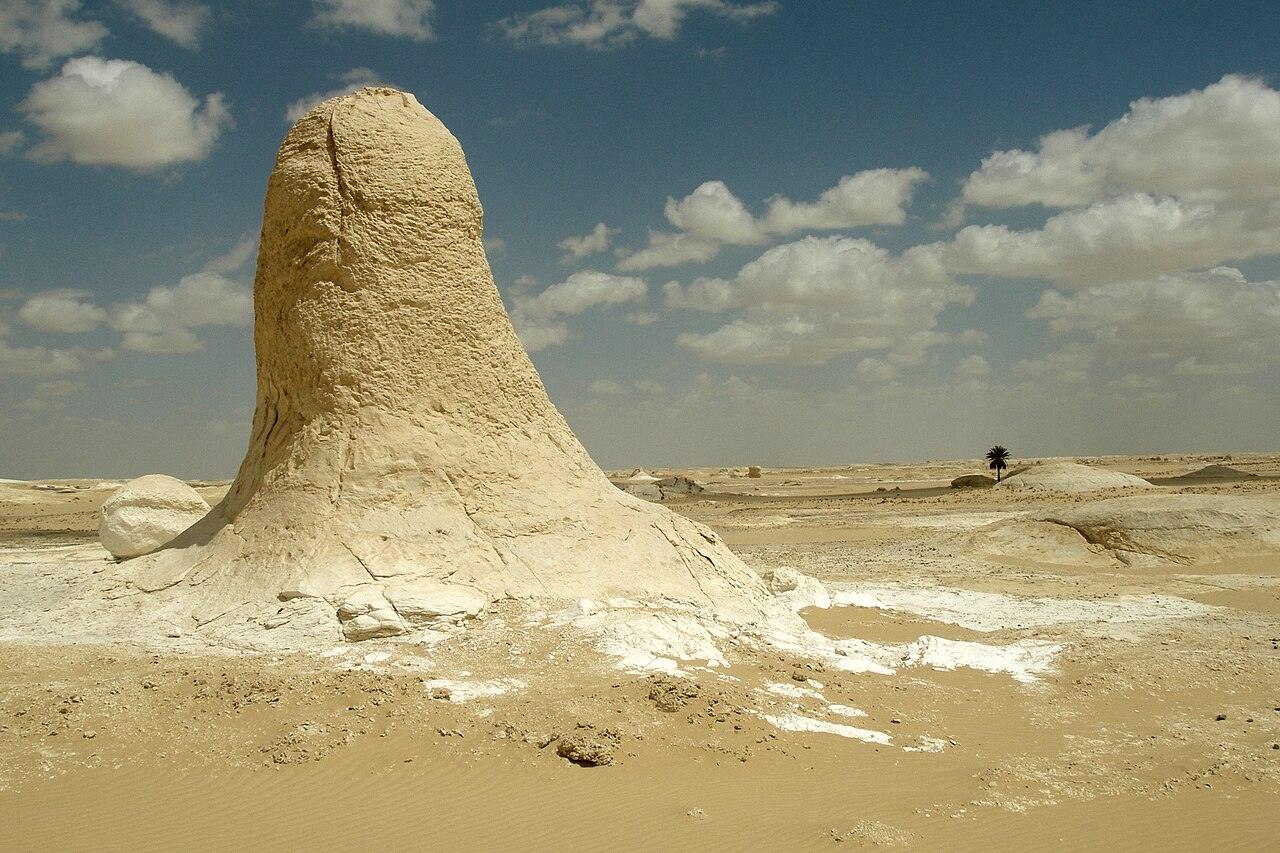
The pyramids, the Nile from Aswan to Luxor, a night in the White Desert and a finale on the Red Sea reef.
 6 daysEasy
Cairo and Alexandria
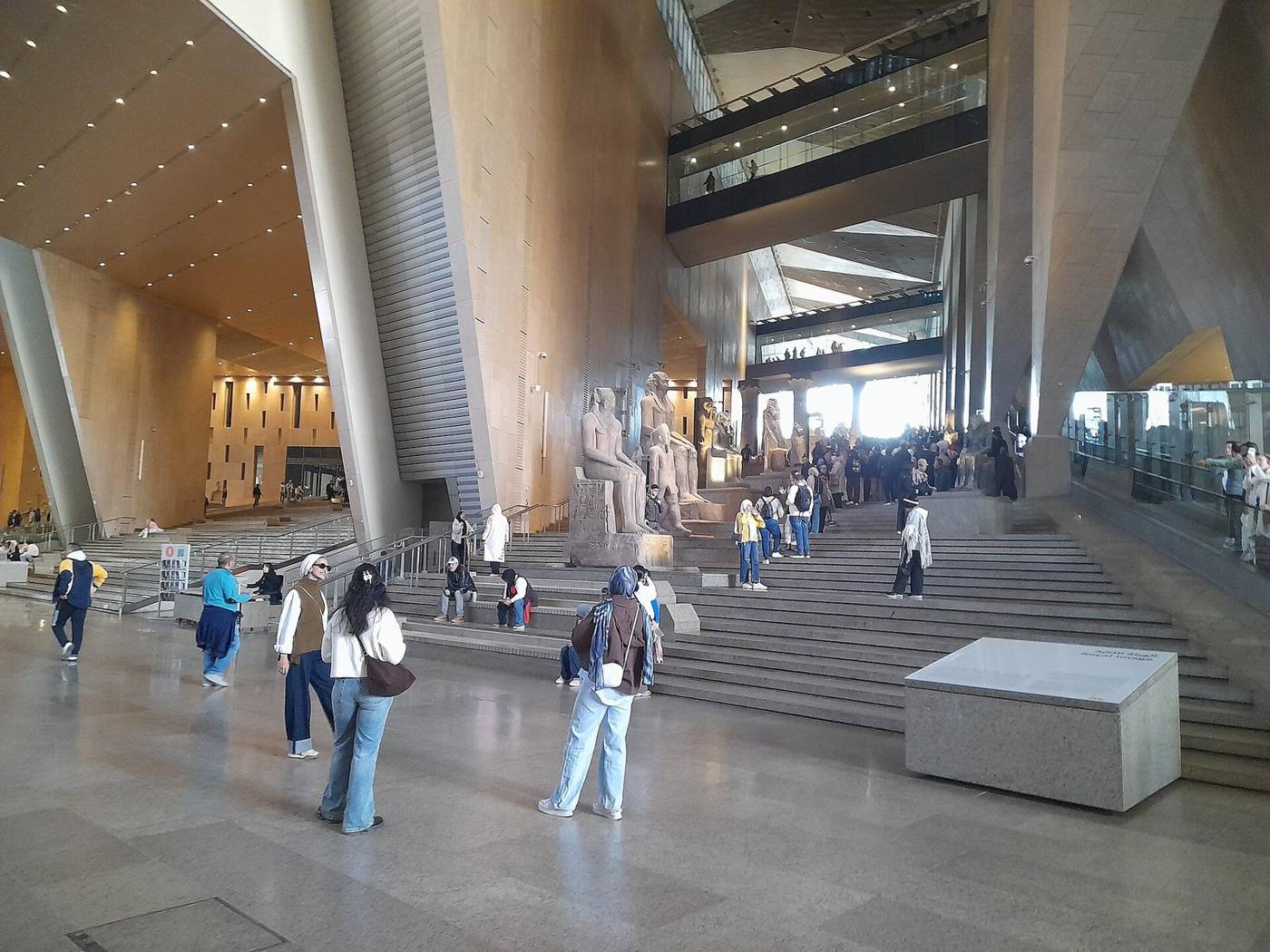
A long weekend among the pyramids, the new Grand Egyptian Museum, Islamic Cairo and Alexander's city on the Mediterranean.