Luxor, Aswan and Abu Simbel with a Nile cruise
Southern Egypt at a gentle pace: three days in Luxor, four nights sailing to Aswan and the flight to Abu Simbel.
- Luxor
- Esna
- Edfu
- Kom Ombo
- Aswan
- Abu Simbel
Day by day
- Day 1
Arrival in Luxor
This trip takes you to Upper Egypt, along the Nile, home to the largest temples and tombs of ancient Egypt: Luxor, ancient Thebes, with Karnak and the Valley of the Kings, then a river cruise with the temples of Esna, Edfu and Kom Ombo, Aswan with Philae and the Nubian villages, and finally Abu Simbel, the temples of Ramesses II saved from the waters of Lake Nasser.
Before you leave: you need a passport valid for at least six months. The visa on arrival costs 30 dollars. The United States government rates Egypt at level 2 of 4. Check the latest advice for Luxor, Aswan and Abu Simbel before you leave.
You fly into Luxor, usually via Cairo. The airport is about half an hour from the centre.
In the late afternoon walk along the Corniche, Luxor's riverside, and watch the sunset over the Nile, with sailing feluccas and, on the far bank, the hills that hide the tombs of the pharaohs.
In the evening visit Luxor Temple lit up, right on the riverside, built mainly by Amenhotep III and Ramesses II, with seated colossi, an obelisk and long rows of columns. In front of the entrance begins the Avenue of Sphinxes, which linked it to Karnak, about three kilometres away.
Sleep in Luxor.
Practical tip: the best time is October to April. From May to September Luxor and Aswan are extremely hot, often over forty degrees.
- Day 2
Karnak and the Luxor Museum
Early in the morning visit the Karnak temple complex, the largest religious complex of the ancient world, built and enlarged over more than two thousand years by the pharaohs in honour of the god Amun. You enter between two rows of ram headed sphinxes and pass through huge gateways, the pylons, and great courtyards.
The heart of Karnak is the Great Hypostyle Hall: one hundred and thirty four stone columns up to more than twenty metres high, covered in hieroglyphs and coloured scenes, where you feel tiny. Then you see the obelisks of Queen Hatshepsut, the sacred lake and the stone scarab which, according to local tradition, you walk around for luck. Arrive at opening time, when the light is soft and the groups have not yet arrived.
In the afternoon rest during the hottest hours.
Towards evening visit the Luxor Museum, on the riverside, small but very beautiful, with statues and objects found at Thebes, including two royal mummies and a group of statues discovered hidden beneath the floor of Luxor Temple. Check opening hours and prices.
In the evening have Egyptian food: ful, stewed fava beans, taamiya, bean fritters, kofta, stuffed vegetables and freshly baked bread.
Sleep in Luxor.
Practical tip: carry cash in Egyptian pounds for tips. In Egypt they are often given, even to temple guards.
- Day 3
The West Bank: the Valley of the Kings, Nefertari and Medinet Habu
Today you cross the Nile to the West Bank, the bank of the dead, where the ancient Egyptians buried pharaohs and nobles in the desert behind the hills. Leave at dawn: after ten it is already very hot.
The first stop is the Valley of the Kings, an arid valley where the tombs of the New Kingdom pharaohs were dug for about five hundred years, with deep corridors decorated with coloured paintings describing the king's journey into the afterlife. The ticket includes entry to three tombs, chosen from those open that day; some, such as Tutankhamun's and Seti I's, cost extra. Check which are open and the current prices.
Then, if it is open, visit the tomb of Nefertari, the favourite wife of Ramesses II, in the Valley of the Queens: its paintings are among the finest and best preserved in Egypt. Entry is limited and the ticket is expensive: check beforehand whether it is open and how much it costs.
In the late morning visit Medinet Habu, the mortuary temple of Ramesses III, one of the least crowded, with deep reliefs of battles and ceremonies still showing their colours.
On the way back stop at the Colossi of Memnon, two huge seated statues of Amenhotep III in the middle of the fields.
Sleep in Luxor.
Practical tip: flash is not allowed in the tombs and often cameras are not allowed at all without a special ticket. Ask at the entrance.
- Day 4
Boarding and the Esna lock
Today you board the cruise boat, which will sail up the Nile from Luxor to Aswan in three or four days. Boats range from simple to very comfortable, with cabins with river view windows, a restaurant and a sun deck with loungers. There are also dahabiyas, smaller sailing boats with few cabins, slower and quieter. Check what is included in the price: meals, visits, guide and tickets.
The boat leaves Luxor heading south. From the deck watch life along the river, little changed for centuries: green fields of sugar cane and clover, palms, buffalo drinking, villages of brick houses, children waving, herons, and the yellow desert starting just beyond the green strip.
In the afternoon the boat reaches Esna, where it passes through a lock to overcome the difference in river level. It is a curious moment: boats wait in line and sellers approach in small boats to throw fabrics and tablecloths on board, bargaining loudly.
If the boat stops at Esna, visit the temple of Khnum, the ram headed god, below the level of the modern town: a recent restoration has revealed the original colours of the ceiling.
Sleep on board.
Practical tip: bring a light jacket. On deck, in the evening and early morning, the river breeze is cool.
- Day 5
Edfu, Egypt's best preserved temple
Early in the morning the boat reaches Edfu. You go ashore and travel to the temple by horse carriage or minibus.
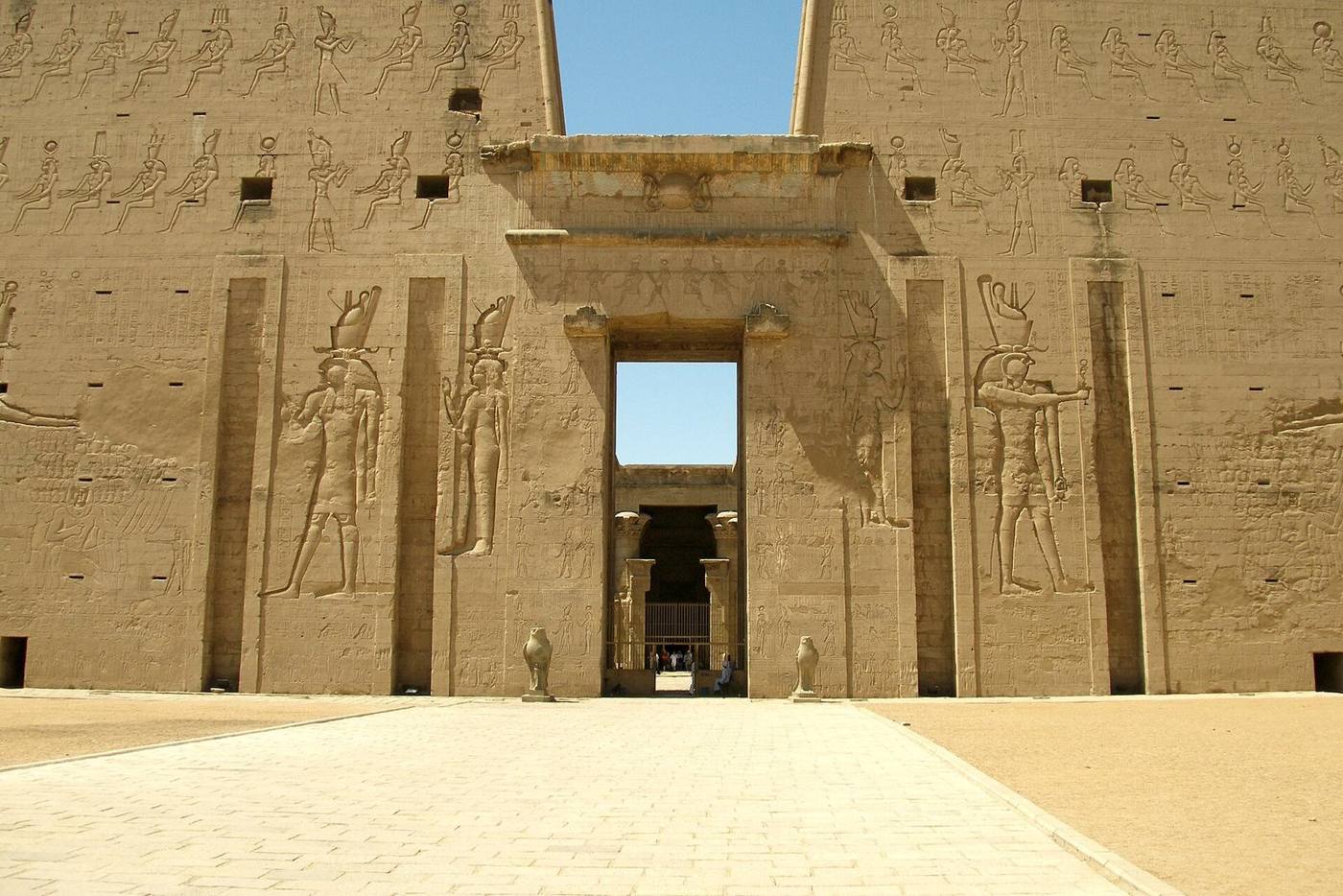
The temple of Horus at Edfu is the best preserved temple in all Egypt. It was built in the Ptolemaic period, between the third and first centuries BC, by the Greek kings who ruled Egypt after Alexander the Great, but following the rules of Egyptian architecture. For centuries it was covered by sand and debris, which is why it is almost intact, with its roof, dark chambers, sanctuary and tall entrance pylon carved with reliefs of the king smiting his enemies.
At the entrance stand two statues of Horus as a falcon, wearing the double crown. On the walls you can read, carved in stone, the legend of the battle between Horus and the god Seth, and descriptions of the temple's festivals and ceremonies. You can go into the innermost sanctuary, where the god's statue stood.
Return to the boat before the heat. In the afternoon the boat continues south. Relax on deck and watch the villages and the desert drawing close to the river, with the golden sandstone hills of Gebel el Silsila, where the ancient Egyptians quarried stone for their temples.
In the evening there is often a night of Nubian or Egyptian music and dance on board.
Sleep on board.
Practical tip: carriage drivers sometimes ask for more than agreed. Settle the price first and bargain calmly.
- Day 6
Kom Ombo and the crocodile museum
Today the boat stops at Kom Ombo, a temple built on a small hill right on the Nile bank, at a bend in the river. You visit it in the late afternoon or at sunset, when the golden light colours the columns.
The temple of Kom Ombo is unique because it is double: perfectly symmetrical, with two entrances, two halls and two sanctuaries, one dedicated to Sobek, the crocodile headed god, and the other to Haroeris, a falcon headed form of Horus. The walls carry very fine reliefs, including one many interpret as a set of medical and surgical instruments, and a calendar of offerings.
Next to the temple is the crocodile museum, with dozens of mummified crocodiles found in nearby cemeteries. In ancient times crocodiles were kept at the temple and, when they died, mummified as sacred animals. There are also crocodile eggs and small coffins.
In the morning, before reaching Kom Ombo, rest on board or read on deck. The stretch between Edfu and Kom Ombo is one of the most beautiful, with the desert reaching right down to the water.
After the visit the boat continues to Aswan, arriving in the evening or during the night.
Sleep on board.
Practical tip: at sunset mosquitoes come close to the river. Use repellent.
- Day 7
Aswan: Philae and Elephantine Island
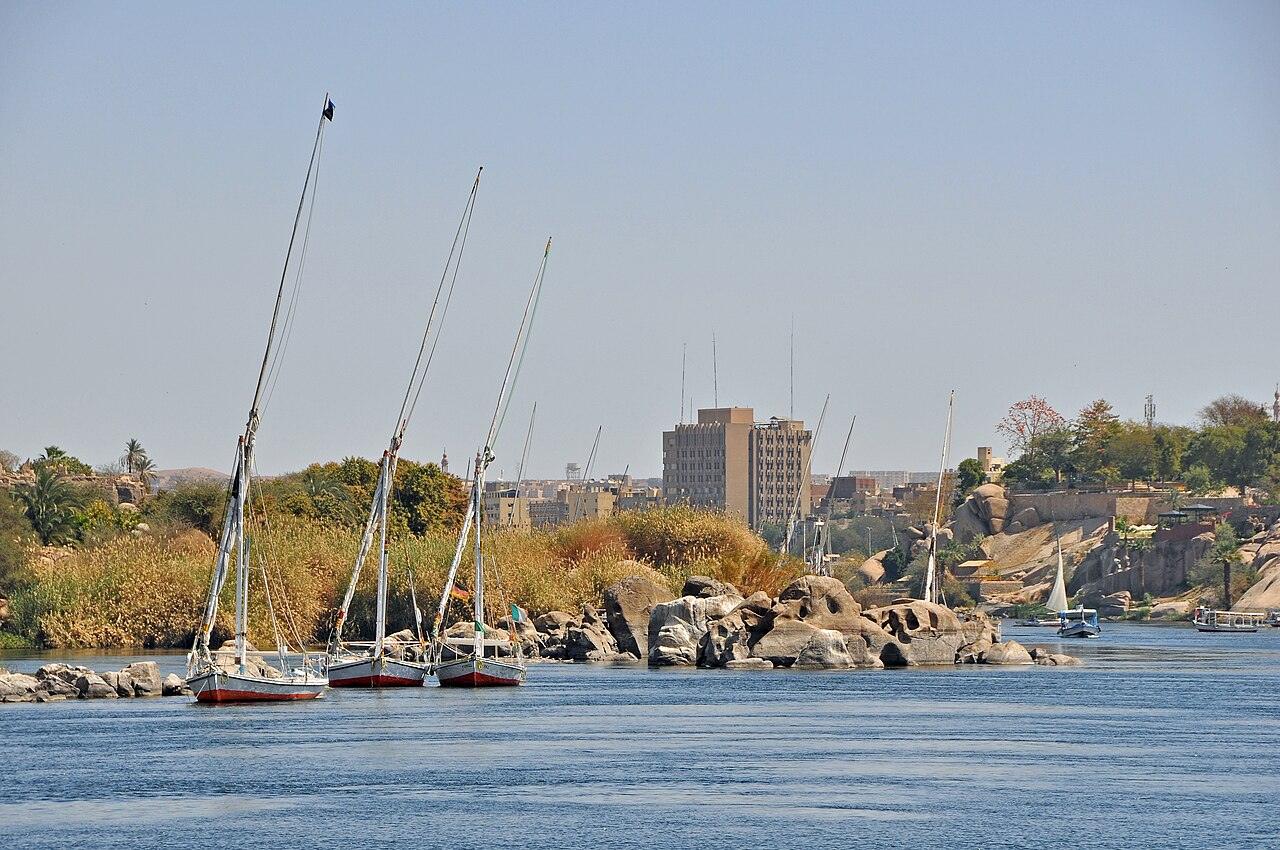
Today you are in Aswan, Egypt's southernmost city, where the Nile is wide and full of dark granite islands, with white feluccas and golden dunes sloping down to the water on the west bank. This is where Nubia begins.
In the morning go to the temple of Philae, dedicated to the goddess Isis, on an island reached only by boat. When the first Aswan dam was built at the start of the twentieth century, the temple spent much of the year under water; with the High Dam of the 1960s it risked disappearing for ever. In the 1970s UNESCO and Egypt dismantled it stone by stone and rebuilt it on a nearby, higher island. It is one of the most elegant temples in Egypt, with colonnades, reliefs and a lovely kiosk by the water.
Then pass the High Dam, which created Lake Nasser and changed life along the Nile, and the Unfinished Obelisk, left in the granite quarry because it cracked during the work.
In the afternoon take a boat to Elephantine Island, in the middle of the river, with Nubian villages of colourful houses, palms, gardens and the ruins of the ancient town of Abu, with the Nilometer, the stone staircase used to measure the Nile floods and calculate taxes.
Sleep in Aswan, on board or in a hotel.
Practical tip: at Aswan market, bargain for spices and fabrics calmly and with a smile.
- Day 8
Abu Simbel by air or at dawn by road
Today you visit Abu Simbel, about two hundred and eighty kilometres south of Aswan, almost at the border with Sudan, on the shore of Lake Nasser. There are two ways to get there: a short flight from Aswan, or the desert road, about three and a half hours, leaving before dawn, usually at the times and under the rules set by the police. Check the current times and rules.
Abu Simbel is two temples cut into the mountain by Ramesses II in the thirteenth century BC. The great temple has a façade with four colossal seated statues of the pharaoh, about twenty metres high. Inside, the hall has pillars with statues of the king and reliefs of the battle of Kadesh. The small temple is dedicated to Queen Nefertari and the goddess Hathor.
In the 1960s, to save them from the waters of Lake Nasser, the temples were cut into more than a thousand blocks and rebuilt higher up, under an artificial mountain. It was one of the largest archaeological rescue operations in history.
Twice a year the morning sun reaches the sanctuary and lights up the statues of the gods: this is the sun festival, which draws huge crowds. Check the dates.
In the afternoon return to Aswan.
Sleep in Aswan.
Practical tip: bring water, a hat and sunscreen. There is no shade at Abu Simbel.
- Day 9
Kitchener's Island by felucca and a Nubian village
Today is a quiet day in Aswan, on the Nile by boat.
In the morning board a felucca, the traditional Nile sailing boat, and sail slowly among the granite islands. It is the best way to see Aswan, in silence, with the wind and the sound of the water. Agree the price and duration before boarding.
Stop at Kitchener's Island, named after the British general who was given it at the end of the nineteenth century and planted it with trees and plants from all over the world. Today it is a shady botanical garden full of palms, tropical trees, flowers and birds.
From the felucca you see, on the hill of the west bank, the mausoleum of the Aga Khan, and the tombs of the nobles cut into the rock, lit up at night.
In the afternoon continue by boat to a Nubian village to the south, such as Gharb Soheil, with houses painted blue, yellow and pink and decorated with designs. Nubians have their own language, music and cuisine. Many families open their homes to visitors for tea and show small crocodiles kept in tanks: choose homes that do not keep them.
At sunset return to Aswan by boat.
Sleep in Aswan.
Practical tip: in Nubian villages always ask before photographing people, especially women.
- Day 10
Departure
On the last day you leave Aswan, usually on a domestic flight to Cairo followed by a flight to Europe. Alternatively you can return to Luxor by train or car, about three and a half hours, and leave from there.
If your flight leaves in the afternoon, you still have a few hours. You can visit the Nubian Museum, one of the finest museums in Egypt, which tells the history and culture of Nubia, from ancient times to the villages flooded by Lake Nasser, with a garden recreating a Nubian house. Or stroll through Aswan souk, the market along the street parallel to the river, with spices, dried hibiscus for karkade, baskets, fabrics and shawls.
Aswan airport is about half an hour from the centre. Arrive early: there are many checks.
Before leaving buy something to take home: spices, karkade, dates, a small painted papyrus or an alabaster figurine. As for antiques, remember that exporting genuine artefacts is forbidden.
This trip shows the heart of ancient Egypt: immense temples, painted tombs, the slow rhythm of the Nile and the Nubian culture of the south, in a landscape where the green of the river meets the yellow of the desert.
Practical tip: keep your passport and visa receipt to hand until boarding.
Egypt at its most comfortable, suitable for everyone, even travelling with elderly parents. If you can, choose a dahabeya (a sailing boat with 10-20 cabins) over the big ships: it costs more but moors where the ships can't. A direct flight to Luxor saves a day.
Before you go
- Documents and visa
- Passport valid for at least six months and a tourist visa, obtained online on the official portal or on arrival at the airport, where since 1 March 2026 it costs 30 dollars in cash.
- Health and vaccines
- No compulsory vaccines for travellers from Europe. Drink only bottled water and take out travel health insurance. Emergencies: 122 police, 123 ambulance.
- Money and payments
- Egyptian pound. Cards work in hotels and larger shops, but for tips, taxis and markets you need cash in small notes.
- Power sockets
- Types C and F, 220 volts.
- Time zone
- UTC+2 in winter; Egypt uses daylight saving time in summer.
- Safety
- Tourist areas along the Nile and the Red Sea are busy and well policed. Governments advise against North Sinai, the Libyan border strip and much of the Western Desert off the main roads. Official advice: GOV.UK.
Information checked in November 2026 for Italian and EU citizens. Rules change: always check before you travel.
Variations
In 7 days: Luxor, the cruise to Aswan and Abu Simbel by air, without the no-cost days.
In 13 days: add three days in Cairo with the Giza pyramids and the Grand Egyptian Museum.
Frequently asked questions
Do I need a visa?
Yes. The visa on arrival costs 30 dollars and you need a passport valid for at least six months. Check the current requirements.
Is it safe?
The United States rates Egypt at level 2 of 4. Check the latest advice before you leave.
When is the best time to go?
October to April. From May to September Upper Egypt is extremely hot. The Abu Simbel sun festival takes place twice a year: check the dates.
Indicative itinerary written by World Atlas. Before booking, check timetables, seasonal openings, documents and safety.
 7 daysEasy
Cairo and a Nile cruise
The pyramids of Giza and the Grand Egyptian Museum, then four days sailing between Luxor and Aswan.
 15 daysModerate
Complete Egypt: the Nile, the desert and the Red Sea
The pyramids, the Nile from Aswan to Luxor, a night in the White Desert and a finale on the Red Sea reef.
 6 daysEasy
Cairo and Alexandria
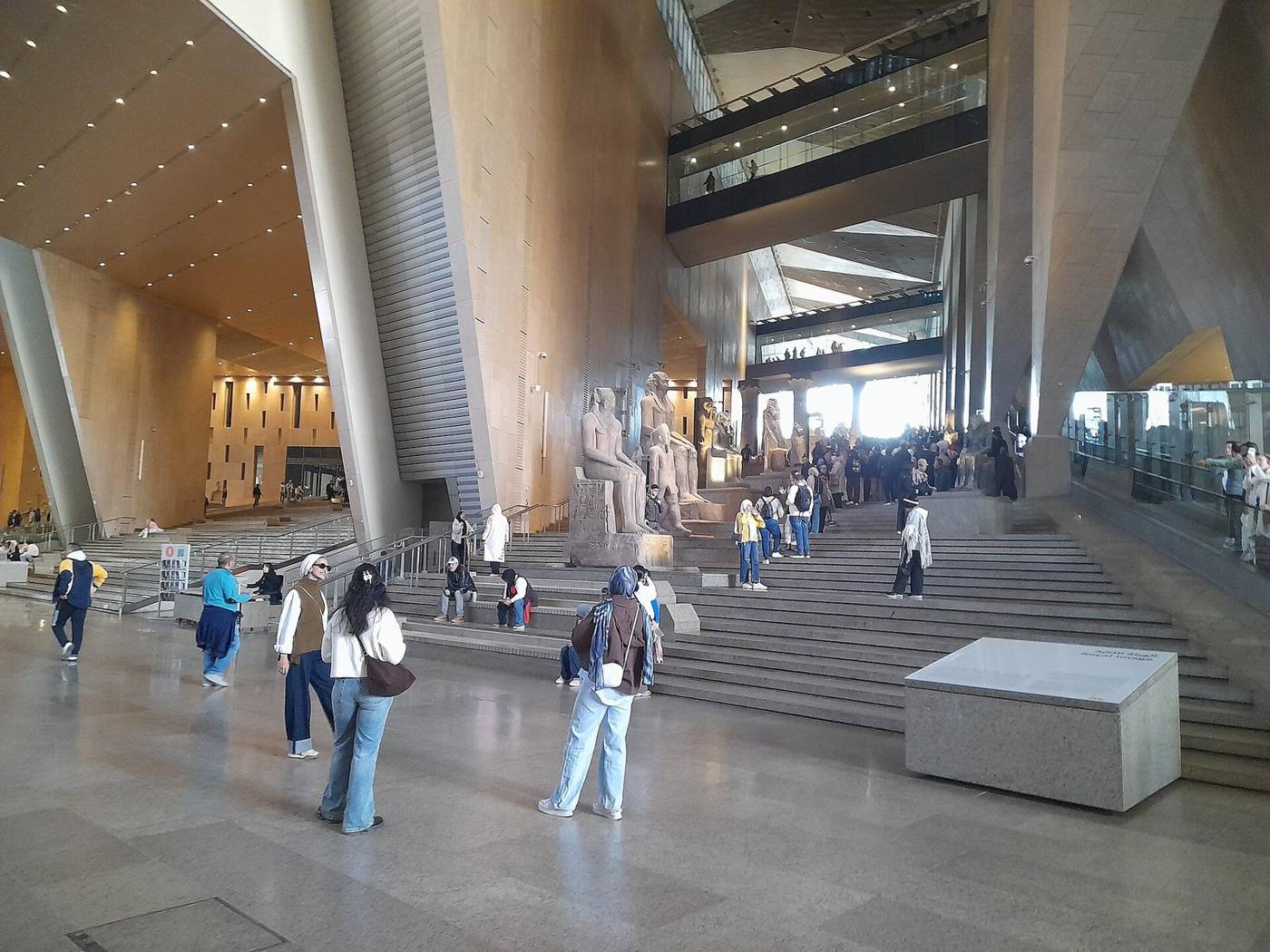
A long weekend among the pyramids, the new Grand Egyptian Museum, Islamic Cairo and Alexander's city on the Mediterranean.