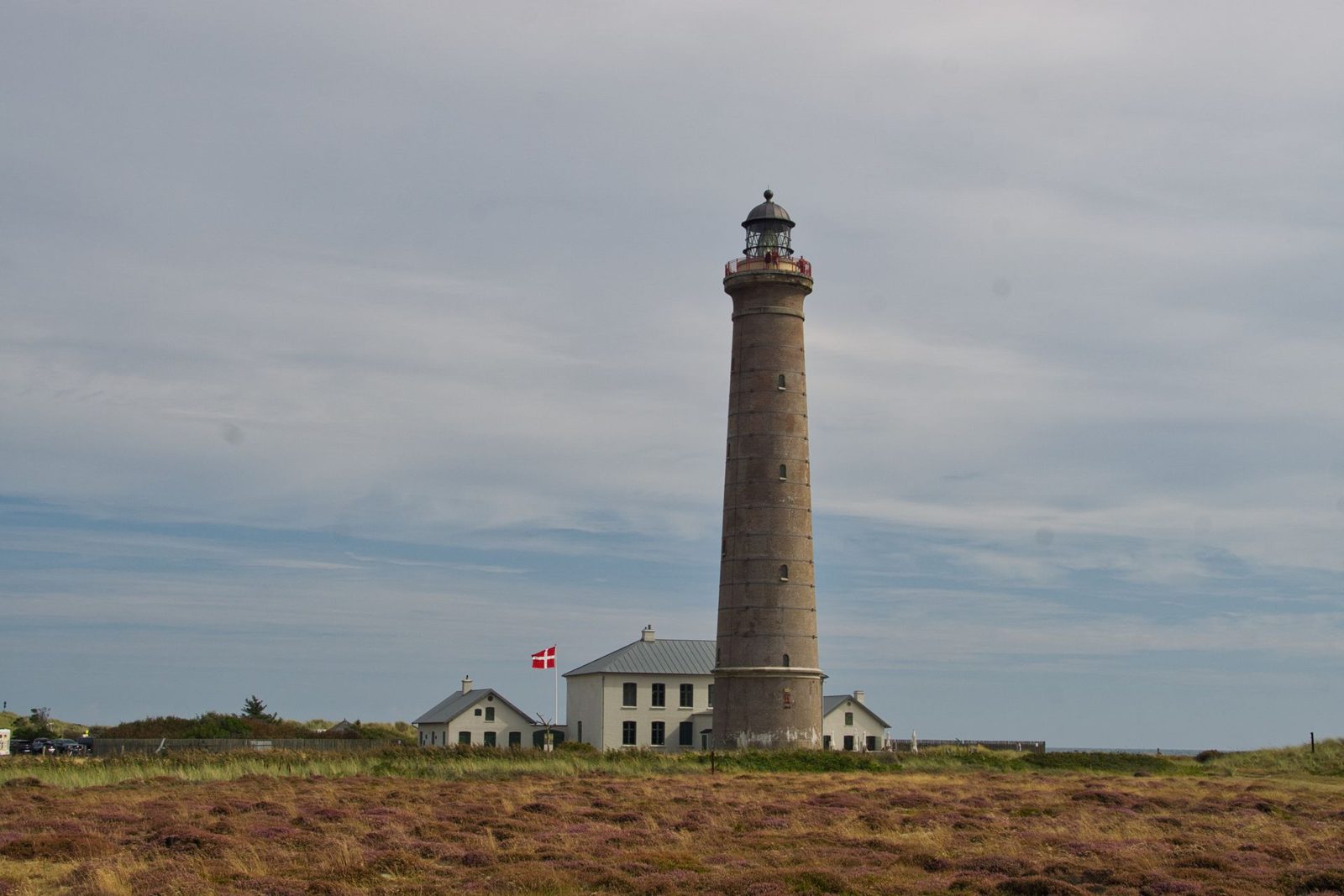
Jutland and Skagen
Aarhus and the ARoS museum, Legoland and LEGO House in Billund, the Jelling rune stones, Ribe and the tip of Grenen where two seas meet.
- Aarhus
- Jelling
- Billund
- Ribe
- Wadden Sea
- Råbjerg Mile
- Skagen
Day by day
- Day 1
Aarhus: the ARoS rainbow
This trip takes you to Jutland, the Danish peninsula: Aarhus with the ARoS museum and the Den Gamle By open-air museum, the runestones of Jelling, Billund with LEGO House and Legoland, Ribe and the Wadden Sea, the west coast, the moving dune of Råbjerg Mile and Skagen with the point of Grenen. You need a car.
Before you go: Italian citizens can enter Denmark with an electronic identity card or a passport. Denmark is in the EU and the Schengen area; until 17 May 2027 it is running checks on its border with Germany, so keep your document with you. Other nationalities should check their own rules. The currency is the Danish krone, and cards are used almost everywhere. The country is very safe; on North Sea beaches swim only where there are flags and lifeguards.
You reach Aarhus, Denmark's second city, by train from Copenhagen in about three hours, or by plane. Drop your bags and walk to ARoS, the city's art museum. On the roof is its most famous work: Your rainbow panorama by the artist Olafur Eliasson, a circular glass walkway in all the colours of the rainbow. As you walk through it you see the city change colour, from red to violet. In the galleries below there is nineteenth century Danish art and contemporary works, including a gigantic sculpture of a crouching boy. Check prices and times.
In the evening stroll along the river in the centre, the Aarhus Å, where cafés put their tables by the water, and through the Latin Quarter, with narrow streets and coloured houses.
Practical tip: go up to the ARoS rainbow at sunset, when the low light makes the colours more intense; in the middle of the day on holidays the queues are longer.
- Day 2
Den Gamle By and the new harbour of Aarhus
You spend the second day on the history and the new architecture of Aarhus.
In the morning go to Den Gamle By, the «old town», one of the first open-air museums in the world devoted to town life. Houses, shops and courtyards were taken apart all over Denmark and rebuilt here, stone by stone. You walk among half-timbered houses, a windmill, a pharmacy, a bakery and cobbled streets. There are also districts from more recent periods, with twentieth century flats and shops, showing how Danish families lived in different decades. In summer and at Christmas people in costume work in the shops. Check prices and times.
In the afternoon walk or cycle to Aarhus Ø, the district built on the old industrial harbour. Look at the white, pointed buildings of the Iceberg, with blue balconies, and the large public library of Dokk1 on the water, where you can go in and climb up to look at the harbour. In summer there is also a harbour bath, where Danes jump in even when the water is cool.
In the evening try smørrebrød, rye bread with herring, egg, prawns or meat, or fresh fish from the coast.
Practical tip: the centre of Aarhus and the new harbour are close together; for these two days you do not need a car, so get around on foot, by bike or by light rail.
- Day 3
The Jelling runestones and Billund with LEGO House
Today you pick up the car and drive south-west for about an hour to Jelling.
Jelling is considered the cradle of the Danish kingdom, and its monument complex is a UNESCO World Heritage Site. Next to a white church there are two great earth mounds and two tenth century runestones. The smaller one was carved for King Gorm the Old in memory of his wife Thyra. The larger one, raised by his son Harald Bluetooth, records that Harald united Denmark and Norway and made the Danes Christian: that is why it is called Denmark's «baptism certificate». The stone bears one of the oldest images of Christ in the North. The visitor centre tells the story with interactive exhibits. Check prices and times.
In the afternoon drive about half an hour to Billund, the town where the LEGO brick was born. Visit LEGO House, a building made of stacked white blocks, with rooms in different colours where adults and children build, program small robots and look at huge models. The terraced roof is open to the public. If you are travelling with children, Legoland, the theme park opened in 1968, is very close and needs a whole day. Check prices and times.
Practical tip: LEGO House works with timed entry; book online, especially during the Danish school holidays.
- Day 4
Ribe, the oldest town in Denmark, and the Wadden Sea
On the fourth day you drive about an hour south-west to Ribe, near the Wadden Sea coast.
Ribe is the oldest town in Denmark: it began in the early eighth century as a market on the river, in the Viking age. Walk among the crooked half-timbered houses, the cobbled lanes and the hidden gardens. Go into the cathedral, the oldest in the country, and climb the tower to see the red roofs and the marshes towards the sea. Check prices and times. If you are interested in the Vikings, the town museum displays finds from the excavations, and outside town there is a reconstructed Viking village.
In the afternoon head out to the coast. The Wadden Sea is a national park and a UNESCO World Heritage Site: a shallow sea where every day the tide uncovers miles of mud and sand flats. Millions of migrating birds stop here, and in spring and autumn huge flocks of starlings form the «black sun» in the sky at sunset. To walk on the seabed you need a guide and the tide times, because the water comes back quickly.
In the evening return to Ribe and follow the night watchman, who in summer walks around the town singing the old songs.
Practical tip: never walk alone on the Wadden Sea flats; the tide and fog can arrive within minutes.
- Day 5
Up the west coast to the north
Today is a day on the road: you drive up the west coast of Jutland to the north, among dunes, fjords and lighthouses.
Set off early and stop in Esbjerg to see «Man Meets the Sea», four white statues nine metres high, seated on the beach looking out at the North Sea. Then continue to Hvide Sande, a small harbour on a narrow strip of sand between the sea and the great Ringkøbing Fjord. Walk along the pier, watch the fishing boats and the surfers on the fjord, and climb the dunes to see the two waters on either side of the road.
Further north, stop at the cliff of Bovbjerg, with its red lighthouse above the sea, one of the few high points on this flat coast. The path along the edge gives a long view over the beaches.
In the afternoon cross the Limfjord, the great arm of sea that cuts across Jutland, and carry on north to the area of Løkken or Hirtshals, where you spend the night. On the way you pass fields, pine plantations and white villages.
In the evening take a walk on the wide beach at Løkken, with the bathers' white huts lined up on the dunes.
Practical tip: the full drive is long, about five hours without stops; choose two or three stops and do not try to see them all.
- Day 6
The Råbjerg Mile dune and Skagen with the point of Grenen
On the sixth day you reach the northern tip of Denmark.
In the morning go to Råbjerg Mile, the largest moving dune in Northern Europe. It is a mountain of pale sand, tens of metres high, which the wind shifts many metres east every year, burying whatever it finds. Climb to the crest barefoot and look at the landscape of sand, heath and sea. It looks like a small desert among the pines.
Then drive a few kilometres to Skagen, a town of yellow houses with red roofs. At the end of the nineteenth century many painters came to live here, drawn by the special light of the coast. Visit the Skagens Museum, with their paintings of fishermen, beaches and summer evenings. Check prices and times.
In the afternoon go to Grenen, the thin point of sand where two seas meet, the Skagerrak and the Kattegat. The waves of the two seas collide in front of you in a line of foam. You can walk to the tip in half an hour or take the tractor-drawn trailer that carries visitors over the sand. Put one foot in each sea, but do not swim: it is forbidden here because of the very strong currents.
In the evening eat fresh prawns at Skagen harbour.
Practical tip: arrive at Grenen in the late afternoon; the light is better and the morning groups have already left.
- Day 7
Back to Aarhus or departure from Aalborg
On the last day choose your way home. Aalborg airport is about an hour from Skagen; Aarhus is about two and a half hours away.
If you have time before leaving, in the morning visit the sand-buried church near Skagen: only the white tower of the medieval church remains among the dunes, because in the eighteenth century the sand covered the building. Or, if you are returning to Aalborg, stop on the waterfront and at the Viking burial ground of Lindholm Høje, with hundreds of stones in the shape of ships.
Trip summary: in seven days you have seen Aarhus with the ARoS rainbow, Den Gamle By and the new harbour, the runestones of Jelling, LEGO House in Billund, Ribe and the Wadden Sea, the west coast with Hvide Sande and Bovbjerg, the Råbjerg Mile dune, Skagen with its painters and the point of Grenen. This is a Denmark different from Copenhagen, with huge beaches and northern light, and good for families too.
When to go: from June to August, with long days and all the museums open; the North Sea stays cold even in August. In May and September there are fewer people, but some attractions shorten their hours. For the starlings' «black sun» on the Wadden Sea go in spring or autumn.
Practical tip: return the car where you picked it up to avoid drop-off charges; if you change the plan, check the rental conditions first.
A different Denmark from Copenhagen, with huge beaches and northern light. Good for families with children thanks to LEGO and Legoland. Distances are short but a car is needed; the North Sea stays cold even in August.
Before you go
- Documents and visa
- EU citizens need a valid identity card or passport: Denmark is in the EU and the Schengen area. Until 17 May 2027 Denmark is running checks on its border with Germany: always carry your document. Greenland and the Faroe Islands have their own rules. Other nationalities should check the Schengen rules.
- Health and vaccines
- No vaccines required. EU citizens should bring their EHIC; insurance with medical cover and repatriation is advised. In summer watch out for currents on North Sea beaches. Emergencies: 112.
- Money and payments
- Danish krone. Cards are accepted almost everywhere, even for small purchases; cash is rarely used. The euro is not the official currency.
- Power sockets
- Types C, F and K, 230 volts: you need an adapter for British plugs.
- Time zone
- Central European Time (UTC+1, summer UTC+2).
- Safety
- A very safe country with low crime. Watch out for pickpockets at stations and in crowded places in Copenhagen. On a bicycle use the cycle lanes and follow the signals, as bike traffic is heavy. On the Wadden Sea coast the tide comes in fast: walk on the seabed only with a guide. Official advice: GOV.UK.
Information checked in November 2026 for Italian and EU citizens. Rules change: always check before you travel.
Variations
In 4 days: Aarhus, Jelling and Billund, then Ribe, returning to Aarhus.
In 9 days: add two days in Thy National Park and Klitmøller, between Bovbjerg and Skagen.
Frequently asked questions
Is this trip suitable for children?
Yes. LEGO House and Legoland in Billund, Den Gamle By in Aarhus and the beaches of the coast are perfect for families. The drives are short, except for the day on the west coast.
Can you swim at Grenen?
No, swimming at Grenen is forbidden because of the very strong currents where the two seas meet. You can only walk on the sand and paddle.
What is the «black sun»?
It is the sight of huge flocks of starlings that at sunset, in spring and autumn, move together in the sky over the Wadden Sea, forming dark shapes.
Indicative itinerary written by World Atlas. Before booking, check timetables, seasonal openings, documents and safety.
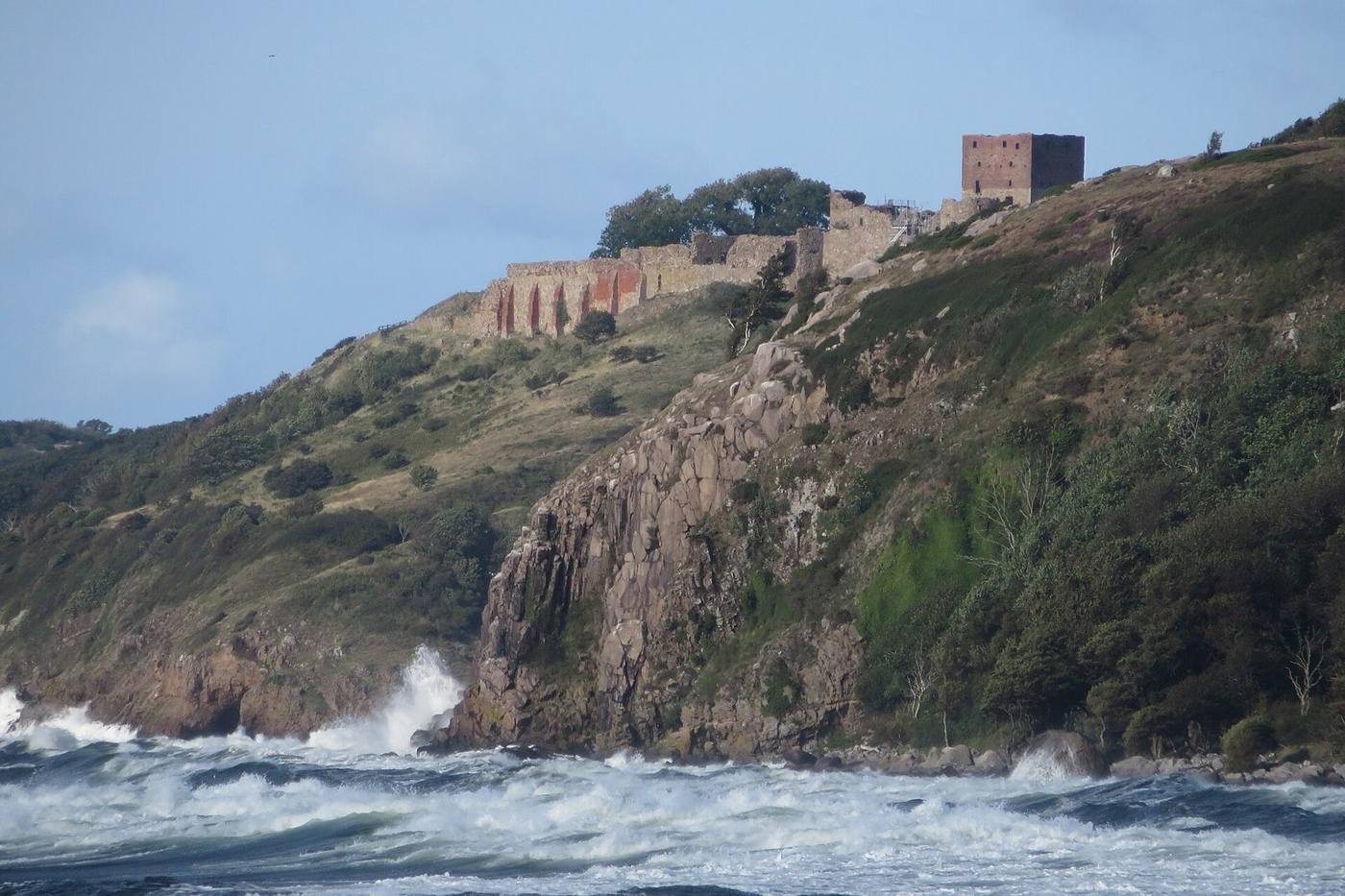 6 daysEasy
Bornholm and the southern islands
The cliffs of Møn, Bornholm's round churches and smoked herring, the ruins of Hammershus and the white beach of Dueodde.
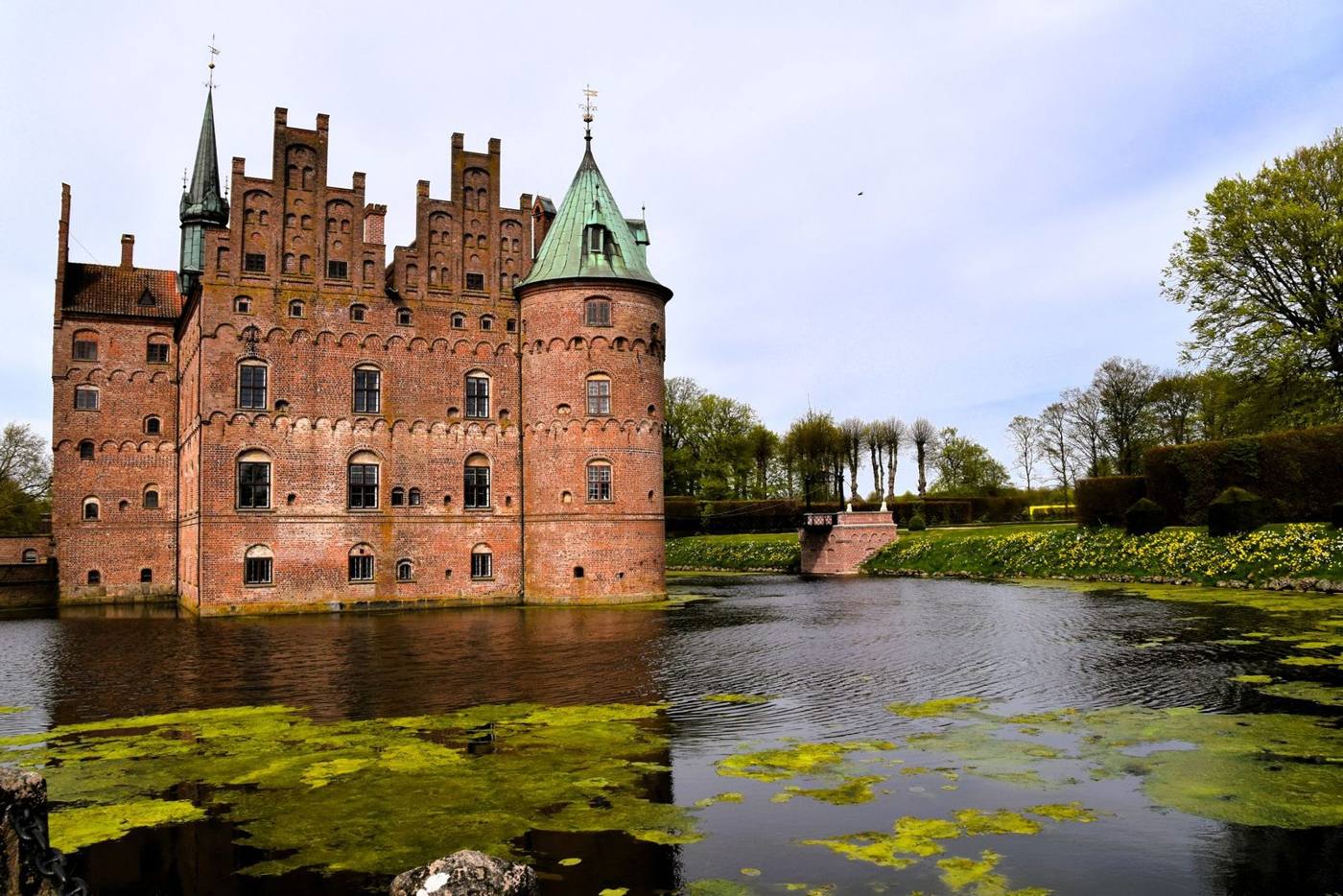 4 daysEasy
Odense and Funen
Hans Christian Andersen's city and his museum, the moated castle of Egeskov, the little town of Faaborg and the hills of south Funen.
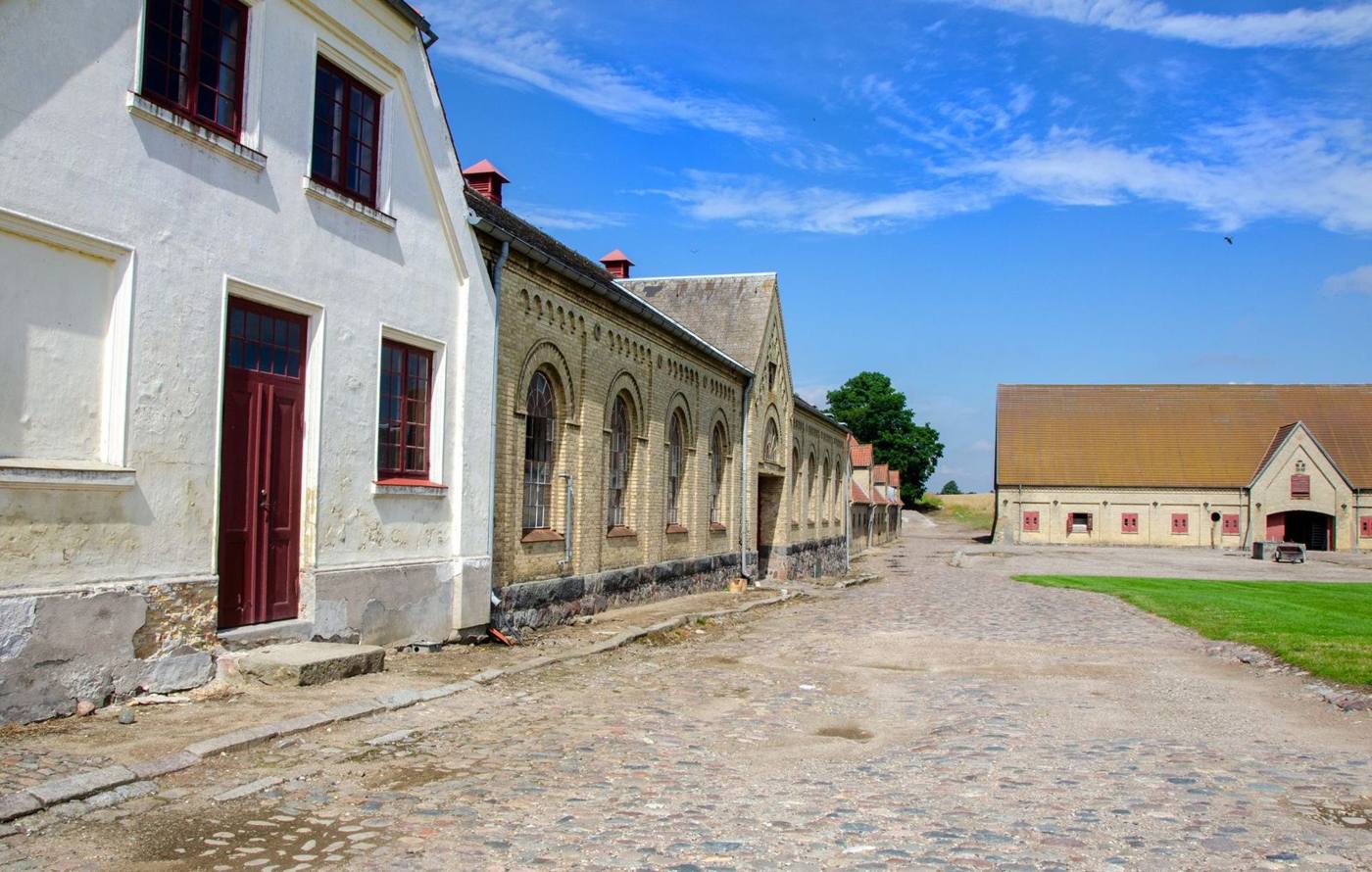 5 daysEasy
Ærø and the archipelago by bike
The south Funen islands by bike: Ærøskøbing with its colourful 18th-century houses, the beach huts of Eriksminde, Tåsinge and Langeland.