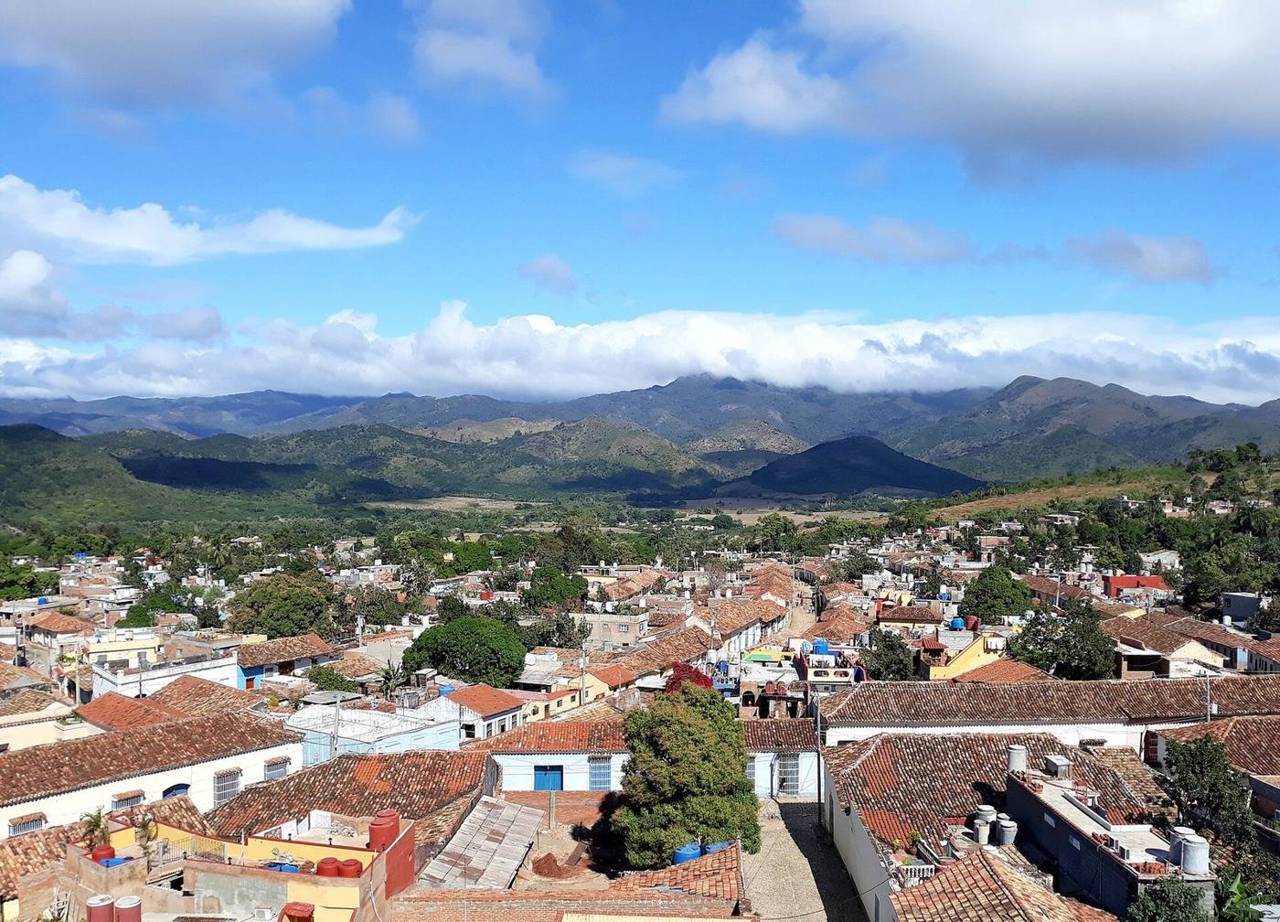
Trinidad and Topes de Collantes
The island's most intact colonial town and its mountains: Trinidad with its Plaza Mayor and cobbled streets, the Valle de los Ingenios of the sugar mills and the Manaca Iznaga tower, then the Escambray hills at Topes de Collantes with the El Nicho and Caburní waterfalls and trails among coffee farms.
- Havana
- Trinidad
- Valle de los Ingenios
- Topes de Collantes
Day by day
- Day 1
From Havana to Trinidad
This trip combines the most intact colonial town in Cuba with its mountains: Trinidad, with the Plaza Mayor and its cobbled streets, the Valle de los Ingenios with its old sugar mills, and the Escambray range at Topes de Collantes, with waterfalls and coffee plantations.
Before you go: Italian citizens enter Cuba with a passport valid for at least six months after the date of arrival; the electronic identity card is not enough. You need the tourist card, the tourist visa, now issued in electronic form, then the online D'Viajeros form to fill in within 72 hours before arrival, a return ticket and health insurance covering medical costs in Cuba, which is compulsory on entry. The rules change often: check them on the website of the Cuban embassy before you leave. Other nationalities should check their own rules. Some areas on this trip are close to borders or places where the situation changes often: check your government's travel advice before booking and again before you leave.
Power cuts and shortages of fuel and medicines are common on the island: bring a power bank, a torch, your own medicines and cash in euros, because foreign cards often do not work.
Leave Havana early in a car with a driver or on a confirmed transfer. It takes about four or five hours to the south east, through sugar cane fields and along the Caribbean coast. You reach Trinidad in the afternoon, when the light colours the façades.
Sleep in Trinidad, for four nights.
Practical tip: the streets of Trinidad are paved with large, uneven cobbles, so bring comfortable shoes and leave suitcases with small wheels at home.
- Day 2
Trinidad on foot
Trinidad is one of the first towns founded by the Spanish in Cuba, in the early sixteenth century, and it grew rich on sugar in the nineteenth century. Since 1988 the historic centre and the Valle de los Ingenios have been a UNESCO World Heritage Site.
Start early in the Plaza Mayor, with its palms, iron benches and terracotta urns, surrounded by colourful mansions. On the upper side is the church of the Holy Trinity. Around the square, visit the Museo Romántico, in a nineteenth century mansion with furniture and porcelain from the wealthy sugar families, and the history museum, in the Cantero mansion, with a tower from which you see all the red roofs and the sea. Check prices and times.
Then walk to the bell tower of the old convent of San Francisco, the symbol of the town. Take your time in the side streets: windows with wooden grilles, huge doors, grandparents sitting on the doorstep and horses clattering over the cobbles.
In the afternoon, try a canchánchara, a traditional drink of rum, honey and lime, served in small clay cups. In the evening the stairway beside the Plaza Mayor fills with live music and people dancing salsa.
Trinidad is very touristy: many people will stop you to offer rooms, cigars or taxis. Answer politely and make your own choices.
Practical tip: visit the museums in the morning, when it is cooler and brighter, because during power cuts some rooms stay dark in the afternoon.
- Day 3
The Valle de los Ingenios
Today you leave town to the east, into the Valle de los Ingenios, the valley of the sugar mills. In the nineteenth century there were dozens of sugar cane plantations and mills here, where thousands of enslaved people worked. Today the valley is green and quiet, with the ruins of the factories, the owners' houses and the hills around.
The first stop is the viewpoint on the hill at the start of the valley, where you see the fields, the palms and the Escambray mountains.
Then you reach Manaca Iznaga, the old estate of the Iznaga family. The tower, about 45 metres high, was used to watch over the work in the fields; you can climb the wooden steps to the top, if it is open. Next to it are the manor house and a large bell. Check prices and times.
In the village, women sell tablecloths and blouses embroidered by hand, a local tradition. Further on you can visit the ruins of other sugar mills, with brick chimneys and the remains of machinery.
An old tourist train runs through the valley, but with the fuel shortage it often does not operate: it is more reliable to go by car with a driver, by bicycle or on horseback with a guide.
In the afternoon, return to Trinidad and, if you have the energy, go to Playa Ancón, the beach about twenty minutes away, for a swim at sunset.
Practical tip: if you go on horseback, wear long trousers and a hat and ask for a helmet, because it is often not offered.
- Day 4
Topes de Collantes and the Caburní waterfall
Today you climb into the Escambray range, the mountains behind Trinidad. The road to Topes de Collantes is short but very steep and full of bends: go in a car with a driver or on an organised excursion, also because fuel is hard to find.
In less than an hour you move from the heat of the coast to the cool of the mountains, at about eight hundred metres above sea level. Topes de Collantes is a nature park with pine and eucalyptus woods, giant ferns, rivers and waterfalls. There is an entrance fee for the trails: check prices and times.
The most famous trail goes down to the Caburní waterfall, a drop of more than sixty metres ending in a pool where you can swim. It is a few kilometres there and back, with descents over stones and roots and a tiring climb back. The waterfall is at its best after the rains; in the dry months there may be little water.
After the walk, stop at one of the coffee plantations in the area: coffee here grows in the shade of the trees, and you can taste it freshly roasted.
In the afternoon, return to Trinidad. The road down is steep: ask your driver to go slowly.
Practical tip: wear walking boots with a good sole, and bring a swimsuit, a towel, at least a litre and a half of water and a light jacket for the cool mountain air.
- Day 5
El Nicho and the return to Havana
Today is the last day. Leave Trinidad early and cross the Escambray again to the west to El Nicho, in the province of Cienfuegos. It is one of the most beautiful places in the range: a river tumbling over the rocks in waterfalls and pools of green water, surrounded by forest.
A short, well marked trail leads among the falls and pools, where you can swim in the cool water. Along the way there are viewpoints over the valley. Check prices and times and arrive early, before the groups.
In the afternoon, drive down towards the coast and take the road back to Havana, passing near Cienfuegos. Allow many hours of travel and try to arrive before dark, because at night the roads are poorly lit and there are animals, carts and bicycles.
In these five days you have seen the colonial heart of Cuba and its mountains: the squares and cobbles of Trinidad, the music on the stairway, the tower of Manaca Iznaga and the history of the sugar mills, the waterfalls of Caburní and El Nicho and the coffee plantations of the Escambray.
When to go: the best months are from December to April, with less rain and drier trails. The waterfalls, however, have more water from May to October, when it is hot and rains often. The hurricane season runs from June to November.
Practical tip: if the journey back seems too long, spend an extra night in Cienfuegos and return to Havana calmly the next day.
The road to Topes de Collantes is steep: a car with driver or an organised trip is better, also because fuel is hard to find. Notice, November 2026: since 11 February 2026 the UK has advised against all but essential travel to Cuba, and Canada does the same, because of shortages of fuel, electricity, water and medicine. There are long blackouts nationwide, internal transport can fail and hospitals are struggling. Check your government's travel advice before booking, bring a power bank and cash, and insurance that covers Cuba. You need a passport, the tourist card and the online D'Viajeros form.
Before you go
- Documents and visa
- Passport valid for at least six months after arrival. You need a tourist visa (the tourist card), now issued only in electronic form: apply online on the official eVisa platform, at a Cuban consulate or through an agency; it is valid for up to 90 days and can be extended in Cuba. After the visa, fill in the online D'Viajeros form within 72 hours before arrival and carry the printed QR code. You also need a return or onward ticket. Anyone who has been in Cuba on or after 12 January 2021 can no longer use ESTA for the United States and must apply for a US visa.
- Health and vaccines
- Health insurance covering medical costs in Cuba is compulsory on entry; it is best if it includes repatriation. Hospitals are struggling and often lack medicines and supplies: bring a stock of your own medicines and a first aid kit. Dengue, chikungunya and Oropouche are present: use repellent all day. Drink only bottled water, without ice. No vaccinations are compulsory: ask your doctor.
- Money and payments
- Cuban peso. Since 6 June 2026 Visa and Mastercard cards are no longer accepted and you cannot withdraw cash from ATMs with foreign cards; cards on US networks do not work either. Bring cash in euros or dollars for the whole trip and for emergencies, and change money only at Cadeca offices: changing on the street is illegal. Amounts over 5,000 dollars, or the equivalent, must be declared on arrival.
- Power sockets
- Types A, B, C and L, at 110 volts in most of the country and 220 volts in some newer hotels: bring an adaptor and check that your devices accept 110 volts.
- Time zone
- UTC-5, UTC-4 in summer.
- Safety
- Cuba is going through a severe crisis of fuel, electricity, water and medicines, with long power cuts across the country, cancelled flights and unreliable domestic transport; the UK advises against all but essential travel to the whole island. In the east, after Hurricane Melissa in October 2025, electricity and water remain severely limited. Theft and bag snatching are rising, especially in Havana: do not walk at night, use licensed taxis, do not change money on the street and stay only in registered accommodation. Bring a power bank and a torch. Official advice: GOV.UK.
Information checked in November 2026 for Italian and EU citizens. Rules change: always check before you travel.
Variations
In 3 days: Trinidad on foot, the Valle de los Ingenios and one trail at Topes de Collantes, without El Nicho.
In 7 days: add Cienfuegos, with its nineteenth century centre by the sea, and a night in Santa Clara.
Frequently asked questions
What documents do I need for Cuba?
Italian citizens enter with a passport valid for at least six months, the electronic tourist card, the online D'Viajeros form and compulsory health insurance. The rules change often: check them before you leave. Other nationalities should check their own rules.
Is the Caburní trail difficult?
It is moderate: it drops steeply over stones and roots and the climb back is tiring in the heat. You need good shoes and water; it is not suitable for people with knee problems.
How do I get to Topes de Collantes?
From Trinidad in less than an hour, on a very steep road. A car with a driver or an organised excursion, confirmed the day before, is the best option.
Indicative itinerary written by World Atlas. Before booking, check timetables, seasonal openings, documents and safety.
 5 daysEasy
Remedios and Cayo Santa María
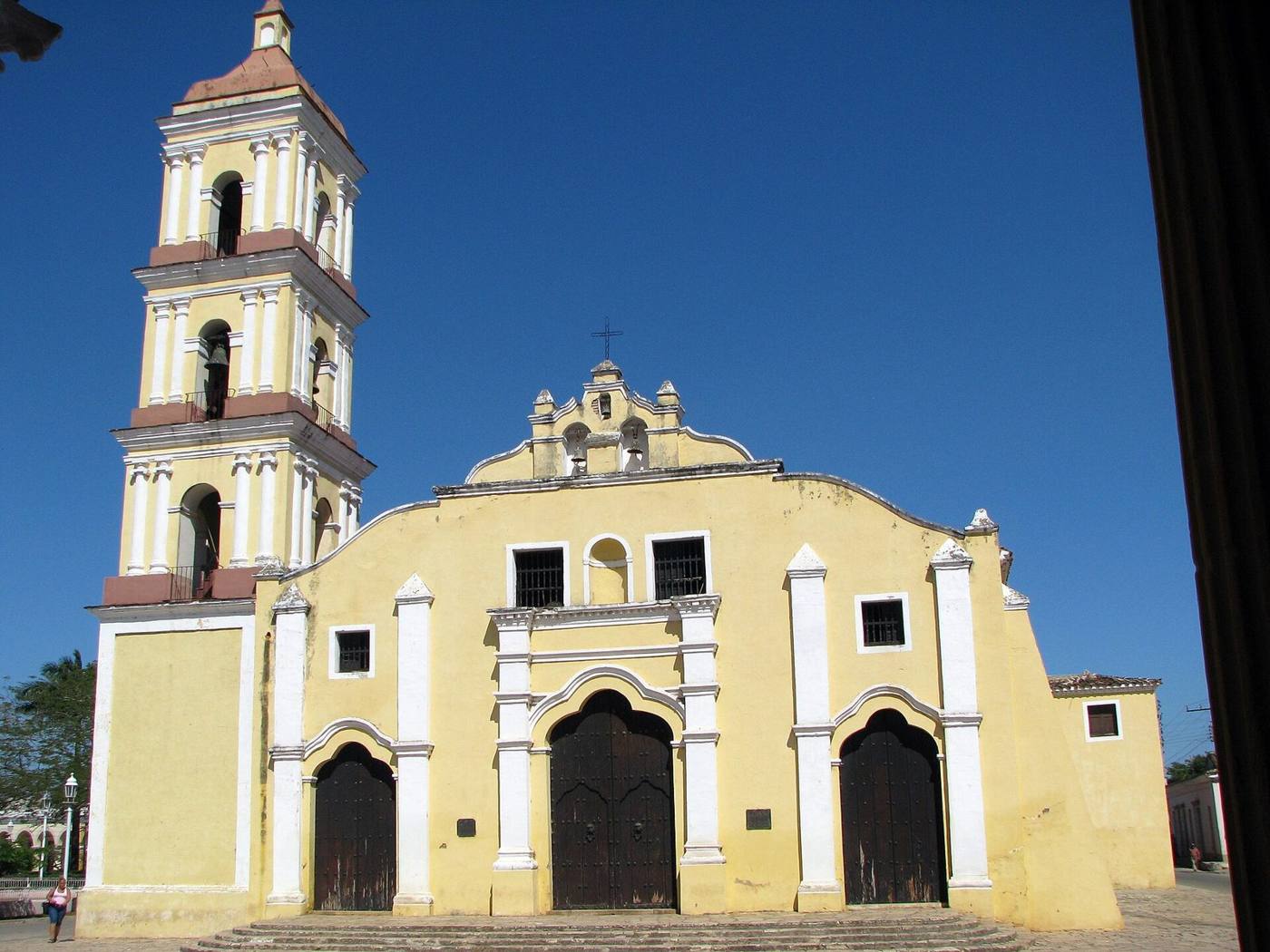
North-central Cuba: Remedios, a small colonial town with two churches on one square and the parrandas festival in December, then the long causeway across the sea to the cays of Santa María, Las Brujas and Ensenachos, with white-sand beaches and shallow water.
 5 daysEasy
Holguín and Gibara
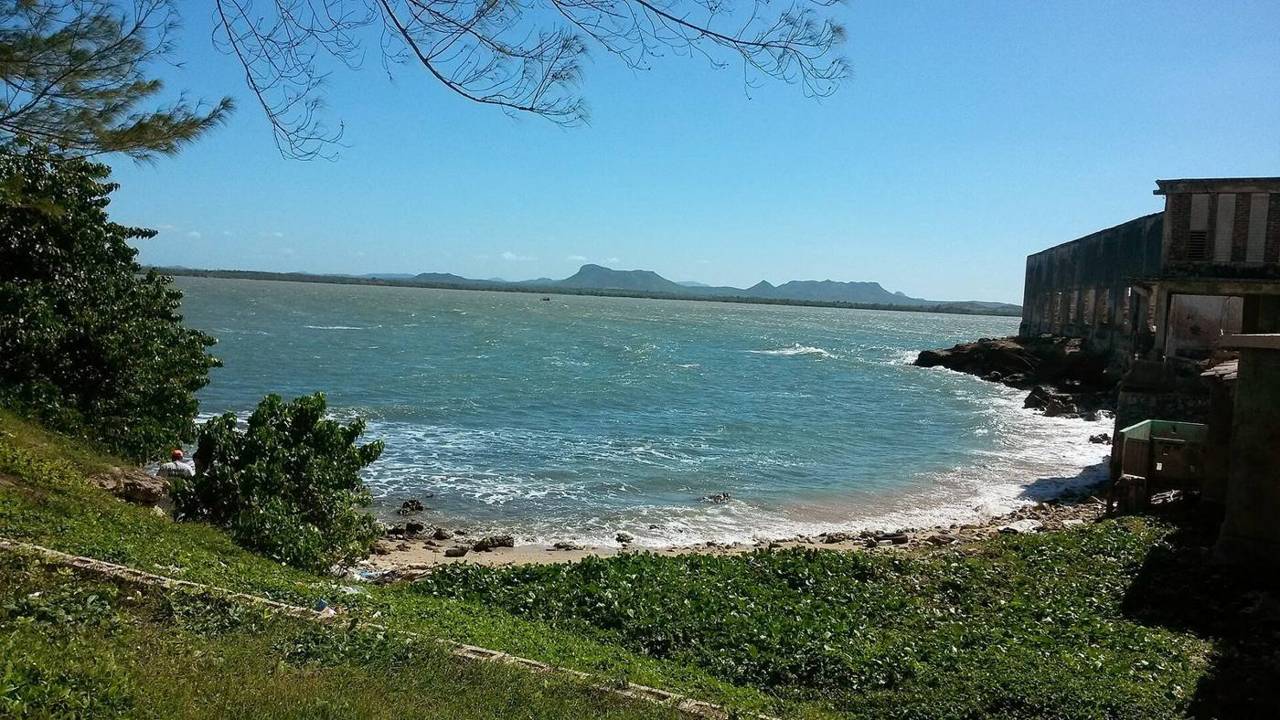
The quieter east: Holguín, the city of parks, with the stairway up the Loma de la Cruz, the fishing town of Gibara with its caves and film festival, Columbus's landing point at Bariay and the beach at Guardalavaca.
 4 daysEasy
Guanahacabibes and María la Gorda
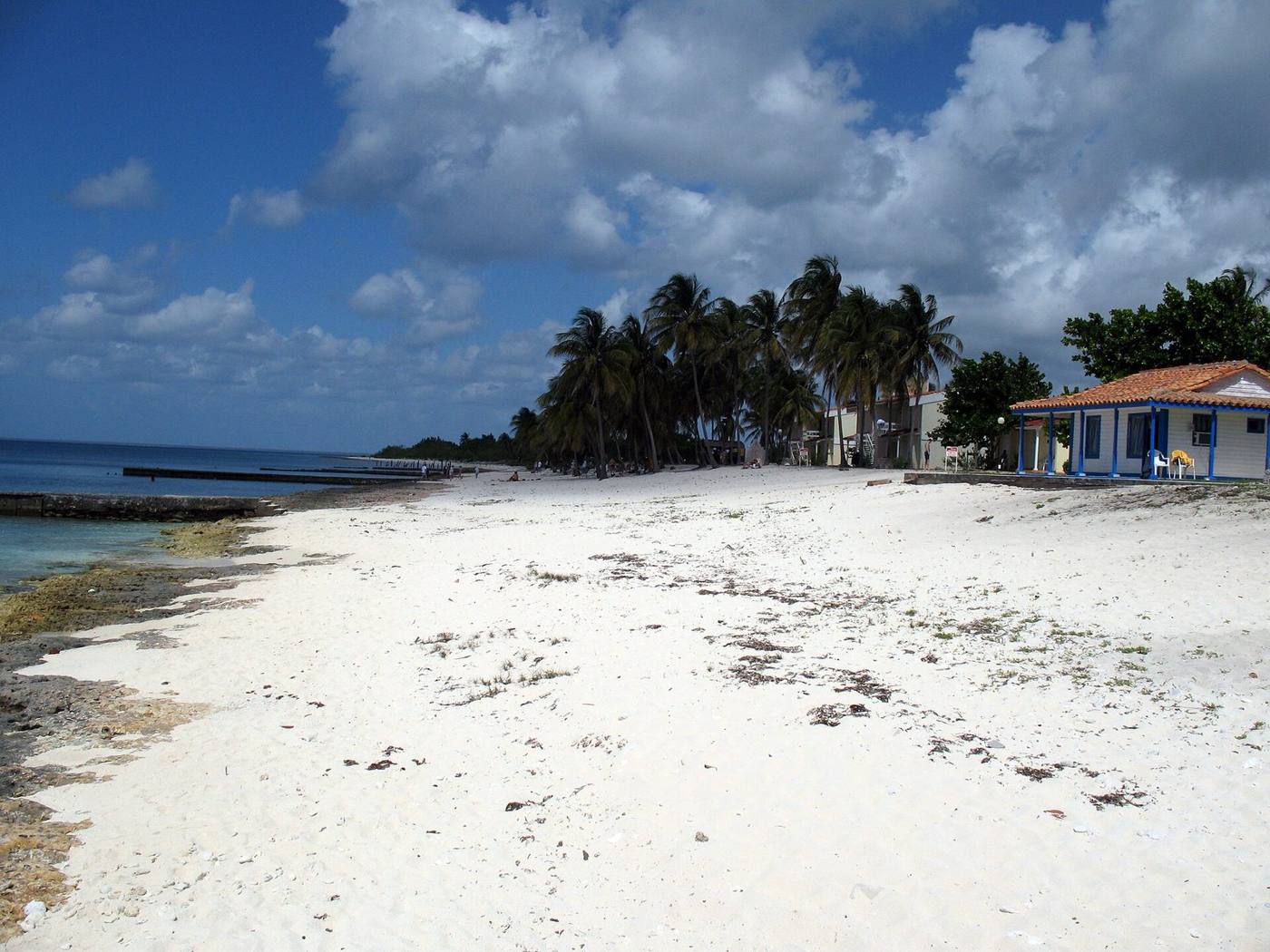
The island's western tip: the Guanahacabibes peninsula, a biosphere reserve with dry forest, land crabs and turtles nesting in summer, and María la Gorda bay with dives on coral walls a few metres from shore.