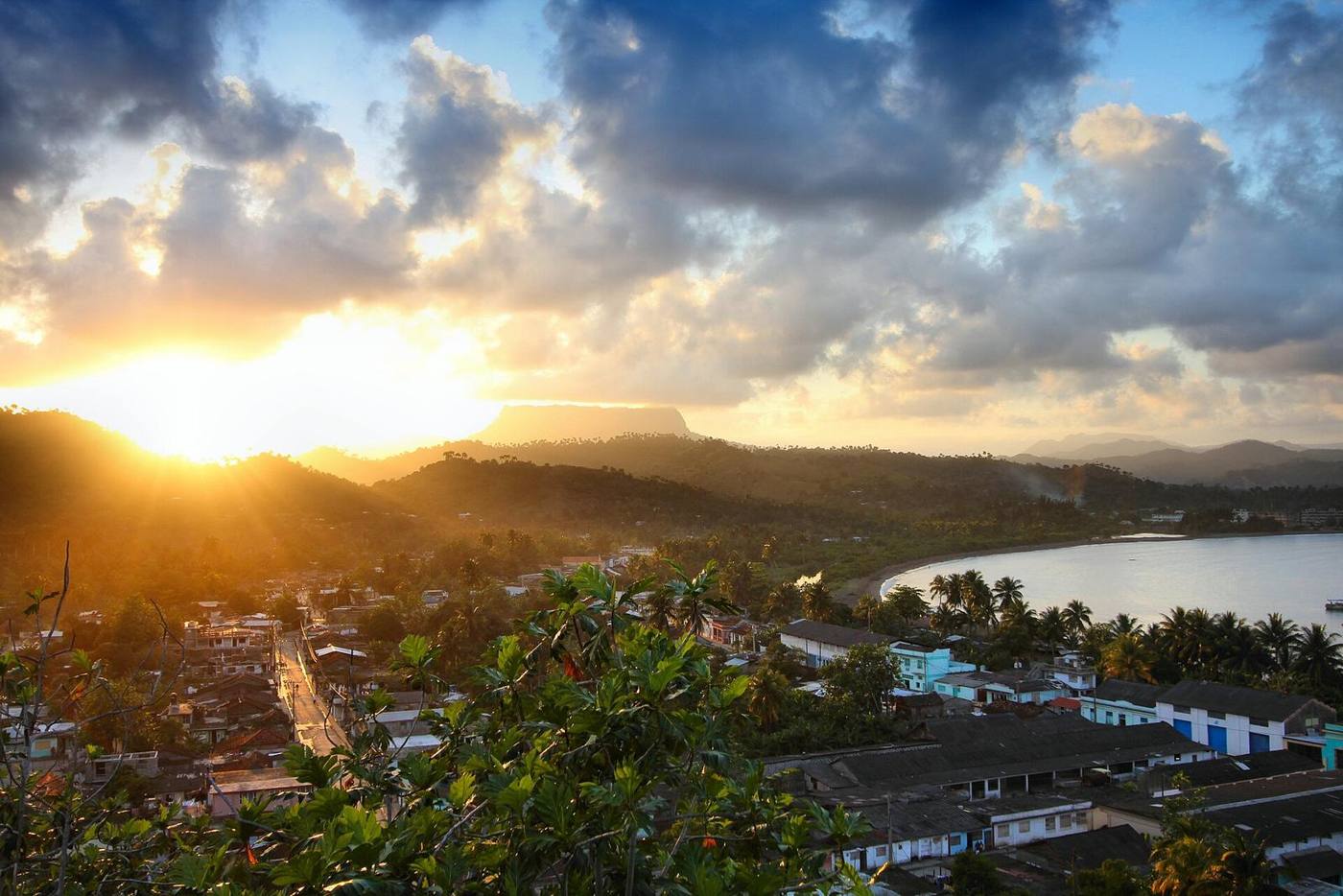
The east: Santiago, Baracoa and Guantánamo
Cuba at its most African and least touristy: the music of Santiago, the Farola road, Baracoa the cocoa town and Alejandro de Humboldt park.
- Santiago de Cuba
- El Cobre
- Guantánamo
- Baracoa
- Humboldt Park
Day by day
- Day 1
Arrival in Santiago de Cuba
This trip takes you to eastern Cuba, the part of the island furthest from Havana and the least touristy: Santiago and its music, the shrine of El Cobre, the Gran Piedra, the city of Guantánamo, the Farola road over the mountains, Baracoa with its cocoa, and the Alejandro de Humboldt park.
Before you go: Italian citizens enter Cuba with a passport valid for at least six months after the date of arrival; the electronic identity card is not enough. You need the tourist card, the tourist visa, now issued in electronic form, then the online D'Viajeros form to fill in within 72 hours before arrival, a return ticket and health insurance covering medical costs in Cuba, which is compulsory on entry. The rules change often: check them on the website of the Cuban embassy before you leave. Other nationalities should check their own rules.
Some areas on this trip are close to borders or places where the situation changes often: check your government's travel advice before booking and again before you leave.
You land at Antonio Maceo airport in Santiago, usually on a domestic flight from Havana. Domestic flights often change times or are cancelled: always keep a spare day before your flight home.
From the airport to the centre takes about twenty minutes by licensed taxi. Settle into a casa particular in the historic centre.
In the evening stroll around Parque Céspedes, the main square, between the cathedral and the town hall, whose balcony is where Fidel Castro spoke on 1 January 1959. Locals sit on the benches until late.
Sleep in Santiago, for three nights.
Practical tip: in the east power cuts are long and frequent: always keep a torch, a charged power bank and a supply of bottled water in your room.
- Day 2
Santiago: music, Moncada and El Morro
Today you discover Santiago, Cuba's second city, seen as the cradle of son music and of the revolution.
In the morning walk around the centre, along sloping streets lined with colonial houses with barred windows. Visit the Casa de Diego Velázquez, on Parque Céspedes, considered one of the oldest houses in Cuba, from the sixteenth century, now a museum of period furniture. Then climb to the Tivolí district, where French settlers from Haiti made their homes, by the Padre Pico stairway, with views over the rooftops and the bay.
Mid-morning go to the Cuartel Moncada, the yellow barracks with bullet marks on the façade. On 26 July 1953 Fidel Castro and a group of rebels attacked it without managing to take it: it was the start of the revolution. Today it is partly a school and partly a museum. Check prices and times.
In the afternoon take a taxi to the Castillo del Morro, the San Pedro de la Roca fortress, built in the seventeenth century on a cliff at the mouth of the bay to keep out pirates. It is a UNESCO World Heritage Site. From the ramparts the view over the sea is wide, and at sunset the stone takes on a warm colour.
In the evening listen to live music at the Casa de la Trova, on Calle Heredia, where the city's son and bolero musicians have played for decades.
Sleep in Santiago.
Practical tip: for El Morro, agree the return trip and waiting time with your taxi driver too: there is no other transport out there and taxis are scarce in the evening.
- Day 3
El Cobre and the Gran Piedra
Today you leave Santiago for two trips nearby, one west and one east of the city.
In the morning go to the shrine of El Cobre, about twenty kilometres west, in a mountain village that grew up around an old copper mine. The basilica, with its three pale towers, holds the statue of the Virgen de la Caridad del Cobre, the patron saint of Cuba, deeply loved by believers of different faiths. In the chapel of offerings you see thousands of votive gifts left by pilgrims: photographs, letters, medals and clothes. The mass and the quiet of the faithful tell you a lot about the country.
From the square you can see the copper quarry, with green water at the bottom.
In the afternoon take the road that climbs east to the Gran Piedra, a huge boulder resting on top of the mountain, at more than a thousand metres. You reach it by climbing over four hundred steps: on clear days the view stretches across the Sierra Maestra and the Caribbean Sea.
Just below, visit the Cafetal La Isabelica, an old nineteenth century coffee plantation built by French settlers, now a museum. It is part of the archaeological landscape of the first coffee plantations in south-east Cuba, a UNESCO World Heritage Site. Check prices and times.
Head back to Santiago before dark.
Sleep in Santiago.
Practical tip: at the top of the Gran Piedra it is much cooler than in the city and clouds often roll in: bring a fleece and a light rain jacket, and go up in the morning if you can.
- Day 4
The Farola road to Baracoa
Today is the longest and most scenic stage of the trip: from Santiago to Baracoa, at the eastern tip of the island, in a car with a driver.
The first part crosses Guantánamo province and drops to the south coast, the driest in Cuba: low hills, cacti, thorny scrub and small fishing villages between the blue sea and the mountains. On this stretch you also pass near Guantánamo Bay, home to the United States naval base: the base is a closed military zone and cannot be visited or approached.
At Cajobabo a small beach marks the landing of José Martí in 1895, at the start of the last war of independence.
Then the road leaves the coast and climbs onto the Farola, the mountain road opened in the 1960s to link Baracoa with the rest of the country. Before that, the town could be reached almost only by sea. The road winds up through pine woods, then descends into ever greener forest, with giant ferns, banana plants and coffee plantations. Along the way farmers sell fruit, coffee and cucurucho.
In the afternoon you reach Baracoa, on the north coast. Take a first walk along the Malecón.
Sleep in Baracoa, for five nights.
Practical tip: before setting off, ask about the state of the Farola, which can be damaged by landslides and heavy rain, and travel only by day: the road is narrow, unlit and has few petrol stations.
- Day 5
Baracoa and El Yunque
Today you get to know Baracoa and climb its emblematic mountain.
Baracoa is the oldest town in Cuba: it was founded in 1511 by Diego Velázquez and was the island's first capital. For centuries it stayed cut off between the sea and the mountains, and it still has a rhythm of its own.
Early in the morning set off for El Yunque, the flat-topped mountain that dominates the bay, just under six hundred metres high. The name means anvil, because of its shape. You climb on foot with a local guide, which is compulsory, on a path through cocoa and coconut plantations, then tropical forest. The climb takes a few hours and is tiring because of the heat and humidity. From the top you see the coast, the town and the rivers flowing to the sea. Check prices and times.
On the way back swim in a pool of the Duaba river, at the foot of the mountain.
In the afternoon rest, then visit the church of Nuestra Señora de la Asunción, which keeps the Cruz de la Parra, a wooden cross that tradition links to Christopher Columbus. Walk to the square and the seafront, with its colourful wooden houses.
In the evening taste Baracoa's cooking, unlike the rest of Cuba: fish cooked in coconut milk, called lechita, and bacán, a plantain and meat paste wrapped in banana leaves.
Sleep in Baracoa.
Practical tip: for El Yunque start early, carry at least two litres of water each and wear shoes with good soles: the path is muddy after rain.
- Day 6
Cocoa and the Toa river by canoe
Today you explore the countryside around Baracoa, the cocoa region.
In the morning visit a small cocoa farm, a finca, near the town. The farmer shows you the tree, with the pods growing straight from the trunk, then the sweet white seeds inside the pod, the fermentation, the drying in the sun and finally the roasting. You taste cocoa at every stage, ending with a cup of hot chocolate made the home way, thick and not very sweet.
At the roadside stalls you see cucurucho, Baracoa's typical sweet: grated coconut cooked with sugar, honey and fruit, packed into a cone of palm leaf.
In the afternoon go to the Toa, one of the rivers with the most water in Cuba, north-west of the town. Get into a cayuca, a canoe carved from a tree trunk, and paddle upstream between walls of forest, palms and fields. The current is slow and the water is clean: in some spots you can swim. Check prices and times.
On the way back stop at the bridge over the Toa to look down on the river, with the mountains behind.
In the evening, if the power is on, there is often live music in town: in the east people listen to changüí, a genre older than son, born in Guantánamo province.
Sleep in Baracoa.
Practical tip: do not buy polymita shells, from the colourful snails of the area: they are a protected species and taking them away is forbidden.
- Day 7
Alejandro de Humboldt National Park
Today you visit the Alejandro de Humboldt National Park, one of the most important natural areas in the Caribbean.
The park, a UNESCO World Heritage Site, stretches across Guantánamo and Holguín provinces, in the mountains north-west of Baracoa. It is named after the German naturalist who studied Cuba in the early nineteenth century. A very high number of plants and animals live here that exist only in this part of the island, including tiny frogs, lizards, birds and orchids.
In the morning leave by car with a driver for Taco Bay, about an hour and a half away on a dirt road full of potholes. The visitor centre organises the walks with park guides, the only way to enter. Check prices and times.
A classic route follows a forest trail, crossing small rivers and waterfalls, while the guides point out rare species, trees and medicinal plants. Another option is a boat trip on Taco Bay, among the mangroves, where you sometimes see manatees, large and very shy marine mammals.
In the afternoon return slowly to Baracoa.
In the evening have fish or freshwater prawns, cooked with coconut milk and local spices.
Sleep in Baracoa.
Practical tip: bring repellent, a long-sleeved top, shoes that can get wet and a dry change of clothes to leave in the car: on the park trails you often wade across streams.
- Day 8
Maguana beach
Today is a day of sea and rest.
In the morning go to Maguana beach, about twenty kilometres north-west of Baracoa, on the same road as the Humboldt park. It is a long beach of pale sand, with coconut palms and sea grape, sheltered by a coral reef. The water is clear and calm almost all year.
Spend the day swimming, snorkelling near the rocks and taking a siesta in the shade. On the beach fishermen sometimes offer grilled fish and lobster: ask the price first.
In the afternoon, on the way back, stop at the mouth of the Duaba river, where fresh water meets the sea and you can swim in the current.
At sunset climb to the old colonial fort on the hill above the town, with views over the bay and El Yunque. Baracoa had three forts built against pirates and privateers between the eighteenth and nineteenth centuries.
In the evening take a last walk along the Malecón, where the Atlantic waves often break over the wall when the wind blows from the north.
Alternatively, if you prefer another outing, the mouth of the Yumurí river, east of Baracoa, is a narrow canyon of rock walls and forest that you explore by boat.
Sleep in Baracoa.
Practical tip: at Maguana you will not always find water, food or toilets: bring everything with you, including some portable shade, and agree the return time with your driver.
- Day 9
Guantánamo and back to Santiago
Today you leave Baracoa and return to Santiago, driving the Farola again with a stop in the city of Guantánamo.
Set off early in the morning to take the mountain bends calmly in the best light. Stop at one of the Farola's viewpoints, where the forest tumbles down towards the sea.
Around midday you reach Guantánamo, the provincial capital. It is a slow-paced city, away from tourism, with a grid of low houses in the centre. Parque Martí, the main square, is surrounded by early twentieth century buildings and the church of Santa Catalina. Nearby stands the Palacio Salcines, an eclectic palace topped by a statue of Fame blowing a trumpet, which has become the symbol of the city.
Guantánamo is also the home of changüí, the country music of the east, played on the tres, the marímbula and the bongo. If you come across a concert, stop and listen.
The United States naval base on the bay cannot be visited: it is a closed military area. Also avoid photographing Cuban barracks and military zones.
In the afternoon continue to Santiago, about an hour and a half by road.
In the evening, if you have the energy, go back to Calle Heredia for a last night of music.
Sleep in Santiago.
Practical tip: fill up with fuel wherever you can and carry cash: between Baracoa and Santiago there are few petrol stations and fuel often runs out.
- Day 10
Departure from Santiago
Today is departure day.
If your flight leaves in the afternoon, use the morning to visit Santa Ifigenia cemetery, north of the centre. Here lie José Martí, the hero of independence, in a large mausoleum, and Fidel Castro, beneath a simple rock. In front of Martí's mausoleum the changing of the guard takes place at regular intervals during the day. Check prices and times.
Alternatively, stroll around Parque Céspedes and the Balcón de Velázquez, a terrace overlooking the port and the bay.
Then go to the airport by licensed taxi, well in advance.
In these ten days you have seen eastern Cuba, so different from Havana: the music of Santiago and the history of the revolution, the Virgin of El Cobre, the view from the Gran Piedra, the dry coast of Guantánamo and the Farola road, Baracoa with its cocoa, coconut and El Yunque, the Toa river, the forest of the Humboldt park and Maguana beach.
When to go: the best time is December to April, the dry season, with less rain and more pleasant temperatures. Baracoa is the rainiest part of Cuba and it can rain even in winter. In July Santiago holds its carnival, very lively, but it is very hot. From August to October the risk of hurricanes is high and mountain roads can close.
Practical tip: if you can, book your international flight from Havana for the day after your domestic flight from Santiago: delays and cancellations are frequent.
For those who have already seen Havana and Trinidad, or want a different Cuba. Baracoa is isolated and lush, with unique food (cocoa, coconut, the cucurucho sweet). Arrive by domestic flight to Santiago or Holguín. Right months: December-April.
Before you go
- Documents and visa
- Passport valid for at least six months after arrival. You need a tourist visa (the tourist card), now issued only in electronic form: apply online on the official eVisa platform, at a Cuban consulate or through an agency; it is valid for up to 90 days and can be extended in Cuba. After the visa, fill in the online D'Viajeros form within 72 hours before arrival and carry the printed QR code. You also need a return or onward ticket. Anyone who has been in Cuba on or after 12 January 2021 can no longer use ESTA for the United States and must apply for a US visa.
- Health and vaccines
- Health insurance covering medical costs in Cuba is compulsory on entry; it is best if it includes repatriation. Hospitals are struggling and often lack medicines and supplies: bring a stock of your own medicines and a first aid kit. Dengue, chikungunya and Oropouche are present: use repellent all day. Drink only bottled water, without ice. No vaccinations are compulsory: ask your doctor.
- Money and payments
- Cuban peso. Since 6 June 2026 Visa and Mastercard cards are no longer accepted and you cannot withdraw cash from ATMs with foreign cards; cards on US networks do not work either. Bring cash in euros or dollars for the whole trip and for emergencies, and change money only at Cadeca offices: changing on the street is illegal. Amounts over 5,000 dollars, or the equivalent, must be declared on arrival.
- Power sockets
- Types A, B, C and L, at 110 volts in most of the country and 220 volts in some newer hotels: bring an adaptor and check that your devices accept 110 volts.
- Time zone
- UTC-5, UTC-4 in summer.
- Safety
- Cuba is going through a severe crisis of fuel, electricity, water and medicines, with long power cuts across the country, cancelled flights and unreliable domestic transport; the UK advises against all but essential travel to the whole island. In the east, after Hurricane Melissa in October 2025, electricity and water remain severely limited. Theft and bag snatching are rising, especially in Havana: do not walk at night, use licensed taxis, do not change money on the street and stay only in registered accommodation. Bring a power bank and a torch. Official advice: GOV.UK.
Information checked in November 2026 for Italian and EU citizens. Rules change: always check before you travel.
Variations
In 7 days: Santiago with El Cobre, then the Farola and three days in Baracoa with El Yunque and the Toa river, without the Humboldt park and Maguana.
In 13 days: add two days in the Sierra Maestra, with the Comandancia de La Plata, and a day in Holguín before your flight.
Frequently asked questions
Can you visit the Guantánamo base?
No. The United States naval base is a closed military zone and cannot be visited or approached. The trip passes through the province and city of Guantánamo, which are something else entirely: a little-visited part of eastern Cuba.
What documents do I need for Cuba?
A passport valid for at least six months after arrival, the electronic tourist card, the online D'Viajeros form to fill in within 72 hours before arrival, a return ticket and health insurance valid in Cuba. The rules change often: check them on the website of the Cuban embassy before you leave.
How do you get around in the east?
The most practical way is a car with a driver for the whole trip, because buses and fuel are very unreliable. Travel only by day, carry cash in euros and keep at least one spare day before your flight home.
Indicative itinerary written by World Atlas. Before booking, check timetables, seasonal openings, documents and safety.
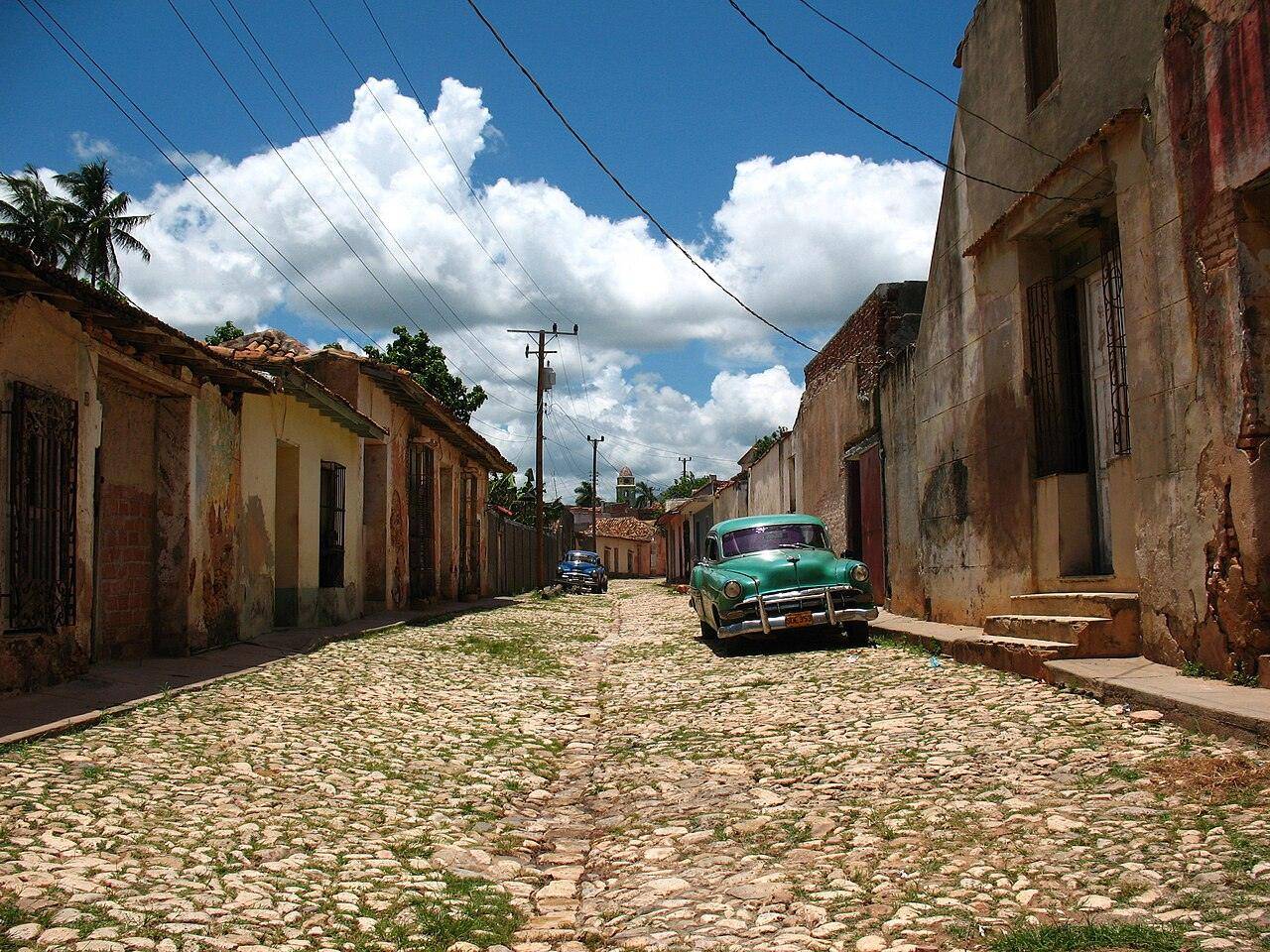 7 daysEasy
Havana, Viñales and Trinidad
The capital of vintage cars and music, the tobacco valley and the island's most beautiful colonial town.
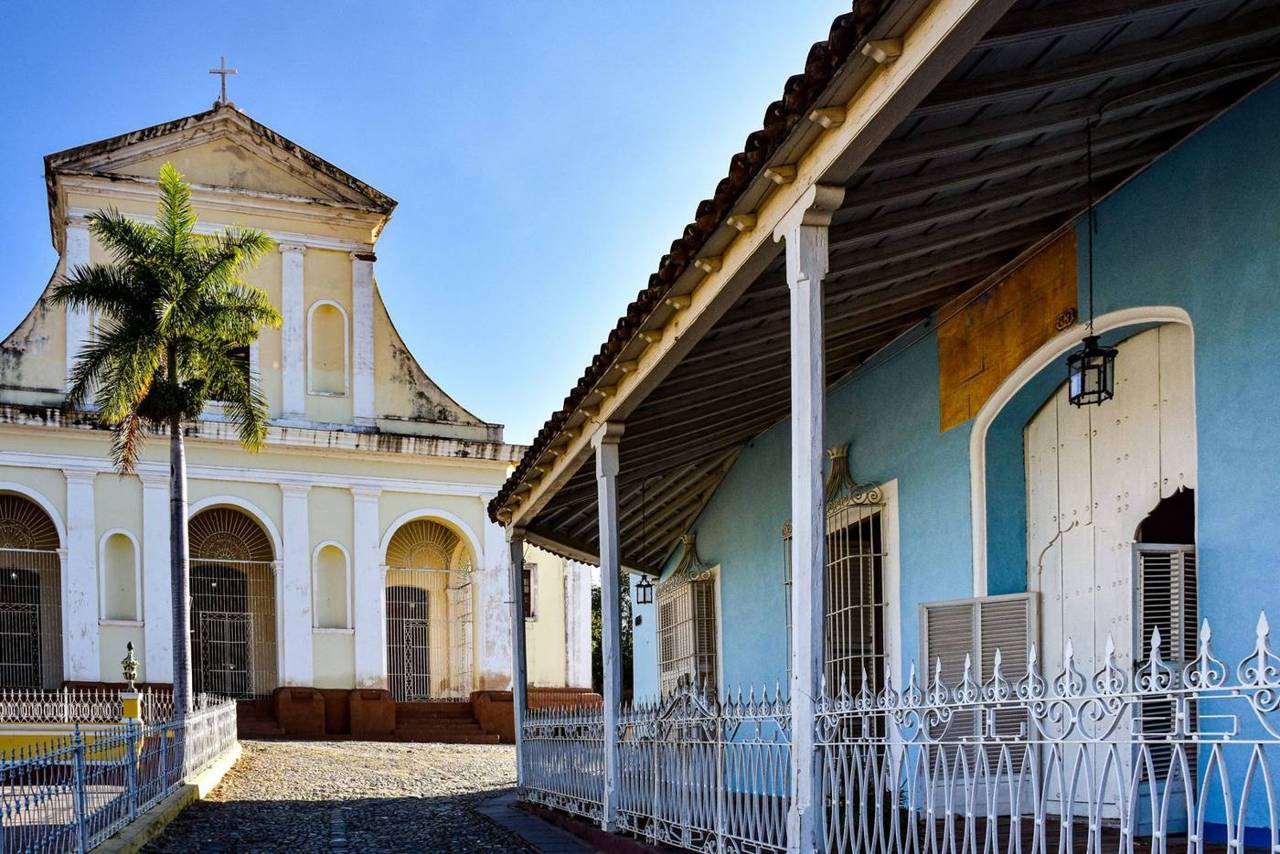 15 daysModerate
Cuba from west to east, to Santiago
The whole island: Havana, Viñales, the colonial towns of the centre, the Sierra Maestra, Santiago and a few days by the sea.
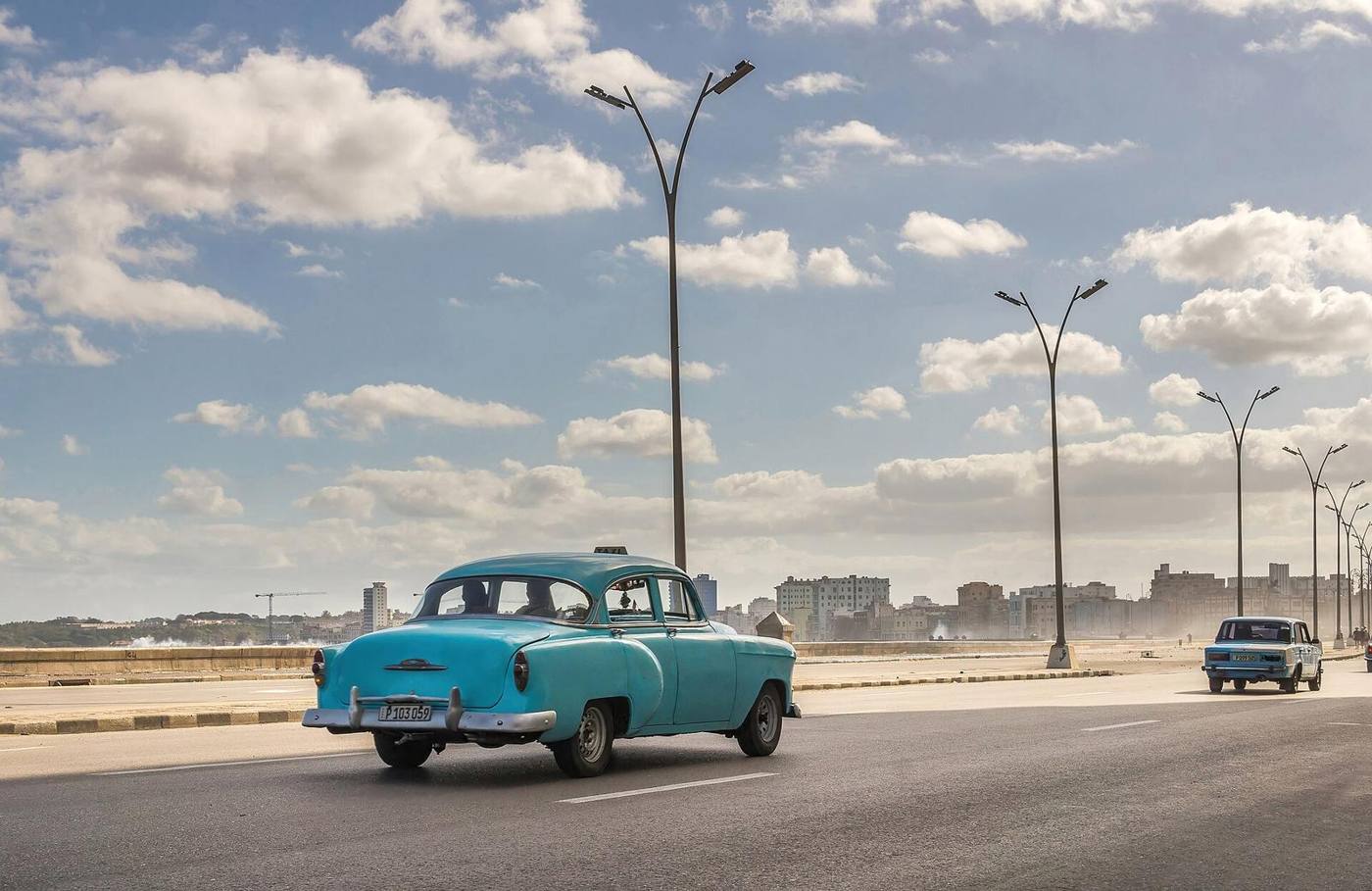 11 daysEasy
Cuba express: Havana, Viñales and Trinidad
The heart of Cuba in under two weeks: colonial Havana, the tobacco valleys of Viñales, timeless Trinidad and the Bay of Pigs.