Cuba from west to east, to Santiago
The whole island: Havana, Viñales, the colonial towns of the centre, the Sierra Maestra, Santiago and a few days by the sea.
- Havana
- Viñales
- Cienfuegos
- Trinidad
- Camagüey
- Bayamo
- Santiago de Cuba
- Cayo Santa María
Day by day
- Day 1
Arrival in Havana
This trip crosses Cuba from end to end in fifteen days: Havana and Viñales in the west, the colonial towns of the centre, Camagüey and Bayamo, the Sierra Maestra, Santiago in the east and, to finish, a few days by the sea on the cays of the north coast.
Before you go: Italian citizens enter Cuba with a passport valid for at least six months after the date of arrival; the electronic identity card is not enough. You need the tourist card, the tourist visa, now issued in electronic form, then the online D'Viajeros form to fill in within 72 hours before arrival, a return ticket and health insurance covering medical costs in Cuba, which is compulsory on entry. The rules change often: check them on the website of the Cuban embassy before you leave. Other nationalities should check their own rules.
Some areas on this trip are close to borders or places where the situation changes often: check your government's travel advice before booking and again before you leave.
You land at José Martí airport in Havana. Take a licensed taxi to the centre, about half an hour away.
For such a long trip the most practical option is a car with a driver for the whole route, booked before you leave: buses and fuel are very unreliable, and hiring a car yourself is complicated today.
Settle into a casa particular and in the late afternoon walk to the Malecón, the seafront, to watch the sunset over the city.
Sleep in Havana, for two nights.
Practical tip: bring all the cash you need for the trip in euros, because foreign cards do not work, and change it a little at a time only at the official offices, called Cadeca.
- Day 2
Havana
Today you have a full day for Havana.
Early in the morning enter Old Havana, the historic city, a UNESCO World Heritage Site. Follow the route of the four squares: the Plaza de Armas with its trees and book stalls, the Plaza de la Catedral with its baroque façade, the Plaza de San Francisco facing the port and the Plaza Vieja, with colourful buildings and iron balconies. On the way go into the Castillo de la Real Fuerza, one of the oldest forts in the Americas. Check prices and times.
For lunch try congrí, rice and black beans cooked together, with roast pork and yuca with garlic.
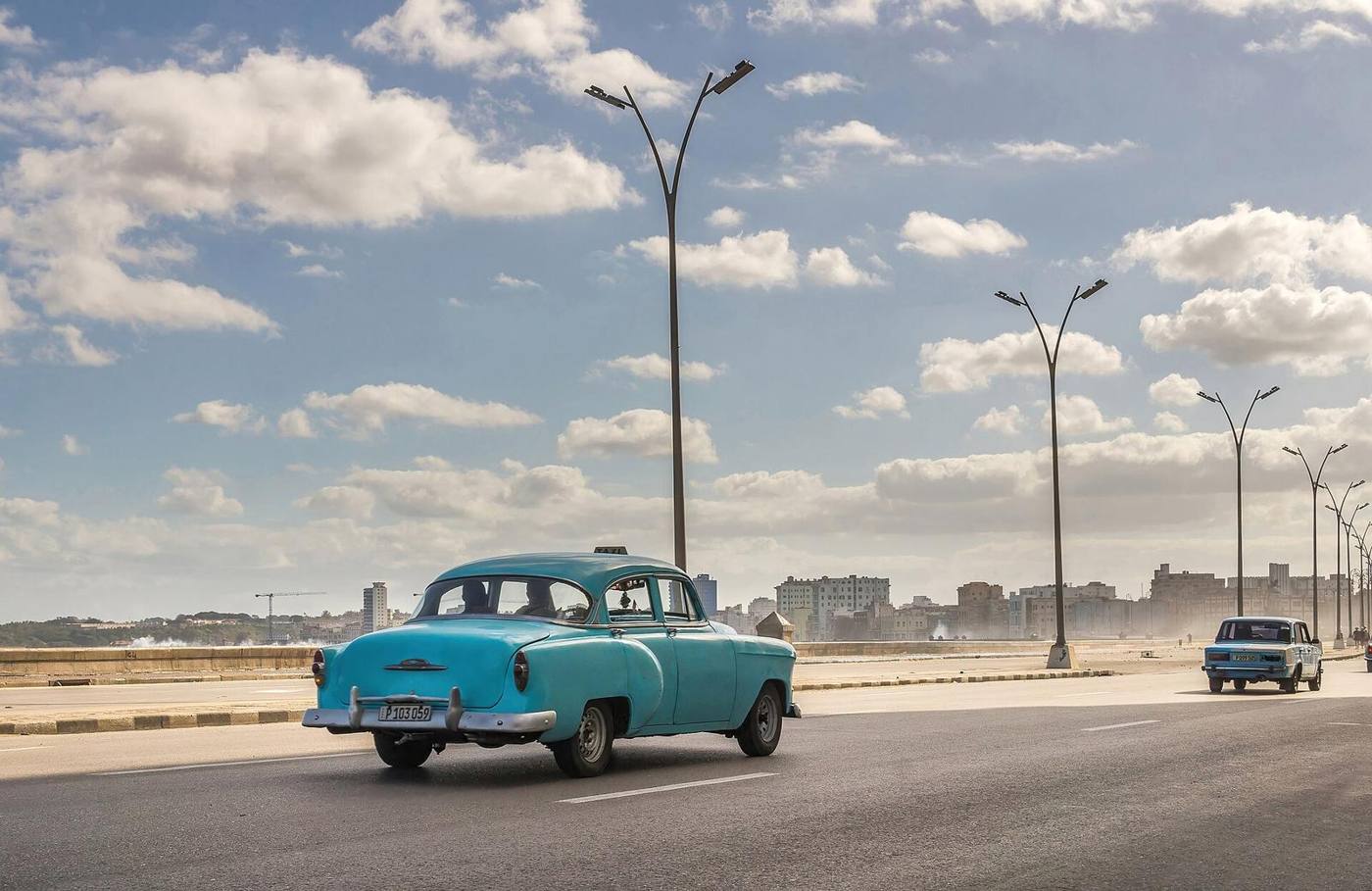
In the afternoon take a ride in a 1950s American car along the Malecón to Vedado and the Plaza de la Revolución, with the large metal portraits of Che and Camilo Cienfuegos on the façades of the ministries.
Then head back towards the centre and visit the Museo de la Revolución, in the former presidential palace: its rooms tell the history of Cuba from colonial times to the revolution, and help you understand the places you will see in the east, from the Moncada barracks to the Sierra Maestra. Check prices and times.
In the evening listen to live music, son or Cuban jazz, and go home by taxi.
Sleep in Havana.
Practical tip: at night do not walk along dark streets: during power cuts many roads have no lighting and bag snatching has increased. Always use licensed taxis.
- Day 3
The Viñales valley
Today you head west to the Viñales valley, about three hours from Havana.
Leave early, on the motorway across the plain between sugar cane fields and royal palms. When you reach the top of the hills, stop at the viewpoint above the valley: below you lie the farmed red earth, the tobacco barns and the mogotes, limestone hills with sheer walls covered in vegetation. The valley is a UNESCO cultural landscape, listed for farming methods that have barely changed for generations.
Late in the morning settle into the village, then set off on horseback with a local guide for a two or three hour ride along tracks and through fields.
On the way stop at a tobacco farm: the farmer shows you the large barn of wood and palm leaves where the leaves hang to dry for weeks, and rolls a cigar by hand in front of you.
In the late afternoon visit the Cueva del Indio, a cave explored partly by boat on an underground river. Check prices and times.
In the evening stroll along the main street of Viñales, with its low, colourful houses and porches with rocking chairs, and have dinner with country dishes.
Sleep in Viñales.
Practical tip: tomorrow's transfer is long: pack your bag tonight, charge your phone and power bank, and buy water and something to eat for the journey.
- Day 4
To Cienfuegos
Today you cross the west of the island to Cienfuegos, on the south coast.
The transfer takes several hours, via Havana and then along the motorway heading east. Leave at dawn so that you arrive in the early afternoon. On the way stop for a Cuban coffee, strong and very sweet, and for a freshly pressed sugar cane juice, called guarapo.
Cienfuegos is an unusual city: it was founded in 1819 by French settlers from Bordeaux and Louisiana, and it has wide, straight streets, neoclassical buildings and an elegant air. Its historic centre is a UNESCO World Heritage Site.
In the afternoon walk around Parque José Martí, the main square, with its triumphal arch, the cathedral, the government palace with its red dome and the Teatro Tomás Terry, opened at the end of the nineteenth century, with a wooden interior and painted ceiling. Check prices and times.
Then follow the Prado, the long tree-lined avenue, down to the seafront on the bay.
At sunset take a horse-drawn carriage to Punta Gorda, the peninsula at the end of the bay, with early twentieth century villas and the Palacio de Valle, a palace with domes and arches in Moorish style.
Sleep in Cienfuegos.
Practical tip: on long transfers ask your driver to make regular stops and do not travel after sunset: the roads are unlit and at night there are carts, bicycles and animals with no lights.
- Day 5
Trinidad
Today you reach Trinidad, about an hour and a half from Cienfuegos, along the south coast, with the sea on one side and the Escambray mountains on the other.
Trinidad was founded in 1514 by Diego Velázquez and grew rich in the eighteenth and nineteenth centuries from sugar plantations and the work of enslaved people. Then trade moved elsewhere and the town was left isolated: that is why the centre has survived almost intact. It is a UNESCO World Heritage Site together with the Valle de los Ingenios.
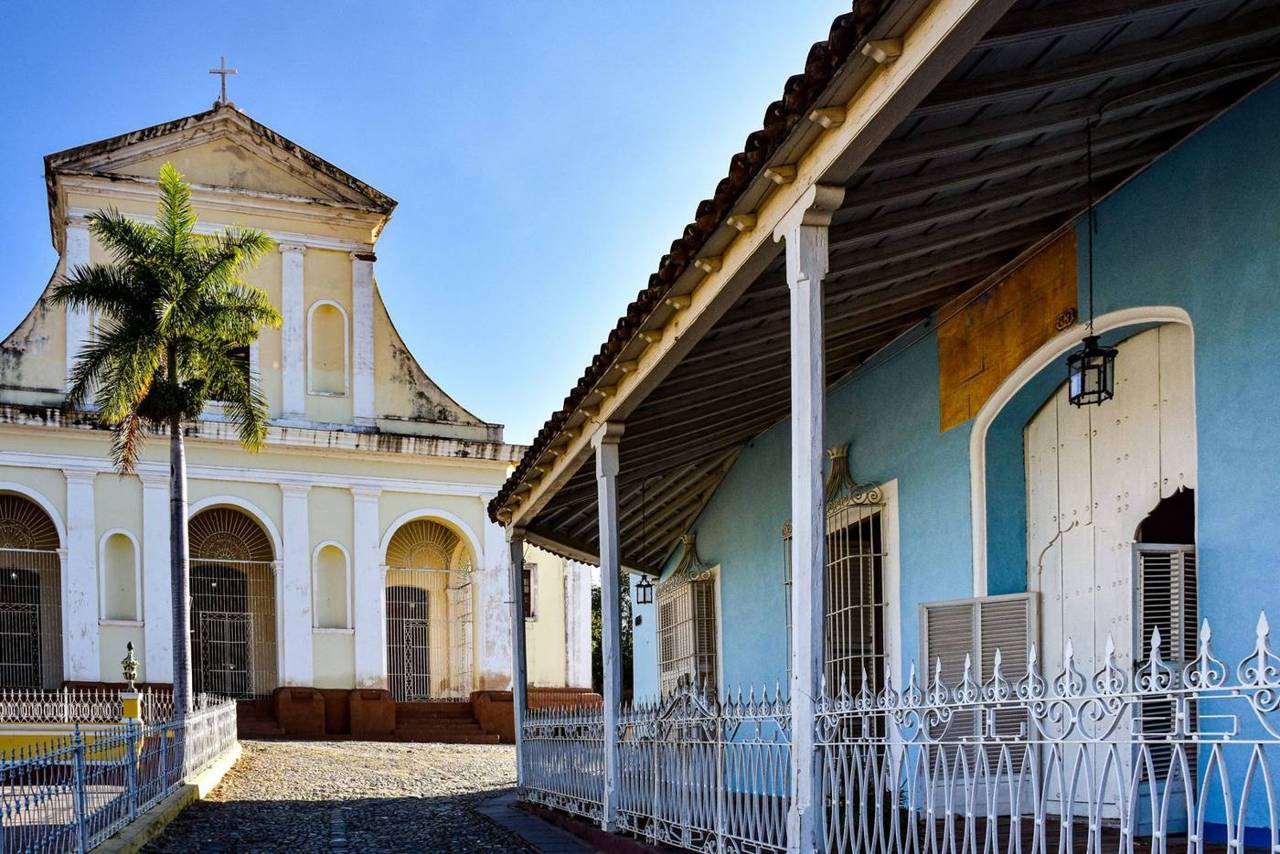
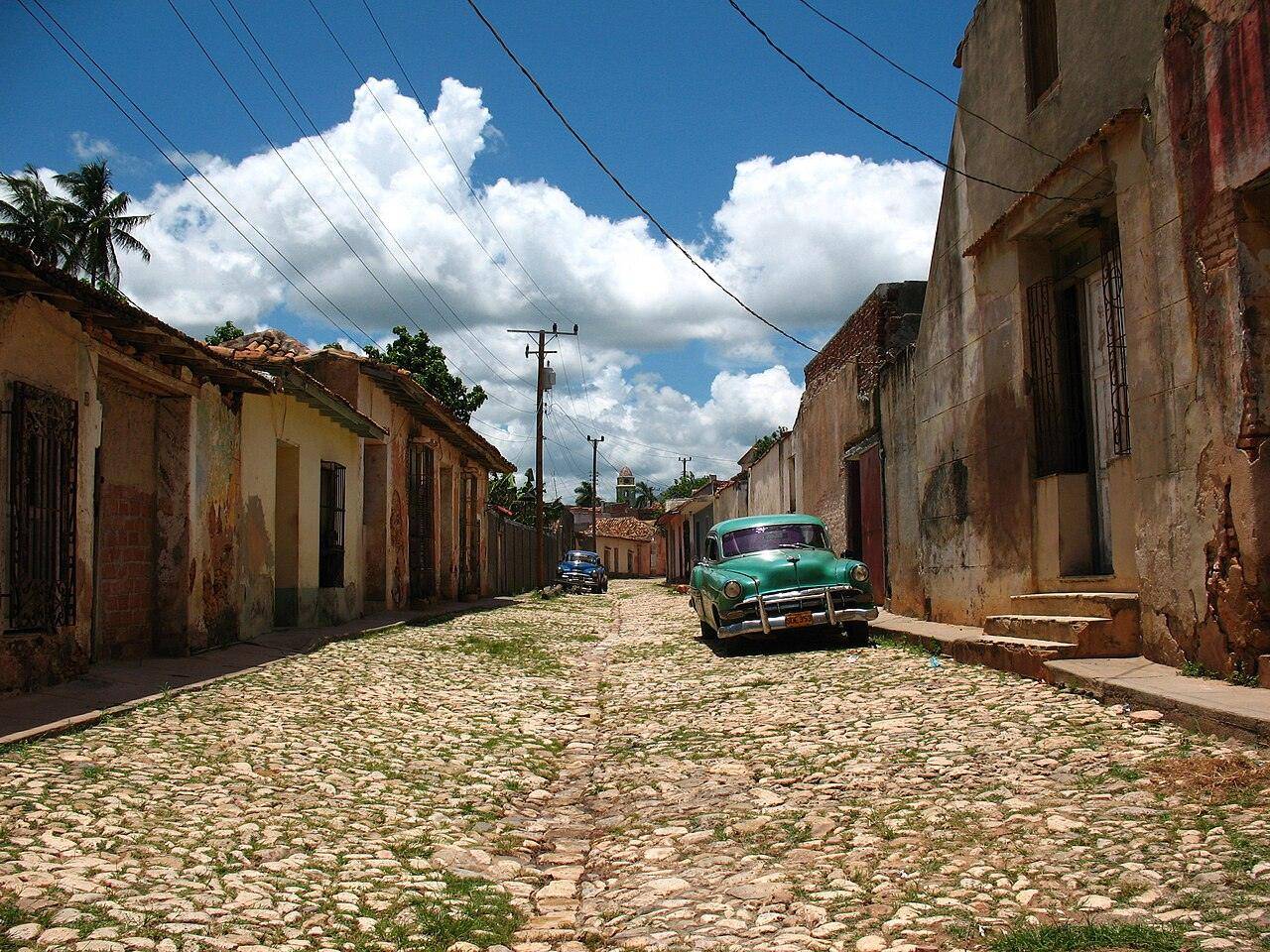
Walk on the cobbles, between low colourful houses with large wooden window grilles. The centre is the Plaza Mayor, with its palms and the church of the Santísima Trinidad.
On the square visit the Museo Romántico, in a nineteenth century mansion with period furniture, porcelain and chandeliers. Then climb the yellow bell tower of the old San Francisco convent, the symbol of the town, for views over the red roofs, the mountains and the sea. Check prices and times.
In the afternoon go to Playa Ancón, about twelve kilometres away, for a swim in the warm Caribbean after the days on the road.
In the evening listen to the music on the steps beside the Plaza Mayor and taste canchánchara, the local drink, with cane spirit, honey and lime.
Sleep in Trinidad.
Practical tip: Trinidad's cobbles are large and uneven: wear comfortable closed shoes, and carry a torch in the evening for the power cuts.
- Day 6
Sancti Spíritus and Camagüey
Today you continue east, into the heart of the island, with two colonial towns.
Just outside Trinidad the road crosses the Valle de los Ingenios, where in the eighteenth and nineteenth centuries dozens of sugar mills processed the cane cut by enslaved workers. Stop at Manaca Iznaga and climb the tower, about forty metres high, from which overseers watched the fields: the view over the valley is wide. Check prices and times.
Mid-morning you reach Sancti Spíritus, one of the first seven towns founded by the Spanish on the island, in the early sixteenth century. It is little visited and slow-paced. See the nineteenth century stone bridge over the Yayabo river, the large parish church, one of the oldest in Cuba, and the cobbled streets of the centre.
In the afternoon carry on to Camagüey, about three hours away. The city is a UNESCO World Heritage Site and has a centre unique in Cuba: a maze of narrow, winding lanes, hidden squares and churches. It is said to have been laid out this way to confuse pirates, who had sacked it in the seventeenth century.
At sunset walk to the Plaza del Carmen, with its bronze statues of locals sitting and chatting, and to the Plaza San Juan de Dios, with colonial houses painted in bright colours. In the courtyards you see tinajones, the large clay jars used to collect rainwater, the symbol of the city.
Sleep in Camagüey.
Practical tip: it is easy to get lost in Camagüey's maze: download an offline map beforehand and mark the location of the house where you are staying.
- Day 7
Bayamo and the Sierra Maestra
Today you enter eastern Cuba, the land of the wars of independence and of the revolution.
In the morning take a last tour of Camagüey by bicycle taxi, then head east. After about three hours you reach Bayamo, one of the oldest towns on the island and the cradle of Cuban identity. Carlos Manuel de Céspedes was born here; in 1868 he freed his slaves and started the first war of independence. The national anthem, La Bayamesa, was first sung here. In 1869, rather than hand it over to the Spanish, the inhabitants set fire to their own town.
Walk through the Plaza del Himno, in front of the parish church, and Parque Céspedes, with the hero's birthplace, now a museum. Check prices and times. The streets of the centre are pedestrianised and horse-drawn carriages are still an ordinary means of transport.
In the afternoon carry on south to Santo Domingo, a small village on the Yara river, at the foot of the Sierra Maestra, the highest mountain range in Cuba. Pico Turquino, the island's highest summit, is here too.
In the evening swim in the river and look at the forested mountains where, at the end of the 1950s, Fidel Castro's guerrillas were hiding.
Sleep in Santo Domingo or nearby.
Practical tip: in the Sierra Maestra electricity and hot water can be off for hours: bring a torch, cash and whatever you need for the evening.
- Day 8
The Comandancia de La Plata and Santiago
Today you climb to the Comandancia de La Plata, the rebel headquarters in the Sierra Maestra, then drive on to Santiago.
Early in the morning an off-road vehicle takes you from Santo Domingo to Alto del Naranjo, a viewpoint over the mountains, along an extremely steep concrete road. From here you continue on foot, with a compulsory park guide, for a few kilometres of forest trail, with muddy climbs and descents.
The Comandancia, hidden among the trees, was the centre of Fidel Castro's guerrilla war in 1958. You see the wooden huts, including the one where Fidel slept, the small field hospital and the post from which Radio Rebelde broadcast. The guides explain how the guerrillas and local farmers lived. Before setting off, ask whether the site is open, and check prices and times.
Around midday you return to Santo Domingo and set off for Santiago de Cuba, a few hours away by road via Bayamo.
In the late afternoon you reach Santiago, the country's second city, set on a bay between the mountains. Settle in and walk to Parque Céspedes, with the cathedral and the town hall, from whose balcony Fidel Castro spoke on 1 January 1959.
In the evening listen to son at the Casa de la Trova, on Calle Heredia, where the city's musicians have played for decades.
Sleep in Santiago, for two nights.
Practical tip: for the Comandancia you need walking boots, a light rain jacket, water and repellent: the trail is often wet and there are plenty of mosquitoes.
- Day 9
Santiago de Cuba
Today you have a full day for Santiago, the most Caribbean and most African city in Cuba.
In the morning visit Santa Ifigenia cemetery, where José Martí lies in a large mausoleum and Fidel Castro beneath a simple rock. In front of Martí's tomb the changing of the guard takes place at regular intervals. Check prices and times.
Then go to the Cuartel Moncada, the yellow barracks attacked by Fidel Castro and his companions on 26 July 1953: the attack failed, but it gave its name to the revolutionary movement. Today the building houses a school and a museum, and the bullet holes are still visible on the façade.
At midday walk through the Tivolí district, founded by French settlers who fled Haiti, and climb the Padre Pico stairway.
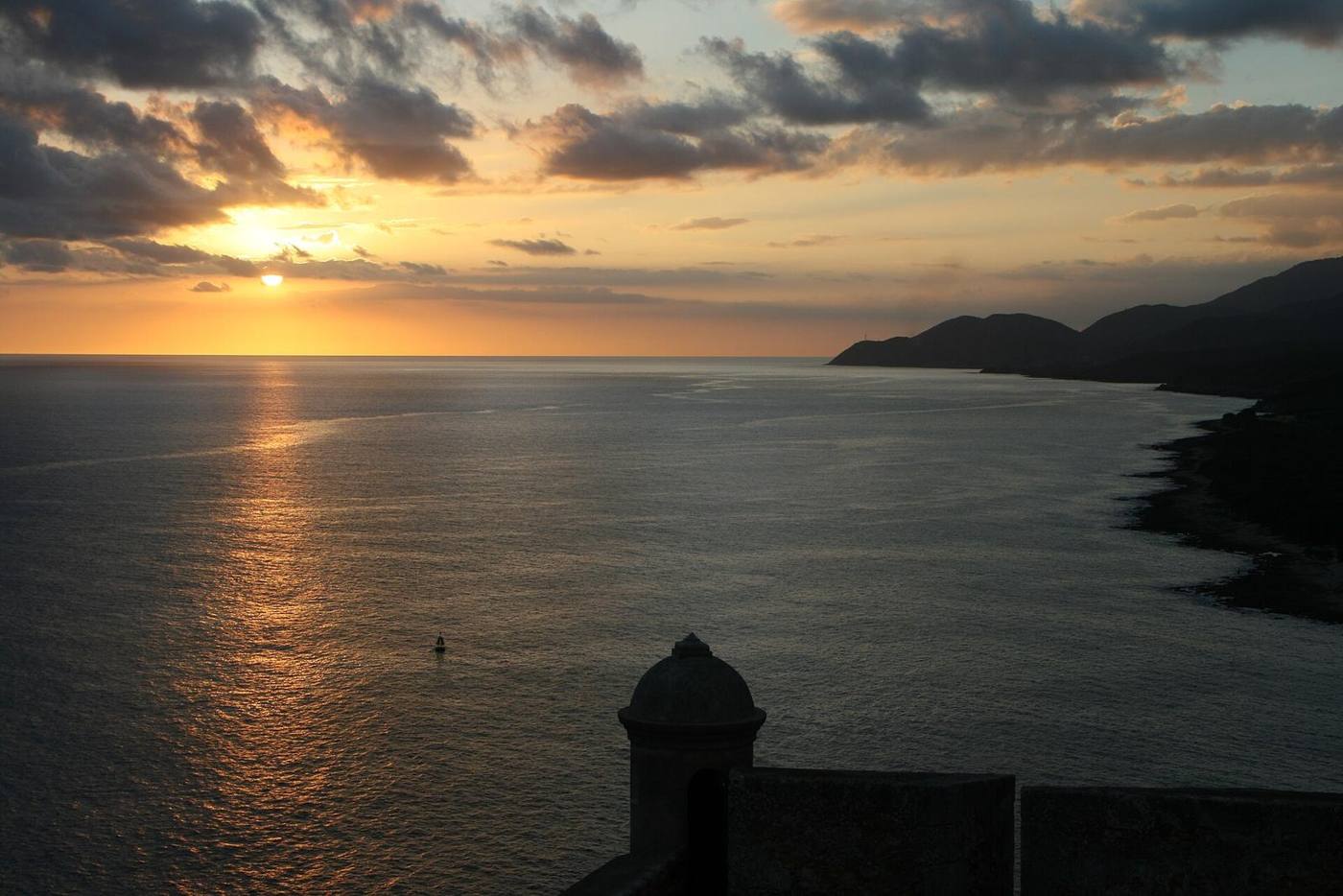
In the afternoon go to the Castillo del Morro, the San Pedro de la Roca fortress, built in the seventeenth century on a cliff at the mouth of the bay. It is a UNESCO World Heritage Site. Stay until sunset, when the sun drops into the sea in front of the ramparts.
In the evening, if you like dancing, look for a venue playing salsa or son, or simply sit in a square: in Santiago music is everywhere.
Sleep in Santiago.
Practical tip: Santiago is hot even in winter and the streets of the centre are steep: visit outdoor sights early in the morning and late in the afternoon, and rest in the middle of the day.
- Day 10
The long transfer to the centre
Today you leave the east and head back towards the centre of the island, to Remedios, the gateway to the cays of the north coast.
This is the longest transfer of the trip, almost a full day on the road along the Carretera Central and then the motorway, through the provinces of Granma, Las Tunas, Camagüey, Ciego de Ávila and Sancti Spíritus. Leave at dawn with your driver and make regular stops to rest. When reliable domestic flights are running, an alternative is to fly from Santiago towards the centre and continue by car, but flights are often cancelled.
Along the way the landscape changes slowly: the mountains of the east give way to the great plains of the centre, with pastures, Cuban cowboys on horseback, called guajiros, sugar cane fields and royal palms.
In the evening you reach Remedios, a colonial town founded in the early sixteenth century, one of the oldest in Cuba. It has two churches on the same square, which is rare in the country. The main church of San Juan Bautista has altars of gilded wood.
Remedios is famous for the Parrandas, the festival of 24 December, when the town's districts compete with illuminated floats and fireworks until morning.
Have a relaxed dinner and rest after the long journey.
Sleep in Remedios.
Practical tip: for this transfer carry enough water and food for the whole day: there are few places to stop along the road and they often have little to offer.
- Day 11
The pedraplén and Cayo Santa María
Today you reach the sea, on the cays of the north coast, where you will stay for four days.
In the morning take a last walk around Remedios, then pass through Caibarién, a fishing town on the sea, with low wooden houses and a harbour. It is famous for its crabs.
From here the pedraplén begins, the road built over the sea in the 1990s to link the coast with the cays: it is almost fifty kilometres long and crosses the bay on a stone embankment, with dozens of small bridges to let the water through. On both sides you see shallow green water, mangroves, seabirds and sometimes flamingos.
Cayo Santa María is part of a small archipelago of low islands, covered in woods and mangroves, with long beaches of fine white sand, inside a UNESCO biosphere reserve. The islands have been given over to tourism and there are almost only large all-inclusive resorts: there are no Cuban villages.
In the afternoon settle in, have your first swim and walk on the beach at sunset. The water is calm and clear, and the seabed slopes very gently.
Sleep on Cayo Santa María, for four nights.
Practical tip: before booking, check that your accommodation is open and working properly: with the crisis some places have closed or cut back their services, so read very recent reviews.
- Day 12
Beach and mangroves
Today is a day of rest after the long journey across the island.
Early in the morning walk along the shore, while the sand is still cool and the beach is empty. On the cays the early light is very clear and the water shows every shade of turquoise.
Swim slowly: the sea here stays shallow for many metres and usually has no strong currents. With a mask and snorkel, near the rocks and the seagrass beds, you see small fish, starfish and shells.
During the hottest hours rest in the shade and read something about Cuban history, to think back over what you saw in the east.
In the afternoon explore the inner part of the cay, if there are marked trails: among the mangroves and low woodland live iguanas, crabs and many birds, including herons, pelicans and, in the lagoons, pink flamingos. Some nature trails start near the main road.
At sunset watch the sun sink into the sea from the western side of the island. Sometimes, on clear evenings, you can see the green flash at the very last moment.
Sleep on Cayo Santa María.
Practical tip: the Caribbean sun burns even under cloud: use a high-factor, reef-friendly sun cream and a swim shirt, and drink plenty of water.
- Day 13
By boat to the reef
Today you head out to sea to see the coral reef that protects the cays.
In the morning leave on a catamaran or boat trip from the marina on the cays. The outing usually lasts half a day or a full day, with snorkelling stops on the reef and on a deserted islet. Check prices and times, and ask exactly what is included before you pay.
Underwater you see brain and elkhorn corals, sea fans swaying in the current, parrotfish, surgeonfish and sometimes rays and turtles. Visibility is often excellent.
If you are a certified diver, you can go diving: the north coast reef has walls and shallow passages suitable for beginners too. Bring your certification card and logbook.
On the islet, during the stop, walk on the white sand and look in the shallow water for starfish, without touching them or lifting them out of the water.
If you suffer from seasickness, take a tablet before boarding and sit in the middle of the boat, where you feel the movement less.
In the afternoon you return to the cay. Rest, and in the evening have fish or lobster for dinner.
Sleep on Cayo Santa María.
Practical tip: boat trips depend on the wind and on the fuel available: book as soon as you arrive and keep the next day as a reserve, in case the trip is cancelled.
- Day 14
Cayo Las Brujas and the last day by the sea
Today is the last full day by the sea, to be enjoyed slowly.
In the morning go to Cayo Las Brujas, the first of the cays along the pedraplén, smaller and quieter. The beaches are long and uncrowded, with low dunes and sea grape trees that give shade.
If you prefer, stay on your own beach and alternate swims, reading and walks along the shore.
In the afternoon, if you feel like it, take a bicycle and ride along the road that links the cays: it is flat, with little traffic, and runs between mangroves and lagoons, where at sunset you see the birds coming home.
This is also the right moment to prepare for the journey back. Check tomorrow's departure time with your driver and confirm the time of your flight from Havana with the airline.
At sunset have the last swim of the holiday, with a calm sea and the sky turning pink and then violet above the islands.
In the evening think back over the trip: from Havana to the mogotes of Viñales, from the colonial towns to the mountains of the Sierra Maestra and the music of Santiago.
Sleep on Cayo Santa María.
Practical tip: have everything ready for tomorrow, including cash for the journey and the airport: on the cays it is not easy to change money and foreign cards do not work.
- Day 15
Santa Clara and back to Havana
Today you return to Havana and complete your tour of the island.
In the morning cross the pedraplén again and carry on to Santa Clara, about two hours away. Here, at the end of 1958, Che Guevara led the decisive battle of the revolution: his men derailed an armoured army train, and a few days later the Batista regime fell. The Tren Blindado monument keeps some of the original carriages.
Then visit the Che memorial complex, with the large bronze statue on a square, the mausoleum where his remains have rested since 1997, together with those of some of his companions, and a small museum. Check prices and times.
In the afternoon continue to Havana, about three and a half hours by motorway, and get ready for your departure.
In these fifteen days you have seen the whole of Cuba: colonial Havana, the mogotes of Viñales, French Cienfuegos and Trinidad, Sancti Spíritus and the maze of Camagüey, Bayamo and the Comandancia in the Sierra Maestra, Santiago with its son and El Morro, and finally the white beaches of Cayo Santa María.
When to go: the best time is November to April, the dry season, with less heat and little rain, ideal for the long transfers. In December there are the Parrandas of Remedios and in July the Santiago carnival. From June to November it is very hot and it rains often; from August to October the risk of hurricanes is high.
Practical tip: book your international flight for the day after you return to Havana, not the same evening: long transfers in Cuba often bring surprises.
The only way to really understand Cuba: the east, with Santiago and the Sierra Maestra, is very different from Havana. Transfers are long and services sometimes shaky, so bring patience and cash in euros. The final days at the beach are a good way to recover.
Before you go
- Documents and visa
- Passport valid for at least six months after arrival. You need a tourist visa (the tourist card), now issued only in electronic form: apply online on the official eVisa platform, at a Cuban consulate or through an agency; it is valid for up to 90 days and can be extended in Cuba. After the visa, fill in the online D'Viajeros form within 72 hours before arrival and carry the printed QR code. You also need a return or onward ticket. Anyone who has been in Cuba on or after 12 January 2021 can no longer use ESTA for the United States and must apply for a US visa.
- Health and vaccines
- Health insurance covering medical costs in Cuba is compulsory on entry; it is best if it includes repatriation. Hospitals are struggling and often lack medicines and supplies: bring a stock of your own medicines and a first aid kit. Dengue, chikungunya and Oropouche are present: use repellent all day. Drink only bottled water, without ice. No vaccinations are compulsory: ask your doctor.
- Money and payments
- Cuban peso. Since 6 June 2026 Visa and Mastercard cards are no longer accepted and you cannot withdraw cash from ATMs with foreign cards; cards on US networks do not work either. Bring cash in euros or dollars for the whole trip and for emergencies, and change money only at Cadeca offices: changing on the street is illegal. Amounts over 5,000 dollars, or the equivalent, must be declared on arrival.
- Power sockets
- Types A, B, C and L, at 110 volts in most of the country and 220 volts in some newer hotels: bring an adaptor and check that your devices accept 110 volts.
- Time zone
- UTC-5, UTC-4 in summer.
- Safety
- Cuba is going through a severe crisis of fuel, electricity, water and medicines, with long power cuts across the country, cancelled flights and unreliable domestic transport; the UK advises against all but essential travel to the whole island. In the east, after Hurricane Melissa in October 2025, electricity and water remain severely limited. Theft and bag snatching are rising, especially in Havana: do not walk at night, use licensed taxis, do not change money on the street and stay only in registered accommodation. Bring a power bank and a torch. Official advice: GOV.UK.
Information checked in November 2026 for Italian and EU citizens. Rules change: always check before you travel.
Variations
In 10 days: Havana, Viñales, Trinidad, Camagüey and Santiago with a domestic flight back, without the Sierra Maestra and the beach days.
In 19 days: add three days in Baracoa, with the Farola road and El Yunque, before heading back to the centre.
Frequently asked questions
Are there too many transfers?
They are long, especially between Viñales and Cienfuegos and between Santiago and Remedios, but they are the price of really seeing the whole island. With a car and driver, departures at dawn and no night driving they are manageable, and the final days by the sea help you recover.
What documents do I need for Cuba?
A passport valid for at least six months after arrival, the electronic tourist card, the online D'Viajeros form to fill in within 72 hours before arrival, a return ticket and health insurance valid in Cuba. The rules change often: check them on the website of the Cuban embassy before you leave.
Can you always visit the Comandancia de La Plata?
Not always: access depends on the park and the weather, and the road up to Alto del Naranjo can only be driven in authorised vehicles. Ask a few days ahead in Bayamo or Santo Domingo and, if it is closed, use the day for a forest walk in the Sierra Maestra.
Indicative itinerary written by World Atlas. Before booking, check timetables, seasonal openings, documents and safety.
 7 daysEasy
Havana, Viñales and Trinidad
The capital of vintage cars and music, the tobacco valley and the island's most beautiful colonial town.
 11 daysEasy
Cuba express: Havana, Viñales and Trinidad
The heart of Cuba in under two weeks: colonial Havana, the tobacco valleys of Viñales, timeless Trinidad and the Bay of Pigs.
 22 daysModerate
Cuba libre: the whole island from Havana to Santiago
Three weeks to really see Cuba: Viñales, Varadero, Trinidad, the colonial cities of the centre, the Sierra Maestra, Santiago and Baracoa.