Cuba express: Havana, Viñales and Trinidad
The heart of Cuba in under two weeks: colonial Havana, the tobacco valleys of Viñales, timeless Trinidad and the Bay of Pigs.
- Havana
- Viñales
- Playa Girón
- Cienfuegos
- Trinidad
Day by day
- Day 1
Arrival in Havana
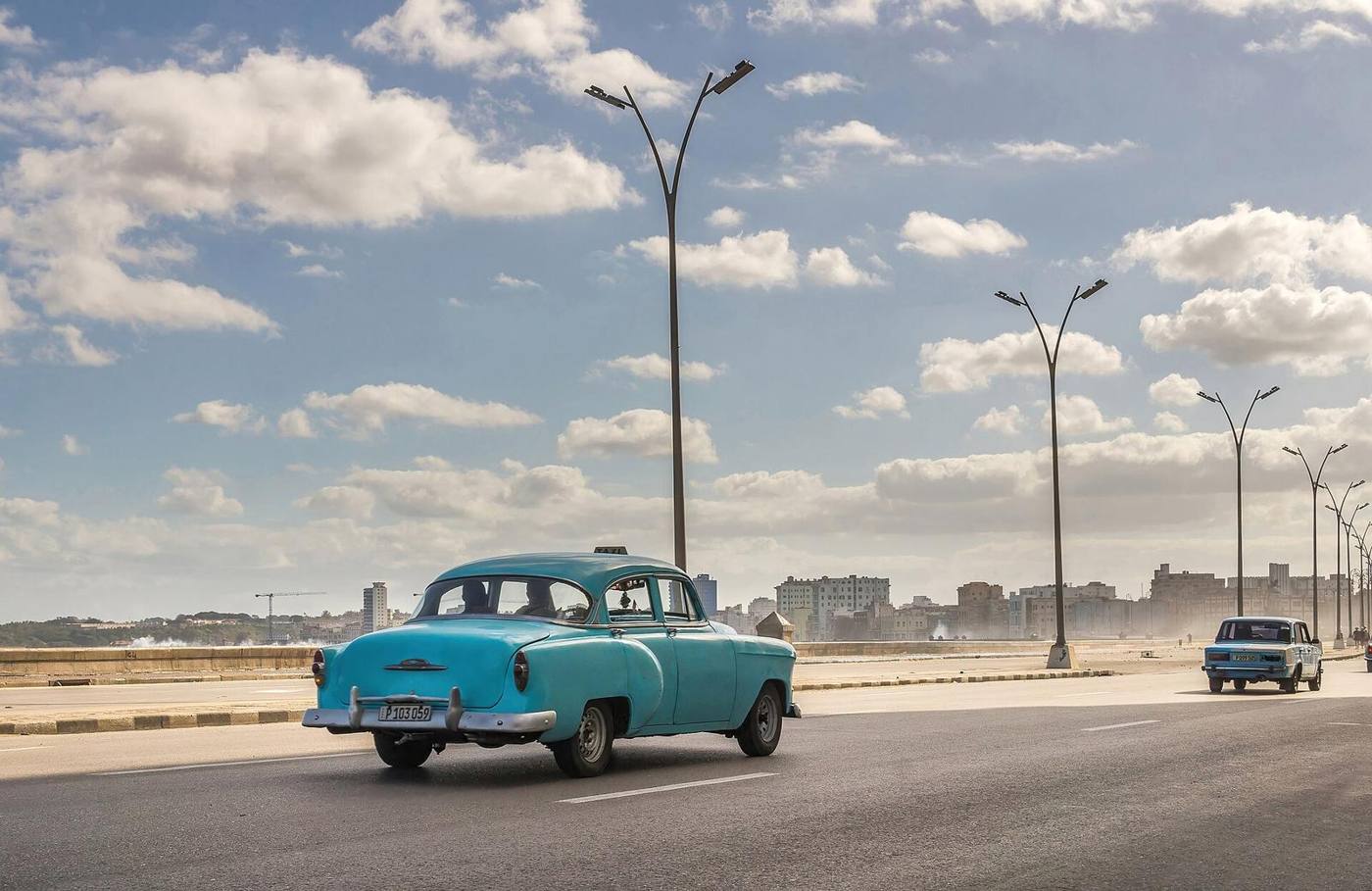
This trip is the classic first tour of Cuba, in eleven days: colonial Havana with the Malecón and its vintage cars, the tobacco valley of Viñales, the Bay of Pigs with its snorkelling, Cienfuegos and Trinidad, the best preserved colonial town on the island.
Before you go: Italian citizens enter Cuba with a passport valid for at least six months after the date of arrival; the electronic identity card is not enough. You need the tourist card, the tourist visa, now issued in electronic form, then the online D'Viajeros form to fill in within 72 hours before arrival, a return ticket and health insurance covering medical costs in Cuba, which is compulsory on entry. The rules change often: check them on the website of the Cuban embassy before you leave. Other nationalities should check their own rules.
Some areas on this trip are close to borders or places where the situation changes often: check your government's travel advice before booking and again before you leave.
You land at José Martí airport, about half an hour from the centre. Take a licensed taxi and agree the fare before getting in. Change a first amount of euros only at the official offices, called Cadeca: foreign cards do not work in Cuba today.
Settle into a casa particular, a private home licensed to rent rooms, in Old Havana or Vedado. Staying in Cuban homes is the best way to get to know people and to help them directly.
In the evening eat something near your lodging and rest.
Sleep in Havana, for three nights.
Practical tip: bring all the cash you need for the trip, split between several places, with small notes in good condition: damaged or marked notes are often refused.
- Day 2
Old Havana
Today you spend the whole day in the old city, Old Havana, a UNESCO World Heritage Site together with its fortifications.
Start early in the morning at the Plaza de Armas, the oldest square, with its trees, second-hand book stalls and the Palacio de los Capitanes Generales, the seat of the Spanish governors, now the city museum. Next to it is the Castillo de la Real Fuerza, one of the oldest forts in the Americas, topped by the Giraldilla weather vane, the symbol of Havana. Check prices and times.
Then walk to the Plaza de la Catedral, framed by the baroque façade of the cathedral, and to the Plaza de San Francisco, facing the port, with its basilica and lion fountain.
At midday reach the Plaza Vieja, the most colourful, with restored colonial buildings and wrought iron balconies. Have lunch with ropa vieja, shredded beef with tomato and peppers, and congrí, rice and black beans cooked together.
In the afternoon walk along Calle Obispo, the pedestrian street of shops and music, as far as Parque Central and the Capitolio, the great domed building. Next to it is the Gran Teatro, with a façade crowded with statues.
At sunset go to the Malecón, the eight kilometre seafront, and walk towards the Castillo del Morro as it glows orange in the last light.
Sleep in Havana.
Practical tip: in Old Havana, people who stop you in the street offering cigars, money exchange or a place to eat often work on commission: answer politely and keep walking.
- Day 3
Vintage cars, Vedado and music
Today you discover modern Havana, outside the historic centre.
In the morning take a ride in one of the 1950s American cars, convertible and brightly painted, still on the road in Cuba thanks to decades of hand repairs. The classic route follows the Malecón to Vedado, the district of tree-lined avenues, eclectic villas and 1950s tower blocks. Agree the price and the length of the ride first.
Get out at the Plaza de la Revolución, the vast square of the great political speeches, with the José Martí memorial and, on the buildings, the metal faces of Che and Camilo Cienfuegos.
Then visit the Museo Nacional de Bellas Artes, with its section of Cuban art from colonial times to today: it is the best way to understand the country's history through its painters. Check prices and times.
In the afternoon walk through the Callejón de Hamel, an alley covered in murals and sculptures made from recycled objects, dedicated to Afro-Cuban culture. On Sundays at midday there is usually rumba dancing.
In the evening listen to live music: in Havana many venues play son, salsa, bolero and Cuban jazz. Try a mojito, with rum, lime, mint and cane sugar, or a daiquiri.
Sleep in Havana.
Practical tip: after dinner always go back by licensed taxi: during power cuts many streets stay dark and bag snatching has increased, even in central areas.
- Day 4
To Viñales
Today you leave Havana and head west, into Pinar del Río province, the land of tobacco.
The journey takes about three hours by car with a driver or in a shared taxi, on the motorway across the plain, between sugar cane fields, royal palms and small towns. Scheduled coaches exist, but with the fuel crisis timetables are uncertain: book your transport the day before.
Towards the end the road climbs into the hills and opens onto the Viñales valley. Stop at the Los Jazmines viewpoint above the valley: from here you see the flat floor of red earth, the green fields and tobacco barns, and the mogotes, limestone hills with sheer walls. The valley is a UNESCO cultural landscape.
In the early afternoon settle in Viñales, a small village with a main street of low, colourful houses, all with porches and rocking chairs.
Later in the afternoon walk out of the village through the fields towards the nearest mogotes, and watch the farmers ploughing with oxen.
In the evening have dinner in the village with country dishes: roast pork, rice, black beans, yuca and fried plantain, with tropical fruit for dessert.
Sleep in Viñales, for two nights.
Practical tip: in Viñales power cuts can last many hours: charge your phone and power bank whenever there is electricity, and download offline maps before you go.
- Day 5
Viñales on horseback, tobacco and caves
Today you explore the Viñales valley in the most traditional way, on horseback.
Early in the morning, while it is still cool, set off with a local guide for a ride of a few hours along red earth tracks, through tobacco fields and among the mogotes. The horses walk slowly, which suits riders with no experience too.
Halfway, stop at a tobacco farm. The farmer explains how the plant is grown, how the leaves are hung to dry in the large tobacco barn of wood and palm leaves, and then rolls a cigar in front of you. Most of the harvest goes to the State; the rest can be sold directly.
Before heading back, pass a small lagoon or a cave along the route, where guides often stop to rest the horses.
In the afternoon visit the Cueva del Indio, a cave you explore partly on foot and partly by boat on an underground river. Alternatively, if you like caves, go to the Cueva de Santo Tomás, about twenty kilometres away, one of the largest cave systems in Cuba, with guided visits and helmets. Check prices and times.
On the way back look at the Mural de la Prehistoria, the large colourful painting on a rock face.
Sleep in Viñales.
Practical tip: for the ride wear long trousers, closed shoes, a hat and sun cream, and check that the horses look healthy before you set off.
- Day 6
The Bay of Pigs: Punta Perdiz and the cenote
Today you cross the island south-east to the Bay of Pigs, on the Caribbean coast.
The transfer is long, several hours by road via Havana: leave at dawn with your car and driver. After the motorway you cross the Zapata peninsula, a vast area of swamps, mangroves and woods, protected as a national park and biosphere reserve. It is one of the best areas in Cuba for birdwatching.
The Bay of Pigs is famous for the landing of April 1961, when Cuban exiles trained by the United States tried to overthrow Fidel Castro's government and were defeated within a few days. At Playa Girón a small museum tells the story of the battle from the Cuban point of view. Check prices and times.
In the afternoon go snorkelling at Punta Perdiz, along the coast: the reef starts a few metres from the rocks, with clear water, corals, sea fans and colourful fish.
Then stop at the Cueva de los Peces, a cenote, a deep crack in the rock filled with brackish water, in the middle of the forest near the road. The water is clear and emerald green and you swim among the fish.
In the evening have fish or lobster for dinner and watch the sunset over the sea.
Sleep in Playa Larga or Playa Girón.
Practical tip: bring your own mask, snorkel and reef shoes from home: hire is not always available and the rocks are sharp. At sunset put on repellent, because the swamp mosquitoes are many.
- Day 7
Cienfuegos, the French city
Today you reach Cienfuegos, about an hour and a half east by road, on the south coast.
Cienfuegos is different from every other Cuban city. It was founded in 1819 by French settlers from Bordeaux and Louisiana, and it has wide, straight streets laid out in a grid, with neoclassical buildings. Its historic centre is a UNESCO World Heritage Site.
Start at Parque José Martí, the main square, with a statue of Martí, a triumphal arch and the buildings around it: the cathedral, the government palace with its red dome and the Teatro Tomás Terry, opened at the end of the nineteenth century, with a wooden interior and frescoes on the ceiling. Check prices and times.
Then walk along the Prado, the long tree-lined avenue with benches, down to the Malecón on the bay.
In the afternoon reach Punta Gorda, the spit of land at the end of the bay, with early twentieth century villas facing the sea. Here you see the Palacio de Valle, a palace in Arab style, with domes, arches and Moorish decoration.
At sunset walk to the tip, where locals fish and swim, and watch the sun go down over the bay.
Sleep in Cienfuegos.
Practical tip: the centre of Cienfuegos is easy to see on foot, but for Punta Gorda, a few kilometres away, take a bicycle taxi or a horse-drawn carriage: agree the fare before you get in.
- Day 8
Trinidad, the colonial town
Today you reach Trinidad, the most beautiful colonial town in Cuba, about an hour and a half from Cienfuegos.
The road runs along the south coast, with the sea on one side and the Escambray mountains on the other.
Trinidad was founded in 1514 by Diego Velázquez and grew rich in the eighteenth and nineteenth centuries from sugar and the work of enslaved people. Then it was cut off for decades, which is why the centre has survived almost intact. It is a UNESCO World Heritage Site together with the nearby Valle de los Ingenios.
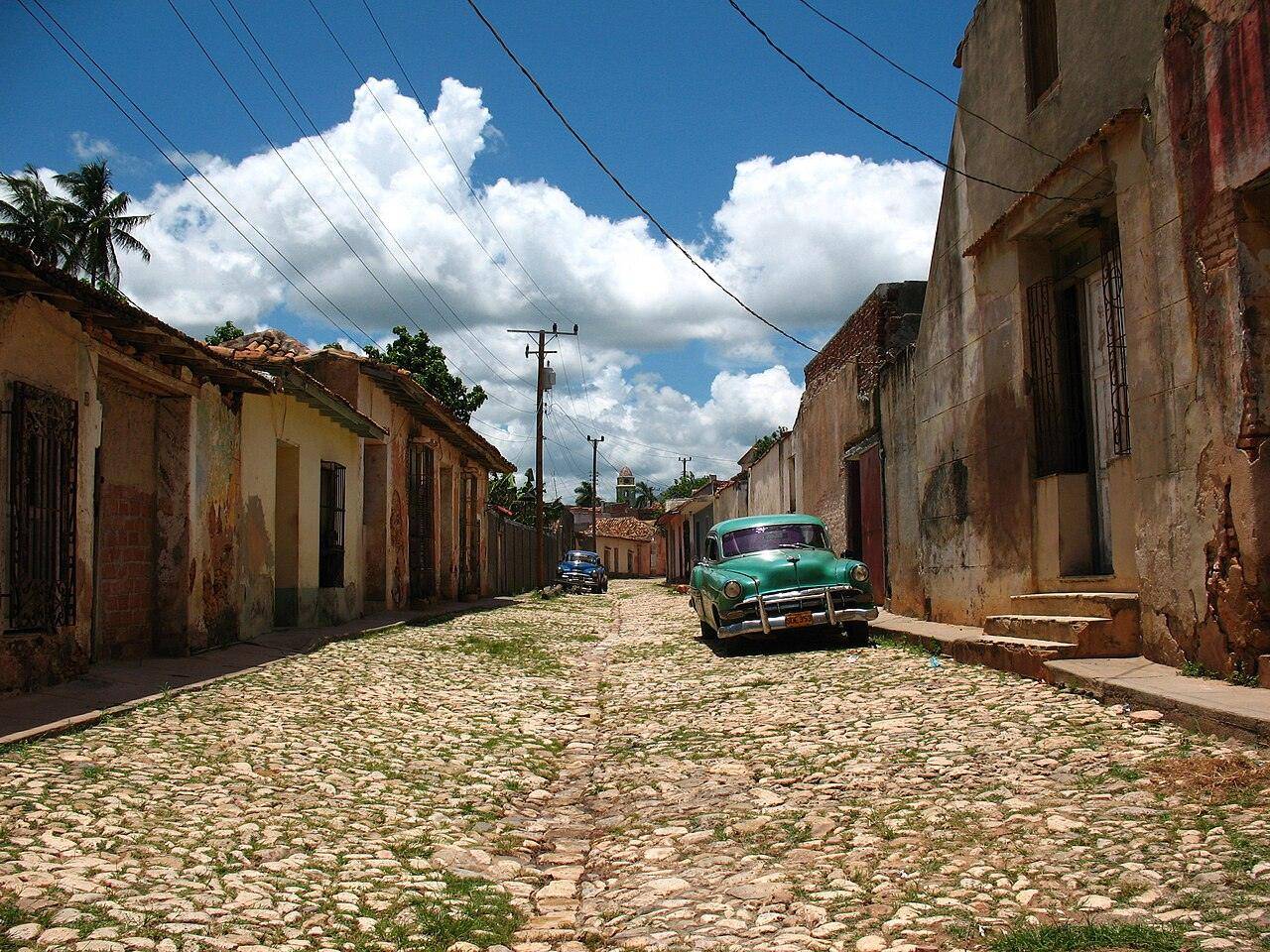
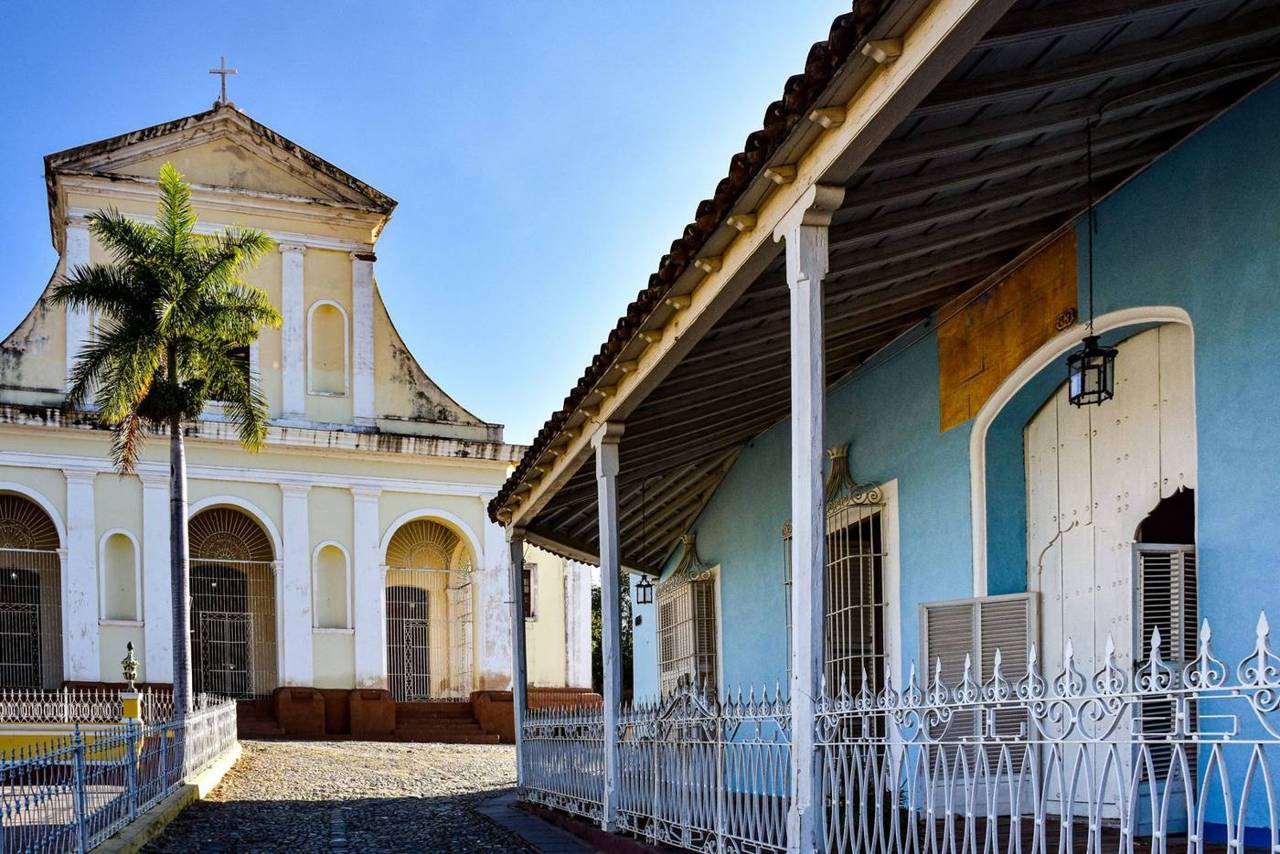
Walk the cobbled streets, between low houses painted yellow, blue and pink, with wooden window grilles. The heart of the town is the Plaza Mayor, with palms, small gardens and the church of the Santísima Trinidad.
On the square visit the Museo Romántico, in a nineteenth century mansion with period furniture, porcelain and chandeliers. Then climb the yellow bell tower of the old San Francisco convent, now a museum, for views over the red tiled roofs, the mountains and the sea. Check prices and times.
In the afternoon, when the heat eases, look into the small workshops selling lace and embroidery made by hand by the town's women.
In the evening music spills into the street, on the steps beside the Plaza Mayor. Try canchánchara, the local drink, with cane spirit, honey and lime.
Sleep in Trinidad, for two nights.
Practical tip: Trinidad's cobbles are large and slippery: wear comfortable shoes with good soles, not beach sandals.
- Day 9
The Valle de los Ingenios and Playa Ancón
Today you leave Trinidad for the sugar valley and the sea.
In the morning go to the Valle de los Ingenios, east of the town. Here, between the eighteenth and nineteenth centuries, dozens of sugar mills, called ingenios, processed the cane grown by enslaved Africans. The owners' houses, the ruins of the mills and the slave quarters remain.
The main stop is Manaca Iznaga, with a tower about forty metres high from which overseers watched the work in the fields. Climb to the top for the view over the green valley, closed in by the Escambray mountains. In the manor house next door, women from the village sell embroidered tablecloths. Check prices and times.
To get there you can take the old tourist train, when it runs, or a taxi. Ask locally the day before.
In the afternoon go to Playa Ancón, on the peninsula south of town, about twelve kilometres away. It is a long beach of pale sand, with the calm, warm water of the Caribbean. Swim, rest under the palms and, if you like, snorkel on the reef offshore.
At sunset return to Trinidad. Pass through the fishing village of La Boca, at the start of the peninsula, where families swim in the small bay.
Sleep in Trinidad.
Practical tip: take water, food and shade to the beach: services are few and with the crisis there is sometimes nothing to buy. Agree the return time with your taxi.
- Day 10
Back to Havana
Today you return to Havana, on the other side of the island.
The journey from Trinidad takes about four or five hours, by car with a driver or by shared taxi. Leave early in the morning so that you arrive in the early afternoon. On the way stop for a Cuban coffee, small, strong and very sweet, and for a freshly pressed sugar cane juice, called guarapo.
In Havana use the afternoon for whatever you have not yet seen. One option is to cross the bay to the Cabaña fortress and the Castillo del Morro, on the opposite side of the harbour: from there you see the whole skyline of the old city and the Malecón. At nine in the evening, in the Cabaña, a group of soldiers in colonial uniform fire the cañonazo, the cannon shot that once announced the closing of the city gates. Check prices and times.
Alternatively, stroll through Vedado along the avenue called Avenida de los Presidentes, with its monuments and shady benches.
For your last dinner try the dishes you have not yet tasted, such as picadillo, minced meat with olives and raisins, or tamal en cazuela, a creamy maize dish.
Sleep in Havana.
Practical tip: the day before departure check your flight time with the airline: last minute schedule changes are frequent in Cuba.
- Day 11
Departure
Today is departure day.
If your flight leaves in the afternoon, take a last walk in the morning. You can go back to the Malecón, when fishermen cast their lines from the wall and the waves crash on the rocks, or visit the Museo de la Revolución, in the former presidential palace, which tells the history of Cuba from the official point of view. Check prices and times.
If you want to take something home, choose Cuban coffee, rum, a record of Cuban music or a painting bought from a local artist. For cigars, buy only in official shops with a receipt.
Then take a licensed taxi to the airport and arrive well in advance.
In these eleven days you have seen the heart of Cuba: the colonial squares and the Malecón of Havana, vintage cars and music, the mogotes and tobacco fields of Viñales, the sea and the cenote of the Bay of Pigs, the French city of Cienfuegos, timeless Trinidad with the Valle de los Ingenios and Playa Ancón, always sleeping in Cuban homes.
When to go: the best time is November to April, the dry season, with less heat and little rain. In December and over holidays there are more visitors and prices rise. From June to November it is very hot and it rains often; from August to October the risk of hurricanes is highest.
Practical tip: keep a few euros in cash aside for the last day, for the taxi and for any surprises at the airport.
The right first trip to Cuba. Staying in casas particulares, licensed private homes, is the best way to get to know Cubans and help them directly. Bring euros in cash and check the exchange situation beforehand: the economy is difficult and changes often.
Before you go
- Documents and visa
- Passport valid for at least six months after arrival. You need a tourist visa (the tourist card), now issued only in electronic form: apply online on the official eVisa platform, at a Cuban consulate or through an agency; it is valid for up to 90 days and can be extended in Cuba. After the visa, fill in the online D'Viajeros form within 72 hours before arrival and carry the printed QR code. You also need a return or onward ticket. Anyone who has been in Cuba on or after 12 January 2021 can no longer use ESTA for the United States and must apply for a US visa.
- Health and vaccines
- Health insurance covering medical costs in Cuba is compulsory on entry; it is best if it includes repatriation. Hospitals are struggling and often lack medicines and supplies: bring a stock of your own medicines and a first aid kit. Dengue, chikungunya and Oropouche are present: use repellent all day. Drink only bottled water, without ice. No vaccinations are compulsory: ask your doctor.
- Money and payments
- Cuban peso. Since 6 June 2026 Visa and Mastercard cards are no longer accepted and you cannot withdraw cash from ATMs with foreign cards; cards on US networks do not work either. Bring cash in euros or dollars for the whole trip and for emergencies, and change money only at Cadeca offices: changing on the street is illegal. Amounts over 5,000 dollars, or the equivalent, must be declared on arrival.
- Power sockets
- Types A, B, C and L, at 110 volts in most of the country and 220 volts in some newer hotels: bring an adaptor and check that your devices accept 110 volts.
- Time zone
- UTC-5, UTC-4 in summer.
- Safety
- Cuba is going through a severe crisis of fuel, electricity, water and medicines, with long power cuts across the country, cancelled flights and unreliable domestic transport; the UK advises against all but essential travel to the whole island. In the east, after Hurricane Melissa in October 2025, electricity and water remain severely limited. Theft and bag snatching are rising, especially in Havana: do not walk at night, use licensed taxis, do not change money on the street and stay only in registered accommodation. Bring a power bank and a torch. Official advice: GOV.UK.
Information checked in November 2026 for Italian and EU citizens. Rules change: always check before you travel.
Variations
In 8 days: Havana, Viñales and Trinidad with the Valle de los Ingenios, without the Bay of Pigs and Cienfuegos.
In 14 days: after Trinidad add Santa Clara, with the Che memorial, and three days on the beach at Cayo Santa María.
Frequently asked questions
Is this a good trip for a first time in Cuba?
Yes, it is the classic route to discover the island: distances are manageable and it combines cities, countryside and sea. With the transport crisis, though, it is best to have a car with a driver or taxis booked in advance for all transfers.
What documents do I need for Cuba?
A passport valid for at least six months after arrival, the electronic tourist card, the online D'Viajeros form to fill in within 72 hours before arrival, a return ticket and health insurance valid in Cuba. The rules change often: check them on the website of the Cuban embassy before you leave.
How much cash should I bring?
All you need for the trip, plus a reserve for emergencies, because foreign cards do not work today and you cannot withdraw cash. Bring euros and change money only at official offices; amounts over 5,000 dollars, or the equivalent, must be declared on arrival.
Indicative itinerary written by World Atlas. Before booking, check timetables, seasonal openings, documents and safety.
 7 daysEasy
Havana, Viñales and Trinidad
The capital of vintage cars and music, the tobacco valley and the island's most beautiful colonial town.
 15 daysModerate
Cuba from west to east, to Santiago
The whole island: Havana, Viñales, the colonial towns of the centre, the Sierra Maestra, Santiago and a few days by the sea.
 22 daysModerate
Cuba libre: the whole island from Havana to Santiago
Three weeks to really see Cuba: Viñales, Varadero, Trinidad, the colonial cities of the centre, the Sierra Maestra, Santiago and Baracoa.