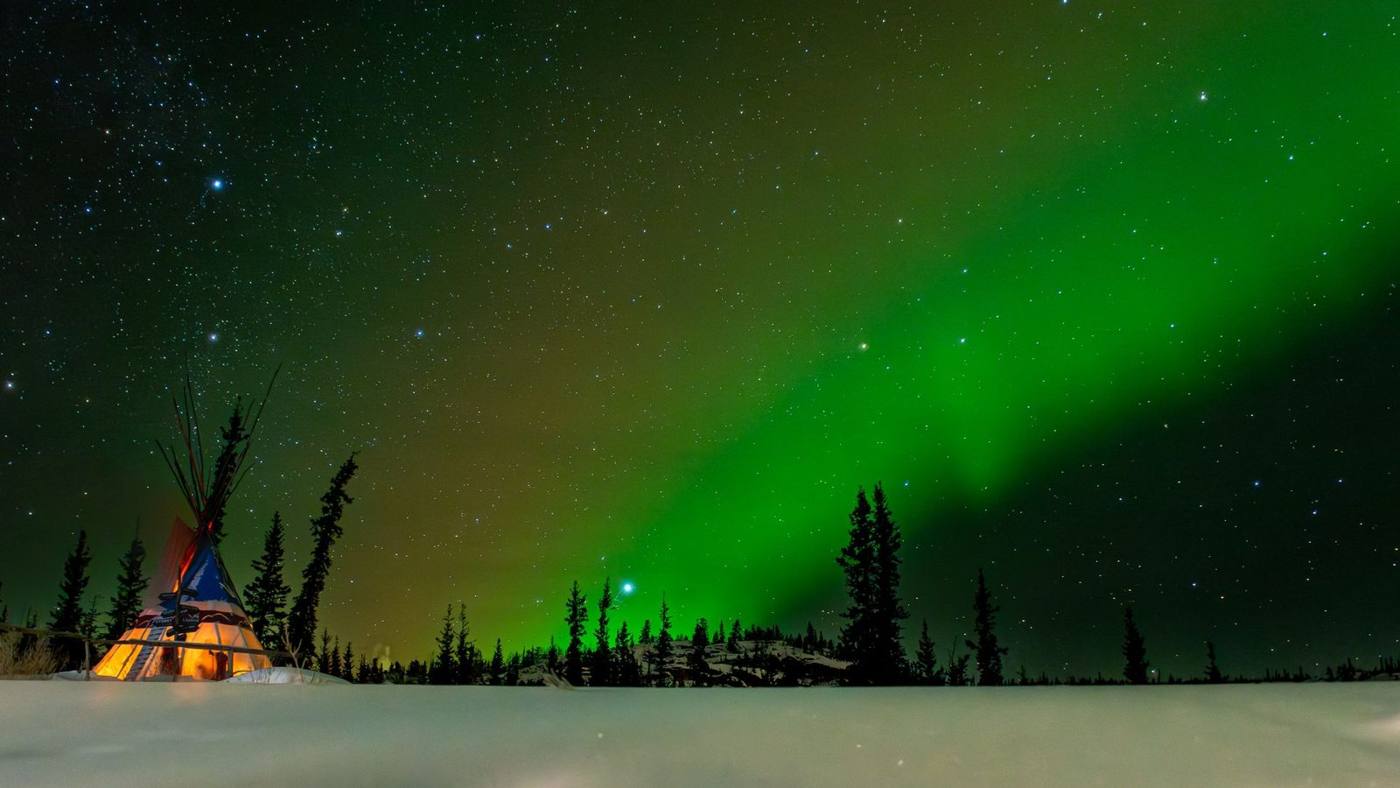
Yukon: northern lights in Whitehorse
Nights in a cabin far from the lights, days of dog sledding and snowshoeing and a soak in the Takhini hot springs.
- Vancouver
- Whitehorse
- Takhini
- Carcross
- Whitehorse
Day by day
- Day 1
Flying via Vancouver and arriving in Whitehorse
Yukon is a vast, almost empty territory in north west Canada, on the border with Alaska. It has mountains, spruce forests, rivers frozen for months and fewer than fifty thousand people, most of them in the capital, Whitehorse. Far from city lights and under the band where the northern lights are most frequent, it is one of the best places in North America to see them. Over seven days you spend several nights chasing the aurora and the days with sled dogs, snowshoes, hot springs and the landscapes of Carcross.
From Europe you almost always reach Whitehorse with a change in Vancouver. The domestic flight takes about two and a half hours and passes over mountains and glaciers.
Whitehorse is a small city on the banks of the Yukon River, born with the Klondike gold rush at the end of the nineteenth century. The first day is for resting after the long journey and getting used to the cold and the time difference.
If you arrive early, walk along the river to the SS Klondike, a large sternwheeler that once carried goods and prospectors to Dawson City. Today it is a national historic site.
In the evening, if the sky is clear, look north: the aurora is sometimes visible even from the edge of town.
Spend the night in Whitehorse.
Practical tip: European citizens flying to Canada must apply online for an eTA, which costs 7 Canadian dollars. Do it before you book. In winter temperatures can drop below minus thirty degrees: many operators rent extreme cold jackets, trousers and boots.
- Day 2
Whitehorse, Yukon history and the first aurora night
In the morning discover Whitehorse and its history. The Beringia centre, just outside town, tells the story of the Ice Age, when Yukon was not covered by ice and was home to mammoths, wild horses, steppe lions and other large animals. There are skeletons, reconstructions and the stories of the original peoples.
In the centre, the MacBride museum recreates the life of the gold seekers, the First Nations and the animals of the north. Yukon First Nations cultures are very present in the city, with cultural centres, art and place names in their languages.
In the afternoon, while it is light, go to Miles Canyon, a few kilometres south. The Yukon River runs through a narrow gorge between basalt walls, and a suspension bridge lets you cross on foot. In winter the river is partly frozen and the landscape is silent. Then rest for a few hours, because the night will be long.
In the evening set off on your first aurora outing. Local operators take visitors to places far from the lights, often with heated tents or small cabins, hot drinks and a fire. You wait, watch the sky and take photos. The aurora appears as a green band, sometimes with pink or purple tones, that moves and changes shape.
Return to Whitehorse late at night.
Practical tip: the aurora depends on solar activity and on clouds, and nobody can guarantee it. The more nights you spend here, the better your chances. The best period is September to April, with the longest nights in midwinter.
- Day 3
Dog sledding
After a night of aurora watching, the morning starts late. The day is devoted to dog sledding, a tradition born with the northern peoples and the gold seekers, when dogs were the only way to travel in winter.
The kennels are in the forest around Whitehorse, half an hour to an hour away. On arrival you meet the dogs, almost always Alaskan huskies, lean, tough and very affectionate, who bark with joy when they realise it is time to run. The musher, the driver, explains how to steer the sled, how to brake and how to stay upright on the runners in the bends.
Then you set off on a trail through the snowy forest, between spruce trees and frozen lakes. The only sounds are paws on snow and the runners. Many outings let you drive your own sled, others let you sit while the musher drives. Some last half a day, others a full day with lunch cooked over a fire.
Back at the kennel you help remove the harnesses and feed the dogs, and you can cuddle the puppies.
In the evening, if the sky is clear and the forecast is good, you can go out again for the aurora. Otherwise rest: tomorrow is another day outdoors.
Spend the night in Whitehorse.
Practical tip: dress in layers and protect your hands, feet and face well, because on the sled the wind makes the cold much sharper. Chemical warmers in gloves and boots are very useful. Keep spare batteries out of the cold, in a pocket close to your body.
- Day 4
Snowshoeing in the forest and hot springs
In the morning go snowshoeing in the forest around Whitehorse. No experience is needed: you walk almost normally, just with slightly wider steps. With a local guide you follow animal tracks in the fresh snow, learn to recognise those of lynx, fox, snowshoe hare and moose, and find out how northern peoples lived in this environment.
If you would rather see animals up close, north west of the city there is a Yukon wildlife preserve where moose, caribou, muskoxen, lynx, foxes and mountain goats live in large natural enclosures. You can walk round or join a guided tour.
In the afternoon head to the natural hot springs in the same area, about half an hour from Whitehorse. There are outdoor pools of hot water rising from underground. Bathing at forty degrees while the air is at minus twenty is a remarkable experience: wet hair freezes and turns white with frost within minutes, and steam rises into the cold air.
In the evening, if the forecast is good, go out again to look for the aurora. The more nights you try, the better your chances of a good display.
Spend the night in Whitehorse.
Practical tip: at the hot springs bring a wool hat to wear in the water, sandals and a towel. Get out slowly and dress quickly. Check opening hours and whether you need to book.
- Day 5
Carcross, the little desert and Emerald Lake
Today you leave Whitehorse and drive south for about an hour and a quarter, on the road towards Skagway and Alaska, through mountains, lakes and forest.
The first stop is Emerald Lake, named for the emerald green colour of its water, caused by a pale bed of mineral deposits that reflects the light. In summer the colour is intense; in winter the lake is often covered with ice and snow, but the mountain scenery around it remains very beautiful.
A little further on is the Carcross Desert, often called the smallest desert in the world. In fact it is a field of sand dunes left by the bed of an ancient glacial lake and shaped by the wind. Walking on dunes surrounded by snowy mountains is a strange and striking sight.
Carcross is a small village on a lake, the land of the Carcross Tagish First Nation. It has colourful houses, an old station of the historic White Pass railway and a centre where community artists carve totems and masks. Respect private areas and ask before photographing people.
In the late afternoon return to Whitehorse or continue to the remote lodge where you will spend your last nights, depending on your plans.
Practical tip: drive in winter only if you are experienced on snow and ice, with winter tyres. Distances are great and phone coverage is patchy: carry blankets, water and food in the car and fill up in Whitehorse.
- Day 6
A last aurora night in a remote lodge
For the last night it is worth moving to a remote lodge out in nature, away from the lights of Whitehorse, on a lakeshore or in the forest. Many are an hour or two from the city and offer heated cabins with large north facing windows, so you can watch the sky while staying warm.
During the day you can do quiet activities: a snowshoe walk across the frozen lake, ice fishing through a hole in the surface, or simply silence in front of the fire. On clear days the low winter light turns the mountains pink for hours.
In the evening, after dinner, the sky watching begins. Many lodges have a wake up system: if the aurora appears during the night, staff alert the guests. When it is strong, green lights fill the sky, move fast like curtains in the wind, and sometimes pink and purple appear too.
To photograph it you need a camera on a tripod and exposures of a few seconds. Recent phones, in night mode and resting on something steady, also give good results.
Spend the night at the lodge.
Practical tip: the cold drains camera and phone batteries fast. Carry spares, keep them warm and, when you come back inside, leave the camera in its closed bag for a few hours so that moisture does not condense inside.
- Day 7
A last morning in the snow and departure
Enjoy your last morning slowly. After what was probably a short night, have breakfast looking out at the frozen lake and the mountains. If there is time, take a final short snowshoe walk or say goodbye to the dogs, if the lodge has any.
Then return to Whitehorse. Before heading to the airport, if you have a few hours, stop in the centre to buy something from local artists, such as leatherwork, beadwork and First Nations carvings, or have a last coffee by the river.
The flight to Vancouver leaves from the city's small airport, a few minutes from the centre. From Vancouver you continue to Europe. Bear in mind that in winter flights from the north can be delayed by extreme cold or snow.
If you have a few extra days, you can stop in Vancouver to see the city, Stanley Park and the mountains above the bay, or add Dawson City, the gold rush town six hours north of Whitehorse.
Practical tip: always leave a day of margin between the flight from Whitehorse and your intercontinental flight. Connections on a single ticket give better protection in case of delays. Before you leave, also check that your eTA is still valid and that your passport meets the expiry requirements. Keep your warm clothes in your hand luggage in case of a long wait.
A good place for the aurora, with often clear skies and fewer people than Scandinavia. In midwinter it drops below -30°C, so technical clothing is needed, which many lodges rent out. From Europe it takes two flights, so less than a week is not worth it. In late summer the aurora is already visible and you sleep by unfrozen lakes.
Before you go
- Documents and visa
- Passport valid for the whole stay. Anyone flying in needs an eTA, applied for online on the official Canadian government website: it costs 7 Canadian dollars.
- Health and vaccines
- No compulsory vaccines. Medical care is very expensive for visitors: health insurance is essential. Emergencies: 911.
- Money and payments
- Canadian dollar. Cards are accepted almost everywhere; tips of 15 to 20% are customary in restaurants.
- Power sockets
- Types A and B, 120 volts: you need an adapter and devices must accept 120 volts.
- Time zone
- Montreal and Quebec City are UTC-5, Calgary and Banff UTC-7, Vancouver UTC-8, all with daylight saving time in summer.
- Safety
- A very safe country. In summer wildfires can close roads and parks and bring smoke: check local alerts. Official advice: GOV.UK.
Information checked in November 2026 for Italian and EU citizens. Rules change: always check before you travel.
Variations
In 4 days: just Whitehorse, with two aurora nights and dog sledding.
In 10 days: add Dawson City and the Klondike Highway, or two nights in Vancouver.
Frequently asked questions
When is the aurora best?
September to April. Midwinter has the longest nights; September and March are less cold.
Is it really that cold?
Yes, from December to February it often drops below minus twenty and sometimes below minus thirty. With the right clothing you are fine.
Is the aurora guaranteed?
No. It depends on the sun and the clouds. With at least four nights your chances are good.
Indicative itinerary written by World Atlas. Before booking, check timetables, seasonal openings, documents and safety.
 9 daysEasy
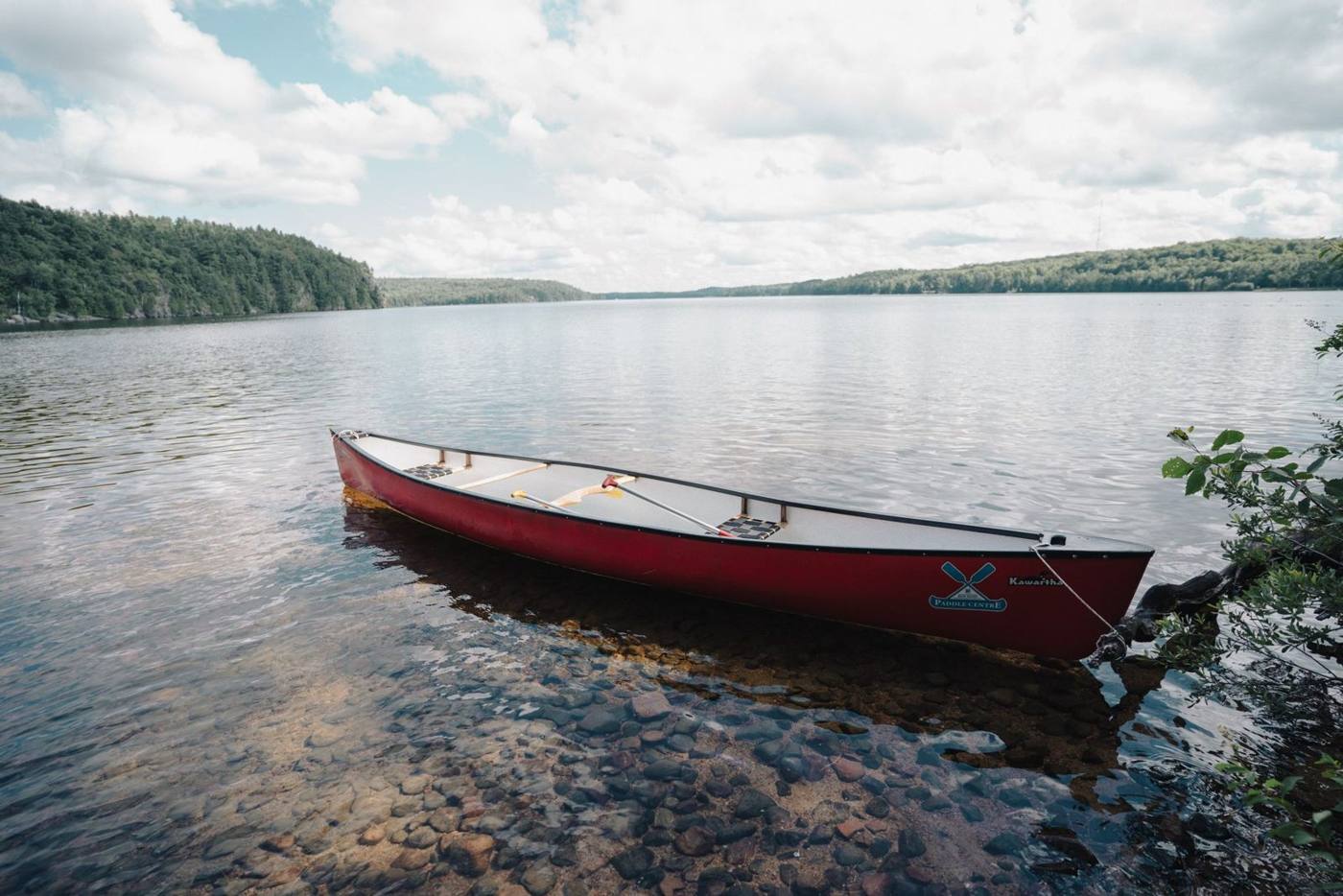
Ontario: Toronto, Niagara and Algonquin
Toronto, Niagara Falls, the Lake Ontario vineyards, the capital Ottawa and three days by canoe among the lakes of Algonquin.
 10 daysModerate
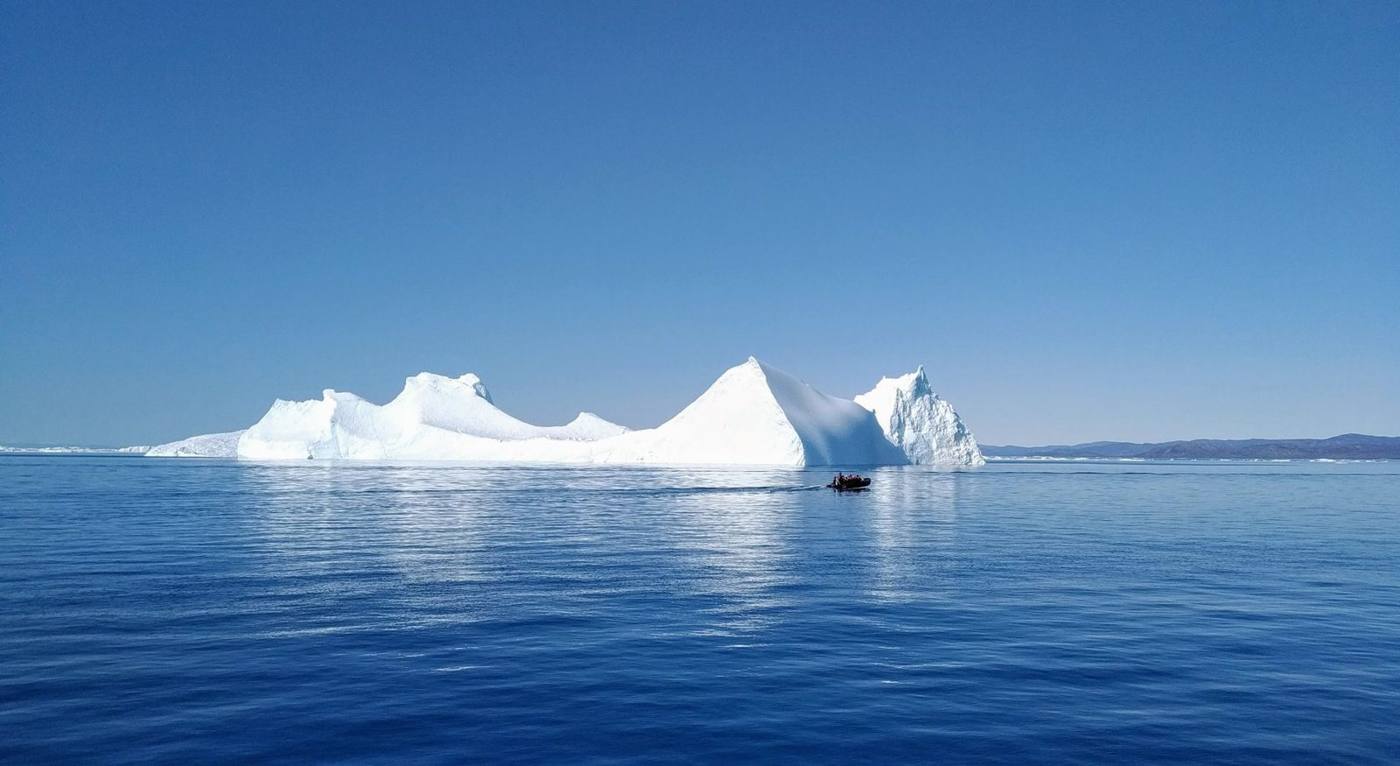
Newfoundland: icebergs, whales and fjords
St. John's and its coloured houses, Iceberg Alley, puffins, the fjords of Gros Morne and the Viking site of L'Anse aux Meadows.
 14 daysEasy
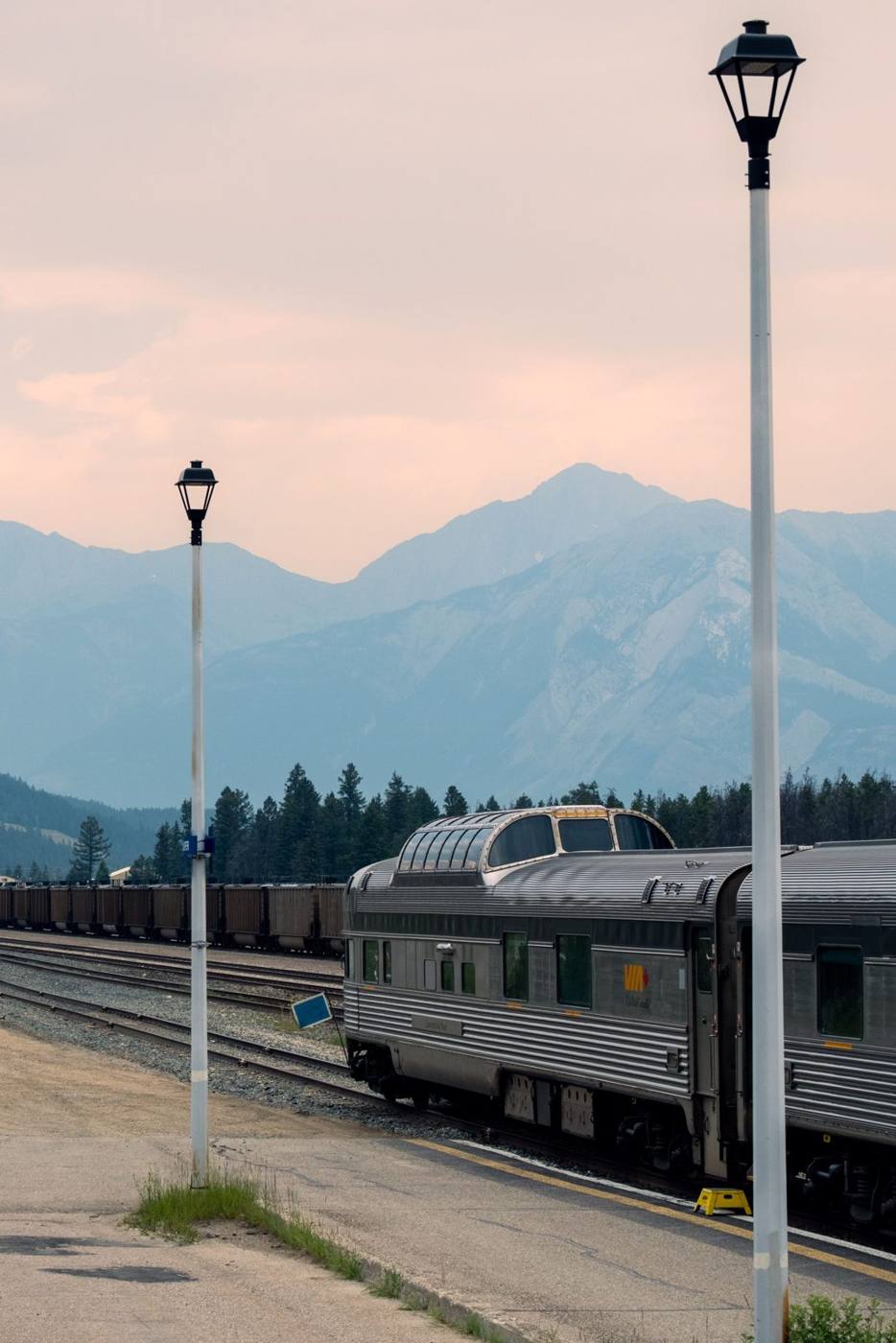
By train from Toronto to Vancouver
Four nights on The Canadian through forests, prairies and the Rockies, with stops in Jasper and Banff before Vancouver.