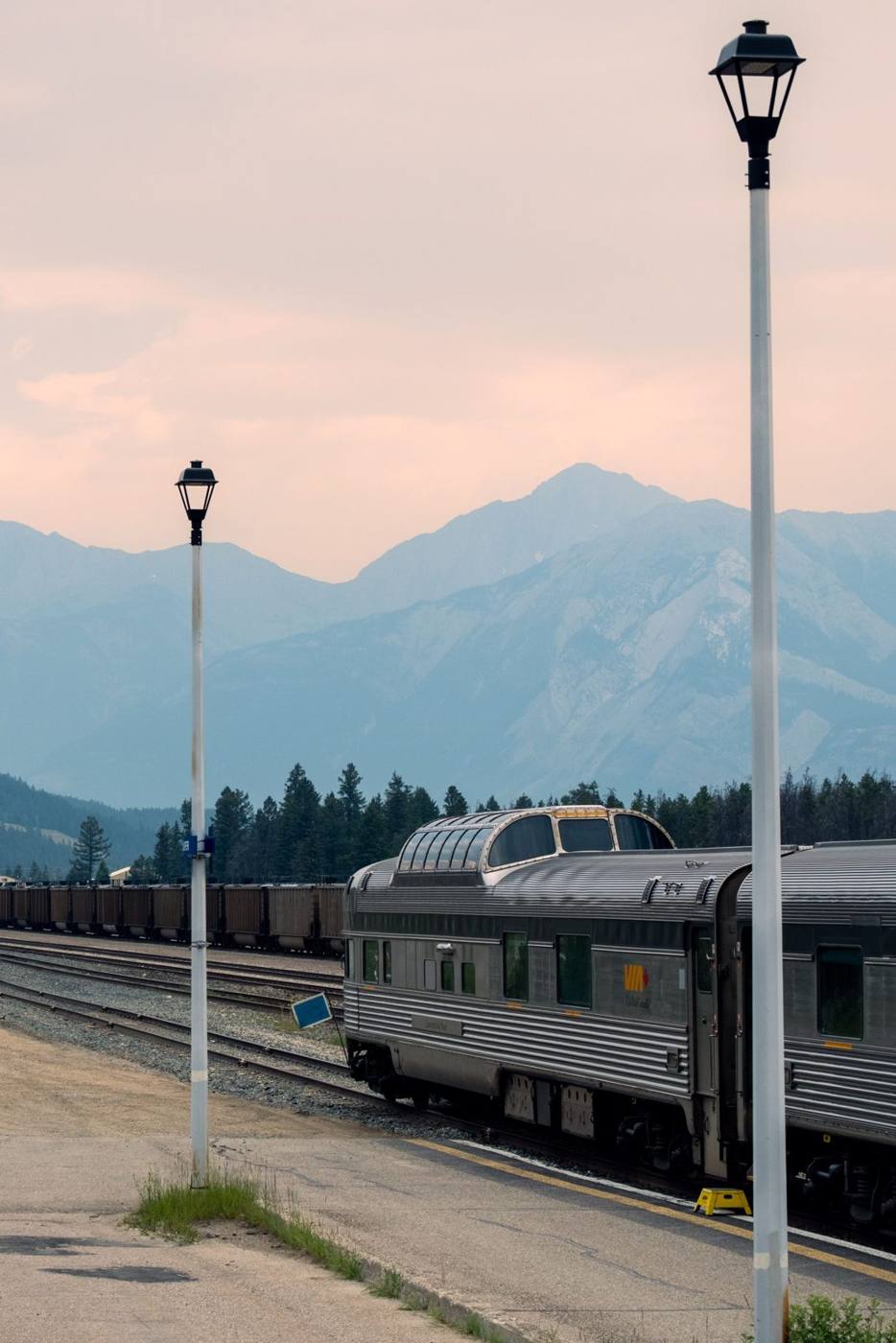
By train from Toronto to Vancouver
Four nights on The Canadian through forests, prairies and the Rockies, with stops in Jasper and Banff before Vancouver.
- Toronto
- The Canadian
- Winnipeg
- Jasper
- Banff
- Vancouver
Day by day
- Day 1
Arrival in Toronto
This trip crosses Canada by train, from Ontario to the Rocky Mountains, and then continues among the lakes and glaciers of Jasper and Banff to Vancouver, on the Pacific. The heart of the trip is four days and four nights on the transcontinental passenger train, which runs for thousands of kilometres through forests, lakes and prairies.
Before you go: to fly into Canada, EU citizens need an eTA, the electronic travel authorisation, applied for online on the official Canadian government website for 7 Canadian dollars. Beware of websites charging more. Your passport must be valid for the whole stay. Other nationalities should check their own rules.
You arrive at Toronto airport, linked to the centre by an express train in about 25 minutes.
Toronto is the largest city in Canada, on the shores of Lake Ontario, and one of the most multicultural cities in the world: about half of its residents were born in another country.
In the afternoon walk along the waterfront and go up the CN Tower, 553 metres high, for the view over the city and the lake. Check prices and times. Then visit the Distillery District, with the red brick buildings of an old nineteenth century distillery turned into shops, galleries and cafés.
In the evening have dinner in one of the ethnic neighbourhoods, such as Chinatown or Little Italy.
Sleep in Toronto.
Practical tip: the transcontinental train leaves Toronto only on certain days of the week and sleeping berths sell out months ahead, especially in summer. Book the train first and build the rest of the trip around the date.
- Day 2
Toronto and the train departure
Today you see more of Toronto and board the train.
In the morning go to St Lawrence Market, a large covered market from 1803, with stalls of cheese, fish and bread and the famous peameal bacon sandwich, a Toronto speciality. Then visit the Royal Ontario Museum, one of the largest museums in North America, with collections of natural history, dinosaurs, First Nations art and ancient civilisations. Check opening times and tickets.
In the afternoon walk through Kensington Market, a colourful neighbourhood of vintage shops, murals and small eateries, and buy something to eat on the train: fruit, snacks and water.
Then go to Union Station, the great historic station in the city centre. Luggage check in takes place before departure: check the times and weight limits. On board take only a small bag with what you need for three or four nights.
According to the timetable, the train leaves and crosses the outskirts of Toronto heading north, among the lakes and first forests of Ontario.
In the evening, if you travel in a cabin or berth, meals are served in the dining car, in sittings. You eat with other travellers at the same table.
Sleep on the train.
Practical tip: the train gives way to freight trains and often runs late, sometimes by many hours. Do not book flights or tight connections on arrival and always keep a margin of one day.
- Day 3
The lakes and forests of Ontario
Today you cross the great north of Ontario.
When you wake up the train is running through the Canadian Shield, one of the oldest rock formations on Earth, with granite billions of years old, polished by glaciers. The landscape is made of lakes, rivers, marshes and forests of spruce and birch, repeated for hundreds of kilometres. You see very few roads and almost no villages.
In the morning go up to the dome car, with its glass roof, from which you see the landscape in every direction. With a little luck you see moose near the lakes, bald eagles and beavers.
Along the line the train stops at small stations in the forest, even on request, to let on or off people who live in cabins and isolated villages, often not reached by any road. It is an essential public service for these communities.
In the afternoon the train passes through railway towns, such as Hornepayne or Sioux Lookout, where it makes short stops. Get off to stretch your legs on the platform, but do not wander away: the train leaves without warning.
In the evening, at sunset, the light on the lakes is beautiful. After dinner, chat with other travellers in the dome car.
Sleep on the train.
Practical tip: in northern Ontario the phone has no signal for many hours. Download books, music and maps in advance and bring a power bank. A pair of binoculars also helps for spotting wildlife from the dome car.
- Day 4
Winnipeg and the start of the prairies
Today the train leaves the forests and reaches the great plains.
In the morning the landscape changes: rocks and lakes give way to farmland and open plains. You enter the province of Manitoba.
The train stops in Winnipeg, the capital of Manitoba, for a few hours. Check how long the stop lasts, which depends on the timetable and delays. If there is time, walk to The Forks, a few minutes from the station, the point where the Red and Assiniboine rivers meet, a meeting place for First Nations peoples for about six thousand years. Today it is an area with a covered market and riverside paths.
Next to it is the Canadian Museum for Human Rights, a modern building with a glass tower, dedicated to the history of human rights in the world and in Canada. Check opening times and tickets.
In the afternoon the train leaves again westwards into the prairies. Fields of wheat, yellow canola and sunflowers stretch to the horizon, with great wooden and metal grain elevators near the stations. The sky seems enormous.
In the evening the train enters the province of Saskatchewan.
Sleep on the train.
Practical tip: in Winnipeg never get off without asking the staff for the exact departure time. Keep your ticket and phone with you, and return to the station well in advance. If the train is running late, the stop may be shortened.
- Day 5
The prairies of Saskatchewan and Alberta
Today you cross the prairies and approach the Rocky Mountains.
During the night the train passes through Saskatoon, the largest city in Saskatchewan, on the South Saskatchewan river. When you wake up you are still in the middle of the prairies, with isolated farms, small lakes full of ducks and dirt roads running straight to the horizon.
Saskatchewan produces much of Canada's wheat and is called the breadbasket of the country. From the train you see huge farm machinery and, in summer, the yellow fields of flowering canola.
During the day the train enters Alberta and reaches Edmonton, the provincial capital, a city born as a fur trading post. The train stops for a short time.
In the afternoon, after Edmonton, the landscape changes again: hills, pine forests and faster rivers appear. In the distance, on clear days, you see the first peaks of the Rocky Mountains, still covered in snow.
In the evening, in the dome car, watch the mountains getting closer. It is one of the finest moments of the trip.
Sleep on the train.
Practical tip: in summer the nights on the prairies are short and the sun sets late. Bring an eye mask if you travel in a berth, because the curtains do not always block out the light completely. Earplugs help too, as the train sways and the carriages creak at night.
- Day 6
Arrival in Jasper
Today you leave the train in the Rocky Mountains.
According to the timetable, the train enters the valley of the Athabasca river and arrives in Jasper, after about four days of travel from Toronto. The station is of wood and stone, from 1925, in the centre of the town.
Jasper is a small mountain town inside Jasper National Park, the largest in the Canadian Rockies, a UNESCO World Heritage site together with the other Rocky Mountain parks. In July 2024 a large wildfire burned part of the town's houses and the surrounding forests; the town is being rebuilt and the signs of the fire are still visible.
At the entrance to the Rocky Mountain national parks you pay the park fee: in 2026 daily admission to Banff for an adult costs 12.25 Canadian dollars, while young people up to 17 pay nothing. For a long trip the annual Discovery Pass, valid in all national parks, is better value.
In the afternoon collect your hire car in town and go to Pyramid Lake and Patricia Lake, a few kilometres away, with the view of reddish Pyramid Mountain. On Pyramid Lake a wooden bridge leads to a small island.
In the evening, if the sky is clear, look at the stars: Jasper is a dark sky preserve.
Sleep in Jasper, for three nights.
Practical tip: black bears and grizzlies live in the Rocky Mountain parks. Always carry bear spray, walk in a group and make noise in wooded stretches. Check trail closures on the Parks Canada website.
- Day 7
Maligne Canyon and Maligne Lake
Today you explore the Maligne valley, the most famous in Jasper.
In the morning go to Maligne Canyon, about half an hour from Jasper. The river has carved a narrow gorge up to 50 metres deep in the limestone, with waterfalls and pools. A path follows the edge of the canyon and crosses six bridges, from which you look down into the water. In winter the canyon freezes and you can walk along the bottom with guides.
Then drive along the valley to Medicine Lake, a strange lake that almost disappears in autumn, because the water drains into an underground cave system, one of the largest in North America. Along the road you often see moose, deer and, sometimes, bears.
In the afternoon you reach Maligne Lake, about 22 kilometres long, the largest natural lake in the Canadian Rockies, surrounded by mountains with glaciers. In summer you take a boat cruise to Spirit Island, a small islet with fir trees, one of the most photographed places in Canada. For the Stoney people it is a sacred place. Check prices and times and book. You can also hire a canoe on the lake.
In the evening return to Jasper.
Sleep in Jasper.
Practical tip: on park roads never stop in the middle of the carriageway to look at animals. Pull over in a safe place, stay in the car and never approach bears or moose. Keep at least a hundred metres from bears.
- Day 8
Athabasca Falls and Mount Edith Cavell
Today you see the waterfalls and glaciers south of Jasper.
In the morning drive to Mount Edith Cavell, about half an hour from Jasper, on a narrow mountain road usually open only from June to October. Check that it is open on the Parks Canada website. The mountain, 3,363 metres high, is named after a British nurse of the First World War.
Walk the Path of the Glacier trail, about two hours return, to a small glacial lake with little icebergs below the north face of the mountain, from which hangs the Angel Glacier, shaped like an angel with outstretched wings. If you have energy, climb the Cavell Meadows trail, with a view down onto the glacier and mountain flowers in July and August.
In the afternoon drive to Athabasca Falls, about thirty minutes from Jasper. The wide and powerful Athabasca river drops about 23 metres into a gorge of dark, smooth rock. Walkways and viewpoints let you see the falls up close.
In the evening return to Jasper and have dinner with Alberta beef, famous throughout Canada, or Pacific salmon.
Sleep in Jasper.
Practical tip: in the Rockies, even in summer, the temperature can drop close to freezing in the evening and it can snow above 2,000 metres. Always carry warm layers and a waterproof jacket.
- Day 9
The Icefields Parkway
Today you drive one of the most beautiful roads in the world.
The Icefields Parkway links Jasper to Lake Louise over about 230 kilometres, along the main range of the Rockies, among glaciers, turquoise lakes and waterfalls. Without stops it takes about three and a half hours; with stops, the whole day.
In the morning leave Jasper and stop at Sunwapta Falls, where the river drops into a narrow gorge among the forests.
Then you reach the Columbia Icefield, the largest icefield in the Rockies, which feeds rivers flowing to three oceans: the Pacific, the Atlantic and the Arctic. From the car park a path leads in about twenty minutes close to the toe of the Athabasca Glacier. Along the path there are signs with dates, showing how far the ice once reached: in just over a century the glacier has retreated by more than a kilometre and a half. Never go onto the ice alone: there are hidden crevasses.
In the afternoon, after the Sunwapta Pass, stop at the Peyto Lake viewpoint, a turquoise lake shaped like a wolf's head, and at Bow Lake, at the foot of a glacier.
In the evening you arrive in Lake Louise.
Sleep in Lake Louise or Banff, for three nights.
Practical tip: on the Icefields Parkway there is only one petrol station, at Saskatchewan River Crossing, and the phone hardly works. Fill up in Jasper and bring water and food.
- Day 10
Lake Louise and Moraine Lake
Today you visit the two most famous lakes in the Rockies.
Early in the morning go to Lake Louise, a turquoise lake in front of the Victoria Glacier, with a large historic hotel on the shore. Walk along the shore and then climb to Lake Agnes, about three and a half kilometres uphill, a small lake in a mountain cirque, with a wooden teahouse from 1901. If you have energy, continue to the Big Beehive, a viewpoint above Lake Louise.
In the afternoon go to Moraine Lake, in the Valley of the Ten Peaks, about fifteen kilometres from Lake Louise. For many it is the most beautiful lake in the Rockies: intense turquoise water ringed by ten jagged peaks and a great rockslide from which you see the lake from above. Climb the rockpile trail, a few minutes, for the most famous photo.
The road to Moraine Lake is closed to private cars: you get there on the Parks Canada shuttle, which in 2026 costs 8 Canadian dollars plus 3.50 for booking, or on tour buses. In 2026 the road is open from 1 June to 12 October. Book the shuttle well ahead.
In the evening return to Lake Louise or Banff.
Sleep in Lake Louise or Banff.
Practical tip: at Lake Louise too the car park fills at dawn and is paid. Use the park shuttles, which leave from the Lake Louise park and ride and link the two lakes. Bring a warm layer, because mornings by the lakes are cold even in July.
- Day 11
Banff and Johnston Canyon
Today you explore Banff, the town that symbolises the Rockies.
In the morning drive along the Bow Valley Parkway, a secondary road quieter than the highway, where you often see deer and bears. Stop at Johnston Canyon and walk the path that follows the river on walkways fixed to the canyon wall, to the lower falls, about thirty minutes, and the upper falls, about an hour.
Then you reach Banff, in Canada's first national park, founded in 1885 after the discovery of the hot springs. Banff is a mountain town of wood and stone houses, shops and views of Mount Rundle.
In the afternoon visit the Cave and Basin historic site, where the hot springs from which the park was born were found, with a cave and a pool of sulphurous water. Then walk to Bow Falls, near the great castle shaped historic hotel. You can ride the gondola up Sulphur Mountain, for the view over the valley, or walk up, about two hours of climbing.
In the evening relax in the open air pools of the Banff hot springs, with views of the mountains. Check prices and times.
Sleep in Banff.
Practical tip: in Banff never feed the animals, not even the squirrels. It is forbidden and fines apply. Elk, the large deer that wander the town's streets, can be aggressive in autumn and spring: stay at least thirty metres away.
- Day 12
To Vancouver
Today you leave the Rockies and reach the Pacific.
In the morning, if you have time, take a last walk at Lake Minnewanka, the largest lake in the Banff area, a few minutes from town, where you often see bighorn sheep, with their curled horns.
Then you have two ways to reach Vancouver. The fastest is to drive for about an hour and a half to Calgary airport, return the car and fly to Vancouver in about an hour and a half. The other is to travel by bus through the mountains of British Columbia, about twelve or thirteen hours, with views of Rogers Pass and the river valleys. Check times and prices.
In the afternoon you arrive in Vancouver, one of the most beautiful cities in North America, between the sea, the forests and the coastal mountains.
Walk through the historic district of Gastown, the first core of the city, with its cobbled streets and steam clock. Then go on to the Canada Place waterfront, with cruise ships and seaplanes taking off from the water.
In the evening have dinner with Pacific salmon or sushi, very common in Vancouver thanks to the large Asian community.
Sleep in Vancouver, for two nights.
Practical tip: in Vancouver it rains a lot from October to April, but it is rarely cold. In the city you do not need a car: there are the SkyTrain, buses and small ferries.
- Day 13
Stanley Park and Granville Island
Today you discover the green side of Vancouver.
In the morning hire a bicycle and ride the Stanley Park Seawall, a seaside path of about ten kilometres around the great park on the downtown peninsula. Stanley Park is larger than Central Park in New York, with forests of giant cedars, beaches and lakes. Along the way there are First Nations totem poles at Brockton Point and views of the Lions Gate Bridge and the North Shore mountains.
In the afternoon take a small ferry to Granville Island, a former industrial area under a bridge, transformed into a covered market full of stalls of fish, fruit, bread and sweets, with craft workshops and theatres. Have lunch at the market.
Then, if you want wild nature, cross the bridge to the North Shore and go to Lynn Canyon Park, with a suspension bridge over the canyon, paths through the rainforest and green pools. Check opening times and park rules.
In the evening walk on the beach at English Bay at sunset, when the sun goes down behind the mountains of Vancouver Island.
Sleep in Vancouver.
Practical tip: on the North Shore the weather changes quickly and the paths are steep and muddy. Wear hiking shoes and a waterproof jacket even for short walks. Never swim in the canyon pools, where the currents and cold water have caused many accidents.
- Day 14
Vancouver and departure
Today you leave Canada.
In the morning, if your flight leaves in the afternoon, visit the Museum of Anthropology at the University of British Columbia, west of the city, with a large collection of totem poles, canoes and objects of the First Nations of the Pacific coast, in a glass and concrete building looking out to sea. Check opening times and tickets.
Alternatively walk around the Kitsilano district, with its beach, cafés and views of the centre and mountains.
Then go to Vancouver airport on the SkyTrain, about 25 minutes from the centre.
In two weeks you have crossed almost all of Canada: the cities of Ontario, the forests and lakes of the Canadian Shield, the endless prairies, the Rocky Mountains with their glaciers and turquoise lakes, and finally the Pacific coast.
When to go: the best period is from mid June to mid September, when the mountain roads are open, the lakes are clear of ice and the trails clear of snow. July and August are the busiest months; in September the larches turn golden. In summer wildfires can bring smoke and closures.
Practical tip: the transcontinental train also runs in winter, when the forests and prairies are covered in snow. It is a different but beautiful journey, with fewer passengers. Book at least a few months ahead in any season, as sleeping cabins remain limited.
A slow trip for train lovers: the landscape rolls by and life on board is part of the pleasure. The prairie stretch is long and monotonous. The train is often many hours late because it gives way to freight, so don't plan tight connections on arrival. Sleeper cabins are expensive and seats are uncomfortable for four nights.
Before you go
- Documents and visa
- Passport valid for the whole stay. Anyone flying in needs an eTA, applied for online on the official Canadian government website: it costs 7 Canadian dollars.
- Health and vaccines
- No compulsory vaccines. Medical care is very expensive for visitors: health insurance is essential. Emergencies: 911.
- Money and payments
- Canadian dollar. Cards are accepted almost everywhere; tips of 15 to 20% are customary in restaurants.
- Power sockets
- Types A and B, 120 volts: you need an adapter and devices must accept 120 volts.
- Time zone
- Montreal and Quebec City are UTC-5, Calgary and Banff UTC-7, Vancouver UTC-8, all with daylight saving time in summer.
- Safety
- A very safe country. In summer wildfires can close roads and parks and bring smoke: check local alerts. Official advice: GOV.UK.
Information checked in November 2026 for Italian and EU citizens. Rules change: always check before you travel.
Variations
In 10 days: fly to Edmonton or Jasper and ride only the last stretch, then Jasper, the Icefields Parkway, Lake Louise and Banff, returning from Calgary.
In 18 days: add Niagara Falls and Montreal before the train, or Vancouver Island with Victoria and Tofino at the end.
Frequently asked questions
What document do I need for Canada?
To fly in, EU citizens need the eTA, applied for online on the official Canadian government website for 7 Canadian dollars, and a passport valid for the whole stay. Other nationalities should check their own rules.
How long is the train journey?
The train takes about four days from Toronto to Jasper, but often runs late because it gives way to freight trains. Check departure days and times and keep a margin of one day.
How much does it cost to enter the Rocky Mountain parks?
In 2026 daily admission to Banff for an adult costs 12.25 Canadian dollars; young people up to 17 pay nothing. For a long trip the annual Discovery Pass, valid in all national parks, is better value.
Indicative itinerary written by World Atlas. Before booking, check timetables, seasonal openings, documents and safety.
 8 daysEasy
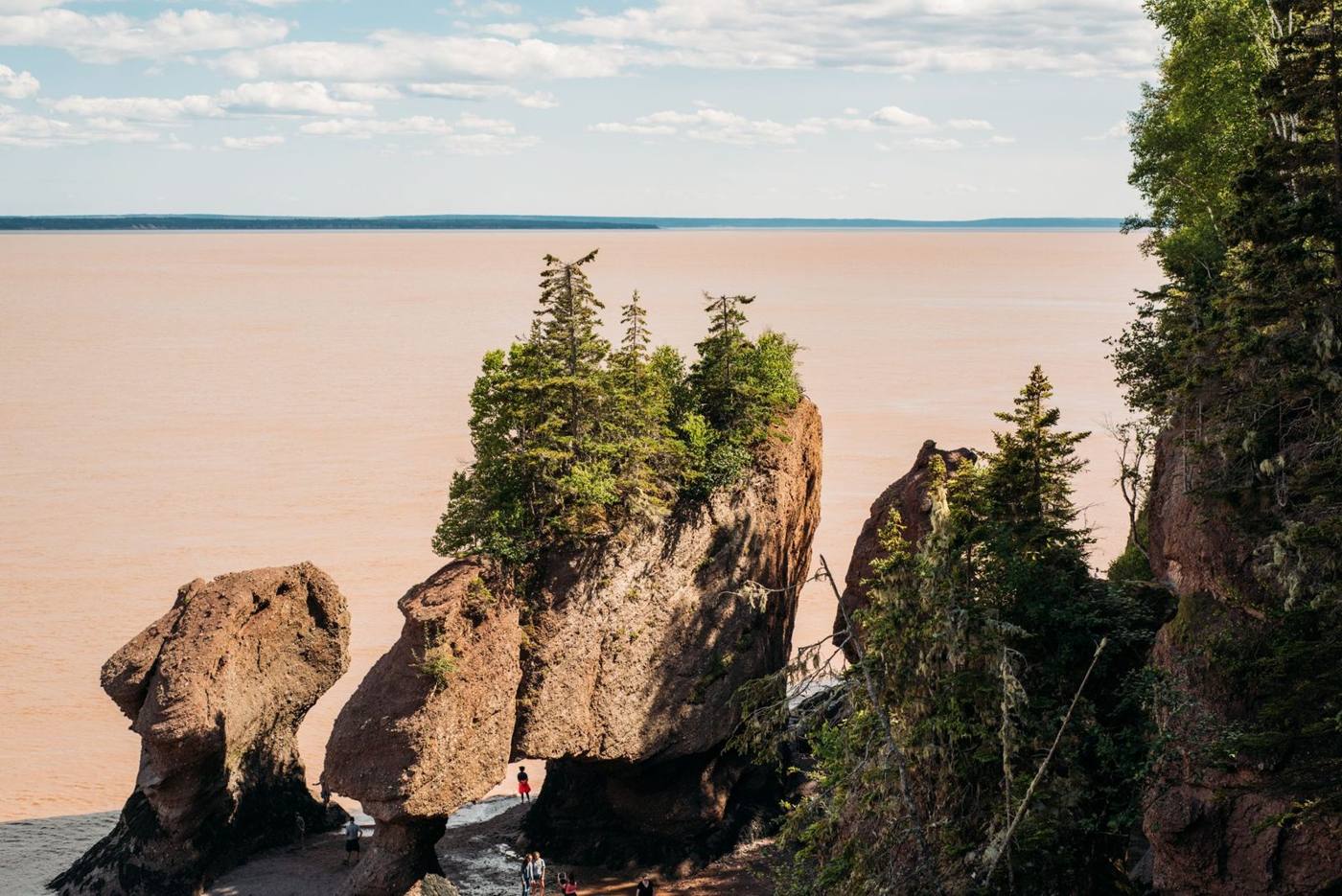
Bay of Fundy and Prince Edward Island
The Hopewell Rocks at low tide, Fundy National Park, the red beaches and fishing villages of Prince Edward Island.
 8 daysEasy
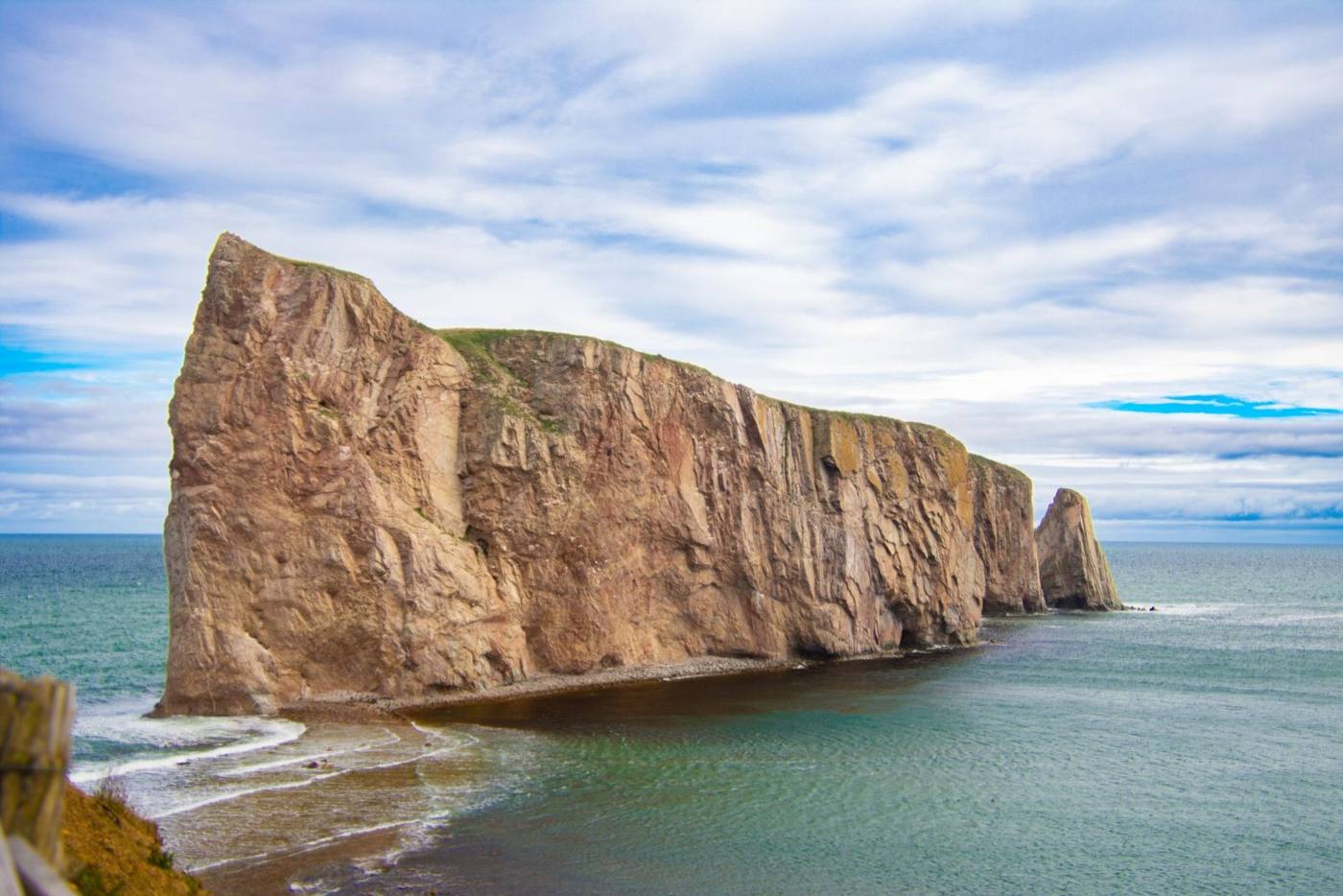
Gaspésie and Percé
A loop around the Gaspé peninsula in maritime Quebec: fishing villages on the St Lawrence, the Chic-Choc mountains with caribou and moose, Forillon park at land's end, the pierced rock of Percé and Bonaventure Island with one of the world's largest gannet colonies.
 6 daysModerate
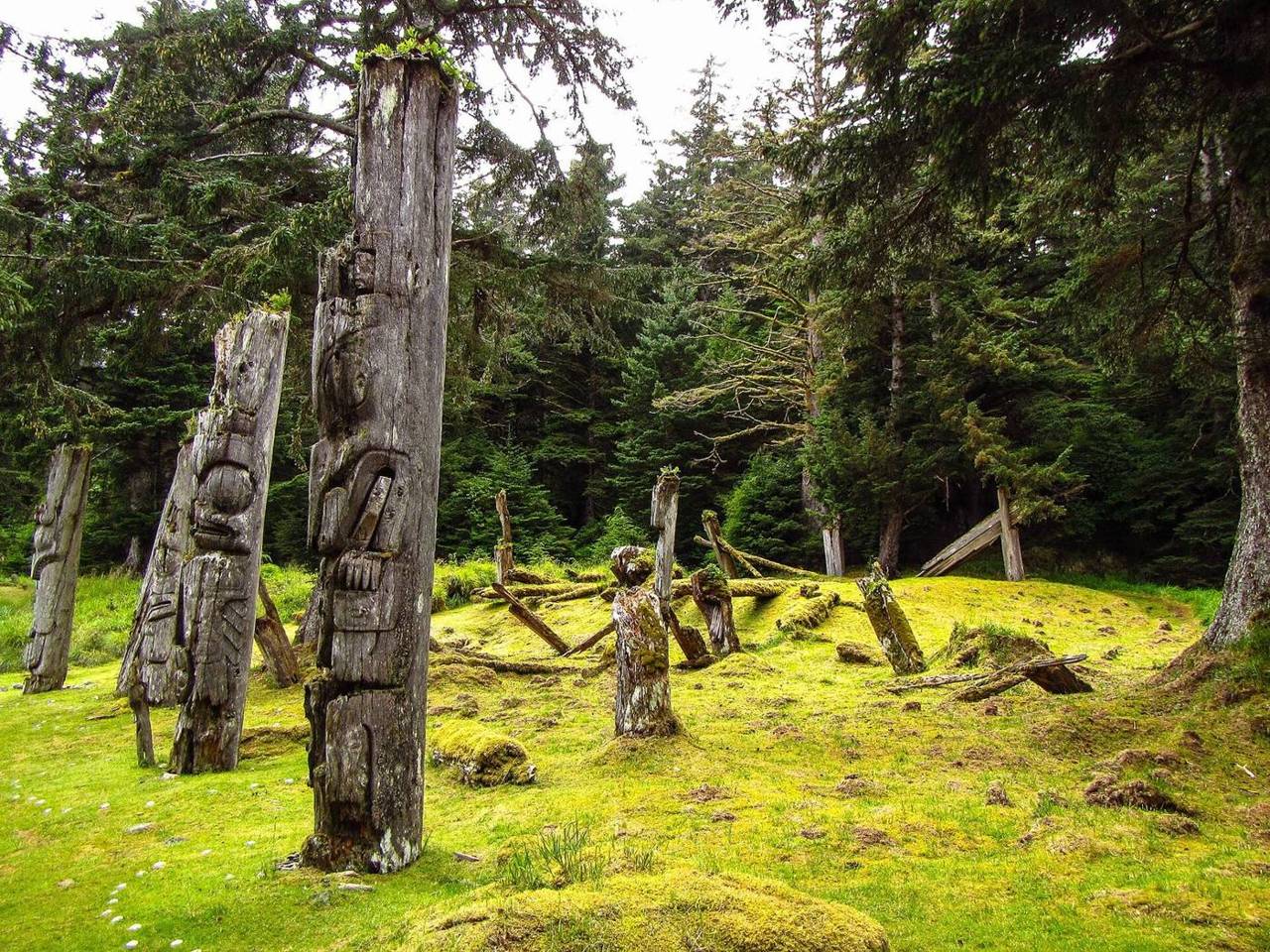
Haida Gwaii
The islands of the Haida people off British Columbia: the Kay Llnagaay heritage centre with its totem poles, moss-covered rainforests, wind-swept beaches and, in Gwaii Haanas park, the ancient village of SGang Gwaay with its mortuary poles, a UNESCO World Heritage site.