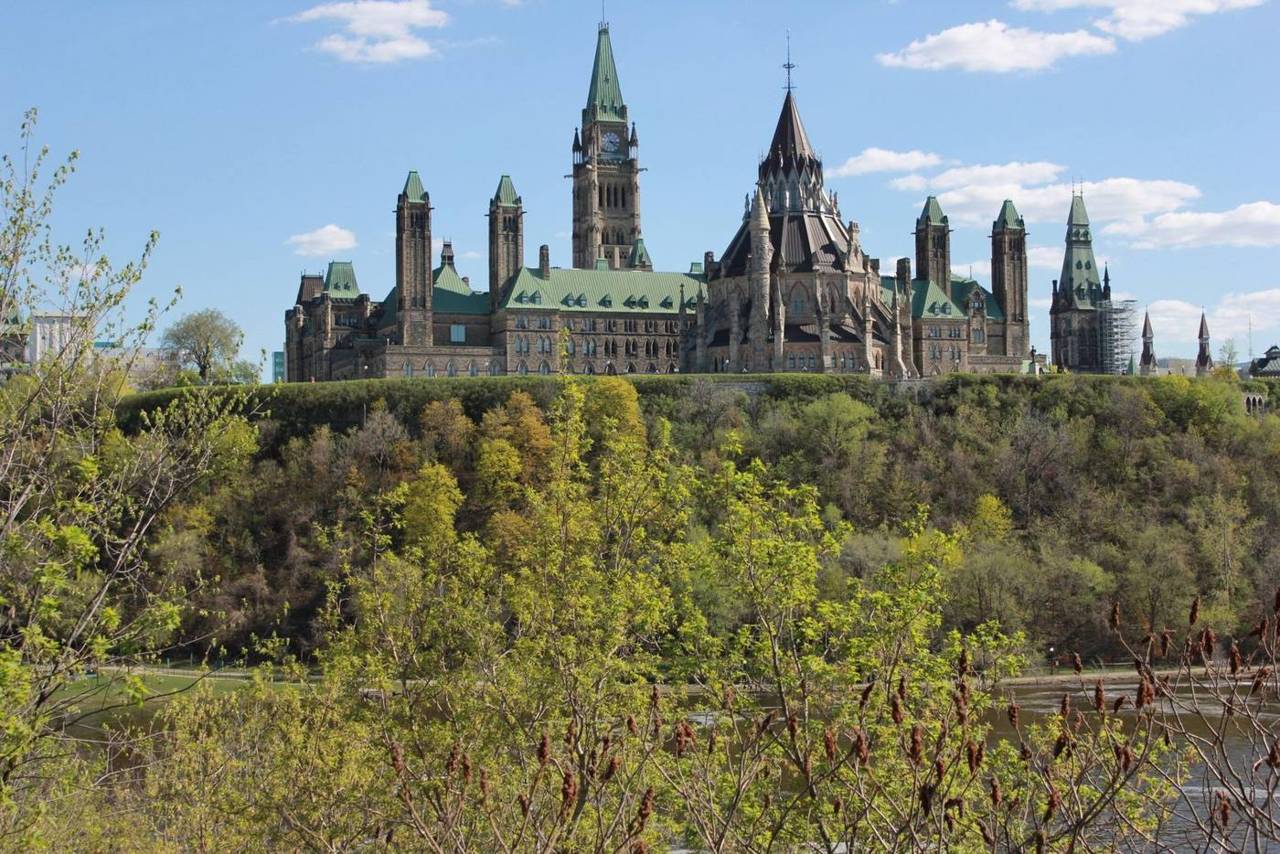
Ottawa, the Thousand Islands and Prince Edward County
The capital with Parliament Hill and the great national museums, the UNESCO-listed Rideau Canal, Kingston and its fort, a cruise among the Thousand Islands of the St Lawrence and the wineries and sand dunes of Prince Edward County.
- Ottawa
- Rideau Canal
- Kingston
- Gananoque
- Prince Edward County
- Toronto
Day by day
- Day 1
Ottawa: Parliament Hill and the ByWard Market
To enter Canada by air you need a valid passport and an Electronic Travel Authorization, eTA, applied for online on the official Canadian government website before departure; it costs 7 Canadian dollars. Check the rules for your nationality.
Ottawa, Canada's capital, stands on the Ottawa River on the border between English-speaking Ontario and French-speaking Quebec: so the city is bilingual, and you hear English and French in shops and in the street. It is a quiet, green capital with great national museums, parks and cycle paths.
In the morning visit Parliament Hill, with its neo-Gothic stone and green copper buildings overlooking the river. The Centre Block, with the Peace Tower, is closed for a long restoration that will last years more; no-cost guided tours, by booking, take place in the West Block, where the House of Commons now sits, and in the temporary Senate. In summer the changing of the guard takes place every morning on the lawn in front of Parliament, with soldiers in red tunics and black bearskin hats.
In the afternoon walk along the Rideau Canal, which runs through the centre, and climb to the viewpoint in Major's Hill Park, overlooking Parliament and the river. Then reach the ByWard Market, the market district and one of Canada's oldest, with stalls of fruit, maple syrup and flowers, galleries and bars.
In the evening try BeaverTails, a flat, stretched fried pastry covered in sugar and cinnamon, born in this very region.
Practical tip: book Parliament tours online; places run out quickly in summer.
- Day 2
The National Gallery and the Canadian Museum of History in Gatineau
In the morning visit the National Gallery of Canada, a large glass and granite building with crystal towers designed by Moshe Safdie. In front of the entrance stands Maman, the giant bronze spider by Louise Bourgeois, almost ten metres tall. The collection tells the story of Canadian art, from Indigenous and Inuit works to the landscapes of the Group of Seven, painters who in the early twentieth century depicted the lakes, forests and rocks of the north in a new way. There are also European and American works, and a reconstructed chapel with the wooden ceiling of a nineteenth-century convent.
In the afternoon cross the Alexandra Bridge on foot or by bike to Gatineau, on the other bank, already in Quebec. Here stands the Canadian Museum of History, in a building of curving forms recalling a glacier-shaped landscape, by architect Douglas Cardinal, of Indigenous descent. The great hall devoted to the peoples of the Pacific coast holds a collection of totem poles, carved and painted wooden poles, in front of traditional house façades. Other galleries tell Canada's history from the first inhabitants to today.
The museum terrace offers the finest view of Ottawa's Parliament, especially at sunset.
In the evening return to the centre; in summer a no-cost sound and light show is sometimes projected on the Parliament buildings.
Practical tip: in winter the frozen Rideau Canal becomes a skating rink of almost eight kilometres, usually open from January to February, depending on the cold.
- Day 3
Along the Rideau Canal to Kingston and the Jones Falls locks
In the morning take the car and follow the Rideau Canal south-west to Kingston on Lake Ontario. The canal, about two hundred kilometres long, was built between 1826 and 1832 by the British army after the War of 1812 against the United States, to provide a safe waterway between Montreal and Lake Ontario away from the American border. It is the oldest continuously operated canal in North America still working as originally designed, and has been a UNESCO World Heritage site since 2007. It links rivers and lakes through dozens of locks, many still opened by hand with iron cranks.
On the way stop in canal villages such as Merrickville, with stone houses, craft shops and a blockhouse, and Westport on its lake.
In the afternoon reach the Jones Falls locks, on the most beautiful stretch of the canal, deep in the woods. Here engineers built a great stone arch dam more than eighteen metres high, the tallest in North America in its day. You see the four locks in a row raising and lowering boats, the lockmaster's house, the blacksmith's forge and paths along the water. In summer it is a pleasure to watch the boats pass.
In the evening arrive in Kingston, the first capital of the united Province of Canada in 1841, with grey limestone buildings, the domed city hall on the harbour and the university.
Practical tip: the locks operate only in the navigation season, usually May to October.
- Day 4
A Thousand Islands cruise from Gananoque and Fort Henry in Kingston
In the morning drive about half an hour to Gananoque on the St Lawrence River, where the river leaves Lake Ontario and widens into an archipelago of more than a thousand islands, the Thousand Islands: some large and wooded, others tiny, with a single house and a tree. In the late nineteenth and early twentieth centuries wealthy families from New York and Chicago built summer villas and castles here. The border between Canada and the United States runs among the islands.
Take a one- or three-hour cruise among the islands: you see villas on the water, the world's shortest international bridge linking two islets, one Canadian and one American, and in the distance Boldt Castle on Heart Island, a great castle-style mansion built by the owner of a big New York hotel for his wife, who died before it was finished. The castle is on US territory: to land you need a passport and the documents to enter the United States.
In the afternoon return to Kingston to visit Fort Henry, a nineteenth-century British fortress on a hill above the harbour, a UNESCO site together with the canal. In summer young people in period uniform drill, fire cannons and play in the band.
In the evening, on summer nights when it is held, watch the Sunset Ceremony, with music, marching and fireworks.
Practical tip: cruises leave several times a day in summer; out of season schedules are much reduced.
- Day 5
Prince Edward County: wineries, Sandbanks and the dunes
In the morning drive west for about an hour to Prince Edward County, a peninsula almost entirely surrounded by the waters of Lake Ontario, linked to the mainland by a bridge and a small no-cost ferry. The landscape is made of farms, orchards, villages of wooden houses and country roads. In recent years it has become one of Ontario's most interesting wine areas, with dozens of small wineries making mainly pinot noir and chardonnay on limestone soils similar to Burgundy's. Winters are so cold that growers bury the vines in earth to protect them.
Visit one or two wineries for tastings, and pass through Picton and Wellington, the main villages, with antique shops, galleries and farmers' markets.
In the afternoon reach Sandbanks Provincial Park, with the world's largest freshwater sand dunes, up to about twenty-five metres high, and long lake beaches. You can walk the dune trails among woods and ponds and swim in the lake water, cool but clear, warmer at the end of summer.
In the evening watch the sunset over the lake from Outlet Beach.
Practical tip: in summer day access to Sandbanks may require an online reservation; check the Ontario Parks website. Many farms along the way sell their own cheese, cider and fresh fruit from roadside stands.
- Day 6
On to Toronto
In the morning leave Prince Edward County and drive west along the north shore of Lake Ontario to Toronto, about two and a half to three hours depending on traffic, which can be very heavy near the city.
On the way you can stop at Cobourg or Port Hope, lakeside towns with nineteenth-century centres, beaches and marinas. Port Hope has one of Ontario's best-preserved nineteenth-century main streets, with brick façades and antique shops.
In the afternoon arrive in Toronto, Canada's largest city, very different from Ottawa: modern, multicultural, with skyscrapers, neighbourhoods of different communities and a long waterfront. If you have time, go up the CN Tower, over five hundred and fifty metres tall and the city's symbol, or stroll through the Distillery District, with old brick factories turned into galleries and bars, and visit St. Lawrence Market. At sunset take the ferry to the Toronto Islands in front of the city, from which you see the illuminated skyline.
From Toronto, Pearson airport has flights to Europe and all over North America; the UP Express train links it to Union Station in about half an hour. Niagara Falls is about an hour and a half away.
Things to take home: maple syrup, Prince Edward County wine, Ontario ice wine, authentic Indigenous crafts and woollen goods.
Practical tip: buy Indigenous art only with a certificate of authenticity. Check your government's travel advice before leaving.
An easy and varied trip linking Montreal and Toronto. Autumn (late September-mid-October) brings the maple colours, the best time. At Sandbanks in summer parking must be booked at weekends. To fly in, European citizens must apply for an eTA (7 Canadian dollars) only on the official Government of Canada website.
Before you go
- Documents and visa
- Passport valid for the whole stay. Anyone flying in needs an eTA, applied for online on the official Canadian government website: it costs 7 Canadian dollars.
- Health and vaccines
- No compulsory vaccines. Medical care is very expensive for visitors: health insurance is essential. Emergencies: 911.
- Money and payments
- Canadian dollar. Cards are accepted almost everywhere; tips of 15 to 20% are customary in restaurants.
- Power sockets
- Types A and B, 120 volts: you need an adapter and devices must accept 120 volts.
- Time zone
- Montreal and Quebec City are UTC-5, Calgary and Banff UTC-7, Vancouver UTC-8, all with daylight saving time in summer.
- Safety
- A very safe country. In summer wildfires can close roads and parks and bring smoke: check local alerts. Official advice: GOV.UK.
Information checked in November 2026 for Italian and EU citizens. Rules change: always check before you travel.
Variations
In 3 days: Ottawa on days one and two, the Thousand Islands and Kingston on day three.
In 10 days: add Montreal and Quebec City, or Niagara Falls and Algonquin Park.
Frequently asked questions
What do I need to enter Canada?
A valid passport and, if arriving by air, an eTA, costing 7 Canadian dollars on the official website.
Can I visit Boldt Castle?
Yes, but it is in the United States: to land you need a passport and the documents to enter the US.
When is the best time for this trip?
From late May to early October, when the locks, cruises and wineries are running; in autumn the maple colours are spectacular.
Indicative itinerary written by World Atlas. Before booking, check timetables, seasonal openings, documents and safety.
 6 daysModerate
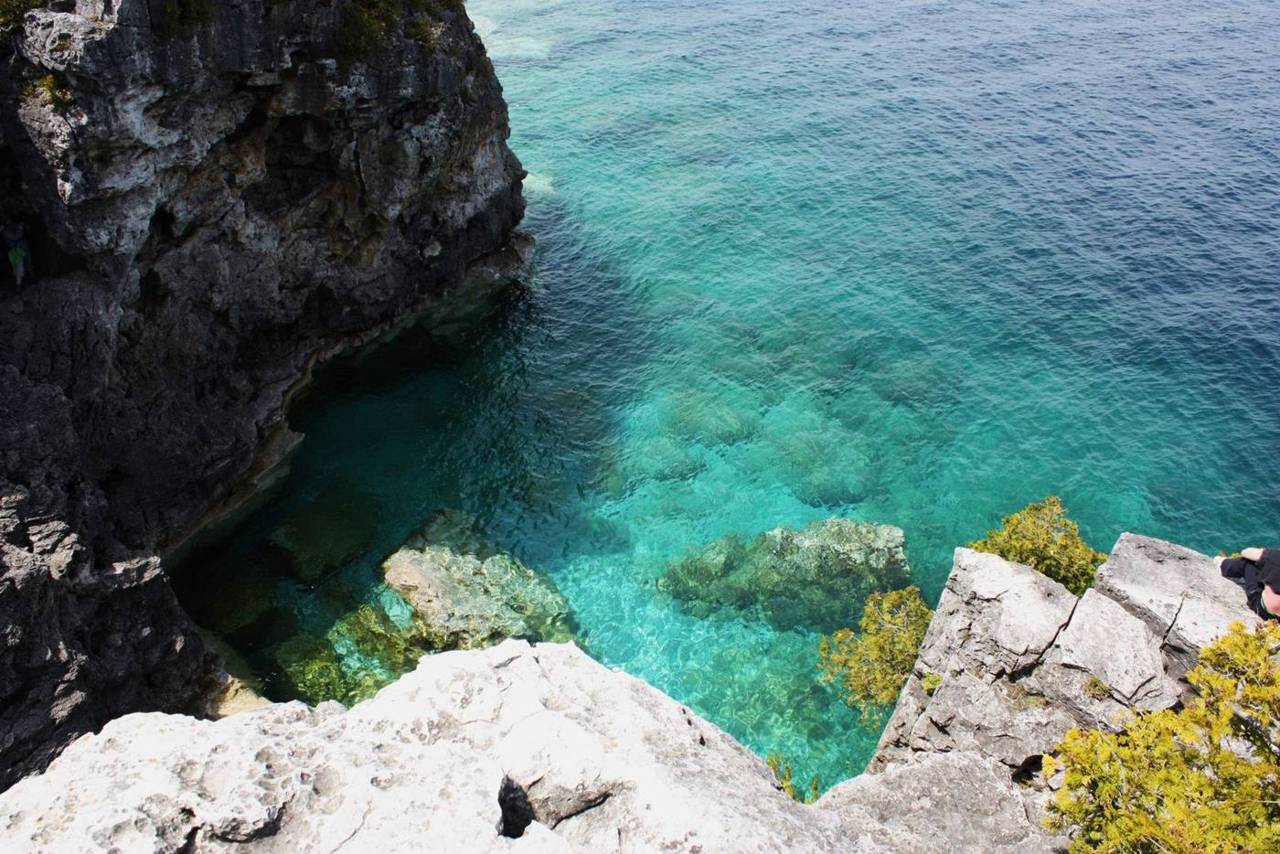
Georgian Bay: the Bruce Peninsula and Killarney
The Ontario landscapes that inspired the Group of Seven: the turquoise water and the Grotto of the Bruce Peninsula, the ferry to Manitoulin, the world's largest freshwater island, and the white quartzite hills of Killarney park, by canoe.
 7 daysModerate
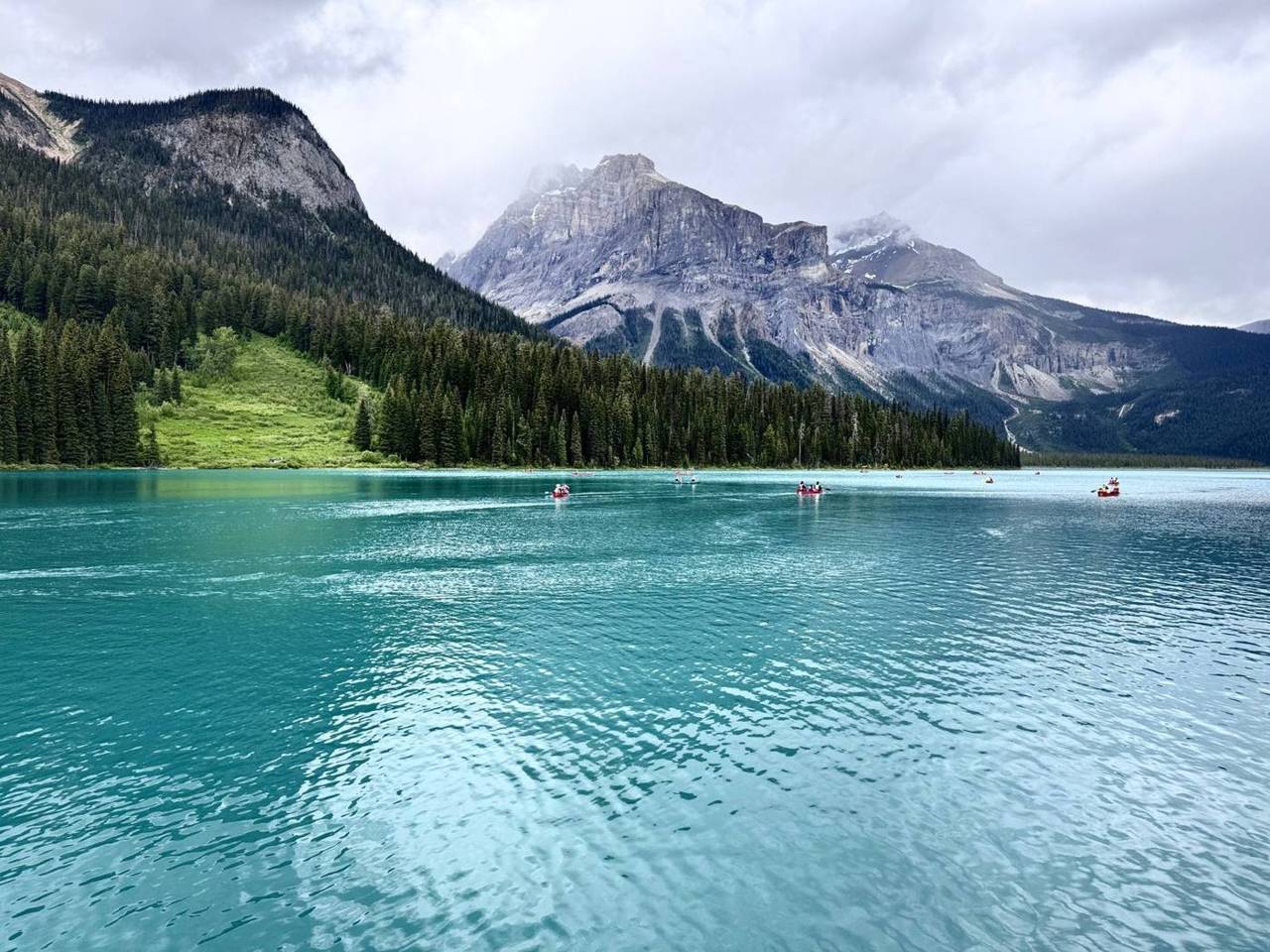
The quieter Rockies: Yoho, Kootenay and Waterton
The Rockies away from the crowds of Banff and Lake Louise: Yoho's Emerald Lake and Takakkaw Falls, Kootenay's canyons and paint pots, the Radium hot springs and Waterton Lakes, where the prairies meet the mountains on the Montana border.
 7 daysEasy
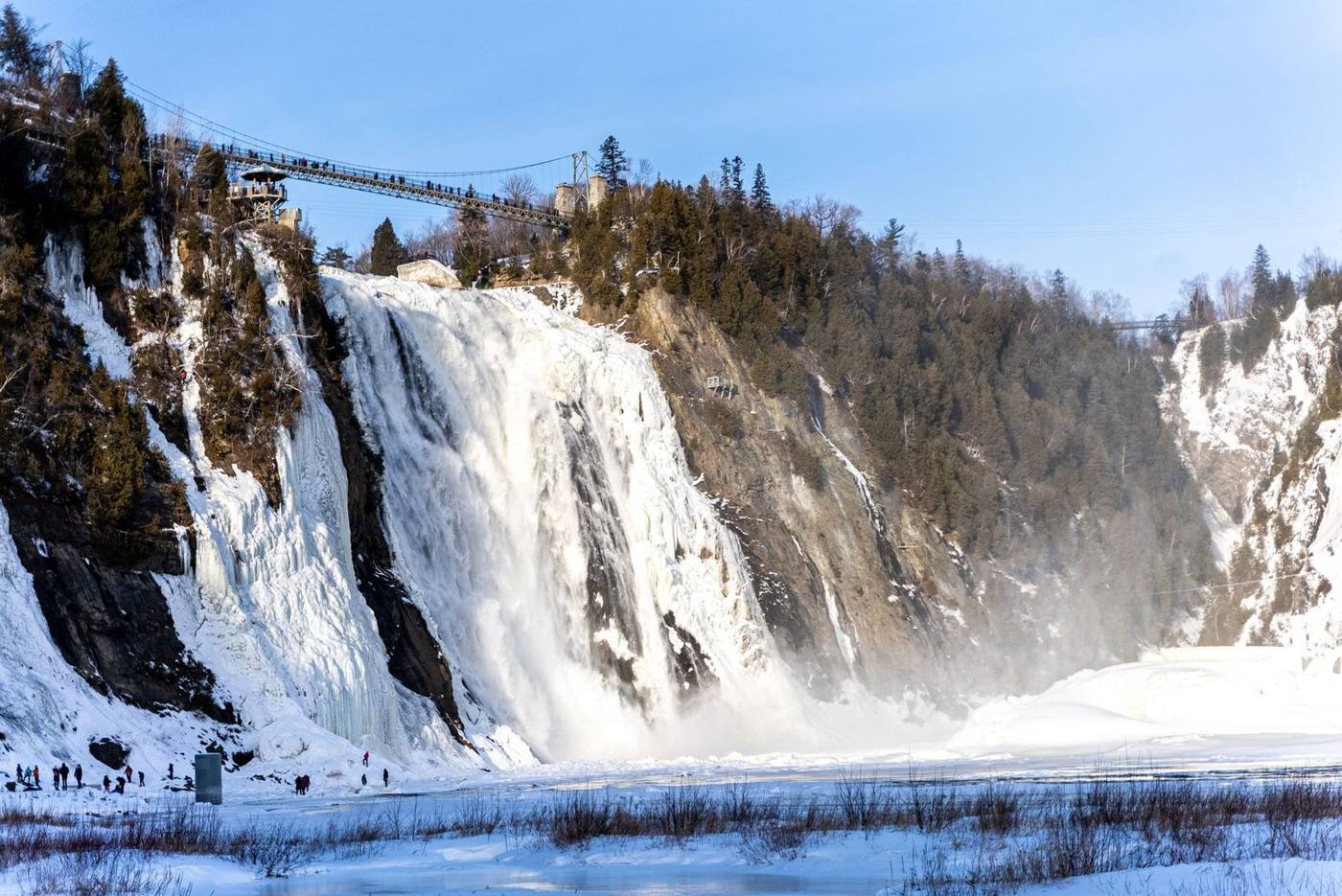
Quebec in winter: carnival and Mont-Tremblant
French Canada under snow: Montreal with its underground city and festival of lights, the Laurentian mountains at Mont-Tremblant, dog sledding and snowshoe trails, then the Quebec Winter Carnival with its ice palace, night parades and the canoe race on the frozen river.