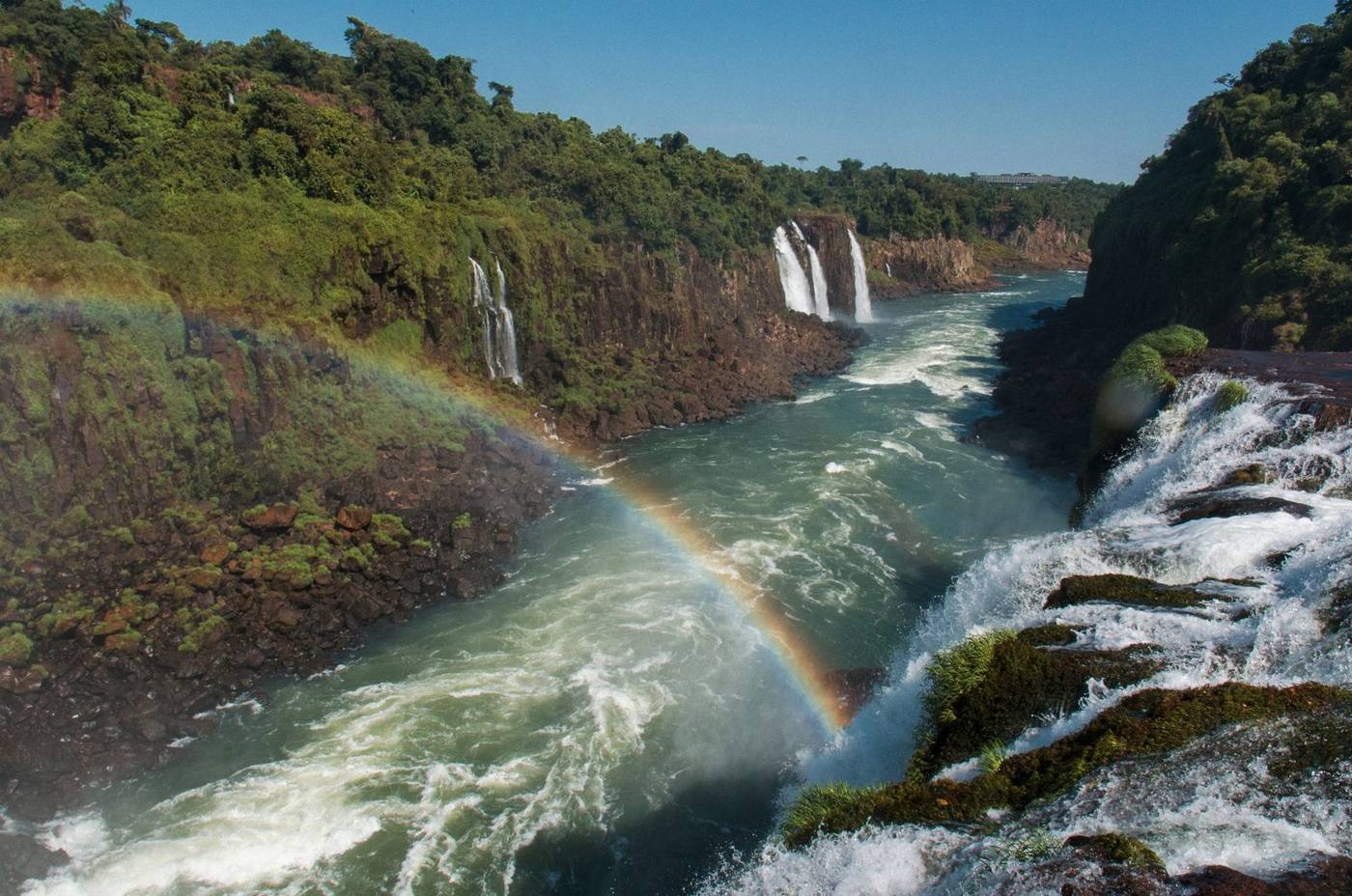
Rio de Janeiro and the Iguaçu Falls
South America's most spectacular city and its mightiest falls, seen from both sides of the border.
- Rio de Janeiro
- Foz do Iguaçu
Day by day
- Day 1
Arrival in Rio and Copacabana
EU citizens enter Brazil without a visa for tourist stays of up to 90 days, with a valid passport. Rio's international airport, called Galeão, is forty minutes to an hour from the beaches of the south zone, depending on traffic. Take an official taxi booked at the airport counter or a ride-hailing app, which works well in the city.
To stay, choose the south zone: Copacabana, Ipanema or Leblon, close to the sea, well served by the metro and calmer at night. Botafogo is a lively, cheaper alternative.
In the afternoon walk along the Copacabana seafront, four kilometres of crescent beach with the famous black and white wave pavement designed by Roberto Burle Marx. On the sand people play football, beach volleyball and footvolley, vendors sell coconut water and grilled cheese, and families gather until sunset. At the end of the beach, Copacabana Fort has a fine view over the bay.
In the evening try Brazilian cooking: churrasco, grilled meat served at the table, feijoada, the black bean and meat stew traditionally eaten on Saturdays, and caipirinha, with lime and cachaça, the sugar-cane spirit.
Practical tip: on the beach bring only what you need and never leave anything unattended; in the evening, on quiet streets, use ride-hailing apps even for short distances, and keep your phone out of sight in the street.
- Day 2
Christ the Redeemer and Sugarloaf at sunset
Early in the morning go up to Christ the Redeemer on the summit of Corcovado, at about seven hundred metres, one of the New Seven Wonders of the World. The statue, thirty metres tall with arms open over the city, was inaugurated in 1931. You go up by the rack railway from Cosme Velho, through Tijuca Forest, or by official vans from Copacabana or Largo do Machado. Buy tickets online and choose the first hour: the summit is often covered in cloud by midday.
From the top you see all of Rio: the beaches, Rodrigo de Freitas lagoon, the Maracanã, Guanabara Bay with Sugarloaf, and the forest-covered mountains.
In the afternoon visit the Botanical Garden, founded in 1808 by the Portuguese prince regent, with its avenue of imperial palms, orchid houses and small monkeys leaping through the trees.
Around five take the cable car up Sugarloaf at Urca: two stages, first to Morro da Urca and then to the summit at almost four hundred metres. At sunset the view of the city lighting up, the beaches and the illuminated Christ is one of the highlights of the trip. Fit walkers can hike up to Morro da Urca on a forest trail of about thirty minutes. Practical tip: check the forecast; with low cloud the view from both summits is almost nil, so keep a backup day if you can.
- Day 3
Santa Teresa, the Selarón steps, the centre and Lapa
In the morning go up to Santa Teresa, a hillside district with old colonial villas, artists' workshops, views over the bay and the bondinho, the historic yellow tram that crosses the Lapa Arches, an eighteenth-century aqueduct. The district has a bohemian air; still, keep your eyes open on isolated streets.
Then descend to the Selarón Steps in Lapa, 215 steps covered with coloured tiles from more than sixty countries, the work of Chilean artist Jorge Selarón, who spent twenty years on them.
In the afternoon visit the historic centre: Confeitaria Colombo, a Belle Époque tearoom with mirrors and stained glass, the Theatro Municipal, inspired by the Paris Opéra, São Bento Monastery, with its gold-covered baroque interior, and the Royal Portuguese Reading Room, one of the most beautiful libraries in the world. In the port area, renovated for the 2016 Olympics, are the Museum of Tomorrow, with futuristic architecture by Santiago Calatrava, and the Rio Art Museum.
In the evening return to Lapa, the heart of Rio's music: in its venues you hear live samba, choro and forró, and on Fridays and Saturdays the streets fill with people. Practical tip: in central Rio, at night and at weekends, many streets are deserted; get around by taxi or app and do not walk with your phone in your hand.
- Day 4
Ipanema and Tijuca Forest
In the morning go to Tijuca Forest, one of the largest urban forests in the world, replanted in the nineteenth century after coffee plantations had destroyed the original one. It is part of Tijuca National Park and covers the mountains at the centre of the city. A trail climbs to Pico da Tijuca, the park's highest summit at over a thousand metres, in about two hours; shorter routes lead to waterfalls and viewpoints such as Vista Chinesa, with a Chinese-style pavilion and a view over Ipanema and the lagoon. It is best to go with a guide or on a tour, and never alone on isolated trails.
In the afternoon go down to Ipanema, the beach made famous by the bossa nova song. The beach is divided into postos, numbered lifeguard stations, each with its own crowd: families, sporty types, young people. Waves can be strong: swim only near the lifeguards and respect the flags.
At sunset go to Arpoador rock, between Ipanema and Copacabana: every evening hundreds of people sit on the rocks and applaud the sun as it sinks behind the Two Brothers hills. It is one of Rio's finest moments.
In the evening Leblon has many elegant places. Practical tip: in the forest and on trails bring water, repellent and closed shoes; in summer, from December to March, afternoon storms are frequent.
- Day 5
The flight to Foz do Iguaçu and the Brazilian side of the falls
In the morning fly to Foz do Iguaçu, about two hours, in southern Brazil on the border with Argentina and Paraguay. The Iguazu Falls are among the most spectacular in the world: about two hundred and fifty drops along almost three kilometres, shared between the Brazilian and Argentine national parks, both UNESCO World Heritage sites. To stay, choose the town of Foz do Iguaçu or the area along the park road.
In the afternoon visit the Brazilian side. From the park entrance a bus takes you to the start of the trail, which follows the canyon for about a kilometre and a half with a panoramic view of all the falls across the river. The trail ends with a walkway that goes almost into the Devil's Throat, the largest, horseshoe-shaped fall: you get completely soaked by the spray, so bring a light waterproof. A lift takes you back up.
Next to the park entrance is Parque das Aves, a conservation centre with huge walk-through aviaries full of toucans, parrots and macaws, many rescued from illegal wildlife trafficking.
Coatis live in the park, small long-nosed mammals used to people: do not feed them, as they bite and scratch. Practical tip: the Brazilian side takes half a day; the Argentine side needs the whole of tomorrow.
- Day 6
The Argentine side and the Devil's Throat
Today you cross the border to visit the Argentine side of the falls, about forty minutes from Foz do Iguaçu, over the Fraternity Bridge on the Iguaçu River. At the border you clear Brazilian exit and Argentine entry controls; EU citizens need no visa. It is best to go with a taxi or transfer that knows the procedure, or by public bus.
Iguazú National Park on the Argentine side is explored on foot along long walkways through the forest and over the falls. From 1 June 2026 entry for foreign visitors costs 60,000 Argentine pesos, according to the official national parks tariff; the second day is 50% off. An ecological train links the entrance to the trails.
The most spectacular route leads to the Devil's Throat: the train goes close and a walkway of more than a kilometre crosses the river to the edge of the fall, where the water plunges with a deafening roar into a cloud of spray. Then there is the upper circuit, which passes above the falls, and the lower circuit, which looks at them from below. Boats that go under the falls are a thrilling, soaking experience.
Allow the whole day. Practical tip: bring your passport and Argentine pesos or a card; check the closing time of the park and of the last train to the Devil's Throat, as you should not arrive late.
- Day 7
Departure
The last day depends on your flight time. Foz do Iguaçu airport has flights to Rio, São Paulo and other Brazilian cities, from which international flights to Europe depart; on the Argentine side, Puerto Iguazú airport has flights to Buenos Aires.
If you have a no-cost morning, you can visit the Itaipu dam, one of the largest hydroelectric plants in the world, built jointly by Brazil and Paraguay on the Paraná River. Guided tours show the dam, the turbines and the reservoir; there is also a wildlife refuge with animals of the region.
Alternatively go to the Triple Frontier point, where the Iguaçu and Paraná rivers meet and you see Brazil, Argentina and Paraguay together, each with an obelisk painted in its national colours. At sunset there is a light and music show.
Things to take home: Brazilian coffee, artisan cachaça, chocolate, Brazilian flip-flops, indigenous crafts bought from cooperative shops that guarantee fair payment, and Minas Gerais gemstones only with a certificate.
Practical tip: when flying home to Europe via São Paulo or Rio, allow plenty of time for the connection, because you often have to collect and re-check your luggage and change terminal. Reach the international airport at least three hours before your flight.
A week that combines two of the world's most famous views. The falls should be seen from both sides, Brazilian and Argentine, which takes two full days. In Rio safety needs care: keep valuables out of sight and use taxis or ride apps at night.
Before you go
- Documents and visa
- Valid passport; no visa for tourism up to 90 days for EU citizens.
- Health and vaccines
- No compulsory vaccines arriving from Europe; yellow fever is recommended for the Amazon and some inland areas. Protect yourself against mosquitoes because of dengue. Emergencies: 190 police, 192 ambulance, 193 fire.
- Money and payments
- Brazilian real. Cards and instant payments are everywhere; carry little cash.
- Power sockets
- Type N, plus C, 127 or 220 volts depending on the city: check the voltage before plugging in devices.
- Time zone
- Rio and São Paulo are UTC-3 all year: Brazil does not use daylight saving time.
- Safety
- The United States rates Brazil level 2 for crime, with level 4 within 160 km of land borders (except Foz do Iguaçu and the Pantanal). No favelas without a community guide. Official advice: GOV.UK.
Information checked in November 2026 for Italian and EU citizens. Rules change: always check before you travel.
Variations
In 5 days: three days in Rio with Christ the Redeemer, Sugarloaf and the beaches, then two days at Iguazu, skipping Tijuca Forest and Santa Teresa.
In 12 days: add Salvador de Bahia, with the Pelourinho and Bahian cooking, or Paraty and Ilha Grande on the green coast between Rio and São Paulo.
Frequently asked questions
Do I need a visa for Brazil?
No, EU citizens enter without a visa for tourist stays of up to 90 days with a valid passport. No visa is needed for the Argentine side of the falls either.
How much is the Argentine side of the falls?
From 1 June 2026 entry to Iguazú National Park for foreign visitors costs 60,000 Argentine pesos, with 50% off the second day, according to the official tariff.
Is Rio de Janeiro safe?
With normal precautions, yes: no valuables on show, little cash, ride-hailing apps at night, no favelas without a community guide and only the bare minimum on the beach.
Indicative itinerary written by World Atlas. Before booking, check timetables, seasonal openings, documents and safety.
 15 daysModerate
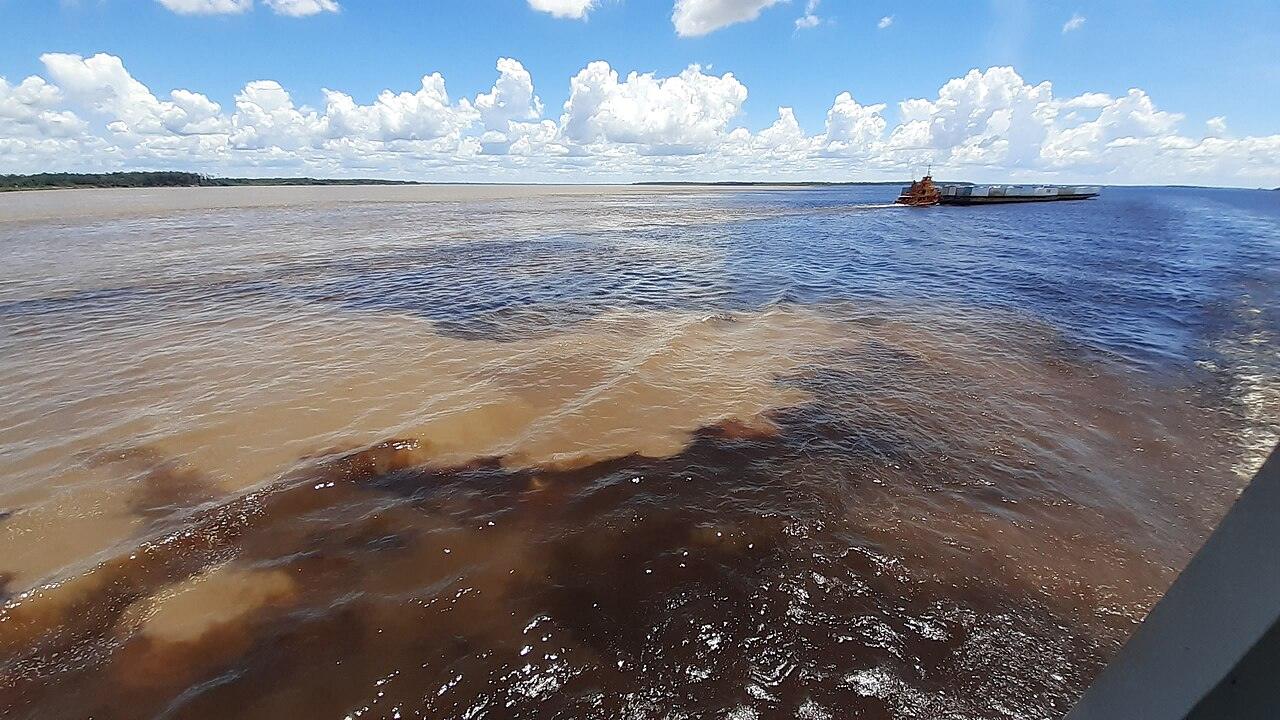
Pantanal, Amazon and Rio
The jaguars of the Pantanal, a lodge in the Amazon rainforest and a finale in Rio de Janeiro.
 12 daysEasy
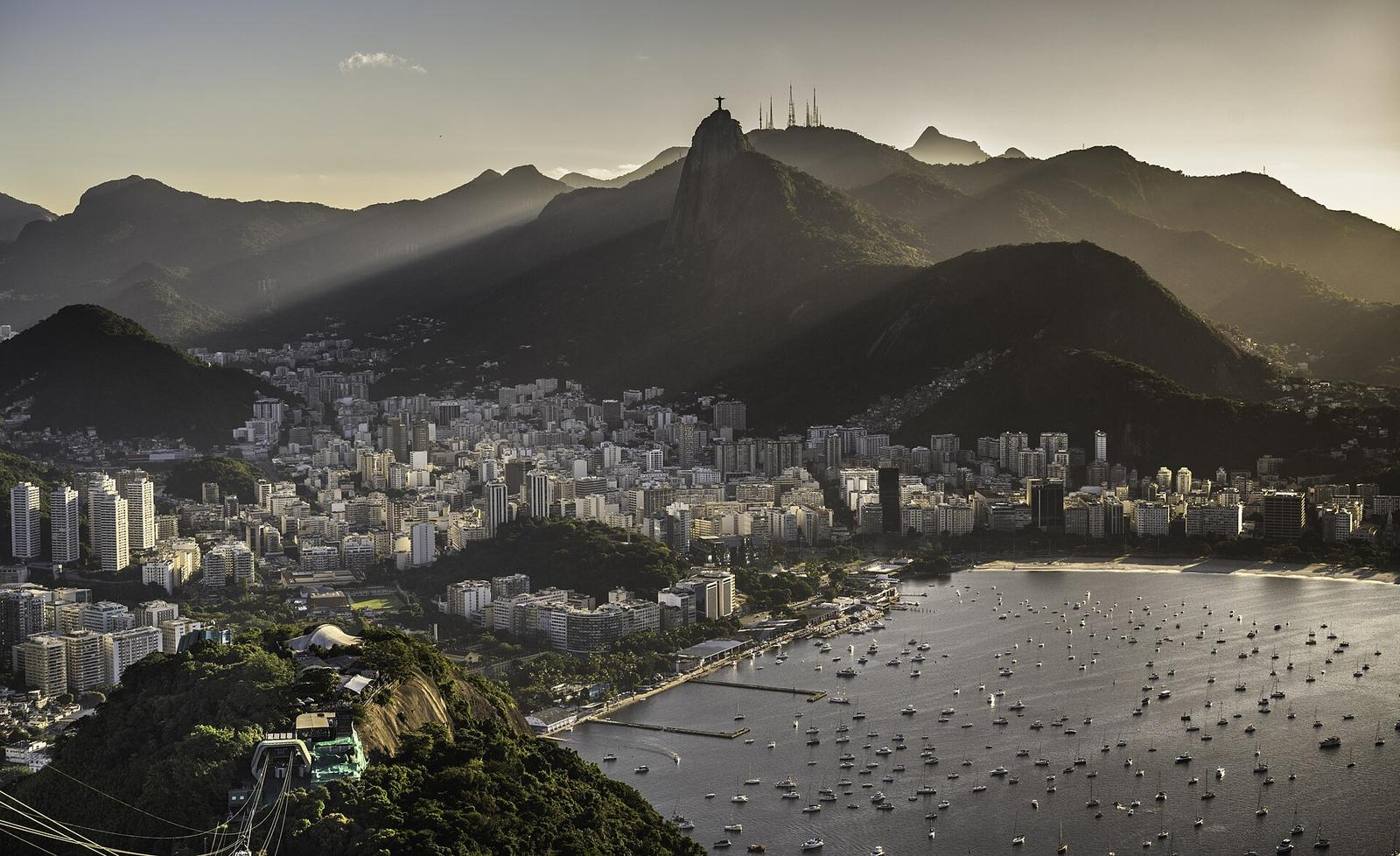
Brazil express: Rio, Iguaçu and Salvador da Bahia
Postcard Brazil in under two weeks: Sugarloaf Mountain, the world's mightiest falls and the most African city in the Americas.
 17 daysModerate
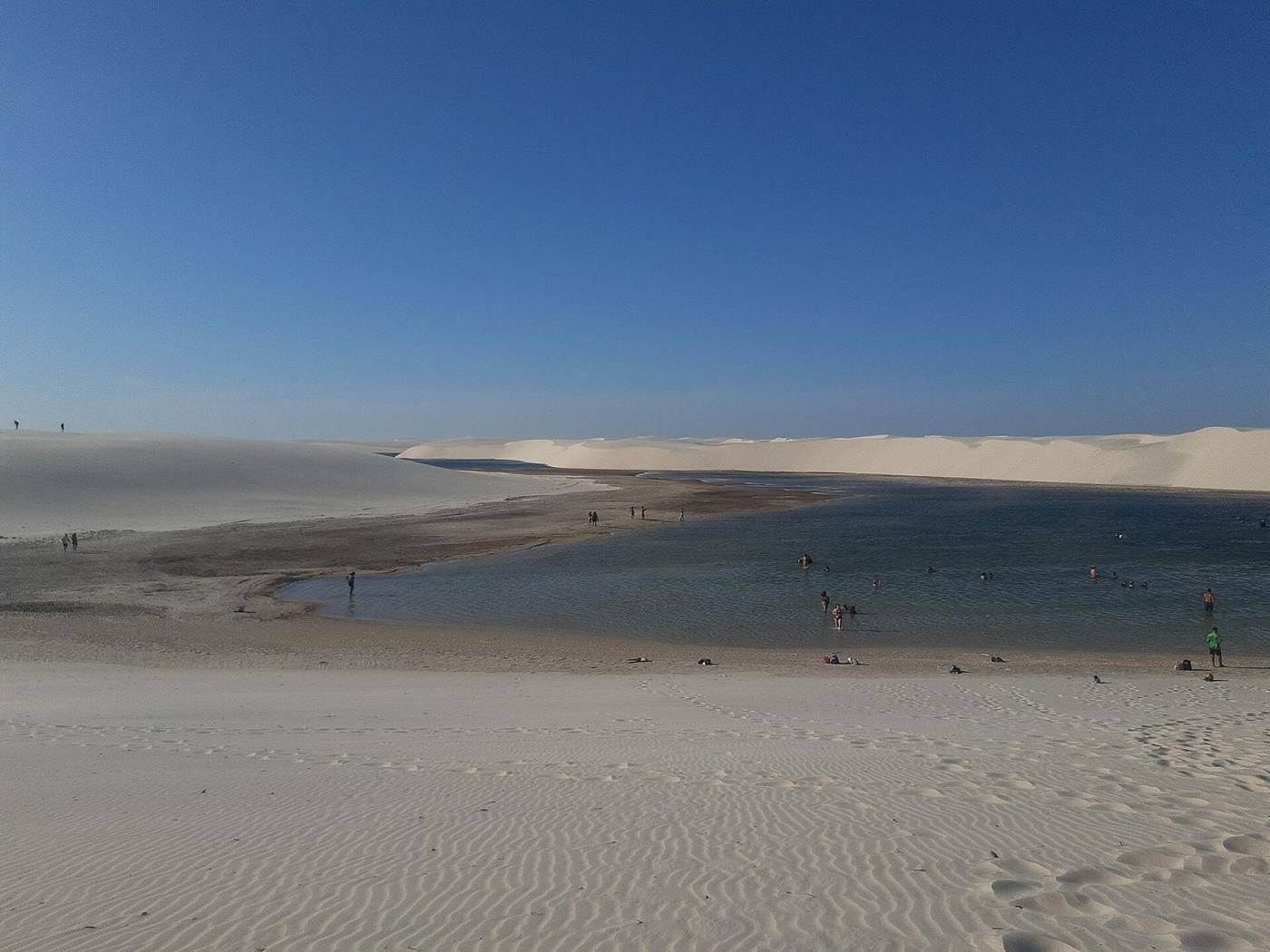
Maranhão and Ceará: Lençóis Maranhenses and Jericoacoara
The most spectacular north-east: the white dunes of the Lençóis filled with turquoise lagoons, the sand village of Jericoacoara, the Parnaíba delta and the colonial city of São Luís.