Maranhão and Ceará: Lençóis Maranhenses and Jericoacoara
The most spectacular north-east: the white dunes of the Lençóis filled with turquoise lagoons, the sand village of Jericoacoara, the Parnaíba delta and the colonial city of São Luís.
- Fortaleza
- Jericoacoara
- Parnaíba Delta
- Atins
- Lençóis Maranhenses
- Barreirinhas
- São Luís
Day by day
- Day 1
Arrival in Fortaleza
This trip crosses the most spectacular part of north-east Brazil, along the windy coast of the states of Ceará, Piauí and Maranhão: Fortaleza, the sand village of Jericoacoara, the Parnaíba delta, the white dunes full of lagoons of the Lençóis Maranhenses and the colonial city of São Luís. You travel by 4x4, by boat and on foot across the dunes.
Before you go: Italian citizens enter Brazil without a visa for tourism with a valid passport. Other nationalities should check their own rules. The United States rates Brazil at level 2, meaning exercise increased caution, because of crime, and advises against entering favelas, the informal communities, at any time. This trip stays on the Atlantic coast, far from the land borders. Ask a travel health clinic about vaccines, such as yellow fever, and use insect repellent against the mosquitoes that carry dengue. Also check Viaggiare Sicuri before you leave.
You land at the airport of Fortaleza, the capital of Ceará, usually with a stop in Europe, in Lisbon, or in a Brazilian city. The airport is about twenty or thirty minutes from the seafront.
In the afternoon settle in the Beira Mar area, the seafront with tower blocks, kiosks and the evening craft fair. Walk to Iracema beach and the old pier, where people gather at sunset.
In the evening try the crabs of Ceará, which you eat by cracking them with a small wooden mallet, or baião de dois, rice and beans with cheese.
Sleep in Fortaleza.
Practical tip: in Fortaleza in the evening stay in the busy parts of the seafront and use taxis or apps to get around. Do not walk on empty beaches after dark.
- Day 2
To Jericoacoara
Today you reach one of the most famous seaside villages in Brazil.
In the morning leave Fortaleza heading west. Jericoacoara is about three hundred kilometres away, five or six hours by shuttle or with a driver. The last stretch, from Jijoca, is done by 4x4 on the sand, because the village lies inside Jericoacoara National Park and ordinary cars cannot enter. If you have less time you can fly to Jericoacoara regional airport, with flights from some Brazilian cities, and then take a 4x4.
At the entrance to the village you pay a tourist tax for each day of your stay: check the current amount and pay it online before you arrive.
Jeri, as Brazilians call it, was an isolated fishing village until the 1980s. The streets are still sand, with no tarmac, and at night they are dimly lit, so as not to spoil the starry sky.
In the late afternoon climb the Duna do Pôr do Sol, the big dune next to the village. Every evening hundreds of people sit on the sand to watch the sun sink into the sea. After sunset, on the beach, capoeira groups train to the sound of the berimbau.
In the evening walk through the sandy streets full of lights, music and stalls selling caipirinha and tapioca, the Brazilian crêpe made with cassava flour.
Sleep in Jericoacoara, for three nights.
Practical tip: in Jeri bring sandals and a small torch. The streets are sand and poorly lit, and closed shoes fill up at once.
- Day 3
Pedra Furada and kitesurfing
Today you explore the coast around the village on foot.
In the morning walk east along the beach and the cliffs to Pedra Furada, a rock arch carved by the sea, the symbol of Jericoacoara. It takes about an hour on foot from the village. The way along the beach is only passable at low tide: check the tide times. Alternatively you climb the Serrote hill, where the lighthouse stands, and go down the other side.
At certain times of year the setting sun can be seen right through the hole in the arch, and many people come especially: ask in the village whether it is the right season.
In the afternoon discover why Jeri is a world capital of kitesurfing and windsurfing. From July to December the wind blows strong and steady almost every day. On the village beach and at nearby Preá there are schools for beginners offering lessons of a few hours, with instructors and equipment.
If you do not want to do sport, swim in the pools that form between the rocks at low tide, or rest in a hammock in the shade.
In the evening go back up the Duna do Pôr do Sol or walk along the beach until sunset, then have the catch of the day grilled for dinner.
Sleep in Jericoacoara.
Practical tip: the sun and the wind here are deceptive. Use a high factor sun cream, put it on often and drink plenty of water, even when you do not feel the heat.
- Day 4
The Paraíso and Azul lagoons
Today you take the 4x4 tour of the freshwater lagoons around Jeri.
In the morning leave by buggy or 4x4 with a driver heading east. The classic tour passes the Árvore da Preguiça, a tree bent by the wind until it almost touches the ground, and the dunes along the coast.
Then you reach the Lagoa do Paraíso, a lagoon of warm, clear, turquoise fresh water surrounded by white dunes. Along the shore hammocks hang over the water: you lie in them with your feet in the lagoon. Not far away is the Lagoa Azul, smaller and quieter, with even clearer water.
In the afternoon, heading west, you can take a second tour to the Mangue Seco area, on the Guriú river, where fishermen take you by canoe to see seahorses among the mangrove roots. The guides gently lift them into a clear jar to show them and then put them back in the water.
Alternatively go to Tatajuba, a village that has moved several times because dunes covered it, with a lagoon and high dunes.
At sunset return to the village. In the evening try forró, the music and dance of the north-east, at the evenings on the square.
Sleep in Jericoacoara.
Practical tip: the level of the lagoons changes a lot with the season. After the rains, from May to August, they are fuller; at the end of the year some shrink considerably.
- Day 5
By 4x4 along the coast to Piauí
Today you cross the coast by off-road vehicle, among dunes, beaches and rivers.
In the morning leave Jericoacoara with a 4x4 and a driver who knows the coast well. The road is largely the beach itself: you travel at low tide on the hard sand, between the dunes and the sea, passing fishing villages, mangroves and lagoons. Along the way you cross some rivers on small motor rafts, called balsas, which take one car at a time.
After Camocim, a fishing town at the mouth of the Coreaú river, you enter the state of Piauí. Stop at Barra Grande, a beach village with shallow, calm water, also known for kitesurfing, for lunch and a swim.
In the afternoon continue to Parnaíba, the town on the delta of the Parnaíba river, which divides Piauí from Maranhão. The journey takes six or seven hours in all, depending on the tides and the stops.
Parnaíba was an important port in the nineteenth century, shipping cotton and carnaúba wax, from a palm of the north-east. In the centre is the Porto das Barcas, with old stone warehouses on the river.
In the evening have river fish and delta crab for dinner.
Sleep in Parnaíba, for two nights.
Practical tip: travel only with drivers who know the coast and the tides. Ask beforehand what time you leave: the departure depends on low tide, not on convenience.
- Day 6
By boat in the Parnaíba delta
Today you sail among the islands of the Parnaíba delta.
The Parnaíba river splits into five branches and forms an open-sea delta, one of few in the world, with more than seventy islands of mangroves, dunes and beaches. It is protected as a natural area and is one of the richest places for birds on the coast.
In the morning leave by boat from Porto dos Tatus, on Ilha Grande de Santa Isabel. The boat goes slowly down the channels, with mangroves on both sides. You see red crabs among the roots, herons, kingfishers, iguanas in the trees and sometimes monkeys.
At midday the boat stops on one of the islands, usually Caju or a dune beach, where you swim in the river and have lunch. You also get off to climb the high dunes that run into the water, from which you see the delta all the way to the sea.
The delta fishermen show how they catch crabs among the mangroves by hand, hard work handed down for generations.
The finest moment comes at sunset: thousands of guarás, scarlet ibises of an intense red, fly back to sleep in the trees of a small island. The boat stops in silence to watch the flocks arrive.
In the evening return to Parnaíba.
Sleep in Parnaíba.
Practical tip: bring binoculars, a hat and plenty of repellent for sunset among the mangroves. The mosquitoes arrive as the sun goes down.
- Day 7
Paulino Neves, Caburé and Atins
Today you reach the village at the gateway to the Lençóis Maranhenses.
In the morning leave Parnaíba by 4x4 heading west and enter the state of Maranhão. You pass through Tutóia and then Paulino Neves, near the Pequenos Lençóis, the little Lençóis, a field of dunes with lagoons and a river running through them, less famous than the national park. Stop for a walk and a swim.
Then the track follows the coast to Caburé, a strip of sand squeezed between the Preguiças river and the ocean, with a few fishermen's houses and pousadas. From here you cross the river by boat to Atins.
Atins is a sand village at the mouth of the Preguiças, on the edge of Lençóis Maranhenses National Park. There are no tarmac roads, only sand tracks, low houses and a few lights. It is the quietest gateway to the dunes, and also a kitesurfing spot, with strong winds from July to December.
In the late afternoon walk on the beach, where the river meets the sea, and watch the sunset over the first dunes.
In the evening, in such a small village, you eat early and go to sleep to the sound of the wind.
Sleep in Atins, for two nights.
Practical tip: in Atins there are no reliable cash machines. Bring enough cash for meals, guides and transport for the next few days, even though many places accept Pix or cards.
- Day 8
The first lagoons and Canto do Atins
Today you enter the dunes of the Lençóis Maranhenses for the first time.
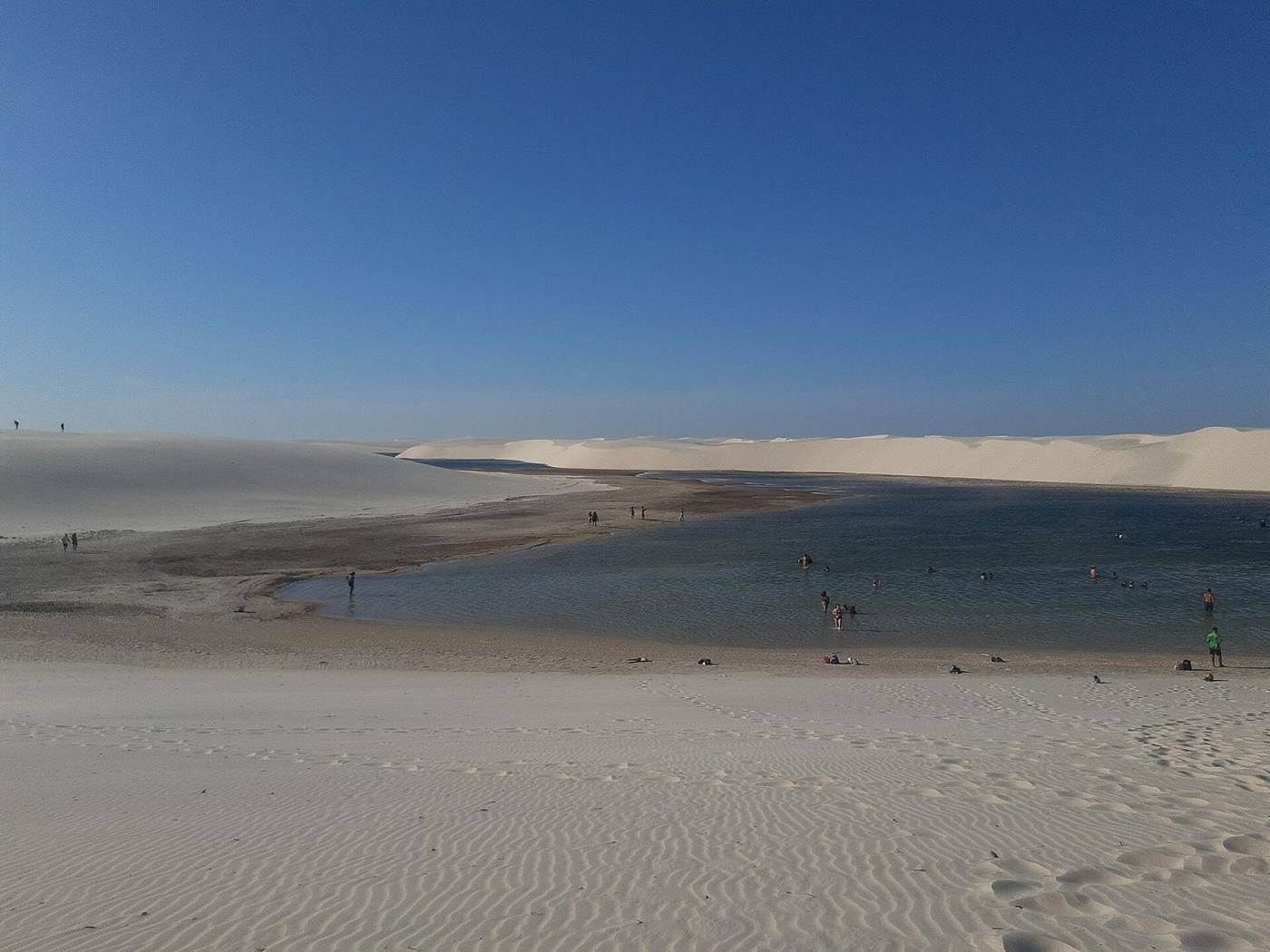
Lençóis Maranhenses National Park, created in 1981, is a desert of white dunes along the coast, with one exception: it rains heavily here from January to June, and the water is trapped between the dunes, forming thousands of blue and green freshwater lagoons. Lençóis means sheets: from above the dunes look like sheets hung out in the wind.
In the morning leave with a guide by 4x4 for the dunes near Atins. You drive to the edge of the dune field and then walk. The first lagoons, such as the one called Lagoa Tropical or those around Atins, are perfect for swimming in warm, clean water.
At midday go to Canto do Atins, a small spot between the dunes and the sea where local families cook prawns grilled or in sauce, famous throughout the region.
In the afternoon walk over the dunes to a larger lagoon and wait for sunset on top of a dune. In the low light the sand turns pink and the lagoons reflect the sky.
Return to Atins before dark with the guide.
Sleep in Atins.
Practical tip: in the dunes there is no shade, water or shop. Carry at least two litres of water each, a hat, sunglasses and a long-sleeved shirt.
- Day 9
Trekking in the dunes: Baixa Grande
Today the great crossing of the Lençóis Maranhenses on foot begins.
The trek crosses the park westwards from Atins in three days, sleeping in oases, small islands of vegetation in the middle of the dunes where families of fishermen and herders have lived for generations. It is the best way to experience the Lençóis, but it is tiring: you walk on sand, in strong sun, uphill and downhill, wading through lagoons up to your waist. You need an authorised guide, because there are no paths between the dunes and it is easy to get lost.
Early in the morning set off on foot from Atins with the guide. The stages are walked at dawn and in the late afternoon, to avoid the hottest hours. Your main luggage stays behind: you carry a light rucksack with water, a hat, sun cream and a change of clothes.
You walk for hours among high dunes, turquoise lagoons and silence. Every so often you stop for a swim, then set off again.
In the afternoon you reach Baixa Grande, an oasis with a few wooden houses and palms. Families host travellers simply: hammocks under a shelter, a basic bathroom, dinner of lagoon fish, rice, beans and cassava flour.
At night the sky is pitch black and full of stars.
Sleep in the oasis of Baixa Grande.
Practical tip: walk barefoot or in sand socks, not in hiking boots. The sand gets in everywhere and your feet need to stay dry between one lagoon and the next.
- Day 10
Trekking in the dunes: Queimada dos Britos
Today you continue the crossing into the heart of the dunes.
In the morning set off before dawn, when the sand is cool and the light is soft. This is the longest and wildest stage: for many hours you see nothing but white dunes, sky and lagoons. The guides find their way by the sun, the shapes of the dunes and their experience.
In this part of the park the lagoons are large and deep. Many, in the right season, are full of small fish: according to the guides, their eggs stay in the sand during the dry season and hatch when the water returns, or they are brought by birds.
At midday rest in the shade of a light awning or in the water of a lagoon, and eat the snack you have brought.
In the afternoon you reach Queimada dos Britos, another oasis in the middle of the dunes, with cashew trees, palms and a few families who live from fishing and small goat herds. It is one of the most isolated places in the park: here life still follows the rhythm of the rains and the wind.
In the evening, after dinner, listen to the residents' stories about life in the dunes and the seasons of the water.
Sleep in the oasis of Queimada dos Britos.
Practical tip: bring a head torch, a light sleeping bag liner and earplugs. In the oases there is little electricity and the hammocks are close together.
- Day 11
End of the trek and Barreirinhas
Today you finish the crossing and reach the main town of the Lençóis.
In the morning walk the last stage, which is shorter, towards the western edge of the park, in the area of Betânia or Santo Amaro, depending on the guide's route. Along the way you cross the last large lagoons and pass small farms.
After three days on foot, stop for a final swim in a lagoon and say goodbye to the guide and the families of the oases.
At the end of the stage a 4x4 is waiting to take you, along sand tracks and road, to Barreirinhas, in about two or three hours. Collect your main luggage here, which has been transferred from Atins.
Barreirinhas is the town on the Preguiças river from which almost all trips into the Lençóis leave. It has places to stay, restaurants, shops and a riverside promenade where people stroll in the evening.
In the afternoon rest: a real shower, a bed and some shade are the reward after the trek.
In the evening walk along the river and have Preguiças fish or a plate of prawns for dinner.
Sleep in Barreirinhas, for three nights.
Practical tip: if the trek seems too hard, you can replace it with 4x4 tours from Barreirinhas and Atins. You see fewer lagoons and spend no nights in the oases, but it is far less tiring.
- Day 12
Lagoa Azul and Lagoa Bonita
Today you visit the most famous lagoons of the Lençóis, in the part of the park near Barreirinhas.
In the morning leave by 4x4 for the Lagoa Azul circuit. After crossing the river on a balsa, the vehicles race along sand tracks through low scrub to the edge of the dunes. From here you walk among dunes and blue lagoons, including the Lagoa Azul and the Lagoa Esmeralda. The guides set precise times for the return: stay with the group.
Return to Barreirinhas for lunch and the hottest hours.
In the afternoon leave for the Lagoa Bonita circuit, further east. To reach the dunes you climb a very steep sandy slope, helped by a rope. At the top the view is the widest in the Lençóis: a sea of white dunes and lagoons to the horizon. Swim in the Lagoa Bonita, one of the largest and deepest.
Stay on top of the dunes for sunset, when the sand changes colour from white to pink, and then return by 4x4 in the dark.
To enter the park check the current rules on the website of the national parks agency, ICMBio, and book your trips with authorised guides. Check prices and times.
Sleep in Barreirinhas.
Practical tip: if you want to see the Lençóis from above, ask about a scenic flight in a small plane from Barreirinhas. From the air the lagoons look like pieces of glass scattered on the sand.
- Day 13
The Preguiças river
Today you go down the Preguiças river by boat to the sea.
In the morning leave by speedboat from Barreirinhas. The Preguiças river flows between mangroves, buriti palms and small dunes towards the ocean. Along the banks you see birds, iguanas and fishing villages.
The first stop is at Vassouras, where the dunes of the Pequenos Lençóis reach the river. Capuchin monkeys live here and come close to visitors. Climb the dune for the view over the river and the dunes.
Then the boat stops at Mandacaru, a fishing village with a lighthouse. You can climb to the top to see the mouth of the river, the dunes and the sea. In the village there are craft stalls with items made from buriti palm fibre, the typical material of the region for bags, baskets and rugs.
At lunchtime the boat reaches Caburé, the strip of sand between the river and the ocean. Eat fish or prawns and swim in the calm river or in the sea with its waves.
In the afternoon go back up the river to Barreirinhas. In the late afternoon light the mangroves and palms are reflected in the water.
In the evening try juçara, a dark berry from a palm, similar to açaí, which in Maranhão is eaten with cassava flour or with fish.
Sleep in Barreirinhas.
Practical tip: water splashes on the speedboat. Put your phone, documents and money in a dry bag and sit towards the back if you do not want to get wet.
- Day 14
São Luís, the city of tiles
Today you leave the dunes and reach the capital of Maranhão.
In the morning leave Barreirinhas for São Luís, about two hundred and sixty kilometres away, four hours on a tarmac road.
São Luís stands on an island between two bays. It is the only Brazilian state capital founded by the French, in 1612, who named it after King Louis XIII. A few years later the Portuguese took it. The historic centre, a UNESCO World Heritage Site since 1997, keeps a great number of colonial houses with façades covered in azulejos, decorated Portuguese tiles, which also protected the walls from heat and humidity.
In the afternoon walk around the Praia Grande district, the heart of the historic centre. On Rua Portugal the coloured, tiled houses stand side by side, with iron balconies and tall windows. Many buildings have been restored, others are still in ruins: the city is beautiful even so.
Stop at the Casa das Tulhas, the old covered market, selling cachaça, spices, dried crabs and local sweets.
At sunset go to the square in front of the Palácio dos Leões, the seat of government, with the view over the bay.
In the evening listen to reggae: São Luís is called the Brazilian Jamaica and reggae is danced in couples at neighbourhood parties.
Sleep in São Luís, for three nights.
Practical tip: in the historic centre of São Luís walk during the day. In the evening some streets empty: get around by taxi or with an app.
- Day 15
The museums and bumba meu boi
Today you discover the popular culture of Maranhão.
In the morning visit the Casa do Maranhão or the Popular Culture Centre, in the historic centre, devoted to bumba meu boi, the most important festival in the state, recognised by UNESCO as intangible cultural heritage. It is a performance with music, dance and theatre telling the story of an ox that dies and comes back to life. The costumes are covered in beads, sequins and feathers, and the ox is embroidered by hand. Check prices and times.
If you travel in June, during the São João festivities, the city fills with bumba meu boi groups dancing until dawn, each with its own style and drums.
Then go into the Casa das Minas, one of the oldest Afro-Brazilian places of worship in Brazil, linked to the traditions of present-day Benin. Visit only with respect and when it is open.
In the afternoon go to the Historical and Art Museum of Maranhão, in a nineteenth-century mansion with furniture, porcelain and paintings of the wealthy families of the cotton and sugar era. Check prices and times.
In the evening try arroz de cuxá, rice with the sour leaves of vinagreira, dried prawns and sesame, the typical dish of São Luís.
Sleep in São Luís.
Practical tip: in São Luís the tides are among the highest in Brazil, and the sea level can change by several metres. On the island's beaches always ask about the tide times before swimming.
- Day 16
Alcântara, the abandoned town
Today you cross the bay to visit a colonial town that has almost stood still in time.
In the morning take the boat from the port of São Luís to Alcântara, on the other side of São Marcos Bay. The crossing takes about an hour or a little more, depending on the sea. Times depend on the tides: check them the day before.
In the eighteenth and nineteenth centuries Alcântara was a rich town, home to the owners of the cotton and sugar plantations. When the economy collapsed, the families left and the mansions were abandoned. Today it is a quiet little town among ruins.
Walk up from the port along the main stone street to the Matriz square, with the ruins of the mother church and the pelourinho, the stone pillar. All around you see colonial mansions, some restored, others roofless, with trees growing inside the walls.
Visit the historic house museum, with objects from the colonial era, and the Carmo church. Check prices and times.
In the village try doce de espécie, a coconut sweet typical of Alcântara, made by local women.
In the afternoon return to São Luís by boat and spend your last evening in the historic centre, beneath the illuminated tiled façades.
Sleep in São Luís.
Practical tip: the crossing to Alcântara can be choppy. If you suffer from seasickness, take something before leaving and sit in the middle of the boat.
- Day 17
Departure
Today you leave Brazil.
In the morning, if your flight leaves in the afternoon, take a last walk around Praia Grande or buy buriti fibre crafts and Maranhão cachaça. São Luís airport is about twenty or thirty minutes from the historic centre. International flights almost always involve a stop in Brasília, São Paulo or Fortaleza: arrive at least two hours early for the domestic flight.
In these seventeen days you have travelled the windy coast of north-east Brazil. In Fortaleza, the seafront and the crabs; in Jericoacoara, the sunset dune, Pedra Furada, the hammocks in the Lagoa do Paraíso and kitesurfing; along the coast by 4x4, the balsas over the rivers; in the Parnaíba delta, the mangroves and the flight of the guarás at sunset; in Atins, the first lagoons and the prawns of Canto do Atins; in the Lençóis Maranhenses, the crossing on foot with nights in the oases, the Lagoa Azul and the Lagoa Bonita; the Preguiças river with the monkeys of Vassouras; and finally São Luís, with its tiles, bumba meu boi and nearby Alcântara.
When to go: the best period is from June to September, when the lagoons of the Lençóis are full of water after the rains. From October they drop and from November many dry out. From January to May it rains heavily. For kitesurfing in Jericoacoara and Atins the strongest wind blows from July to December.
Practical tip: on this trip transfers depend on the tides and the sand. Always leave a margin of half a day before your flight home.
One of the planet's most incredible landscapes, but only at the right time: the Lençóis lagoons are full from June to September and dry out from November. Trekking in the dunes is tiring due to heat and sand. The constant wind makes Jeri a kitesurfing capital.
Before you go
- Documents and visa
- Valid passport; no visa for tourism up to 90 days for EU citizens.
- Health and vaccines
- No compulsory vaccines arriving from Europe; yellow fever is recommended for the Amazon and some inland areas. Protect yourself against mosquitoes because of dengue. Emergencies: 190 police, 192 ambulance, 193 fire.
- Money and payments
- Brazilian real. Cards and instant payments are everywhere; carry little cash.
- Power sockets
- Type N, plus C, 127 or 220 volts depending on the city: check the voltage before plugging in devices.
- Time zone
- Rio and São Paulo are UTC-3 all year: Brazil does not use daylight saving time.
- Safety
- The United States rates Brazil level 2 for crime, with level 4 within 160 km of land borders (except Foz do Iguaçu and the Pantanal). No favelas without a community guide. Official advice: GOV.UK.
Information checked in November 2026 for Italian and EU citizens. Rules change: always check before you travel.
Variations
In 10 days: Fortaleza, Jericoacoara and the Lençóis Maranhenses based in Barreirinhas and Atins, without the trek and without São Luís.
In 21 days: add a few beach days and the coast of Ceará east of Fortaleza, with the coloured cliffs of Canoa Quebrada and Morro Branco.
Frequently asked questions
When are the Lençóis lagoons full?
Usually from June to September, after the January to May rains. The level changes every year depending on how much rain has fallen. From November many lagoons dry out.
Is the Lençóis trek difficult?
It is tiring: three days on foot on sand, in the heat and without shade, sleeping in hammocks in the oases. You need to be fit and to have an authorised guide. If you are not up to it, you can see the lagoons on 4x4 tours from Barreirinhas and Atins.
Is north-east Brazil safe?
The United States rates Brazil at level 2, meaning exercise increased caution, because of crime, and advises against entering favelas. This trip is far from the land borders. In Fortaleza and São Luís use taxis or apps in the evening and do not show your phone or jewellery; villages such as Jeri and Atins are quieter.
Indicative itinerary written by World Atlas. Before booking, check timetables, seasonal openings, documents and safety.
 7 daysEasy
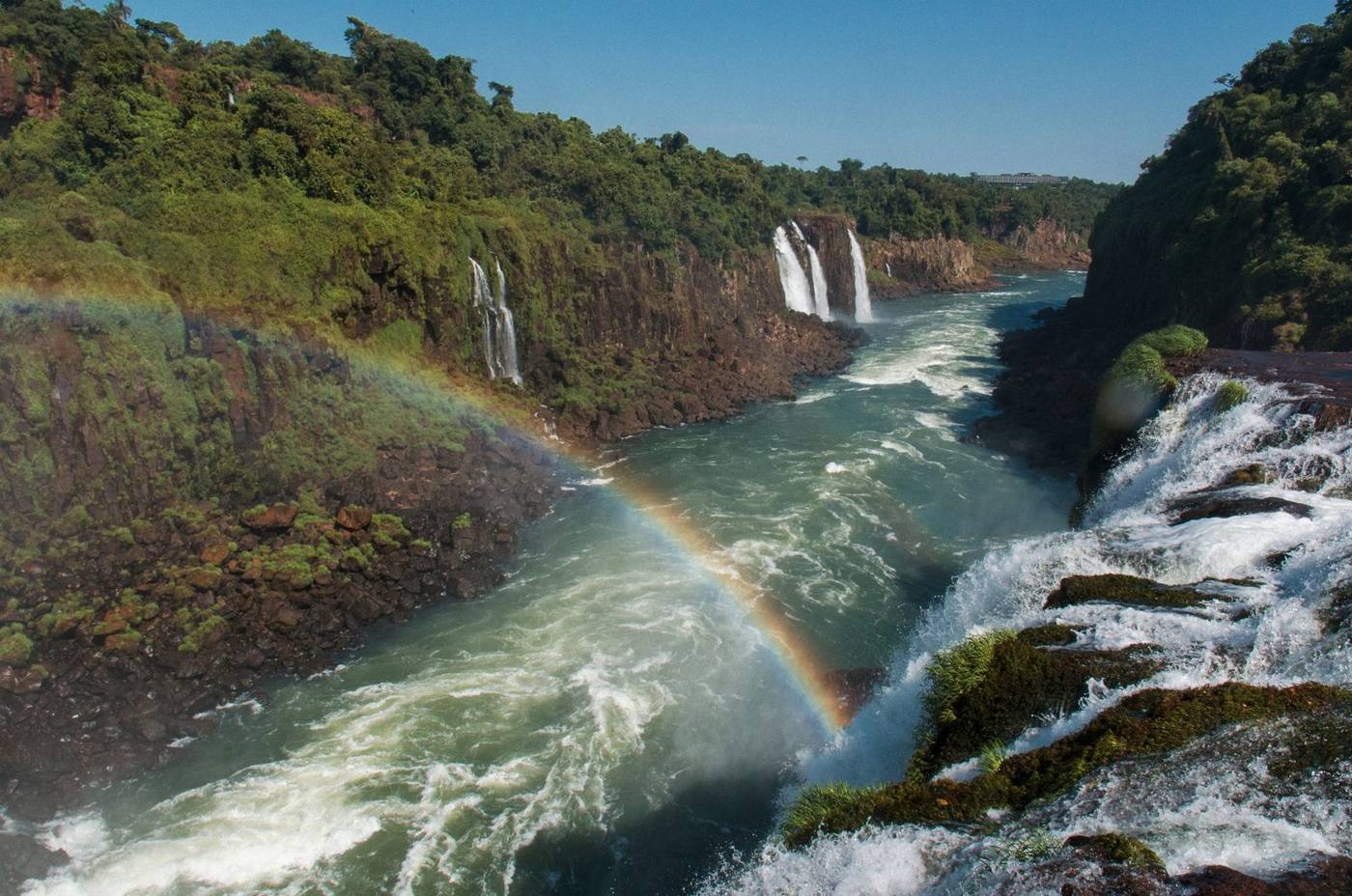
Rio de Janeiro and the Iguaçu Falls
South America's most spectacular city and its mightiest falls, seen from both sides of the border.
 15 daysModerate
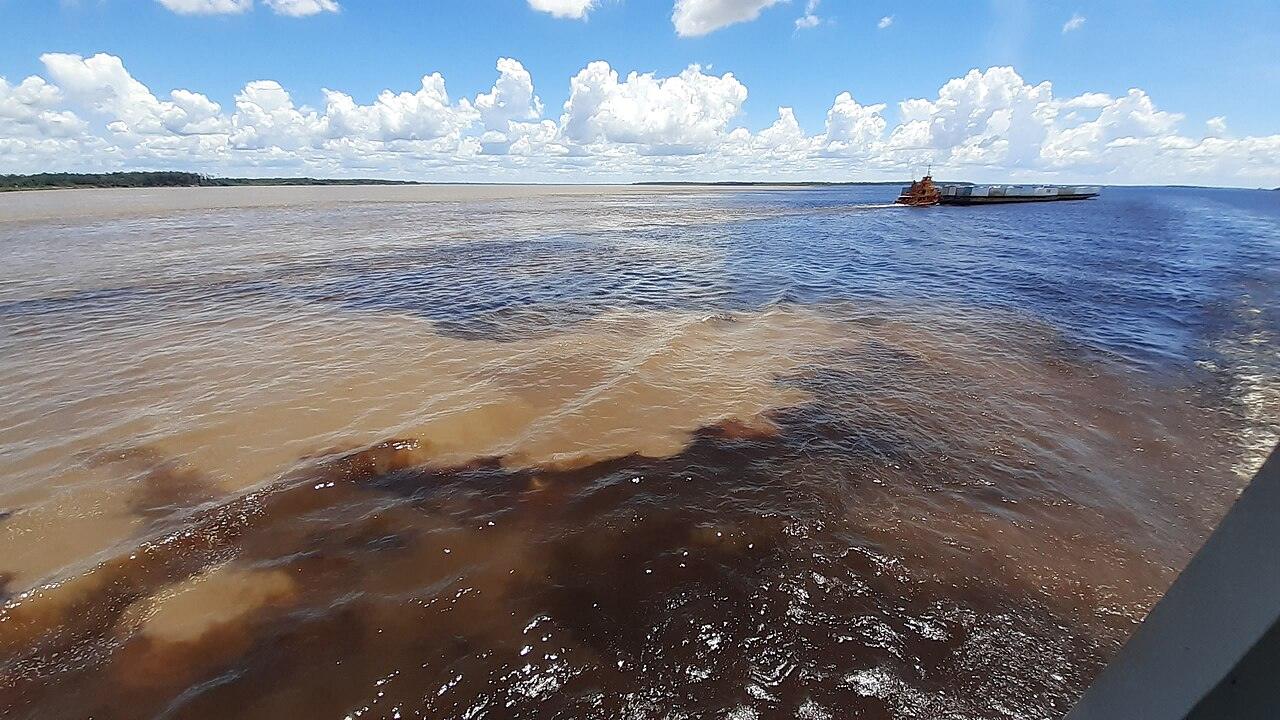
Pantanal, Amazon and Rio
The jaguars of the Pantanal, a lodge in the Amazon rainforest and a finale in Rio de Janeiro.
 12 daysEasy
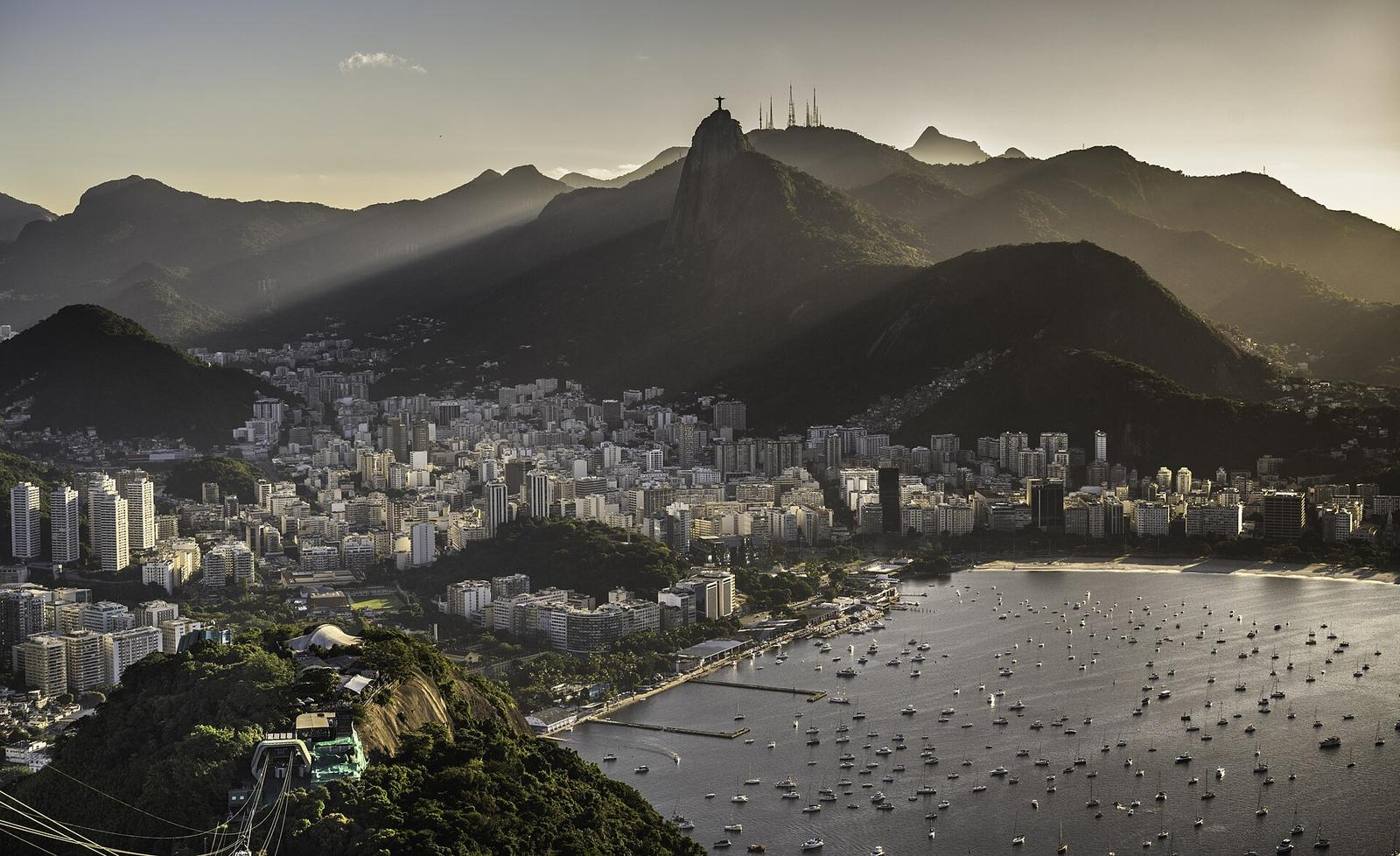
Brazil express: Rio, Iguaçu and Salvador da Bahia
Postcard Brazil in under two weeks: Sugarloaf Mountain, the world's mightiest falls and the most African city in the Americas.