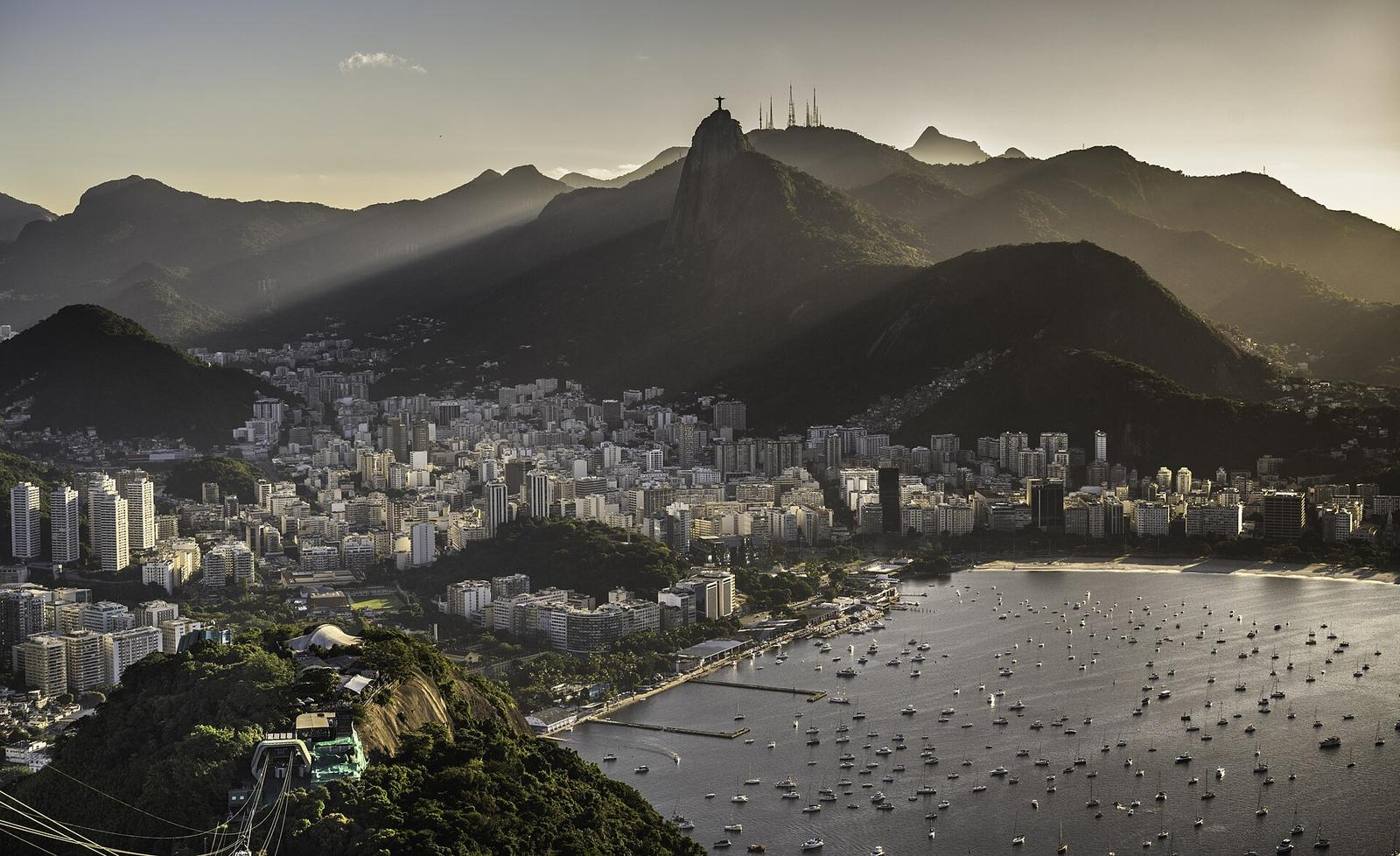
Brazil express: Rio, Iguaçu and Salvador da Bahia
Postcard Brazil in under two weeks: Sugarloaf Mountain, the world's mightiest falls and the most African city in the Americas.
- Rio de Janeiro
- Foz do Iguaçu
- Salvador de Bahia
- Praia do Forte
Day by day
- Day 1
Arrival in Rio de Janeiro
This trip brings together in twelve days three iconic places in Brazil: Rio de Janeiro between the mountains and the sea, the Iguaçu Falls on both sides of the border with Argentina, and Salvador de Bahia, the city where Brazil's African culture is strongest. You move between the three by plane.
Before you leave: Italian citizens enter Brazil without a visa for tourism with a valid passport. Other nationalities should check their own rules. The United States rates Brazil at level 2, meaning increased caution, because of crime; it advises against areas within 160 km of the land borders, except Foz do Iguaçu, where this trip goes. In cities do not enter favelas except with authorised guides.
You arrive at Rio's international airport, on Ilha do Governador. Take an official taxi or a booked car to Copacabana or Ipanema: it takes about an hour, longer in traffic.
In the afternoon walk along the Copacabana seafront, with the black and white wave pavement designed by Roberto Burle Marx. On the beach people play football and footvolley until sunset.
In the evening try a churrascaria, the grilled meat restaurant where meat is served at the table, or a fish moqueca.
Sleep in Copacabana or Ipanema.
Practical tip: on the beach and in the street do not show your phone and jewellery. Carry only the money you need.
- Day 2
Christ the Redeemer and Santa Teresa
Today you climb Rio's most famous mountain and discover the artists' neighbourhood.
Early in the morning go to Corcovado, the mountain of over 700 metres topped by Christ the Redeemer, the great statue with open arms above the city. You go up on the cog railway from the Cosme Velho neighbourhood through the Tijuca forest, or with authorised vans. Tickets are bought online for a set time: check prices and availability. Go early, before the clouds and the crowds rise.
From the top you see all of Rio: Sugarloaf, Guanabara Bay, the beaches, the Rodrigo de Freitas lagoon and the forest covered mountains running into the city.
In the afternoon go to Santa Teresa, a hillside neighbourhood with old colonial houses, steep streets, artists' studios and small bars. The old yellow tram, the bondinho, climbs from the centre to the neighbourhood over the Lapa arches, an eighteenth century aqueduct.
Then go down to the Escadaria Selarón, a stairway covered with coloured tiles from all over the world, the work of a Chilean artist.
Sleep in Copacabana or Ipanema.
Practical tip: in Santa Teresa and Lapa get around by taxi or app in the evening. Some streets are dark and isolated.
- Day 3
The historic centre and Sugarloaf at sunset
Today you visit Rio's historic centre and go up Sugarloaf for sunset.
In the morning go downtown. The Metropolitan Cathedral is a great concrete cone with very tall coloured windows. Further on is the Municipal Theatre, a copy of the Paris Opera, and the Confeitaria Colombo, an early twentieth century pastry shop with mirrors and stained glass. Then Praça XV, the old imperial palace and the monastery of São Bento, a baroque church covered in gold inside.
In the port area, renewed for the 2016 Olympics, is the Museu do Amanhã, the Museum of Tomorrow, with white architecture over the water. Check times and tickets.
In the afternoon go to Urca, the neighbourhood at the foot of Sugarloaf. The cable cars rise in two stages: first to Morro da Urca, then to the top of Sugarloaf, almost 400 metres above the sea. Arrive an hour before sunset: you see the sun go down behind Corcovado and the city lighting up. Check prices and times.
If you like walking you can climb Morro da Urca on foot by a forest path and take only the second cable car.
Sleep in Copacabana or Ipanema.
Practical tip: go downtown by day, on weekdays. At weekends it is empty and less safe.
- Day 4
Ipanema, the lagoon and samba in Lapa
Today you live Rio like its residents: beach, lagoon and music.
In the morning go to Ipanema beach. The beach is divided into postos, the numbered lifeguard towers, and each posto has its own crowd. Rent a chair and an umbrella, drink coconut water and watch the vendors passing with prawns, grilled cheese and iced mate. The sea is open and the waves are sometimes strong: swim near the lifeguards.
At midday walk to Arpoador, the rock between Ipanema and Copacabana. At sunset people here applaud the sun going down behind the Dois Irmãos mountains.
In the afternoon, if you want a break from the sea, cycle around the Rodrigo de Freitas lagoon, about seven kilometres, or visit the botanical garden, with its avenue of imperial palms.
In the evening go to Lapa, the music neighbourhood. In the venues and in the street live samba and choro are played. On Friday and Saturday the streets under the arches fill with people until late.
Sleep in Copacabana or Ipanema.
Practical tip: in Lapa at night there are many pickpockets. Carry only the money for the evening and return by taxi. Order drinks at the bar and keep an eye on your glass.
- Day 5
Flight to Foz do Iguaçu
Today you leave the sea and fly to the falls, in southern Brazil.
In the morning go to Rio airport and take the flight to Foz do Iguaçu. The flight takes about two hours. Many flights leave from Santos Dumont airport, downtown, on the bay: it is more convenient and the view on take off is beautiful. Check which airport your flight leaves from.
Foz do Iguaçu is a border city, where Brazil, Argentina and Paraguay meet, on the banks of the Iguaçu and Paraná rivers. The airport is near the entrance of the Brazilian national park.
In the afternoon go to the Marco das Três Fronteiras, the triple frontier point: from a terrace over the river you see the banks of Argentina and Paraguay, with their monuments. At sunset there is often a light and music show.
If you are curious you can visit the Itaipu dam, one of the largest hydroelectric plants in the world, built jointly by Brazil and Paraguay. Visits must be booked: check times and prices.
In the evening dine on river fish, such as pacu or dourado, or on southern grilled meat.
Sleep in Foz do Iguaçu or near the park.
Practical tip: Foz is close to Paraguay and Ciudad del Este, a trading city full of traffic and pickpockets. You do not need to go there.
- Day 6
The falls from the Brazilian side
Today you see the Iguaçu Falls from the Brazilian side, the side of the overall view.
The falls are more than two hundred drops along almost three kilometres, where the Iguaçu River falls from the plateau into a gorge, surrounded by forest. The border runs through the middle: most of the drops are in Argentina, but Brazil has the panoramic view.
In the morning, at opening time, enter the Brazilian national park, a UNESCO World Heritage site. Park buses take you to the start of the trail. The ticket is paid: check the price. The falls trail is about a kilometre and a half long, descending along the gorge with viewpoints ever closer, to the walkway that goes out into the river in front of the Devil's Throat. Here you get completely soaked: bring a raincoat or a bag for your phone. At the end a lift takes you back up.
Coatis live in the park, raccoon like animals that steal food: do not feed them. You also see colourful butterflies and toucans.
In the afternoon visit the private bird park near the entrance, with large aviaries where you walk among toucans, parrots and macaws of the Atlantic forest. Check prices and times.
Sleep in Foz do Iguaçu.
Practical tip: arrive at opening time. By mid morning organised groups fill the walkways.
- Day 7
The Argentine side and the Devil's Throat
Today you cross the border and see the falls from the Argentine side, where you walk above and beside the water.
Before you go: to enter Argentina Italian citizens do not need a visa for tourist stays of up to 90 days; Argentina requires health insurance valid for the trip. Bring your passport and the policy. Other nationalities should check their own rules.
From Foz you cross the bridge over the Iguaçu River by taxi or transfer. At the border Brazilian and Argentine checks are carried out. Then in half an hour you reach Iguazú National Park. Since 1 June 2026 the ticket for foreigners costs 60,000 Argentine pesos; those who return the next day pay half for the second day.
In the park a small train takes you to the Devil's Throat station. From here a walkway of about a kilometre crosses the river to the edge of the biggest drop. The water falls over eighty metres in a cloud of spray, with an enormous roar. It is the strongest moment of the trip.
Then follow the upper circuit, with walkways above the falls, and the lower circuit, which descends through the forest to the foot of the drops.
In the evening return to Foz do Iguaçu.
Sleep in Foz do Iguaçu.
Practical tip: bring Argentine pesos or a card. In Argentina Brazilian reais are not always accepted.
- Day 8
Flight to Salvador de Bahia
Today you fly from the south to the north east of Brazil, to Salvador de Bahia.
The flight from Foz do Iguaçu to Salvador usually connects in São Paulo or another city: it takes almost the whole day. Check the times and leave a margin.
Salvador was the first capital of Brazil, from the sixteenth to the eighteenth century, and the main port of the African slave trade. Today it is the most African city in Brazil: in its music, in the candomblé religion, in its cooking, in capoeira, in its festivals.
The city is divided into two levels: the Cidade Alta, the upper city, with the historic centre of Pelourinho, and the Cidade Baixa, the lower city, with the port and the market. The two levels are linked by the Elevador Lacerda, a large art deco public lift.
In the evening you arrive and go to your lodging. If you have energy, walk along the seafront of Barra, the seaside neighbourhood with the lighthouse and the fort of Santo Antônio. At sunset many people come here to watch the sun go down over the Bay of All Saints.
Dinner with an acarajé, the bean fritter fried in palm oil and filled with prawns, sold by baianas dressed in white.
Sleep in Barra or near Pelourinho.
Practical tip: Salvador is hot and humid all year. Dress lightly and drink plenty of water.
- Day 9
Pelourinho and the golden churches
Today you discover Salvador's historic centre, Pelourinho, a UNESCO World Heritage site.
In the morning walk among the squares and steep streets of Pelourinho, with colonial houses painted yellow, pink, blue and green. The name comes from the post where slaves were once punished.
Visit the church of São Francisco, one of the richest baroque churches in Brazil, with walls and ceiling covered in gilded wood and blue Portuguese tiles in the cloister. Check times and tickets. Nearby is the church of Nossa Senhora do Rosário dos Pretos, built by slaves and their descendants, painted blue: some masses are accompanied by Afro Brazilian drums and songs.
In the afternoon visit the Afro Brazilian museum or the house dedicated to the writer Jorge Amado, who told the story of Bahia in his novels.
On Tuesday evenings Pelourinho often has a party with music in the street. On some days the rehearsals of percussion groups fill the squares with drums.
In the evening dine on a moqueca baiana, fish or prawns cooked in coconut milk and palm oil.
Sleep in Salvador.
Practical tip: in Pelourinho stay on the main streets, where the tourist police are. The side streets are less safe in the evening.
- Day 10
Salvador: Bonfim, the market and capoeira
Today you see the Salvador of faith and daily life.
In the morning go to the church of Nosso Senhor do Bonfim, on the Itapagipe peninsula, the most loved in the city. Thousands of coloured ribbons are tied to the gate and railings: you tie one round your wrist with three knots and three wishes, and wait for it to fall off by itself. Every January the festival of washing the church steps brings together Catholics and followers of candomblé.
Then pass along the Ribeira seafront, with its historic ice cream parlours and fishing boats.
In the afternoon return to the lower city and visit the Mercado Modelo, the old customs building turned into a crafts market: musical instruments, figurines, fabrics, hammocks. In the square in front capoeira is often played.
Capoeira is an art born among slaves, combining fighting, dance and music, with the berimbau, the bow shaped instrument. In the historic centre there are schools where you can watch training or take a trial lesson: ask about the conditions.
In the evening try Bahian cooking: vatapá, a cream of bread, prawns and peanuts, and caruru, with okra.
Sleep in Salvador.
Practical tip: if you buy a Bonfim ribbon, buy it from the vendors near the church. You also find them at the market.
- Day 11
Praia do Forte and the sea turtles
Today you leave the city and go to the coast north of Salvador.
Praia do Forte is a fishing village that became a seaside resort, about an hour and a half from Salvador airport, along the coast road called Linha Verde. There are long beaches with coconut palms, natural pools between the rocks at low tide and a pedestrian street with shops and cafés.
In the village there is a sea turtle protection centre, founded in the 1980s to save the five species that lay their eggs on Brazil's beaches. You see the tanks with turtles, learn about their life cycle and, in the right season, usually between September and March, you can sometimes see hatchlings emerge or being released. Check times and prices.
In the afternoon walk to the ruins of the castle of Garcia d'Ávila, one of the first fortresses in Brazil, built in the sixteenth century, or swim in the natural pools with a mask.
Between July and October humpback whales pass offshore: boat trips leave to see them.
Sleep in Praia do Forte.
Practical tip: in the natural pools watch where you put your feet. There are sea urchins and sharp corals. Water shoes are useful.
- Day 12
Departure from Salvador
On the last day you return to Salvador airport and take the return flight.
If your flight is in the afternoon, in the morning take a last walk on the beach at Praia do Forte or a last swim in the natural pools.
Salvador airport is about an hour and a half from Praia do Forte. Many international flights to Europe connect in São Paulo, Rio or Lisbon. Leave a margin for traffic.
What to take home: a berimbau or a Bahian drum, Brazilian coffee, cachaça, the sugar cane spirit, cotton hammocks, Bonfim ribbons, wooden figurines, gemstones from Minas Gerais sold in the markets.
This trip shows three very different faces of Brazil in a few days: the city between mountains and sea, one of the natural wonders of the world on the border with Argentina, and African Bahia of music and faith.
If you have more time, you can add a few days by the sea in southern Bahia or an excursion to the Chapada Diamantina, among canyons and waterfalls.
Practical tip: in Brazil cards are accepted almost everywhere, but keep some reais in cash for street vendors and tips. Tell your bank about the trip before you leave.
The right first trip to Brazil, with three internal flights but three completely different worlds. See Iguaçu from both sides: they complement each other. In Rio and Salvador keep valuables out of sight, especially at night. Right months: April-October for Rio and Iguaçu.
Before you go
- Documents and visa
- Valid passport; no visa for tourism up to 90 days for EU citizens.
- Health and vaccines
- No compulsory vaccines arriving from Europe; yellow fever is recommended for the Amazon and some inland areas. Protect yourself against mosquitoes because of dengue. Emergencies: 190 police, 192 ambulance, 193 fire.
- Money and payments
- Brazilian real. Cards and instant payments are everywhere; carry little cash.
- Power sockets
- Type N, plus C, 127 or 220 volts depending on the city: check the voltage before plugging in devices.
- Time zone
- Rio and São Paulo are UTC-3 all year: Brazil does not use daylight saving time.
- Safety
- The United States rates Brazil level 2 for crime, with level 4 within 160 km of land borders (except Foz do Iguaçu and the Pantanal). No favelas without a community guide. Official advice: GOV.UK.
Information checked in November 2026 for Italian and EU citizens. Rules change: always check before you travel.
Variations
In 8 days: only Rio de Janeiro and the Iguaçu Falls, without Salvador.
In 16 days: add Paraty and Ilha Grande after Rio, or the Chapada Diamantina after Salvador.
Frequently asked questions
Do I need a visa?
No, Italian citizens travelling as tourists only need a valid passport. For the Argentine side of the falls you need your passport and valid health insurance. Other nationalities should check their own rules.
How much does the Argentine side of the falls cost?
Since 1 June 2026 the ticket for Iguazú National Park costs 60,000 Argentine pesos for foreigners; the second day costs half.
Is Brazil safe?
The United States rates it at level 2 because of crime. In cities get around by taxi at night, do not show your phone and jewellery and do not enter favelas without authorised guides.
Indicative itinerary written by World Atlas. Before booking, check timetables, seasonal openings, documents and safety.
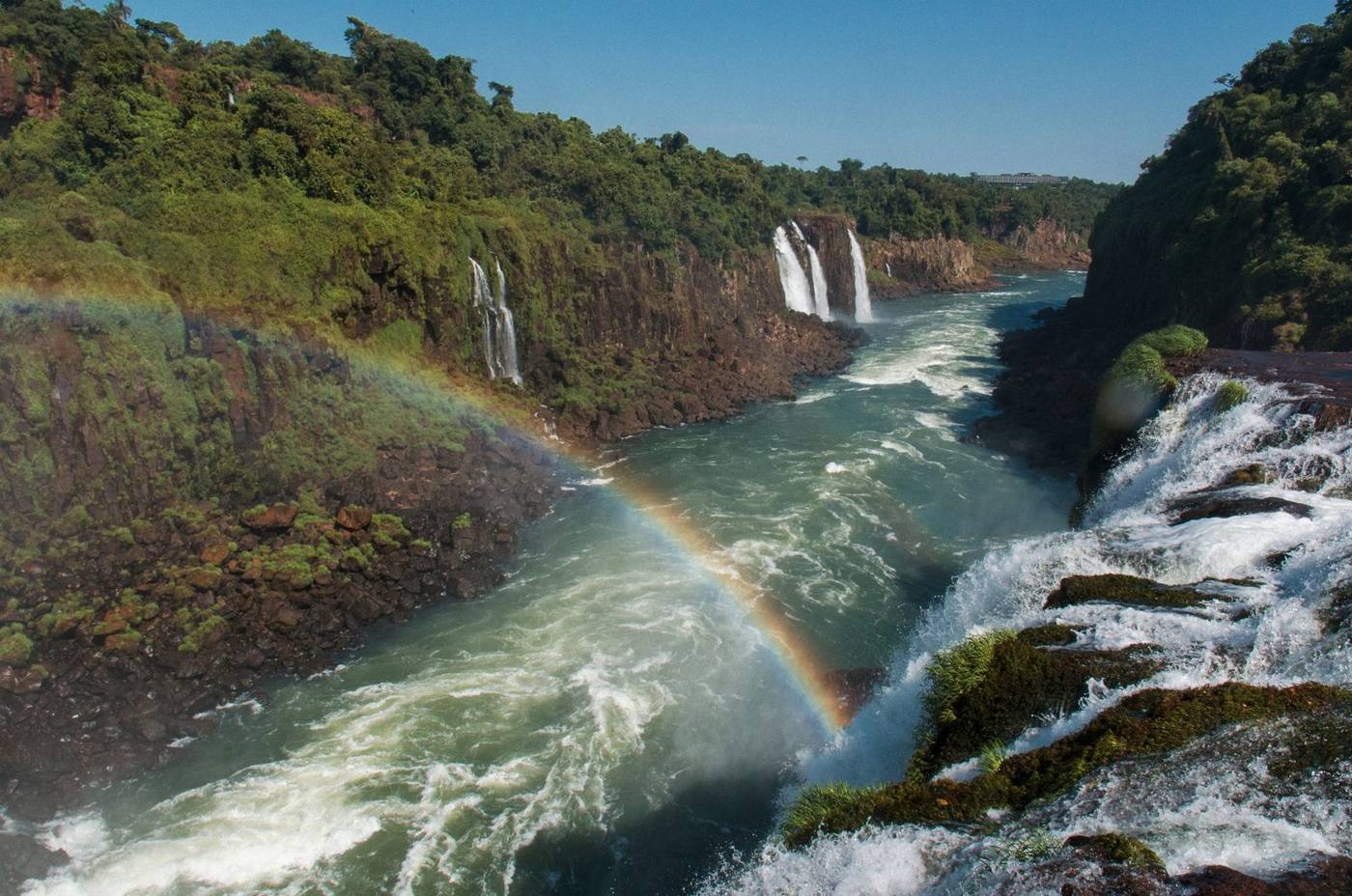 7 daysEasy
Rio de Janeiro and the Iguaçu Falls
South America's most spectacular city and its mightiest falls, seen from both sides of the border.
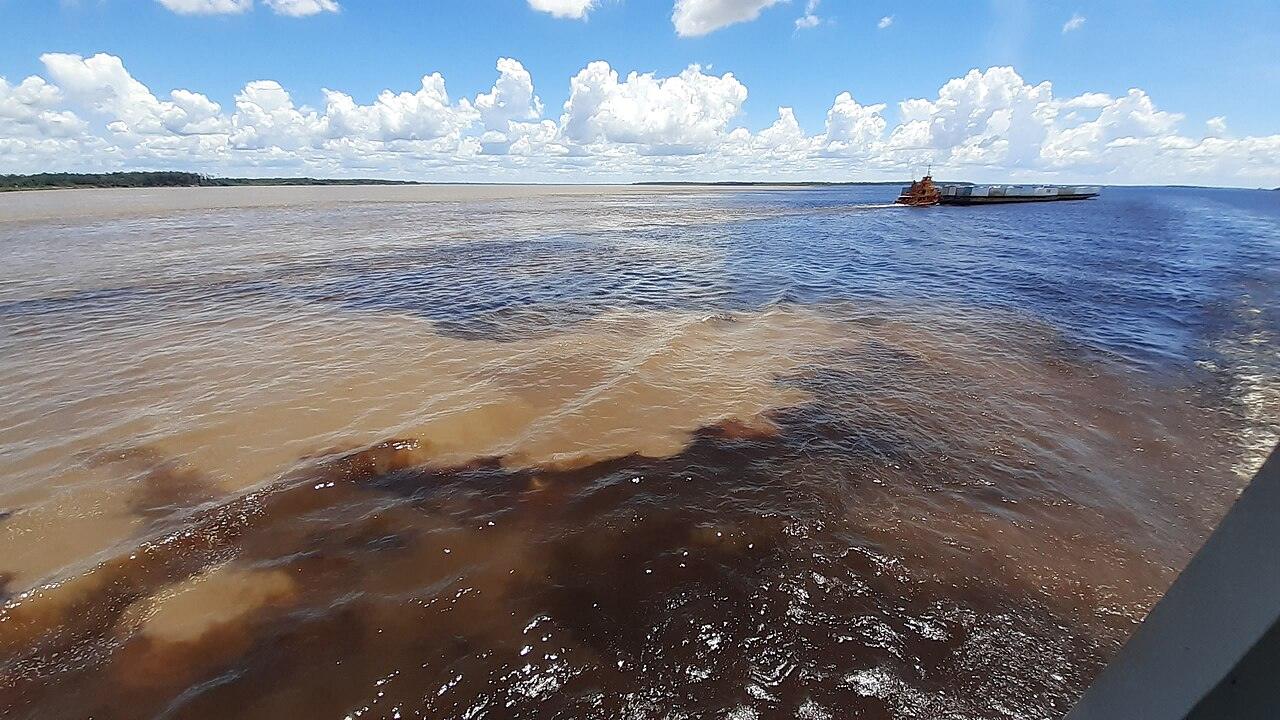 15 daysModerate
Pantanal, Amazon and Rio
The jaguars of the Pantanal, a lodge in the Amazon rainforest and a finale in Rio de Janeiro.
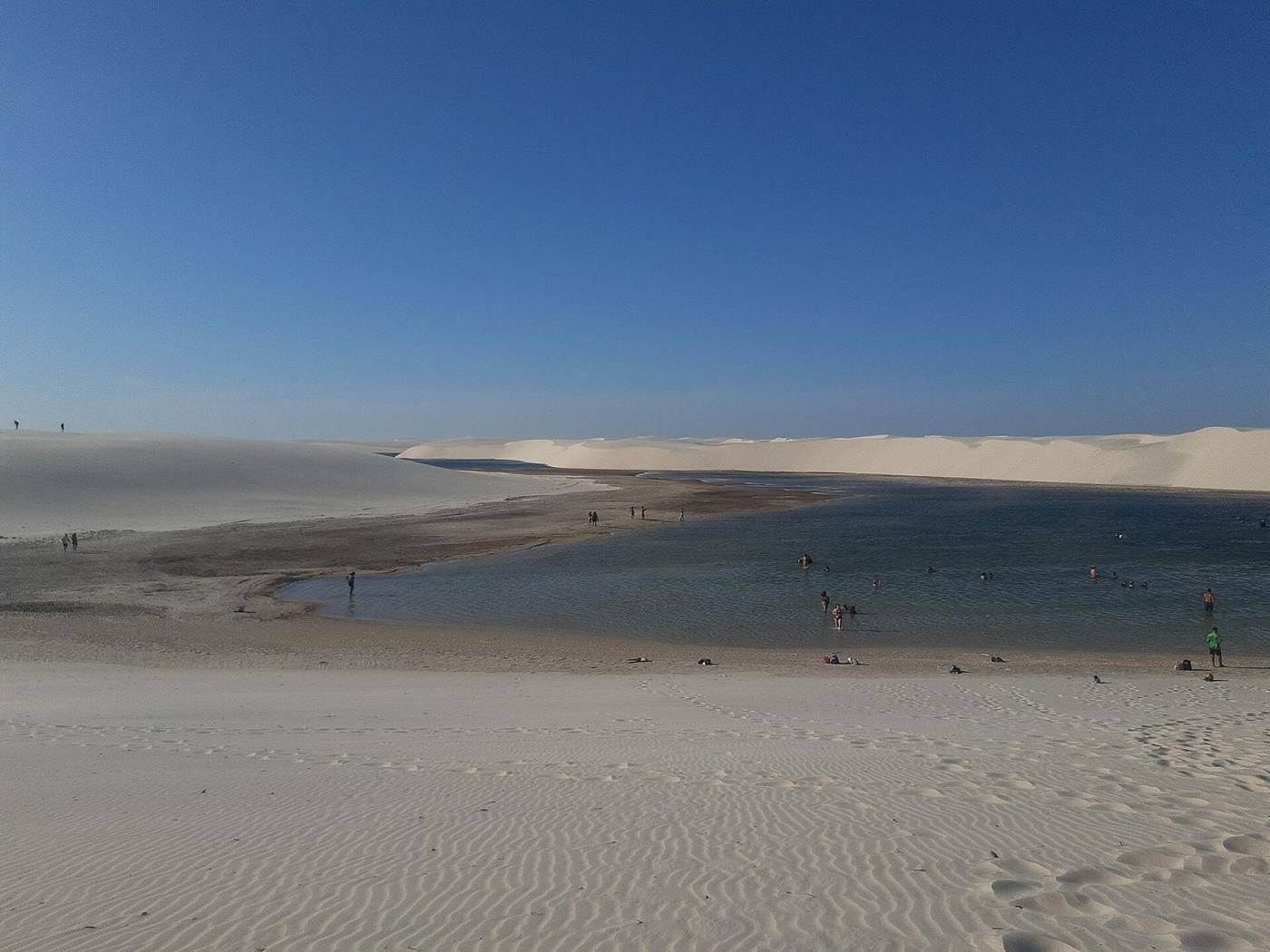 17 daysModerate
Maranhão and Ceará: Lençóis Maranhenses and Jericoacoara
The most spectacular north-east: the white dunes of the Lençóis filled with turquoise lagoons, the sand village of Jericoacoara, the Parnaíba delta and the colonial city of São Luís.