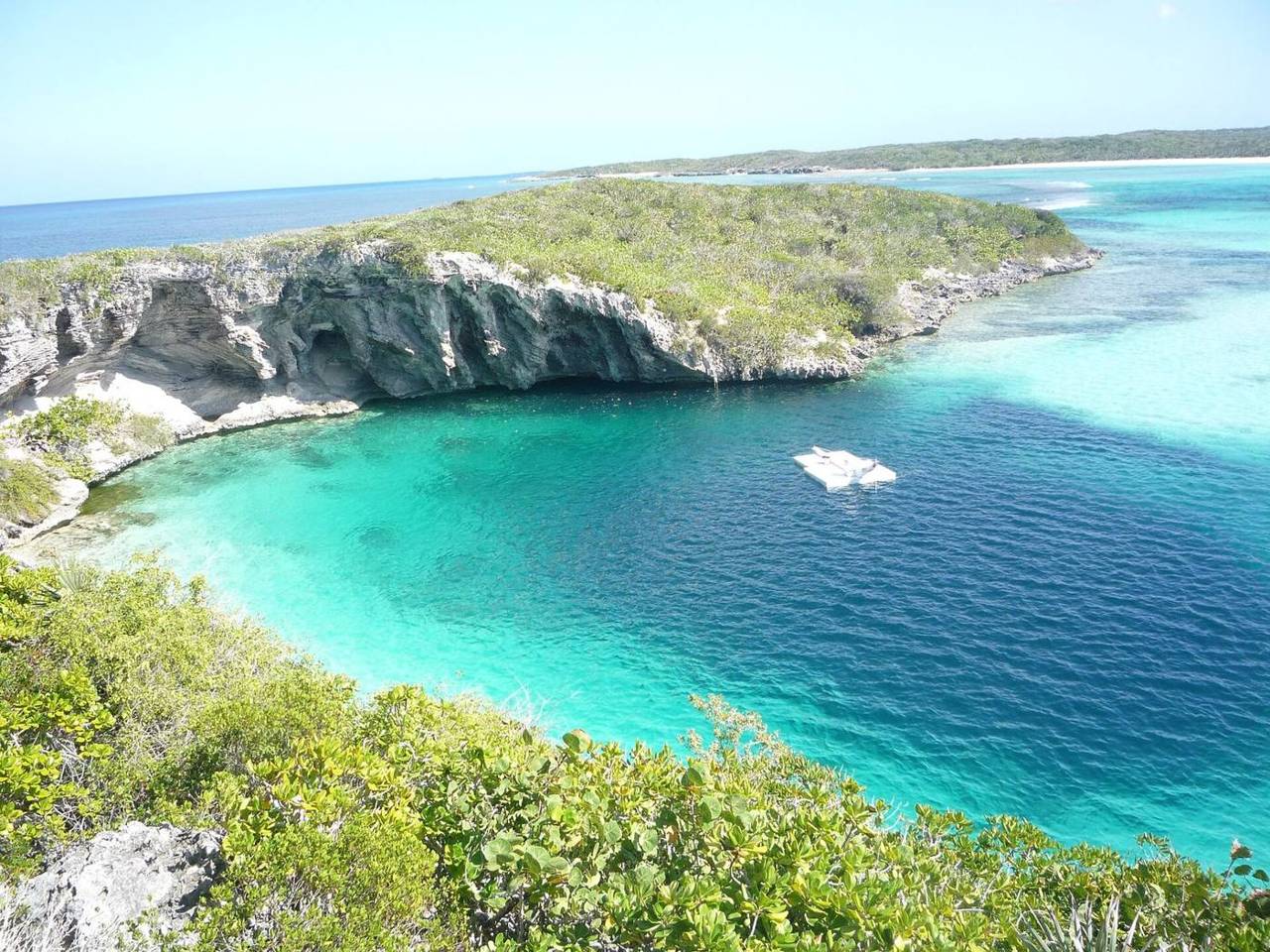
Long Island and Dean's Blue Hole
A long, narrow island, with cliffs on the Atlantic and calm beaches on the Caribbean side: Dean's Blue Hole, one of the world's deepest blue holes, Cape Santa Maria and the stone churches.
- Stella Maris
- Cape Santa Maria
- Clarence Town
- Dean's Blue Hole
Day by day
- Day 1
Arrival at Stella Maris, in the north of Long Island
This four-day trip takes you to Long Island, one of the Out Islands of The Bahamas: a long, narrow island crossed by a single main road, with cliffs and waves on the Atlantic to the east and calm, shallow beaches on the west side. You will see Cape Santa Maria, the stone churches of Clarence Town and Dean's Blue Hole, one of the deepest blue holes in the world. There are no big resorts and you need a hire car.
Before you go: Italian citizens enter The Bahamas with a passport valid for at least six months, without a visa for tourist stays of under 90 days. Other nationalities should check their own rules. The crime reported by the United States mainly concerns Nassau and Grand Bahama, where you will only pass through for the flight; water sports are poorly regulated, so always choose authorised guides and centres. On the island there are only small clinics: you need insurance with medical cover and air repatriation. Hurricane season runs from June to November.
From Nassau a short flight lands at Stella Maris airport, in the northern part of the island. Pick up the car and take the afternoon slowly: here you drive on the left, as in Britain, and the road is narrow, with few lights and some potholes.
Towards evening walk on the beach nearest your accommodation, on the west side. The water is shallow, clear and almost always calm, good for a first swim. After sunset, stay out of the sea.
Do your shopping as soon as you arrive: the shops are small, close early and are often shut on Sundays.
Practical tip: book the car before you leave, because hire cars on the island are few and run out quickly in the high season months.
- Day 2
Cape Santa Maria and the Columbus monument
In the morning drive to the northern tip of the island, Cape Santa Maria. Here is one of the most beautiful beaches in The Bahamas: a long crescent of fine white sand, with water that shifts from pale turquoise to blue, almost always empty. The seabed slopes gently and the sheltered sea suits even weak swimmers.
Christopher Columbus is thought to have passed these shores on his first voyage, in 1492, and to have named the island Fernandina. On a rise near the cape there is a monument recalling his arrival and the Lucayans, the people who lived here before the Europeans. You reach it on a short walk along a path of stones and bushes; the view over the ocean on one side and the bay on the other is wide. Wear closed shoes, because the limestone is sharp.
In the afternoon go snorkelling near the rocks at the sides of the beach, where you can see tropical fish, sea urchins and small corals. Do not touch anything and do not stand on the coral. If the wind swings to the west the water gets choppy: in that case stay close to the shore.
In the evening try conch, the large Bahamian shellfish, served as a salad with lime, onion and chilli, or fried. Have it with coconut bread or johnny cakes.
Practical tip: bring your own shade, a light umbrella or a sheet, because at Cape Santa Maria there are few trees and the sun is strong even in winter.
- Day 3
South by car: Dean's Blue Hole and Clarence Town
Today is the longest day. Leave early and drive south on the main road, through villages, farmed fields and stretches of scrub. On the way you cross the Tropic of Cancer, which cuts across the island. In about two hours you reach the Clarence Town area.
Dean's Blue Hole lies just west of the town, in a small bay enclosed by cliffs. From the pale, shallow beach the water suddenly turns very dark blue: it is the opening of a shaft that drops for more than 200 metres. International freediving competitions are held here. With a mask and snorkel you can swim on the surface, staying close to the edge, where you see fish and the wall plunging down.
Safety in the water: deep freediving is dangerous even for experts, and trained athletes have died here. Never freedive alone, always with a buddy watching you from the surface, and do not go deep without a course and qualified support. Do not hyperventilate before diving. Avoid jumping from the cliffs if you do not know the depth below.
In the afternoon visit Clarence Town, with its harbour and two white churches on two hills: the Anglican St Paul's and the Catholic St Peter's, built in stone by Father Jerome, a priest and architect. You can climb the towers to see the bay.
Practical tip: fill up whenever you can, because petrol stations are few and some close at weekends.
- Day 4
Hamilton's Cave and the return
In the morning visit Hamilton's Cave, in the central part of the island near Deadman's Cay. It is one of the longest limestone cave systems in The Bahamas, with chambers, stalactites and bat colonies. Lucayan objects have been found here. Visits are only with a local guide, using torches; check prices and times and book the day before, because someone is not always available. Wear shoes with non-slip soles.
If you have time, stop at one of the west side beaches for a last swim, then return the car and take the flight to Nassau. Allow at least a couple of hours before your connection: the small inter-island flights can be delayed.
Trip summary: four calm days on an authentic island with few tourists, between the beach of Cape Santa Maria, the blue shaft of Dean's Blue Hole, the stone churches of Clarence Town and Hamilton's Cave. You have driven a single road from one end to the other, meeting more goats than cars.
When to go: from November to May, with dry weather, fewer mosquitoes and a calmer sea. In summer it is very hot and humid, and from June to November it is hurricane season, with the risk of cancelled flights and services closed even for days.
Practical tip: carry cash in dollars, because in small shops and with local guides cards often do not work and cash machines are few.
Calm, authentic and without big resorts. A car is needed. Dean's Blue Hole is lovely even with just a mask and snorkel, staying near the edge.
Before you go
- Documents and visa
- Passport valid for at least six months after the date you leave; British citizens can usually stay up to 30 days without a visa, extendable. You cannot work without a permit. If you arrive from the United States on an ESTA, your days in The Bahamas count towards the ESTA's 90 days.
- Health and vaccines
- No compulsory vaccinations (a yellow fever certificate only if you arrive from a risk country). Dengue and Zika: use repellent. Public hospitals are limited and private ones are good but very expensive: get insurance with medical cover and repatriation, including air evacuation. Emergencies: 911 or 919.
- Money and payments
- Bahamian dollar, at par with the US dollar, which is accepted everywhere. Visa, Mastercard and American Express work on the main islands; carry cash in the Out Islands.
- Power sockets
- Types A and B, 120 volts, as in the United States: you need an adapter for British plugs.
- Time zone
- UTC-5, UTC-4 in summer (US Eastern Time), five hours behind the UK for most of the year.
- Safety
- The United States rates The Bahamas at level 2 because of crime. On New Providence, where Nassau is, and Grand Bahama there are armed robberies and sexual assaults: stay in the main tourist areas, do not walk alone away from the centre and the beaches, travel in groups after dusk and avoid the Over the Hill area south of Shirley Street. Water sports are poorly regulated: do not rent jet skis from unregistered operators. Do not swim at dusk or at night, or where fish is gutted or sharks are baited. Hurricane season runs from 1 June to 30 November. Official advice: GOV.UK.
Information checked in November 2026 for Italian and EU citizens. Rules change: always check before you travel.
Variations
Shorter version: in 3 days, Cape Santa Maria and Dean's Blue Hole, leaving out Hamilton's Cave.
Longer version: in 7 days, add three days in Nassau or Exuma, with a short domestic flight.
Frequently asked questions
Can you swim at Dean's Blue Hole without experience?
Yes, on the surface with a mask and snorkel, close to the edge, if you can swim. Do not freedive without a course and never go into the water alone.
Do you really need a car on Long Island?
Yes: the island is long and there is no public transport. Taxis exist, but over these distances they become very expensive.
Is Long Island safe?
It is quiet and crime is lower than in Nassau. The main risks are driving at night, the sea and the sun: follow sensible precautions.
Indicative itinerary written by World Atlas. Before booking, check timetables, seasonal openings, documents and safety.
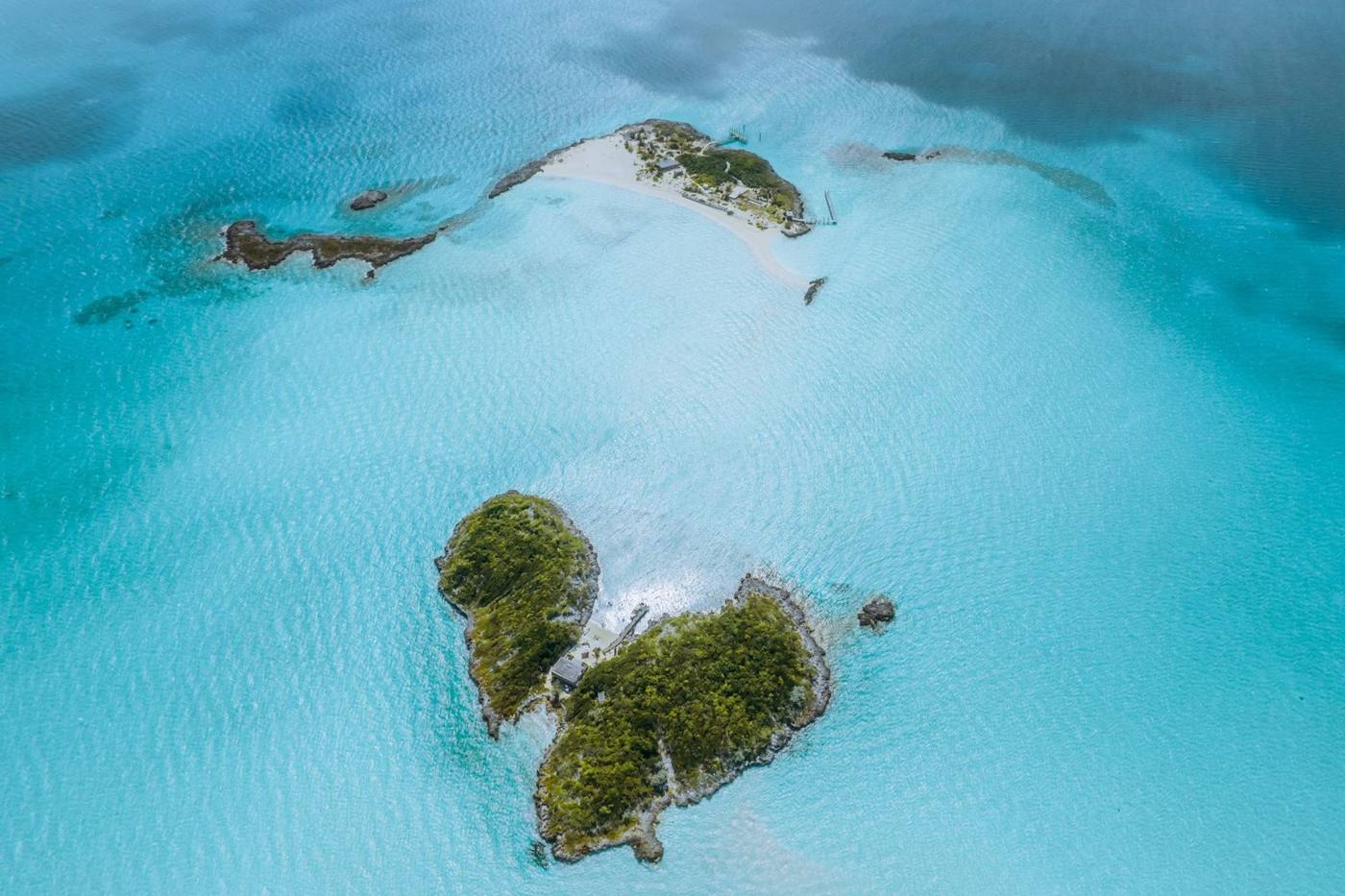 6 daysEasy
The Exumas
A chain of islands on a turquoise sea: the swimming pigs of Big Major Cay, Thunderball Grotto, sandbars and the iguanas of Allan's Cay.
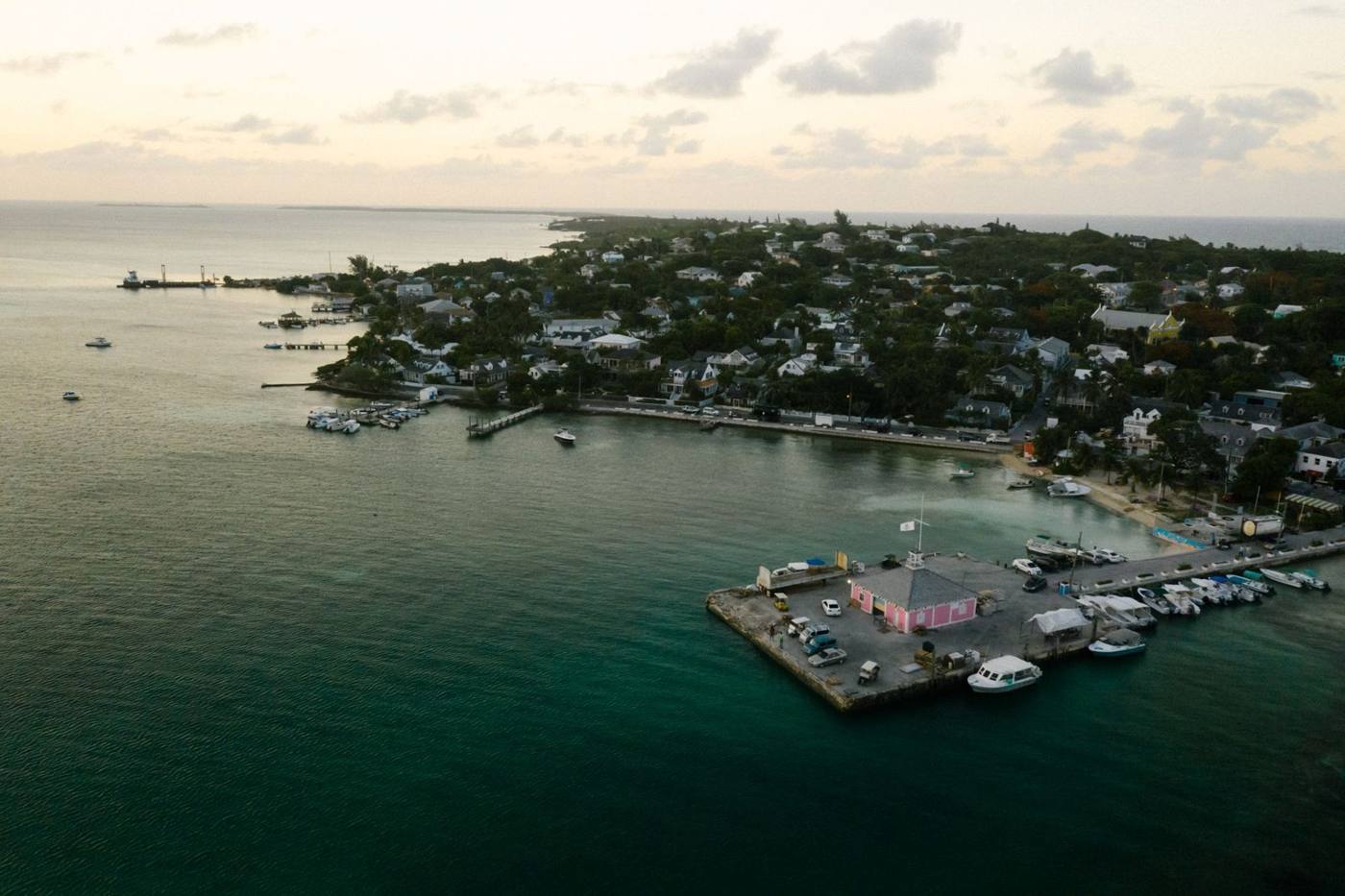 5 daysEasy
Eleuthera and Harbour Island
Harbour Island's pink-sand beach, the Glass Window Bridge between ocean and Caribbean sea and the Queen's Bath rock pools.
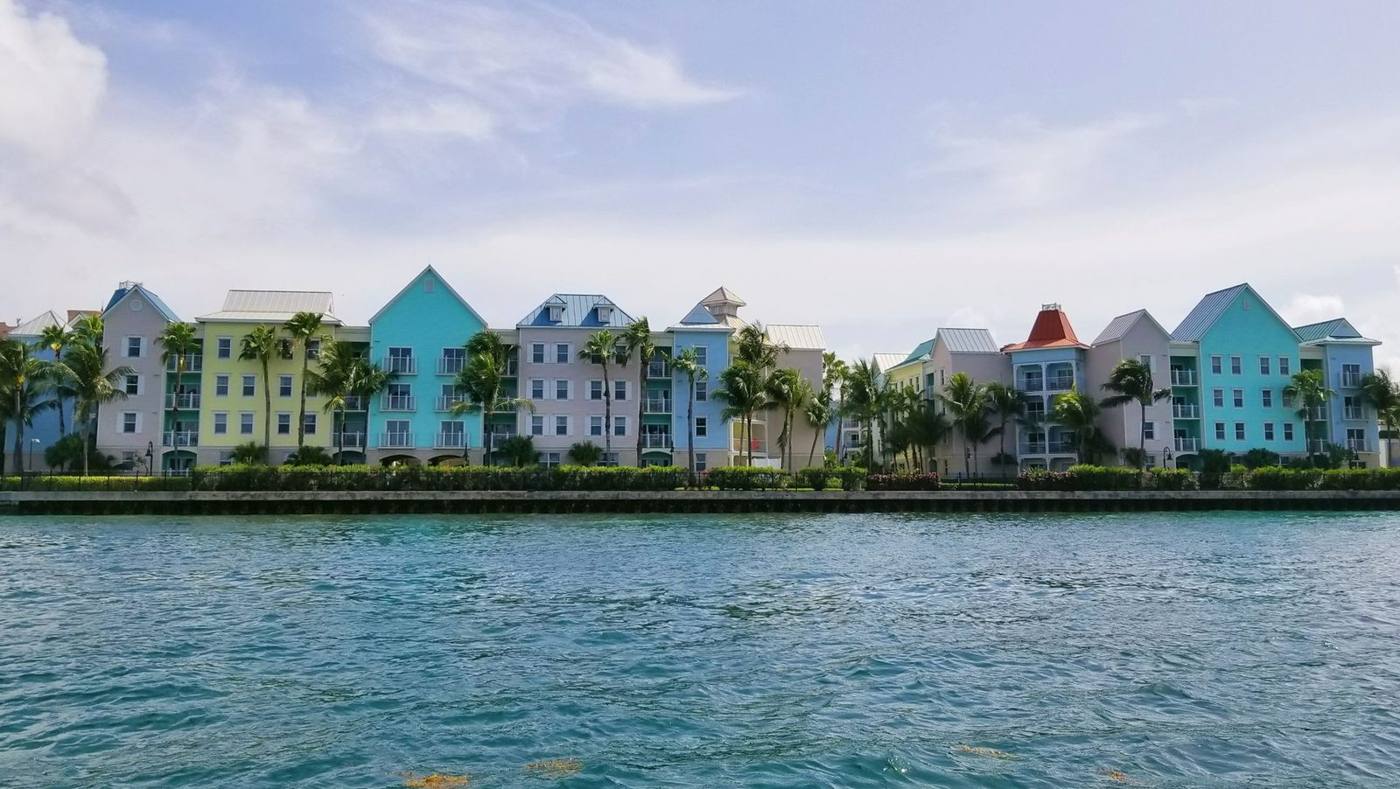 3 daysEasy
Nassau and Paradise Island
The colonial capital with Fort Fincastle and the Queen's Staircase, the straw market, the fried fish of Arawak Cay and the white beaches of Paradise Island and Cable Beach.