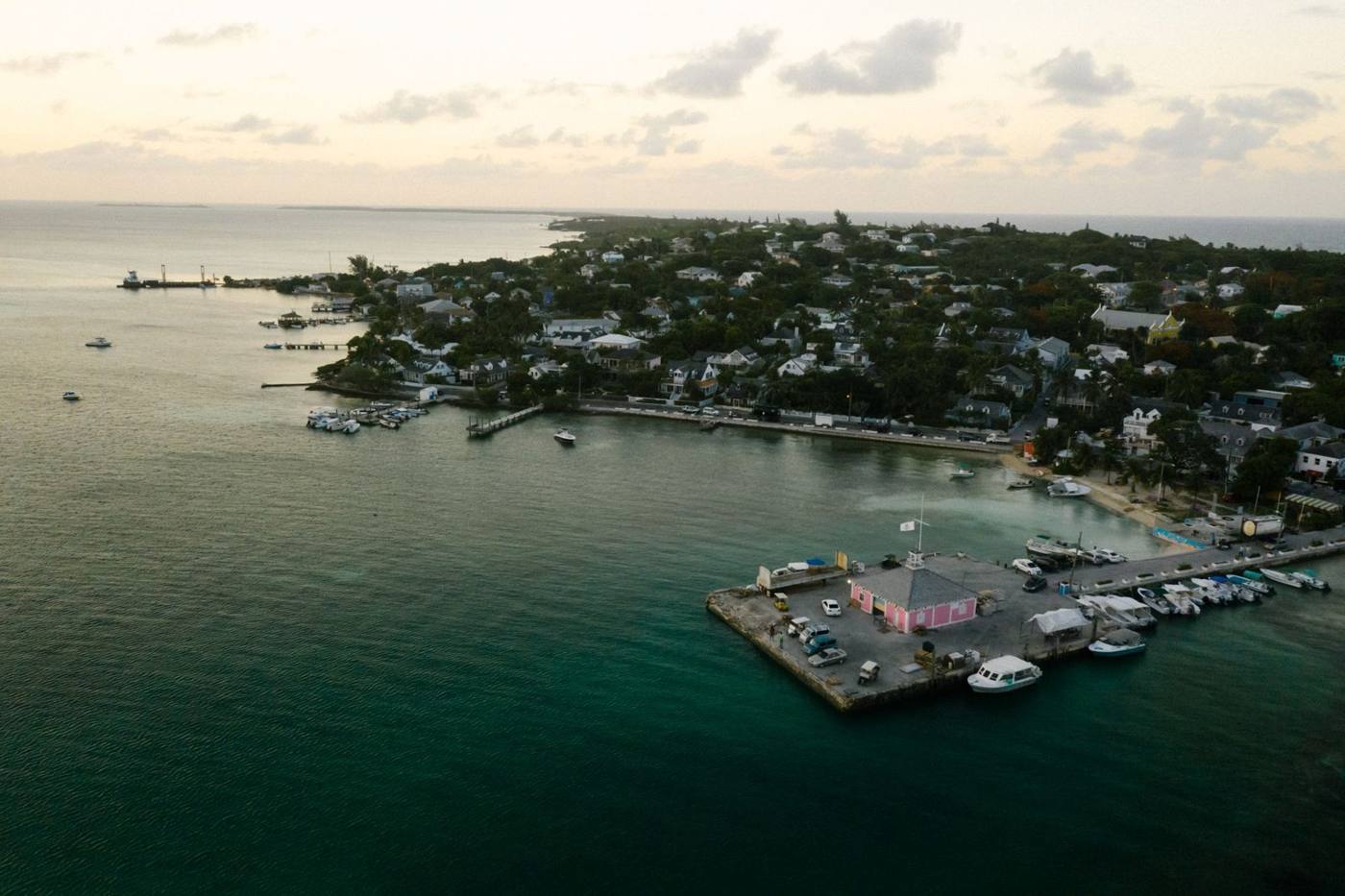
Eleuthera and Harbour Island
Harbour Island's pink-sand beach, the Glass Window Bridge between ocean and Caribbean sea and the Queen's Bath rock pools.
- North Eleuthera
- Harbour Island
- Glass Window Bridge
- Queen's Bath
- Governor's Harbour
Day by day
- Day 1
Arrival at North Eleuthera and crossing to Harbour Island
This five-day trip takes you to Eleuthera and Harbour Island, in the quietest part of The Bahamas, far from the cruise ships. Eleuthera is a long, narrow island with the Atlantic to the east and calm waters to the west; Harbour Island is a small island nearby, famous for its pink sand beach. You will also see the Glass Window Bridge, the natural pools of Queen's Bath and the town of Governor's Harbour.
Before you go: Italian citizens enter The Bahamas with a passport valid for at least six months, without a visa for tourist stays of under 90 days. Other nationalities should check their own rules. The crime reported by the United States mainly concerns Nassau and Grand Bahama; here the atmosphere is calm, but always lock the car and your accommodation. Water sports are poorly regulated: choose authorised guides and rentals. Hurricane season runs from June to November.
From Nassau a short flight lands at North Eleuthera airport. A taxi takes you in a few minutes to the dock, where water taxis cross the channel to Harbour Island in about ten minutes. There are few cars on the island: people get around on foot, by bicycle or in hired golf carts.
In the afternoon stroll through Dunmore Town, the main settlement, with colourful wooden houses, white picket fences, bougainvillea and small churches. It is one of the oldest towns in The Bahamas and you can walk round it in an hour.
At sunset go down to Pink Sands Beach, on the Atlantic side: with the sun low the pink of the sand shows best.
Practical tip: book the golf cart in advance during the high season months and ask your accommodation whether it has a place to park it overnight.
- Day 2
A day on Pink Sands Beach
Spend the day on Pink Sands Beach, a beach several kilometres long on the east coast of Harbour Island. The pinkish colour comes from tiny marine organisms with red shells, foraminifera, which mix with the white sand. It is a soft pink, not as bright as in photos: you notice it most where the waves wash in, early in the morning and towards evening.
The beach is protected by an offshore reef, so the sea is usually fairly calm, but with an easterly wind waves and currents arrive. There is not always a lifeguard: swim close to the shore and do not go far out alone. The sand is fine and soft, perfect for long barefoot walks.
Around midday go back to the town for lunch. Try conch salad, grilled fish, peas and rice and the sweet Harbour Island bread, famous across The Bahamas. Portions are generous and prices high, as everywhere on the island.
In the afternoon drive the golf cart along the lanes to the north, between villas and gardens, then return to the beach for a last swim. If you want shade, look for it under the casuarina trees at the edge of the sand, but do not leave belongings unattended.
In the evening the town is quiet: people eat early and go to bed to the sound of the sea.
Practical tip: use a reef-safe sun cream and wear a T-shirt in the water, because the glare from the pale sand burns even in the cooler hours.
- Day 3
The Glass Window Bridge and Queen's Bath
In the morning take the water taxi back to Eleuthera and pick up your hire car. Here you drive on the left, and the Queen's Highway, the main road, runs the whole length of the island.
After about half an hour you reach the Glass Window Bridge, the narrowest point of Eleuthera. A bridge links two parts of the island above a tongue of rock: on one side you see the dark blue of the Atlantic, on the other the pale turquoise of the shallow waters of the Bight of Eleuthera. It is one of the most famous views in The Bahamas. Park in the proper area and look from the nearby rocks; do not stop on the bridge.
Take care: when the Atlantic is rough, very high waves can suddenly break over the rocks and the bridge. Check the sea before going closer and keep away from the edge on the ocean side.
A little further south is Queen's Bath, a series of natural pools carved into the limestone, filled by ocean waves and warmed by the sun. With a calm sea and low tide you can bathe in the pools; with strong waves it is dangerous, so watch from a distance. The rock is sharp and slippery: you need reef shoes.
In the afternoon stop at Gregory Town, a small settlement on a bay, once famous for its pineapples. Then continue to Governor's Harbour, where you will sleep.
Practical tip: drive only by day, because the road is unlit and at night you may find animals or people on the carriageway.
- Day 4
Governor's Harbour and the empty beaches of the south
In the morning walk around Governor's Harbour, the island's main town, on a sheltered bay. On the hills there are Victorian-style houses with wooden verandas, an Anglican church and a small harbour. According to tradition, the first English settlers who reached Eleuthera in the middle of the seventeenth century settled in this area; the island's name comes from the Greek word for freedom.
Then drive south. The southern part of the island is sparsely populated, with long empty beaches on both sides, lagoons and small villages. Choose one or two beaches and spend your time there slowly: on the west side the water is shallow and calm, on the Atlantic the sand is paler and the waves stronger.
Near Rock Sound you can see the Ocean Hole, an inland blue hole connected to the sea, with salt water and fish. There are steps to go down. Further south the road becomes unpaved and slow: ask locally before setting off, because some stretches need a high car and there is no signal.
Take water and something to eat: in the south shops are rare and close early. Return to Governor's Harbour before dark.
In the evening, on the bay, watch the sunset over the calm water, one of the best moments of the trip.
Practical tip: before heading to the more isolated beaches, tell your accommodation where you are going and what time you expect to be back.
- Day 5
Last morning and departure
If your flight leaves late, enjoy a last swim in the morning on a beach near Governor's Harbour, then return the car. You can fly from Governor's Harbour airport or go back towards North Eleuthera, depending on your flight: work out the driving time carefully, because the island is long. Leave a margin before your connection in Nassau, because small inter-island flights can be delayed or rescheduled.
Before leaving, buy something local: jams, hot sauces, woven straw goods or worked shells. Do not take away coral or marine animals, not even small ones: the rules are strict.
Trip summary: five days in the quiet Bahamas, between the pink sand of Harbour Island and the town of Dunmore Town, the Glass Window Bridge between ocean and bay, the pools of Queen's Bath, Governor's Harbour and the empty beaches of the south. It is a slow trip, made of sea, long roads and small villages.
When to go: from December to May, with dry weather, a calmer sea and less heat. In summer the humidity is high, and from June to November it is hurricane season, which can close services and cancel flights.
Practical tip: pack a light jacket for the evenings and the boat, because in winter the wind can be cool.
Quiet Bahamas, far from the cruise ships. The pink of the sand is soft, most visible with low sun. You need a car on long, narrow Eleuthera.
Before you go
- Documents and visa
- Passport valid for at least six months after the date you leave; British citizens can usually stay up to 30 days without a visa, extendable. You cannot work without a permit. If you arrive from the United States on an ESTA, your days in The Bahamas count towards the ESTA's 90 days.
- Health and vaccines
- No compulsory vaccinations (a yellow fever certificate only if you arrive from a risk country). Dengue and Zika: use repellent. Public hospitals are limited and private ones are good but very expensive: get insurance with medical cover and repatriation, including air evacuation. Emergencies: 911 or 919.
- Money and payments
- Bahamian dollar, at par with the US dollar, which is accepted everywhere. Visa, Mastercard and American Express work on the main islands; carry cash in the Out Islands.
- Power sockets
- Types A and B, 120 volts, as in the United States: you need an adapter for British plugs.
- Time zone
- UTC-5, UTC-4 in summer (US Eastern Time), five hours behind the UK for most of the year.
- Safety
- The United States rates The Bahamas at level 2 because of crime. On New Providence, where Nassau is, and Grand Bahama there are armed robberies and sexual assaults: stay in the main tourist areas, do not walk alone away from the centre and the beaches, travel in groups after dusk and avoid the Over the Hill area south of Shirley Street. Water sports are poorly regulated: do not rent jet skis from unregistered operators. Do not swim at dusk or at night, or where fish is gutted or sharks are baited. Hurricane season runs from 1 June to 30 November. Official advice: GOV.UK.
Information checked in November 2026 for Italian and EU citizens. Rules change: always check before you travel.
Variations
Shorter version: in 3 days, just Harbour Island and the Glass Window Bridge.
Longer version: in 7 days, add two days in Nassau at the start or end of the trip.
Frequently asked questions
Is the sand on Pink Sands Beach really pink?
Yes, but the colour is soft. You see it best with the sun low and where the sand is wet from the waves.
Do you need a car?
Not on Harbour Island, where a golf cart or a bicycle is enough. On Eleuthera yes, because the island is long and there is no public transport.
Can you swim at Queen's Bath?
Only with a calm sea and low tide. With strong waves it is dangerous: watch from a distance and do not go near the edge.
Indicative itinerary written by World Atlas. Before booking, check timetables, seasonal openings, documents and safety.
 3 daysEasy
Nassau and Paradise Island
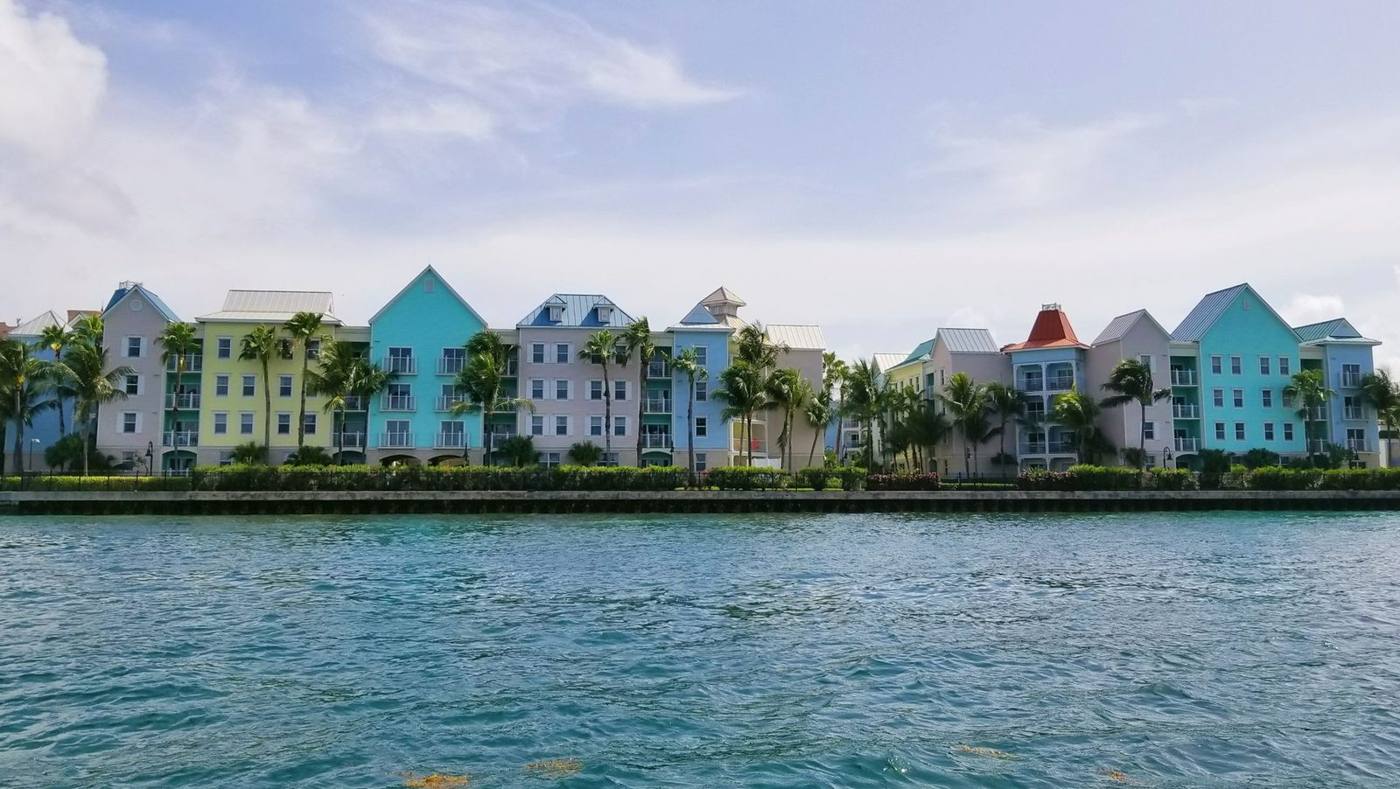
The colonial capital with Fort Fincastle and the Queen's Staircase, the straw market, the fried fish of Arawak Cay and the white beaches of Paradise Island and Cable Beach.
 4 daysModerate
Andros and the blue holes
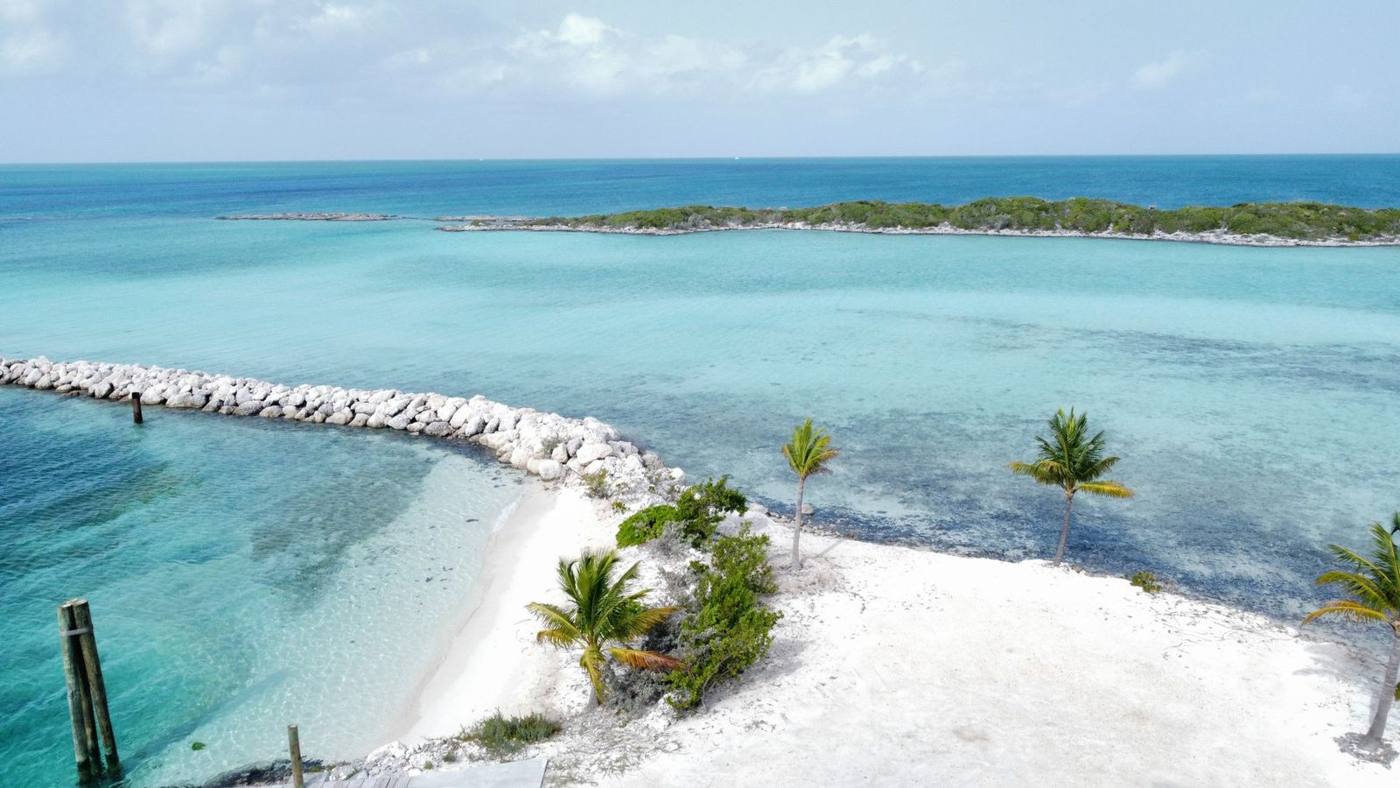
The archipelago's largest and wildest island: mangroves, hundreds of blue holes inland and at sea, a long barrier reef offshore and fly fishing for bonefish.
 4 daysEasy
Abaco and Hope Town
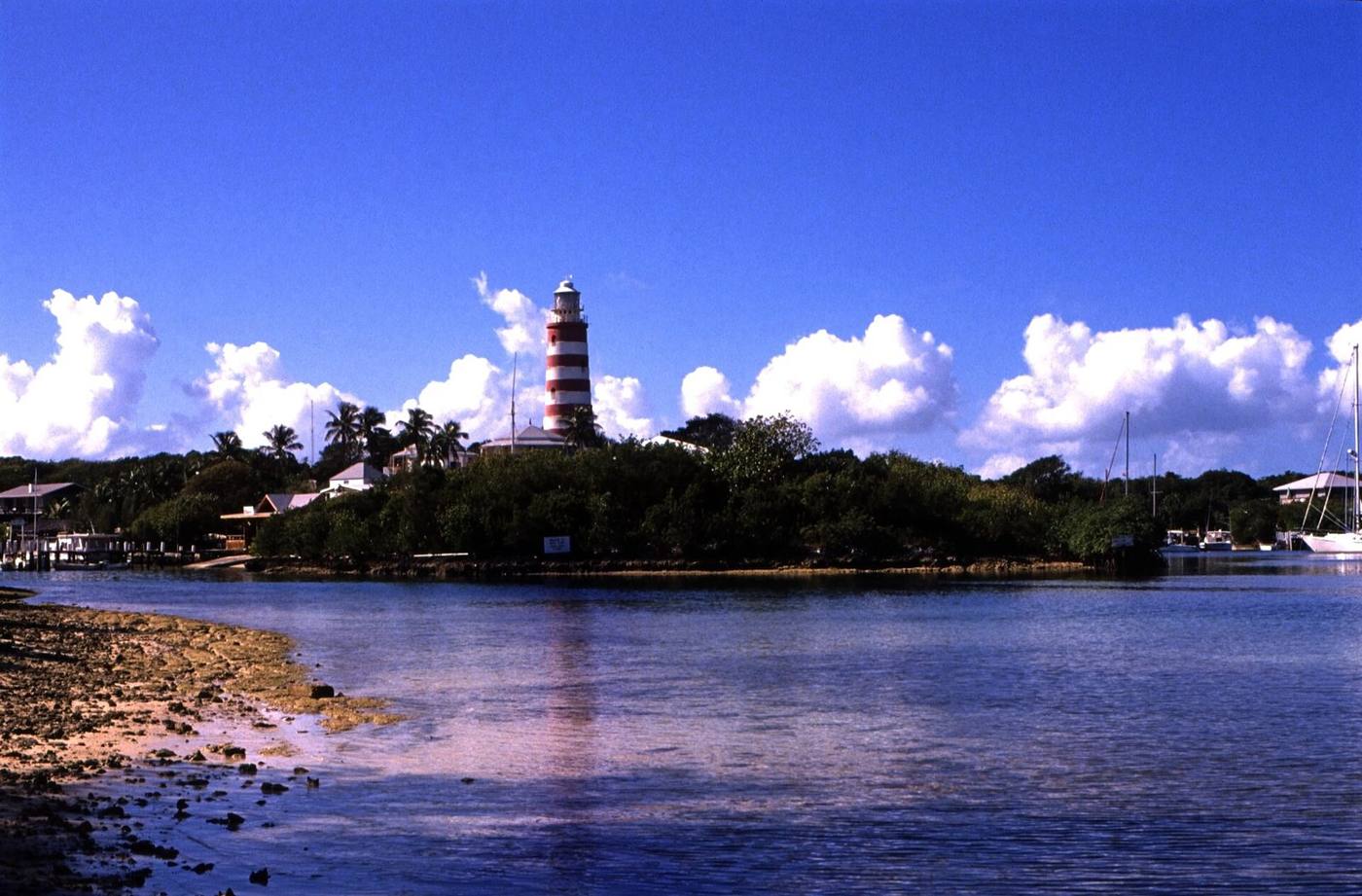
The Abaco islands by boat: the red-striped lighthouse of Hope Town, the Loyalist villages of Elbow Cay and Green Turtle Cay and the sheltered bays of the Sea of Abaco.