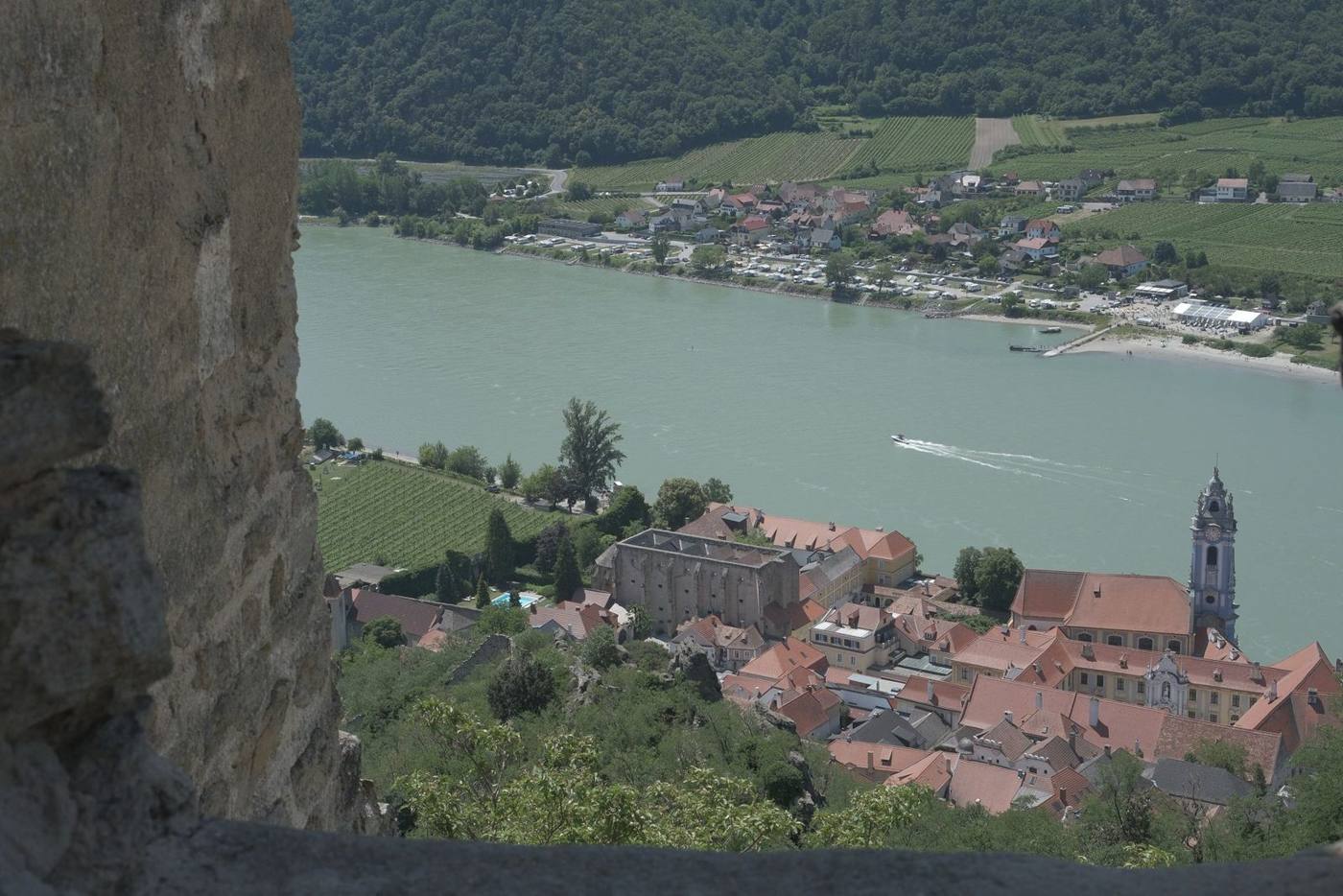
The Wachau by bike
The UNESCO-listed Danube valley, from Melk to Krems by bike, among apricots, terraced Grüner Veltliner vineyards and the village of Dürnstein.
- Melk
- Spitz
- Weißenkirchen
- Dürnstein
- Krems
Day by day
- Day 1
From Vienna to Melk, the baroque abbey on the Danube
This trip is a short cycling holiday in the Wachau, the most beautiful stretch of the Danube valley and a UNESCO World Heritage Site since 2000. You ride from Melk to Krems in three days, almost always on the flat, past terraced vineyards, apricot orchards, villages with fortified churches and ruined castles, then return to Vienna by train.
Before you go: Austria is part of the European Union and the Schengen area and uses the euro. Italian citizens only need an electronic identity card valid for travel abroad or a passport; the paper identity card has not been valid for travel abroad since 3 August 2026. Other nationalities should check their own rules. The United States rates Austria level 1, the lowest: on trains and in stations just watch out for pickpockets.
From Vienna take the train to Melk, about an hour, sometimes with a change at St. Pölten. From the station walk up in a few minutes to the Benedictine abbey, yellow and white, perched on a rock above the river. The baroque building you see today was built in the early eighteenth century by the architect Jakob Prandtauer.
Inside you visit the abbey museum, the marble hall, the library with thousands of old volumes and the church, all gold and frescoes. From the terrace the view runs along the Danube and the valley you will ride tomorrow. Check prices and times.
In the afternoon pick up your bike in Melk, electric if you like, and try the saddle with a short ride along the river. In the evening taste your first glass of Grüner Veltliner, the white wine of the valley.
Sleep in Melk.
Practical tip: book the bike in advance and ask if you can leave it in Krems, at the end of the route, so you do not have to ride back.
- Day 2
By bike from Melk to Spitz and Weißenkirchen
Today you ride through the heart of the Wachau, on the Danube cycle path, one of the best known cycle routes in Europe. It is well signposted, paved and almost entirely flat: you can do it at an easy pace even without training.
From Melk cross the bridge and follow the left bank downstream. On the other bank, high on a spur of rock, you see the ruins of Aggstein castle. Soon after you pass Willendorf, the village where the Venus of Willendorf was found in 1908, a small stone figure about thirty thousand years old, now kept at the Natural History Museum in Vienna.
You reach Spitz, about twenty kilometres from Melk, below the Tausendeimerberg hill, covered in vines right to the top. Stop for lunch and try Wachau apricots, as jam, as liqueur or in Marillenknödel, sweet dumplings filled with apricot, if you are there in the right season.
In the afternoon carry on between dry stone walls and rows of vines to Weißenkirchen, with its fortified church at the top of the village. Here winemakers take turns to open their taverns, the Heurigen, where you drink the new wines with bread, cold meats and cheese. Each one opens only in certain weeks: check the local calendar.
In total you ride just over twenty five kilometres.
Sleep in Weißenkirchen or nearby.
Practical tip: many fast electric bikes use the cycle path too. Keep to the right, ring your bell before overtaking and always carry water and a light windproof jacket.
- Day 3
Dürnstein, the castle of Richard the Lionheart, and Krems
Today the stage is short, so you have time to walk and visit.
From Weißenkirchen ride a few kilometres to Dürnstein, the most photographed village in the Wachau, with the blue and white bell tower of the old monastery church facing the river. Leave the bike and walk along the main street, squeezed between old houses.
Then walk up to the castle ruins above the village, about half an hour of climbing on a stepped path. Here, according to tradition, Richard the Lionheart, King of England, was held prisoner between 1192 and 1193, captured by the Duke of Austria on his way back from the crusade. From the top you see the whole bend of the Danube, the vineyards and the roofs of the village.
In the afternoon get back on the bike towards Krems, less than ten kilometres away. You enter through Stein, with Gothic and Renaissance houses along the river, then reach the Stein gate, the Steiner Tor, symbol of the town. Krems also has an arts quarter, the Kunstmeile, with the Lower Austria state gallery. Check prices and times.
On the hill across the river you see the great abbey of Göttweig. Return the bike in Krems, if you hired it with drop off in town.
In the evening have dinner with a dish of the valley, such as river fish or Schnitzel, with a Wachau Riesling.
Sleep in Krems.
Practical tip: wear closed shoes for the climb to Dürnstein castle. The path is stony and on hot days it is best to go up early in the morning.
- Day 4
Krems and back to Vienna by train
Last morning in the Wachau.
Have a slow breakfast and walk around the centre of Krems, along the pedestrian street, the squares and the churches, and look in the food shops for the produce of the valley, such as wine, cheese and apricot jam. If you still have energy, you can go by bike or bus up to Göttweig abbey, on the hill south of the river, with a fine view over the valley. Check prices and times.
Then take the train to Vienna, about an hour. If you want a slower return, in season there are also scheduled boats on the Danube between Krems and Melk: check prices and times.
In these four days you have seen the best of the Wachau: the baroque abbey of Melk, the cycle path through terraced vineyards, the ruins of Aggstein, Spitz and Weißenkirchen, Dürnstein castle where Richard the Lionheart was held prisoner and the old town of Krems. It is an easy trip, suitable for everyone, families included.
When to go: the season runs from April to October. In April the apricot trees blossom and the valley turns white and pink. In July the apricots are harvested. In September and October it is grape harvest time, the air is cool and the vineyards turn yellow and red. In high summer it is hot in the middle of the day: ride in the morning.
Practical tip: before you leave, buy something to take home, such as a bottle of Grüner Veltliner, Wachau apricot jam or apricot liqueur. Bottles travel best wrapped in clothes, in your checked baggage.
A light, pleasant trip, almost entirely flat, suitable for everyone. The Danube cycle path is excellent and e-bikes can be hired. Winegrowers' taverns open in rotation, only at certain times, so check the Heuriger calendar. In July the Wachau apricots are a celebration.
Before you go
- Documents and visa
- EU citizens need a valid identity card or passport: Austria is in the EU and the Schengen area. Until 15 March 2027 Austria is running checks on its borders with Slovenia, Hungary, the Czech Republic and Slovakia: always carry your document. Other nationalities should check the Schengen rules.
- Health and vaccines
- No vaccines required. EU citizens should bring their EHIC; for skiing and hiking you need insurance covering mountain rescue and helicopter costs. Emergencies: 112, police 133, ambulance 144, mountain rescue 140.
- Money and payments
- Euro. Cards are accepted almost everywhere, but carry some cash for alpine farms, mountain huts and small taverns. Motorways need a vignette, digital only from 2027, from the official ASFINAG website or sales points.
- Power sockets
- Types C and F, 230 volts.
- Time zone
- Central European Time (UTC+1, summer UTC+2).
- Safety
- A very safe country: the United States has rated Austria level 1, the lowest, since 21 August 2026. The UK warns that terrorists are likely to try to carry out attacks in crowded places, and of pickpockets at stations and on trains. In the mountains check the weather and the avalanche bulletin; off-piste skiing is very dangerous. Official advice: GOV.UK.
Information checked in November 2026 for Italian and EU citizens. Rules change: always check before you travel.
Variations
In 3 days: from Melk to Dürnstein by bike, with a night in Spitz and the return to Vienna from Krems on the evening of the third day.
In 6 days: add two days in Vienna, or carry on cycling along the Danube from Krems to Tulln and Vienna.
Frequently asked questions
What document do I need for Austria?
Italian citizens only need an electronic identity card valid for travel abroad or a passport. Other nationalities should check their own rules.
Do I need to be fit for the Wachau cycle path?
No. The route is almost entirely flat and the stages are short, between ten and twenty five kilometres a day. With an electric bike it suits people who rarely cycle.
When do the winemakers' taverns open?
The Wachau Heurigen take turns to open, only in certain weeks of the year. Check the local calendar before you go and ask in the village which ones are open.
Indicative itinerary written by World Atlas. Before booking, check timetables, seasonal openings, documents and safety.
 7 daysModerate
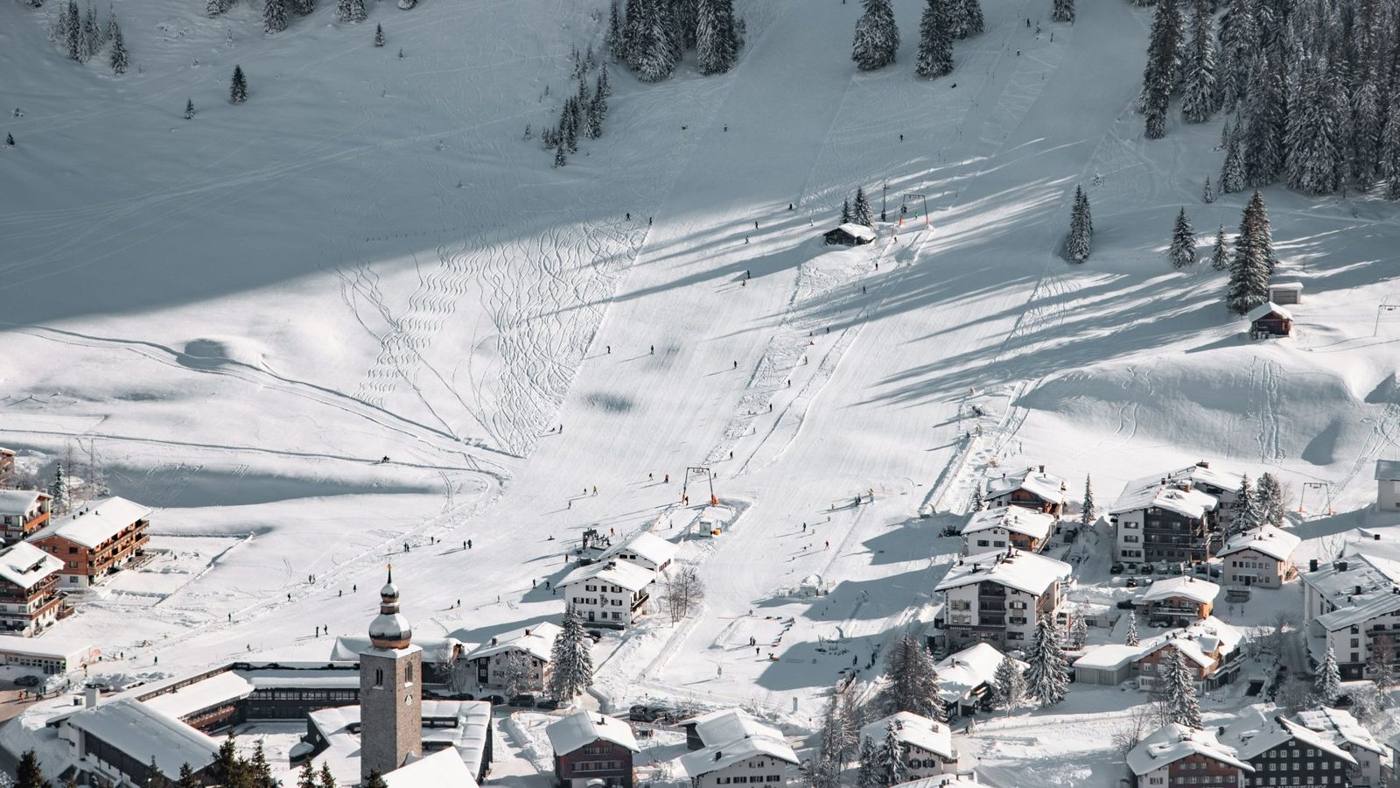
Skiing in St. Anton and the Arlberg
A week in the Ski Arlberg area between St. Anton, Lech and Zürs, with the Run of Fame circuit and Tyrolean après-ski.
 5 daysEasy
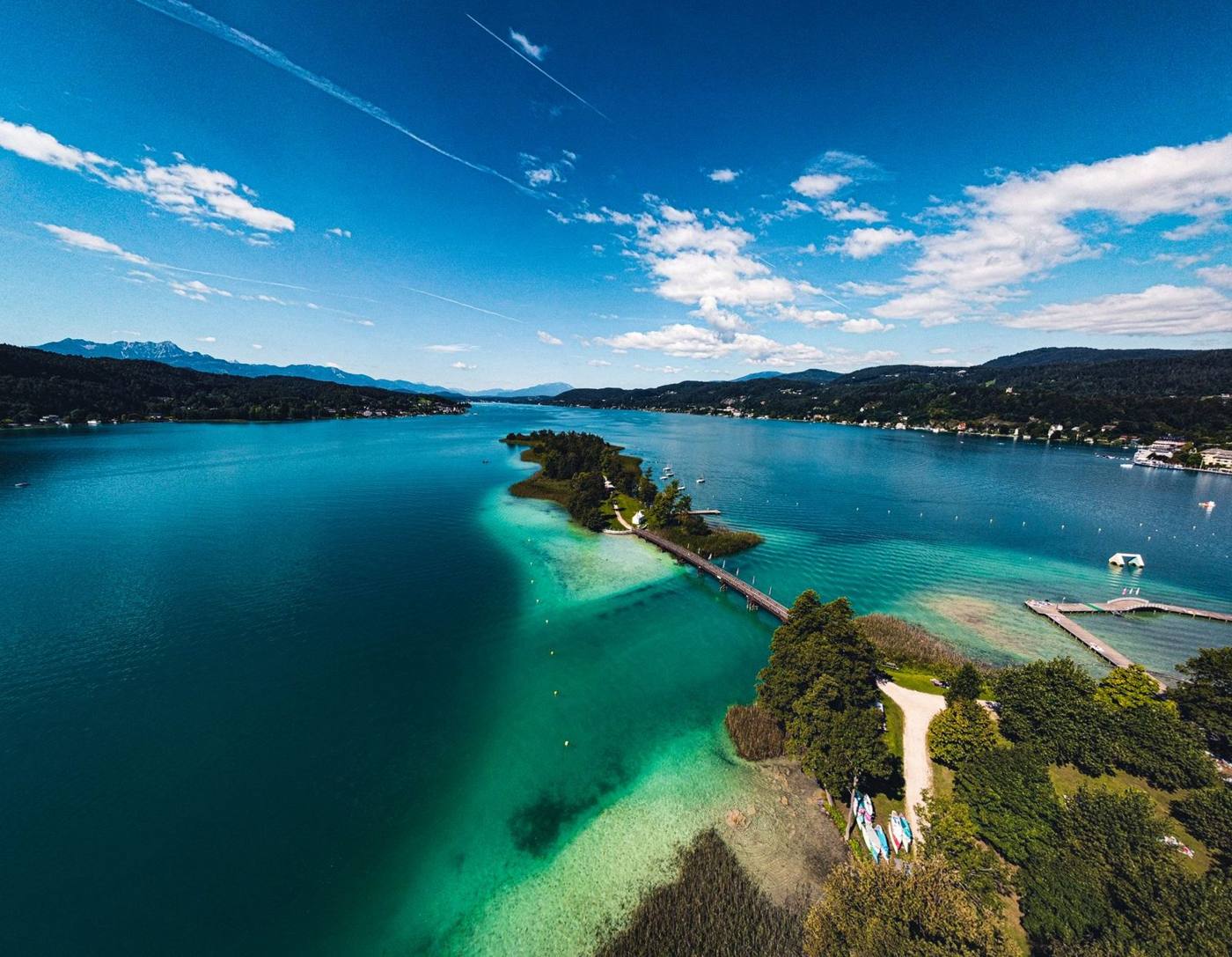
The lakes of Carinthia
The warm waters of the Wörthersee, the Pyramidenkogel tower, Lake Millstatt, the Weissensee and Klagenfurt.
 5 daysEasy
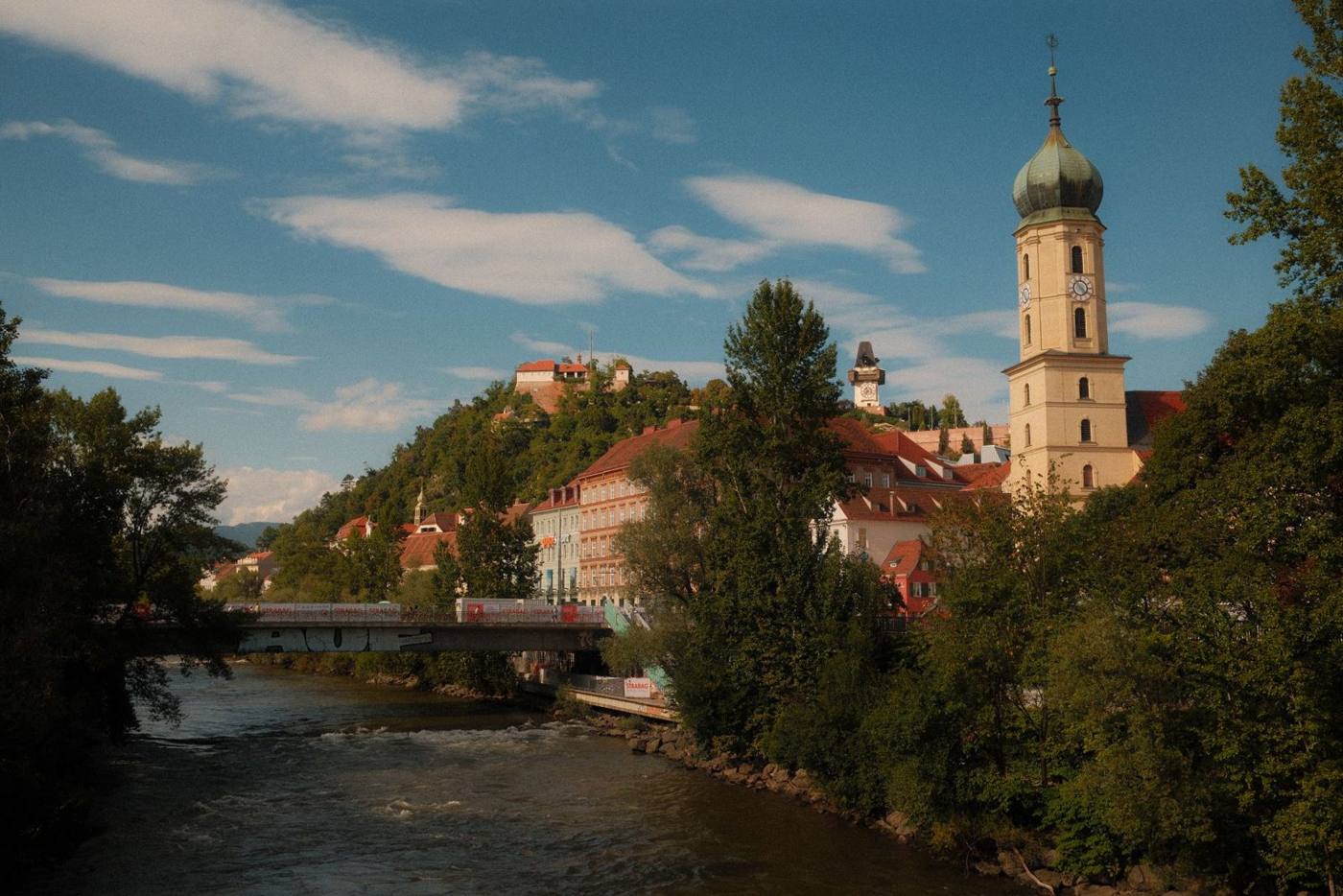
Graz and the Styrian wine road
Graz and its UNESCO-listed centre, then the hills of southern Styria, Austria's Tuscany, with Sauvignon, pumpkin seed oil and taverns.