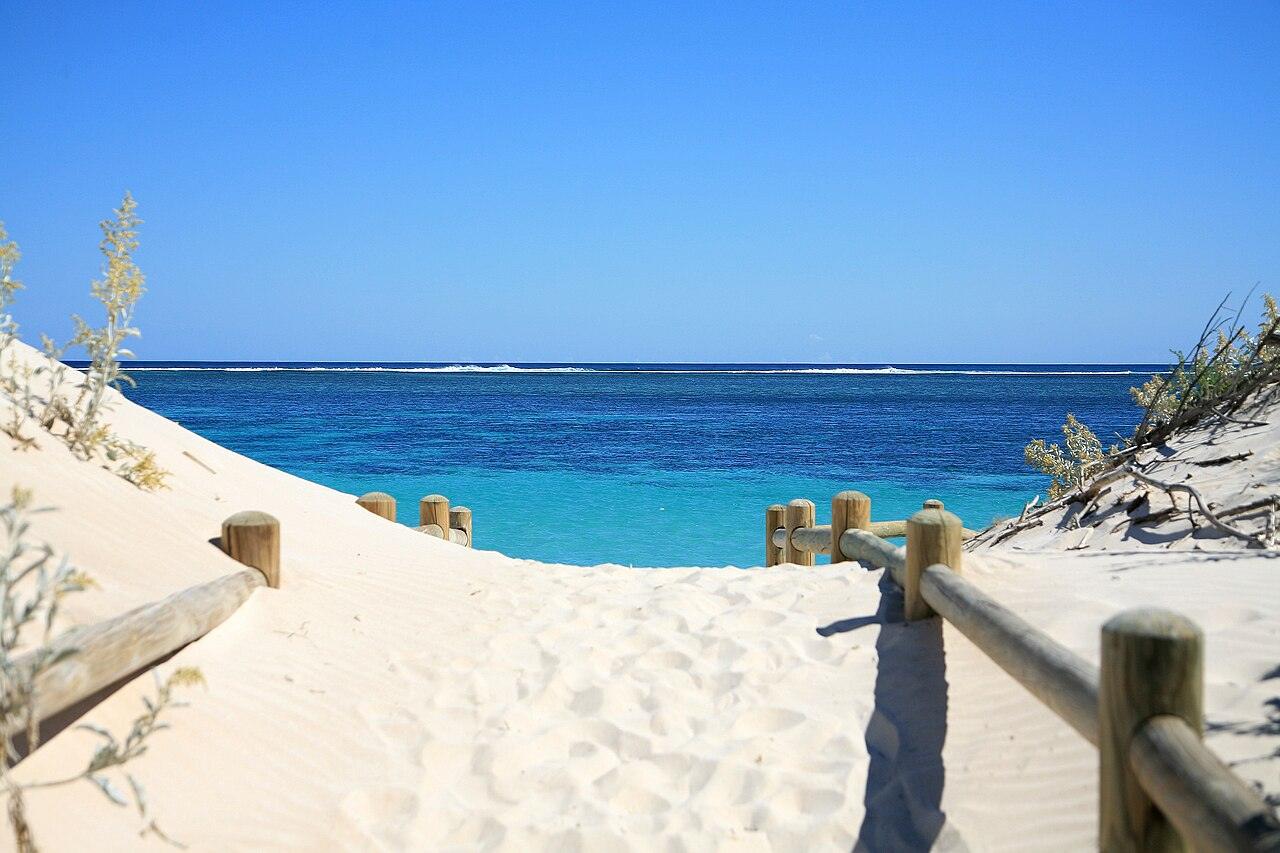
The west coast: Perth to Ningaloo
The coast's wildest road trip: the Pinnacles, the dolphins of Monkey Mia, the Kalbarri gorges and Ningaloo Reef, where you swim with whale sharks.
- Perth
- Pinnacles
- Kalbarri
- Shark Bay
- Monkey Mia
- Coral Bay
- Exmouth
Day by day
- Day 1
Arrival in Perth
This trip follows the Western Australian coast from Perth northwards for about one thousand three hundred kilometres to the Ningaloo Reef: the Pinnacles desert, the red gorges of Kalbarri, Shark Bay with its dolphins and stromatolites, and the reef where you swim with whale sharks, the largest fish in the world.
Before you leave: citizens of the European Union, including Italians, must apply online for an eVisitor, the electronic authorisation to enter Australia as a tourist. Apply only on the official Australian government website. Other nationalities should check their own rules.
You fly into Perth airport, about half an hour from the centre. Perth is one of the most isolated cities in the world, on the Swan River, with skyscrapers, parks and beaches on the Indian Ocean.
In the afternoon, after the long flight, walk in Kings Park, one of the largest city parks in the world, on a hill above the city, with gardens of native plants, a walkway through the eucalyptus canopy and views over the river and the towers.
In the evening have dinner by the river or in Northbridge, with many eateries and food from all over the world.
Sleep in Perth.
Practical tip: the best time is March to October. Whale sharks at Ningaloo are usually seen from March to July. In summer the north is very hot and it is cyclone season.
- Day 2
Fremantle and the Perth coast
Today you visit Fremantle, the historic port at the mouth of the Swan River, about half an hour by train from central Perth.
In the morning visit Fremantle Prison, built by convicts transported from Britain in the nineteenth century and used until 1991, a World Heritage Site together with other convict sites in Australia. There are guided tours of the cells, the tunnels dug beneath the prison and the history of escapes. Check opening hours and prices.
Then walk around the centre of Fremantle, with Victorian and gold rush era buildings, the weekend covered market and the Western Australian Shipwrecks Museum, with the remains of the Batavia, a Dutch ship wrecked in 1629. Check opening hours and prices.
In the afternoon, if you have time, take the ferry to Rottnest Island, a car no-cost island about half an hour's sail away, with white beaches, turquoise water and quokkas, small marsupials found almost nowhere else. Do not touch or feed them: it is forbidden and fined. Check ferry times and prices.
At sunset watch the sun sink into the ocean at Cottesloe Beach.
Sleep in Perth or Fremantle.
Practical tip: on Perth's beaches swim between the red and yellow lifeguard flags. Rips can be strong even on calm looking days, so always swim at patrolled beaches.
- Day 3
The Pinnacles desert
In the morning pick up your rental car and drive north along the Indian Ocean Drive, a coastal road among white dunes, low scrub and the ocean, about two and a half hours to Nambung National Park.
Here lies the Pinnacles desert, an expanse of yellow sand from which thousands of limestone pillars rise, up to a few metres high, formed over tens of thousands of years from seashells and erosion. You follow a loop dirt track by car and walk among the pillars. The visitor centre explains how they formed. There is a park entry fee: check the price.
The best light is at sunrise and sunset, when the shadows of the pillars stretch across the sand and the colours turn orange.
In the afternoon continue north to Cervantes, a small lobster fishing town, and visit the stromatolites of Lake Thetis, rock structures formed by microorganisms, among the oldest forms of life on Earth.
In the evening have western rock lobster, if it is in season.
Sleep in Cervantes or Jurien Bay.
Practical tip: in Australia you drive on the left. At dawn and dusk watch out for kangaroos on the road. They jump out suddenly and can do serious damage to a car.
- Day 4
To Kalbarri and the pink lagoon
Today you drive north to Kalbarri, about five and a half hours, through wheat fields, plains and the city of Geraldton, the main centre on the coast.
In Geraldton, if you have time, visit the HMAS Sydney memorial, for an Australian warship sunk in 1941 with all hands, with a dome of steel seagulls on the hill above the city.
In the afternoon, before reaching Kalbarri, stop at Hutt Lagoon, the pink lake near Port Gregory, a salt lake that turns pink, sometimes almost purple, because of algae that produce a pigment. The colour changes with the time of day, the season and the clouds: it is most intense when the sun is high and the sky is clear.
You reach Kalbarri, a small town at the mouth of the Murchison River between the desert and the ocean. In the evening walk along the riverfront and watch the pelicans.
Sleep in Kalbarri.
Practical tip: on Western Australian roads fuel stations can be more than a hundred kilometres apart. Fill up whenever you can and always carry water in the car, at least five litres per person. Many areas have no phone signal: download maps before you leave and tell someone your route. If you break down, stay with the car, which is easier to find than a person on foot.
- Day 5
Kalbarri: Nature's Window and the Skywalk
Today you explore Kalbarri National Park, with the gorges of the Murchison River and the ocean cliffs. There is an entry fee: check the price or buy a multi park pass.
Early in the morning, before the heat, walk to Nature's Window, a natural arch of red and white banded sandstone framing the river gorge, the symbol of the park. Then visit the Kalbarri Skywalk, two platforms projecting over the gorge about a hundred metres up, with partly glass floors. Further on, the Z-Bend trail drops into a deep gorge.
The heat in the gorges can be extreme, over forty degrees in summer. Some trails close in the hottest hours: check the rules and carry plenty of water.
In the afternoon drive the coast south of Kalbarri, with red cliffs dropping into the ocean, such as Island Rock, Natural Bridge and Red Bluff. From July to November you may see humpback whales migrating along the coast from the lookouts.
At sunset return to Kalbarri.
Sleep in Kalbarri.
Practical tip: in the gorges carry at least three litres of water per person and set off at dawn. There are lots of flies: a head net helps. A hat and sunscreen are essential.
- Day 6
Shark Bay: Shell Beach and the stromatolites
Today you drive north to Shark Bay, a World Heritage Site, about four and a half hours across an arid, almost empty plain.
The first stop is Hamelin Pool, home to the most numerous and diverse living marine stromatolites in the world: rock structures built by microorganisms, similar to those that, billions of years ago, began producing the oxygen in the atmosphere. You view them from a boardwalk over the shallow water. Do not walk on the stromatolites.
Then stop at Shell Beach, a beach kilometres long made not of sand but of billions of tiny white shells, piled in a layer several metres deep. The water of the bay here is very salty.
In the afternoon visit Eagle Bluff, a cliff with a boardwalk from which, in the clear water below, you often see sharks, rays, turtles and sometimes dugongs, the plant eating marine mammals that live in large numbers in Shark Bay's seagrass meadows.
In the evening reach Denham, the main town on the bay, by the sea.
Sleep in Denham or Monkey Mia.
Practical tip: in Shark Bay buy or show your park pass. Some areas are run by the state government and require a ticket: check.
- Day 7
The dolphins of Monkey Mia and the Peron Peninsula
In the morning go to Monkey Mia, on the shore of the bay, where for decades a group of wild bottlenose dolphins has come almost every morning right up to the beach. Park rangers run a controlled encounter: visitors stand knee deep in the water at a distance, and only a few selected dolphins receive a small fish, so they do not become dependent on people. Their arrival is not guaranteed. There is an entry fee for the reserve: check.
After the encounter walk on the beach, watch the pelicans and emus wandering around the resort, or take a sailing boat trip on the bay to see dugongs, turtles and sharks.
In the afternoon, if you have a suitable four wheel drive or join a tour, enter François Peron National Park on the peninsula, with red dunes dropping into turquoise sea, salt lagoons and the Cape Peron lookout, where you often see sharks, rays and dolphins in the water beneath the cliff. The track requires a real 4x4 and soft sand driving: do not go in with an ordinary car.
At sunset watch the sun go down over the bay from Denham.
Sleep in Denham or Monkey Mia.
Practical tip: do not feed the dolphins or other animals outside the controlled encounter. It is forbidden and harms the animals.
- Day 8
To Coral Bay
Today you leave Shark Bay and drive north to Coral Bay, about seven hours, the longest stage of the trip, through the Carnarvon region and across the Tropic of Capricorn.
On the way stop at Carnarvon, a town at the mouth of the Gascoyne River surrounded by irrigated plantations of bananas, mangoes and vegetables. You can visit the space centre in the old satellite tracking station that followed the Apollo missions. Check opening hours and prices.
Then continue north. The landscape becomes redder and drier, with termite mounds, spiny shrubs, emus and kangaroos. Halfway you cross the Tropic of Capricorn, marked by a sign.
In the late afternoon you reach Coral Bay, a tiny settlement on a bay of white sand and turquoise water, where the Ningaloo Reef begins right off the beach, just a few metres from shore.
At sunset walk on the beach at Bill's Bay and watch the sun go down into the ocean.
Sleep in Coral Bay.
Practical tip: do not drive at night in the outback. Kangaroos, cattle and multi trailer road trains make the road very dangerous. Many rental companies ban driving after dark outside towns: read the contract. Coral Bay has only a small shop, so stock up in Carnarvon.
- Day 9
Snorkelling the reef at Coral Bay
Today you stay in Coral Bay, in the Ningaloo Marine Park, a World Heritage Site and one of the largest fringing reefs in the world.
In the morning snorkel straight from the beach at Bill's Bay: a few metres from shore there are coral gardens, parrotfish, butterflyfish, rays and sometimes turtles. Follow the signs for the sanctuary zones, where fishing is banned. Swim only where the current is weak and do not go too far from shore.
In the afternoon you can take a glass bottom boat trip to see the reef without getting wet, or a trip to snorkel with manta rays, which live near Coral Bay all year and feed on plankton. From June to November there are also trips to see humpback whales. Choose operators licensed by the park.
At sunset walk north to the Skeleton Bay area, where small reef sharks are sometimes seen in the shallows.
Sleep in Coral Bay.
Practical tip: do not walk on or touch the coral. Use reef friendly sunscreen and wear a long sleeved top to protect yourself from the sun. In the water the sun burns your back without you noticing. Drink plenty of water between swims and rest in the shade.
- Day 10
Exmouth and swimming with whale sharks
In the morning drive north to Exmouth, about an hour and a half, a town on the North West Cape peninsula and the starting point for whale shark trips.
From March to July, usually, whale sharks come along the Ningaloo Reef to feed on plankton. Licensed boats leave early in the morning; a small spotter plane searches for the sharks from above and guides the boat. When a shark is sighted, small groups of swimmers enter the water with mask and snorkel and swim alongside the animal at a distance, without touching it. The whale shark is harmless to people. Park rules limit the number of people in the water and the distances. Out of season, some operators offer swimming with humpback whales.
Sightings are not guaranteed but are frequent in season; many operators offer another trip if nothing is seen. Check dates, prices and conditions.
In the afternoon rest after a day at sea.
In the evening have dinner in Exmouth and watch the sunset from Vlamingh Head lighthouse at the tip of the peninsula.
Sleep in Exmouth.
Practical tip: to swim with whale sharks you need to be a strong swimmer in open water. Waves and currents can be strong.
- Day 11
Cape Range and Turquoise Bay
Today you explore Cape Range National Park, on the west coast of the peninsula, between the limestone ranges and the reef. There is an entry fee: check the price.
In the morning go to Turquoise Bay, one of the most beautiful beaches in Australia, with white sand and turquoise water. Here you do the drift snorkel: you enter the water at the south end of the beach, let the current carry you along the reef among corals, fish and turtles, and come out further north, before the sandy point. Take care: beyond the point the current can carry you out to sea. Follow the signs and do not swim if the current is strong.
In the afternoon walk in Yardie Creek, a gorge with red rock walls dropping into a channel of green water, home to black footed rock wallabies, small agile kangaroos that hop among the rocks. There is a trail and, at certain times, a boat up the gorge.
At sunset stop at one of the park's beaches and watch the sun go down behind the reef.
Sleep in Exmouth.
Practical tip: from November to March turtles nest on the park's beaches. At night do not use bright lights and keep away from the nests.
- Day 12
Flight from Exmouth to Perth and departure
On the last day return the car in Exmouth or at Learmonth airport, about half an hour from town, and take the flight to Perth, about two hours. Many rental companies allow one way drop off in the north for an extra fee: check when you book.
In Perth take your connection to Europe. If there is time between flights, you can go back into the city for a last walk in Kings Park or along the river.
Before leaving buy something to take home: Aboriginal art bought from galleries that guarantee fair payment to the artists, cultured pearls from the north west coast bought in shops with a certificate, eucalyptus honey, and wine from the Margaret River region south of Perth.
This trip shows Australia's wildest and least crowded coast: a city on the Swan River, a desert of limestone pillars, red gorges, the oldest forms of life on Earth, dolphins, dugongs and manta rays, and the largest fish in the world on a reef that starts at the beach.
Practical tip: between the Learmonth flight and your intercontinental flight from Perth leave many hours. Domestic flights can be delayed. Flights from Learmonth are few, so book early and check the baggage allowance.
In my view Australia's finest and least crowded reef: at Ningaloo the coral starts a few metres from shore. Distances are huge (over 1,200 km): a campervan or a car with a return flight from Exmouth makes sense. Don't drive at dusk: kangaroos cross the road.
Before you go
- Documents and visa
- Valid passport and an eVisitor, the no-cost electronic authorisation applied for online on the official Australian government website before departure.
- Health and vaccines
- No compulsory vaccines arriving from Europe. Very strong sun: high-factor sunscreen and a hat. Emergencies: 000.
- Money and payments
- Australian dollar. Contactless cards are used everywhere, even for small amounts and on public transport; cash is rarely needed.
- Power sockets
- Type I, 230 volts: you need an adapter for the angled flat-pin plugs.
- Time zone
- The country has several time zones. Sydney and Melbourne are UTC+10, UTC+11 with daylight saving from October to April.
- Safety
- One of the safest countries for travellers. The risks are natural: rip currents, bushfires especially from October to February, cyclones and floods in the north in the wet season. Official advice: GOV.UK.
Information checked in November 2026 for Italian and EU citizens. Rules change: always check before you travel.
Variations
In 7 days: Perth, Fremantle, the Pinnacles, Kalbarri and Shark Bay, flying back from Monkey Mia or Shark Bay.
In 15 days: add Karijini National Park, with the gorges and pools of the Pilbara inland.
Frequently asked questions
Do I need a visa for Australia?
Citizens of the European Union, including Italians, must apply online for an eVisitor, the electronic tourist authorisation, on the official Australian government website. Other nationalities should check their own rules.
When can you swim with whale sharks?
Usually from March to July, with operators licensed by the Ningaloo Marine Park. Sightings are not guaranteed; many operators offer another trip if nothing is seen.
Do I need a four wheel drive?
Not for the main highway, which is sealed. Yes for some tracks, such as the one in François Peron National Park, where you need a real 4x4.
Indicative itinerary written by World Atlas. Before booking, check timetables, seasonal openings, documents and safety.
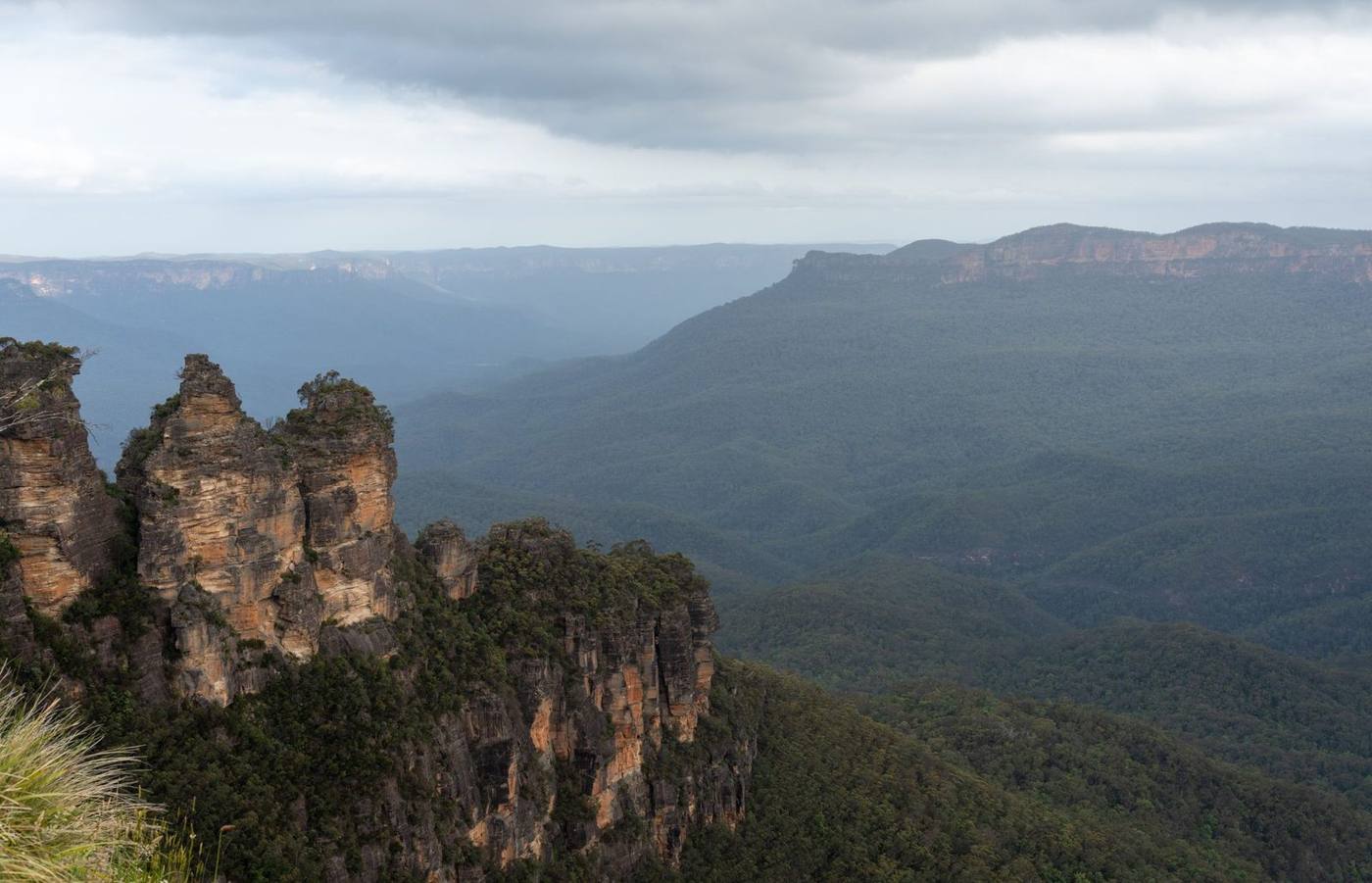 7 daysEasy
Sydney and the Blue Mountains
A week of Sydney harbour, Bondi and Manly beaches and the canyons of the Blue Mountains. For such a long journey, two weeks is better.
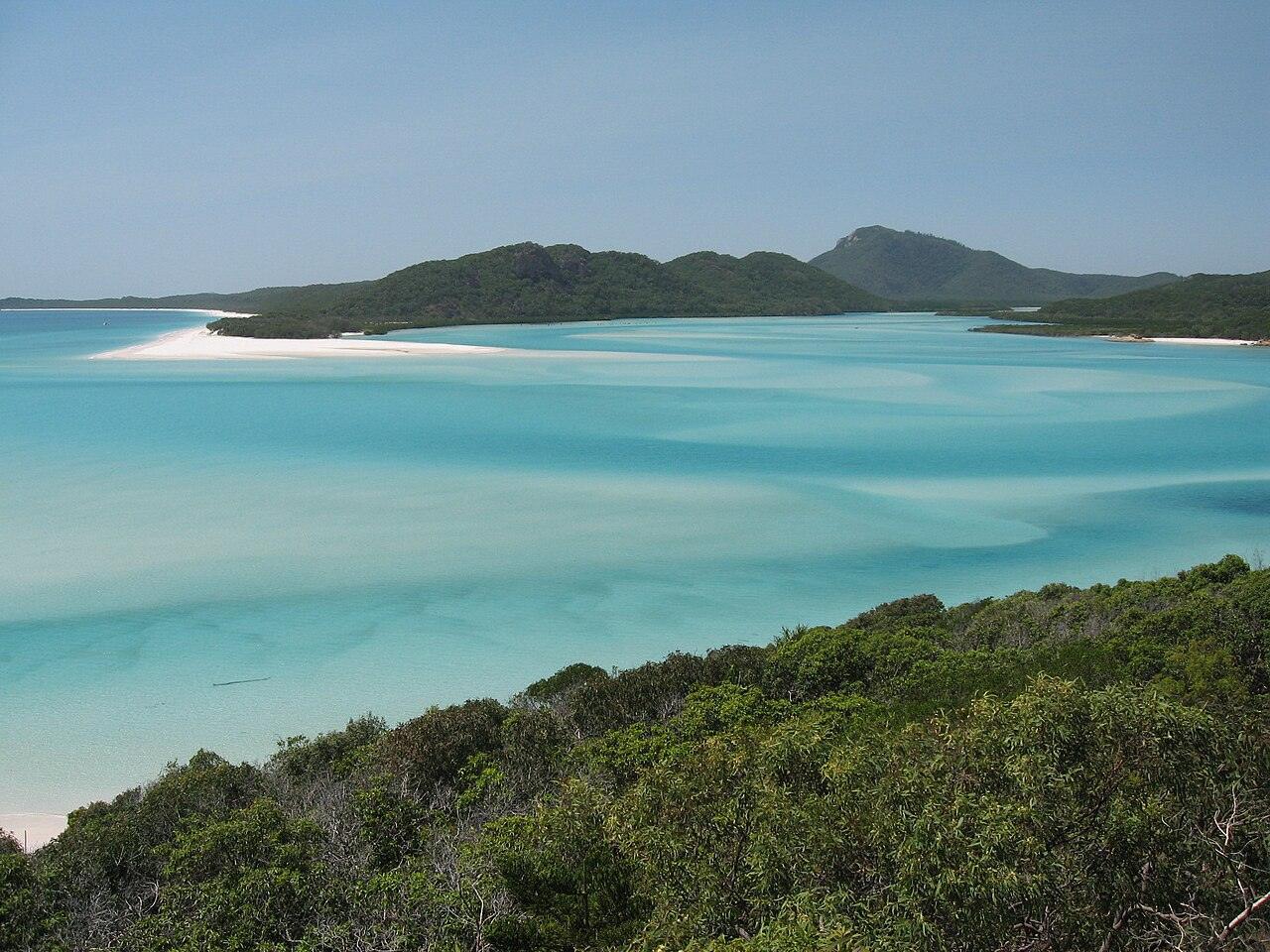 15 daysModerate
The Outback, the Great Barrier Reef and Sydney
Australia's three faces: the red heart of Uluru, the reef and rainforest of Queensland, the great city.
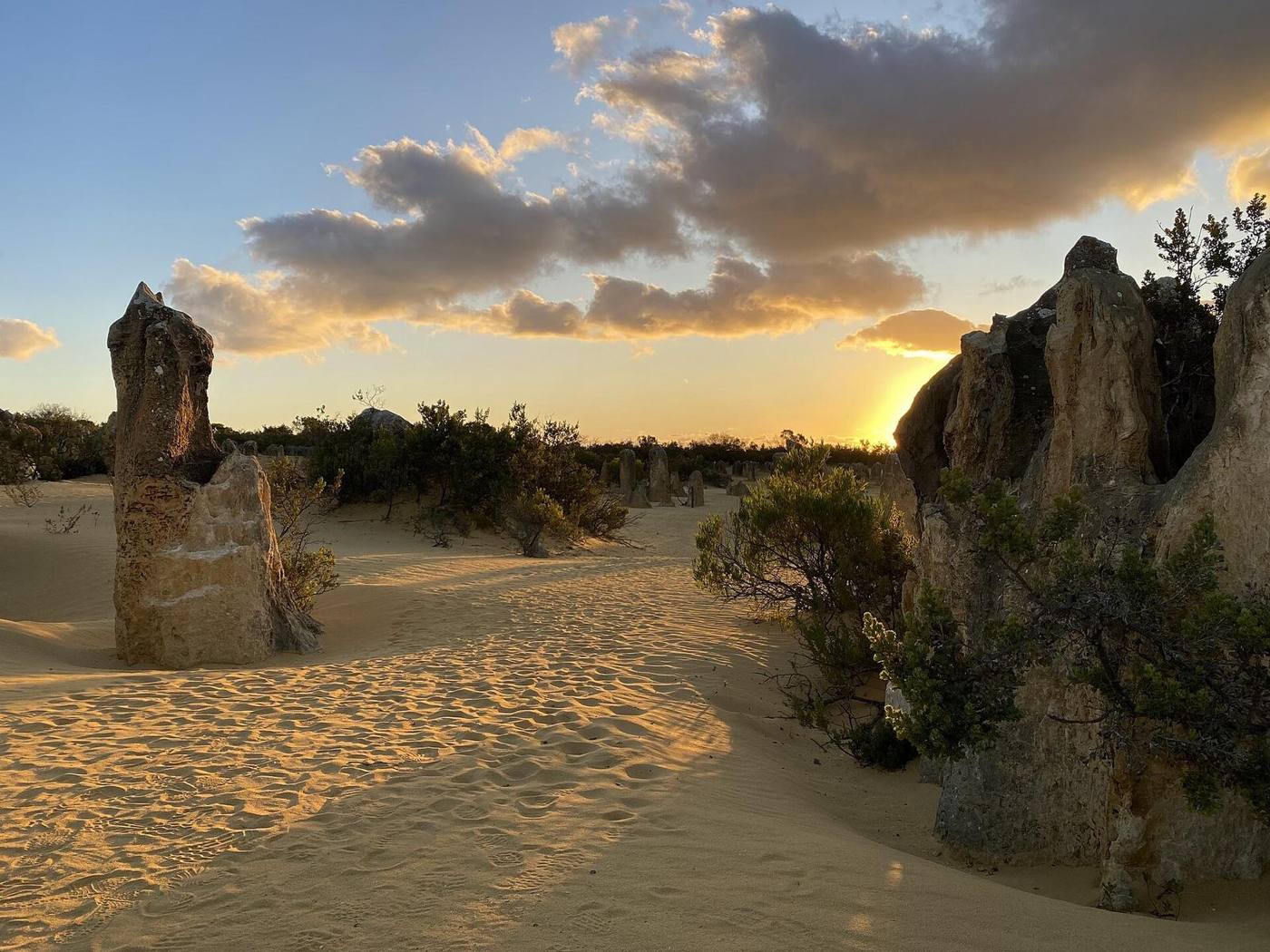 17 daysEasy
All of Australia: the west coast, Uluru, the Reef and Sydney
The continent in seventeen days: Perth and the Pinnacles, the red heart at Uluru, the Great Barrier Reef and the Daintree forest, ending in Sydney.