The Top End: Darwin, Kakadu and Litchfield
Tropical and Aboriginal Australia: Kakadu's rock art, saltwater crocodiles, Litchfield's waterfalls and natural pools, and Nitmiluk gorge.
- Darwin
- Litchfield
- Kakadu
- Ubirr
- Yellow Water
- Nitmiluk
- Katherine
Day by day
- Day 1
Arrival in Darwin and Mindil Beach market at sunset
This trip goes to the Top End, the tropical northern tip of Australia, in the Northern Territory. It is a land of savanna, crocodile filled rivers, waterfalls, red rock gorges and wetlands with thousands of birds, and above all the country of the Aboriginal peoples, who have lived here for tens of thousands of years and left on the rocks some of the oldest rock paintings in the world. The heart of the trip is Kakadu National Park, a UNESCO World Heritage Site for both nature and culture.
To enter Australia European citizens apply online for the eVisitor, a no-cost authorisation. You fly into Darwin, usually with a connection in another Australian city or in Asia, and pick up a hire car. In Australia you drive on the left.
Darwin is a small tropical city on the Timor Sea, closer to Jakarta than to Sydney, rebuilt after Cyclone Tracy destroyed it on Christmas 1974. On the first day visit the Museum and Art Gallery of the Northern Territory, with a section on Aboriginal art, one on Cyclone Tracy and Sweetheart, a stuffed crocodile more than five metres long.
At sunset go to the Mindil Beach market, held in the dry season on Thursday and Sunday evenings on the beach: hundreds of stalls with food from all over Asia, crafts, musicians and crowds watching the sun set over the sea.
Spend the night in Darwin.
Practical tip: the best time is the dry season, from May to October. In the wet season, from November to April, many roads and park sites are closed by flooding.
- Day 2
Litchfield: Florence and Wangi falls and the magnetic termite mounds
Today go to Litchfield National Park, about an hour and a half south of Darwin, smaller and closer than Kakadu, famous for its waterfalls and natural swimming holes.
The first stop is the magnetic termite mounds, on a grassy plain at the park entrance: hundreds of mounds up to two metres high, thin and flat like gravestones, all aligned north to south. The termites build them this way to reduce the heat of the midday sun. Nearby are also cathedral termite mounds, giants up to five metres high.
Then go to Florence Falls, where two cascades drop into a deep pool surrounded by monsoon forest. You go down a staircase and swim beneath the falls. A trail along the creek then leads to Buley Rockhole, a series of small rock pools linked by little cascades, where you sit immersed as if in a natural spa.
In the afternoon go to Wangi Falls, the park's most famous, with two large waterfalls dropping into a wide pool, and a loop trail climbing above the falls through the forest, home to large colonies of fruit bats.
In the evening return to Darwin or stay near the park, in Batchelor.
Spend the night in Batchelor or Darwin.
Practical tip: swim only in pools marked as safe: saltwater crocodiles live in the rivers and waterholes of the Top End. Pools can be closed after rain for checks: always respect the signs.
- Day 3
To Kakadu and Ubirr with its rock art
Today go to Kakadu, about three hours east of Darwin along the Arnhem Highway. On the way you pass the floodplains of the Adelaide River, where cruises show crocodiles leaping out of the water to grab a piece of meat, and Fogg Dam, with wetlands full of birds.
Kakadu is Australia's largest national park, almost the size of Slovenia. It is jointly managed by the government and the traditional Aboriginal owners, the Bininj and Mungguy peoples, who have lived on this land for at least sixty thousand years.
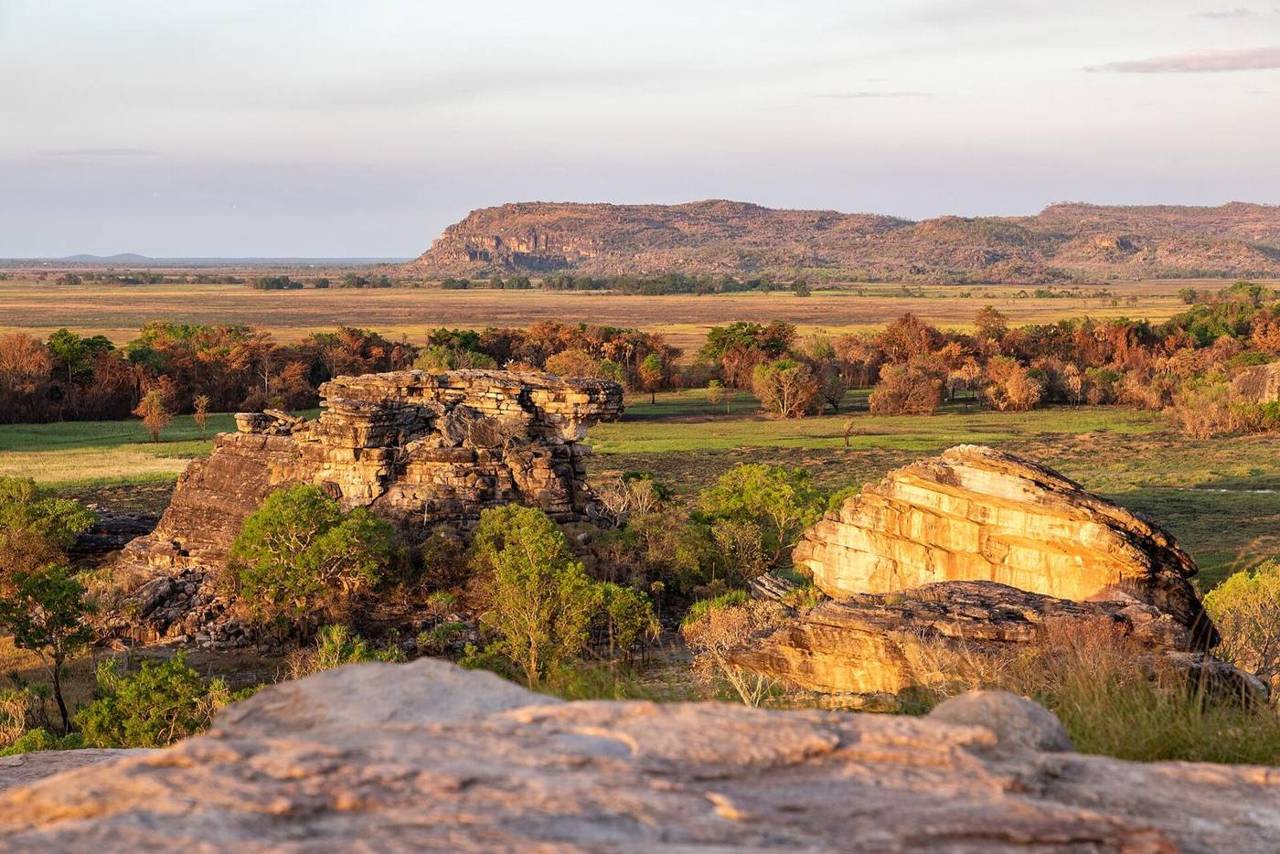
In the afternoon go to Ubirr, in the north of the park near the border with Arnhem Land, one of the most important rock art sites in the world. A trail of about a kilometre passes beneath large rock overhangs where Aboriginal people painted for thousands of years fish, turtles, kangaroos, spirit figures, the thylacine, the Tasmanian tiger extinct in this area for thousands of years, and the first Europeans arriving with guns and boats. Many paintings are in X ray style, showing the bones and internal organs of the animals.
At sunset climb Ubirr rock, with an immense view over the green, water filled Nadab floodplain and the rock escarpments of Arnhem Land in the background. It is one of the finest sunsets in Australia.
Spend the night in or near Jabiru.
Practical tip: to enter Kakadu you need a park pass, which charges a fee: check the price and buy it online before arriving. Ubirr opens at different times depending on the season: check.
- Day 4
Kakadu: the floodplain and Aboriginal culture
Today stay in northern Kakadu to learn more about Aboriginal culture and the nature of the wetlands.
In the morning visit the Bowali visitor centre near Jabiru and the Warradjan cultural centre at Cooinda, built in the shape of a pig nosed turtle. Here the traditional owners tell about their life, the seasons, which in the Aboriginal calendar number six rather than two, kinship rules, creation stories and their relationship with the land. You also see everyday objects, baskets, tools and weapons.
One of the most interesting experiences is an outing with an Aboriginal guide, who teaches you to recognise edible and medicinal plants, find water, hunt and read signs on the land.
In the afternoon take a cruise on the East Alligator River, the river on the border between Kakadu and Arnhem Land, accompanied by an Aboriginal guide. You sail the dark water between rock walls, see crocodiles, and step ashore for a short walk on the Arnhem Land bank, where entry normally requires a special permit.
In the evening, in Jabiru, have dinner and get ready for the next day's sunrise.
Spend the night in Jabiru or Cooinda.
Practical tip: many Kakadu sites are sacred. Respect signs asking you not to photograph or not to enter. The heat is intense even in the dry season: walk early in the morning and carry plenty of water.
- Day 5
A sunrise cruise on Yellow Water among crocodiles and birds
Today, at dawn, take the cruise on Yellow Water billabong at Cooinda, in the centre of the park, one of Kakadu's finest experiences. A billabong is a cut off river channel, a lagoon that stays full of water even in the dry season, where wildlife gathers.
The boat moves slowly among water lilies, reeds, paperbark trees and pandanus forests. At dawn the light is golden and animals are most active. You almost always see saltwater crocodiles, some more than four metres long, resting on the banks or swimming close to the boat. There are thousands of birds: herons, egrets, white bellied sea eagles, kingfishers, magpie geese flying in great flocks, jabiru, a stork with a green and black neck, and jacanas, small birds that walk on lily pads.
With a little luck you also see water buffalo, wild horses, feral pigs and agile wallabies coming to drink.
After the cruise go back to the Warradjan cultural centre if you have not yet visited, and rest through the hottest hours.
In the afternoon, if the roads are open, you can take a four wheel drive trip to Jim Jim Falls or Twin Falls, in the south of the park, reachable only with a suitable vehicle, or go to Maguk gorge, with a pool among the rocks.
Spend the night in Cooinda.
Practical tip: the sunrise cruise is the most popular: book ahead. The roads to Jim Jim and Twin Falls open only in the middle of the dry season and need a 4x4: check first.
- Day 6
Nourlangie and the sacred sites
Today visit Nourlangie, called Burrungkuy by the Aboriginal people, a great sandstone outcrop in the centre of the park, about half an hour from Cooinda.
Under the rock overhangs, for thousands of years, Aboriginal families sheltered from heat and rain. A trail of about a kilometre and a half passes Anbangbang, a shelter used for at least twenty thousand years, and the site's most famous paintings. Among them is Namarrgon, the Lightning Man, painted with bands linking his head, hands and feet and stone axes on his knees, with which he creates lightning during the storms of the wet season. There are also figures of families, spirits and fish, and paintings retouched in the 1960s by an Aboriginal artist, Najombolmi.
Then climb to the Gunwarrdehwarrde lookout, with a view of the Arnhem Land escarpment and Nourlangie rock.
In the afternoon walk around Anbangbang billabong at the foot of the rock, with water lilies and birds, or take the Nawurlandja trail, a short climb with a sunset view of the rock.
Alternatively, in the south of the park, visit Gunlom, with a waterfall and a natural infinity pool at the top of the rock face, from which you see the whole plain below.
Spend the night in Cooinda or near the southern edge of the park.
Practical tip: do not touch the rock where there are paintings. Stay on the walkways. During ceremonies some areas may close without notice.
- Day 7
Nitmiluk (Katherine Gorge) by canoe
Today leave Kakadu by the south side and drive to Katherine, about three hours away, and then to Nitmiluk National Park, some thirty kilometres from town.
Nitmiluk, also called Katherine Gorge, is a series of thirteen gorges carved by the Katherine River into red sandstone, with walls up to seventy metres high. The park belongs to the Jawoyn people, who manage it jointly with the government. The name Nitmiluk means place of the cicadas.
The finest way to discover the gorge is by canoe: you hire a canoe and paddle the calm water between the red walls, stopping at small beaches to swim and carrying the canoe by hand over the rocks between one gorge and the next. In the first gorge there are rock paintings on the walls. Alternatively there are boat cruises lasting a few hours.
Above the gorge there are walking trails, including a short route to a lookout over the first gorge.
In the late afternoon relax at the Katherine hot springs, natural pools of warm, clear water along the river near town, or at Mataranka springs, an hour further south, amid palm forest.
Spend the night in Katherine.
Practical tip: in the dry season saltwater crocodiles are removed from the gorge, but freshwater crocodiles, which are much less dangerous, remain. Check the signs before swimming. Canoe hire and cruises charge fees: check.
- Day 8
Back to Darwin and departure
On the last day return to Darwin, about three and a half hours from Katherine along the Stuart Highway, the road that crosses Australia from north to south to Adelaide.
On the way, if you have time, stop at the Territory Wildlife Park near Berry Springs, a park with Top End animals in natural settings: kangaroos, wallabies, dingoes, crocodiles, birds of prey and a large freshwater aquarium with a tunnel. Nearby are the Berry Springs, a natural pool in the forest.
In Darwin, if your flight is in the evening, visit the Waterfront, the harbour district, with a lagoon where you can swim without risk of crocodiles or jellyfish, or the Second World War oil storage tunnels dug into the rock beneath the city. Darwin was bombed by the Japanese in February 1942: it was the largest attack ever made on Australia. The aviation museum and military sites along the coast tell this story.
Before leaving buy a work of Aboriginal art, a painting or a carved object, from a gallery that works directly with Aboriginal communities and art centres.
From Darwin there are flights to other Australian cities and to Singapore and other Asian cities, from which you continue to Europe.
Practical tip: when buying Aboriginal art ask for a certificate of authenticity and check that the gallery pays the artist fairly. Be wary of cheap mass produced souvenirs.
The most authentic Australia for Aboriginal culture, with paintings thousands of years old. Only go in the dry season (May-September): in the wet many roads and falls are closed. Swim only where signs allow it: the crocodiles are real.
Before you go
- Documents and visa
- Valid passport and an eVisitor, the no-cost electronic authorisation applied for online on the official Australian government website before departure.
- Health and vaccines
- No compulsory vaccines arriving from Europe. Very strong sun: high-factor sunscreen and a hat. Emergencies: 000.
- Money and payments
- Australian dollar. Contactless cards are used everywhere, even for small amounts and on public transport; cash is rarely needed.
- Power sockets
- Type I, 230 volts: you need an adapter for the angled flat-pin plugs.
- Time zone
- The country has several time zones. Sydney and Melbourne are UTC+10, UTC+11 with daylight saving from October to April.
- Safety
- One of the safest countries for travellers. The risks are natural: rip currents, bushfires especially from October to February, cyclones and floods in the north in the wet season. Official advice: GOV.UK.
Information checked in November 2026 for Italian and EU citizens. Rules change: always check before you travel.
Variations
In 5 days: Darwin, Litchfield and northern Kakadu, with Ubirr and Yellow Water.
In 12 days: add Uluru and the Red Centre by air, or the Gibb River Road in the Kimberley by four wheel drive.
Frequently asked questions
When is the best time to go?
The dry season, from May to October. In the wet season many roads and sites in Kakadu are closed.
Do I need a visa?
European citizens apply online for the eVisitor, a no-cost authorisation, before leaving.
Can I swim?
Only in pools marked as safe. Saltwater crocodiles live in the rivers, wetlands and sea.
Indicative itinerary written by World Atlas. Before booking, check timetables, seasonal openings, documents and safety.
 7 daysEasy
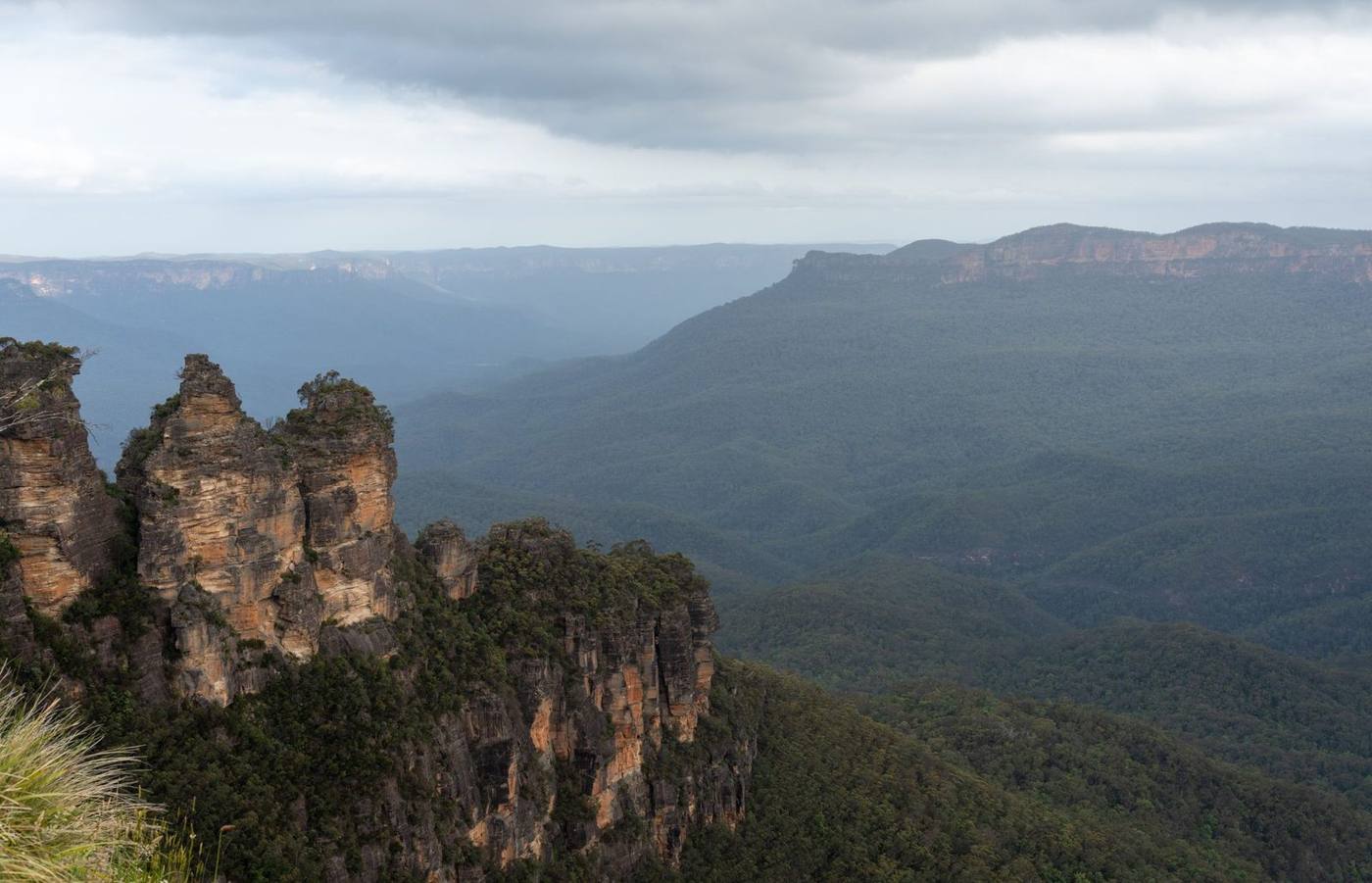
Sydney and the Blue Mountains
A week of Sydney harbour, Bondi and Manly beaches and the canyons of the Blue Mountains. For such a long journey, two weeks is better.
 15 daysModerate
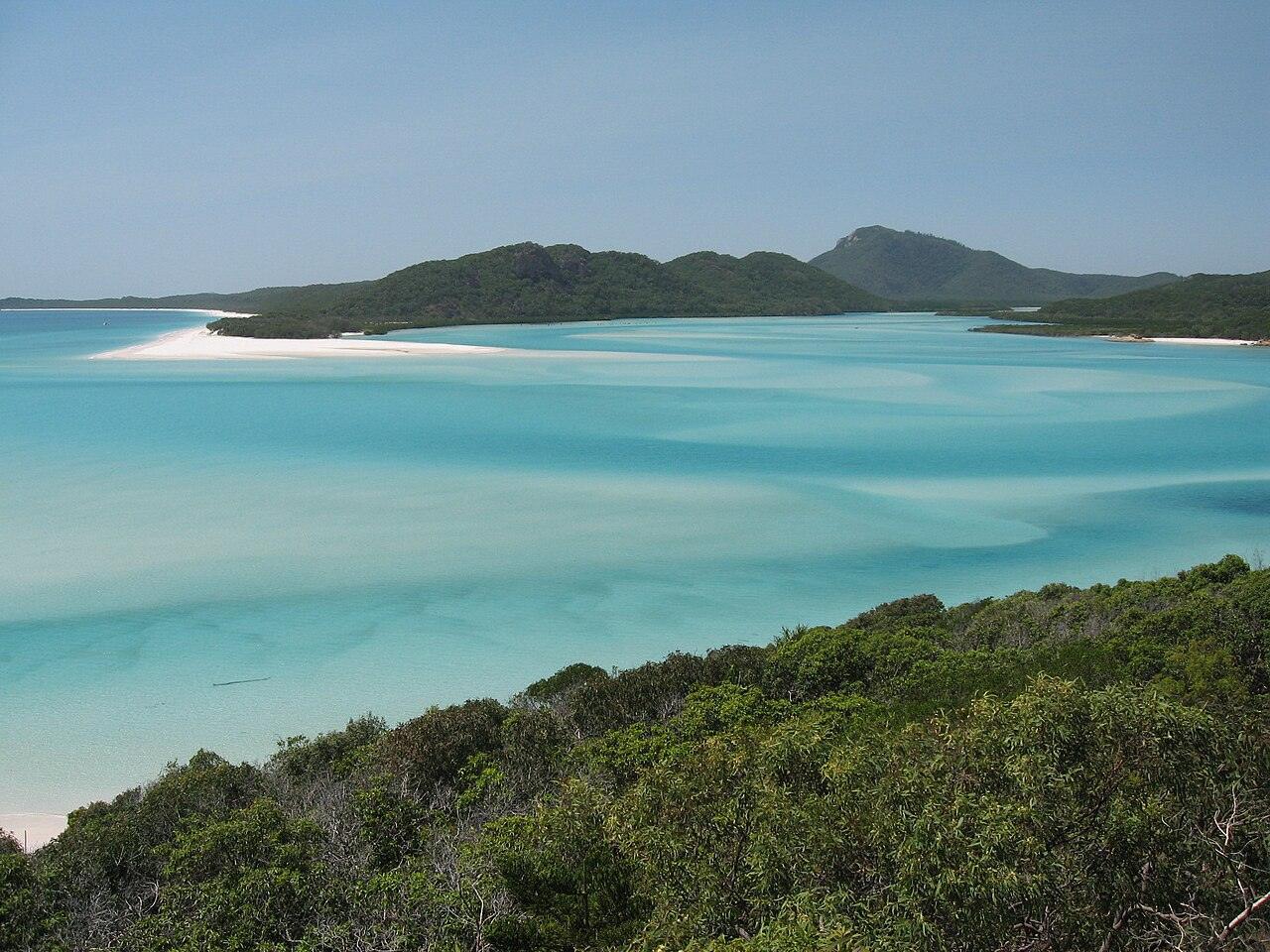
The Outback, the Great Barrier Reef and Sydney
Australia's three faces: the red heart of Uluru, the reef and rainforest of Queensland, the great city.
 17 daysEasy
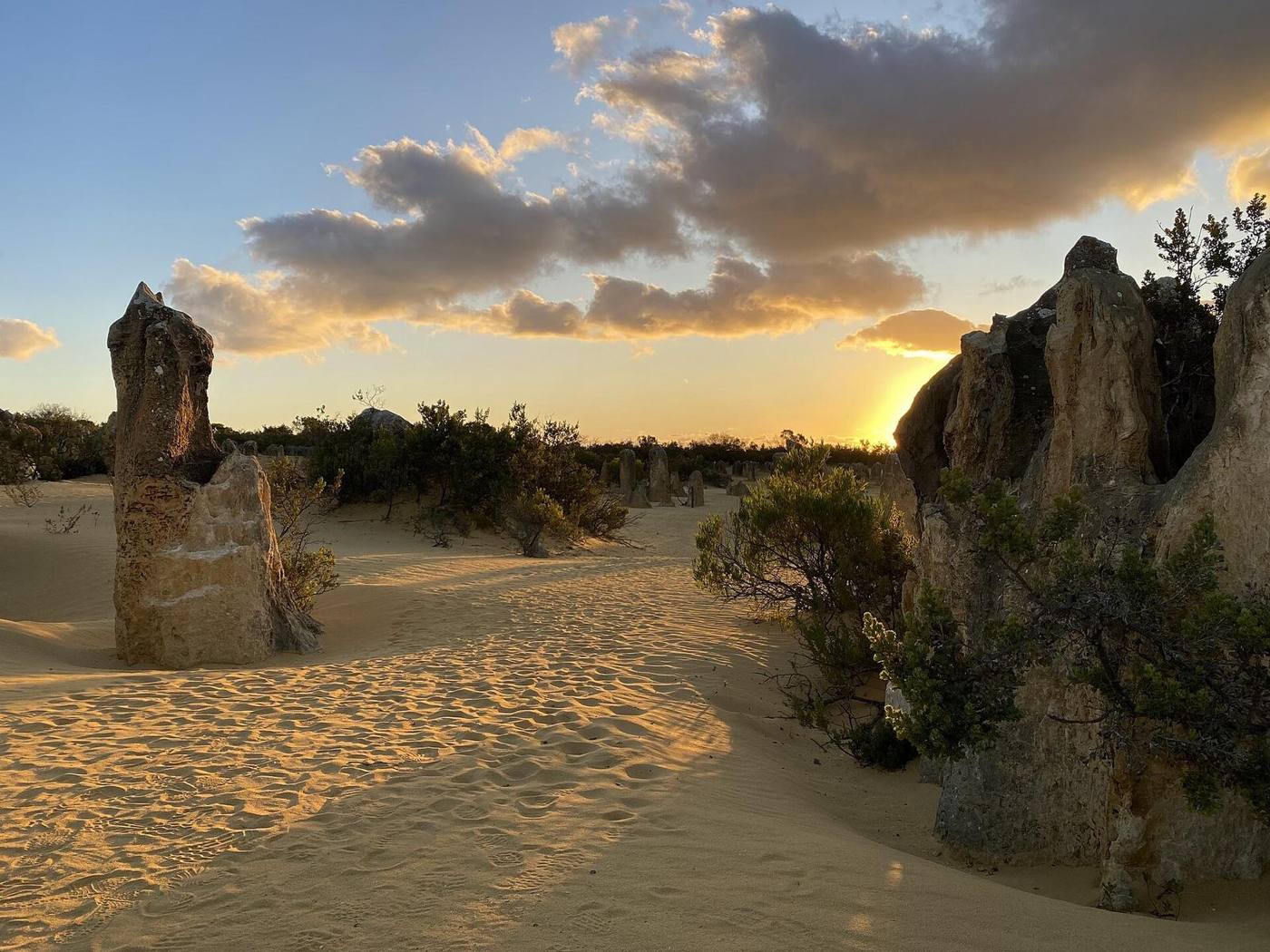
All of Australia: the west coast, Uluru, the Reef and Sydney
The continent in seventeen days: Perth and the Pinnacles, the red heart at Uluru, the Great Barrier Reef and the Daintree forest, ending in Sydney.