Sydney to Melbourne along the coast
The south-east's classic road trip, but away from the motorway: the white sand of Jervis Bay, the South Coast towns, the Sapphire Coast with whales in spring, wild Wilsons Promontory and the penguins of Phillip Island.
- Sydney
- Kiama
- Jervis Bay
- Narooma
- Eden
- Lakes Entrance
- Wilsons Promontory
- Phillip Island
- Melbourne
Day by day
- Day 1
From Sydney to Kiama, with the Royal National Park on the way
This trip drives Australia's south eastern coast, from Sydney to Melbourne, along about 1,100 kilometres of beaches, national parks, small harbours and forests. It is an alternative to the inland highway, slower and far more beautiful: you see dolphins, seals, kangaroos, wombats and penguins, and stay in small seaside towns.
To enter Australia, EU citizens apply online for an eVisitor, a no-cost authorisation. Traffic drives on the left, and hire companies let you pick up a car in Sydney and drop it in Melbourne.
On the first day leave Sydney heading south and enter the Royal National Park, about an hour from the city, the second oldest national park in the world, founded in 1879. Stop at the clifftop lookouts and walk a short stretch of the coast track, among flowering heathland and beaches.
Then drive the Sea Cliff Bridge, a bridge running out from the cliffs above the sea, and continue along the Wollongong coast.
In the afternoon you reach Kiama, a seaside town famous for its blowhole, a hole in the rock from which, in rough seas, water shoots up several metres high. Nearby there is a second, smaller blowhole.
At sunset walk the Kiama coast walk, among green hills and cliffs.
In the evening have dinner with fish and seafood, or the classic Australian fish and chips.
Spend the night in Kiama.
Practical tip: the best time is October to April. In summer there is a bushfire risk: check local alerts before entering the parks.
- Day 2
Jervis Bay: Hyams Beach and the dolphins
Today go to Jervis Bay, about an hour and a half south of Kiama, a large bay with some of the whitest beaches in the world and clear water, within a marine park.
In the morning stroll on Hyams Beach, famous for its very white quartz sand, which squeaks underfoot, and turquoise water. Then walk the White Sands Walk, a path linking several beaches through coastal bush, to Greenfield Beach.
In the afternoon take a boat trip in the bay to see bottlenose dolphins, which live in the bay all year round. From May to November humpback whales can also be seen migrating along the coast.
If you prefer, visit Booderee National Park at the southern tip of the bay, jointly managed with the Aboriginal community of Wreck Bay, with beaches, bushland, a botanic garden and the ruins of a lighthouse. Kangaroos, wallabies and many birds can be seen here.
At sunset sit on one of the bay's beaches, with pink light on the calm water.
In the evening have dinner in one of the bay's towns, such as Huskisson.
Spend the night at Jervis Bay.
Practical tip: at Hyams Beach on summer weekends traffic is heavy and parking limited: arrive early. Entry to Booderee and the boat trips charge fees: check.
- Day 3
Narooma and Montague Island with its seals
Today continue south to Narooma, about two and a half hours from Jervis Bay, along the South Coast of New South Wales, among coastal lakes, forests and towns.
Along the way stop at Ulladulla or Mollymook, with beaches and harbours, and at Pebbly Beach in Murramarang National Park, where eastern grey kangaroos graze on the grass by the beach.
Then go through Central Tilba and Tilba Tilba, two small historic nineteenth century villages with wooden houses and shops selling cheese and crafts, at the foot of Mount Gulaga, a mountain sacred to the Aboriginal Yuin people.
In the afternoon you reach Narooma, a town at the mouth of the river, with emerald green water. On the breakwater near the harbour, at the Narooma Bar, seals often rest on the rocks, and from the lookout you see Australia Rock, with a hole shaped like the Australian continent.
Weather permitting, take a boat trip to Montague Island, about nine kilometres offshore, a nature reserve with colonies of Australian and New Zealand fur seals, little penguins and seabirds. Visits are guided and include time on the island, with its nineteenth century lighthouse.
Spend the night in Narooma.
Practical tip: trips to Montague Island depend on the sea and must be booked: check dates and prices. At Pebbly Beach do not feed the kangaroos.
- Day 4
Eden, the Sapphire Coast and Ben Boyd National Park
Today drive the Sapphire Coast to Eden, about two hours from Narooma.
The coast takes its name from the deep blue colour of the sea, with bays, cliffs, coastal lakes and small fishing harbours such as Bermagui, with its rock pool, a natural pool by the sea, and Merimbula, with its oysters.
In the afternoon you reach Eden, a small port town on Twofold Bay with a long whaling history. Visit the Killer Whale Museum, which tells a story unique in the world: between the nineteenth and early twentieth centuries a group of orcas helped the whalers hunt whales, herding them towards their boats in exchange for part of the catch. The museum keeps the skeleton of Old Tom, the most famous orca.
Then go to Ben Boyd National Park south of Eden, with the Pinnacles, cliffs of white and orange clay carved by erosion, and the coastal path towards Boyd's Tower, an unfinished nineteenth century lighthouse.
From September to November, from Eden's lookouts, you can see humpbacks and other whales migrating south and resting in the bay.
Spend the night in Eden.
Practical tip: in October or November Eden holds its whale festival: check the dates. Ben Boyd National Park and the museum charge entry: check.
- Day 5
Croajingolong and Lakes Entrance
Today enter the state of Victoria and cross East Gippsland, one of the wildest stretches of the Australian coast, to Lakes Entrance, about four hours from Eden.
The road crosses great forests of eucalyptus and tree ferns, with few towns. Croajingolong National Park, a UNESCO biosphere reserve, protects about a hundred kilometres of almost untouched coast, with empty beaches, estuaries, dunes, temperate rainforest and isolated lighthouses.
In the morning take a detour to the coast, for example to Mallacoota, a town at the head of an estuary within the park, with lakes, beaches and kangaroos. Walk along the lakefront or hire a boat. Mallacoota was hit by the great fires of 2019 and 2020, and the forest is recovering.
In the afternoon continue to Lakes Entrance, a seaside town at the mouth of the Gippsland Lakes, one of the largest lagoon systems in Australia, separated from the ocean by a long strip of dunes called Ninety Mile Beach.
At sunset walk across the footbridge to the ocean beach, or along the lakefront with its fishing boats.
In the evening have dinner with fresh fish, prawns and scallops, as Lakes Entrance has one of the largest fishing fleets in Victoria.
Spend the night in Lakes Entrance.
Practical tip: in East Gippsland fuel stations are far apart: fill up when you can. Check for fire alerts or closed roads, especially in summer.
- Day 6
Wilsons Promontory: Squeaky Beach and the wombats
Today go to Wilsons Promontory, about three and a half hours from Lakes Entrance, the southernmost point of mainland Australia.
Wilsons Promontory National Park, known to Australians simply as the Prom, is one of Victoria's best loved parks: a peninsula of granite mountains, forests, white sand beaches and turquoise bays, with rich wildlife.
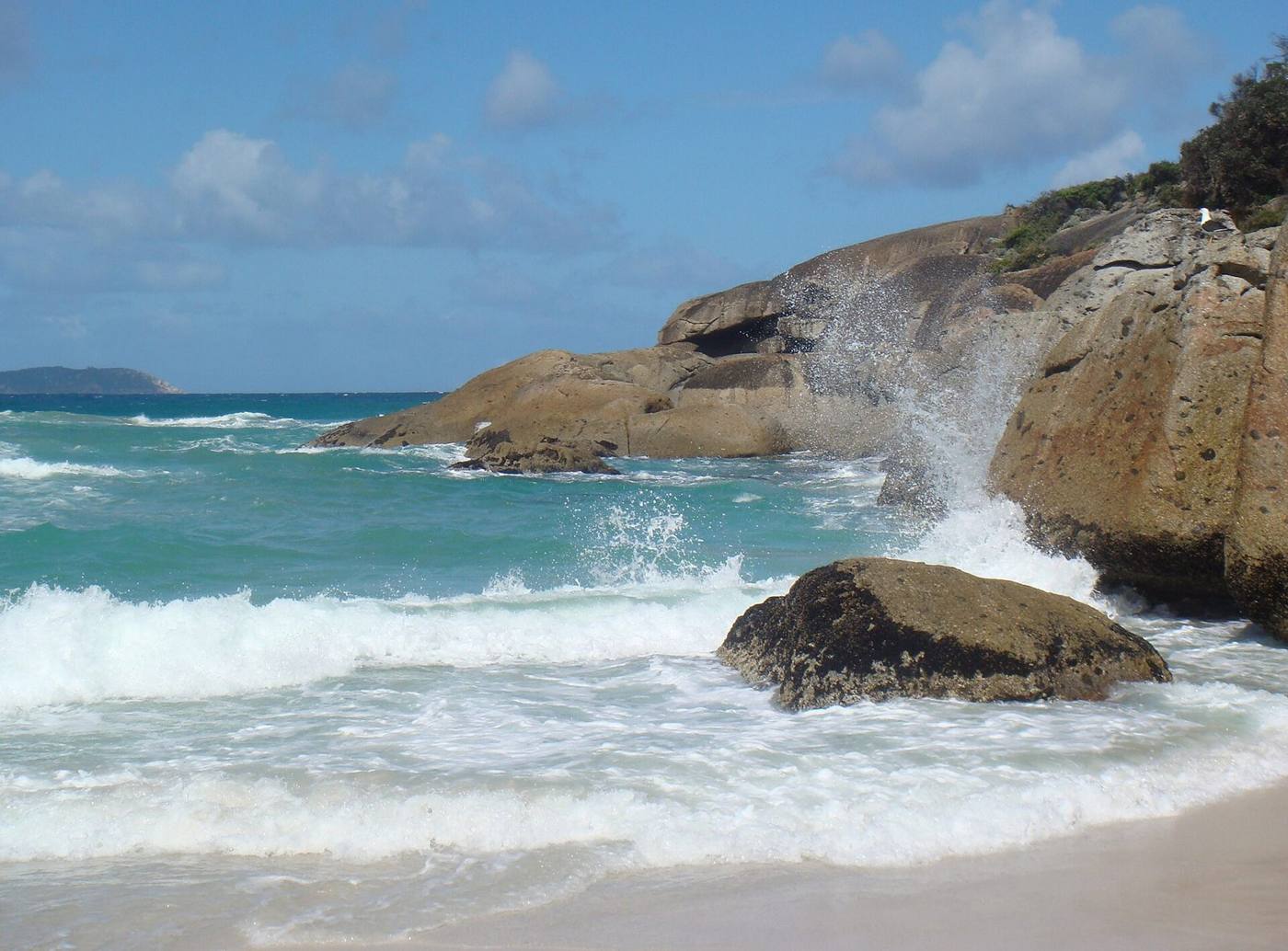
In the afternoon, on arrival, go to Squeaky Beach, famous for its very fine quartz sand that squeaks when you walk on it, with great orange granite boulders at each end. Then walk the coastal track towards Picnic Bay or Whisky Bay, other beaches with clear water.
At sunset go to the Tidal River area, the heart of the park, where on the lawns and around the campground you often see wombats, large stocky marsupials that come out to graze in the evening, as well as kangaroos, wallabies, emus and rosella parrots.
In the evening look at the starry sky, far from city lights.
Spend the night at Tidal River or in a town near the park, such as Yanakie or Foster.
Practical tip: accommodation in the park is limited and booked far in advance, especially in summer. Never feed the animals and store food securely: wombats and birds get into tents.
- Day 7
Wilsons Promontory: Mount Oberon and the bays
Today stay at Wilsons Promontory to walk.
In the morning climb Mount Oberon, at about 558 metres: you start from the Telegraph Saddle car park and climb a wide, even track for about three and a half kilometres, in an hour to an hour and a half. From the granite summit there is a 360 degree view over the whole peninsula, its bays, offshore islands and Bass Strait, which separates Australia from Tasmania.
In the afternoon choose a coastal walk: the track from Tidal River to Norman Bay and Little Oberon Bay, or the walk to Lilly Pilly Gully, a damp rainforest with tree ferns and a creek. Fit walkers can do a longer hike to Sealers Cove, an isolated bay reached only on foot, through forest and a swamp crossed by boardwalks.
At sunset return to Squeaky Beach or Norman Beach, the beach in front of Tidal River, to see the light on the granite boulders.
In the evening look for wombats on the lawns.
Spend the night at Tidal River or nearby.
Practical tip: in summer the Telegraph Saddle car park may be closed and a shuttle bus runs up: check. The weather changes quickly: carry a jacket, water and sun cream, even on cloudy days.
- Day 8
Phillip Island and the penguin parade at sunset
Today go to Phillip Island, about two hours from Wilsons Promontory, an island linked to the mainland by a bridge at the entrance to Western Port Bay.
Phillip Island is famous for little penguins, the smallest penguins in the world, about thirty centimetres tall, which live in large colonies on the island's south coast.
In the morning, on arrival, visit the koala centre, where boardwalks among the eucalyptus trees let you see koalas up close in their habitat. Then go to Cape Woolamai, the island's south eastern tip, with pink granite cliffs, or to the Nobbies, a headland with boardwalks above the cliffs looking out to Seal Rocks, the largest fur seal colony in Australia.
In the afternoon, if you have time, visit the island's motorcycle circuit, home of the Australian MotoGP Grand Prix.
At sunset go to Summerland Beach for the penguin parade: from stands and boardwalks you watch hundreds of penguins come out of the sea in small groups and cross the beach to their burrows in the dunes, after a day fishing at sea. It is a moving sight.
Spend the night on Phillip Island or in Cowes.
Practical tip: the penguin parade must be booked in advance and is paid, and photos and videos are forbidden to protect the penguins. Bring warm clothes: even in summer the beach is cold in the evening.
- Day 9
Arrival in Melbourne
On the last day go to Melbourne, about two hours from Phillip Island, Australia's second city and capital of Victoria.
In the morning, if you like, go via the Mornington Peninsula, an area of vineyards, beaches and natural hot springs, with seaside towns such as Sorrento, and the colourful bathing boxes of Brighton on Port Phillip Bay.
In the afternoon, in Melbourne, return the car and explore the city on foot. Melbourne is famous for its laneways, full of cafés, murals and small shops, such as Hosier Lane, covered in graffiti and street art. Visit Federation Square, the modern square opposite Flinders Street station, with its yellow facade and clocks, and walk along the Yarra river.
If you have time, visit the Queen Victoria Market, a great nineteenth century covered market with stalls of fruit, vegetables, meat, cheese and produce from all over the world, or the National Gallery of Victoria, Australia's oldest art museum.
In the evening have dinner in one of Melbourne's many restaurants, a city famous for its multicultural food, with strong Italian, Greek and Asian influences.
From Melbourne airport there are flights to Europe with one stop, usually in Asia or the Gulf.
Practical tip: in central Melbourne the trams in the no-cost tram zone cost nothing: check the zone boundaries. Melbourne weather changes a lot even within a day: bring layers.
An easy trip by rental car, ideal for those who have already seen Sydney and Melbourne. Whales pass mainly from September to November off Eden. Park lodging at Wilsons Prom must be booked well ahead. In the east-coast forests fires can close roads and parks. From October to February bushfire risk is high: follow the state emergency services apps and respect closures. EU citizens need the eVisitor (subclass 651), which is at no cost and must be requested online before departure.
Before you go
- Documents and visa
- Valid passport and an eVisitor, the no-cost electronic authorisation applied for online on the official Australian government website before departure.
- Health and vaccines
- No compulsory vaccines arriving from Europe. Very strong sun: high-factor sunscreen and a hat. Emergencies: 000.
- Money and payments
- Australian dollar. Contactless cards are used everywhere, even for small amounts and on public transport; cash is rarely needed.
- Power sockets
- Type I, 230 volts: you need an adapter for the angled flat-pin plugs.
- Time zone
- The country has several time zones. Sydney and Melbourne are UTC+10, UTC+11 with daylight saving from October to April.
- Safety
- One of the safest countries for travellers. The risks are natural: rip currents, bushfires especially from October to February, cyclones and floods in the north in the wet season. Official advice: GOV.UK.
Information checked in November 2026 for Italian and EU citizens. Rules change: always check before you travel.
Variations
In 5 days: from Sydney to Jervis Bay and Narooma only, returning to Sydney.
In 12 days: add the Great Ocean Road after Melbourne.
Frequently asked questions
Do I need a visa?
EU citizens apply online for an eVisitor, a no-cost authorisation. Check the current rules.
Can I drop the car in Melbourne?
Yes, many hire companies let you pick up the car in Sydney and drop it in Melbourne, usually with a one way fee: check.
When is the best time to go?
October to April. Summer brings bushfire risk; from May to November whales can be seen along the coast.
Indicative itinerary written by World Atlas. Before booking, check timetables, seasonal openings, documents and safety.
 5 daysModerate
Canberra and the Snowy Mountains
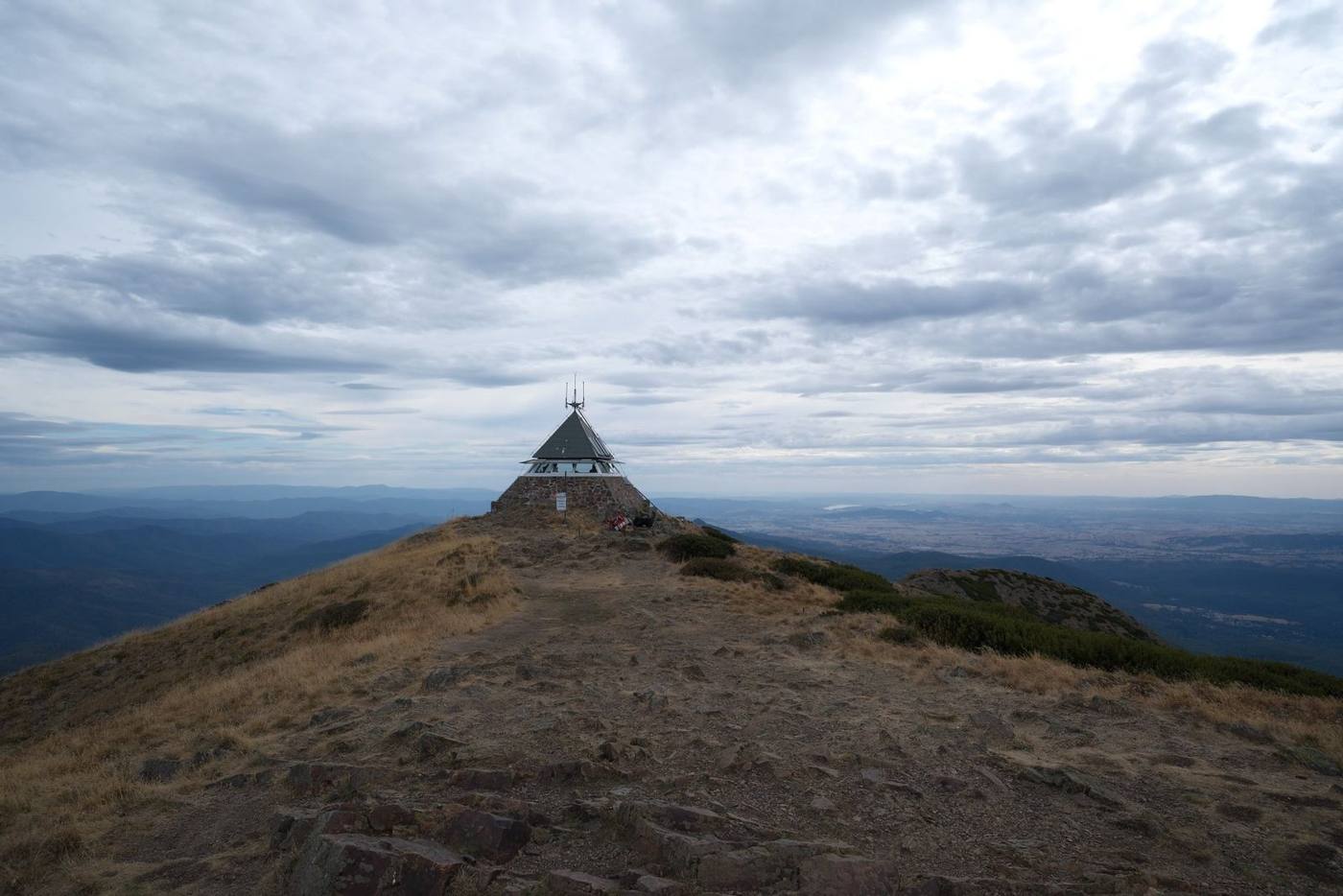
The purpose-built capital, with Parliament House, the National Gallery and the Australian War Memorial, then the Australian Alps: Kosciuszko National Park, the walk to the continent's highest summit, glacial lakes and the villages of Thredbo and Jindabyne.
 8 daysEasy
Margaret River and the South West
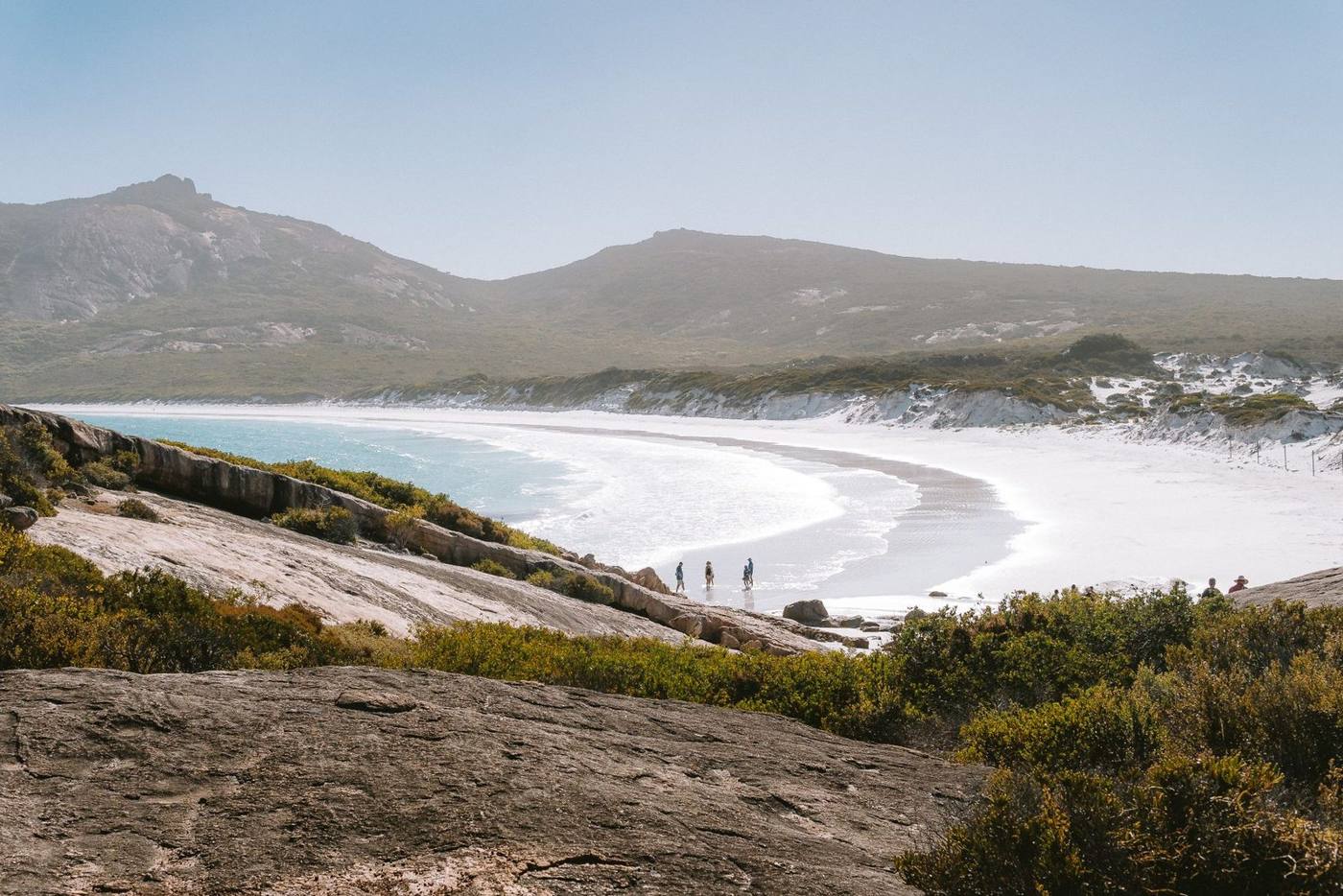
Western Australia's green corner: the wineries and surf of Margaret River, limestone caves, forests of giant karri trees, the Valley of the Giants Tree Top Walk, the historic port of Albany and the dazzling white beaches of Cape Le Grand near Esperance.
 6 daysEasy
Byron Bay and the Gold Coast hinterland
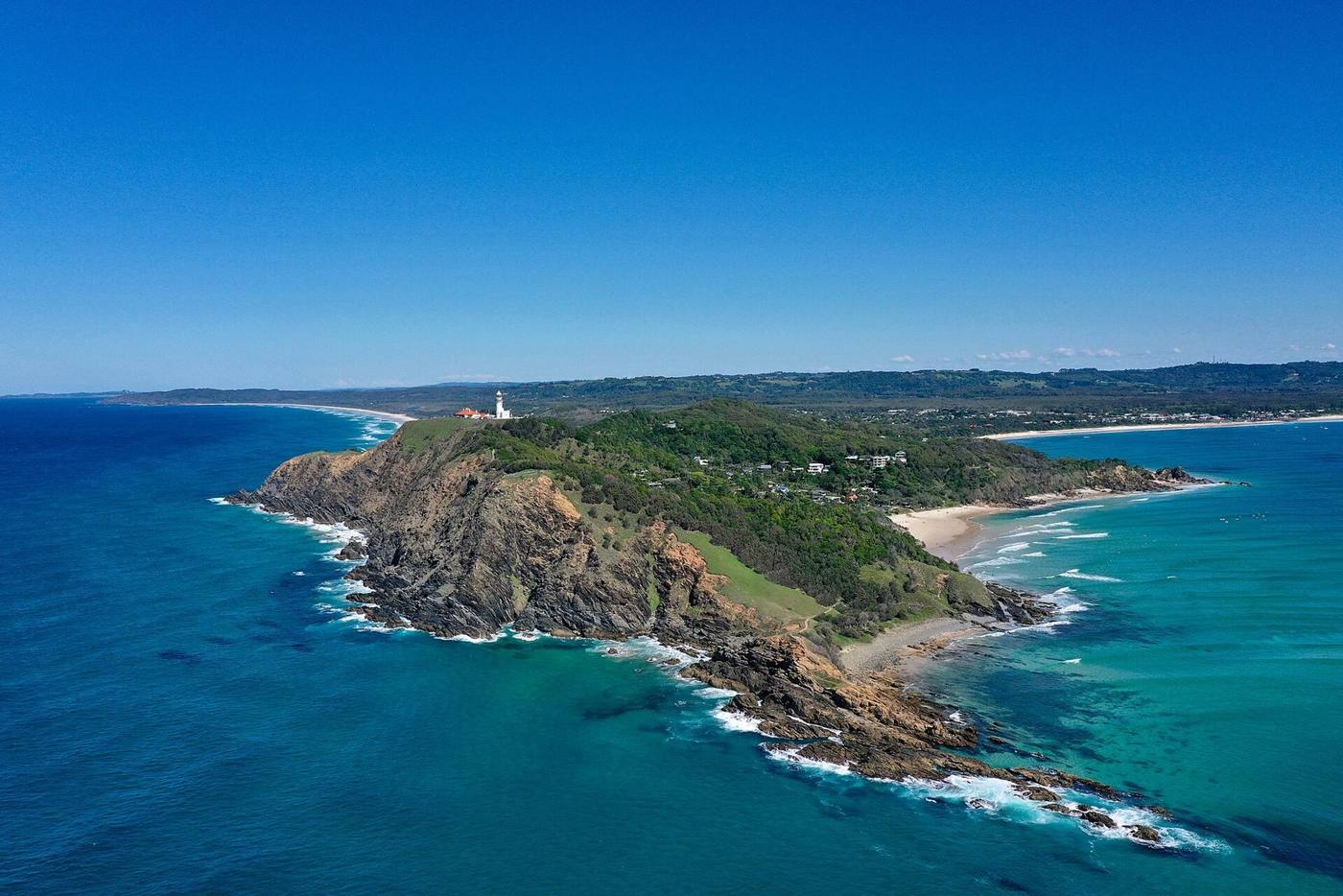
The continent's most easterly point, with the Byron lighthouse and surf beaches, the alternative towns of the Northern Rivers and the ancient Gondwana rainforests, a UNESCO World Heritage site, in Lamington and Springbrook parks, an hour from the Gold Coast.