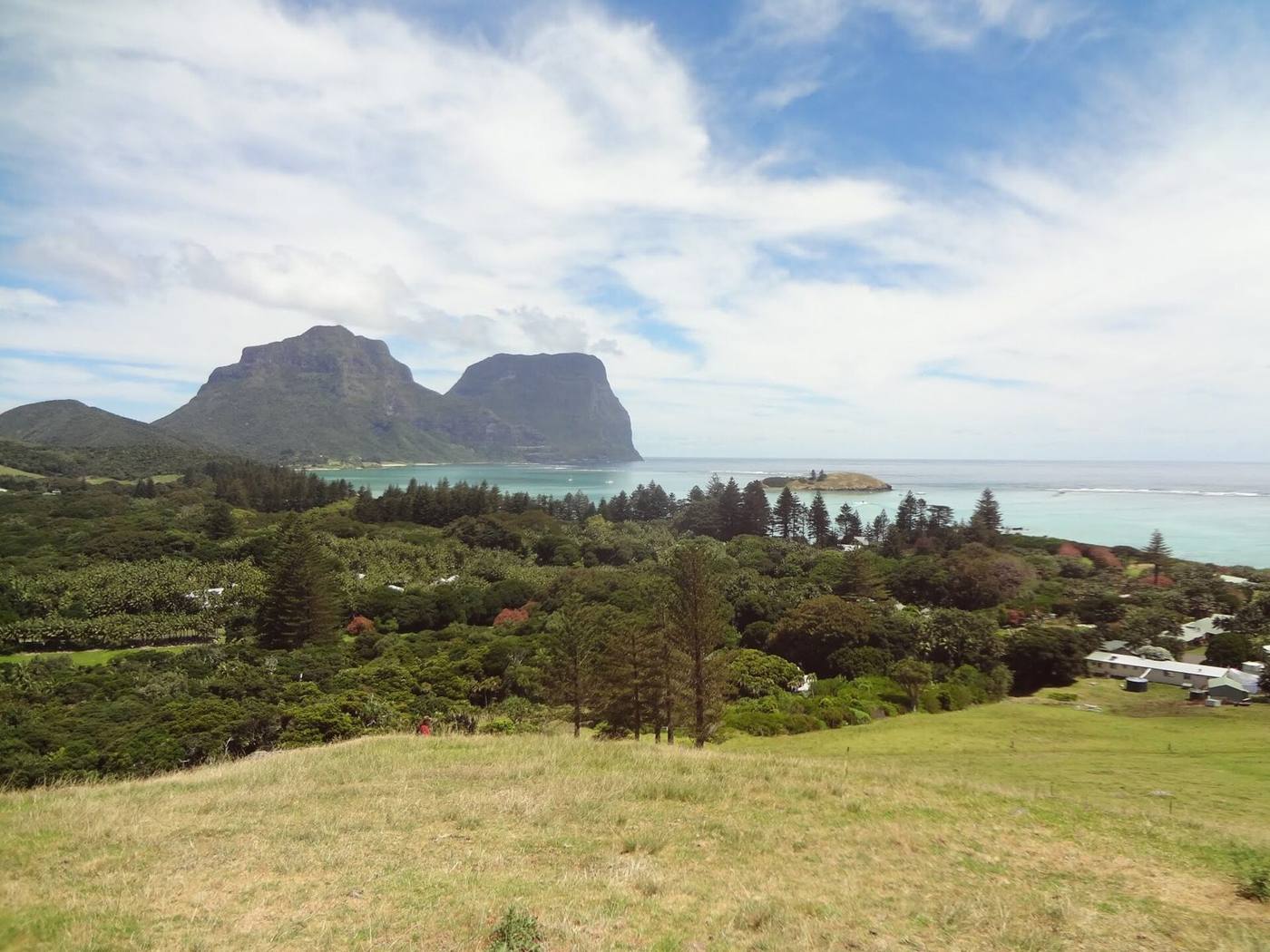
Lord Howe Island
A UNESCO-listed volcanic island in the Tasman Sea, a two-hour flight from Sydney: the lagoon with the world's southernmost coral reef, Mount Gower rising straight from the sea, seabirds by the thousand and only 400 tourists allowed at a time.
- Sydney
- Lord Howe Island
- Ned's Beach
- Mount Gower
- Ball's Pyramid
Day by day
- Day 1
The flight from Sydney, cycling and sunset at Middle Beach
Lord Howe is a small volcanic island in the Tasman Sea, about 600 kilometres off the coast of New South Wales. It is about eleven kilometres long, with two mountains in the south, a lagoon with the world's southernmost coral reef and forests where birds found nowhere else live. It has been a UNESCO World Heritage Site since 1982 and, to protect it, a maximum of about 400 visitors can stay at any one time. That is why it is quiet and almost closed to cars. In five days you see the lagoon, the beaches, the mountains and the sea around the great spire of Ball's Pyramid.
You arrive on a small flight from Sydney, in about two hours, sometimes also from Brisbane or Port Macquarie. From the window, as you land, you see the green island with its turquoise lagoon and the two mountains, Lidgbird and Gower, rising sheer from the sea.
Your accommodation usually picks you up at the airport. After settling in, hire a bicycle: it is the island's main means of transport, along with walking. The roads are few, narrow and quiet, with a very low speed limit.
In the afternoon, take a first ride along the lagoon and stop at the beaches. At sunset, go to Middle Beach or the lagoon beach and watch the sun go down behind Blackburn Island, while the mountains turn pink.
In the evening, if you are on the island between September and May, listen to the calls of the shearwaters returning to their nests in the forest.
Practical tip: on flights to Lord Howe luggage has strict weight limits. Check them before you pack.
- Day 2
Ned's Beach and the lagoon by glass-bottomed boat
In the morning, cycle to Ned's Beach, on the north-east coast, a white sand beach protected as a marine reserve. Here fish come right up to the shore in the shallow water: parrotfish, moonwrasse, trevally and sometimes small harmless sharks. With mask and snorkel, going in straight from the beach, you swim among corals, sea urchins and colourful fish a few metres from the sand. On the beach there is usually a spot where you can hire masks and fins, leaving a contribution in the box.
At midday, rest in the shade of the trees above the beach, or walk the short path up into the northern hills, with views of the cliffs and the islets where seabirds nest.
In the afternoon, take a trip on the lagoon in a glass-bottomed boat, which takes you over the coral reef. The guide explains why tropical corals and cold-water fish meet here: warm currents from the north reach this latitude, creating a unique environment. Some boats also stop for snorkelling in the middle of the lagoon, at a spot with sea turtles.
At sunset, if the sky is clear, go up to the viewpoint near the lagoon and watch the southern mountains lit by the last light.
In the evening, at dinner, try fish caught around the island.
Practical tip: in the Lord Howe marine park there are zones where fishing is banned and you can only look at the fish. Respect the signs and do not touch the corals.
- Day 3
Climbing Mount Gower with a guide
Today is the day of the climb up Mount Gower, 875 metres high, the island's highest mountain and one of the finest hikes in Australia. It can only be done with an authorised guide, because the path is steep and exposed and in places you climb using ropes fixed to the rock. Trips leave early in the morning and take about eight or nine hours there and back.
You start from the south coast, and the first stretch runs along the base of the cliffs above the sea, with sections over rocks and ropes. Then the path climbs into the forest, crosses a stream and tackles the steepest part, again with ropes, up to the summit plateau.
At the top is a forest in the mist, called the cloud forest, with low trees covered in moss, ferns, orchids and plants that grow only here. It is also one of the places where the Lord Howe woodhen lives, a flightless bird saved from extinction in the 1980s: today it is curious and often comes close to people.
In good weather, from the edges of the summit you see the whole island, the turquoise lagoon, the beaches and, out at sea, the spire of Ball's Pyramid. Often, however, the summit is wrapped in cloud.
In the afternoon you descend the same way, carefully on the roped sections.
In the evening, rest: it is a very tiring day.
Practical tip: you need good fitness and no fear of heights. Trips are booked in advance and cancelled in rain or strong wind.
- Day 4
Ball's Pyramid from the sea and Malabar Hill
In the morning, take a boat trip to Ball's Pyramid, about 23 kilometres south-east of the island. It is the remnant of an ancient volcano, a rock spire 551 metres high rising straight out of the ocean, considered the tallest volcanic stack in the world. Seeing it up close, with the waves breaking at its base and seabirds circling it, is striking.
On its walls, in 2001, a small colony of the Lord Howe stick insect was found, a large insect believed extinct for eighty years after rats arrived on the main island. Since then it has been bred and protected.
The sea around Ball's Pyramid is very rich: with some boats you can scuba dive, for experienced divers, among Galápagos sharks, groupers, rays and schools of fish. Other boats only circle the spire or go game fishing. Climbing the spire is forbidden.
In the afternoon, back on the island, walk up Malabar Hill, on the north coast, in about an hour and a half there and back. The path climbs through grassland and trees to the top of the cliff, at about 200 metres, with a spectacular view of the whole island, the lagoon and the southern mountains. Masked boobies and other seabirds nest on the cliff.
You can continue to Kim's Lookout and come down the other side.
Practical tip: the trip to Ball's Pyramid depends heavily on the sea and the wind. Keep a spare day, because it is often postponed.
- Day 5
Kayaking, snorkelling and back to Sydney
On your last morning, hire a kayak or a paddleboard and cross the lagoon, with shallow, clear water over sand and coral. You can reach Blackburn Island, in the middle of the lagoon, a small island with a beach and its original vegetation.
Or take a last snorkel at one of the lagoon's spots, such as the area off Erscott's, where you see corals, colourful fish and sometimes green turtles. At low tide some areas can also be reached on foot.
If you prefer walking, take the short path to Little Island or the walk along the south coast at the foot of Mount Lidgbird, through the forest of kentia palms, a palm that grows only here and is now grown all over the world as a house plant. The seeds collected on the island are still one of its small sources of income.
At midday, before your flight, take a last bike ride to say goodbye to the island, then return the bicycle.
In the afternoon, take the flight back to Sydney.
Lord Howe combines well with a trip along Australia's east coast: Sydney and the Blue Mountains, the coast towards Port Macquarie and Byron Bay, or the Great Barrier Reef in Queensland.
Practical tip: to enter Australia, Italian citizens must apply online for the no-cost eVisitor before leaving. On Lord Howe there is little phone coverage and card payments do not always work: bring some cash.
One of Australia's most beautiful and peaceful places, but expensive. Beds are limited: book lodging first, then the flight. The Mount Gower climb is steep, with roped sections, and is only done with a guide. Phone coverage is limited. Access is by plane only, with tight baggage limits. EU citizens need the eVisitor (subclass 651), which is at no cost and must be requested online before departure.
Before you go
- Documents and visa
- Valid passport and an eVisitor, the no-cost electronic authorisation applied for online on the official Australian government website before departure.
- Health and vaccines
- No compulsory vaccines arriving from Europe. Very strong sun: high-factor sunscreen and a hat. Emergencies: 000.
- Money and payments
- Australian dollar. Contactless cards are used everywhere, even for small amounts and on public transport; cash is rarely needed.
- Power sockets
- Type I, 230 volts: you need an adapter for the angled flat-pin plugs.
- Time zone
- The country has several time zones. Sydney and Melbourne are UTC+10, UTC+11 with daylight saving from October to April.
- Safety
- One of the safest countries for travellers. The risks are natural: rip currents, bushfires especially from October to February, cyclones and floods in the north in the wet season. Official advice: GOV.UK.
Information checked in November 2026 for Italian and EU citizens. Rules change: always check before you travel.
Variations
In 3 days: Ned's Beach, the lagoon by boat and Malabar Hill, without Mount Gower.
In 9 days: Sydney and the Blue Mountains first, then five days on Lord Howe.
Frequently asked questions
When is the best time to go?
From September to April, with the warmest sea for snorkelling. In winter, from June to August, it is cool and windy and some activities are reduced.
Why are there so few places?
To protect the island, a maximum of about 400 visitors can stay at any one time. Book accommodation first and then the flight, many months ahead.
Can I climb Mount Gower on my own?
No: the climb is only allowed with an authorised guide, because of its difficulty and the roped sections. Trips are booked in advance.
Indicative itinerary written by World Atlas. Before booking, check timetables, seasonal openings, documents and safety.
 8 daysChallenging
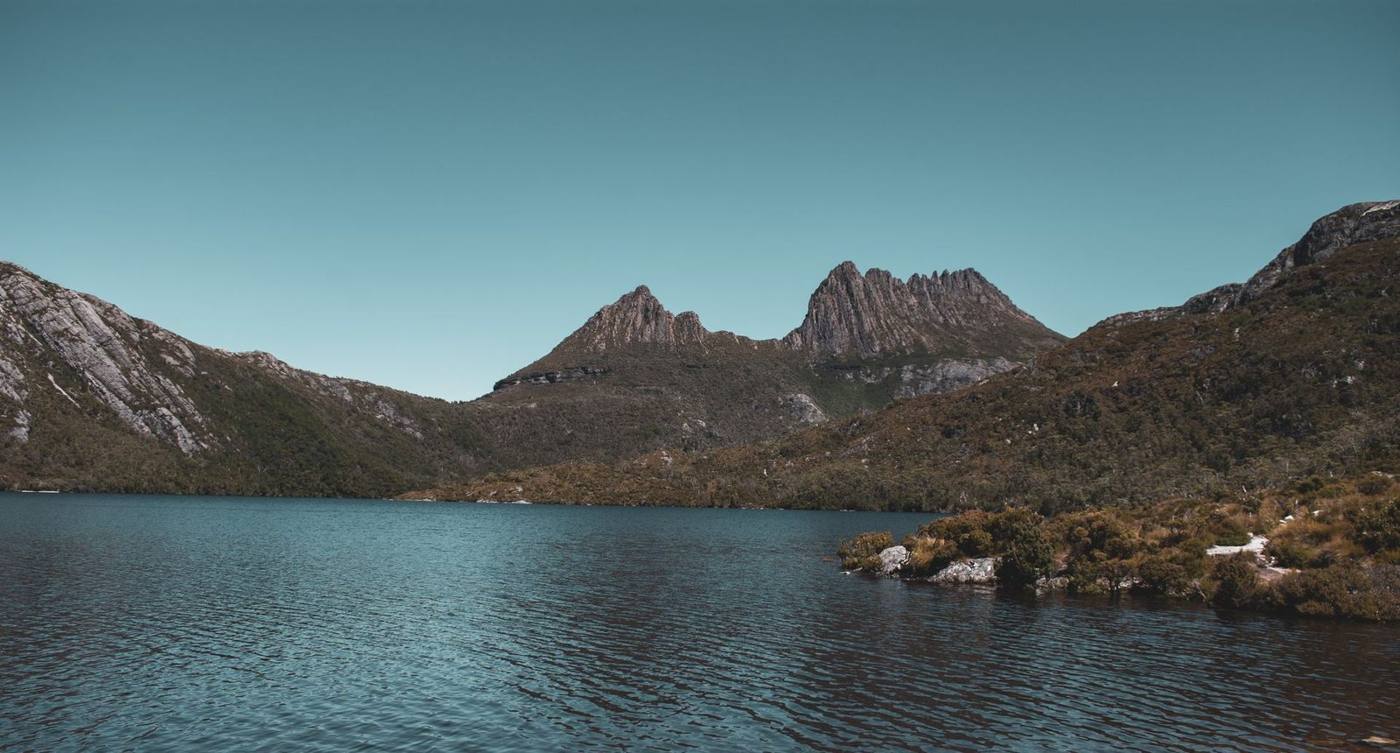
The Overland Track in Tasmania
Australia's most famous trek: about 65 km over six days from Cradle Mountain to Lake St Clair, the country's deepest lake, across buttongrass plateaus, ancient pine forests, waterfalls and huts, in the heart of UNESCO-listed Tasmanian wilderness.
 5 daysEasy
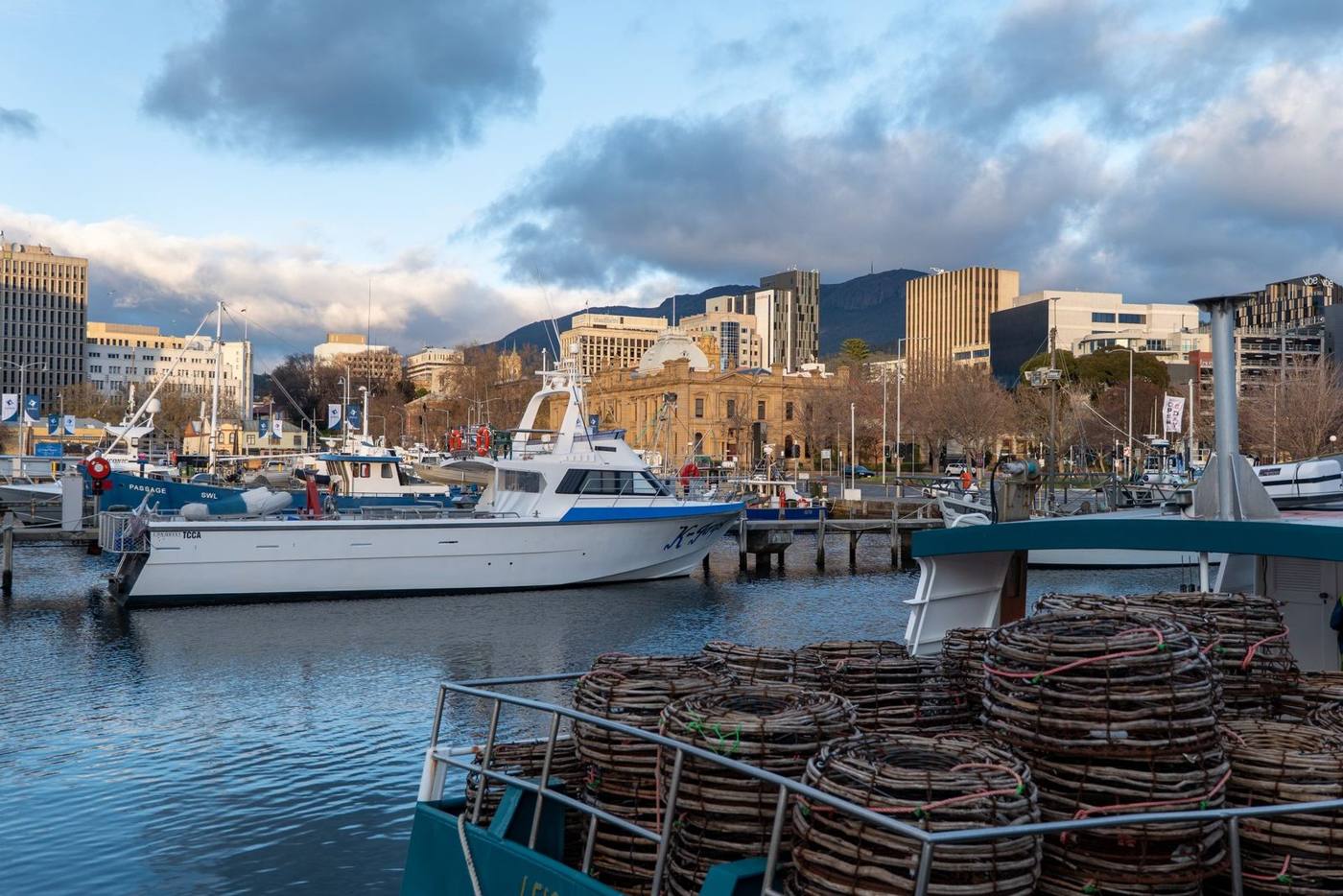
Hobart, MONA and Bruny Island
Southern Tasmania at a gentle pace: Hobart and Salamanca Market, the MONA art museum reached by ferry, Mount Wellington above the city, Bruny Island with its oysters, cheeses and cliffs, and the Huon Valley with orchards and cider.
 6 daysEasy
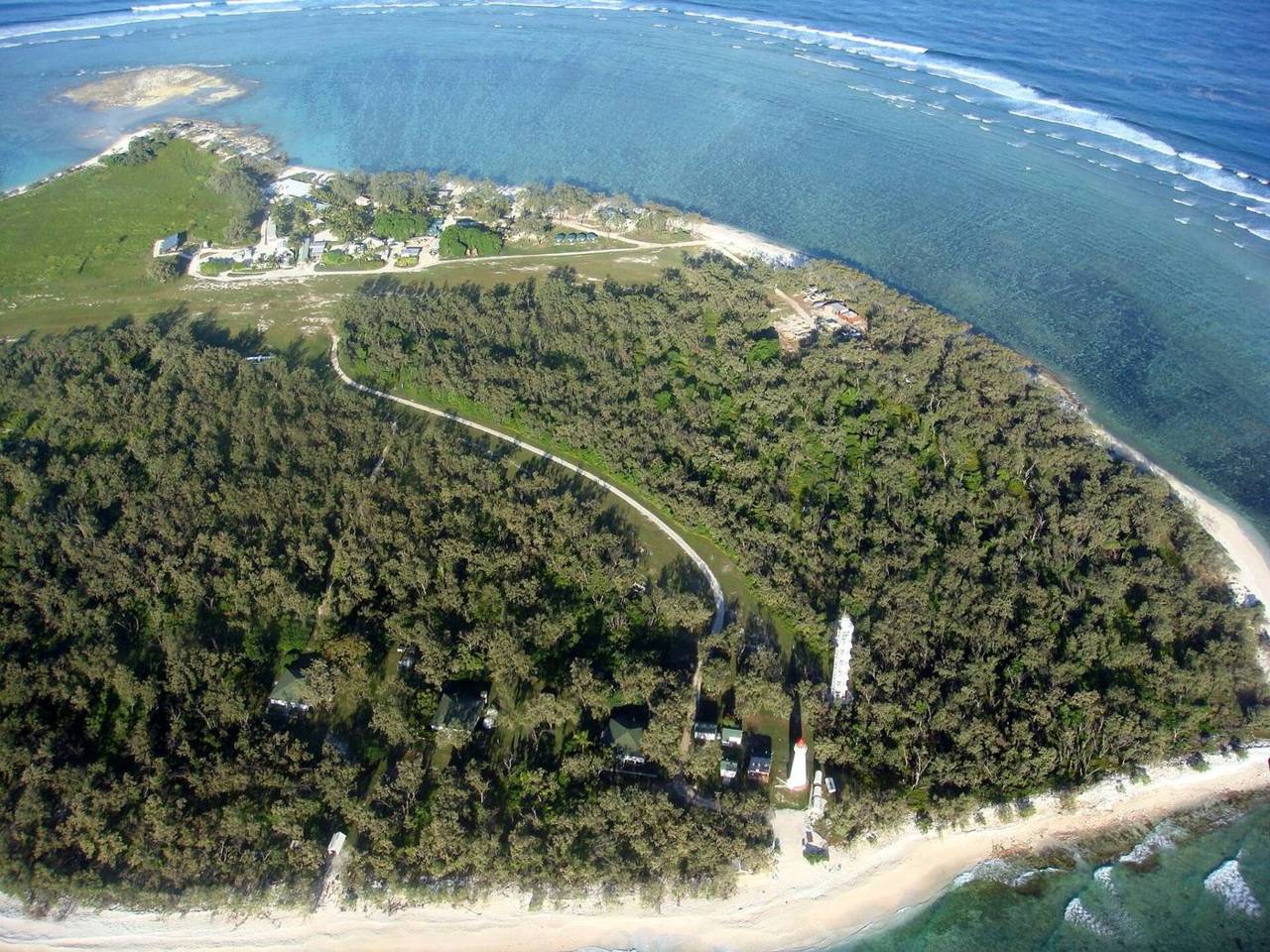
Bundaberg, turtles and Lady Elliot
The southern Great Barrier Reef, quieter than Cairns: turtles laying eggs on Mon Repos beach, the coral island of Lady Elliot with manta rays and turtles, and the towns of Agnes Water and 1770, where Captain Cook landed in Queensland.