The Iberá Wetlands in depth
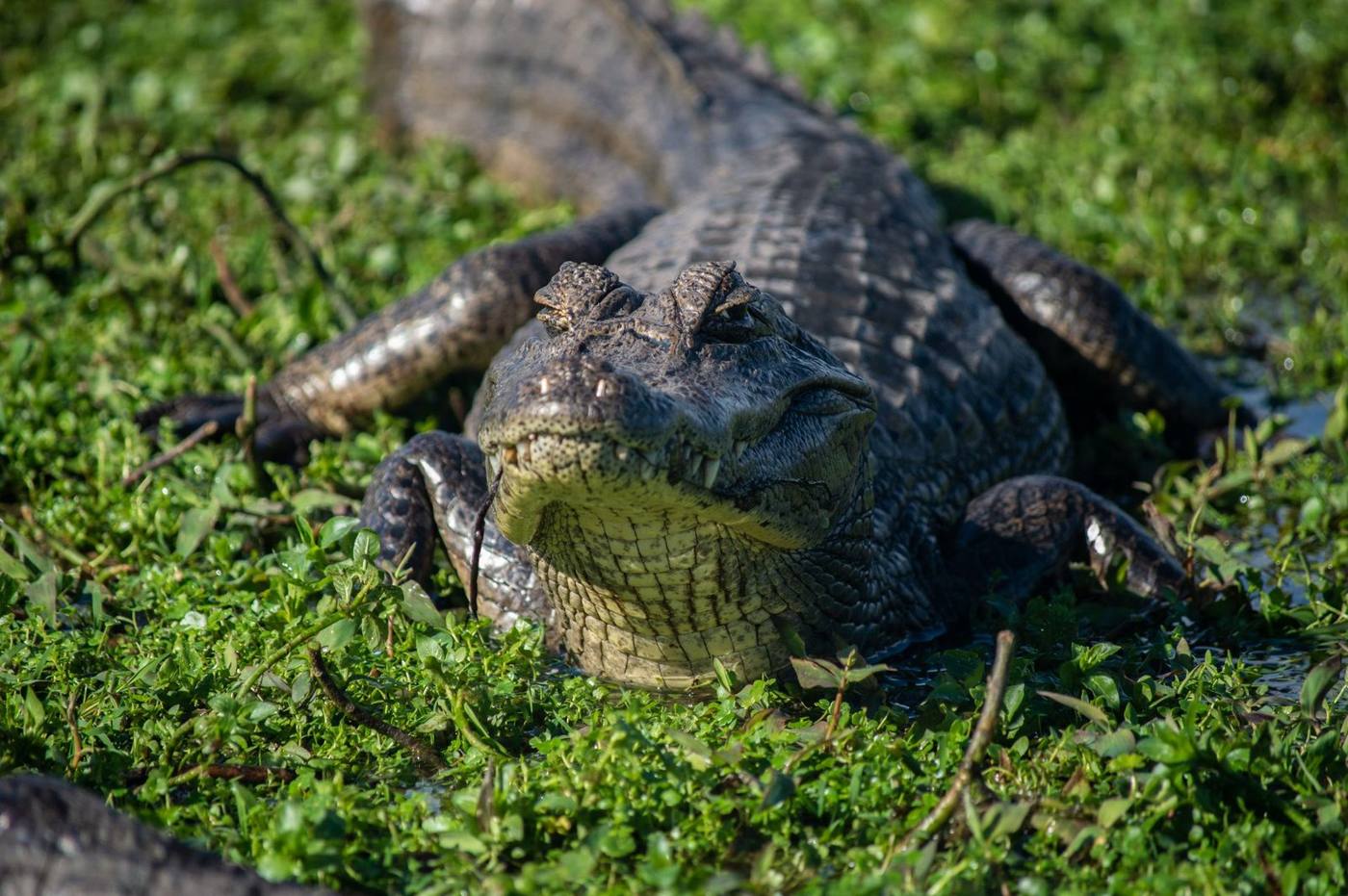
One of the world's largest wetlands, in Corrientes province: caimans, capybaras, marsh deer, hundreds of birds and the jaguars reintroduced to the park, explored by boat, on foot and on horseback from the villages of Colonia Carlos Pellegrini and San Nicolás.
- Posadas
- Colonia Carlos Pellegrini
- Laguna Iberá
- Portal San Nicolás
Day by day
- Day 1
From Posadas to Colonia Carlos Pellegrini
The Esteros del Iberá, in Corrientes province in north-eastern Argentina, are one of the largest wetlands in South America: an immense expanse of lagoons, marshes, channels and floating islands of vegetation, home to caimans, capybaras, marsh deer, howler monkeys and hundreds of bird species. In recent years it has also become one of the most important rewilding projects in the world: thanks to private foundations and the state, animals that had disappeared have been brought back, such as the giant anteater, the pampas deer, the red-and-green macaw and, since 2021, the jaguar. Since 2018 a large part of the area has been a national park. In five days it is an easy, relaxed safari, ideal before or after the Iguazú Falls.
You fly into Posadas, in Misiones province, or to the city of Corrientes. From Posadas to Colonia Carlos Pellegrini, the village on the Iberá lagoon, it is about four or five hours by road, partly unpaved. It is best to use the transfer arranged by your lodging, because after rain the dirt roads become difficult.
On the way, as you enter the Esteros, you already start seeing animals: capybaras grazing by the roadside, rheas, storks and herons in the marshes.
Colonia Carlos Pellegrini is a small, quiet village with sandy streets, on the shore of the lagoon. In the afternoon, walk to the park visitor centre, which explains the history of the area and the reintroduction project.
Practical tip: there are few cash machines in Pellegrini and they often do not work. Bring cash in pesos for small expenses and tips.
- Day 2
By boat on the Iberá lagoon among caimans and capybaras
Early in the morning, go out by boat on the Iberá lagoon with a local guide. It is the finest experience of the trip. The boat is small and quiet and moves through channels of dark, clear water, floating islands of grasses and plants called embalsados, and large stretches of water hyacinth.
The animals are everywhere and not very shy. Caimans, called yacaré here, bask on the banks or float with only their eyes above the water, a few metres from the boat. Capybaras, the largest rodents in the world, graze in groups on the islands, with their young. You will also see marsh deer, with large antlers and long legs, and a great many birds: great egrets and cocoi herons, jabiru storks, kingfishers, egrets, birds of prey and the southern screamer, a large grey bird with a very loud cry.
The guide knows the names of all the animals and plants, and tells you about life in the area: caimans and capybaras were once hunted here for their skins, and today many former hunters work as guides.
In the afternoon, after resting during the hottest hours, take a second boat trip at sunset, when the light is golden and the animals are more active. Alternatively, walk on the boardwalk over the marsh near the visitor centre.
In the evening, after dinner, some guides organise a night outing to see the caimans' eyes shine in the torchlight.
Practical tip: use repellent, a hat and sunscreen. Bring a light jacket on the boat: early in the morning it can be cool on the water.
- Day 3
On horseback with the gauchos and the howler monkey trail
In the morning, go out on horseback with the local gauchos, the countrymen who work with cattle. Here the horses are used to water and walk calmly through the marsh, with water up to their bellies, among the reeds and islands. It is a different way of approaching the animals, which are not afraid of horses: capybaras, deer and birds let you come very close. You do not need to be an experienced rider: the horses are calm and the gauchos accompany beginners.
During the morning the gauchos tell you about their life, the Guaraní culture of the region and the traditions of Corrientes, such as chamamé, a popular accordion music much loved in the province. The outing often ends with shared mate, the bitter infusion of yerba mate that Argentines drink through a metal straw from the same gourd, passing it from hand to hand.
In the afternoon, walk the forest trail near the village, called the monkey trail. Groups of black and gold howler monkeys live here: the males are black, the females and young golden. In the morning and at sunset the males give a deep, powerful call that can be heard kilometres away. Along the trail you will also see forest birds, such as woodpeckers and toucans, and lizards.
In the evening, taste the food of the region: grilled meat, river fish such as surubí and dorado, and chipá, small breads made with cheese and cassava flour.
Practical tip: for the horse ride, wear long trousers and closed shoes that can get wet.
- Day 4
The San Nicolás portal: kayaking and birdwatching
Today you visit another part of the park, the San Nicolás portal, on the northern side of the Esteros, reached by car in a couple of hours on dirt roads. The park has several entrances, called portals, each with different landscapes: here there are smaller, quieter lagoons, palm groves, grasslands and areas where some of the reintroduced animals were released.
In the morning, take a kayak trip on one of the lagoons with a guide. The kayak lets you enter narrow channels where motorboats cannot go, gliding silently close to the banks. It is the best way to watch the birds, which are extremely numerous here: more than three hundred and fifty species have been recorded in the area, including the jabiru, the great stork with a black head and red neck, ibises, roseate spoonbills and many small, colourful marsh birds.
In the afternoon, walk with the guide on the grassland and forest trails. With luck you may see the giant anteater, with its long fan-shaped tail, which was reintroduced and now breeds in the wild, or the pampas deer. The jaguar, reintroduced in another part of the park, is very hard to see: it is a solitary, nocturnal animal, and many visitors look for it without ever meeting one.
In the evening, return to Colonia Carlos Pellegrini or sleep near the portal, where there are a few camps and simple lodgings.
Practical tip: visits to the portals are best arranged with a local guide, who knows the roads and where the animals are at that time of year.
- Day 5
Return to Posadas or on to Iguazú
On the last morning, if you can, take a last short outing at dawn on the lagoon or a walk along the shore, when the sky turns colour and the birds begin to sing. It is a moment of great calm, with the sky reflected on the still water.
After breakfast, set off on the transfer towards Posadas, about four or five hours by road. On the way you cross the countryside of Corrientes and Misiones, with rice fields, grasslands, pine and eucalyptus woods and the red earth typical of the region.
From Posadas you can take a flight to Buenos Aires, or continue to the Iguazú Falls, about four or five hours north by bus or car. On the road to Iguazú, in Misiones province, there are also the ruins of the Jesuit missions of the Guaraní, such as San Ignacio Miní, a UNESCO World Heritage Site, with its large church of red sandstone decorated with baroque carvings, built in the seventeenth century by the Jesuits and the indigenous Guaraní. It is worth a stop of two or three hours.
If you prefer to head back south, from Colonia Carlos Pellegrini you can also reach the town of Mercedes and from there Buenos Aires by overnight bus.
Practical tip: Italian citizens do not need a visa for up to 90 days. Argentina asks tourists for health insurance valid for the whole stay. From December to February it is very hot and there are many mosquitoes: the best months are from April to October.
An easy and quiet safari, ideal before or after Iguazú. Roads are dirt and become difficult after rain: lodge transfers are best. The reintroduced jaguars are rarely seen. December to February is very hot, with many mosquitoes. Italians need no visa for up to 90 days; Argentina requires tourists to hold health insurance valid for the whole stay.
Before you go
- Documents and visa
- Valid passport; no visa for tourism up to 90 days for EU citizens.
- Health and vaccines
- No compulsory vaccines arriving from Europe; yellow fever is recommended for Misiones and Corrientes. In Patagonia beware of hantavirus in forests and closed huts. Emergencies: 911.
- Money and payments
- Argentine peso. Inflation changes prices often; foreign cards work almost everywhere and paying by card is usually best, keeping some cash.
- Power sockets
- Types I and C, 220 volts: you need an adapter for the angled flat-pin plugs.
- Time zone
- UTC-3 all year: Argentina does not use daylight saving time.
- Safety
- The United States rates Argentina level 1, with level 2 for Rosario. In Buenos Aires watch out for pickpockets; in the mountains and Patagonia the main risks are wind and weather. Official advice: GOV.UK.
Information checked in November 2026 for Italian and EU citizens. Rules change: always check before you travel.
Variations
In 3 days: Colonia Carlos Pellegrini only, with the boat on the lagoon, the monkey walk and the horse ride.
In 9 days: after Iberá, visit the Jesuit missions of San Ignacio and continue to the Iguazú Falls, with two days on the Argentine and Brazilian sides.
Frequently asked questions
When is the best time to go?
From April to October, with mild temperatures and fewer mosquitoes. In winter, from June to August, mornings can be cool. From December to February it is very hot.
Will I see a jaguar?
Very rarely. The reintroduced jaguars live in specific areas and are solitary, nocturnal animals. Caimans, capybaras, marsh deer and birds, on the other hand, are easy to see and close up.
What documents do I need?
A valid passport. Italian citizens do not need a visa for up to 90 days; health insurance valid for the whole stay is required.
Indicative itinerary written by World Atlas. Before booking, check timetables, seasonal openings, documents and safety.
 6 daysModerate
Jujuy: Iruya and the Hornocal
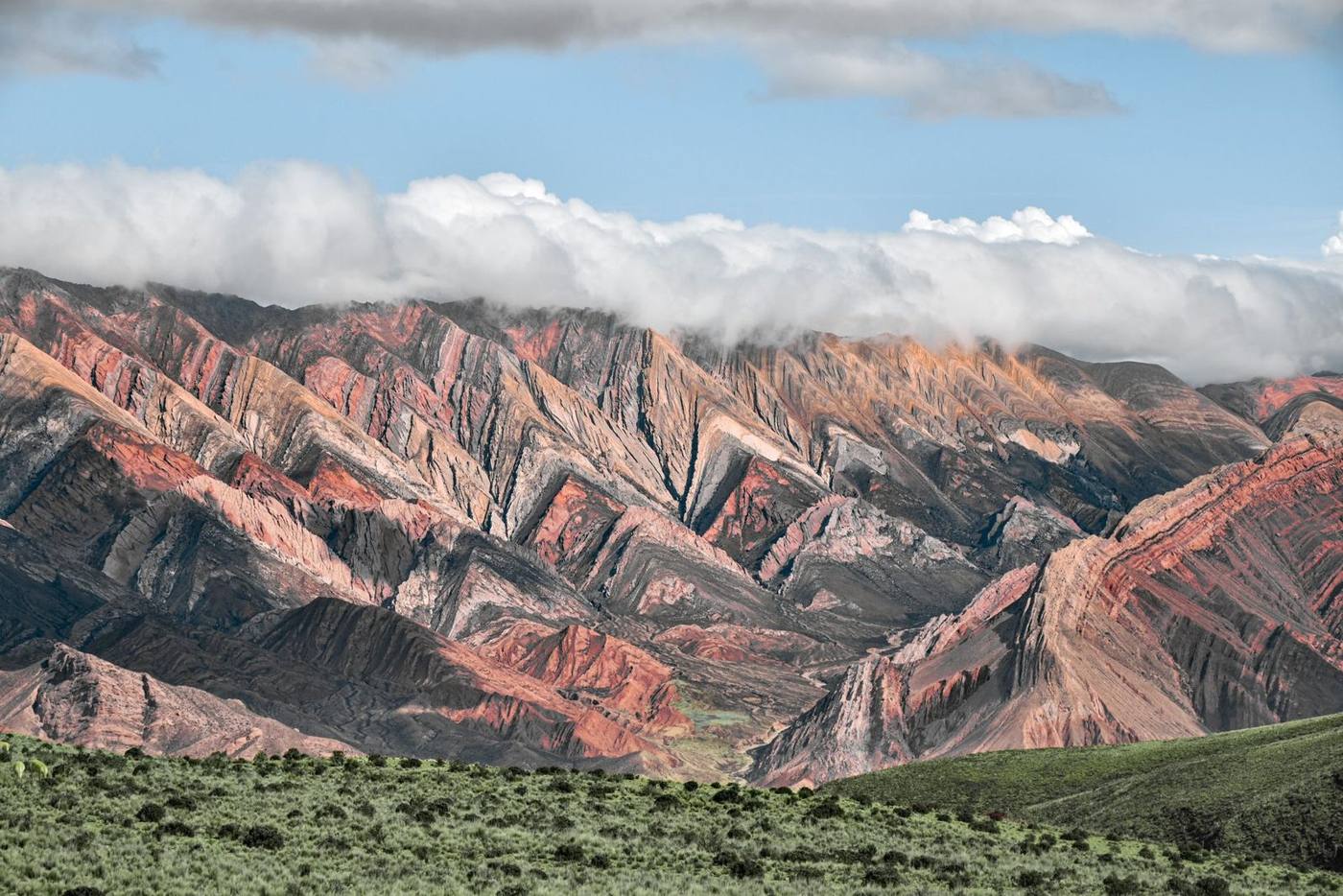
The most authentic Andean North: the Quebrada de Humahuaca with the Hill of Seven Colours, the fourteen-coloured mountain of the Hornocal at 4,350 metres, the village of Iruya clinging to a remote valley and the Salinas Grandes.
 6 daysModerate
Neuquén: Lanín and Villa Pehuenia
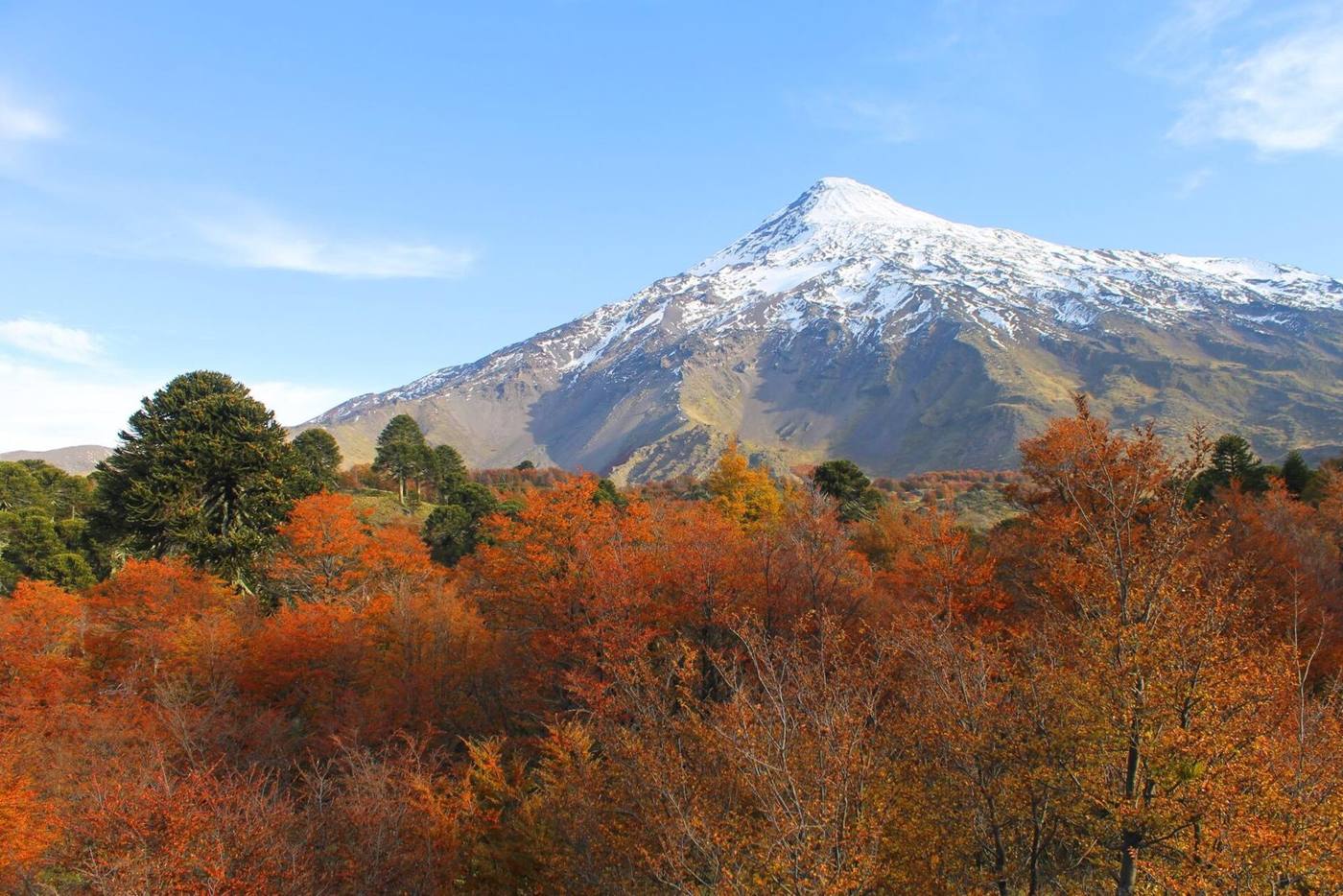
The Patagonia of monkey-puzzle trees, prehistoric trees sacred to the Mapuche people: the Lanín volcano, a perfect snowy cone above lakes and forests, Junín de los Andes with its fly fishing, and the Aluminé and Moquehue lakes around the village of Villa Pehuenia.
 5 daysEasy
Buenos Aires in depth
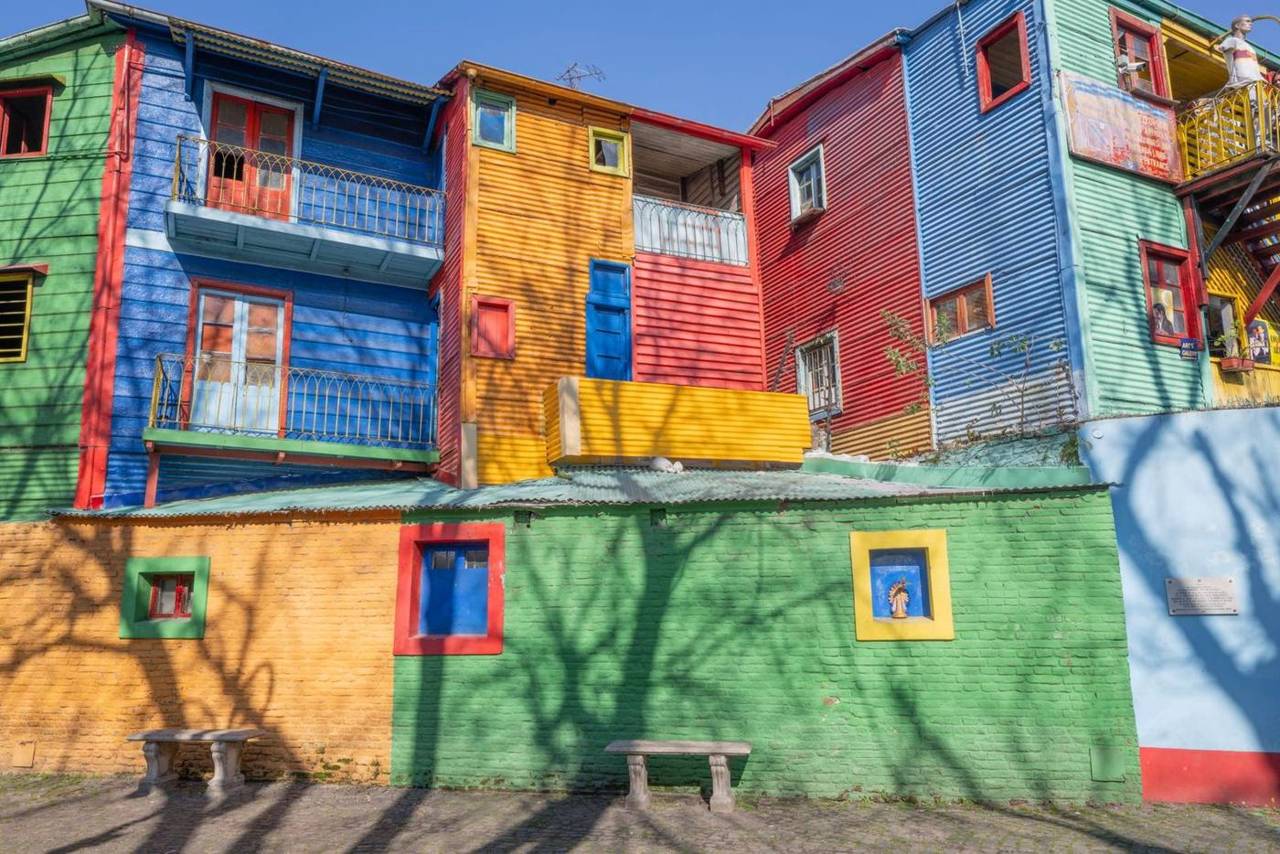
The tango capital at a gentle pace: San Telmo and its Sunday fair, the colours of La Boca, Recoleta cemetery, the Teatro Colón, historic cafés, Palermo with its parks and restaurants, an evening milonga and the parrillas serving the best beef.