Ancient Albania: from Apollonia to Lake Ohrid
Roman Durrës, Apollonia and Butrint, a boat to Sazan island and a finale on Lake Ohrid, with two days by the sea at Dhërmi.
- Tirana
- Durazzo
- Apollonia
- Valona
- Dhërmi
- Butrinto
- Gjirokastra
- Berat
- Ocrida
Day by day
- Day 1
From Tirana to Durrës, the Roman city by the sea
This trip follows the traces of the Greeks, Romans and Byzantines in Albania: Durrës, Apollonia, the monastery of Ardenica, the island of Sazan, Butrint, the stone towns of Gjirokastër and Berat, as far as Lake Ohrid. In between there are two days by the sea at Dhërmi. You travel by rental car or with a driver, with no long walks.
Before you go: Italian citizens can enter Albania with an electronic identity card or a passport, valid for at least three months after leaving the country, without a visa for tourist stays. Italian paper identity cards are no longer valid for travel abroad from 3 August 2026. Other nationalities should check their own rules. The United States rates Albania at level 2 because of crime, with no areas to avoid. If you want to cross to the Macedonian side of Lake Ohrid, North Macedonia also accepts the identity card of European Union citizens.
From Tirana airport to Durrës takes less than an hour. In the afternoon, visit the Roman amphitheatre, built in the second century AD and hidden for centuries under houses: inside there is also a small chapel with Byzantine mosaics. Then walk to the Byzantine forum, a round square with columns, and to the Archaeological Museum near the sea. Check prices and times.
At sunset, climb the Venetian tower at the end of the walls, and have dinner by the harbour with fish.
Overnight in Durrës.
Practical tip: in Durrës, leave the car in a car park outside the old town and explore on foot, because the streets near the port are narrow and busy.
- Day 2
The Karavasta lagoon, Ardenica and Apollonia
In the morning, head south to Divjakë, about an hour and a half. Here begins the Divjakë-Karavasta National Park, with a pine forest along the sea and the largest lagoon in Albania. It is one of the few places in Europe where the Dalmatian pelican nests: from the observation tower, with binoculars, you can watch it fishing among the reeds. Check prices and times.
Then drive to the monastery of Ardenica, on a hill among olive trees. It is an Orthodox monastery of Byzantine origin, with a church full of frescoes and a carved wooden iconostasis. According to tradition, Skanderbeg married Donika Arianiti here in 1451.
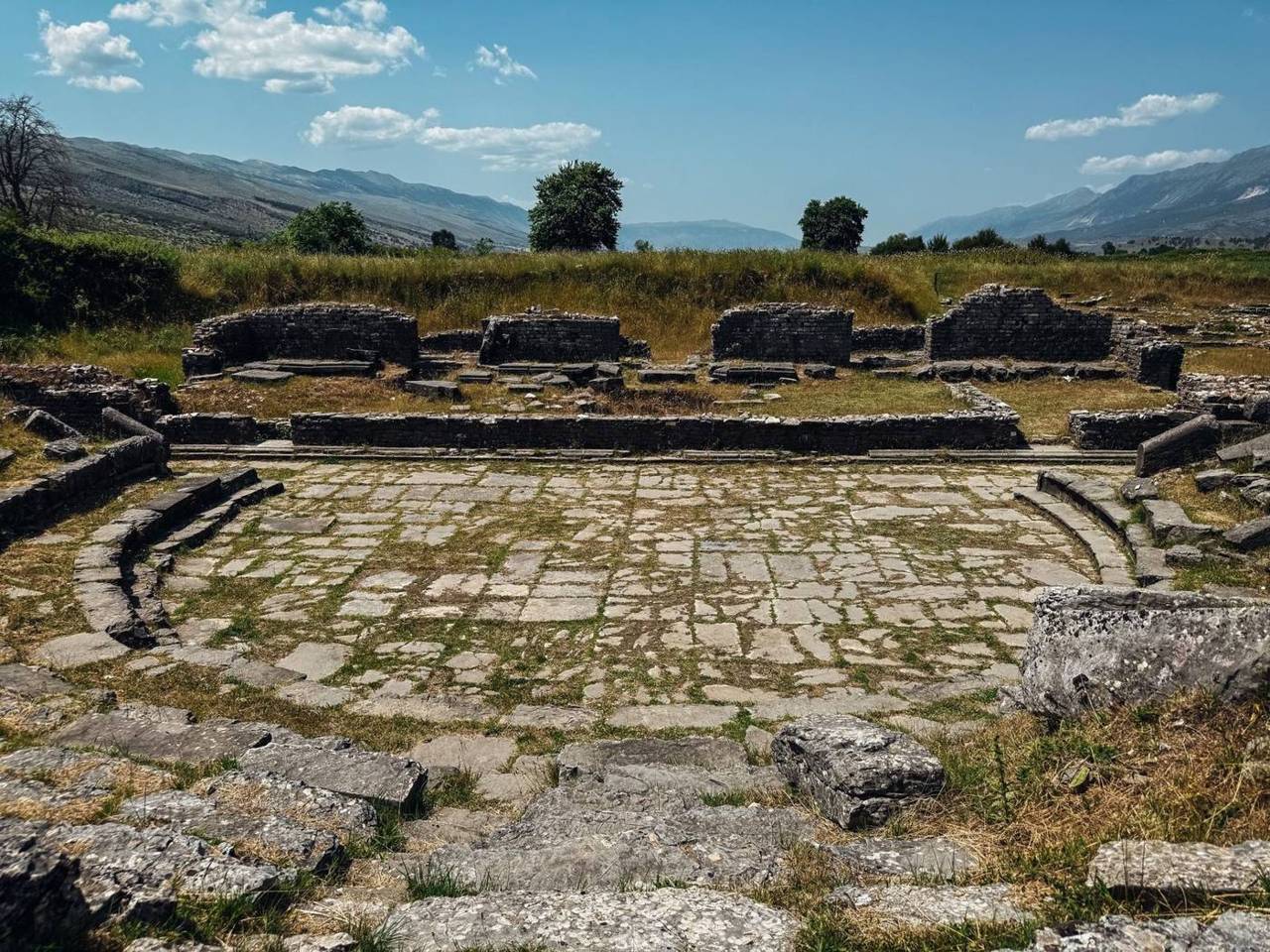
In the afternoon you reach Apollonia, near Fier. The city was founded by Greek colonists from Corinth and Corfu and later became a famous school in Roman times. Start at the monument of the Agonothetes, the columned facade partly rebuilt, then the odeon, the long portico and the street climbing the hill. In the monastery of Saint Mary, in the middle of the site, there is a museum with statues found during the excavations. Check prices and times.
In the evening, carry on to Vlorë, about an hour away.
Overnight in Vlorë.
Practical tip: go to Karavasta early in the morning, when the birds are most active and the afternoon wind has not yet ruffled the lagoon.
- Day 3
By boat to the island of Sazan, then towards the riviera
In the morning, go to the port of Vlorë for a boat trip to the island of Sazan, at the entrance of the bay. For decades the island was a closed military base, first Italian and then Albanian, and you can still see abandoned barracks, tunnels and bunkers in the scrub. Boats leave almost every day in the warm season, often with a swimming stop on the shores of the Karaburun peninsula, where the water is clear and there are no roads. Check prices and times.
Only land on the island with the guide, walk on the marked paths and do not go into collapsed buildings.
You are back in port in the early afternoon. After lunch, drive south on the panoramic road: you pass Orikum, then the road climbs through the pines of Llogara National Park to the pass. From above, the riviera opens up below you, with the sea in different colours and the mountains plunging steeply.
Wind down the hairpins to the coast as far as Dhërmi, where you will spend the next three nights.
In the evening, taste the olives and cheese of the riviera, with wood-fired bread.
Overnight in Dhërmi, for three nights.
Practical tip: for the Sazan trip, bring your swimsuit, sun cream and an identity document, and choose a day without wind, because boats do not sail in rough seas.
- Day 4
A slow day in Dhërmi
Today you do not need the car. Dhërmi has two sides: the old village on the hill, and the beaches below, with clear water and white shingle.
In the morning, climb to the upper village and wander among the stone houses, the steps and the small Orthodox churches. Many have old frescoes, but they are often locked: ask in the village if someone has the key. From the highest points of the village you see the whole bay, with the blue of the sea below the olive groves.
Then go down to the beach for the rest of the day. If you want some exercise, walk along the coast towards Drymades beach, to the north, or rent a kayak to reach the small caves in the cliffs. In summer little boats also leave for the nearby coves.
In the afternoon, as the sun goes down, have a coffee in the shade of the olive trees and look at the Ceraunian Mountains, which close off the coast behind you.
In the evening, try grilled fish with seasonal vegetables and a glass of local wine.
Overnight in Dhërmi.
Practical tip: in July and August Dhërmi's beaches fill with music and umbrellas; if you want peace, go down to the sea early and look for the coves furthest from the centre.
- Day 5
Himarë, its castle and nearby beaches
In the morning, drive to Himarë, about twenty minutes away. First climb to the old village, inside the castle walls, on the hill above the town. The walls date from different periods, from antiquity to Ottoman times, and inside there are stone houses, churches and a view of the sea. It is a quiet place, where some families still live, and many people here also speak Greek.
Then go down to the new town, with its seafront and small harbour. For a swim you can choose Livadh beach, long and shingly, just north of the centre, or go further south to Porto Palermo, the bay with Ali Pasha's small fortress. In the same bay you will also see the entrance of a submarine tunnel cut into the rock during the Cold War, now disused: look at it only from outside, because it is still a military area.
In the afternoon, if you feel like a little walk, go to Gjipe, the beach at the end of the canyon between Dhërmi and Himarë: you leave the car above and walk down in about half an hour.
In the evening, return to Dhërmi for your last dinner on the riviera. Try vegetable byrek and mussels.
Overnight in Dhërmi.
Practical tip: in the old town of Himarë the streets are narrow and steep; leave the car below and walk up.
- Day 6
Butrint, the city in the woods, and the sea at Ksamil
Set off early heading south: from Dhërmi to Butrint it is about two and a half hours of bends along the coast. You arrive before the heat builds.
Butrint is the most complete site in Albania, because here you can read all the periods one above the other: the Greek sanctuary of Asclepius, the theatre, the Roman baths, the early Christian basilicas, the Byzantine walls, the Venetian castle and an Ottoman fortress at the mouth of the channel. Everything lies in a dense wood, on the shore of a lake. The site has been a UNESCO World Heritage Site since 1992. Check prices and times.
Do not miss the baptistery, with its great mosaic floor, although it is almost always covered with sand to protect it; in the castle museum you find the statues and coins from the site.
For the full tour, allow at least two and a half hours, with a rest in the shade near the lake.
In the afternoon, go to Ksamil, a few minutes away, for a swim. The coast is low and jagged, with turquoise water and small islets a few strokes away.
In the evening, have dinner in Sarandë, on the seafront.
Overnight in Ksamil or Sarandë.
Practical tip: at the Vivari channel, in front of Butrint, there is a small cable ferry for cars heading towards the Greek border; you do not need it for the visit, but be careful not to take the wrong road.
- Day 7
Gjirokastër, then the road to Berat
In the morning, go to Gjirokastër, about an hour from Sarandë. The Ottoman stone town climbs the side of the mountain above the Drino valley, with grey slate roofs and houses as tall as towers.
Focus on the castle and the bazaar. The castle is huge, with vaulted galleries, cannons and a museum on the history of the town; from time to time it hosts the national folk festival. Then go down to the bazaar, with its stone shops, embroidery and wooden objects, and visit the Zekate House, one of the largest fortified houses, on the hill opposite. Check prices and times.
Have lunch with shapkat, a pie of cornmeal and greens, or with qifqi.
In the afternoon, set off north again. The road follows the Drino and then the Vjosa, passes Tepelenë and Fier and reaches Berat after about four hours. It is a long stretch, but the landscape is varied, with gorges, bridges and mountains.
You arrive in Berat in the evening, when the windows of the houses on the hill light up.
Overnight in Berat.
Practical tip: in Gjirokastër the streets in the centre are of polished cobbles and very steep; leave the car below and wear closed shoes.
- Day 8
Berat, Elbasan and the Albanian shore of Ohrid
Today is a full day, so start early. Before leaving Berat, climb to the citadel and visit the Onufri Museum, with its brightly coloured icons, then look down at the houses of Mangalem and Gorica, facing each other across the river. Check prices and times.
Then drive north east to Elbasan, about two hours. The old town lies inside the walls of an Ottoman fortress built on the remains of a Roman fort along the Via Egnatia, the great road that linked Durrës with Constantinople. Take a walk inside the walls and have a coffee in the square.
In the afternoon, continue to Lake Ohrid, one of the oldest lakes in Europe and a UNESCO World Heritage Site. On the Albanian shore, stop at Lin, a village on a small peninsula, with the remains of an early Christian basilica and its mosaics. Then you reach Pogradec, the little town on the lake.
If you have time and documents, you can cross the border at Tushemisht and visit the monastery of Saint Naum, on the Macedonian side, with its Byzantine church and the springs that feed the lake.
In the evening, have dinner on the lakeside with lake fish and baked beans, fasule në tavë, a home dish throughout the region.
Overnight in Pogradec.
Practical tip: if you cross into North Macedonia by car, ask the rental company for permission first and check that the insurance is valid there too.
- Day 9
Tirana, the pyramid and your flight
From Pogradec to Tirana takes about two and a half hours, through Elbasan again. Leave after breakfast to have a few hours in the city before your flight.
Start at Skanderbeg Square and the National History Museum, with the large mosaic on its facade: inside, the rooms follow the history of the country from prehistory to the twentieth century, with many objects from the sites you have seen in recent days. Check prices and times. Then walk to the Pyramid, built as a museum to Enver Hoxha and now restored and open, with outside steps up to the roof and youth centres inside.
Then go to the airport, about half an hour away.
In nine days you have seen ancient Albania and its sea: the amphitheatre of Durrës, the pelicans of Karavasta, Ardenica, Apollonia, the military island of Sazan, Dhërmi and Himarë, Butrint, Gjirokastër, Berat, Elbasan and Lake Ohrid. It is the right trip for a first visit to Albania, with archaeology and beaches and no long walks. If you can, add a night on the lake: the last two days are very full.
When to go: the best months are April, May and June, and September. In spring the sites are green and there are few people, but the sea is cool. In September the sea is still warm and the beaches are quiet. In July and August it is very hot at the archaeological sites.
Practical tip: before you leave, buy something to take home: olive oil from the riviera, raki from Berat or a hand-painted icon.
This is the right first trip for anyone new to Albania who wants archaeology and the sea together without hiking. Apollonia and Sazan, which short tours skip, are the highlights. The drawback is that it partly repeats the riviera and Ottoman towns, and the last two days are crammed: if you can, add a night on the lake. AnM also runs the same route in Discovery (ages 18 to 40) and Family versions.
Before you go
- Documents and visa
- Electronic identity card or passport for EU citizens, valid for at least three months after leaving Albania. Italian paper identity cards are no longer valid for travel abroad from 3 August 2026. No visa is needed for tourist stays of up to 90 days.
- Health and vaccines
- No compulsory vaccinations. Outside Tirana medical facilities are limited: you need insurance covering medical costs and repatriation. Drink sealed bottled water. Emergencies: 127 ambulance, 129 police, 128 fire.
- Money and payments
- Albanian lek. Cash machines and cards work mainly in cities and tourist areas; in villages and small shops you need cash.
- Power sockets
- Types C and F, 230 volts: you need an adapter for British plugs.
- Time zone
- UTC+1, UTC+2 in summer, one hour ahead of the UK.
- Safety
- The United States rates Albania at level 2 because of crime, with no areas to avoid. The UK advises staying away from demonstrations in central Tirana. In winter mountain roads can be blocked by snow. Official advice: GOV.UK.
Information checked in November 2026 for Italian and EU citizens. Rules change: always check before you travel.
Variations
In 6 days: Durrës, Apollonia, Sazan, Dhërmi and Butrint, returning from Sarandë to Tirana.
In 11 days: add a night in Ohrid, on the Macedonian side of the lake, and a day in Kruja before your flight.
Frequently asked questions
What document do I need for Albania?
Italian citizens can enter with an electronic identity card or a passport, valid for at least three months after leaving, without a visa for tourist stays of up to 90 days. Other nationalities should check their own rules.
Can you visit the island of Sazan?
Yes, in the warm season guided boat trips leave from the port of Vlorë, often combined with a stop on the Karaburun peninsula. Boats do not sail in rough seas, so keep a spare day.
Can you cross to the Macedonian side of Lake Ohrid?
Yes, from the Tushemisht crossing near Pogradec you reach the monastery of Saint Naum in a few minutes. North Macedonia accepts the identity card of European Union citizens; with a rental car you need the company's permission.
Indicative itinerary written by World Atlas. Before booking, check timetables, seasonal openings, documents and safety.
 13 daysModerate
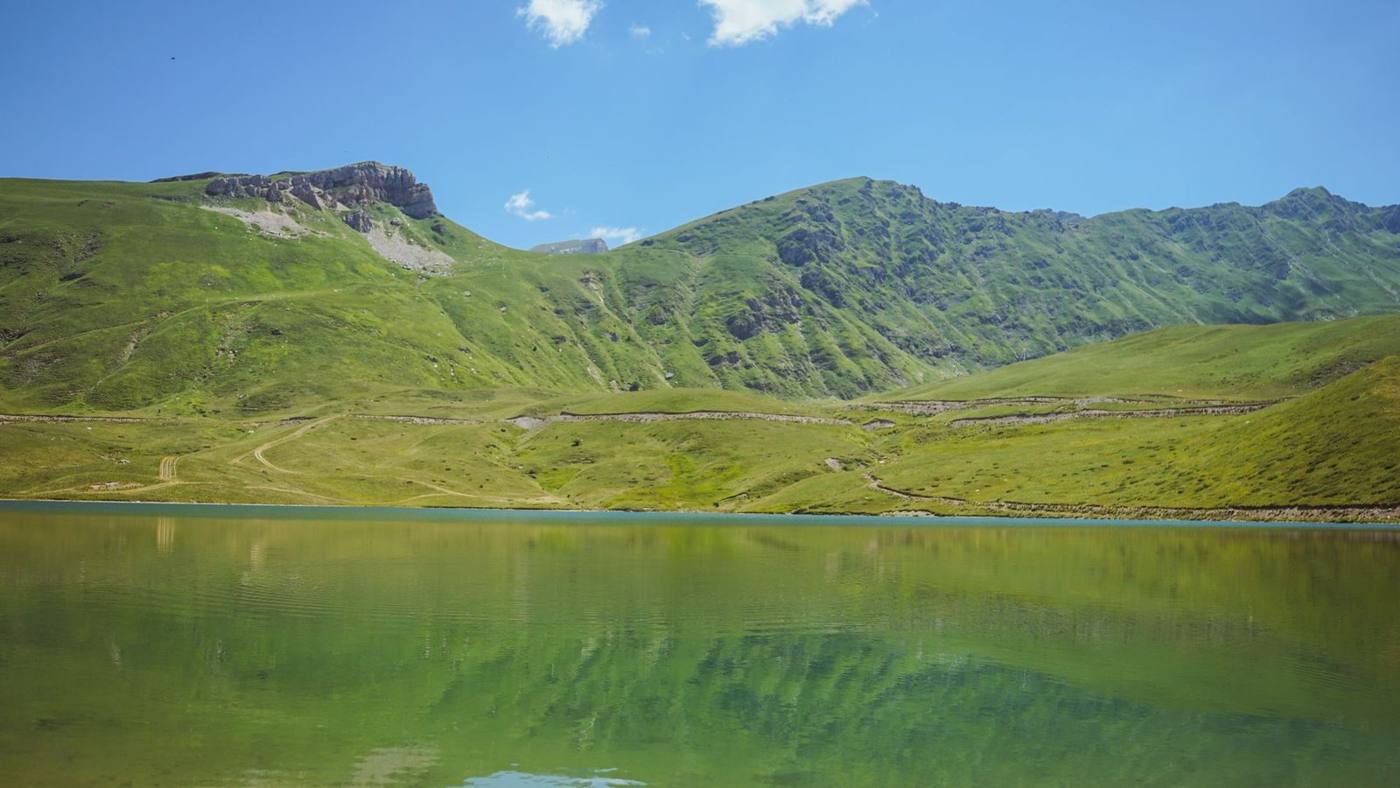
By motorbike through inland Albania: Dibër and the Drin valley
A motorbike raid far from the coast, on mountain roads between Burrel, Peshkopi and the Drin river, coming back through Shkodër.
 7 daysModerate
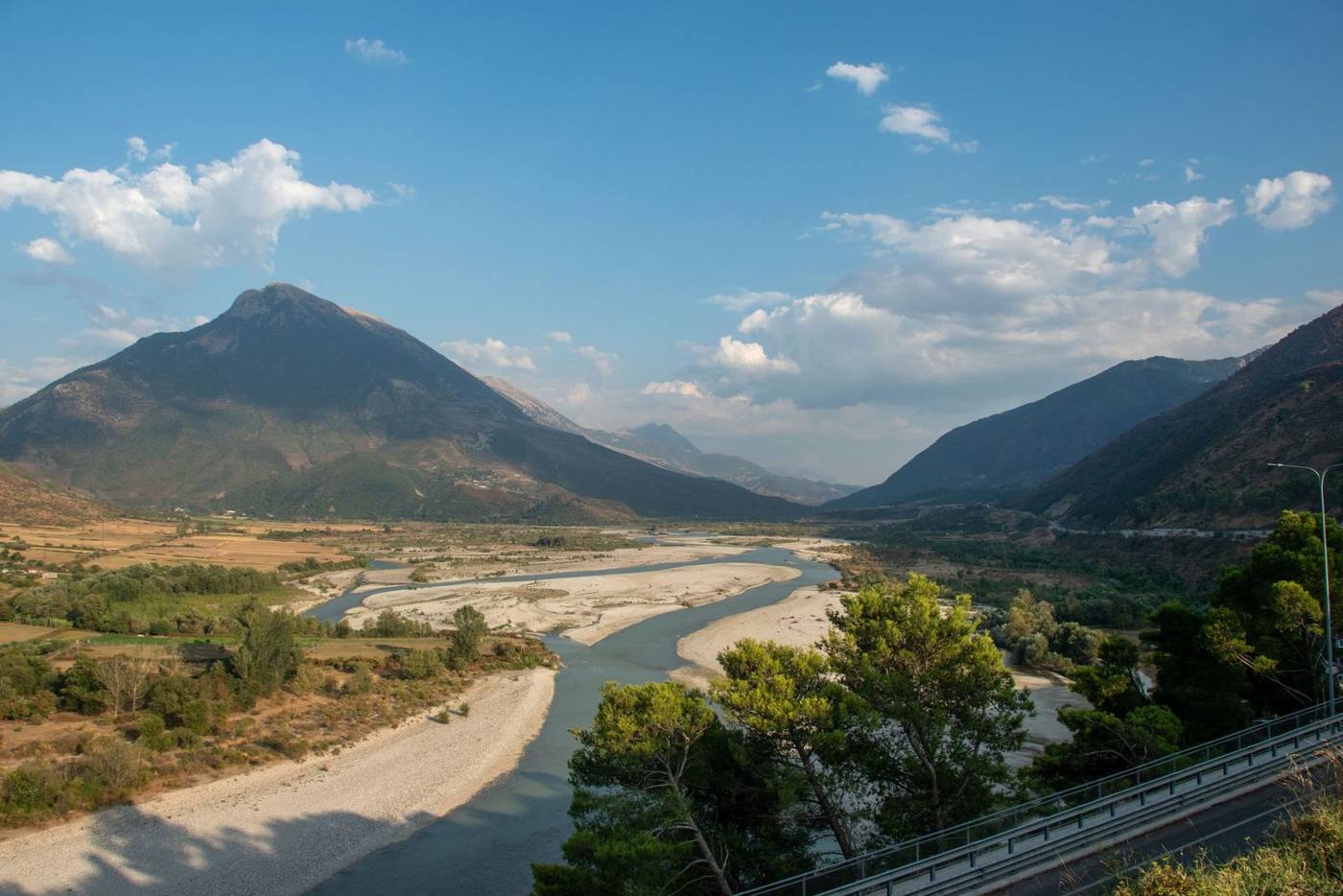
The Vjosa and Përmet, the wild river
Rafting in the Langarica canyon, the Benja hot springs, the villages of Zagoria and the Vjosa delta, in Europe's first wild river national park.
 6 daysEasy
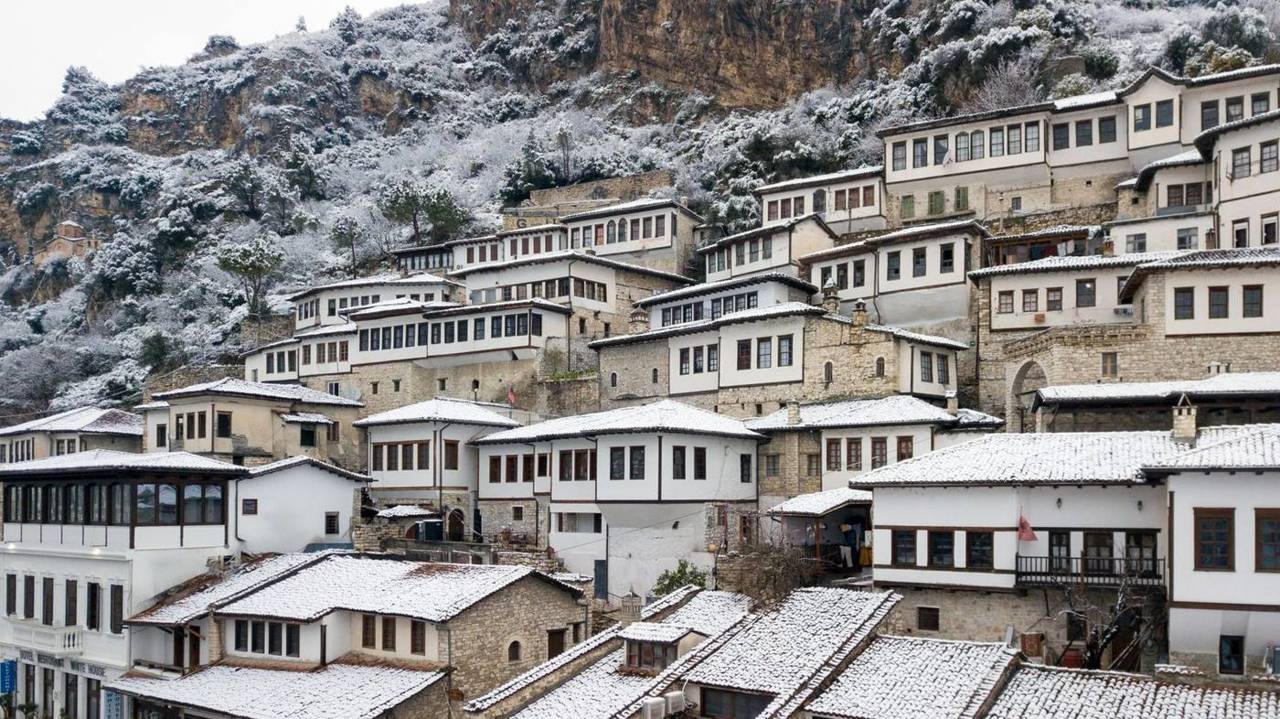
Albania in winter: Tirana, Berat and Korçë
A winter break in the towns, between Tirana's bunker museums, the white houses of Berat and the breweries and churches of snowy Korçë.