Albania in winter: Tirana, Berat and Korçë
A winter break in the towns, between Tirana's bunker museums, the white houses of Berat and the breweries and churches of snowy Korçë.
- Tirana
- Kruja
- Berat
- Elbasan
- Coriza
- Voskopojë
- Pogradec
Day by day
- Day 1
Arrival in Tirana and an evening in Blloku
This trip is a winter break in the cities of Albania: Tirana with its bunkers turned into museums, Kruja and Skanderbeg's castle, Berat with its white houses, Elbasan, Korçë and the mountain village of Voskopojë, as far as Lake Ohrid. You travel by rental car or with a driver.
Before you go: Italian citizens can enter Albania with an electronic identity card or a passport, valid for at least three months after leaving the country, without a visa for tourist stays. Italian paper identity cards are no longer valid for travel abroad from 3 August 2026. Other nationalities should check their own rules. The US government rates Albania at level 2 because of crime, with no areas to avoid; stay away from demonstrations in central Tirana.
You land at Tirana airport, about half an hour from the centre. Drop your bags and walk to Skanderbeg Square, the capital's great pedestrian square, with the Et'hem Bey Mosque, the clock tower and the National History Museum with the large mosaic on its facade.
At sunset, walk to Blloku, the district where the Communist Party leaders lived under the regime and ordinary citizens were not allowed in. Today it is the liveliest part of the city, with cafes, bars and the villa where the dictator Enver Hoxha lived.
In the evening, have dinner with Albanian dishes: tavë kosi, lamb baked with yoghurt, byrek, filled pastry, and fërgesë, peppers and cheese cooked in an earthenware dish.
Overnight in Tirana, for two nights.
Practical tip: take out some lek as soon as you arrive, because outside the cities many places only accept cash.
- Day 2
Tirana's bunkers and Kruja castle
Today you discover Albania's communist past and then go up to Kruja, the town of the national hero.
In the morning, visit Bunk'Art 1, on the eastern edge of Tirana: it is a huge nuclear shelter dug into the hill in the 1970s for the dictator and the government, with dozens of rooms on several floors. Today it is a museum on twentieth-century Albanian history and on daily life under the regime. Check prices and times.
Return to the centre and visit Bunk'Art 2, near Skanderbeg Square, the bunker of the Interior Ministry, devoted to the political police. Then go to the House of Leaves, the museum of secret surveillance, in a building where the regime's police recorded and spied on citizens. The three visits explain well why, under the regime, the country built thousands of small concrete bunkers, which you will still see along the roads.
In the afternoon, drive north to Kruja, about an hour away, on a hill overlooking the plain and the sea. Here George Kastrioti Skanderbeg held out against the Ottomans in the fifteenth century. Go up to the castle and visit the museum devoted to him and the ethnographic museum, in a traditional house. Check prices and times.
Then walk down into the old bazaar, a stone street with wooden roofs and workshops selling carpets, copperware and felt.
In the evening, return to Tirana for dinner.
Overnight in Tirana.
Practical tip: Bunk'Art 1 is cold and damp even in summer; in winter, keep your jacket on for the whole visit.
- Day 3
Berat, the city of a thousand windows
Today you visit one of the most beautiful towns in the Balkans, without the summer crowds.
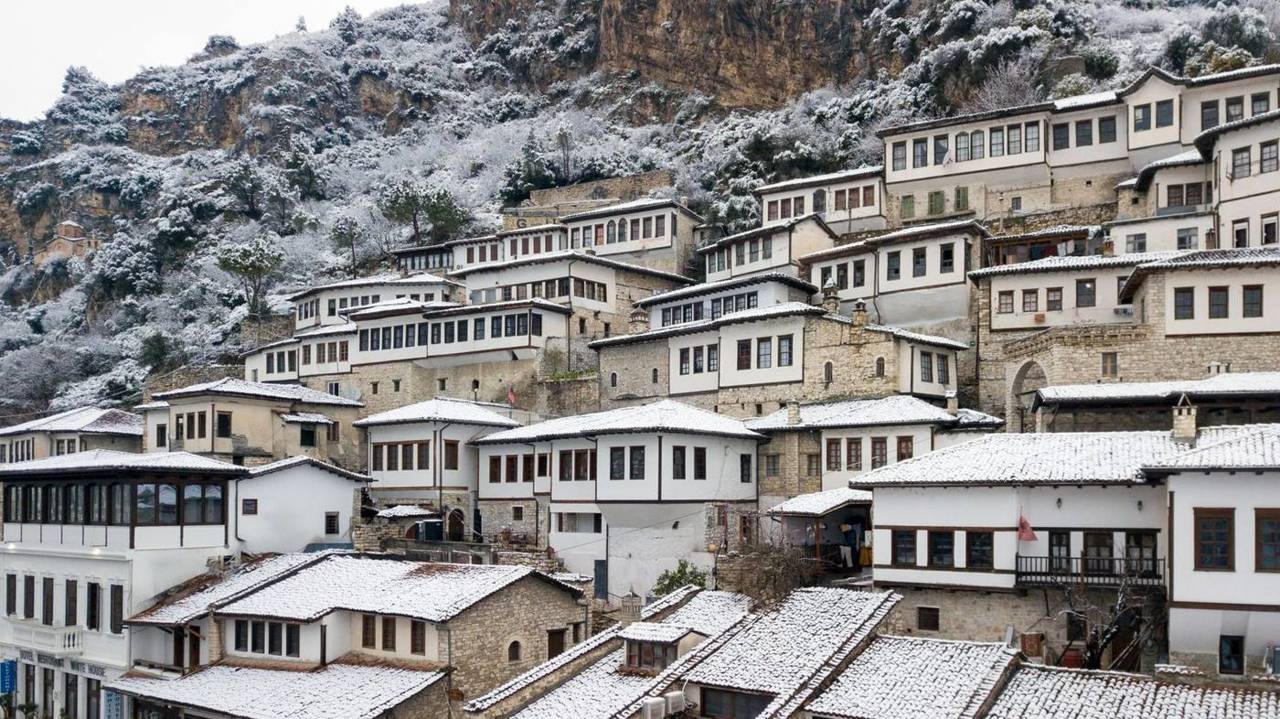
In the morning, head south to Berat, about two and a half hours from Tirana. Berat is a UNESCO World Heritage Site together with Gjirokastër, and it is called the city of a thousand windows for its white Ottoman houses that climb one above the other up the hill, with their windows facing the Osum river.
First go up to the castle, which is still inhabited: inside the walls there are houses, stone lanes and small Byzantine churches. Visit the Onufri Museum, in the Church of the Dormition, with icons by the painter Onufri, who lived in the sixteenth century and is famous for a red all of his own, and with a carved wooden iconostasis. Check prices and times. From the top of the walls the view takes in the valley and Mount Tomorr, often covered in snow in winter.
In the afternoon, walk down into the Mangalem quarter, below the castle, among mosques and Ottoman houses. Cross the stone bridge over the Osum to Gorica, the Christian quarter on the other bank, from where you see the facade of a thousand windows.
In the evening, stroll along the riverside, where locals take their evening walk even in winter, and then have dinner with Berat dishes, such as grilled meats, stuffed vegetables and local cheese.
Overnight in Berat, in an Ottoman house turned into a guesthouse.
Practical tip: the castle streets are paved with smooth stone and in winter, with rain or ice, they are very slippery; wear shoes with soles that grip.
- Day 4
Elbasan and the climb to Korçë
Today you cross central Albania and climb towards the mountains of the south-east.
In the morning, drive north-east to Elbasan, about an hour and a half from Berat. In the centre of the town stand the castle walls, built by the Ottomans in the fifteenth century on the remains of a Roman fort along the Via Egnatia, the ancient road that linked the Adriatic to Constantinople. Walk inside the walls, among the low houses, the clock tower and the Orthodox Church of Saint Mary. Check times.
Then take the road that climbs the Shkumbin valley towards the border with North Macedonia, crosses the pass and drops towards Lake Ohrid, before reaching Korçë, about three hours in all. In snow, drive slowly and check the road conditions beforehand.
Korçë, at about 850 metres, is the most elegant town in the south-east, with tree-lined avenues, early twentieth-century townhouses and a strong tradition of cafes, music and serenades. In the afternoon, visit the large Orthodox Cathedral of the Resurrection and the National Museum of Medieval Art, with a rich collection of icons. Check prices and times.
At sunset, stroll through the restored old bazaar, with its stone houses and small squares.
In the evening, have dinner with lakror, the savoury pie of Korçë, and taste the town's beer, brewed here for almost a century.
Overnight in Korçë, for two nights.
Practical tip: in winter your rental car must have winter tyres or carry snow chains; ask clearly when you book.
- Day 5
Voskopojë and Lake Ohrid at Pogradec
Today you visit a mountain village with frescoed churches and go down to Lake Ohrid for lunch.
In the morning, drive to Voskopojë, about half an hour from Korçë, at more than a thousand metres, often under snow from December to February. In the eighteenth century Voskopojë was one of the richest towns in the Balkans, a centre of Aromanian merchants with schools, a printing press and dozens of churches. It was later looted and destroyed several times, and today it is a small village among the woods.
Walk among the churches that remain, such as Saint Nicholas, covered inside and out with eighteenth-century frescoes, with scenes from the Bible and rows of saints. Some are locked: ask in the village who has the keys and leave a small donation. Check times.
Around midday, drive down to Pogradec, about an hour away, on the Albanian shore of Lake Ohrid, one of the oldest lakes in Europe, a UNESCO World Heritage Site together with the Macedonian side. In winter the lakefront is quiet and the clear water reflects the snowy mountains.
Have lunch with fish from the lake and walk along the shore. If you have time, continue to the village of Lin, on a small peninsula, with the remains of an early Christian basilica with mosaics. Check times.
In the afternoon, return to Korçë and in the evening join the stroll along the main avenue, with families out and the cafes full.
Overnight in Korçë.
Practical tip: the churches of Voskopojë have neither heating nor lights; bring a small torch to see the frescoes properly.
- Day 6
Return to Tirana and flight
Today you leave Albania.
In the morning, before setting off, have breakfast in a Korçë cafe with a warm byrek and a Turkish coffee, still widely drunk in the town. If there is time, walk once more through the old bazaar or go up the hill above the town for the view over the roofs and the mountains.
Then drive to Tirana, about three and a half to four hours, through the Shkumbin valley and Elbasan. Stop along the way for a break and a last plate of grilled meat. Return the car at the airport and take your flight home.
In these six days you have seen the Albania of its towns in winter: the bunkers and memory museums of Tirana, Skanderbeg's castle at Kruja, the white houses and Onufri's icons in Berat, the walls of Elbasan, the avenues, churches and bazaar of Korçë, the frescoes of Voskopojë in the snow and Lake Ohrid at Pogradec. It is a short trip, often with cheap flights and without the beach crowds.
When to go: this trip is designed for December to March, for a long weekend or a different New Year. It is cold, especially in Korçë and Voskopojë, and many houses and churches are unheated, but the towns are lively and there are no queues. In snow some mountain roads need winter tyres or are best avoided. The same route also works well in spring and autumn.
Practical tip: before you leave, buy something to take home: raki, mountain honey, Albanian mountain tea, çaj mali, or a carpet from Kruja.
In Albania tipping is not compulsory, but in restaurants people usually leave around ten per cent.
For a long weekend or an unusual New Year, with cheap flights and low hotel prices: in winter Albania's towns show better than in summer. Korçë, lively and little known, is the highlight. The drawback is the cold in unheated houses and churches, and some mountain roads that need winter tyres in snow or are best avoided. We wrote this route ourselves, with no matching AnM trip.
Before you go
- Documents and visa
- Electronic identity card or passport for EU citizens, valid for at least three months after leaving Albania. Italian paper identity cards are no longer valid for travel abroad from 3 August 2026. No visa is needed for tourist stays of up to 90 days.
- Health and vaccines
- No compulsory vaccinations. Outside Tirana medical facilities are limited: you need insurance covering medical costs and repatriation. Drink sealed bottled water. Emergencies: 127 ambulance, 129 police, 128 fire.
- Money and payments
- Albanian lek. Cash machines and cards work mainly in cities and tourist areas; in villages and small shops you need cash.
- Power sockets
- Types C and F, 230 volts: you need an adapter for British plugs.
- Time zone
- UTC+1, UTC+2 in summer, one hour ahead of the UK.
- Safety
- The United States rates Albania at level 2 because of crime, with no areas to avoid. The UK advises staying away from demonstrations in central Tirana. In winter mountain roads can be blocked by snow. Official advice: GOV.UK.
Information checked in November 2026 for Italian and EU citizens. Rules change: always check before you travel.
Variations
In 4 days: Tirana, Kruja and Berat, without the journey to Korçë and the mountains.
In 8 days: add Gjirokastër, the stone town of the south, and continue to Përmet and the Vjosa valley before climbing to Korçë.
Frequently asked questions
What document do I need for Albania?
Italian citizens can enter with an electronic identity card or a passport, valid for at least three months after leaving, without a visa for tourist stays of up to 90 days. Other nationalities should check their own rules.
Can you drive in Albania in winter?
Yes, the main roads between Tirana, Berat and Elbasan are fine. Towards Korçë and Voskopojë the road climbs into the mountains: you need winter tyres or chains, and it is best to check the weather before setting off.
Is it very cold in Korçë in winter?
Yes, Korçë is at about 850 metres and Voskopojë at more than a thousand: at night it often drops below zero and it can snow. Bring warm clothes, also for the unheated churches and museums.
Indicative itinerary written by World Atlas. Before booking, check timetables, seasonal openings, documents and safety.
 8 daysEasy
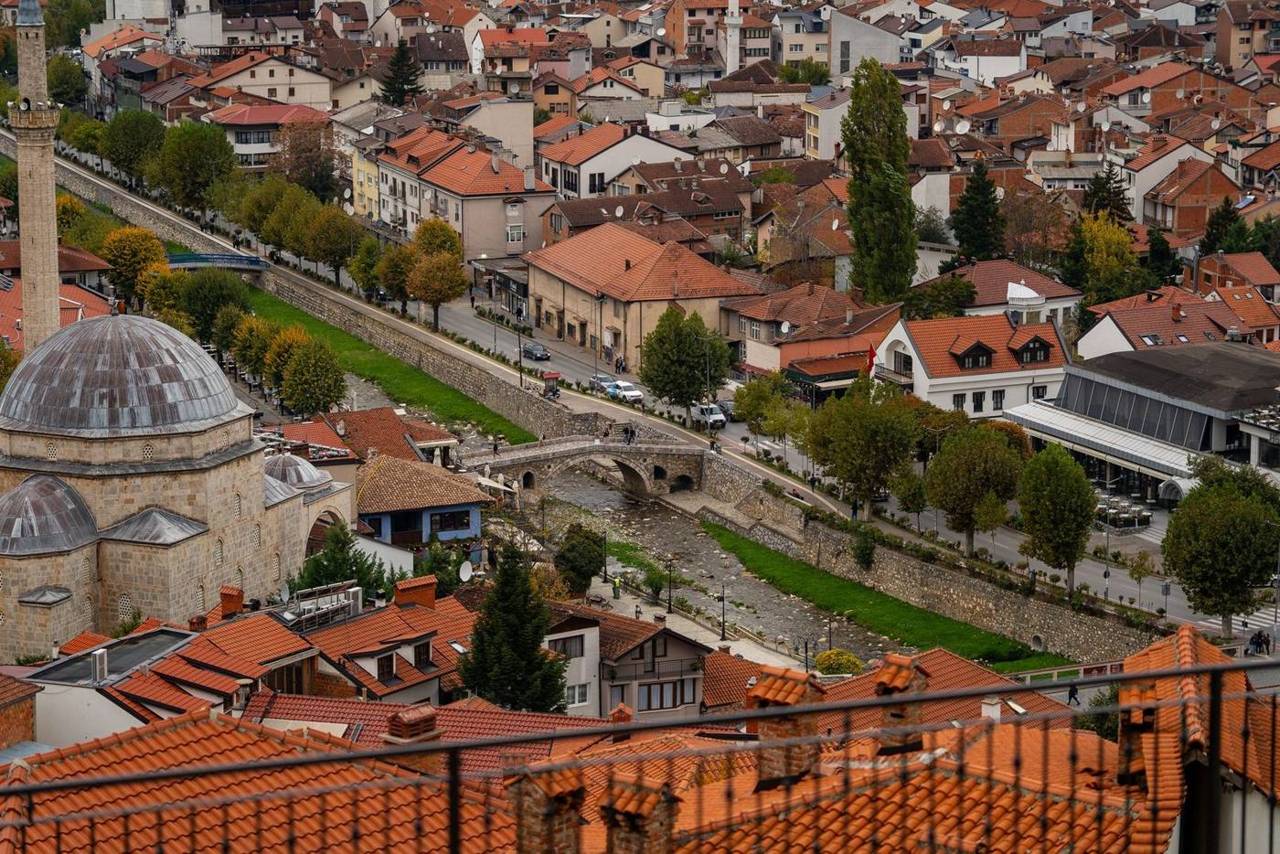
Albania and Kosovo: from Krujë to Prizren and Peja
The Road of the Nation into Kosovo, between Ottoman Prizren, the Serbian monasteries of Dečani and Gračanica and the Rugova gorge.
 8 daysModerate
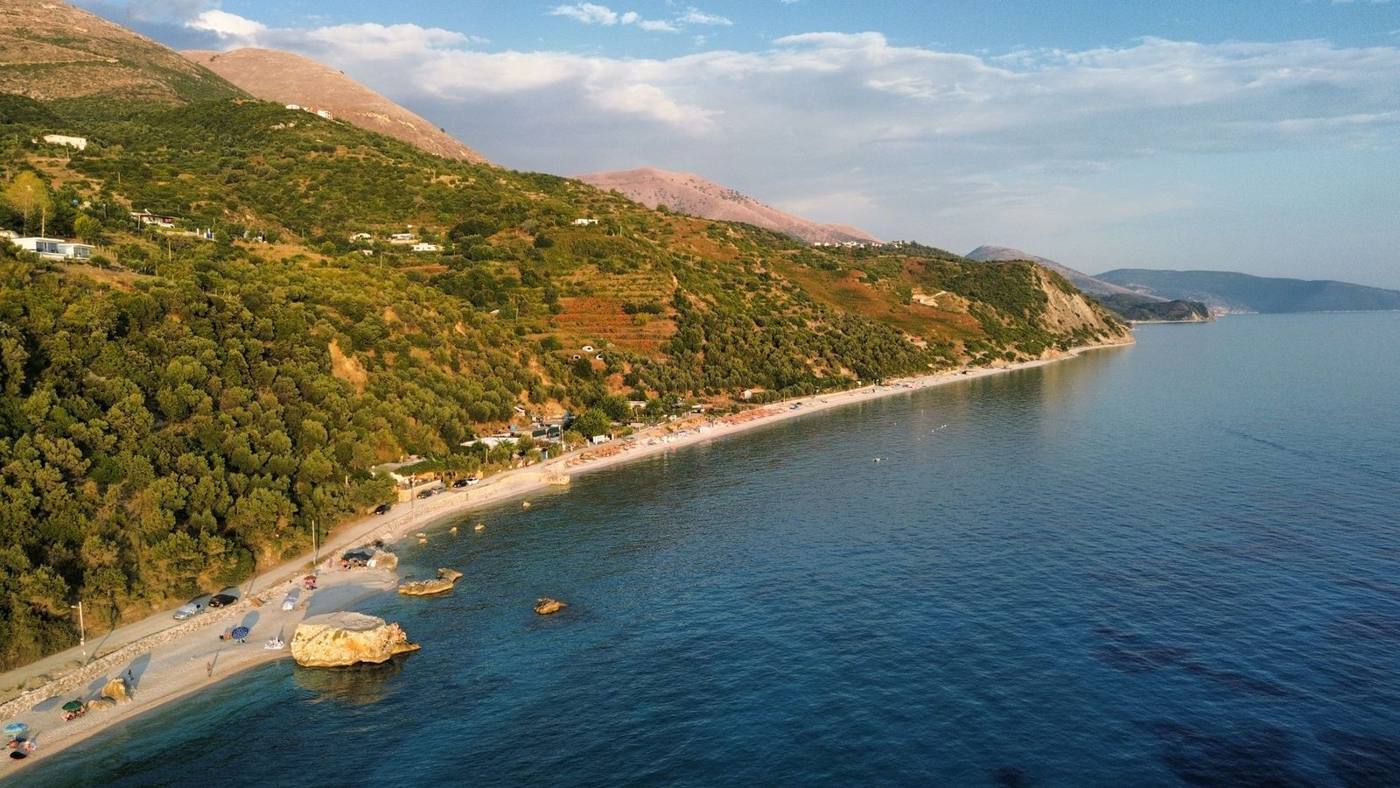
The coastal trail on foot, from Dhërmi to Nivicë
Five days of walking with a pack between coves, olive groves and abandoned hill villages above the Ionian, sleeping in the villages along the way.
 16 daysEasy
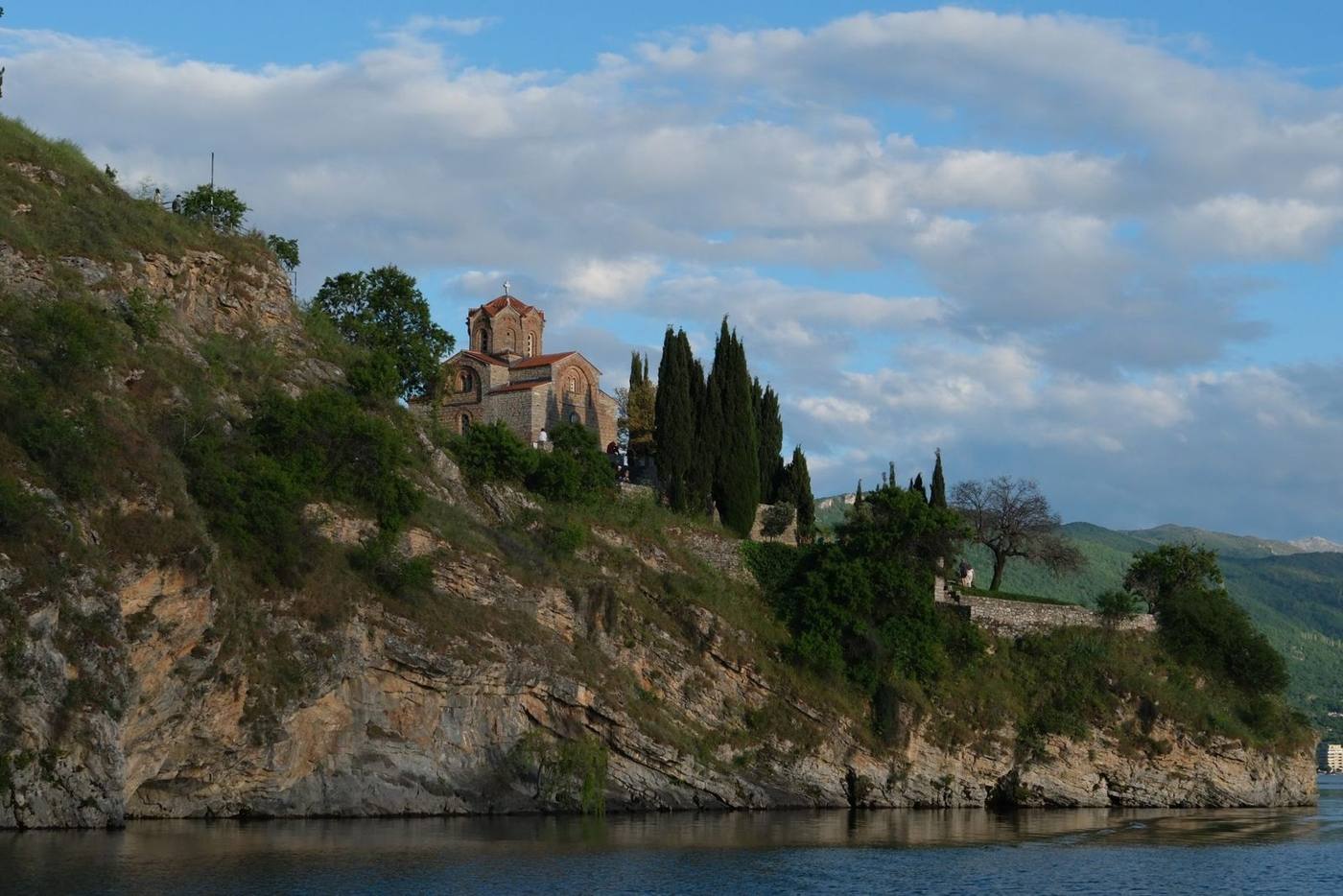
Albania, Ohrid and the Bay of Kotor
The full loop of Albania with two border crossings: the lakeside monasteries of Ohrid in North Macedonia and the Venetian towns of Montenegro.