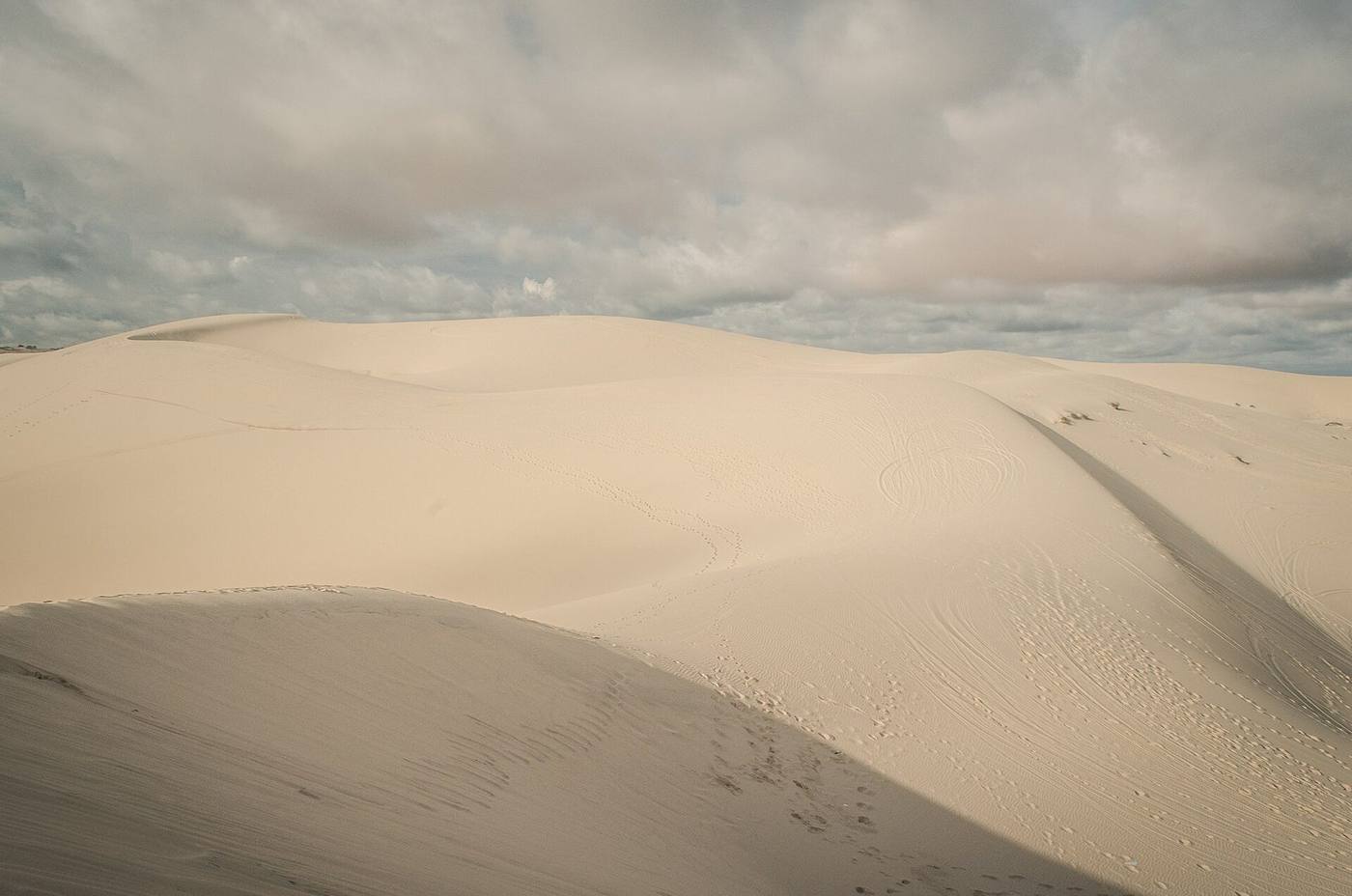
Mui Ne and the dunes
The desert by the southern sea: the white and red dunes of Mui Ne at dawn, the Fairy Stream flowing between red rocks, the fishing-boat harbour, wind for kitesurfing and the Cham towers of Po Shanu.
- Saigon
- Phan Thiet
- Mui Ne
- White dunes
- Fairy Stream
Day by day
- Day 1
From Saigon to Phan Thiet and Mui Ne
Mui Ne is a long strip of coast east of Saigon, with palm trees, golden sand beaches, a fishing village and, behind the coast, large dunes of red and white sand that look like a piece of desert in the middle of the tropics. It is one of the driest areas in Vietnam, with little rain and a lot of wind, and it has become one of the best known places in Asia for kitesurfing. In four days it makes an easy seaside break after the city.
There are several ways to get there from Saigon. The train takes you to Phan Thiet, the nearest town, in about four hours, in comfortable carriages with views over the rice fields; from there a taxi takes about half an hour to Mui Ne. Alternatively, there are coaches with reclining seats that leave from central Saigon and arrive directly along the beach road, or a car with a driver on the new motorway, in about three hours.
In the afternoon, settle in along the main road, which follows the coast for about ten kilometres, with places to stay on one side and the sea on the other. Take a first walk on the beach, which has become very narrow in some stretches because of erosion by the waves.
In the evening, eat fish and seafood chosen live from the tanks, grilled or steamed, as Vietnamese people do on holiday. Also try banh xeo, a crispy pancake filled with shrimp and bean sprouts, and dragon fruit, grown in large plantations around Phan Thiet.
Practical tip: the train is the most comfortable and safest option; buy your ticket in advance at weekends and during Vietnamese holidays, when seats sell out quickly.
- Day 2
The white dunes at dawn, the fishing harbour and the Fairy Stream
Wake up very early: at about half past four the jeep tours leave for the white dunes, about an hour's drive to the north-east. The white dunes, called Bau Trang, are the largest in the area: hills of very pale sand, dozens of metres high, with a small lake with lotus flowers at their foot. At dawn the light is soft, the sand is cool and the landscape changes colour minute by minute. Walk up to the highest ridge to see the sea on one side and the desert on the other.
On the dunes you can rent quad bikes or jeeps to get higher up, but the driving is often reckless and the vehicles damage the sand: it is better to explore them on foot.
On the way back, stop at the red dunes, which are smaller, near the village, where children rent plastic sledges to slide down. Then go down to the fishing harbour of Mui Ne: in the morning the bay is full of colourful boats and thung chai, the small round boats woven from bamboo, and on the beach the fish is unloaded and sold.
In the late morning, go to the Fairy Stream, a shallow stream running between walls of red, white and orange sand, carved by erosion into strange shapes. You walk barefoot in the warm, ankle-deep water for about an hour, up to a small waterfall.
In the afternoon, rest: the sun and the heat in the middle of the day are strong.
Practical tip: bring a hat, sunscreen and plenty of water. There is no shade on the dunes, and after nine in the morning the sand becomes very hot.
- Day 3
Kitesurfing or the beach, and the Cham towers of Po Shanu
Today is a no-cost day and depends on what you enjoy. From November to April a strong, steady wind blows in Mui Ne almost every day, especially from late morning to the afternoon. It is the perfect season for kitesurfing and windsurfing: along the beach there are many schools with international instructors who run courses for beginners, usually over a few days, and rent equipment to those who already know how. Even just watching the dozens of colourful kites over the water is a show. In those months, however, the sea is rough and not ideal for swimming.
From May to October the wind drops, the sea is calmer and the beach is better for swimming, although there may be a few showers in the afternoon.
If the sea does not interest you, book a bike ride through the dragon fruit plantations, with their rows of cactus and pink fruit, or visit a fish sauce factory, making the nuoc mam for which Phan Thiet has been famous for centuries: the smell is strong, but it is interesting to see the large wooden barrels where the fish ferments with salt.
In the late afternoon, go to the Cham towers of Po Shanu, on a hill between Phan Thiet and Mui Ne. They are three red brick towers built around the ninth century by the Cham people, who then ruled this coast with a Hindu kingdom. From the hill the sunset over the sea and the town is beautiful.
Practical tip: for kitesurfing, choose a school that provides a helmet, a vest and a radio, and only take lessons in the designated areas, away from swimmers.
- Day 4
Last morning and return to Saigon
Your last morning in Mui Ne. If you missed the dawn on the dunes on the second day, you can still go to the red dunes at sunrise, a few minutes from the beach: there are fewer people than at sunset and the sand turns a deep orange. Or enjoy a last swim and a breakfast with Vietnamese coffee, strong and sweet with condensed milk.
If you have the time and the wish before leaving, stop on the way at Mount Ta Cu, south of Phan Thiet: a cable car climbs through the forest to a complex of pagodas, where there is a large reclining Buddha statue, about fifty metres long, among the trees and rocks. Alternatively, visit the centre of Phan Thiet, with the river full of fishing boats, the market and the old water tower, the symbol of the town.
In the afternoon, take the train, the coach or the car back to Saigon. By train you arrive at the city's main station, close to the central districts. If you have an international flight, plan your timing carefully: the traffic coming into Saigon, especially in the evening, can be very slow.
Mui Ne combines well with a trip to southern Vietnam: from Saigon you can continue to the Mekong Delta, or from Mui Ne go up to Da Lat, in the highlands, about four hours by road.
Practical tip: Italian citizens can enter Vietnam without a visa for up to 45 days, under an exemption valid until 14 March 2028, with a passport valid for at least six months. For longer stays you need the 90-day e-visa.
An easy seaside break from Saigon. From November to April the wind is strong: perfect for kiting, less so for swimming. On the dunes you can hire a quad bike, but driving is often reckless: better on foot. Italians enter without a visa for up to 45 days (exemption valid until 14 March 2028), with a passport valid for at least six months; longer stays need the 90-day e-visa.
Before you go
- Documents and visa
- Passport with at least six months' validity remaining. Italian, French and several other European citizens need no visa for tourism up to 45 days, an exemption valid until 14 March 2028; otherwise use the e-visa from the official portal.
- Health and vaccines
- No compulsory vaccines. Protect yourself against mosquitoes because of dengue; drink only bottled water. Emergencies: 113 police, 114 fire, 115 ambulance.
- Money and payments
- Vietnamese dong. Cards and QR code payments are widespread in cities; in markets, villages and for small purchases you need cash.
- Power sockets
- Types A and C, among others, 220 volts: a universal adapter is useful.
- Time zone
- UTC+7 all year: Vietnam does not use daylight saving time.
- Safety
- A safe country for travellers. In big cities beware of snatch thefts from scooters; from July to December typhoons and floods hit the centre and north. Official advice: GOV.UK.
Information checked in November 2026 for Italian and EU citizens. Rules change: always check before you travel.
Variations
In 3 days: arrival, then the white dunes and the Fairy Stream on the second day, and return on the third.
In 7 days: from Mui Ne go up to Da Lat, with its cool climate, lakes and coffee plantations, and then fly back to Saigon.
Frequently asked questions
When is the best time to go?
From November to April there is sun almost every day and a strong wind, ideal for kitesurfing. From May to October the sea is calmer for swimming, with some storms.
Is the sea good for swimming?
Yes, but with the strong wind of the dry months the waves are high and currents can be dangerous. Some stretches of beach have become very narrow because of erosion.
What documents do I need?
A passport valid for at least six months. Italian citizens do not need a visa for up to 45 days, under the exemption valid until 14 March 2028.
Indicative itinerary written by World Atlas. Before booking, check timetables, seasonal openings, documents and safety.
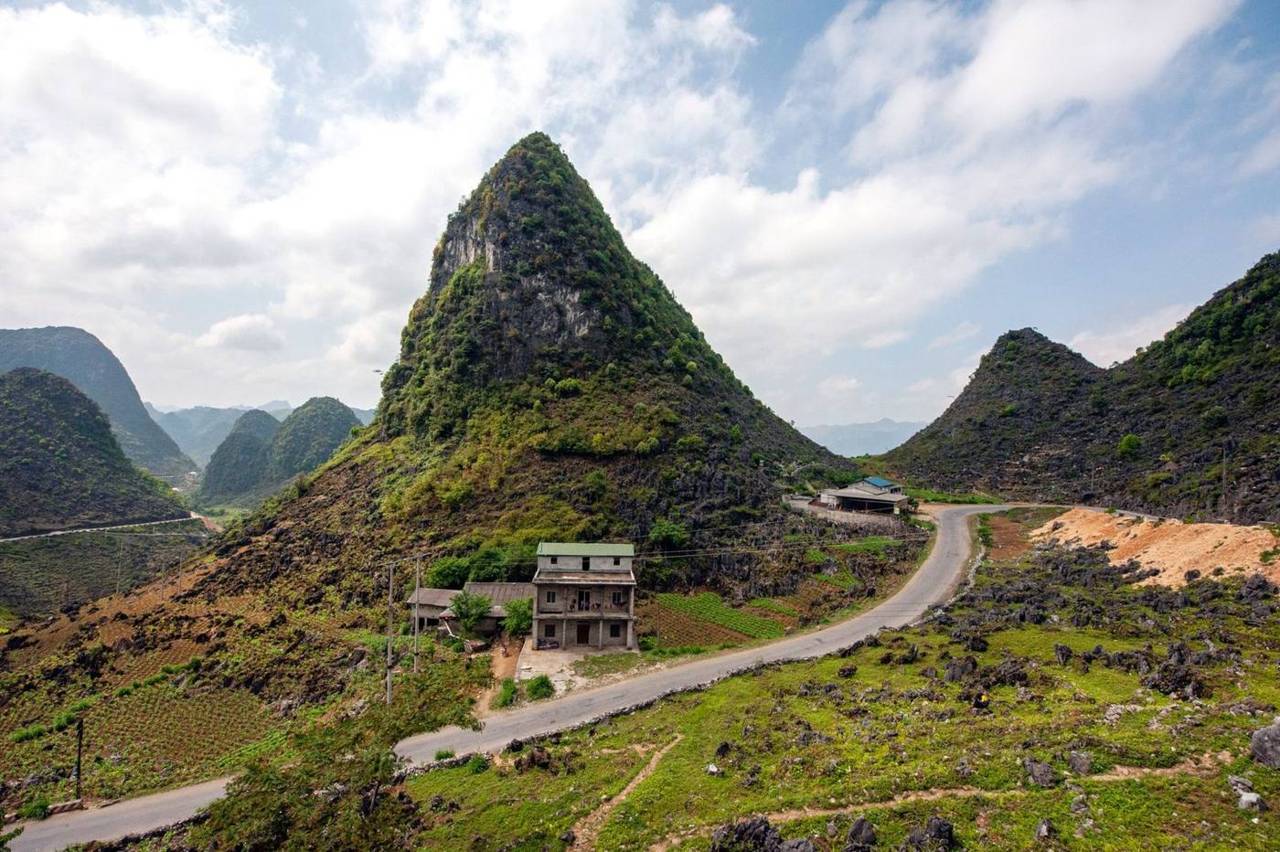 17 daysModerate
Hill tribes and mountains of the North
From the Can Cau and Bac Ha markets to the karst plateau of Dong Van, with Ba Be Lake and a night on the Gulf of Tonkin to finish.
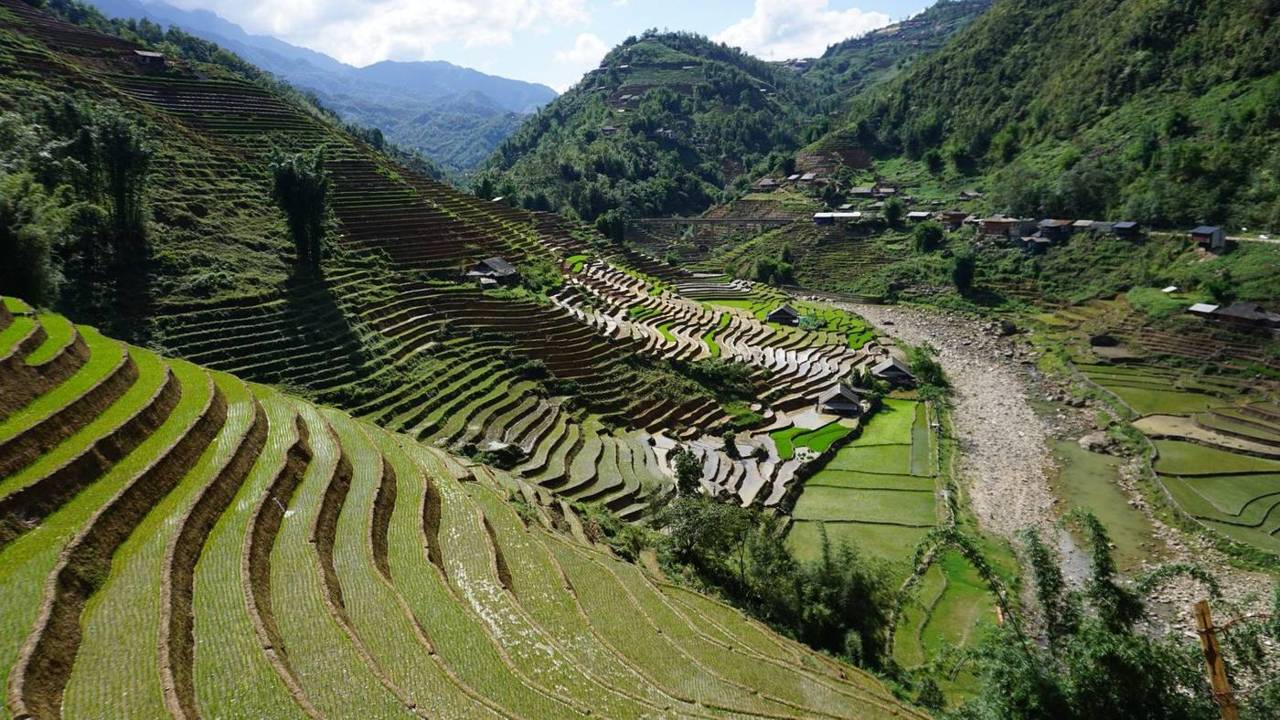 18 daysChallenging
Sapa on foot and the Fansipan climb
Several days walking between Sapa's villages, the highest summit in Indochina if the season allows, then a slow return through the border provinces.
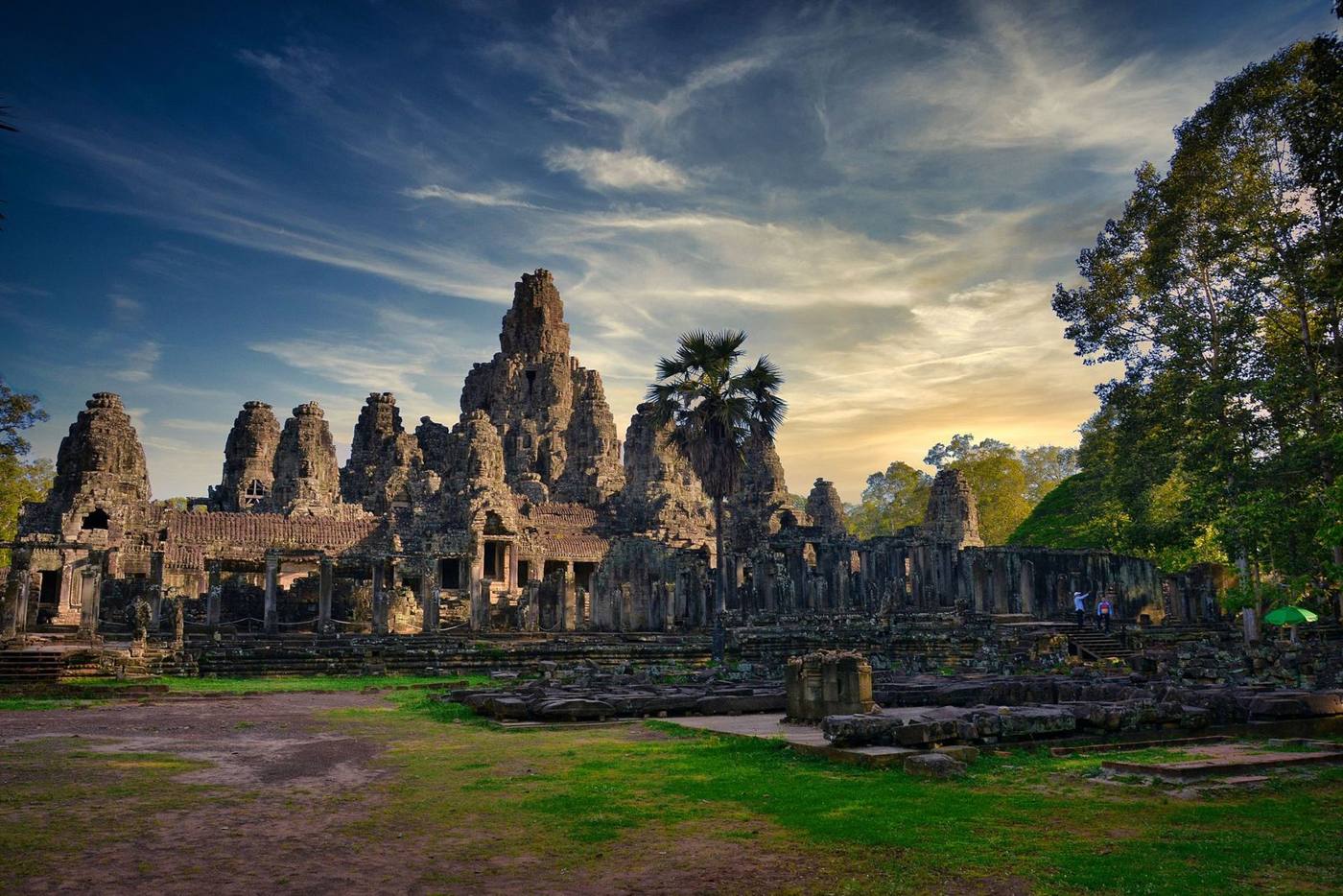 17 daysModerate
From Angkor to Ha Long Bay
A week in Cambodia among the temples of Angkor and the memory of Phnom Penh, then Vietnam travelled north from the Mekong to Hanoi.