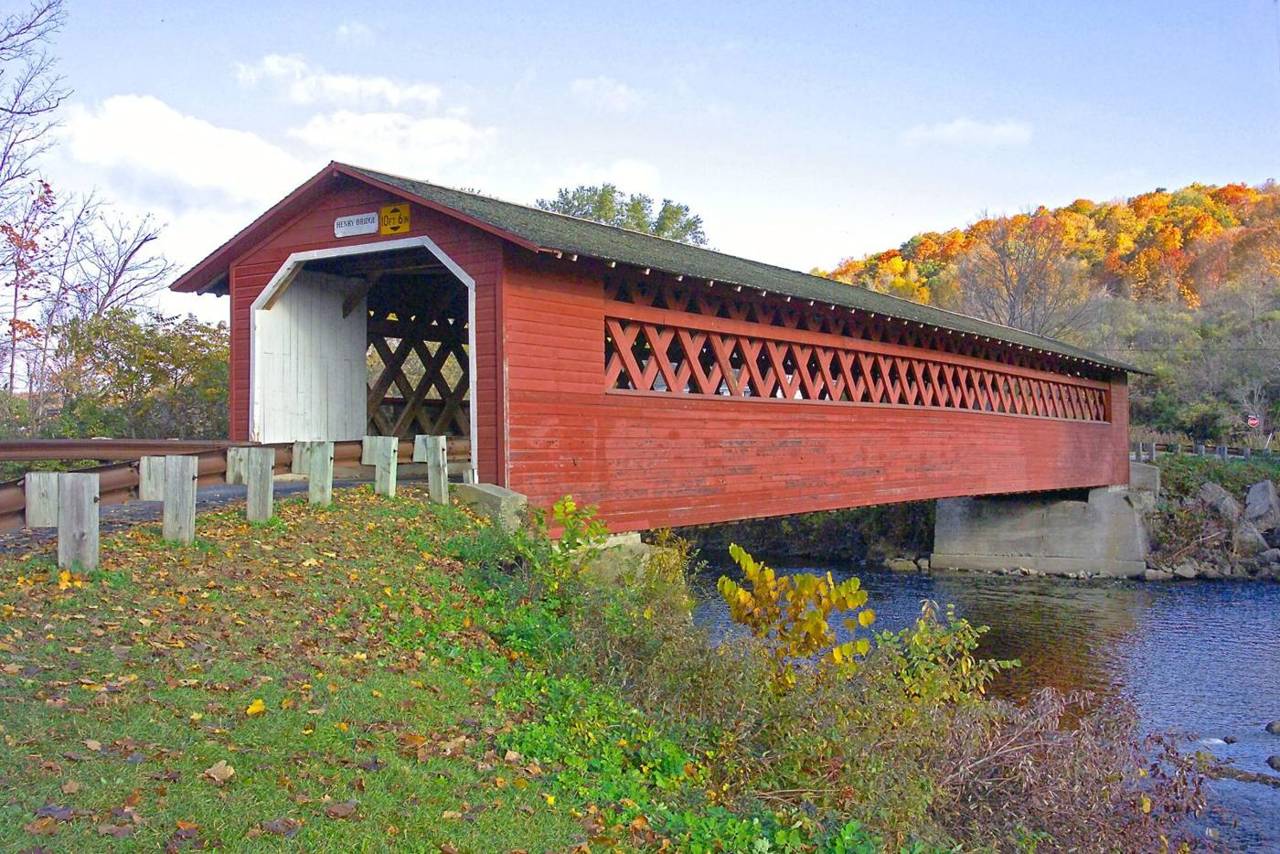
New England in autumn
Boston, the red woods of Vermont and New Hampshire, the lighthouses and lobsters of Maine up to Acadia National Park.
- Boston
- Stowe
- White Mountains
- Portland
- Bar Harbor
- Acadia
- Boston
Day by day
- Day 1
Arrival in Boston
This trip crosses New England in autumn, when the maple, birch and oak forests turn red, orange and yellow: Boston and its history, the covered bridges and white villages of Vermont, New Hampshire's White Mountains, the lighthouses of the Maine coast and Acadia National Park.
Before you leave: to enter the United States without a visa you need an ESTA, which costs 40.62 dollars and is applied for online on the official US government website; check whether you are eligible. In Acadia National Park, since 1 January 2026, non resident visitors aged sixteen and over pay a surcharge of 100 dollars per person, or can buy the 250 dollar annual pass for non residents.
You fly into Boston airport, linked to the centre by subway in about twenty minutes. For the first days in Boston you do not need a car: the city is easy on foot and by subway.
In the afternoon walk through Boston Common, the oldest public park in the United States, and the Public Garden next to it, with its pond and swan boats. Then climb Beacon Hill, the nineteenth century neighbourhood of red brick houses, gas lamps and cobbled streets such as Acorn Street.
In the evening have New England food in Boston: clam chowder, the creamy clam soup, and a lobster roll.
Sleep in Boston.
Practical tip: the best time for colours is usually late September to mid October, first in the north and mountains, then further south and on the coast. Book early: it is peak season.
- Day 2
The Freedom Trail
Today follow the Freedom Trail, a route of about four kilometres marked by a line of red bricks on the pavement, linking sixteen sites connected with the birth of the United States.
You start at Boston Common and pass the State House with its golden dome, the Granary Burying Ground, where Samuel Adams, Paul Revere and John Hancock are buried, the Old South Meeting House, where colonists met before the Boston Tea Party of 1773, and the Old State House, in front of which the Boston Massacre took place in 1770.
Then you reach Faneuil Hall and Quincy Market, an old covered market full of food stalls.
In the afternoon continue into the North End, Boston's Italian neighbourhood, with the Paul Revere House, the oldest wooden house in the city, and the Old North Church, where in 1775 the two lanterns were lit to warn of British troops, at the start of the War of Independence.
The trail ends across the bridge in Charlestown, with USS Constitution, the oldest commissioned warship afloat in the world, and the Bunker Hill Monument. Check opening hours and access rules.
In the evening have dinner in the North End.
Sleep in Boston.
Practical tip: the Freedom Trail can be walked alone with a map or on a guided tour. Many sites have separate tickets: check.
- Day 3
Harvard and Cambridge
In the morning take the subway to Cambridge, across the Charles River, home of two great universities, Harvard and MIT.
Walk through Harvard Yard, the tree lined quad of the oldest university in the United States, founded in 1636, with red brick buildings, the John Harvard statue and the great Widener Library. Students lead guided tours: check times and prices.
Visit one of Harvard's museums, such as the art museum, with collections from antiquity to modern art, or the natural history museum, with the Glass Flowers, hundreds of plant models handmade in glass in the nineteenth century with extraordinary realism. Check opening hours and prices.
In the afternoon walk to MIT, with modern architecture such as the Frank Gehry building, and a small museum devoted to science and technology.
Return to Boston and at sunset walk along the Charles River Esplanade, with views of Back Bay, or explore Back Bay itself, with Trinity Church and the Boston Public Library and its decorated reading rooms.
In the evening pick up your rental car or prepare to collect it in the morning.
Sleep in Boston.
Practical tip: avoid driving in central Boston. Pick up the car on the morning you leave, on the way out of the city.
- Day 4
To Vermont: Woodstock and covered bridges
In the morning pick up the car and leave Boston north west, about two and a half hours, to Vermont, New England's most rural state, with green mountains, farms, white villages and forests that in autumn explode with colour.
The road enters Vermont along the Connecticut River. Minor state roads pass through villages with a central green, a white church with a pointed steeple, an inn and a general store.
You reach Woodstock, one of the prettiest villages in New England, with nineteenth century houses around an oval green, shops and a wooden covered bridge in the centre. Visit the Marsh Billings Rockefeller National Historical Park, with a mansion and woodland trails, telling the story of nature conservation in America. Check opening hours and prices.
In the afternoon visit a Vermont farm, such as Billings Farm with its dairy cows, or a farm that produces maple syrup, where they explain how maple sap is collected in spring.
Look for the area's wooden covered bridges: Vermont has more than a hundred, built in the nineteenth century to protect the structure from snow.
Sleep in or near Woodstock.
Practical tip: during foliage season lodgings in the villages are booked months ahead. Book very early.
- Day 5
Stowe and the Green Mountains
Today you head north through the Green Mountains, the range that runs through Vermont from south to north.
Route 100, which crosses the state from south to north, is one of the finest roads for autumn colour, among woods, farms, ponds and villages. Stop wherever you like at viewpoints and small village stores.
You reach Stowe, a mountain village at the foot of Mount Mansfield, Vermont's highest peak, with a white church with a tall steeple that has become one of the symbols of New England in autumn. Walk the Stowe Recreation Path, a flat path of about eight kilometres along the river among meadows and woods.
In the afternoon, if open, take the toll road or gondola up towards the summit of Mount Mansfield for a view over mountains covered in colour. Check times and prices.
Alternatively, drive the Smugglers' Notch road, a narrow pass between rock walls and woods, with very tight hairpins. It closes in winter.
In the evening try Vermont produce: cheddar cheese, maple syrup on pancakes, apple cider and local ice cream.
Sleep in Stowe.
Practical tip: buy maple syrup at the farms. There are several grades, from the lightest to the darkest and most intense.
- Day 6
The Kancamagus Highway in the White Mountains
In the morning leave Vermont and cross the Connecticut River into New Hampshire, about two hours, to the White Mountains, the highest mountains in the north eastern United States.
The Kancamagus Highway, Route 112, crosses the White Mountain National Forest for about fifty five kilometres between Lincoln and Conway, with no towns or shops, only woods, rivers and mountains. In autumn it is one of America's most famous roads for colour. There are many viewpoints and short trails along the road. To park in the national forest you need a day pass: check the price.
Stop at Sabbaday Falls, a few minutes' walk from the road, a waterfall in a narrow gorge, and at the Lower Falls on the Swift River, with big flat rocks for picnics.
If you have time, visit the Flume Gorge, in Franconia Notch State Park near Lincoln, a narrow gorge with granite walls about twenty metres high, walked on wooden boardwalks. Check opening hours and prices.
In the evening reach North Conway, a small town at the foot of the mountains.
Sleep in North Conway.
Practical tip: on October weekends the Kancamagus is very busy. Drive it on a weekday or early in the morning.
- Day 7
The Maine coast and Portland Head Light
Today head down to the Maine coast, about two hours, to Portland, the state's largest city, on a peninsula in Casco Bay.
The first stop is Portland Head Light at Cape Elizabeth, one of the most photographed lighthouses in America, first lit in 1791, white on a cliff of dark rock pounded by waves, with the red keeper's house. The park around it has clifftop paths and a small museum in the keeper's house. Check opening hours.
Then go to Portland's Old Port, with cobbled streets, nineteenth century brick warehouses turned into shops and restaurants, and lobster boats in the harbour.
For lunch eat Maine's most famous dish: lobster, boiled whole or in a lobster roll, with melted butter or mayonnaise, at one of the seafood shacks by the sea.
In the afternoon drive north along Route 1, the coastal road, through small fishing harbours such as Camden, with sailing boats in the bay and colourful hills behind. In Camden, if you have time, climb Mount Battie for the view over the bay.
Sleep in Camden or along the coast.
Practical tip: lobster prices change daily with the market. Ask before you order, as menus often say market price. A whole lobster takes time to eat.
- Day 8
Acadia: sunrise on Cadillac Mountain
Today you visit Acadia National Park, on Mount Desert Island, a coast of pink granite, forests, lakes and rounded mountains dropping into the ocean. Remember the 100 dollar non resident surcharge, or the 250 dollar annual pass.
Wake very early to watch sunrise from the summit of Cadillac Mountain, the highest point on the US Atlantic coast, at about four hundred and sixty metres. For part of the year, from autumn to early spring, it is one of the first places in the United States to see the sun rise. To drive to the summit in the main season you need a timed vehicle reservation: check the dates and book ahead.
After sunrise drive the Park Loop Road, a loop of about forty five kilometres past the main sights: Sand Beach, a sandy beach among the rocks, and Thunder Hole, a cleft in the rock where, with the right tide, waves crash in with a roar.
In the afternoon walk the Ocean Path, an easy clifftop trail between Sand Beach and Otter Cliff, with the sea breaking on the granite.
In the evening have dinner in Bar Harbor, the town at the park entrance.
Sleep in Bar Harbor.
Practical tip: on top of Cadillac at dawn it is cold and windy. Bring a jacket, hat and gloves.
- Day 9
The trails and lakes of Acadia
Today you stay in Acadia and walk the park's trails.
In the morning choose a walk to suit your fitness. The Jordan Pond trail is an easy loop of about five kilometres around a clear lake, with wooden boardwalks and views of the two rounded mountains called the Bubbles. If you are fit and do not suffer from vertigo, the Beehive trail climbs a granite face with iron rungs and ladders, with a spectacular view over Sand Beach.
For lunch have a picnic on the lake shore, or try popovers, light puffy rolls served with jam, a park tradition.
In the afternoon ride part of the carriage roads, a network of gravel roads built by John D. Rockefeller Jr. in the early twentieth century, closed to cars, with stone bridges and lake views. You can walk or cycle them, with bikes for hire in Bar Harbor.
At sunset go to Bass Harbor Head lighthouse, on the island's south west coast, on a rocky cliff, or to the Seawall shore.
Sleep in Bar Harbor.
Practical tip: the park shuttle bus links Bar Harbor with trails and car parks. Check its service dates: in autumn it may finish early, and then you need your own car.
- Day 10
Back to Boston and departure
On the last day head back to Boston, about five hours by road, on the highway or, if you have time, partly along the coast.
On the way you can stop at Kennebunkport, a seaside village with sea captains' houses and a harbour, or at Ogunquit, with the Marginal Way, a clifftop path between rocks and sea. If you prefer history, stop at Portsmouth, New Hampshire, with the Strawbery Banke open air museum, a historic neighbourhood with houses from four different centuries. Check opening hours.
Return the car at Boston airport with a full tank, checking for damage, and arrive early for your flight.
Before leaving buy something to take home: Vermont maple syrup, cheddar cheese, a Harvard or MIT sweatshirt, Maine wild blueberry jam or local crafts.
This trip shows New England at the most beautiful time of year: the history of the birth of the United States in Boston, the white villages of Vermont, the mountains and foliage roads, the lighthouses and lobster of Maine, and Acadia's granite cliffs.
Practical tip: for your intercontinental flight from Boston allow for traffic coming out of Maine. Friday afternoon is the worst time, and the airport tunnels can be slow. Leave early.
Beautiful during the two or three weeks of the foliage, much less so out of season. Peak colour changes every year and moves from north to south, so follow the foliage reports and start in Vermont. Hotels fill up at that time, so book early. A vehicle reservation is needed for sunrise on Cadillac Mountain.
Before you go
- Documents and visa
- Electronic passport and ESTA authorisation for Visa Waiver nationalities, applied for online on the official site at least 72 hours ahead: since 16 October 2026 it costs 40.62 dollars and is valid for two years. Travellers who have visited certain countries, such as Cuba or Iran, need a visa.
- Health and vaccines
- No vaccines required. Healthcare is extremely expensive: insurance with very high medical cover is essential. Emergencies: 911.
- Money and payments
- Dollar. Cards accepted everywhere. Prices are shown before tax, added at the till; restaurant tips of 15 to 20 per cent are expected.
- Power sockets
- Types A and B, 120 volts: you need a flat-pin adapter.
- Time zone
- Six time zones: New York is UTC-5, Los Angeles UTC-8; daylight saving changes on different dates from Europe.
- Safety
- Risks are mainly crime in some urban areas and natural hazards: hurricanes, wildfires, extreme desert heat. Official advice: GOV.UK.
Information checked in November 2026 for Italian and EU citizens. Rules change: always check before you travel.
Variations
In 7 days: Boston, Vermont and the White Mountains, returning without the Maine coast.
In 14 days: add Cape Cod, Martha's Vineyard and the Rhode Island coast with Newport.
Frequently asked questions
Do I need a document to enter?
To enter the United States without a visa you need an ESTA, which costs 40.62 dollars and is applied for online on the official website. Other rules for your case should be checked.
How much does Acadia cost?
Since 1 January 2026 non resident visitors aged sixteen and over pay a surcharge of 100 dollars per person, or the 250 dollar annual pass for non residents. To drive up Cadillac Mountain in the main season you need a reservation.
When are the autumn colours?
Usually from late September to mid October, first in the north and mountains, then further south and on the coast. It varies every year: check the foliage maps.
Indicative itinerary written by World Atlas. Before booking, check timetables, seasonal openings, documents and safety.
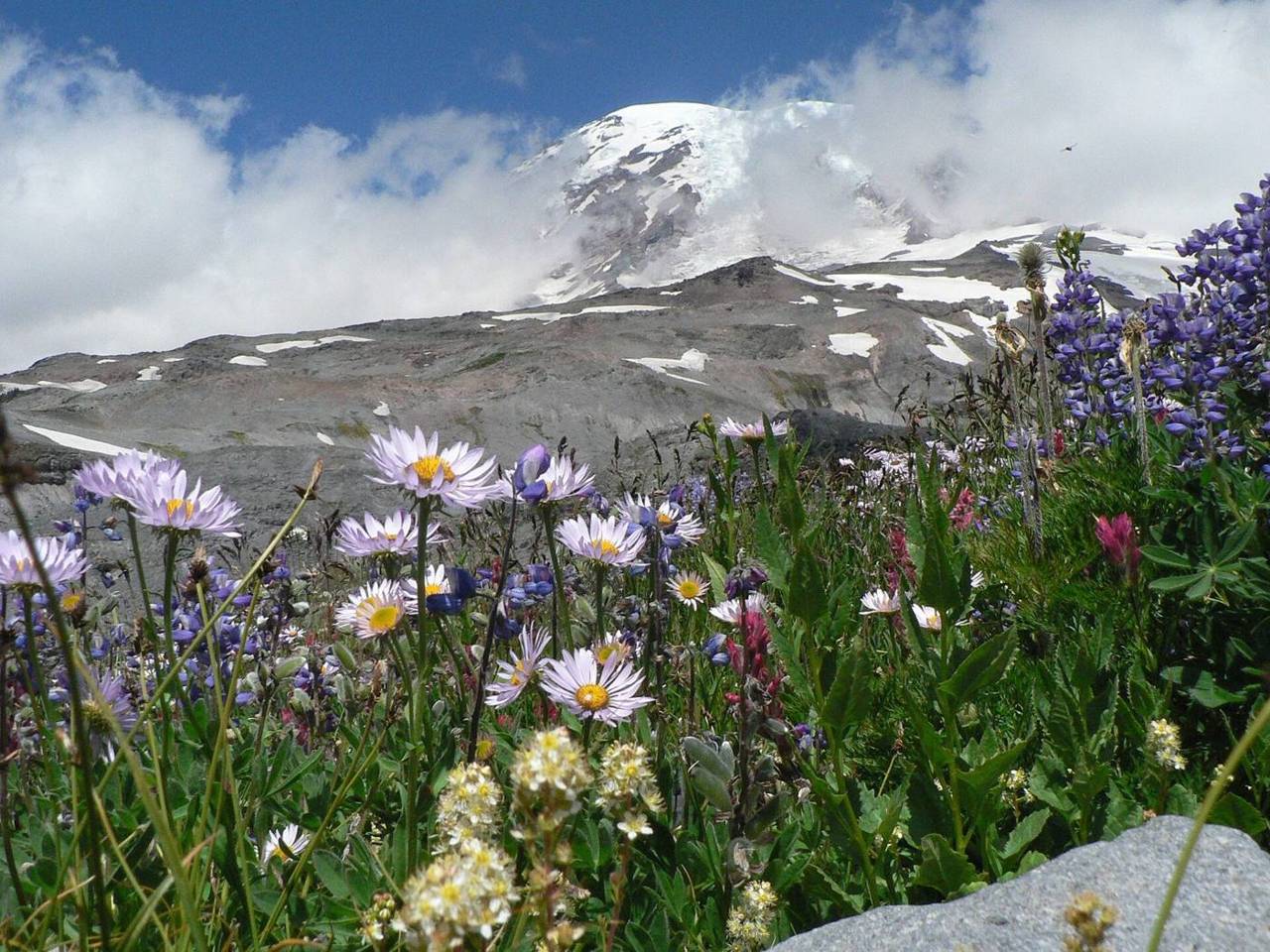 8 daysModerate
Pacific Northwest: Seattle, Olympic and Rainier
Seattle and its waterfront market, the Olympic Peninsula with the Hoh rainforest, the wild beaches of Rialto and Ruby Beach and the meadows of Hurricane Ridge, then the glaciers and wildflower meadows of Mount Rainier.
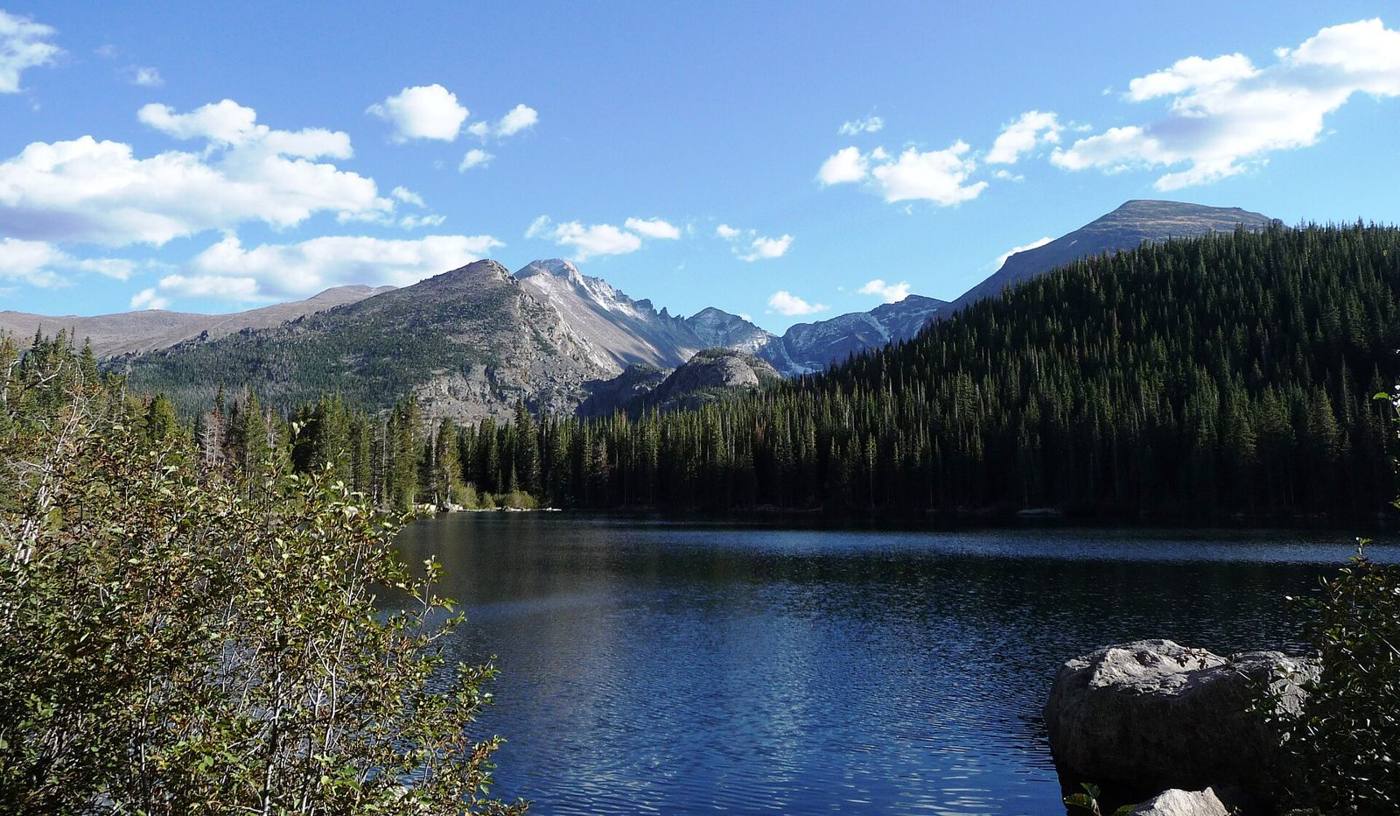 8 daysModerate
Colorado: the Rocky Mountains and Mesa Verde
Denver, Rocky Mountain National Park with the Trail Ridge Road above 3,700 metres, old mining towns, the Million Dollar Highway between Silverton and Ouray and the cliff dwellings of the ancestral Pueblo people at Mesa Verde.
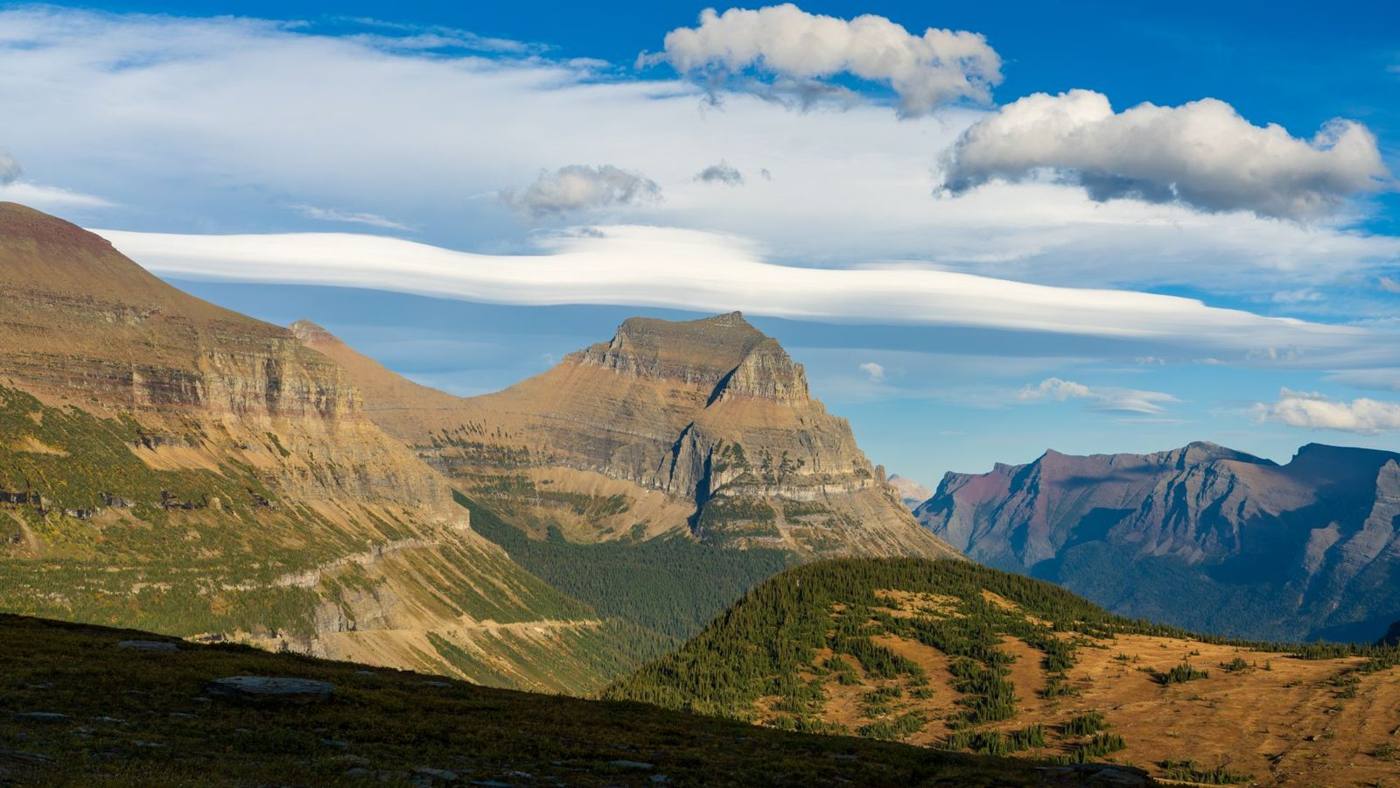 6 daysModerate
Montana: Glacier National Park
The Crown of the Continent: the Going-to-the-Sun Road up to Logan Pass, the turquoise lakes of Many Glacier, mountain goats and grizzly bears, Two Medicine and Lake McDonald with its coloured pebbles.