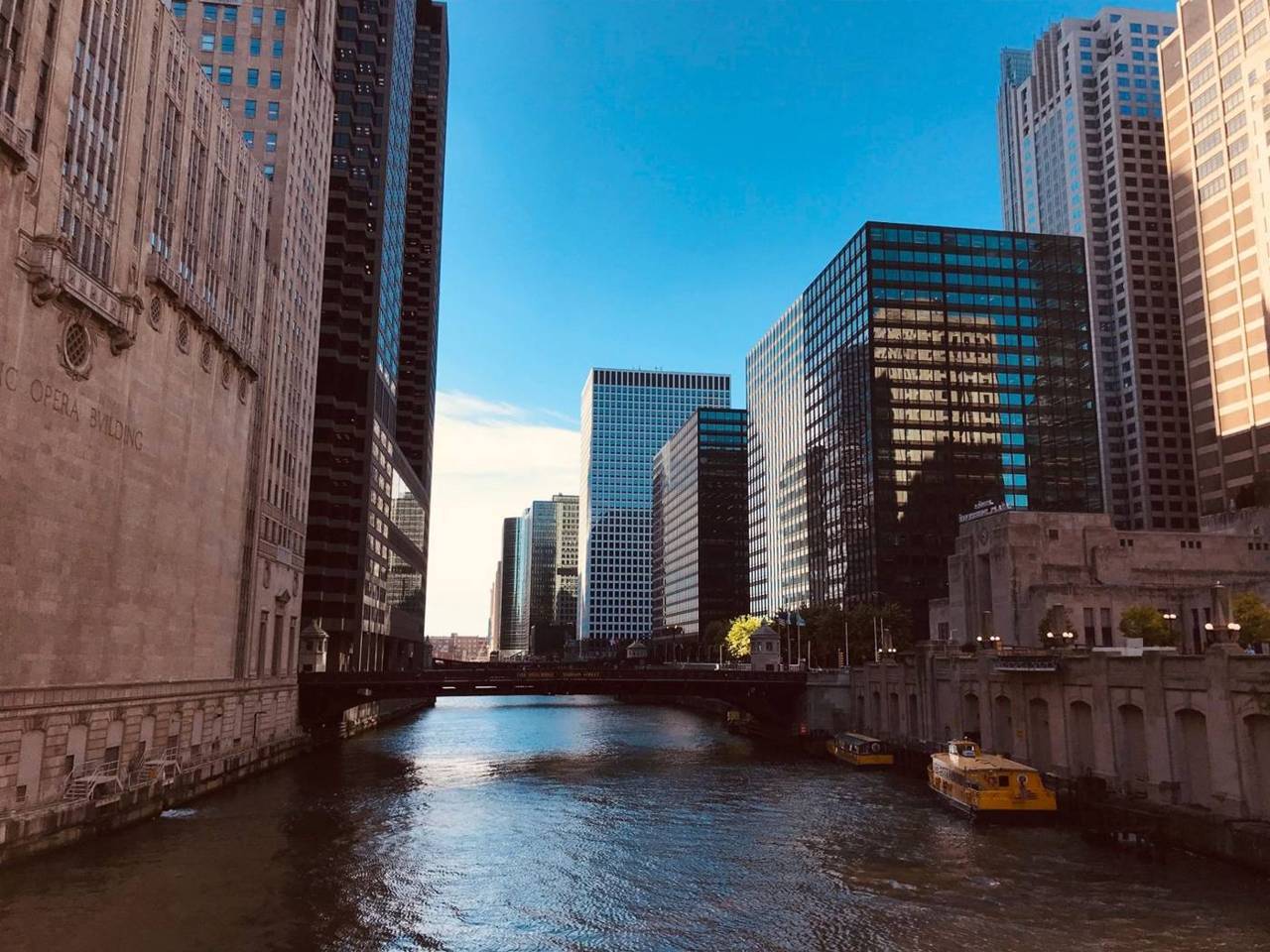
Chicago and Lake Michigan
The city of skyscrapers seen from the river, the Art Institute and Millennium Park, blues and deep-dish pizza, then the towering Sleeping Bear dunes and the fishing villages on the eastern shore of Lake Michigan.
- Chicago
- Saugatuck
- Sleeping Bear Dunes
- Glen Arbor
- Traverse City
Day by day
- Day 1
Chicago: the architecture river cruise and the Riverwalk
To enter the United States EU citizens of Visa Waiver Program countries need no visa for tourist stays of up to ninety days, but must have an electronic passport and apply before departure for an ESTA on the official US government website, costing 40.62 dollars. Avoid unofficial sites, which charge more. Check the rules for your nationality.
Chicago, on the south-western shore of Lake Michigan and the third largest city in the United States, is the birthplace of the modern skyscraper: after the Great Fire of 1871 destroyed the centre, architects rebuilt it by inventing new ways to build tall, and today it is a true open-air museum of architecture. O'Hare airport is linked to the centre by the Blue Line of the L, the elevated railway, in about forty minutes.
In the morning take the architecture cruise on the Chicago River, about ninety minutes, with guides from the city's architecture centre: the boat passes between the most famous towers, from the white, ornate Wrigley Building to the corncob towers of Marina City and the Willis Tower, for years the tallest building in the world, telling the story of how the city grew.
In the afternoon stroll along the Chicago Riverwalk, the pedestrian riverside below street level, with cafés, piers and floating gardens. Then go up the Willis Tower to the Skydeck on the hundred and third floor, where glass balconies jut out into the void, or to 360 Chicago at the top of the black Hancock tower, overlooking the lake.
In the evening listen to live Chicago blues in one of the city's historic clubs, the music born here when Black musicians from the South brought electric guitars to the clubs of the South Side.
Practical tip: Chicago is called the Windy City; even in summer bring a jacket by the lake.
- Day 2
The Art Institute and Millennium Park
In the morning visit the Art Institute of Chicago, one of the largest art museums in the world, with one of the richest Impressionist collections outside France: Monet's water lilies and haystacks, Degas's dancers, Renoir, Caillebotte with his famous Paris street on a rainy day, and Seurat's Sunday on La Grande Jatte, a huge canvas made of tiny dots of colour. There are also American masterpieces, such as Grant Wood's American Gothic, with the farmer and his daughter in front of their house, and Edward Hopper's Nighthawks, the lonely customers of a night diner. Allow at least three hours; buy tickets online.
In the afternoon cross the footbridge to Millennium Park, the great park in the centre, built over railway tracks. Its most famous sculpture is Cloud Gate, known to locals as the Bean, a large polished steel form reflecting the skyscrapers and the sky. Nearby, Crown Fountain is made of two glass towers showing the faces of hundreds of Chicagoans who seem to spit water into the pool, where children play in summer. The Pritzker Pavilion, designed by Frank Gehry with its great steel ribbons, hosts no-cost concerts in summer.
Towards evening walk along the lake to Buckingham Fountain, one of the largest fountains in the world, and to Navy Pier, the lakeside pier with its Ferris wheel.
Practical tip: to get around the city use the L and buses, paying with a contactless card.
- Day 3
The lakeshore road to Saugatuck and its dunes
In the morning pick up a rental car and drive along the southern shore of Lake Michigan, through northern Indiana, into the state of Michigan, about two and a half hours. Lake Michigan, one of the five Great Lakes, is so large it looks like a sea: you cannot see the other shore, and there are waves, fine sand beaches and towering dunes.
If you want a stop, soon after Chicago you find Indiana Dunes National Park, with beaches and trails over the dunes. Then continue to Saugatuck, a small village on the Kalamazoo River near its mouth on the lake, with painted wooden houses, art galleries, shops and marinas. For more than a century it has been a summer retreat for Chicago artists, and it is also known for welcoming the LGBT community.
In the afternoon cross the river on the small hand-cranked chain ferry, the only one of its kind still running in Michigan, and climb Mount Baldhead dune, with more than three hundred wooden steps, from which you see the lake, the river mouth and the forest. On the other side a path leads down to the lake beach.
Alternatively you can take a ride over the dunes in open off-road vehicles, departing near the village.
In the evening watch the sunset over the lake from Oval Beach, one of the most beautiful in Michigan: the sun sets into the water, just like at sea.
Practical tip: Lake Michigan water stays cool even in summer; watch for rip currents, shown by flags on the beaches.
- Day 4
Sleeping Bear Dunes: Pierce Stocking Drive, the Dune Climb and Glen Haven
In the morning drive north along the coast for about three hours to Sleeping Bear Dunes National Lakeshore, a national reserve of towering dunes, beaches and forests on the eastern shore of Lake Michigan, near Traverse City. The name comes from an Ojibwe legend: a mother bear and her two cubs fled a fire by swimming across the lake; the mother reached the shore and fell asleep there, becoming the great dune, while the cubs drowned and became the two Manitou Islands offshore. Entry requires a park pass, bought online or at the visitor centres.
Drive the Pierce Stocking Scenic Drive, a scenic road of about eleven kilometres through the forest with several stops. The most spectacular is overlook number nine, above the Lake Michigan dune, more than a hundred metres above the water: from here sand drops steeply down to the blue lake. You can go down, but the climb back is very hard and can take an hour; signs warn that rescue is expensive.
In the afternoon do the Dune Climb, the ascent of the great sand dune, very steep at first, followed by a trail across the dunes to the lake, about six kilometres return. Then visit Glen Haven, a historic early twentieth-century village with its general store, blacksmith shop and old life-saving station, now a small maritime museum.
In the evening watch the sunset from the beach at Glen Arbor or Empire.
Practical tip: bring plenty of water and closed shoes; in summer the sand gets scorching hot.
- Day 5
Old Mission Peninsula, vineyards and cherries in Traverse City, and the return
In the morning reach Traverse City, the main town of the area, on Grand Traverse Bay, a large bay of Lake Michigan with clear blue water. It is the cherry capital of America: the area produces much of the country's tart cherries, and in early July it hosts the National Cherry Festival. In summer farm stands along the roads sell fresh cherries, and all year round you find pies, jams, sauces and dried cherries.
Then drive Old Mission Peninsula, a narrow strip of land about thirty kilometres long dividing the bay in two, with vineyards, cherry and apple orchards, farms and wineries offering tastings. The peninsula lies near the forty-fifth parallel, halfway between the equator and the North Pole, like some great European wine regions, and the lake protects the vines from frost. At its tip stands Mission Point Lighthouse, from 1870, with a pebble beach and a woodland trail.
In the afternoon, before departure, stroll through downtown Traverse City along Front Street, with its shops and old cinema, and along the waterfront.
Traverse City airport has direct flights to Chicago in about an hour and to other American cities. Return the car at the airport if you rented it with a one-way drop-off.
Things to take home: dried cherries, cherry jams, Michigan wine and maple syrup products.
Practical tip: check your government's travel advice before leaving.
A summer trip of city and freshwater beaches. The river architecture cruise is the best way to understand Chicago. At Sleeping Bear going down the dunes is easy, climbing back up is not: less fit walkers should stay on the Dune Climb. In winter Chicago is very cold and windy.
Before you go
- Documents and visa
- Electronic passport and ESTA authorisation for Visa Waiver nationalities, applied for online on the official site at least 72 hours ahead: since 16 October 2026 it costs 40.62 dollars and is valid for two years. Travellers who have visited certain countries, such as Cuba or Iran, need a visa.
- Health and vaccines
- No vaccines required. Healthcare is extremely expensive: insurance with very high medical cover is essential. Emergencies: 911.
- Money and payments
- Dollar. Cards accepted everywhere. Prices are shown before tax, added at the till; restaurant tips of 15 to 20 per cent are expected.
- Power sockets
- Types A and B, 120 volts: you need a flat-pin adapter.
- Time zone
- Six time zones: New York is UTC-5, Los Angeles UTC-8; daylight saving changes on different dates from Europe.
- Safety
- Risks are mainly crime in some urban areas and natural hazards: hurricanes, wildfires, extreme desert heat. Official advice: GOV.UK.
Information checked in November 2026 for Italian and EU citizens. Rules change: always check before you travel.
Variations
In 3 days: Chicago only, with the river cruise, the Art Institute, Millennium Park and a day in neighbourhoods such as Wicker Park and Lincoln Park.
In 9 days: continue north to Mackinac closed to cars Island and Michigan's Upper Peninsula.
Frequently asked questions
What do I need to enter the United States?
An electronic passport and an ESTA, costing 40.62 dollars on the official US government website, applied for before departure.
Can I swim in Lake Michigan?
Yes, in summer, but the water is cool; watch for rip currents, shown by flags on the beaches.
Do I need a car?
Not in Chicago; for Saugatuck, Sleeping Bear Dunes and Traverse City yes, best rented with a one-way drop-off.
Indicative itinerary written by World Atlas. Before booking, check timetables, seasonal openings, documents and safety.
 14 daysEasy
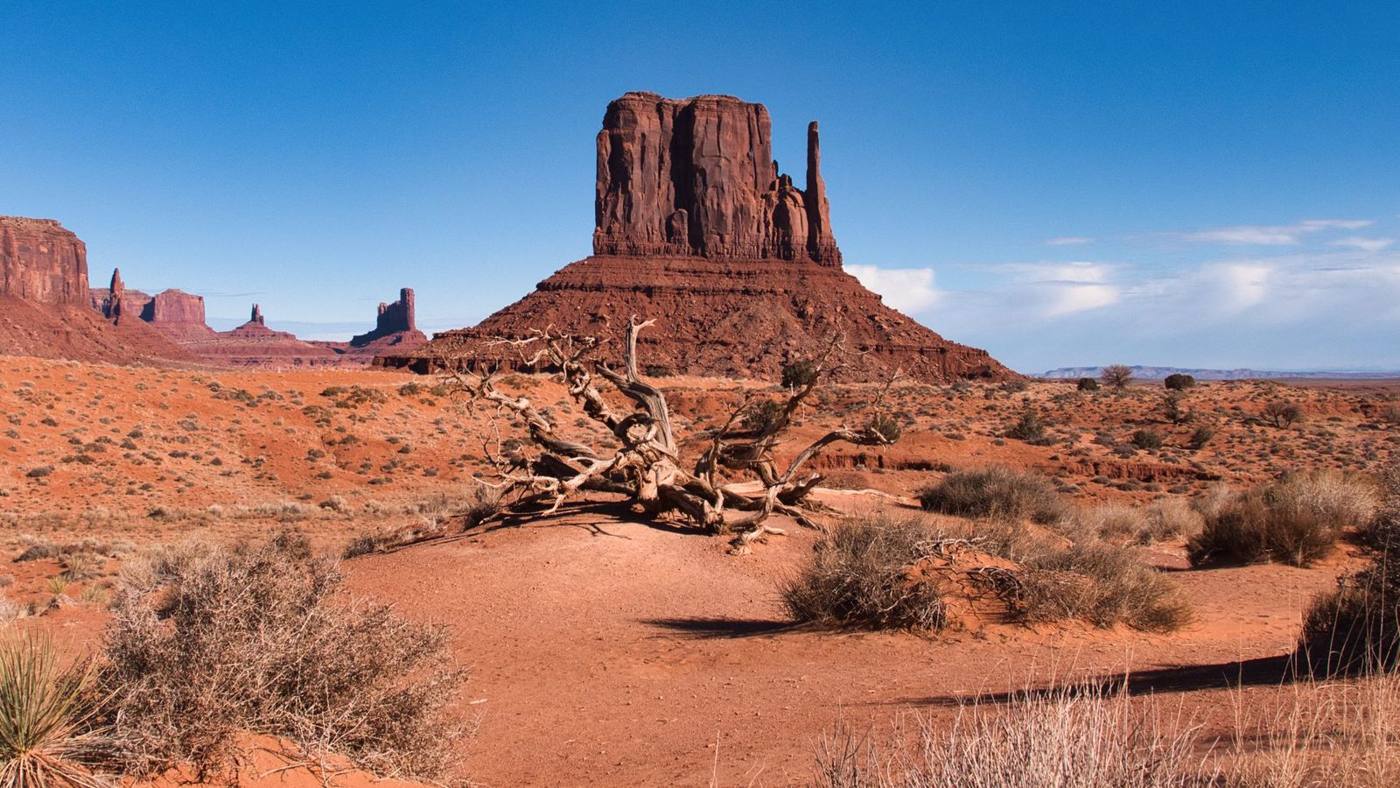
The great parks of the Southwest
Two weeks by car between Las Vegas, Zion, Bryce Canyon, Monument Valley and the Grand Canyon, with nights in roadside motels.
 12 daysEasy
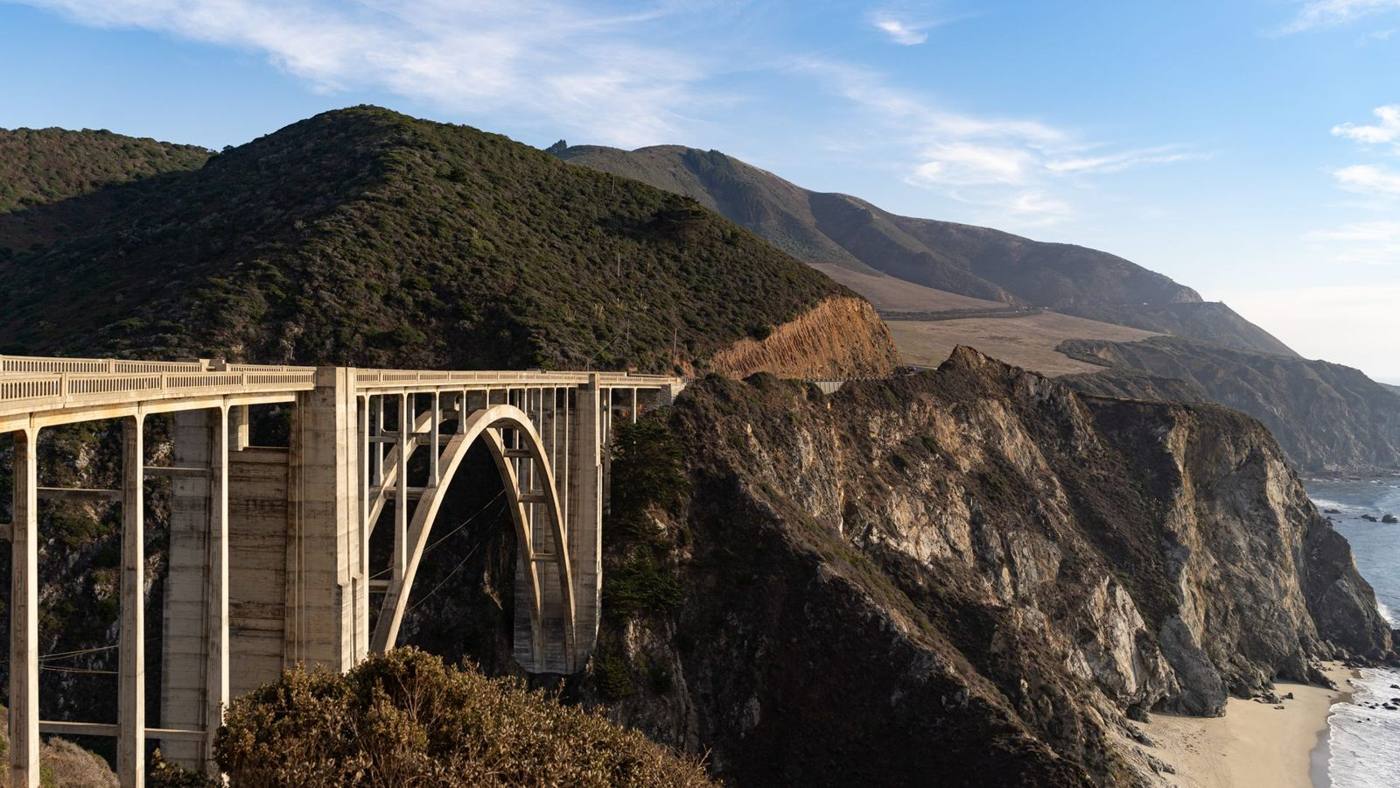
California: San Francisco to Los Angeles
San Francisco, Napa wines, Yosemite and Highway 1 along Big Sur to Santa Barbara and Los Angeles.
 8 daysEasy
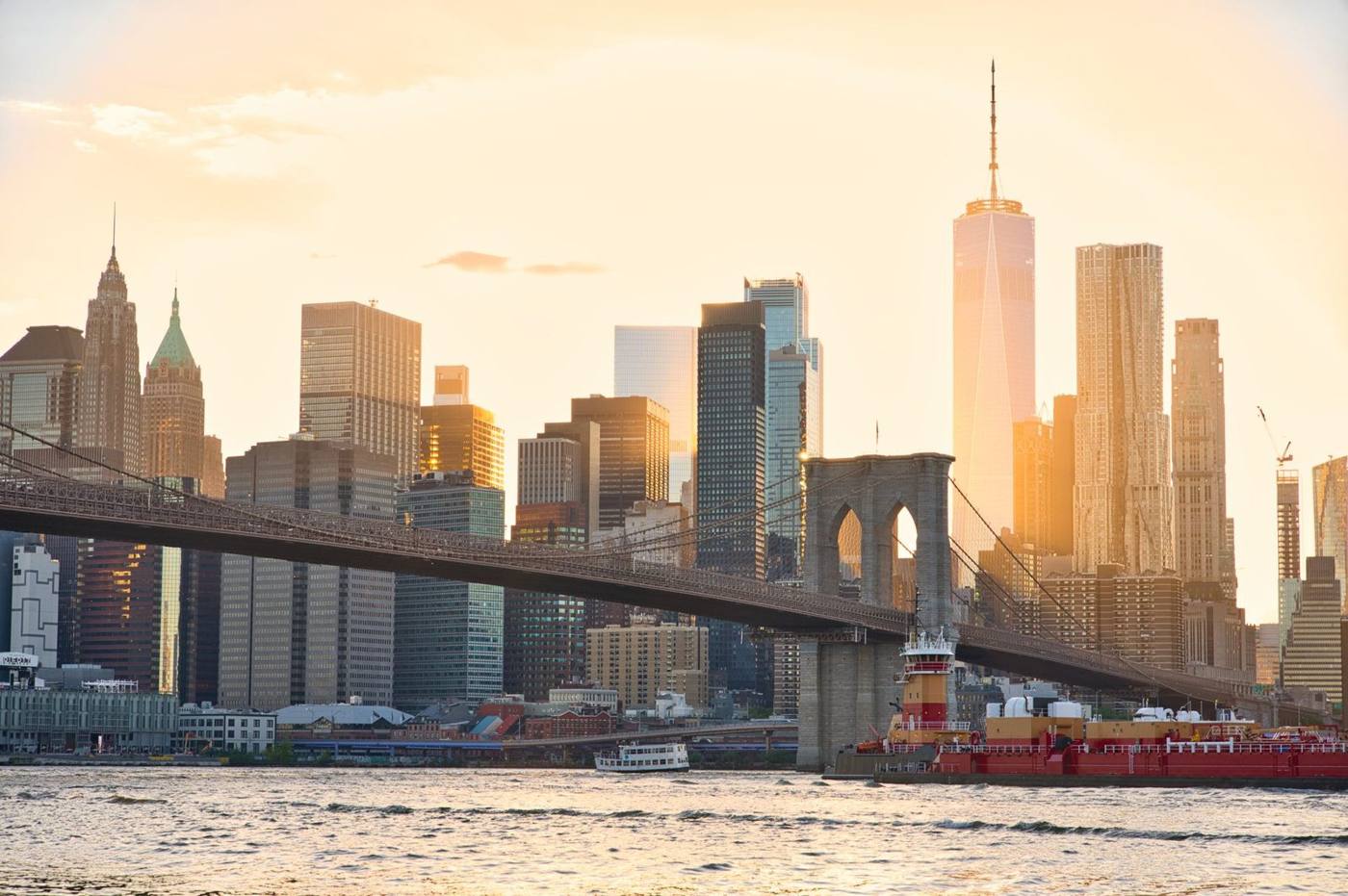
New York and Washington
Six days in New York between Manhattan, Brooklyn and the great museums, then two in Washington on the Mall and at the Smithsonian.