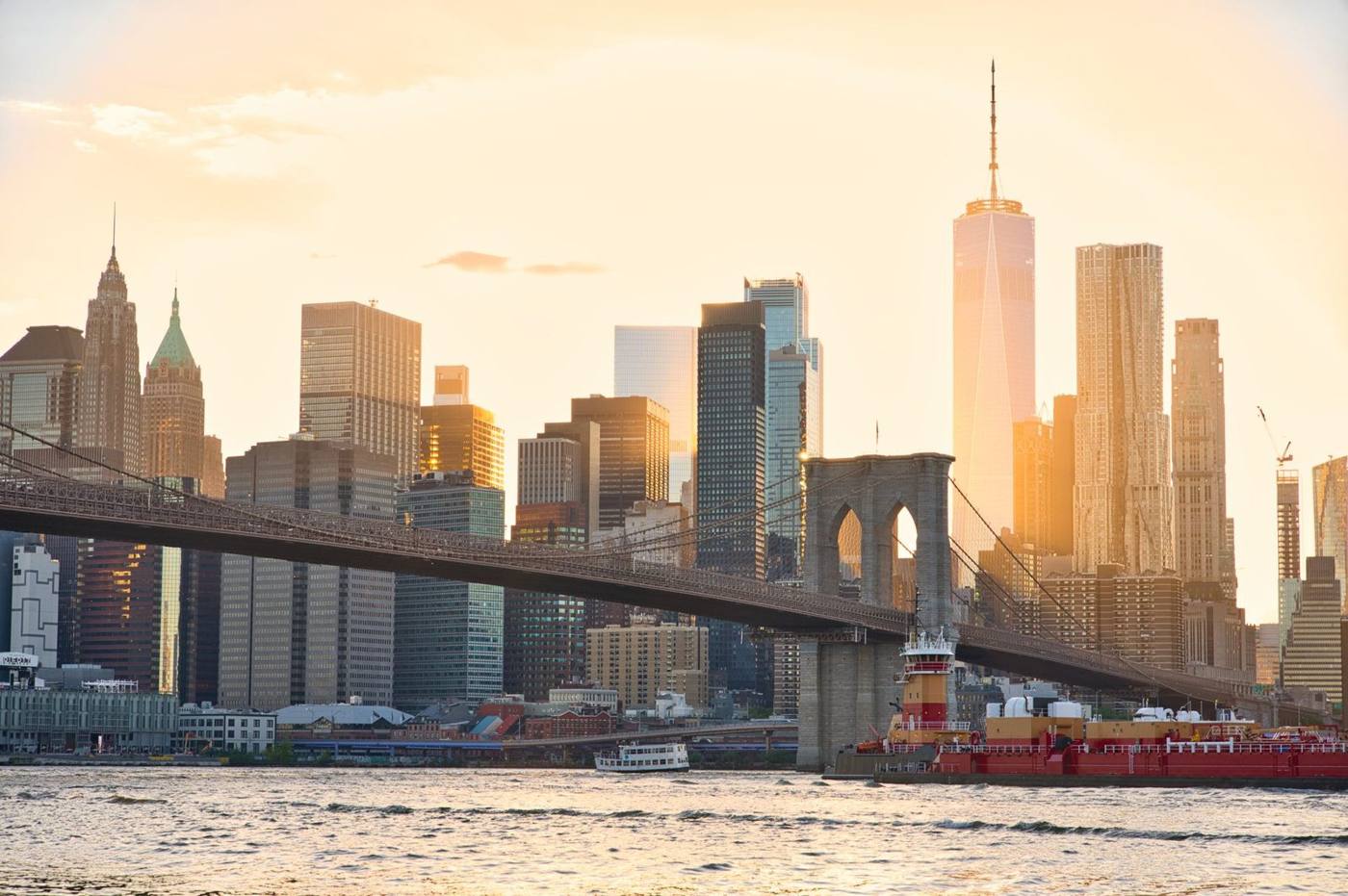
New York and Washington
Six days in New York between Manhattan, Brooklyn and the great museums, then two in Washington on the Mall and at the Smithsonian.
- Manhattan
- Brooklyn
- Harlem
- Amtrak
- Washington
Day by day
- Day 1
Arrival in New York, Central Park and Times Square
You arrive in New York at JFK or Newark. From JFK the AirTrain links to the subway or train into Manhattan in about an hour; from Newark the AirTrain connects to the train to Penn Station. Yellow cabs from JFK to Manhattan charge a flat fare, plus tolls and tip. Remember that Visa Waiver travellers need an ESTA, applied for on the official site at least 72 hours ahead: since 16 October 2026 it costs 40.62 dollars.
For six nights stay in Midtown or lower Manhattan, near a subway station: hotels are small and expensive, and city taxes are added to the price. The subway runs day and night and you pay by tapping a contactless card or phone at the turnstile; after a certain number of rides in the same week, further rides are at no cost.
In the afternoon, if your flight landed early, enter Central Park at the south-east corner and walk north: the boating lake, Bethesda Terrace with its fountain, Strawberry Fields with the mosaic dedicated to John Lennon, and the great lawn of Sheep Meadow. Then walk down Fifth Avenue, with St Patrick's Cathedral and Rockefeller Center.
In the evening, when the signs light up, pass through Times Square: chaotic and crowded, but worth seeing once. For dinner try a New York slice of pizza or a bagel. Practical tip: on the first day stay up until evening to adjust to the time difference.
- Day 2
Midtown: Rockefeller Center, Grand Central and the view from above
In the morning visit Grand Central Terminal, the 1913 station whose concourse has a blue ceiling painted with the constellations and a brass clock in the middle. Downstairs is the Whispering Gallery, an arched passage where speaking into the wall in one corner can be heard in the opposite corner. A few steps away is the New York Public Library, with its great reading room and the stone lions at the entrance, no-cost to enter.
In the afternoon go up to one of the city's viewpoints: Top of the Rock, atop Rockefeller Center, looking straight at the Empire State Building and Central Park; or the Empire State Building itself, with its open-air 86th-floor terrace. Tickets are bought online with a set time, and sunset slots cost more. Choose a clear day.
Before dinner walk west to Hudson Yards and the Vessel, the honeycomb structure made of stairs, and pick up the start of the High Line if you want to get ahead of day 5. Alternatively go to Broadway for a show: the most famous musicals are booked weeks ahead, but the TKTS booth in Times Square sells discounted seats for the same evening.
For dinner try a New York Jewish deli, with pastrami on rye. Practical tip: in restaurants the expected tip is 15 to 20 per cent of the bill before tax.
- Day 3
Downtown: the 9/11 Memorial, Wall Street, the ferry and Brooklyn Bridge
Take the subway down to Lower Manhattan. The 9/11 Memorial consists of two large pools in the footprints of the Twin Towers, with water falling towards the centre and the names of almost three thousand victims engraved around the edge: access is at no cost. The underground museum, paid with a set time, tells the story of the day through objects, voices and photographs: an intense visit of at least two hours. Next to it are the Oculus, Santiago Calatrava's white wing-shaped station, and One World Trade Center.
Then walk to Wall Street, with the Stock Exchange and Federal Hall, where George Washington was sworn in, and on to Battery Park at the tip of the island. From here take the no-cost Staten Island Ferry: a twenty-five-minute crossing past the Statue of Liberty with views of the skyline. If you want to land at the statue, tickets are sold only by the official vendor and must be booked ahead, especially to climb to the crown.
In the late afternoon walk across Brooklyn Bridge from Manhattan to Brooklyn, on the wooden walkway above the traffic, at sunset. On the other side, in DUMBO, are the riverside park and the famous view of the Manhattan Bridge framed by brick buildings.
Dinner in Brooklyn. Practical tip: on the bridge keep to the pedestrian lane, as the bike lane is reserved and cyclists come fast.
- Day 4
The Metropolitan Museum and MoMA
Today is museum day. In the morning enter the Metropolitan Museum of Art on Fifth Avenue at the edge of Central Park, one of the largest museums in the world: from Egypt, with the Temple of Dendur rebuilt in a glass hall, to European masters, armour and American art. You cannot see everything: choose three or four sections and save your energy. Tickets are bought online; pay-what-you-wish entry applies only to New York State residents. In summer the roof has a terrace overlooking the park.
At lunchtime cross Central Park southwards past the lake and Belvedere Castle, or stay on Museum Mile, home to the Guggenheim, with Frank Lloyd Wright's spiral ramp, and the Neue Galerie with Klimt's paintings.
In the afternoon go to MoMA, the Museum of Modern Art in Midtown: Van Gogh's Starry Night, Monet's Water Lilies, Picasso's Les Demoiselles d'Avignon, Warhol's Campbell's soup cans, and the sculpture garden, a quiet spot to rest among works by Picasso and Rodin. Book a time online to avoid the queue.
In the evening relax in a Midtown bar or go to a concert: Carnegie Hall and Lincoln Center have programmes almost every night. Practical tip: both museums close on certain weekdays and holidays, so check opening hours before you go.
- Day 5
The High Line, Chelsea and Greenwich Village
In the morning walk the High Line, the elevated park built on an old freight railway between Hudson Yards and the Meatpacking District: two kilometres of gardens, benches and art installations, with views of the streets below and the Hudson river. Stairs along the route give access and entry is at no cost.
Halfway along, go down to Chelsea Market, an old biscuit factory turned covered market, with food stalls from around the world. Chelsea's contemporary art galleries, between Tenth and Eleventh Avenues, are at no cost and change exhibitions constantly, so there is always something new to see.
In the afternoon head down into Greenwich Village, the artists' and music district of the 1960s: Washington Square with its arch and street musicians, tree-lined streets of brick houses, small cafés and jazz clubs. A little further south is SoHo, with its cast-iron buildings and shops, then Little Italy and Chinatown, very different from the past but still full of life.
In the evening listen to live jazz in one of the Village's historic clubs, where music has been played for decades in small dark rooms: book or arrive early for the first set. Practical tip: clubs often charge a cover plus a minimum drink spend, so check first.
- Day 6
Harlem and a gospel service, then Williamsburg
If today is Sunday, go up to Harlem in the morning for a gospel service at one of the neighbourhood's Baptist churches: the choirs and music are part of worship, not a show. Some churches welcome visitors in a reserved area, others ask groups not to attend: arrive early, dress modestly, do not take photos during the service and leave an offering. If it is not Sunday, explore the same area on foot.
Harlem is the heart of New York's African American culture: the Apollo Theater on 125th Street, where many music greats began, the brownstones of Strivers' Row, and the Schomburg Center for Research in Black Culture. For lunch try soul food: fried chicken, waffles, collard greens and mac and cheese.
In the afternoon take the subway to Williamsburg in Brooklyn, the neighbourhood that in the last twenty years has become the centre of the city's young life: record shops, galleries, craft breweries, weekend markets and a riverside park with views of the Manhattan skyline. At sunset the view from Domino Park on the East River is one of the finest.
Dinner in Williamsburg. Practical tip: subway lines are often diverted at weekends for works, so check the official app before setting off.
- Day 7
By train to Washington: the National Mall, the Capitol and the Lincoln Memorial
Early in the morning take the train from Penn Station to Washington: the regional train takes about three and a half hours, the fast one about three. Tickets are much cheaper booked ahead. The train arrives at Union Station, the monumental station a few minutes' walk from the Capitol. For one night stay near the National Mall or Dupont Circle.
Start with the Capitol, seat of Congress, with its great white dome: guided tours inside are at no cost and booked online. From here a tunnel leads to the Library of Congress, whose main reading room is one of the most beautiful in the country.
In the afternoon walk along the National Mall, the long lawn between the Capitol and the Lincoln Memorial. On either side are the Smithsonian museums, all no-cost: the Natural History Museum, the Air and Space Museum with Apollo capsules, and the National Museum of African American History and Culture, which needs a no-cost timed pass. The Washington Monument, the obelisk in the middle, is climbed with timed tickets for a nominal fee, to be booked.
At sunset reach the Lincoln Memorial, on the steps where Martin Luther King gave his I have a dream speech, looking over the Reflecting Pool and the obelisk. Then pass the White House. Practical tip: museums and federal buildings have security checks, so carry little luggage.
- Day 8
Washington: Georgetown, the memorials and departure
On the last morning visit the memorials around the Tidal Basin: the Jefferson Memorial with its dome on the water, the Martin Luther King Memorial carved from a granite mountain, and the Franklin Delano Roosevelt Memorial with its fountains and open-air rooms. In spring, from late March to early April, the Japanese cherry trees around the basin bloom all at once, the most beautiful and busiest moment of the year.
Alternatively stroll through Georgetown, the oldest neighbourhood, with Federal-style brick houses, the Chesapeake and Ohio Canal towpath and the Potomac waterfront. Arlington National Cemetery, just across the river, with John F. Kennedy's grave and the Tomb of the Unknown Soldier with its changing of the guard, is one metro stop away.
Intercontinental flights leave from Dulles airport, about an hour from the centre by the Silver metro line; Reagan airport, close to the centre, mainly serves domestic flights. Alternatively return to New York by train and fly from there.
For lunch try Chesapeake Bay blue crab, in crab cakes, a speciality of the whole region between Washington and Baltimore. Practical tip: at US airport security you often remove your shoes; arrive three hours early for international flights.
The most complete city trip in the United States. New York is very expensive: a decent Manhattan hotel often costs over $300 a night, so budget travellers stay in Long Island City or Brooklyn. In Washington the Smithsonian museums are at no cost and alone justify the detour.
Before you go
- Documents and visa
- Electronic passport and ESTA authorisation for Visa Waiver nationalities, applied for online on the official site at least 72 hours ahead: since 16 October 2026 it costs 40.62 dollars and is valid for two years. Travellers who have visited certain countries, such as Cuba or Iran, need a visa.
- Health and vaccines
- No vaccines required. Healthcare is extremely expensive: insurance with very high medical cover is essential. Emergencies: 911.
- Money and payments
- Dollar. Cards accepted everywhere. Prices are shown before tax, added at the till; restaurant tips of 15 to 20 per cent are expected.
- Power sockets
- Types A and B, 120 volts: you need a flat-pin adapter.
- Time zone
- Six time zones: New York is UTC-5, Los Angeles UTC-8; daylight saving changes on different dates from Europe.
- Safety
- Risks are mainly crime in some urban areas and natural hazards: hurricanes, wildfires, extreme desert heat. Official advice: GOV.UK.
Information checked in November 2026 for Italian and EU citizens. Rules change: always check before you travel.
Variations
In 5 days: Midtown and Central Park on the first day, Downtown and Brooklyn Bridge on the second, the Met and MoMA on the third, the High Line and the Village on the fourth, Harlem or Williamsburg on the fifth. You give up Washington.
In 12 days: add two days in Boston, with the Freedom Trail and Harvard, three and a half hours by train from New York, and two days in Philadelphia, with the Liberty Bell, on the way to Washington.
Frequently asked questions
Do I need a visa for the United States?
For tourism up to 90 days, Visa Waiver nationalities need only an ESTA, the electronic authorisation applied for online on the official site at least 72 hours ahead, with an electronic passport. Since 16 October 2026 it costs 40.62 dollars and is valid for two years. Travellers who have visited certain countries, such as Cuba or Iran, must apply for a visa at an embassy.
Is New York expensive?
Yes, especially hotels, to which city taxes are added, and restaurants, where tax is not included in the prices and a 15 to 20 per cent tip is expected. Many things are at no cost: Central Park, the High Line, the Staten Island Ferry, the 9/11 Memorial, and the Smithsonian museums in Washington.
When is the best time to go?
April to June and September to early November: mild weather and colourful parks. Summer is hot and humid; winter is cold, sometimes snowy, but the Christmas season in New York is magical and crowded. In Washington the cherry blossom is between late March and early April.
Indicative itinerary written by World Atlas. Before booking, check timetables, seasonal openings, documents and safety.
 10 daysEasy
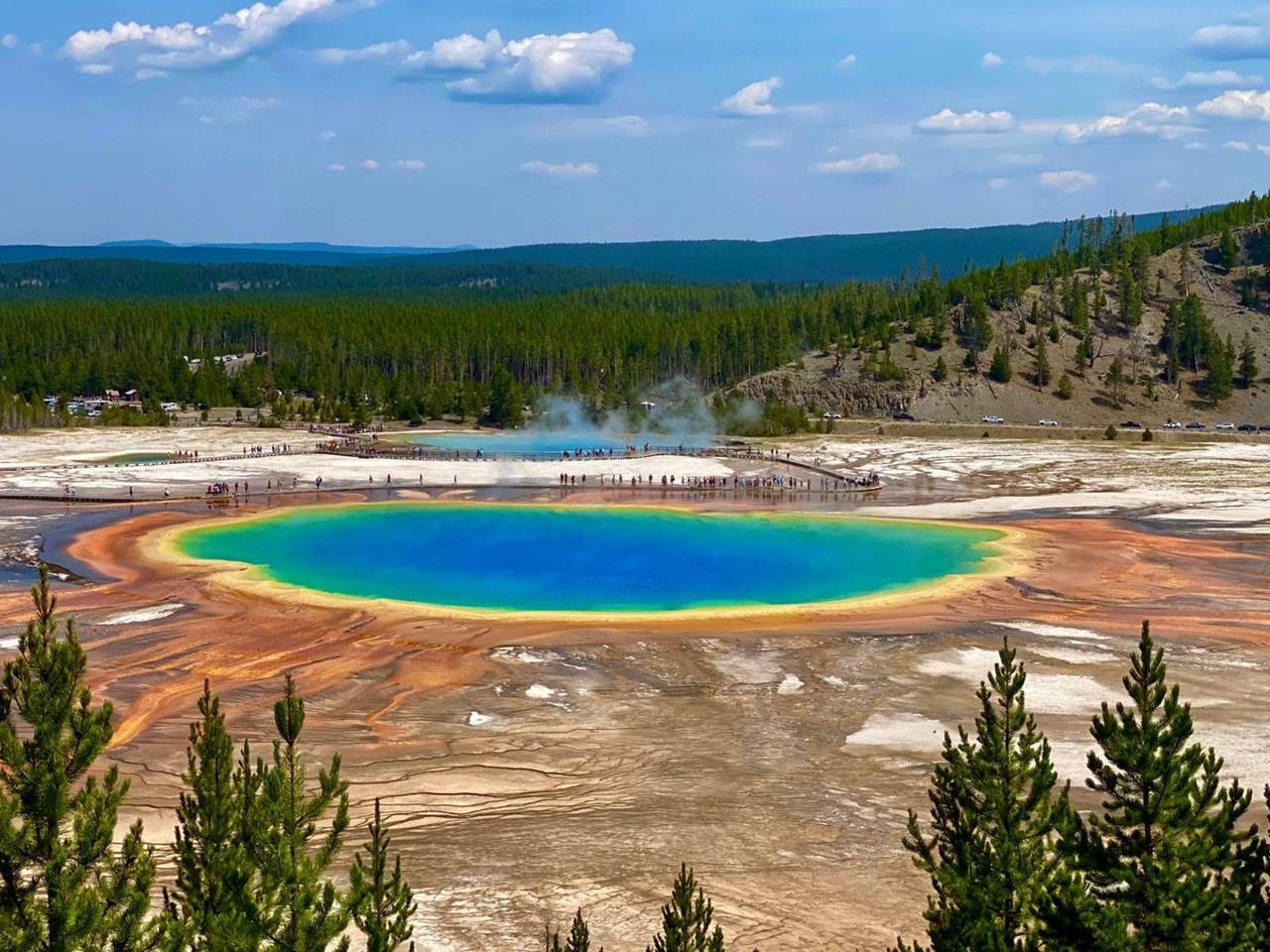
Yellowstone and Grand Teton
Geysers, coloured hot springs and the Lamar Valley with bison, bears and wolves, then the Grand Teton peaks above Jackson Hole.
 12 daysEasy
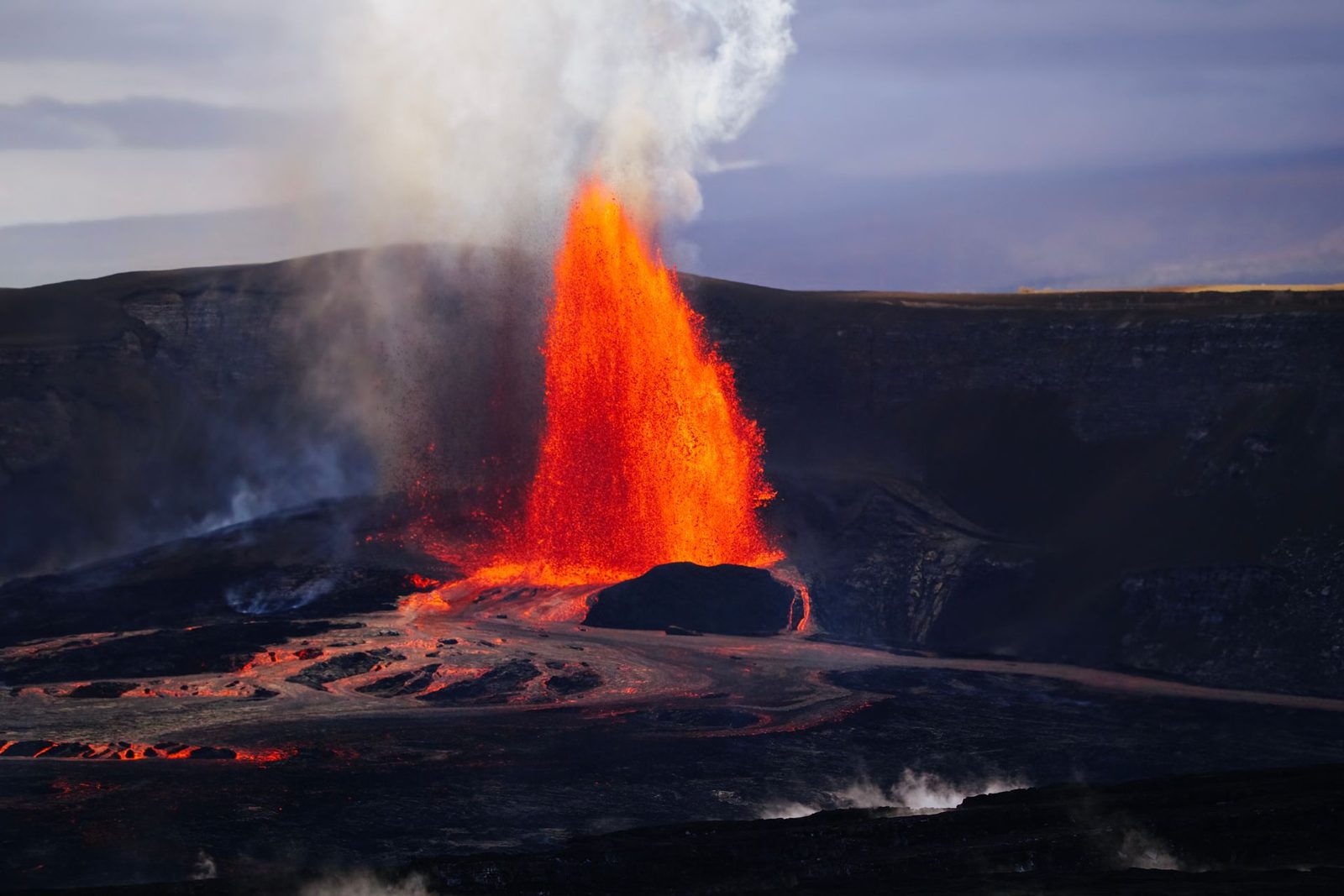
Hawaii: Big Island and Maui
The active volcanoes of the Big Island and night snorkelling with manta rays, then the Road to Hana and sunrise on Haleakalā in Maui.
 21 daysModerate
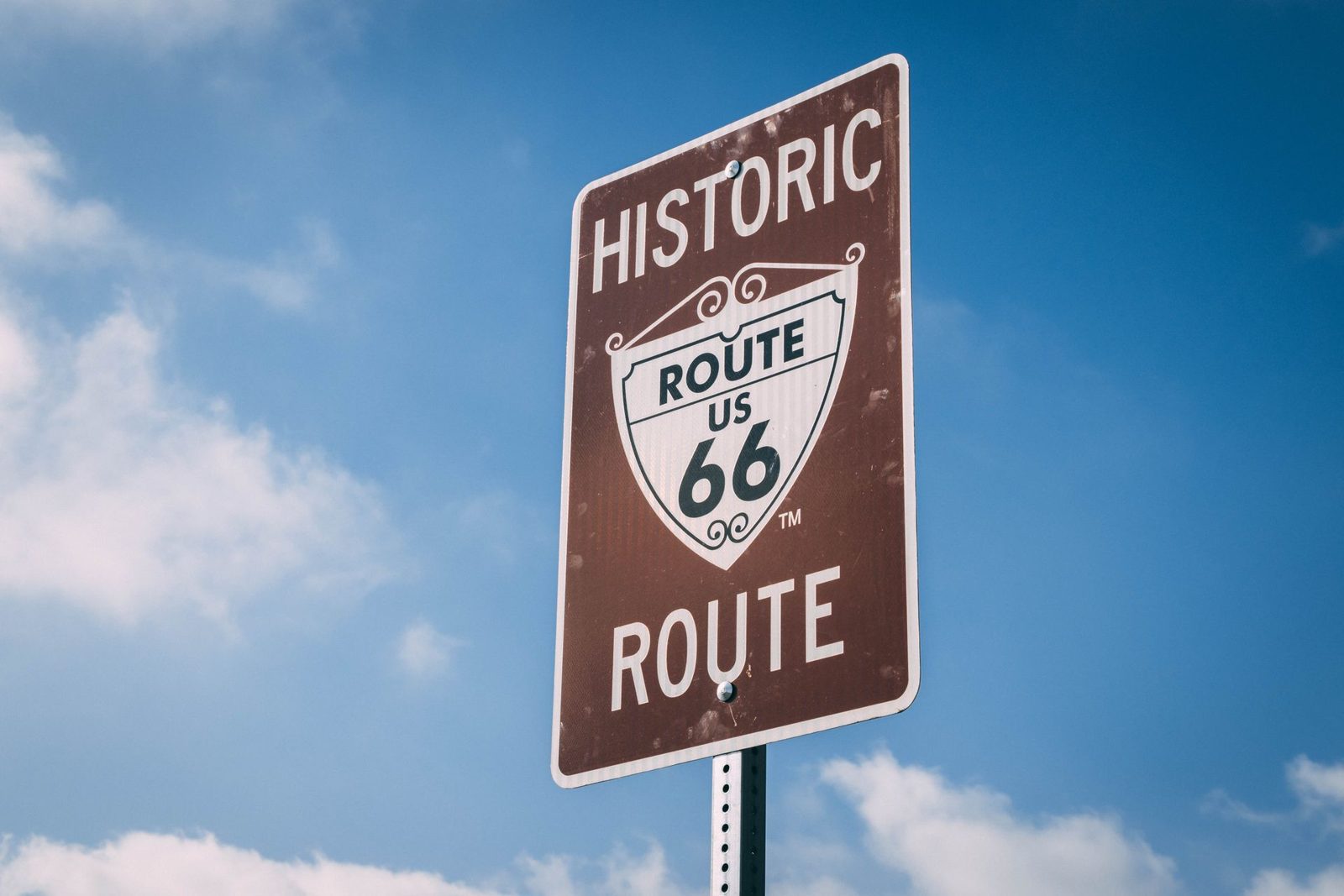
Route 66 from Chicago to Los Angeles
Almost 4,000 kilometres across eight states: diners, neon-signed motels, Santa Fe, the Grand Canyon and Santa Monica Pier.