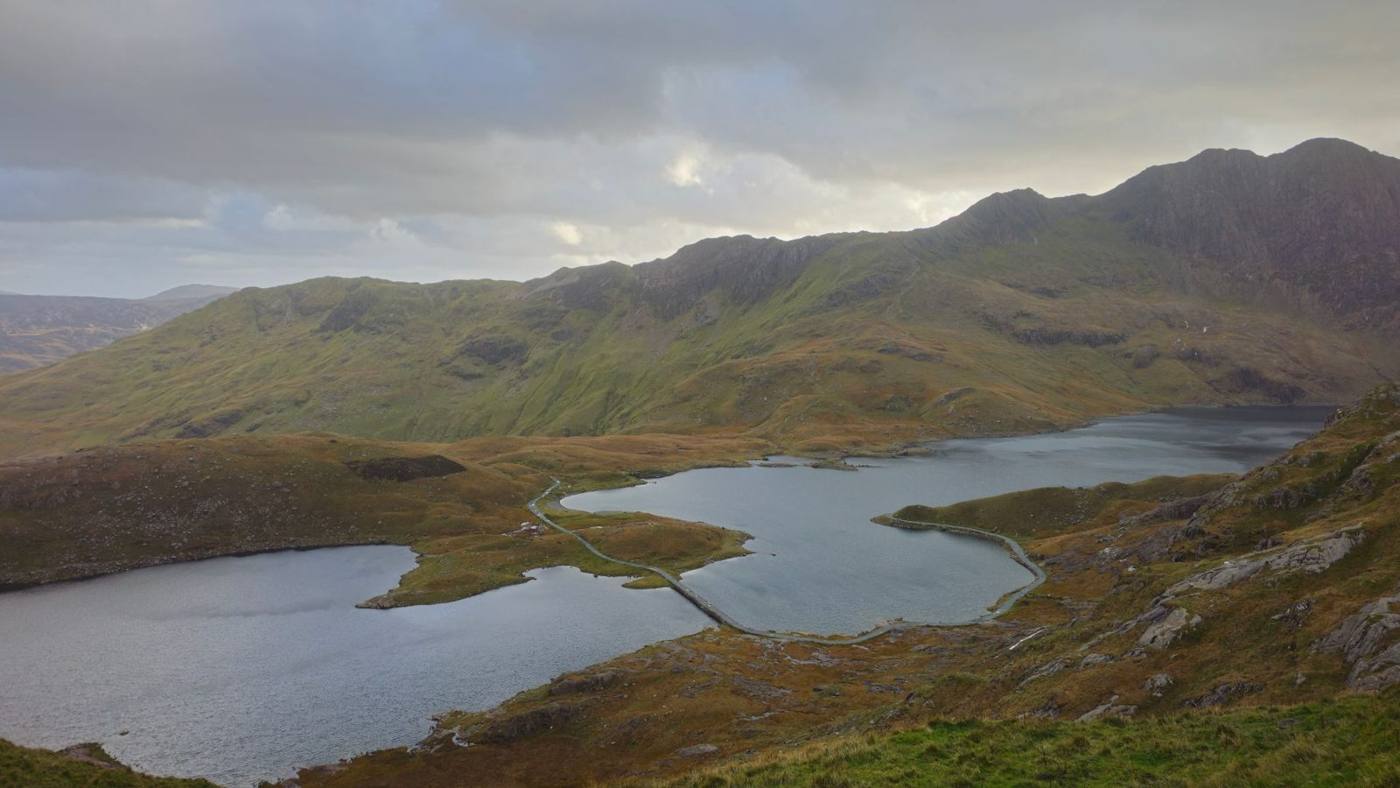
Wales: Snowdonia and Pembrokeshire
The castles of Conwy and Caernarfon, the climb up Snowdon, the Llŷn Peninsula and the Pembrokeshire cliffs with the Skomer puffins.
- Conwy
- Eryri
- Caernarfon
- Llŷn
- Aberaeron
- St Davids
- Skomer
Day by day
- Day 1
Conwy castle and town walls
This trip crosses Wales from north to south: the medieval castles of the north coast, the mountains of Eryri National Park, known in English as Snowdonia, the wild Llŷn peninsula, the long sweep of Cardigan Bay and the Pembrokeshire coast, with cliffs, small towns and islands full of seabirds. Wales has its own language, Welsh, still spoken every day by many people, especially in the north: all road signs are bilingual.
To enter the United Kingdom you need a passport, an identity card is not enough, and you must apply before departure for an ETA, the electronic travel authorisation, which costs 20 pounds. You fly into Manchester or Liverpool, about an hour and a half by road from Conwy. You need a car, and you drive on the left.
Conwy is a small town at the mouth of a river, enclosed by almost intact medieval walls with twenty one towers. They were built by the English king Edward I at the end of the thirteenth century, after conquering Wales, together with the castle and its eight great round towers. The castle and walls are part of a UNESCO World Heritage Site, with the king's other castles in north Wales.
Visit the castle and climb the towers, then walk along the walls, with views over the town's roofs, the harbour and the mountains. On the quay stands the smallest house in Great Britain, a red cottage of two rooms.
In the evening have Conwy mussels, harvested in the estuary for centuries.
Spend the night in Conwy.
Practical tip: check the castle's opening times and price. Apply for your ETA a few days in advance.
- Day 2
Eryri: climbing Yr Wyddfa
Today climb Yr Wyddfa, Snowdon in English, the highest mountain in Wales at 1,085 metres. It lies in Eryri National Park, about half an hour by road from Conwy, a landscape of rocky mountains, lakes, glacial valleys and sheep pastures.
Several paths lead to the summit, all demanding, taking five to seven hours there and back.
The Pyg Track and the Miners' Track start from the Pen y Pass. The Miners' Track is easier at first, past lakes and the remains of old copper mines, then joins the Pyg Track for the steep final section. The Llanberis Path, from the village of Llanberis, is the longest but gentlest, following the railway. The Crib Goch ridge is for experienced scramblers only, as it requires using your hands on a very exposed ridge.
From the summit on clear days you see the mountains of Wales, the sea and sometimes Ireland. Often, though, the top is in cloud.
Those who prefer not to walk can ride the rack railway from Llanberis, a historic line from the late nineteenth century.
In the evening return to the valley tired but satisfied.
Spend the night in Llanberis or Betws y Coed.
Practical tip: the Pen y Pass car park is small and must be booked; otherwise there are shuttle buses from the villages. The railway must be booked well ahead and does not always reach the summit. Check the mountain forecast and bring warm, waterproof clothing.
- Day 3
Beddgelert and the valleys of Eryri
After the climb, today is a quieter day to discover the valleys and villages of Eryri.
In the morning go to Beddgelert, one of the prettiest villages in Wales, about half an hour from Llanberis, with grey stone houses, a bridge over the river and mountains all around. The name means Gelert's grave, and a local legend tells of a prince who killed his faithful dog Gelert by mistake, believing it had killed his son, when the dog had in fact saved the child from a wolf. A short riverside walk leads to the stone marking the dog's grave.
From Beddgelert a fine walk follows the Aberglaslyn gorge, a riverside path among rocks and woods, with sections over rock where you need your hands.
In the afternoon, if you like trains, ride a stretch of the Welsh Highland Railway, a narrow gauge line with steam locomotives that crosses the mountains.
Alternatively, go to Betws y Coed, a Victorian village among forests, and to the nearby Swallow Falls, and walk in the woods of Gwydyr forest park.
Another option is the slate quarries of Llanberis and Blaenau Ffestiniog, which roofed half the world in the nineteenth century and are now part of a UNESCO site.
In the evening have Welsh lamb.
Spend the night in Beddgelert or Betws y Coed.
Practical tip: it rains often in the valleys of Eryri. Always keep a waterproof jacket handy and check the steam train timetables.
- Day 4
Caernarfon and the Llŷn peninsula
Today go to Caernarfon, on the north west coast, about half an hour from Beddgelert. Caernarfon castle is the largest and most imposing of Edward I's castles, with polygonal towers and walls banded in stones of different colours, inspired by the walls of Constantinople. In 1969 the present King Charles III was invested here as Prince of Wales. Walk the walls and towers, with views over the Menai Strait and the island of Anglesey.
In the afternoon enter the Llŷn peninsula, a long arm of land stretching west into the sea, with small farms, stone walls, beaches and villages where Welsh is the main language. Much of the coast is an Area of Outstanding Natural Beauty.
Stop at Porthdinllaen, a tiny fishing hamlet on a beach, reached only on foot along the coast or across a golf course, with a pub right on the sand.
Then continue to the tip of the peninsula, Braich y Pwll, from where you see Bardsey Island, Ynys Enlli, a pilgrimage destination in the Middle Ages: three pilgrimages to Bardsey were said to equal one to Rome. Legend also says twenty thousand saints are buried on the island.
In the evening return towards Abersoch or Pwllheli, on the peninsula's south coast.
Spend the night on the Llŷn peninsula.
Practical tip: the peninsula's roads are narrow, between high hedges, with few passing places. Drive calmly. Check opening times and prices for Caernarfon castle.
- Day 5
Along Cardigan Bay to Pembrokeshire
Today head south along the coast of Cardigan Bay, the great bay that fills the whole west coast of Wales. It is a driving day, about four hours, with many possible stops.
The first stop is Portmeirion, near Porthmadog, a village built in the twentieth century by a Welsh architect in Italian style, inspired by Portofino, with colourful houses, squares, statues and gardens on a bay. It is a curious and much photographed place.
Then follow the coast through Harlech, with another of Edward I's castles on a crag above the dunes, and Barmouth, a small seaside town with a long wooden bridge across the estuary.
Halfway down is Aberaeron, a small harbour with houses painted in pastel colours, and then New Quay, where bottlenose dolphins are often seen from the shore. They belong to one of the few resident dolphin populations in the United Kingdom, living in Cardigan Bay.
In the afternoon you reach Pembrokeshire, the region at the south western tip of Wales, home to the only national park in the United Kingdom devoted mainly to the coast.
In the evening have fish and crab from the coast.
Spend the night in or near St Davids.
Practical tip: seeing dolphins at New Quay takes patience: they are easiest to spot in calm seas, from the pier. Portmeirion charges an admission fee: check the price.
- Day 6
St Davids and the boat to Skomer
Today discover St Davids, the smallest city in the United Kingdom, with fewer than two thousand inhabitants, which holds city status thanks to its cathedral. It is dedicated to Saint David, the patron saint of Wales, who founded a monastery here in the sixth century.
The cathedral lies in a small valley, hidden from the sea, to protect it from Viking raids. Inside it has a carved oak ceiling, sloping floors and the shrine of Saint David. Beside it are the ruins of the bishop's palace, a large Gothic building.
In the afternoon drive to Martin's Haven, about half an hour away, where small boats leave for Skomer Island, a nature reserve. Skomer is famous for its puffins, tens of thousands of them, nesting in burrows in the island's soil between spring and summer. You walk the paths between the burrows and puffins pass a few metres away, their bills full of small fish. Manx shearwaters and other seabirds also nest on the island, and grey seals lie on the rocks.
In the evening walk the coast near St Davids to the chapel of Saint Non, Saint David's mother, on the cliffs.
Spend the night in St Davids.
Practical tip: Skomer boats run only in the fine season, not every day and only in calm seas, with a limited number of visitors. Check dates and rules and arrive early at the harbour. Puffins are mainly seen from April to July.
- Day 7
The coast path and departure from Cardiff
On the last day walk a stretch of the Pembrokeshire Coast Path, a trail following the whole coast of the national park for about three hundred kilometres, past cliffs, coves, beaches and rock arches.
A fine, not too long section runs from St Davids to Whitesands Bay, with a large sandy beach, passing St Davids Head, with rocks and the remains of an Iron Age fort. Alternatively, walk the section around the St Davids peninsula, with views of Ramsey Island.
Further south, if you have time, stop at Tenby, a seaside town with colourful houses, medieval walls and beaches, or at the tiny chapel of St Govan, built into the rock of a cliff.
In the afternoon drive to Cardiff, the Welsh capital, about two and a half hours away. If you have time, make a short visit to the centre, with Cardiff castle, combining Roman remains, a Norman keep and decorated Victorian rooms, and Cardiff Bay, with the Welsh parliament.
Cardiff airport has some international flights, but it is often easier to leave from Bristol, about an hour away, or return to London by train or car.
Practical tip: on the coast path keep away from cliff edges, especially in wind. Allow plenty of time for the airport, as roads in Wales are slow.
Wales combines medieval castles, mountains and one of Europe's finest coastlines, with far fewer people than England. Snowdon is crowded in summer, so start at dawn or take the Rhyd Ddu path. Boats to Skomer run only in calm seas, with limited places. Welsh is a living language and signs are bilingual.
Before you go
- Documents and visa
- You need a passport: identity cards are no longer accepted. Before leaving you apply online for an ETA, the electronic travel authorisation: it costs 20 pounds and is valid for two years.
- Health and vaccines
- No vaccines required. EU citizens should carry the European Health Insurance Card for necessary treatment. Emergencies: 999 or 112.
- Money and payments
- Pound sterling. Contactless cards are used everywhere, including on London public transport.
- Power sockets
- Type G, 230 volts: you need an adapter for British three-pin plugs.
- Time zone
- UTC in winter and UTC+1 in summer.
- Safety
- The United States rates the United Kingdom level 2 for terrorism. In big cities watch out for pickpockets; in Scotland and Wales the main risks are weather and mountains. Driving is on the left. ETA: GOV.UK.
Information checked in November 2026 for Italian and EU citizens. Rules change: always check before you travel.
Variations
In 4 days: Conwy, Eryri with Yr Wyddfa and Caernarfon.
In 10 days: add the island of Anglesey to the north and the Brecon Beacons, Bannau Brycheiniog, to the south.
Frequently asked questions
Do I need a passport?
Yes, an identity card is not enough. You also need an ETA, costing 20 pounds, applied for before departure.
When is the best time to go?
May to September, with long days. Skomer's puffins are seen from April to July.
Is Yr Wyddfa hard to climb?
You need to be reasonably fit. The Llanberis Path is the gentlest route, or you can go up by train.
Indicative itinerary written by World Atlas. Before booking, check timetables, seasonal openings, documents and safety.
 9 daysChallenging
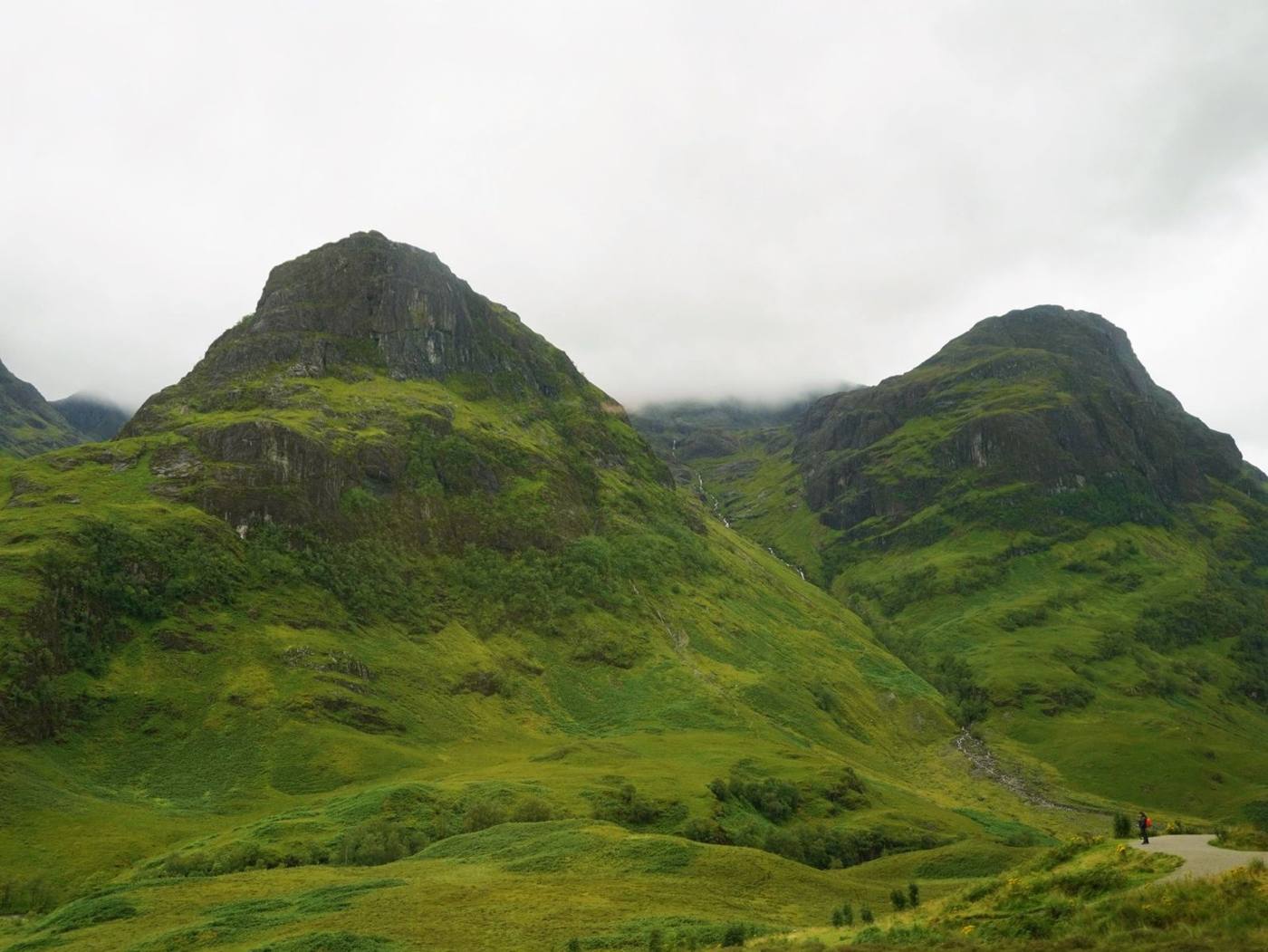
The West Highland Way
Scotland's most famous long-distance walk: 154 km from Milngavie to Fort William along Loch Lomond, across Rannoch Moor and Glencoe, to the foot of Ben Nevis.
 8 daysEasy
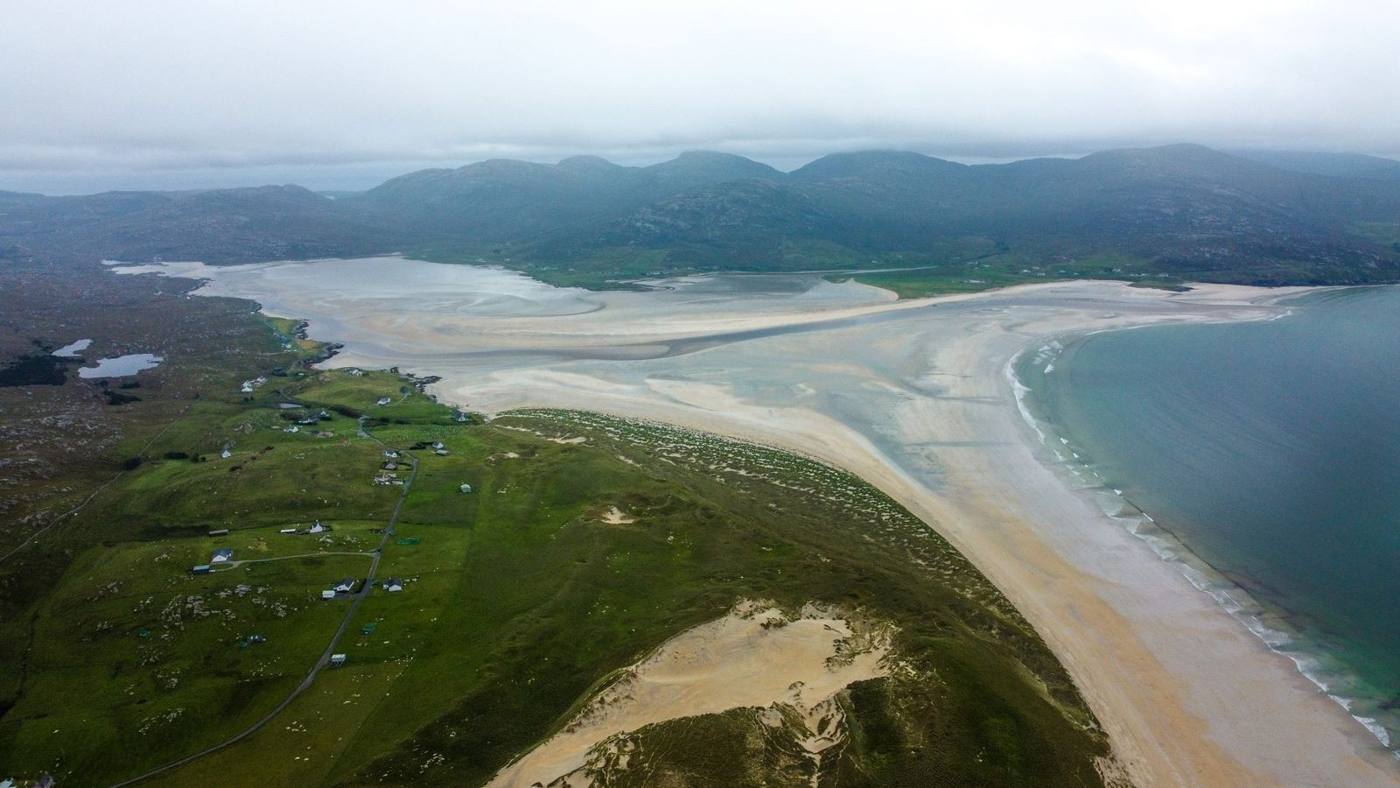
Orkney and the Outer Hebrides
Scotland's northern islands: the Neolithic village of Skara Brae and the Ring of Brodgar on Orkney, the white beaches of Harris and the Callanish Stones on Lewis.
 6 daysEasy
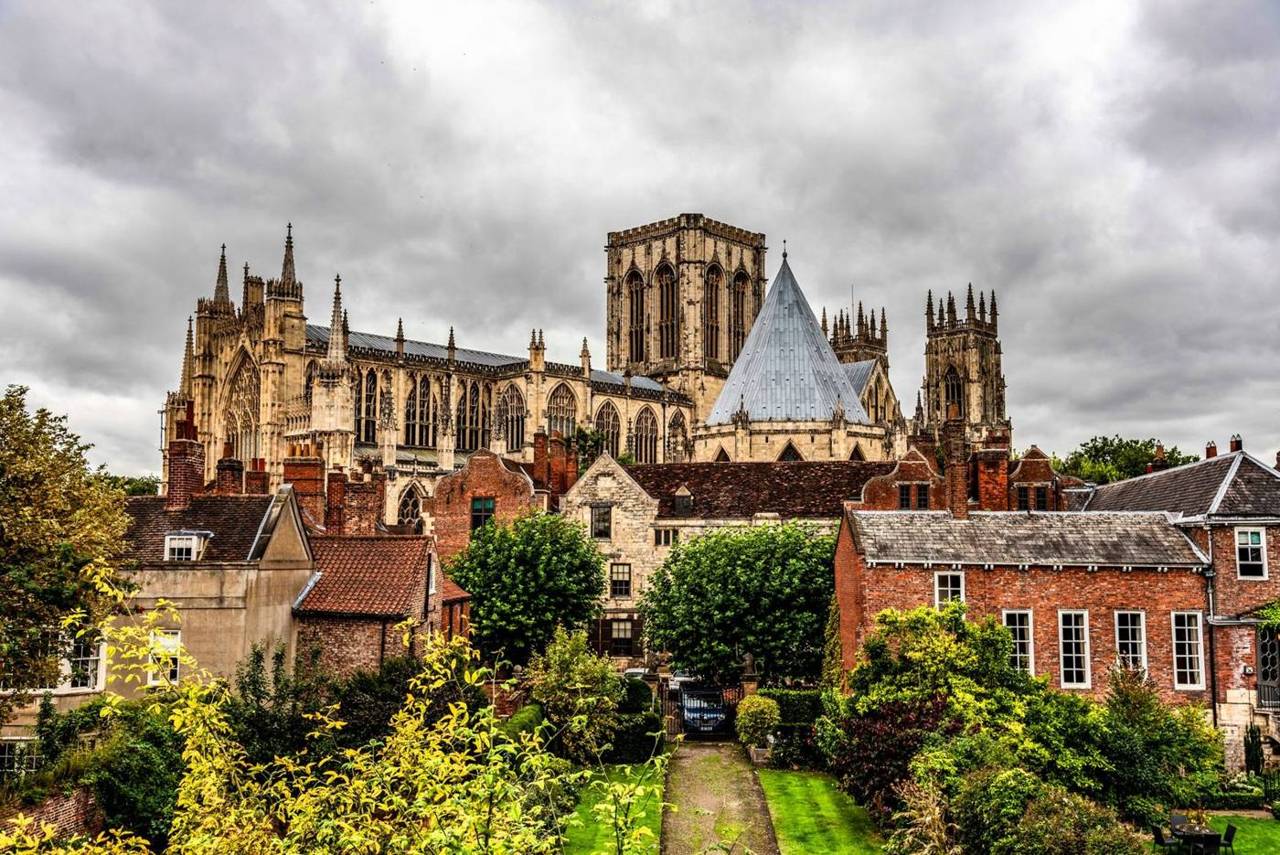
York and Yorkshire
The walled city of York and its minster, the Yorkshire Dales, Fountains Abbey and the harbour of Whitby on the coast.