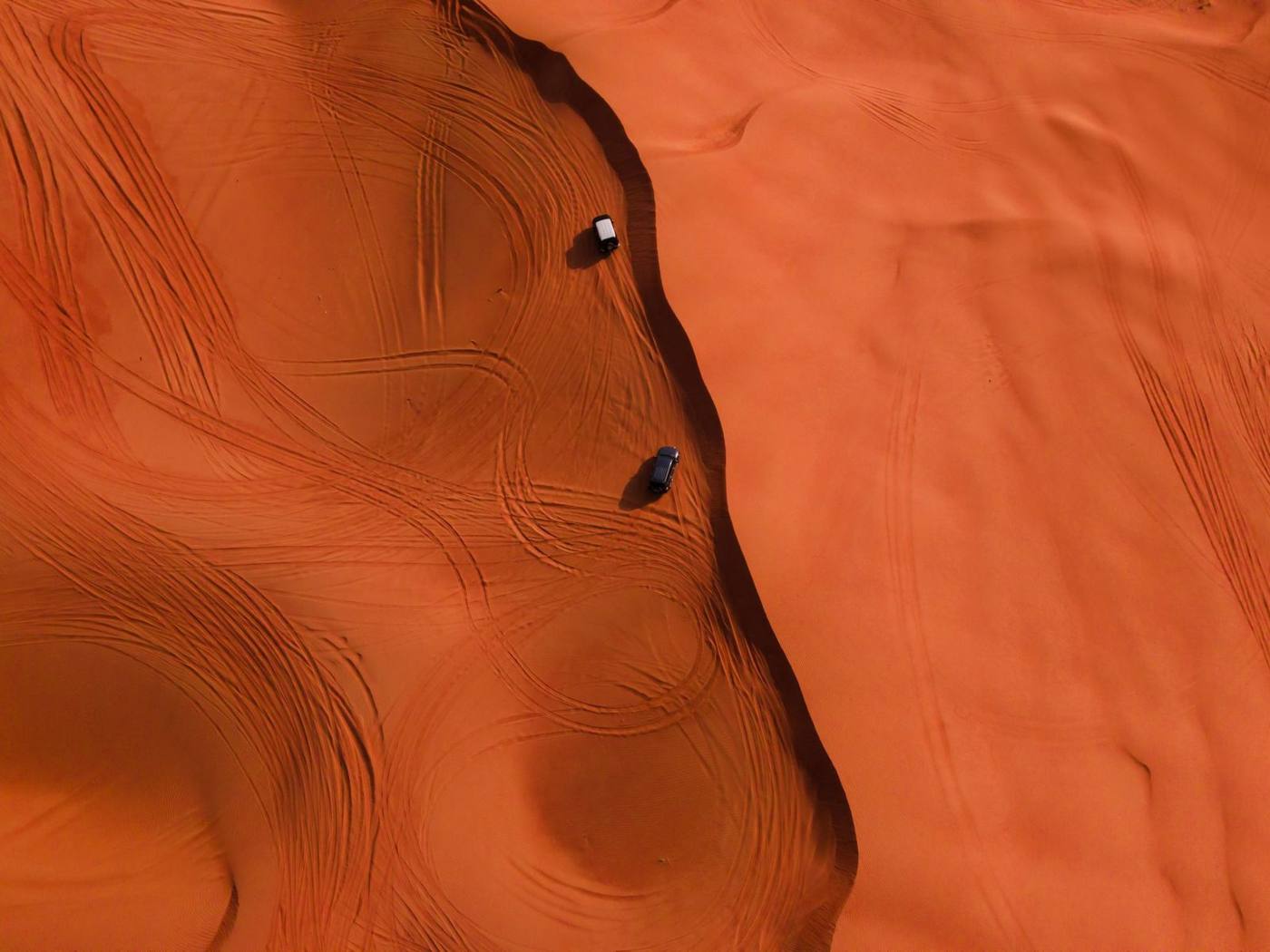
The Liwa desert
The highest dunes in the Emirates on the edge of the Empty Quarter, the Liwa oasis, Moreeb dune and a night in a desert resort.
- Abu Dhabi
- Madinat Zayed
- Liwa
- Tal Moreeb
- Qasr Al Sarab
Day by day
- Day 1
From Abu Dhabi to the Liwa oasis
This four-day trip takes you into the real desert of the Emirates, on the edge of the Rub al Khali, the Empty Quarter, one of the largest sand deserts in the world. You see the Liwa oasis, Moreeb Dune, among the highest in the region, the dunes by 4x4 with a guide and a night under a starry sky.
Before you go: Italian citizens enter the Emirates with a passport valid for at least six months from the date of arrival; an identity card is not enough. The tourist visa is issued on arrival, with no need to apply in advance, for stays of up to 90 days. Other nationalities should check their own rules.
Some areas on this trip are close to borders or places where the situation changes often: check your government's travel advice before booking and again before you leave.
In the morning leave Abu Dhabi heading south-west. The wide, straight road crosses the Al Dhafra region and passes through Madinat Zayed, where you can stop for a coffee and fuel. From the capital to Liwa takes about three hours.
After Madinat Zayed the dunes become ever higher and more orange. Liwa is not a city but a long crescent of villages and palm groves among the dunes. The Bani Yas tribe came from here, and at the end of the eighteenth century moved to the island of Abu Dhabi.
In the afternoon drive slowly between the villages and the date palm groves, protected by fences against the sand.
Sleep in Liwa, for two nights.
Practical tip: download maps to your phone before leaving: in some areas of the desert the signal is weak.
- Day 2
Moreeb Dune and the dunes by 4x4
Today you see the most spectacular dunes of Liwa, with an experienced guide.
Early in the morning go to Tal Moreeb, Moreeb Dune, south of the oasis: a wall of sand about 300 metres high, with a very steep slope. In winter races are held here in which cars and motorbikes try to reach the top. At the foot of the dune there are car parks and stands. Climb part of the way on foot on the gentler sides: the sand slides under your feet and it is hard work, but the view over the waves of dunes is enormous.
Then set off with your guide in an equipped 4x4 for a drive in the dunes around the oasis. Driving in the dunes without experience is dangerous: cars roll over or get stuck, and far from the roads nobody can help you quickly. The guide knows how to deflate the tyres, read the wind and find safe passages.
At midday rest in the shade, during the hottest hours.
In the afternoon, in the low light, the guide takes you up a ridge for sunset: the dunes turn red and shadows stretch for kilometres.
In the evening taste the dates of Liwa, among the most famous in the country, with Arabic coffee flavoured with cardamom.
Practical tip: always travel with at least two vehicles, carry plenty of water and leave your plans with someone: it is the golden rule of the desert.
- Day 3
A night in the desert and the starry sky
Today you move to isolated accommodation among the dunes, to experience the silence of the desert.
In the morning leave Liwa and reach one of the hotels or desert camps in the area, built far from the villages, with views of nothing but dunes. Book in advance: there are few and prices are high.
In the afternoon walk on the nearby dunes and join a camel ride or a fat-bike outing, if your accommodation organises them. You can also watch a falconry display, a much-loved tradition in the Emirates: the falcon flies low over the sand and returns to the falconer's glove.
At sunset sit on top of a dune and watch the sun sink below the horizon.
After dinner switch off the lights and look at the sky. Far from the cities, on moonless nights, you see the Milky Way and thousands of stars. In winter the temperature drops a lot, sometimes close to ten degrees.
In the evening the silence is total: it is the best moment of the trip, the one that makes Liwa different from the dune safaris near Dubai.
Sleep in the desert.
Practical tip: to see the stars choose a date close to the new moon and bring a heavy jacket: after sunset the desert cools quickly.
- Day 4
Back to Abu Dhabi
On the last day you head back to the coast.
At dawn go out to look at the dunes, when the sand is cool and you can see the tracks left overnight by beetles, foxes and small rodents.
After breakfast take the road back to Abu Dhabi, about three hours. Along the way stop in Madinat Zayed or at one of the service stations, and watch the landscape become flat and sandy again towards the coast.
In the afternoon you reach Abu Dhabi. If you still have time, walk along the Corniche or visit the Sheikh Zayed Mosque before your flight.
In these four days you have seen the real desert of the Emirates, far more beautiful and silent than the dune safaris near Dubai: the Liwa oasis, the great Moreeb Dune, red ridges at sunset and a night under the stars. Remember that in the desert it is always best to move with a guide. The Liwa date festival is held in summer, when it is extremely hot: for travellers, winter remains much better.
When to go: from November to February, when the days are warm but bearable and the nights cool. From May to September temperatures become dangerous.
Practical tip: before setting off on the way back check your tyre pressure, especially if you lowered it to drive on sand, and inflate the tyres again at the first fuel station.
The Emirates' real desert, far more beautiful and silent than the dune safaris near Dubai. Driving in the dunes without experience is dangerous: go with a guide. The Liwa date festival takes place in summer.
Before you go
- Documents and visa
- Passport valid for at least six months from the date of arrival. Italian, EU and British citizens receive a tourist visa on arrival, with no need to apply in advance, for stays of up to 90 days. Some medicines that are common in Europe (for example for pain, anxiety or sleep) need prior approval from the UAE Ministry of Health: check before you travel and carry the prescription.
- Health and vaccines
- No compulsory vaccinations, except a yellow fever certificate if you arrive from a risk country. Healthcare is excellent but very expensive: get insurance with high medical cover. From May to September the heat is extreme: drink often and stay in the shade in the middle of the day. Tap water is treated, but almost everyone drinks bottled water. Emergencies: 999 police, 998 ambulance.
- Money and payments
- UAE dirham, pegged to the US dollar. Cards are accepted almost everywhere, including taxis; keep some cash for the souks, the abras on the Creek and small kiosks.
- Power sockets
- Type G, 230 volts: the same sockets as in the UK.
- Time zone
- UTC+4 all year, four hours ahead of the UK in winter and three in summer.
- Safety
- The situation in the Gulf region can change quickly, including sudden airspace closures: check the advice and the status of your flights before leaving. The laws are strict and apply to tourists too. Alcohol: you may drink only in licensed venues and from the age of 21; drinking or being drunk in public is an offence and there is zero tolerance for drink-driving; alcohol is banned in the emirate of Sharjah. Clothing: in public places, including shopping centres, cover shoulders and knees; swimwear is for beaches and pools only; in mosques you need long clothes and, for women, a headscarf. Ramadan: during the day do not eat, drink, smoke or chew gum in public, even in your car. Photos: do not photograph people without their permission, or government buildings, military sites or airports; drones need a permit. Public displays of affection, swearing and rude gestures, online too, can lead to arrest. Zero tolerance for drugs, even traces in the blood. In the desert travel only in an equipped 4x4, with a guide or other vehicles. Official advice: GOV.UK.
Information checked in November 2026 for Italian and EU citizens. Rules change: always check before you travel.
Variations
In two days from Abu Dhabi you can see the Liwa oasis and Moreeb Dune.
With two more days add Sir Bani Yas and its animals, on the west coast.
Frequently asked questions
Can I drive in the dunes on my own?
Not without experience: the paved roads are easy, but in the dunes you need a guide with an equipped 4x4.
How cold is it at night?
In winter the temperature drops a lot after sunset: bring a heavy jacket.
Is Liwa close to the border?
The oasis is in the south of the emirate of Abu Dhabi, towards Saudi Arabia: stay on the roads and in the areas your guide indicates.
Indicative itinerary written by World Atlas. Before booking, check timetables, seasonal openings, documents and safety.
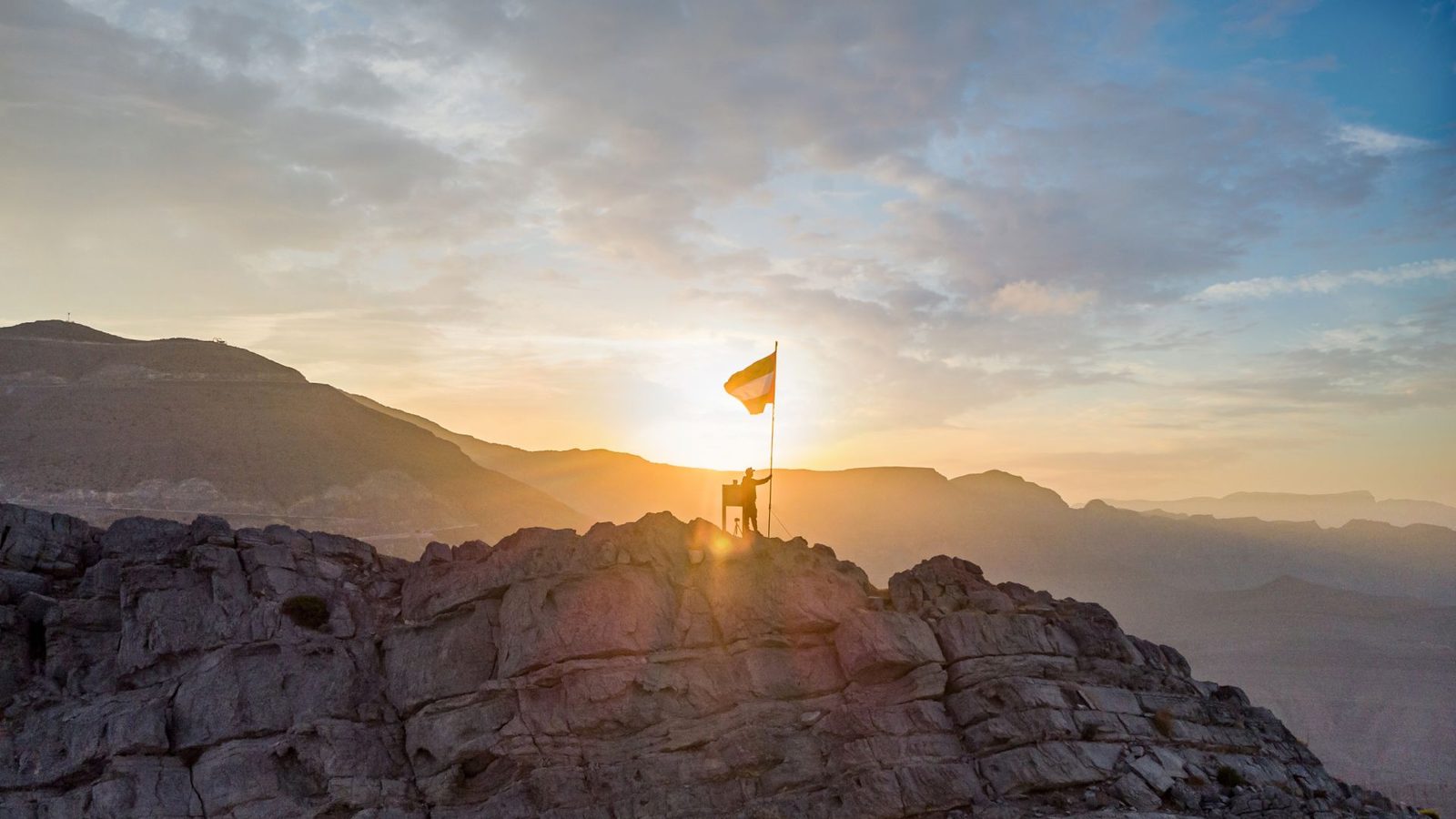 4 daysEasy
Ras Al Khaimah and Fujairah
Jebel Jais, the highest mountain in the Emirates, the country's oldest mosque at Al Badiyah and snorkelling at Dibba on the Indian Ocean coast.
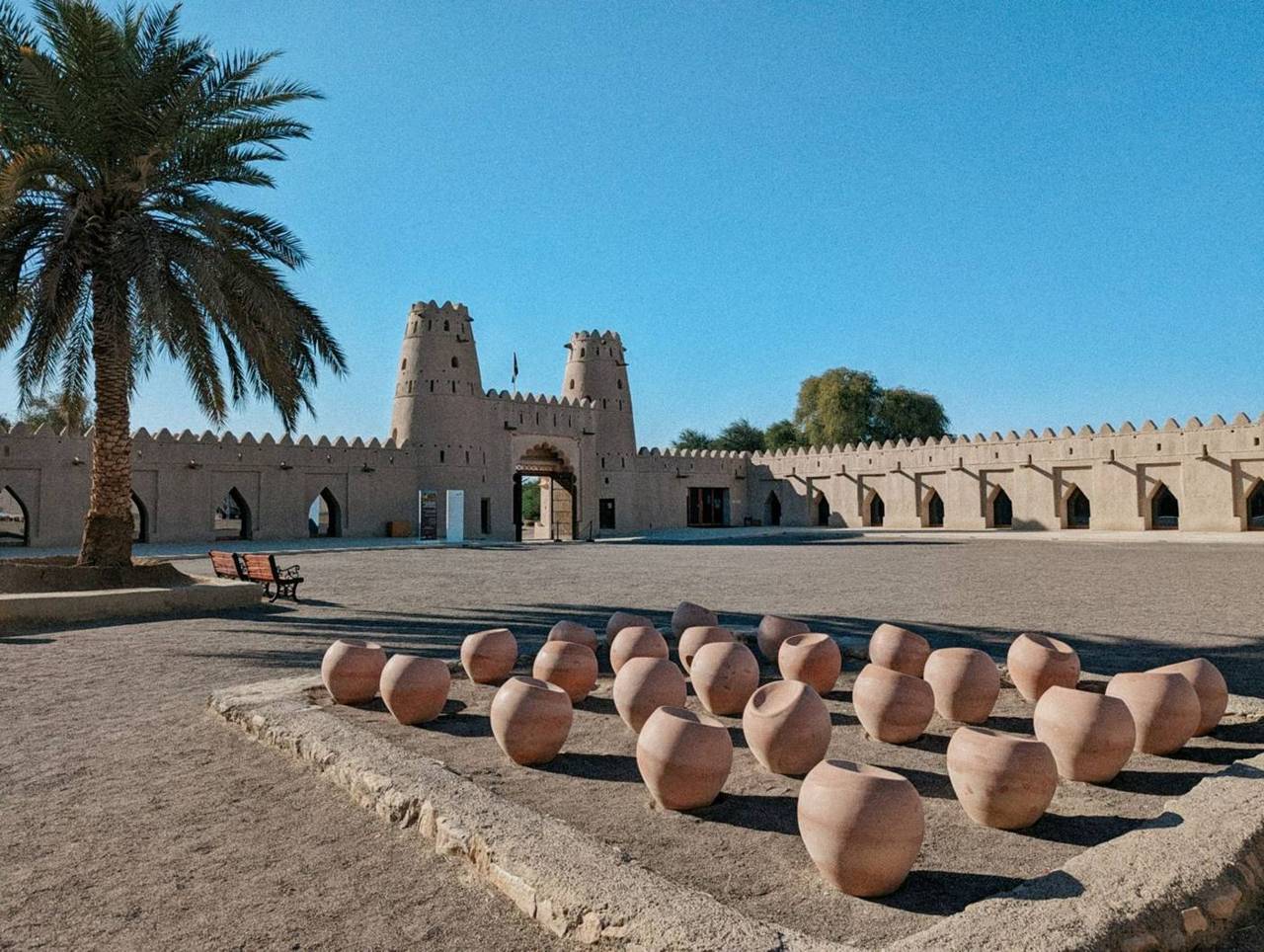 3 daysEasy
Al Ain and Jebel Hafeet
The UNESCO garden city of Al Ain with its palm oasis and falaj channels, Al Jahili fort, the Hili tombs and the scenic road up Jebel Hafeet.
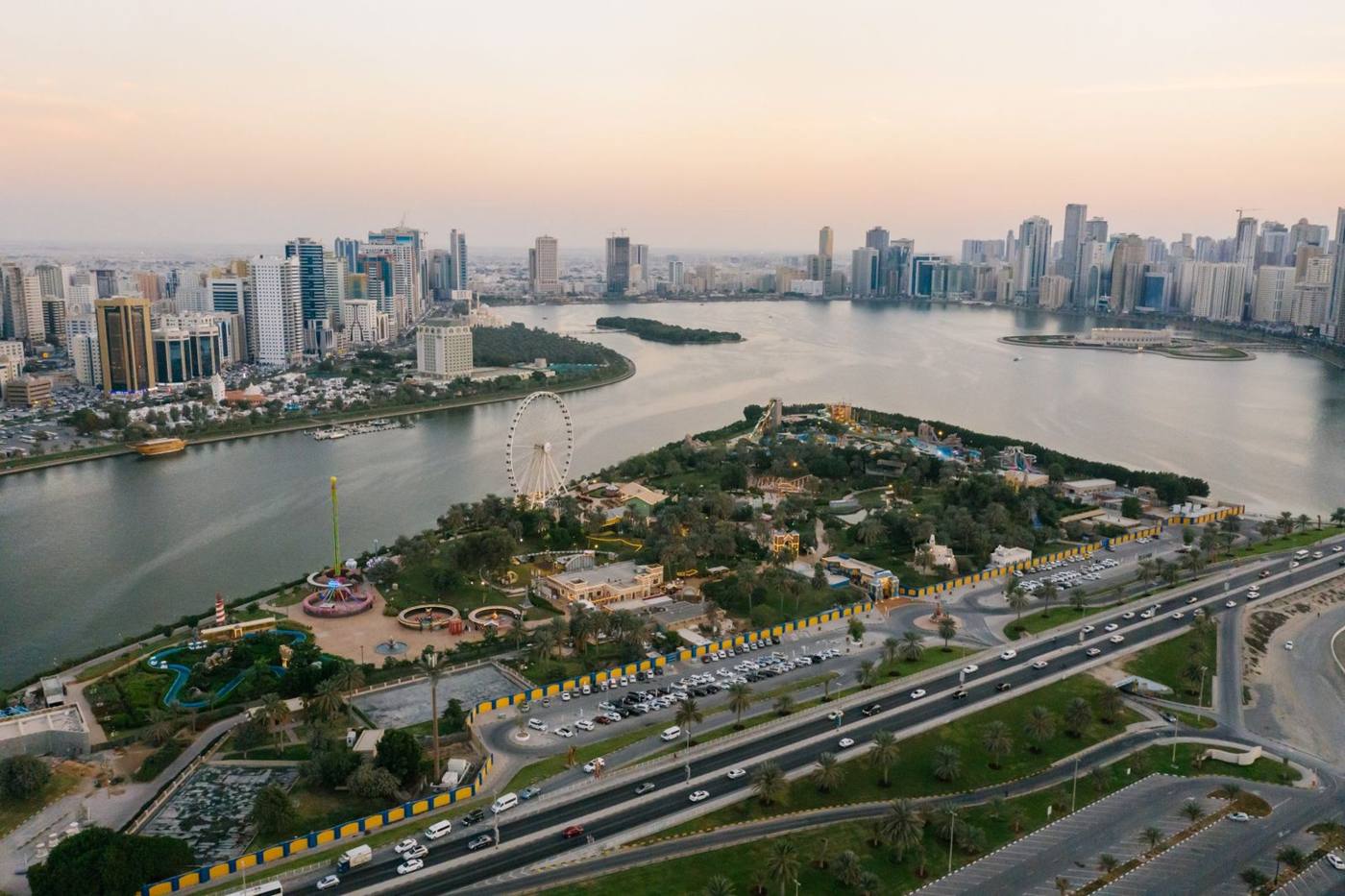 3 daysEasy
Sharjah and its museums
The cultural capital of the Emirates: the Museum of Islamic Civilization, the Heart of Sharjah quarter, the Blue Souk, the Rain Room and the Mleiha archaeological site in the desert.